
O-Pee-Chee vs. Topps: Why the Canadian Card Is Worth More
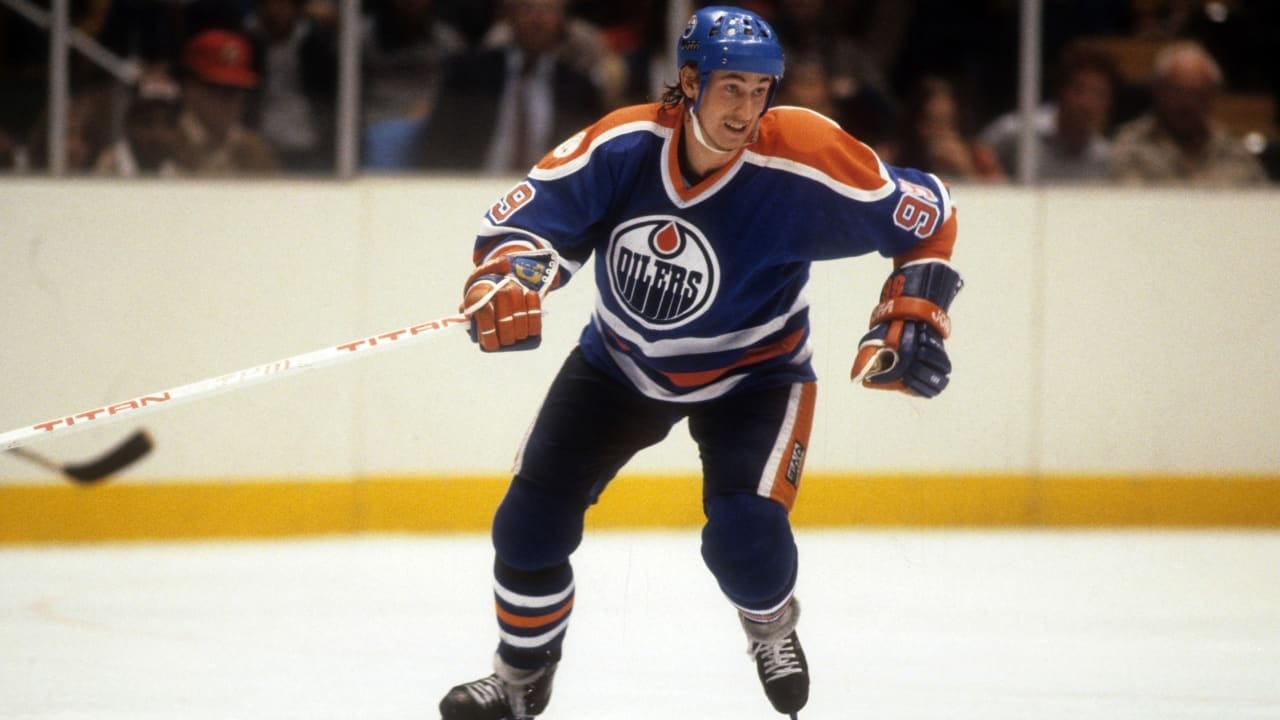
The most expensive hockey card ever sold — $3.75 million, in May 2021 — is a 1979-80 Wayne Gretzky rookie. But not the Topps one. The record belongs to the O-Pee-Chee version: same photo, same design, made in Canada, and worth roughly 5 times more than its American twin. A PSA 9 O-Pee-Chee Gretzky runs about $120,000; the Topps 9 is a $35,000 card.
Same player. Same picture. Wildly different money. If you've ever wondered what O-Pee-Chee actually is and why collectors pay the premium, here's the whole story.
A Gum Company Named After a Robin
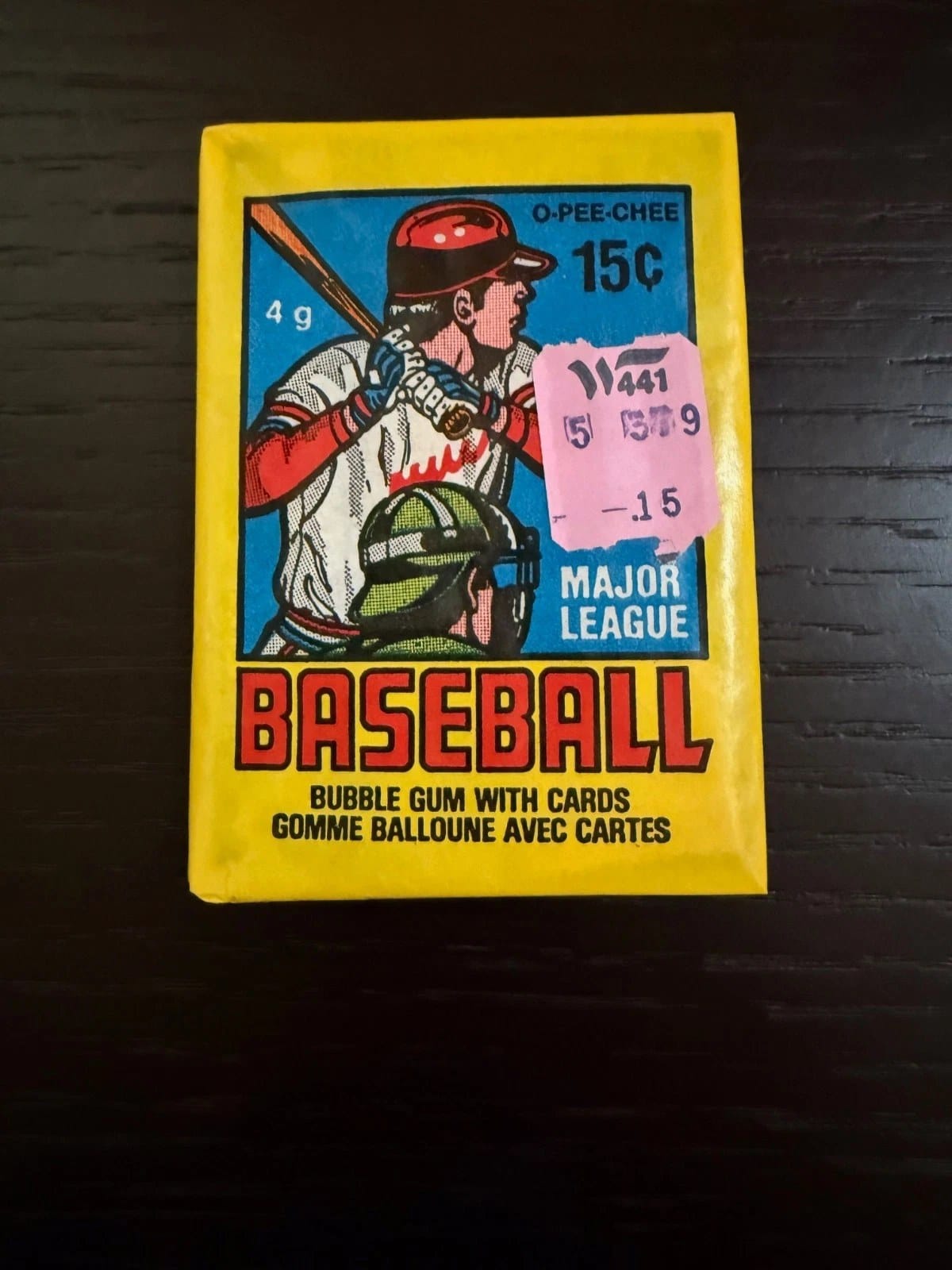

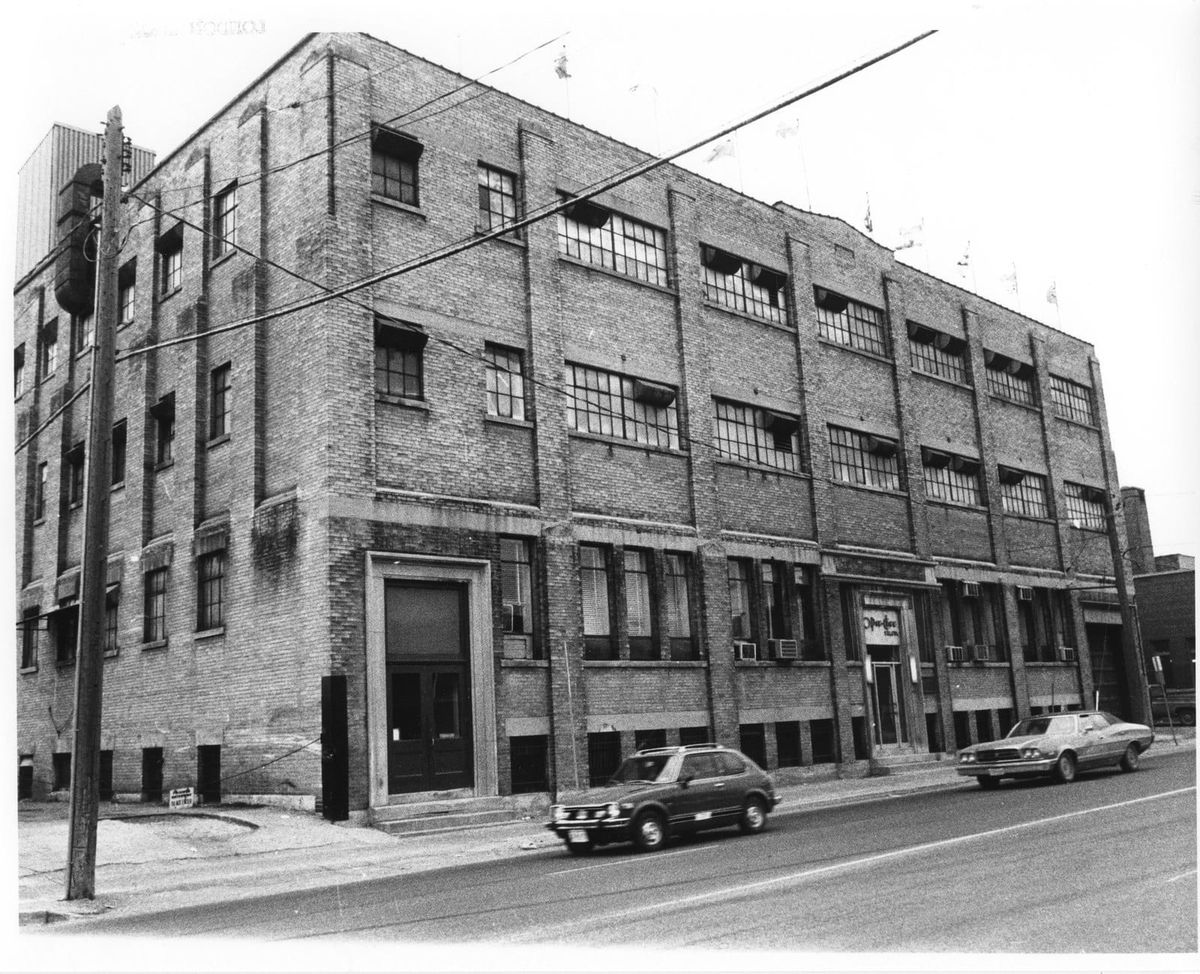
O-Pee-Chee was founded in 1911 in London, Ontario, by brothers John and Duncan McDermid, ex-employees of a local gum works. The name is Ojibwe for "the robin," lifted from Longfellow's The Song of Hiawatha — it was also the name of the McDermid summer cottage. Their first product was a penny gum called Gipsy Gum; along the way they'd also make Mickey Mouse cards (1935) and, eventually, the most valuable hockey cards on Earth.
OPC's first hockey cards ran from 1933-34 to 1940-41, until wartime rationing killed production. When the modern era arrived, it came through an unlikely partnership: a 1958 licensing agreement with Topps. And here's the twist most collectors don't know — from 1961, O-Pee-Chee's London plant physically printed Topps' hockey cards. For years, "Topps" hockey cards were literally made by O-Pee-Chee.
The Parallel Universe (1965-1992)
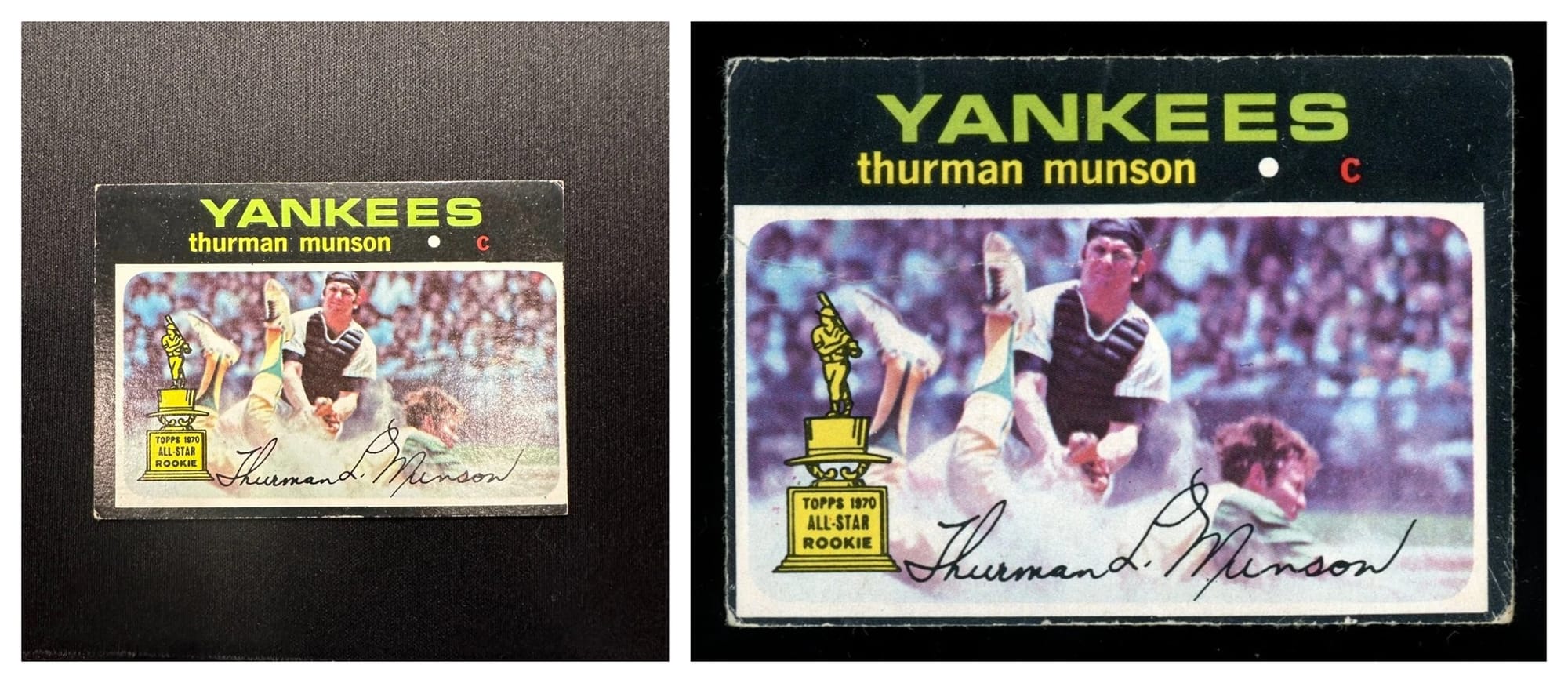
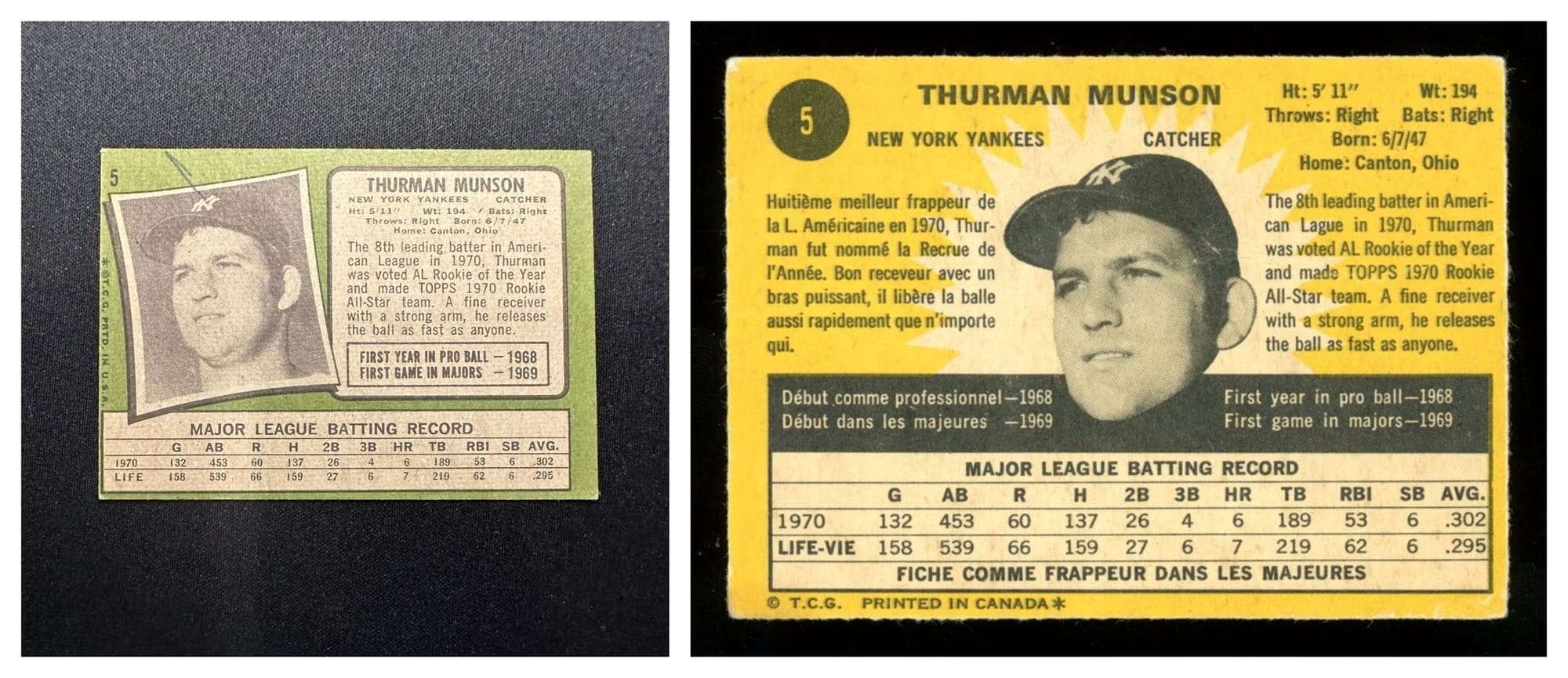
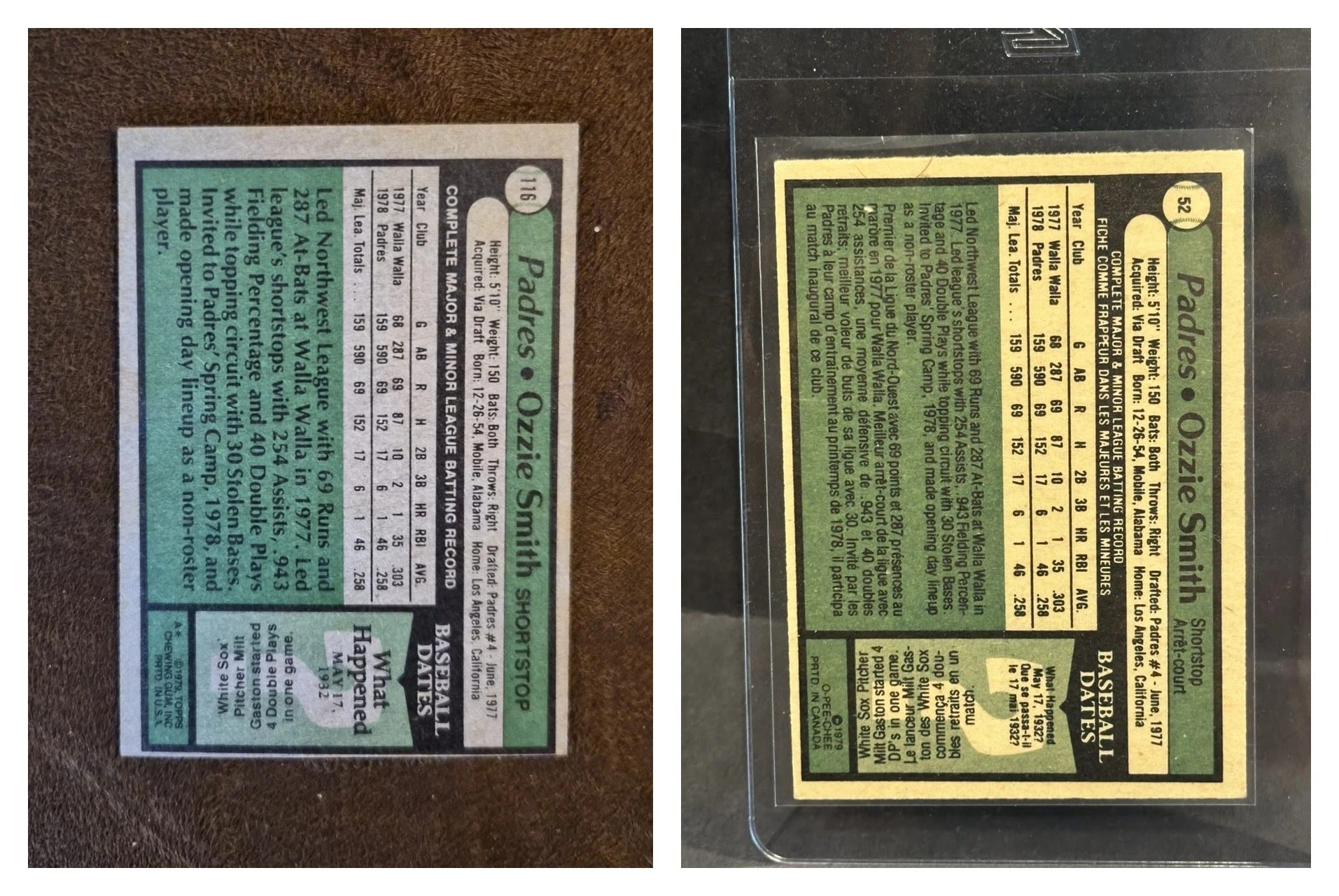
Starting in 1965 for baseball and 1968-69 for hockey under its own brand, OPC issued Canadian versions of Topps sets — same designs, different DNA. How to tell them apart:
- Bilingual backs. Hockey backs went English/French in the mid-'60s for the French-Canadian market; baseball followed in 1970, driven by Canada's federal bilingualism push of 1969-70.
- The stock. OPC cardboard is lighter — a creamier, almost "creamsicle" tone against Topps' muddy brown-gray.
- The cuts. OPC's rough, jagged edges are notorious. That sloppy factory cut is exactly why gem-mint OPC barely exists — and why high-grade examples command fortunes.
- The fine print. "Printed in Canada" on the back; the copyright line reads "T.C.G." through 1972, then "O.P.C."
- The trade updates. OPC went to press weeks later than Topps, so it caught offseason moves — printing "Now with [new team]" right on card fronts Topps had already frozen in time.
In baseball, OPC sets were much smaller — 1977 OPC ran 264 cards to Topps' 660, with a heavy Expos and Blue Jays tilt. The marquee vintage OPC baseball card: the 1968 O-Pee-Chee #177 Nolan Ryan rookie, dramatically scarcer than its Topps twin.
In Hockey, the Roles Reverse
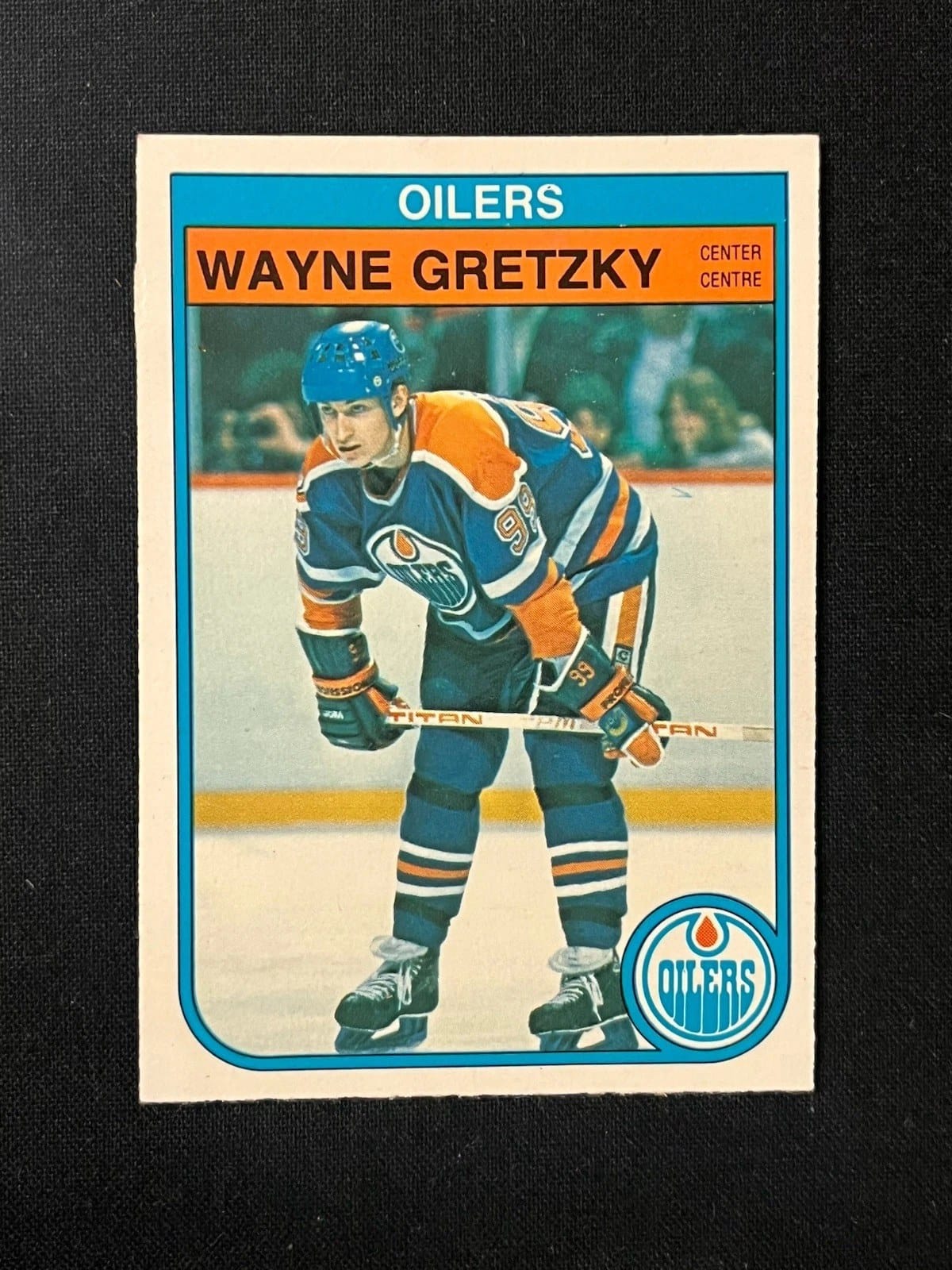
Here's where it gets fun: in hockey, Topps was the junior partner. OPC hockey sets were consistently bigger than the American versions — in 1971-72, OPC issued 264 cards to Topps' 132, which means the Guy Lafleur and Marcel Dionne rookies (plus Ken Dryden's classic) only exist in full glory on Canadian cardboard. Then Topps skipped hockey entirely in 1982-83 and 1983-84, leaving OPC as the only major NHL set two years running — which is why the Doug Gilmour, Cam Neely and Chris Chelios rookies are OPC-only. Even where both versions exist — the 1985-86 Mario Lemieux rookie, say — the OPC is the premium card.
Smaller Canadian print runs did the rest. There are only 2 PSA 10 copies of the O-Pee-Chee Gretzky rookie in existence; one of them is the $3.75 million card, still the hockey record. (One honest caveat: the premium lives in hockey and high-grade star cards. A mid-grade 1970s OPC baseball common is mostly just a curiosity with a French back.)
The End — and the Afterlife
The 1994 baseball strike and the NHL lockout hit O-Pee-Chee's two sports simultaneously, and that double blow ended the card business; the 1994 baseball set (by then an original design, not a Topps parallel — OPC went its own way in 1993) was the last. Nestlé bought the candy operation in 1996. The brand never died, though: Topps used the O-Pee-Chee name through the early 2000s, and since 2006-07 Upper Deck has licensed it for an annual flagship hockey set — the 2025-26 O-Pee-Chee is on shelves right now, 114 years after two brothers named a gum company after a robin.
The Verdict
Topps is the iconic American brand; O-Pee-Chee is the scarcer, stranger, bilingual sibling that — in hockey — became the main event. If you find an old shoebox with jagged-edged cards and French on the back, look closer. The Canadian twin might be the one paying for the cottage.
Got OPC in your collection — or did the rough cuts scare you off? Tell us below.
Comments ()