On This Date: Army and Notre Dame Play the “Game of the Century” to a 0-0 Tie (Nov. 9, 1946)

On Nov. 9, 1946, No. 1 Army and No. 2 Notre Dame played the Game of the Century at Yankee Stadium. 4 Heisman winners were on the field, and nobody scored.
On This Date: Army and Notre Dame Play the “Game of the Century” to a 0-0 Tie (Nov. 9, 1946)
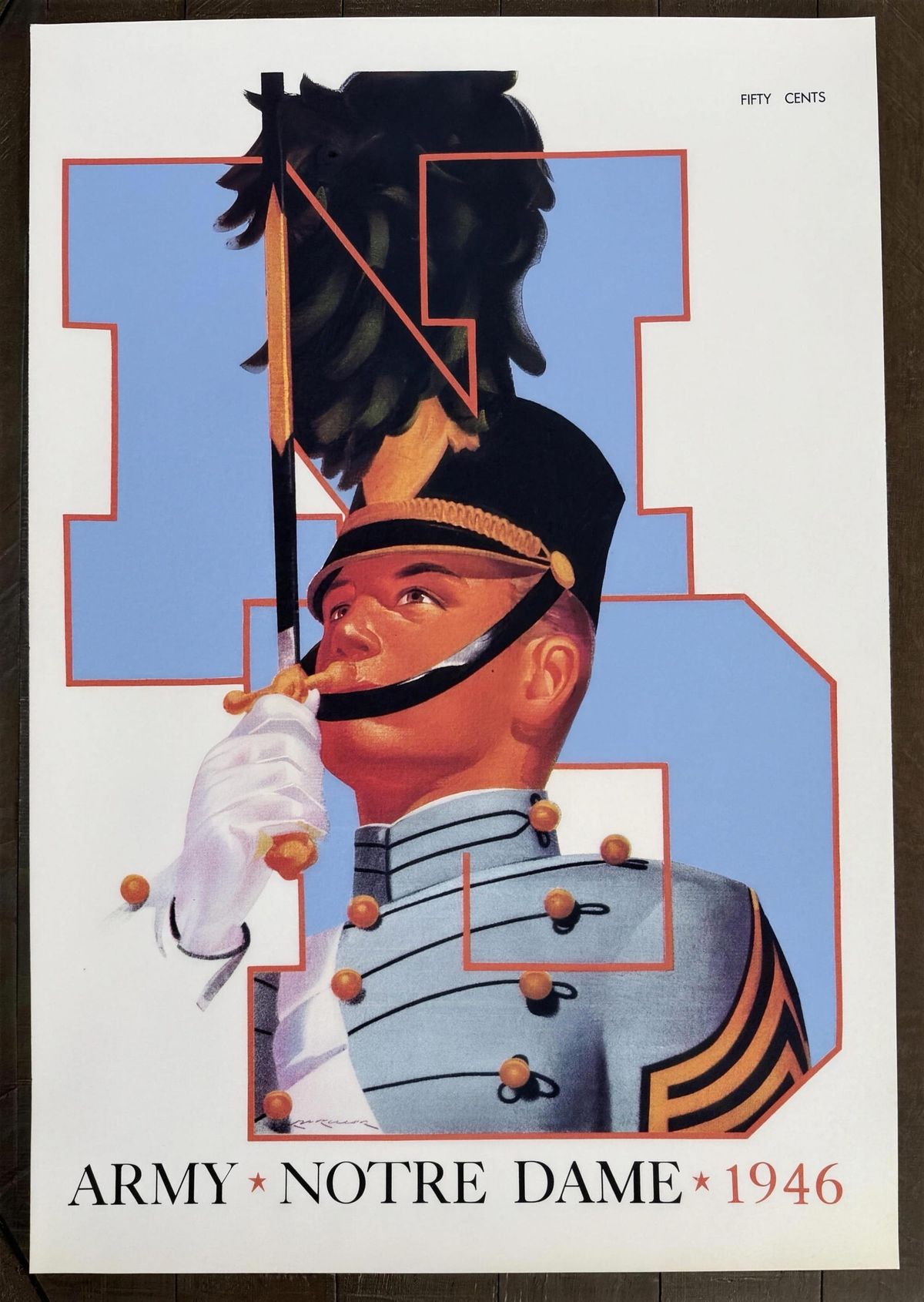
The official program, Army vs. Notre Dame, 1946.

4 players who won the Heisman Trophy were on the field at Yankee Stadium on Nov. 9, 1946. Neither team scored.

No. 1 Army and No. 2 Notre Dame played to a 0-0 tie in front of 74,121 people. It was billed as the Game of the Century, and it’s still called that.
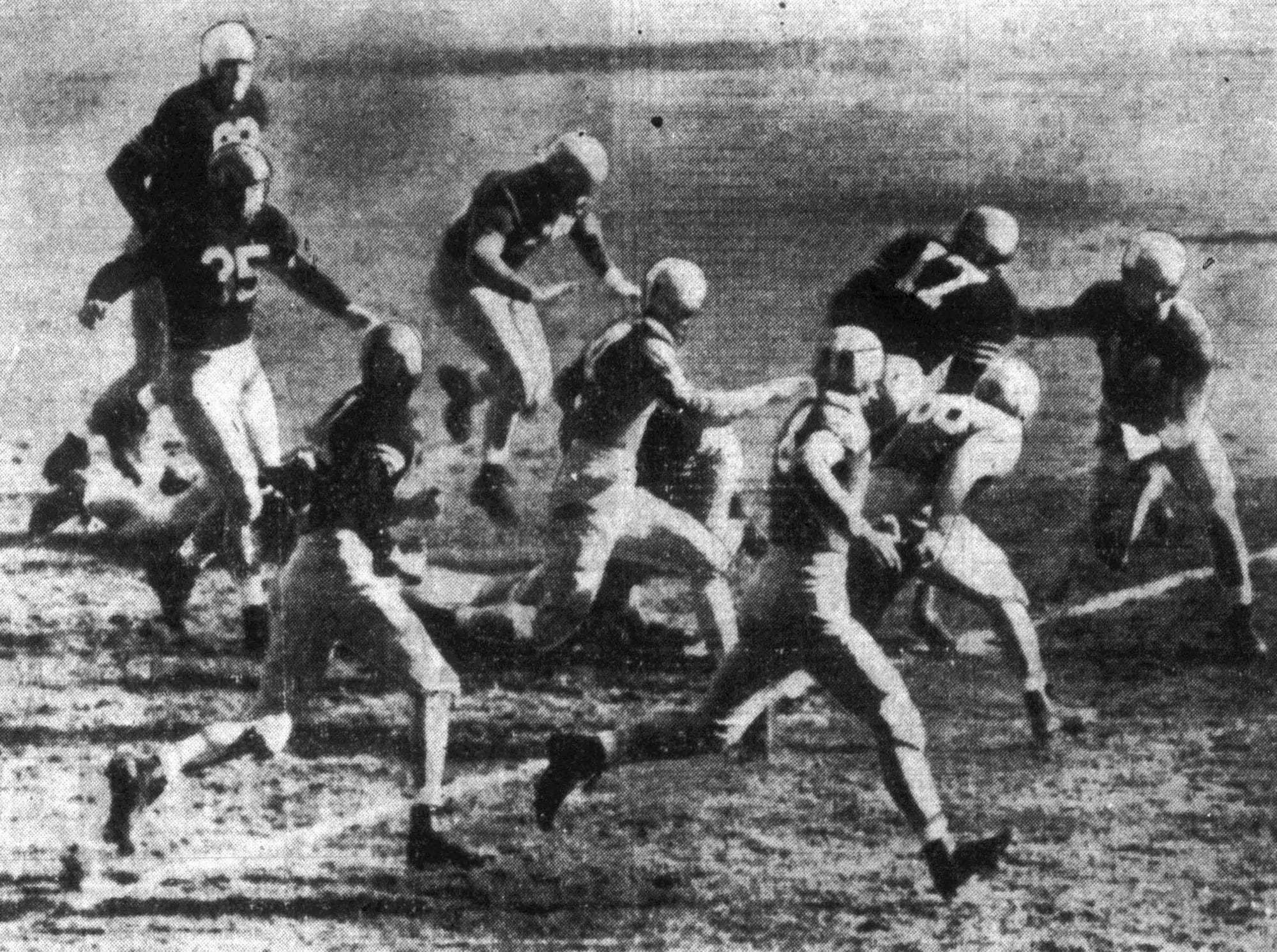
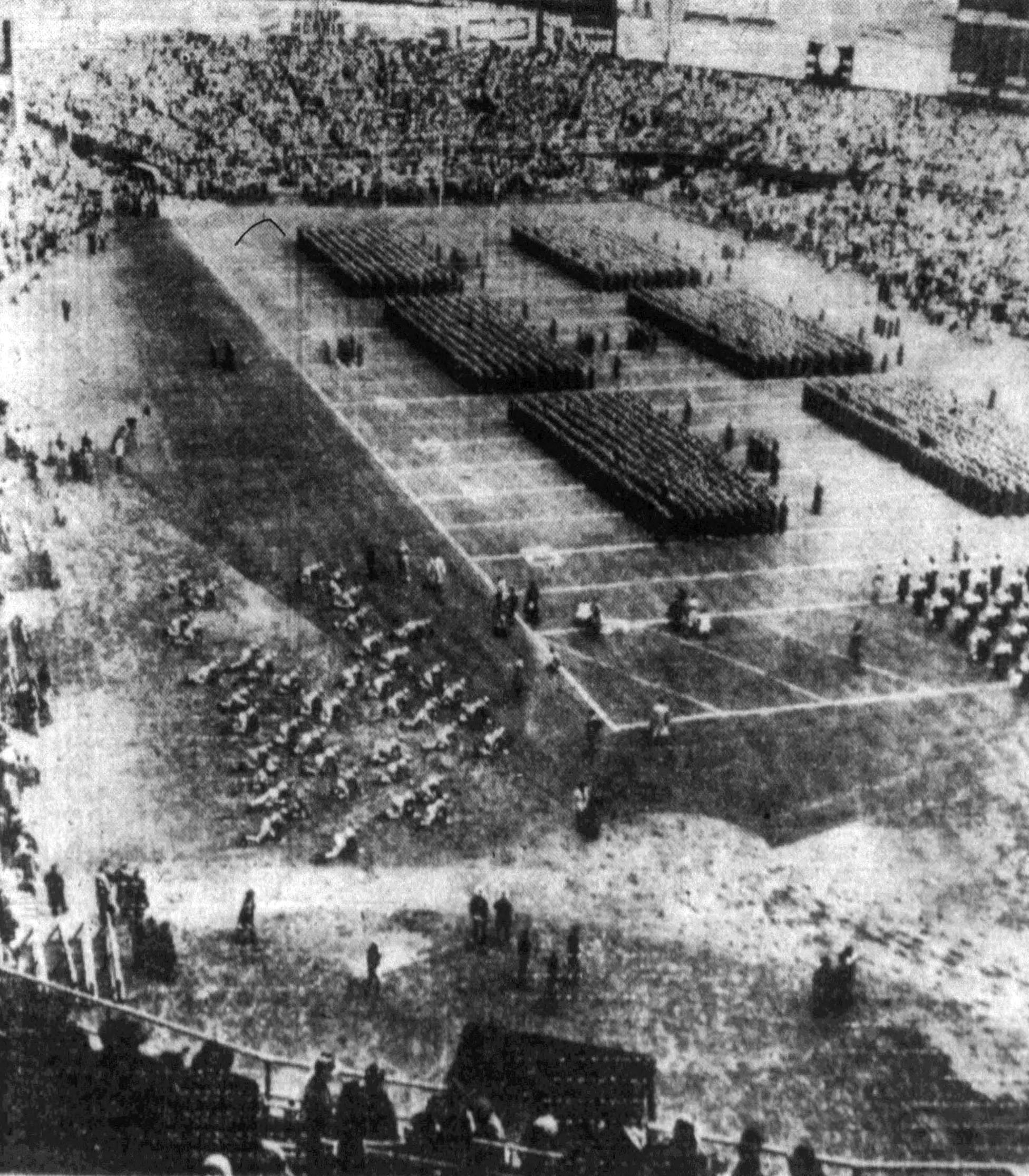
The game at Yankee Stadium. (Public domain, via Wikimedia Commons)
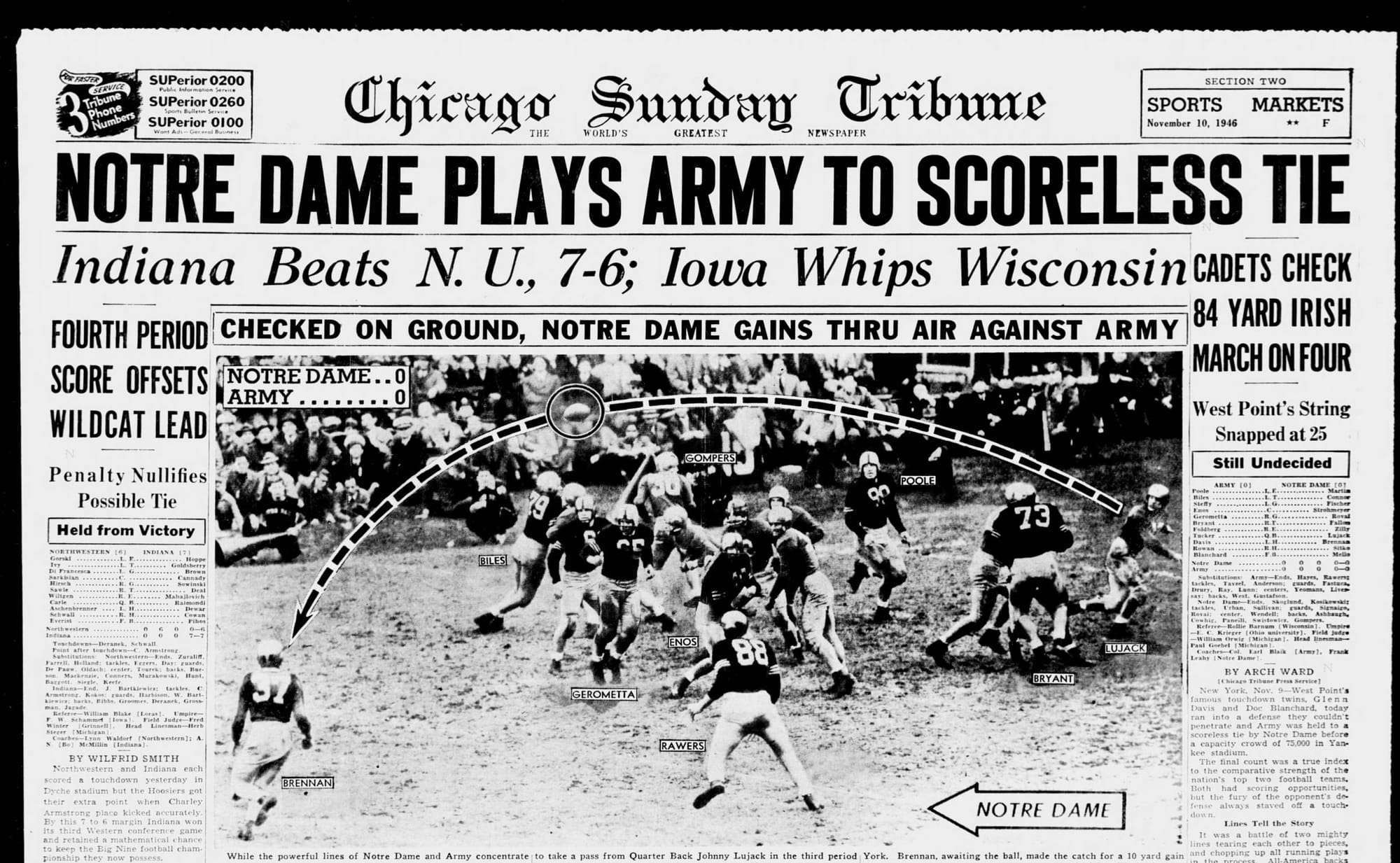
“Notre Dame Plays Army to Scoreless Tie.” (Chicago Sunday Tribune, Nov. 10, 1946, Part 2, p. 1, via Newspapers.com)

59-0 and 48-0

During World War II, Army had the best players in the country. Many of the best college players were in the service, and some ended up at West Point.

Coach Earl Blaik’s Army teams went unbeaten in 1944 and 1945 and won the national championship both years, behind 2 running backs: Felix “Doc” Blanchard, “Mr. Inside,” and Glenn Davis, “Mr. Outside.” Blanchard won the Heisman in 1945, and Davis would win it in 1946.
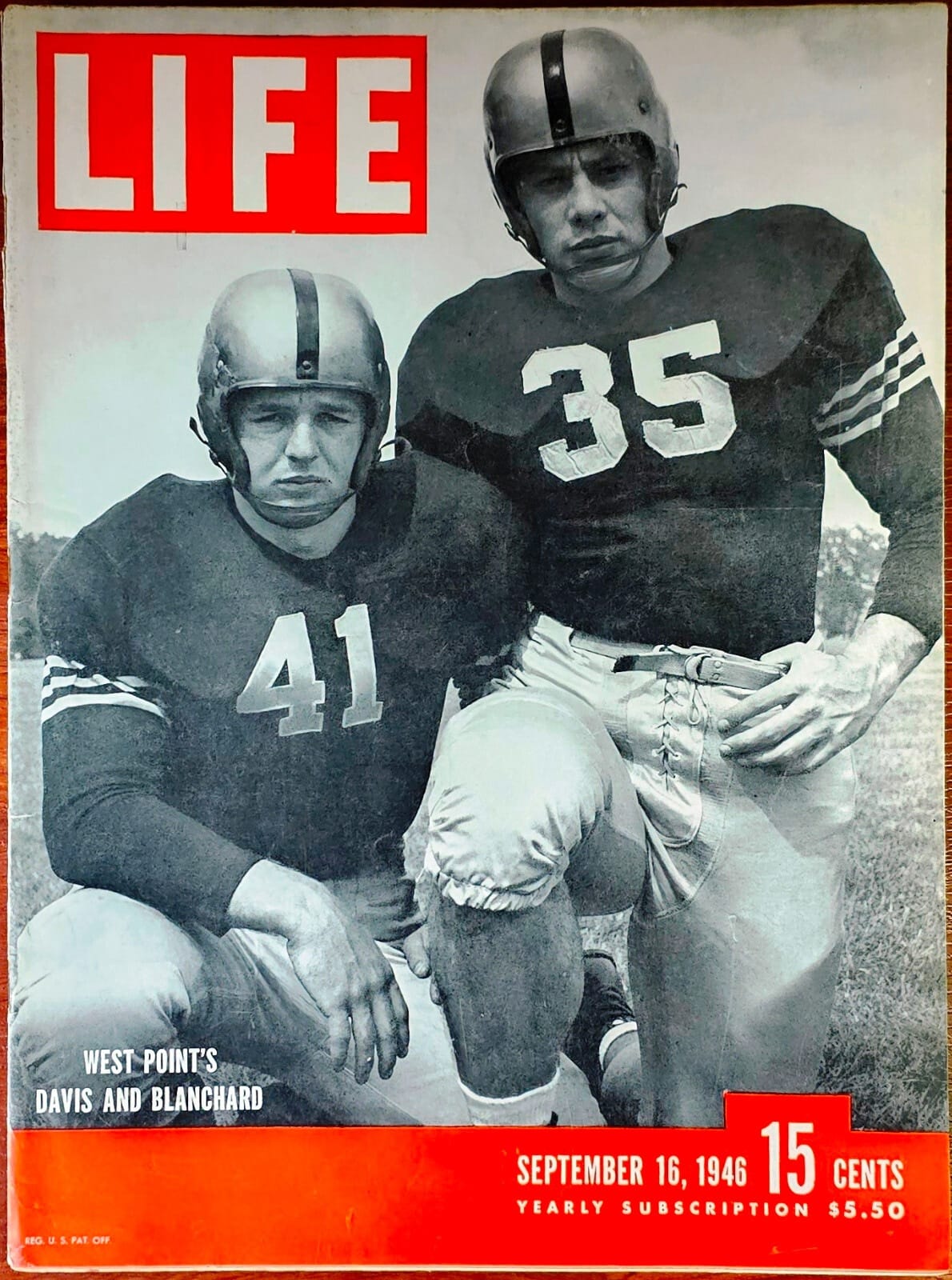
Davis (41) and Blanchard (35) on the cover of LIFE, Sept. 16, 1946.
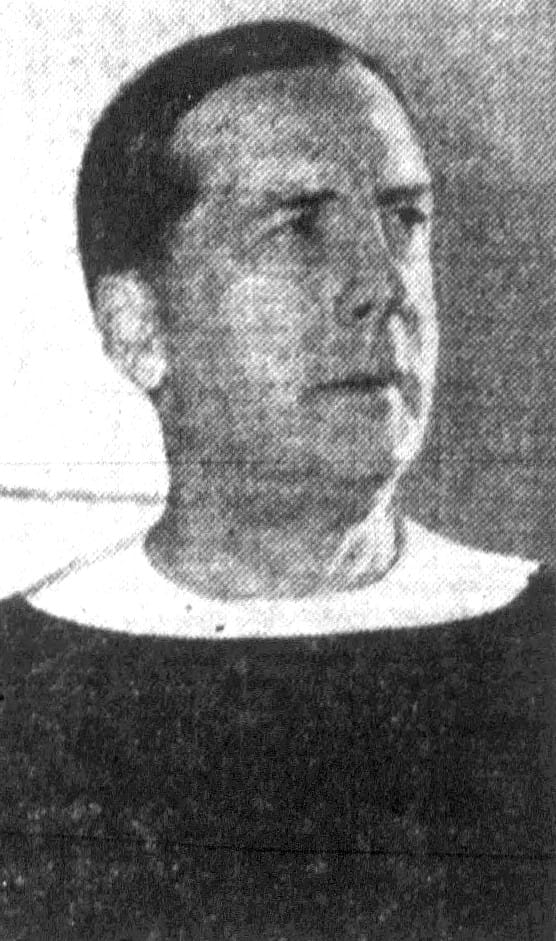
Army coach Earl Blaik. (Public domain, via Wikimedia Commons)

In those 2 years, Army beat Notre Dame 59-0 and 48-0.

Leahy Comes Home

Notre Dame coach Frank Leahy spent those 2 seasons in the Navy. He came back in 1946 with a roster full of veterans, led by quarterback Johnny Lujack.
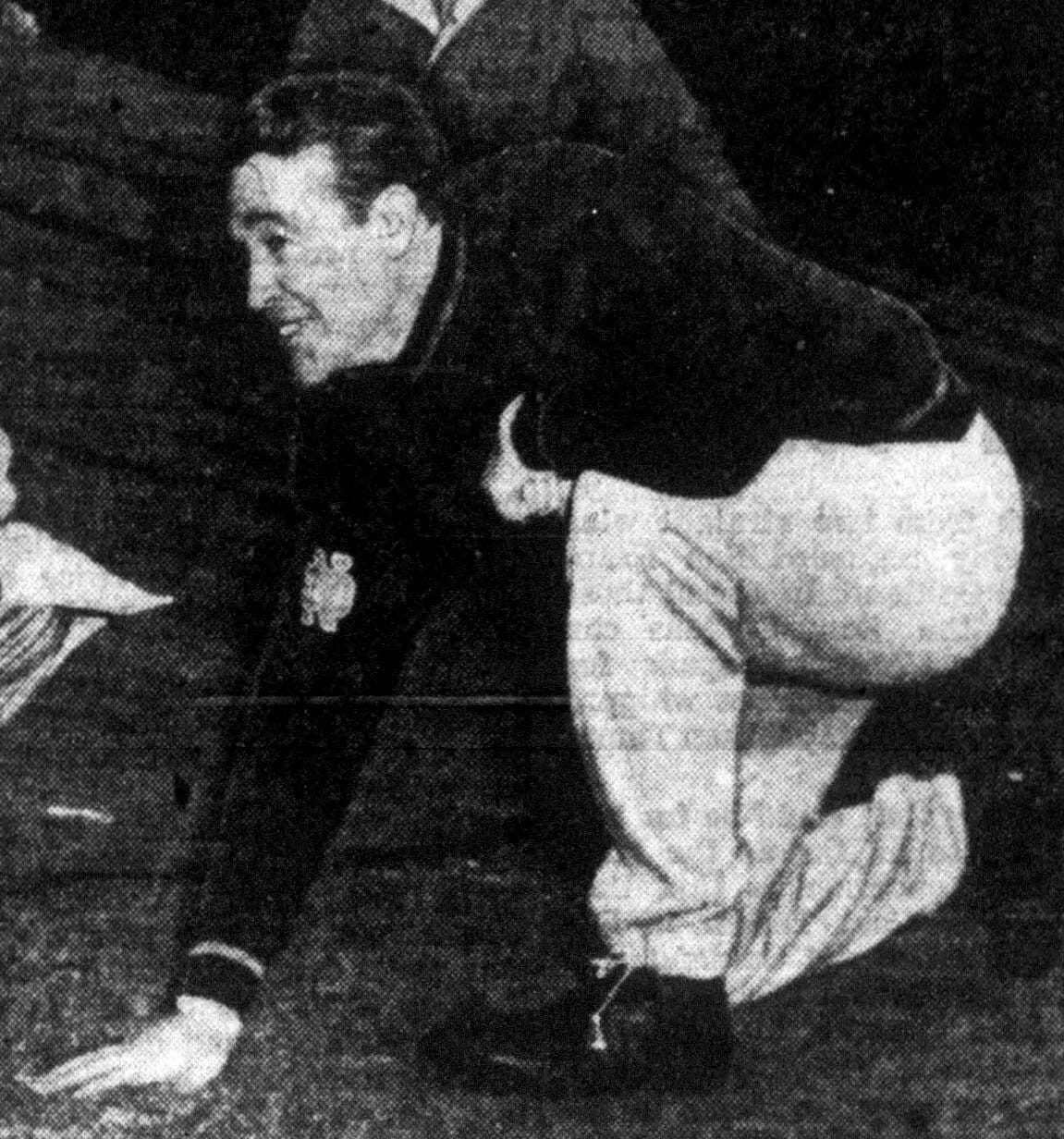
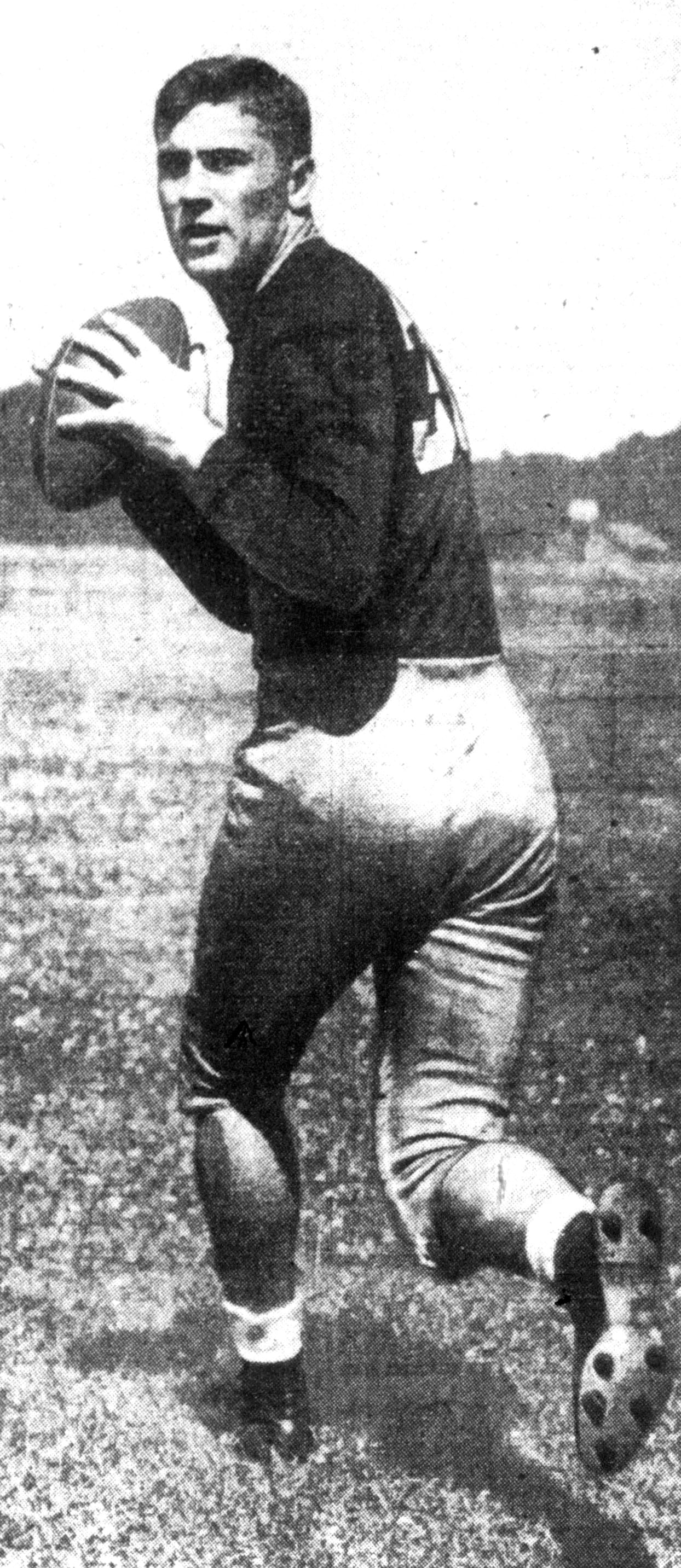
Notre Dame coach Frank Leahy (right) in 1947. (Public domain, via Wikimedia Commons)
Johnny Lujack. (Public domain, via Wikimedia Commons)

Both teams came in unbeaten, Army at 7-0 and Notre Dame at 5-0. Army had won 25 straight. Notre Dame hadn’t forgotten the scores.

New York went crazy for tickets. Every one of the 76,000 seats was sold, and 2 days before the game a Staten Island columnist reported that $200 a pair couldn’t buy one. Even the scalpers were trying to buy.
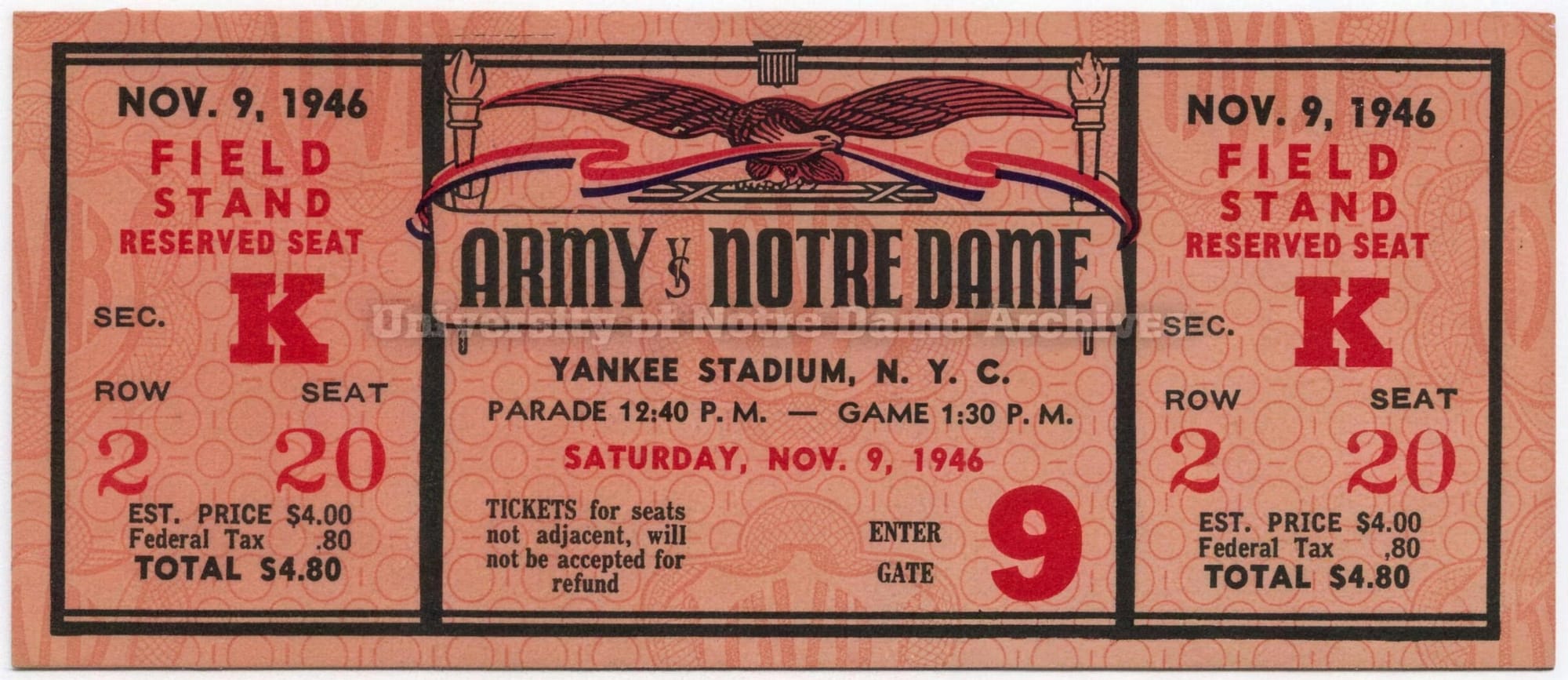

A $4.80 field-stand ticket for Nov. 9, 1946. (University of Notre Dame Archives)
“Football Frenzy Hits New High Over N.D.-Army Game.” (Staten Island Advance, Nov. 7, 1946, p. 25, via Newspapers.com)
The Corps of Cadets on the field at Yankee Stadium before the game. (Public domain, via Wikimedia Commons)

The Game

It was a defensive struggle. Notre Dame held Blanchard and Davis to 79 yards between them. Army quarterback Arnold Tucker intercepted 3 passes.
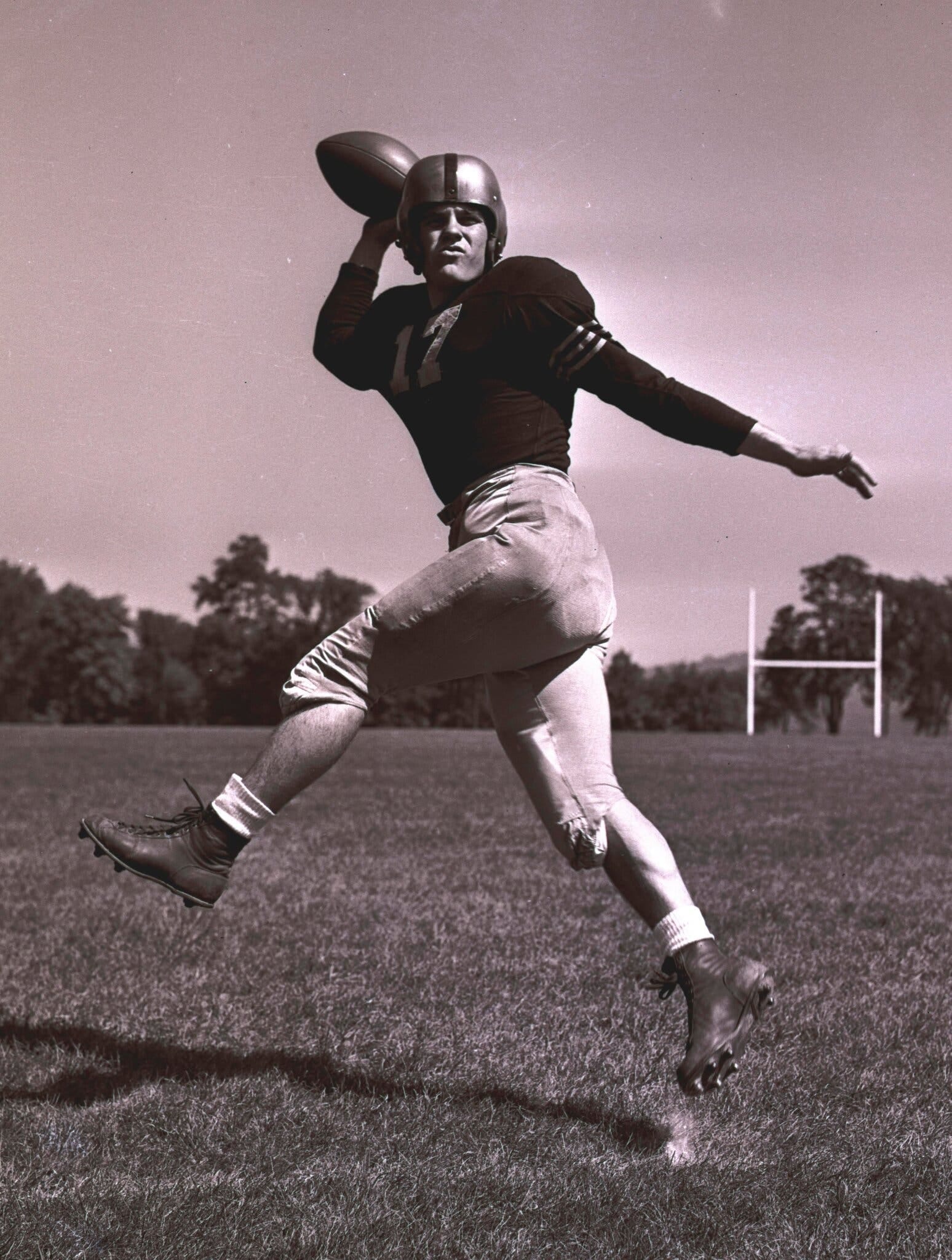
Army quarterback Arnold Tucker.
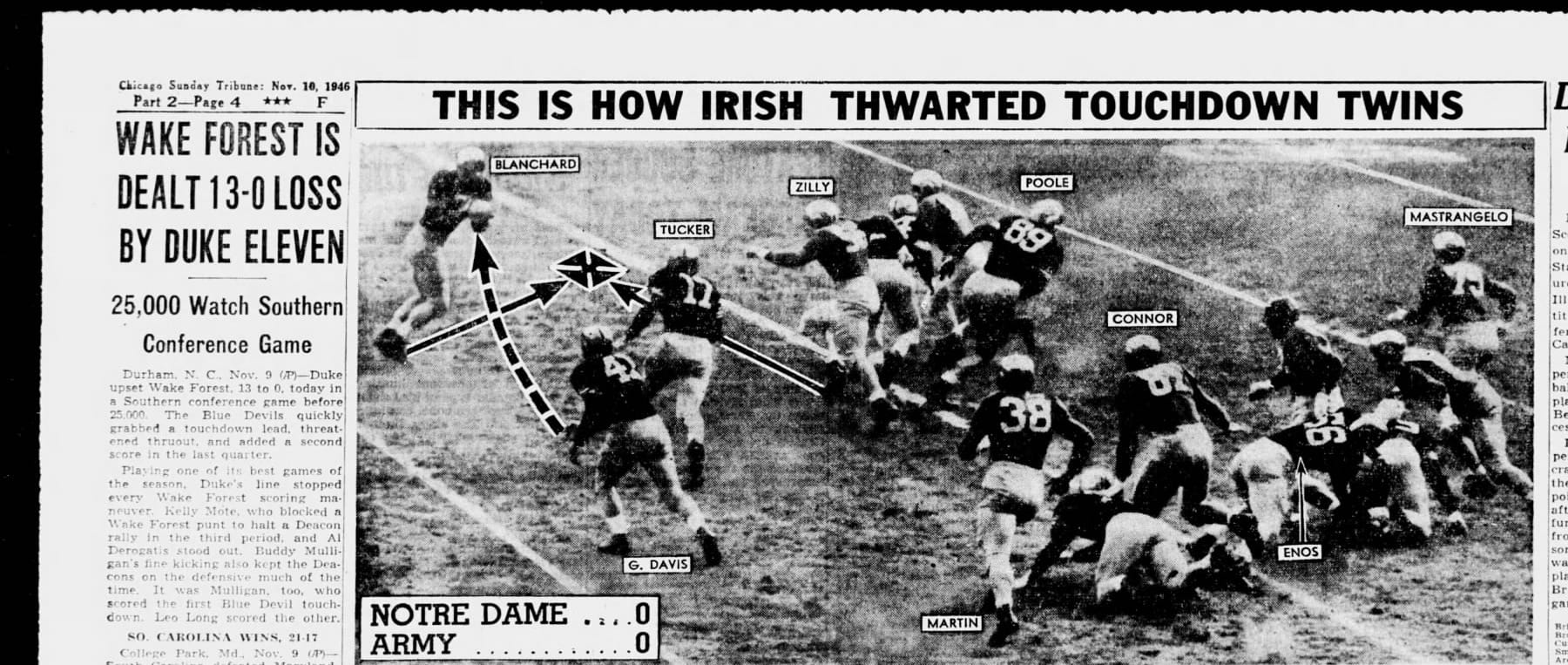
“This Is How Irish Thwarted Touchdown Twins.” Notre Dame’s Jack Zilly stops Blanchard for a 2-yard loss. (Chicago Sunday Tribune, Nov. 10, 1946, p. 72, via Newspapers.com)
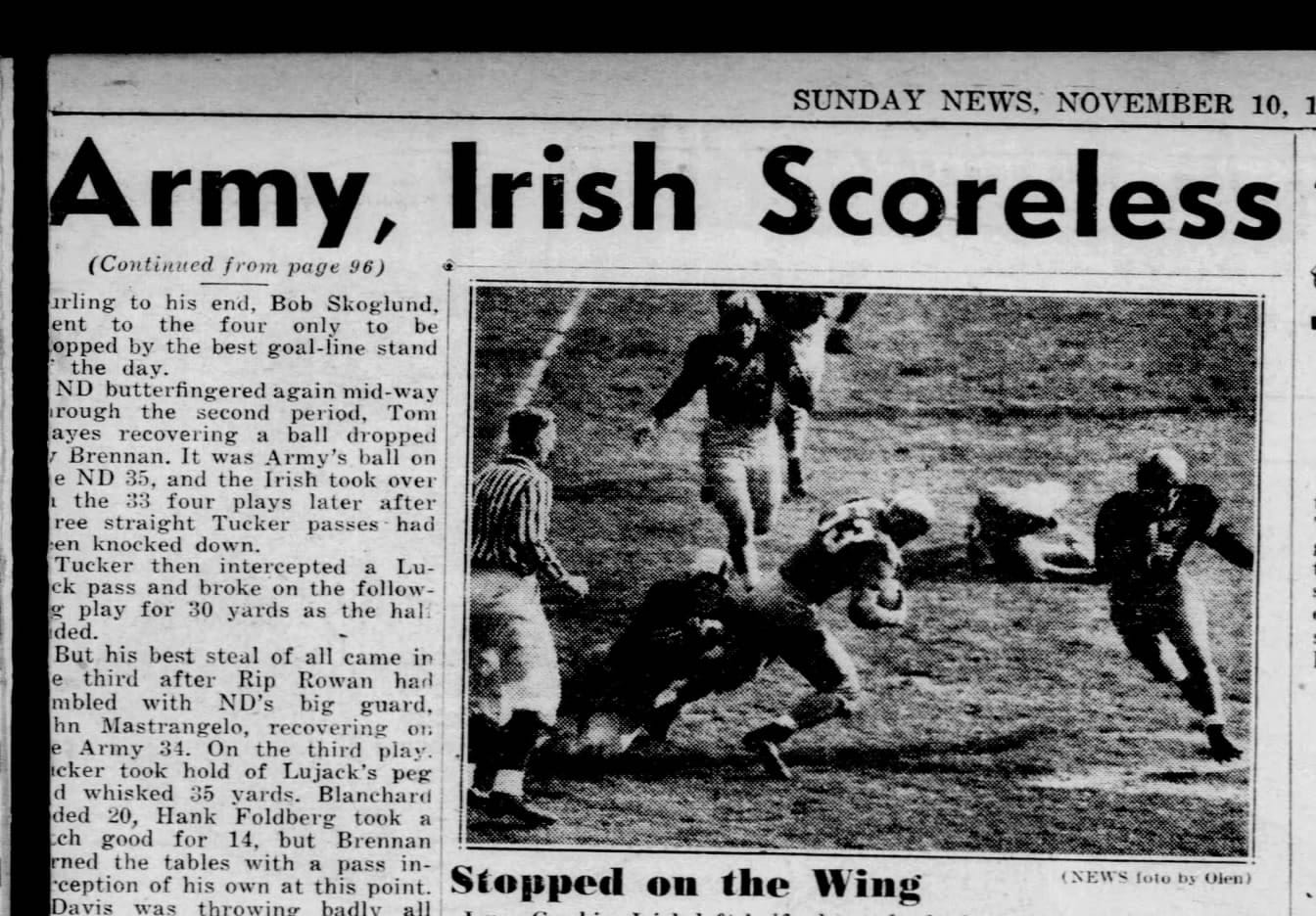
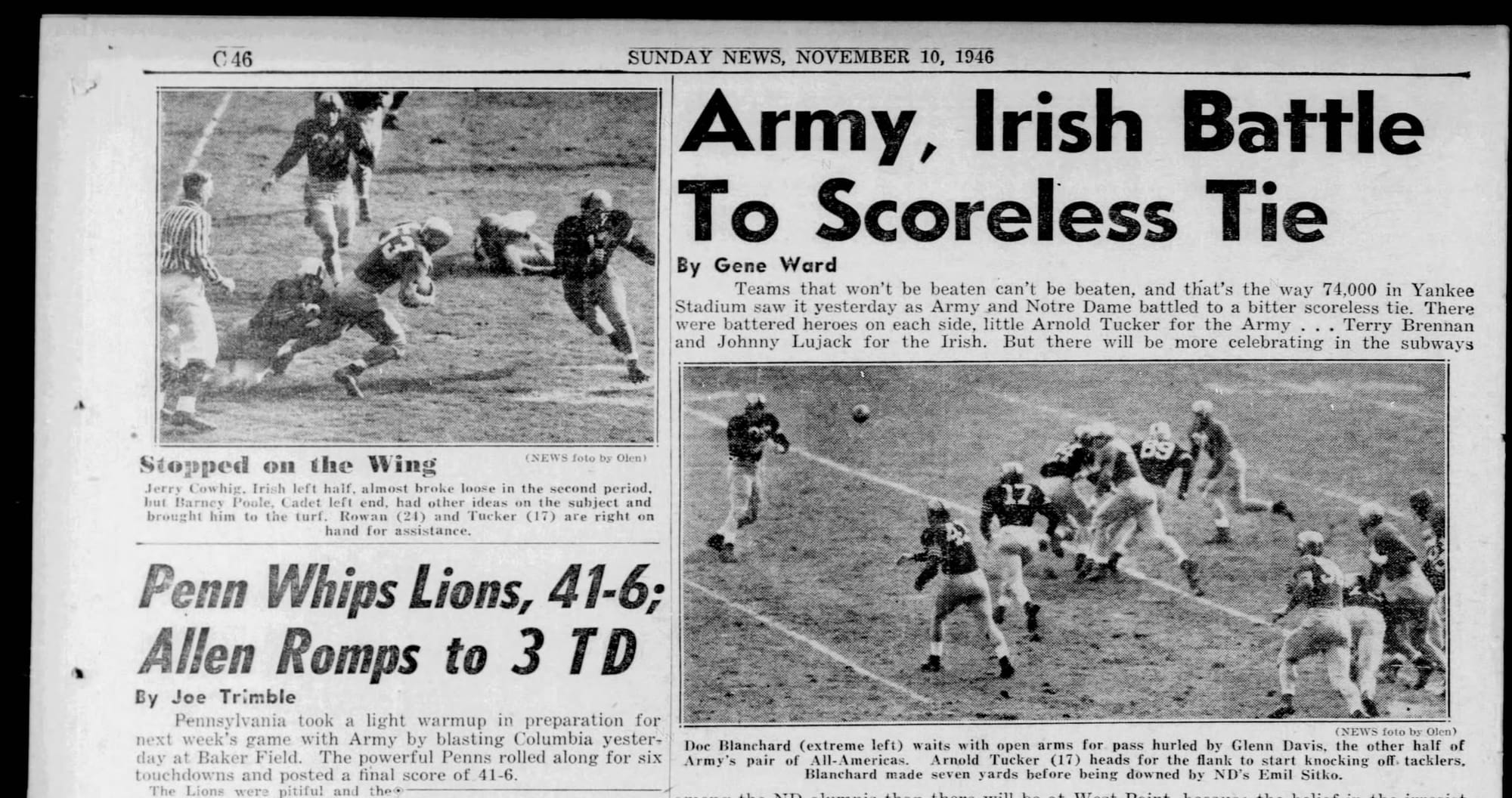
“Stopped on the Wing.” Army’s Barney Poole drags down Notre Dame’s Jerry Cowhig in the 2nd quarter. (Daily News, New York, Nov. 10, 1946, via Newspapers.com)

Notre Dame’s best chance was an 84-yard drive that reached the Army 4-yard line. Army stopped it on 4th down.
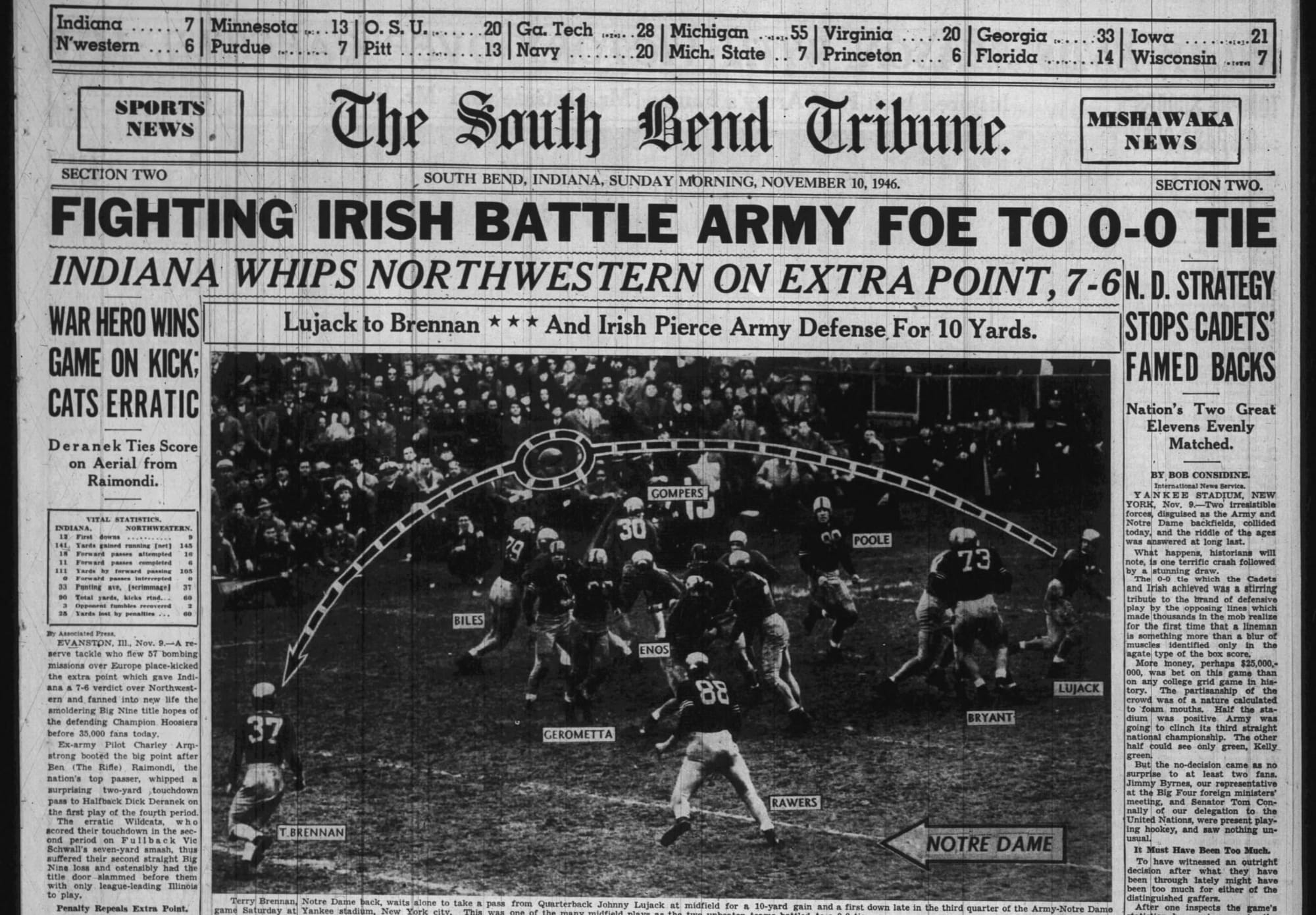
“Fighting Irish Battle Army Foe to 0-0 Tie.” (The South Bend Tribune, Nov. 10, 1946, p. 17, via Newspapers.com)

Army’s best chance came in the 2nd half, when Blanchard broke into the open with only Lujack to beat. Lujack, playing defense too, brought him down. It’s still one of the most famous tackles in Notre Dame history.

Nobody tried a field goal. The 2 teams combined for 10 turnovers. It ended 0-0.
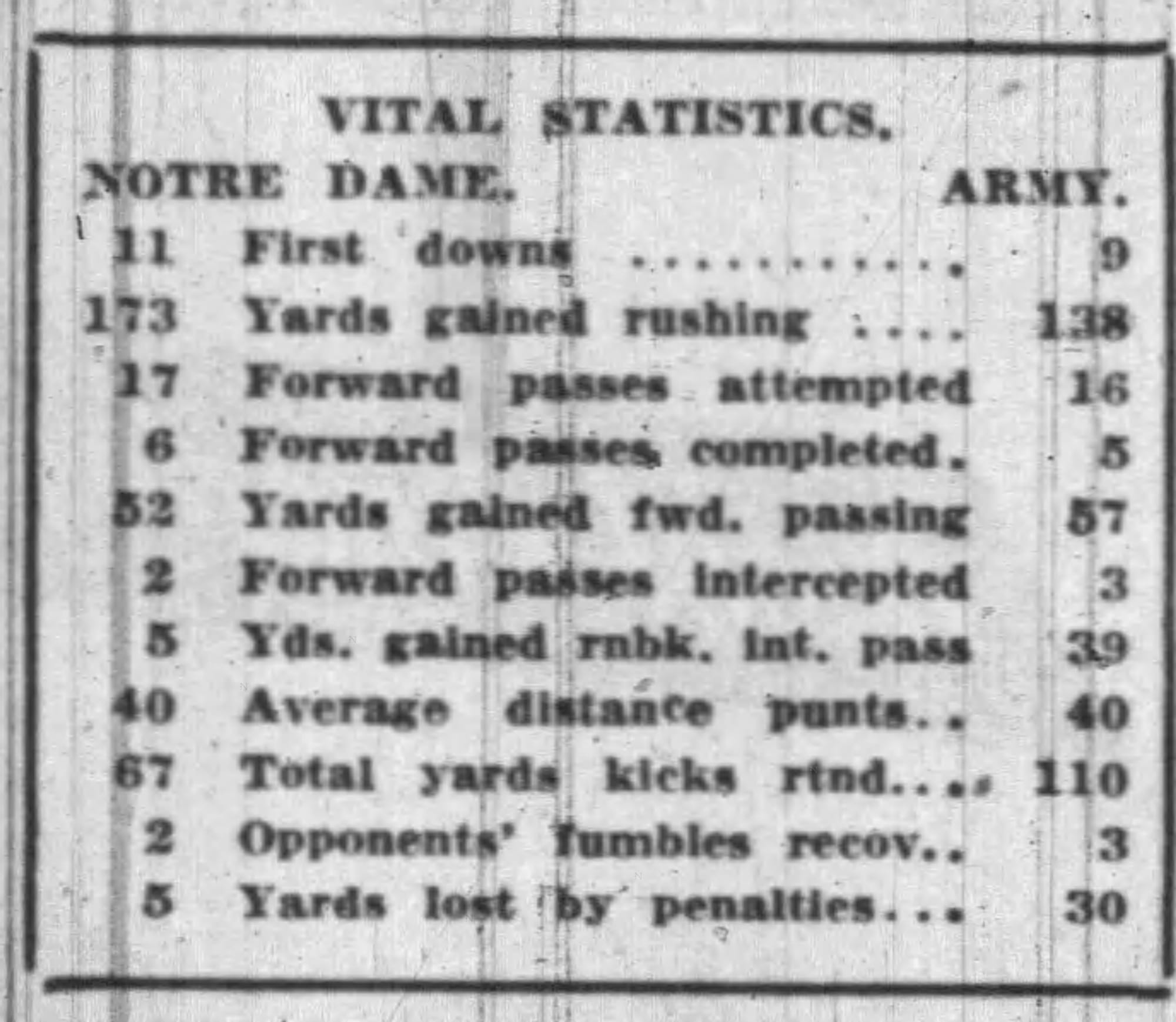
The statistics. (The South Bend Tribune, Nov. 10, 1946, p. 19, via Newspapers.com)
“Army, Irish Battle To Scoreless Tie.” (Daily News, New York, Nov. 10, 1946, via Newspapers.com)

In the quiet Notre Dame locker room, Lujack, his ankle taped and his lips caked with blood, sat down and said, “Gee, that was a tough one.” Leahy told his players they had played their hearts out. “The test of a champion,” he said, “is how he can stand adversity.”

What Came After

Davis won the Heisman that year. Lujack won it in 1947, and Notre Dame end Leon Hart won it in 1949, which made 4 Heisman winners on the field that afternoon.
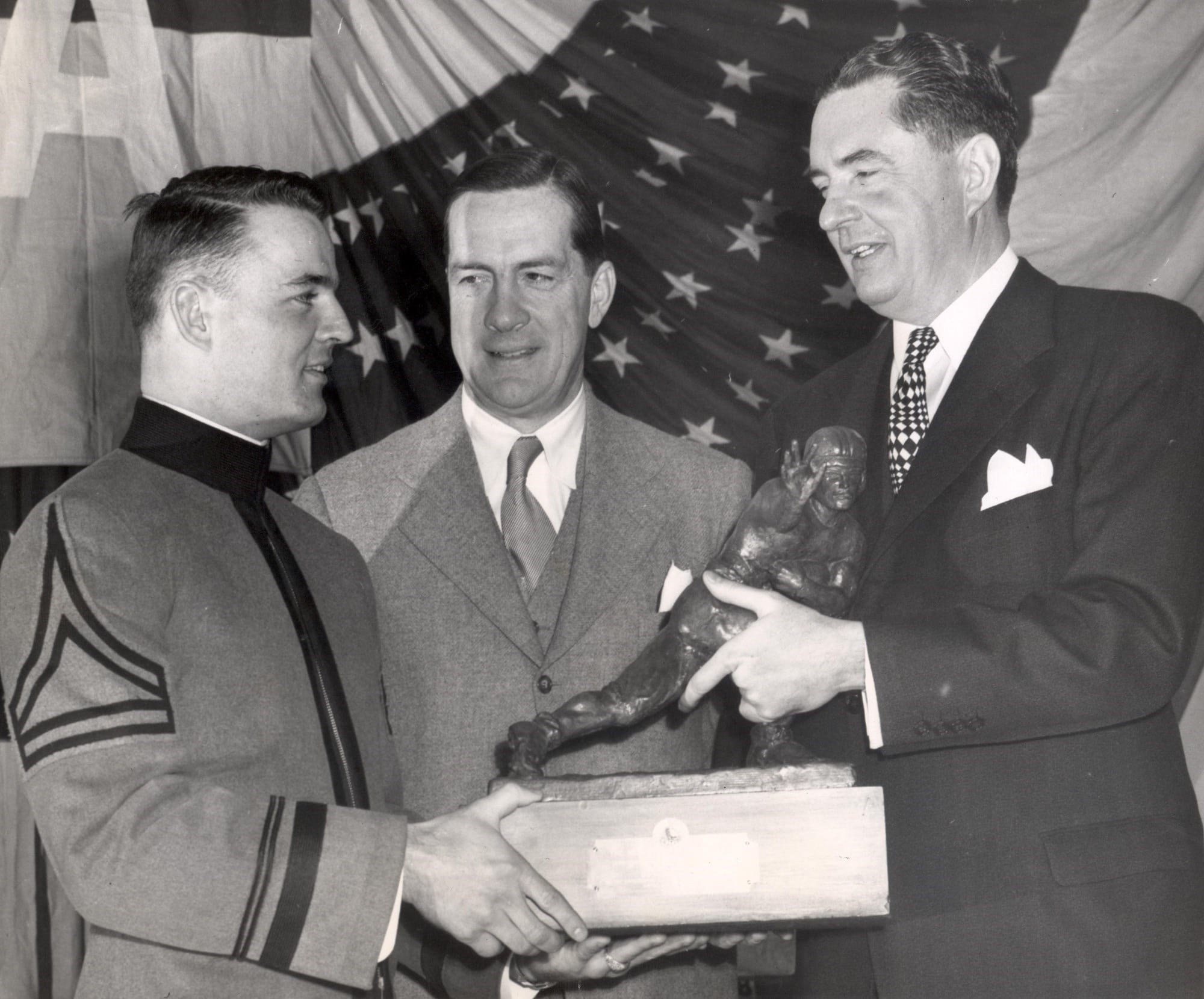
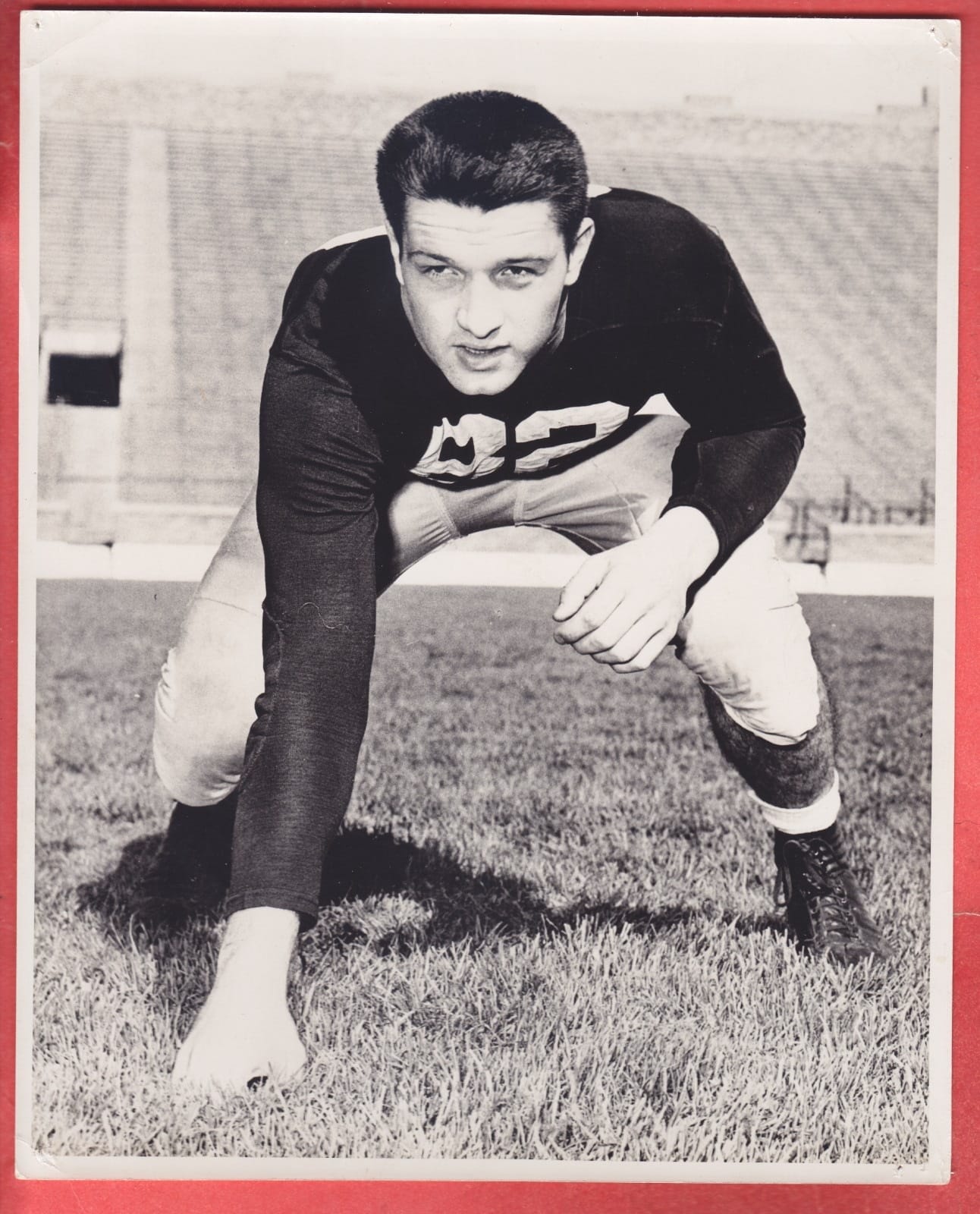
Davis receives the 1946 Heisman Trophy.
Notre Dame end Leon Hart, the 1949 Heisman winner.

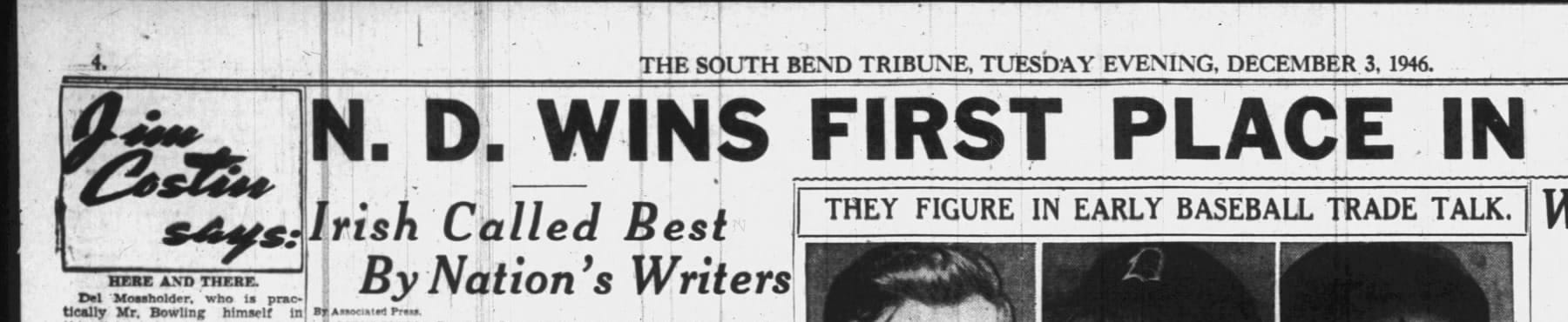
Notre Dame won the rest of its games. Army barely got past Navy in its finale, and the sportswriters voted Notre Dame No. 1 in the final AP poll, ending Army’s 2-year run at the top.
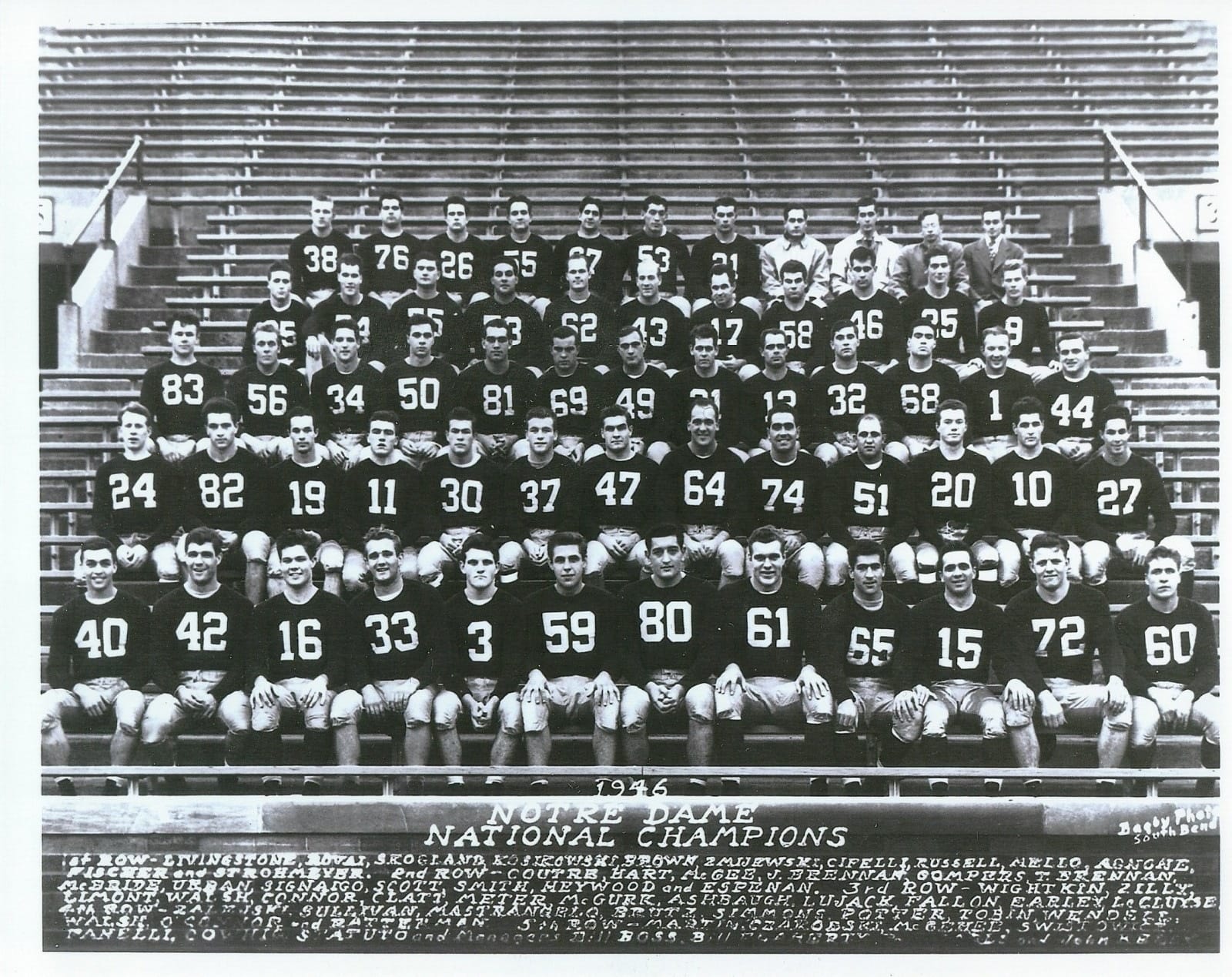
Notre Dame’s 1946 national champions.
“N. D. Wins First Place in A. P. Poll.” (The South Bend Tribune, Dec. 3, 1946, p. 18, via Newspapers.com)

They played once more, in 1947, and Notre Dame won 27-7. Then the 2 schools stopped playing each other every year. The rivalry that had made Knute Rockne and the Four Horsemen famous was over, and its last great game was a tie.