
On This Date: Bob Feller Wins No. 20 at Age 20 — a Record Built to Last 46 Years (Sept. 8, 1939)

On this date in 1939, a 20-year-old farm kid from Van Meter, Iowa, went the distance against the St. Louis Browns at Sportsman's Park, scattering 5 hits in a 12-1 stroll. Nothing about the game itself was historic — Bob Feller struck out only 5 that day. The history was on his birth certificate: at 20 years, 10 months and 5 days old, Feller had just become the youngest 20-game winner of baseball's modern era.
It was the kind of record that sounds unbreakable. It very nearly was.
The $1 Signing
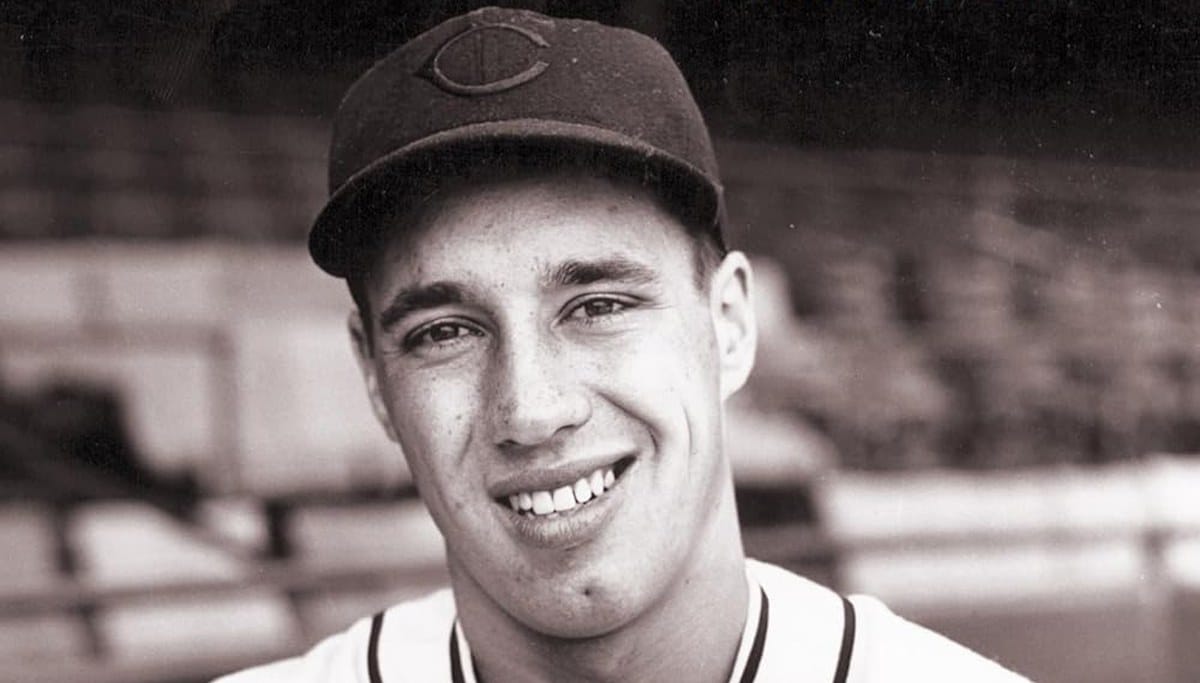
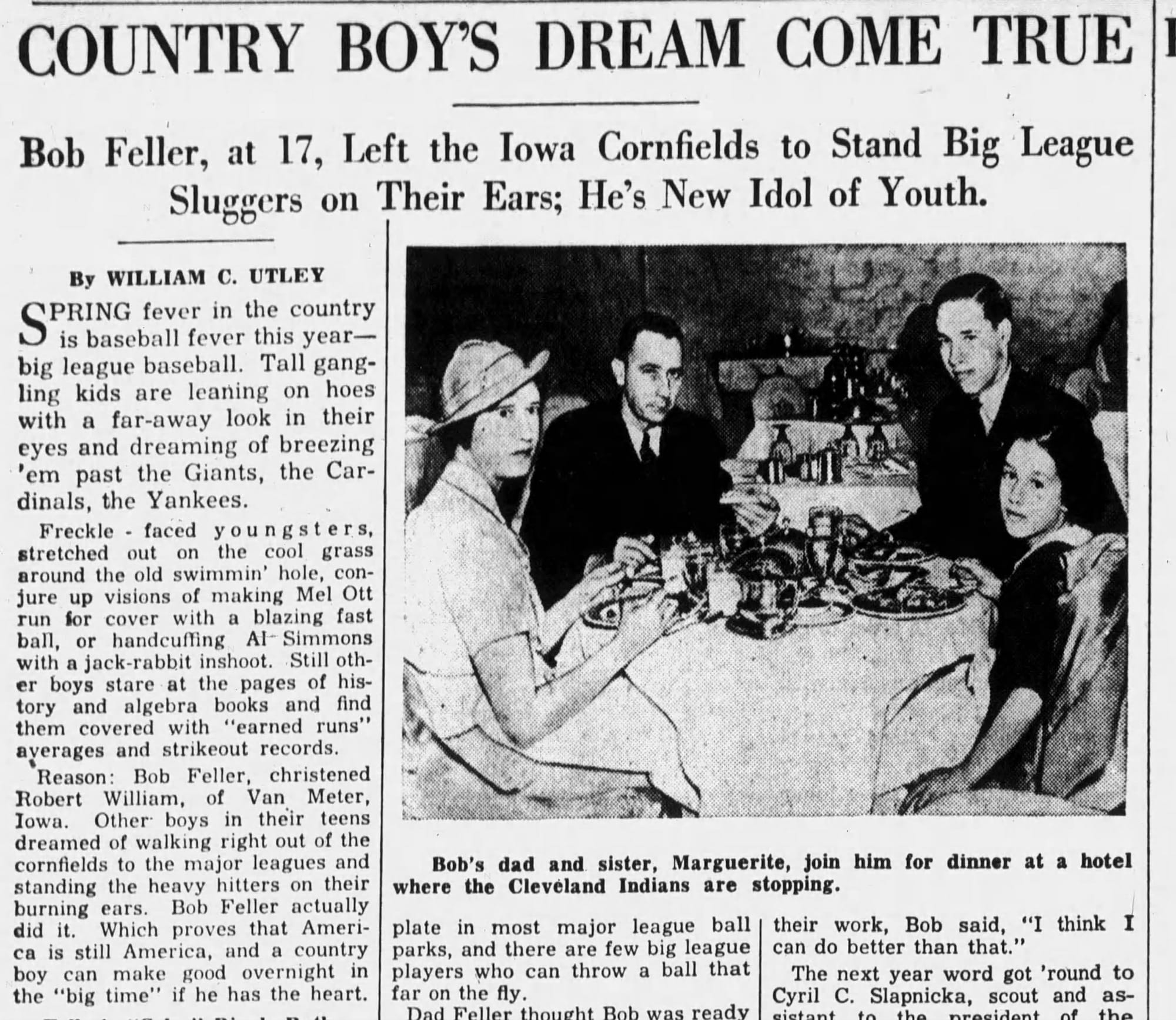
Everything about Feller's origin reads like tall tale, except it's all documented. A Cleveland scout named Cy Slapnicka signed the 16-year-old off his father's Iowa farm in 1935 for one dollar and an autographed baseball — arguably the best transaction in the history of American business. At 17, in his first big-league start, Feller struck out 15 Browns. Three weeks later he fanned 17 Philadelphia A's — tying the major-league record, at an age when most pitchers are worrying about prom.
Then, because it was 1936 and he was legally a child, the American League's most electrifying arm went back to Van Meter High School for his senior year. His 1937 graduation was broadcast live on NBC radio — a national event, for a diploma.
20 at 20
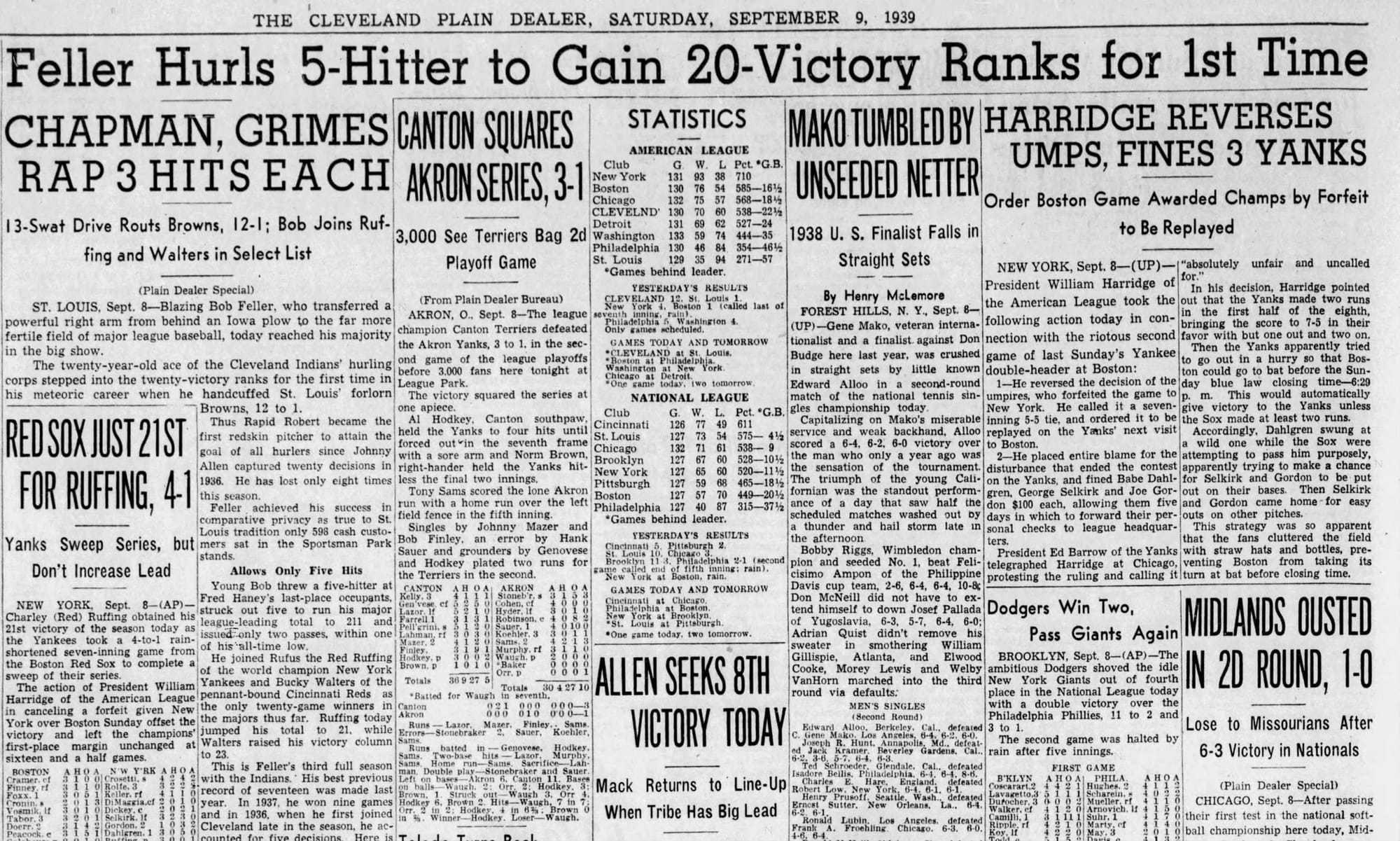
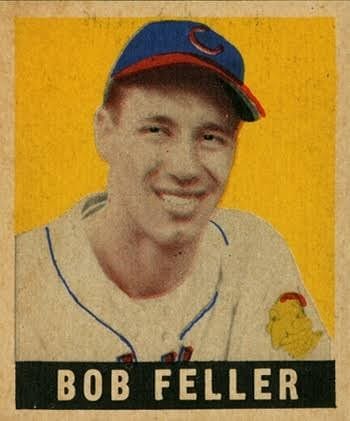
By 1939, "Rapid Robert" and his estimated-100-mph fastball had fully arrived. The Sept. 8 win over the Browns was his 20th on the way to a monstrous age-20 season: 24-9, a 2.85 ERA, and 246 strikeouts — leading the American League in wins and all of baseball in strikeouts, at an age when today's phenoms are in Double-A. He would lead the AL in wins three straight years, 1939-41: 24, then 27, then 25. Entering 1942, at 23, Feller had 107 career wins and was on a Hall of Fame pace with room to chase 400.
The Career He Gave Away
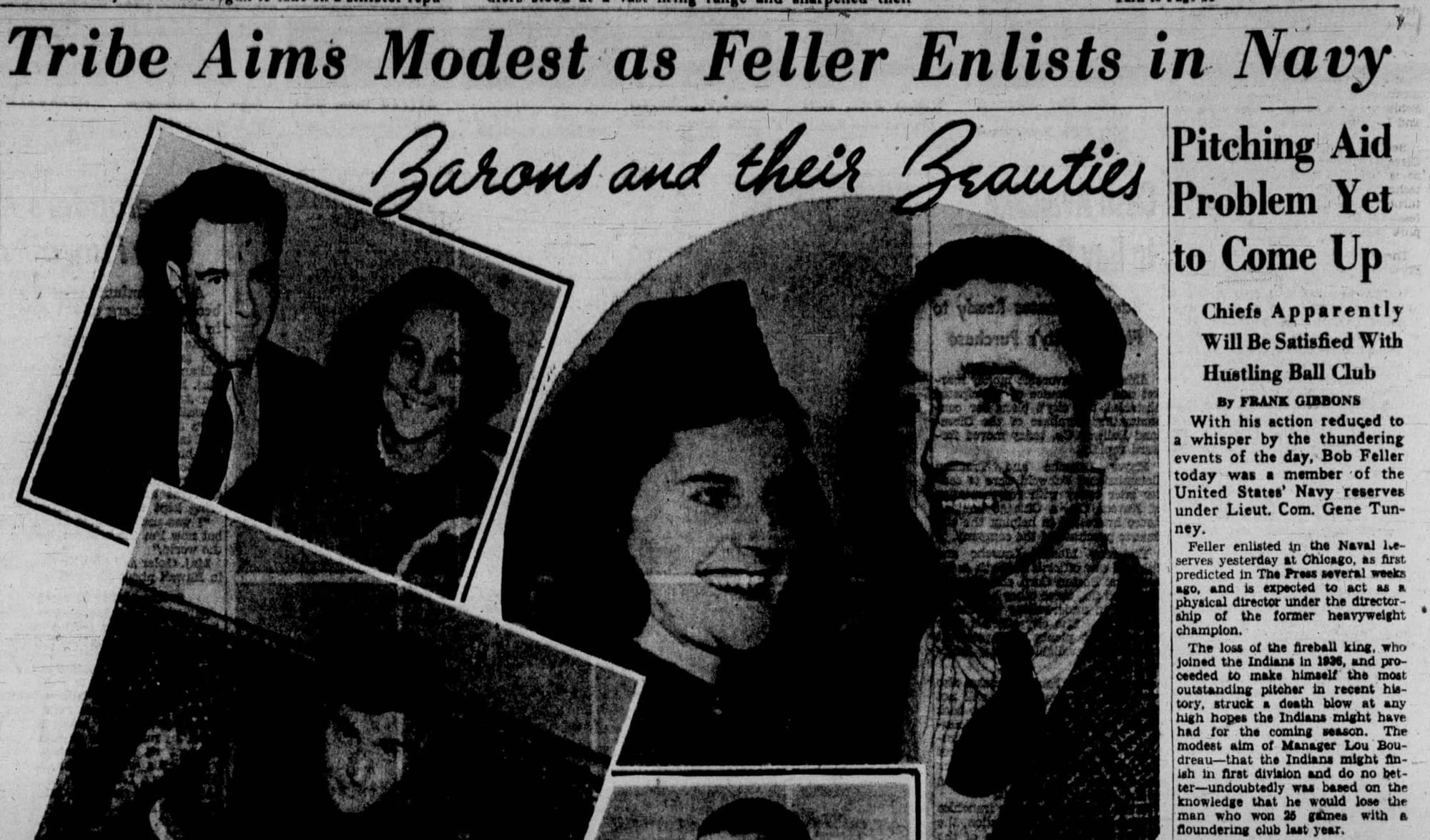
Then came the reason Feller's win total stopped at 266 instead of somewhere unreachable: on Dec. 9, 1941 — two days after Pearl Harbor — Feller walked away from the best pitching career in baseball and became the first major leaguer to enlist. Not a desk job, either: 34 months, much of it as a gun captain aboard the USS Alabama in the Pacific. He missed nearly 4 full prime seasons, ages 23 through 26 — for a pitcher, the exact years the plaque gets written.
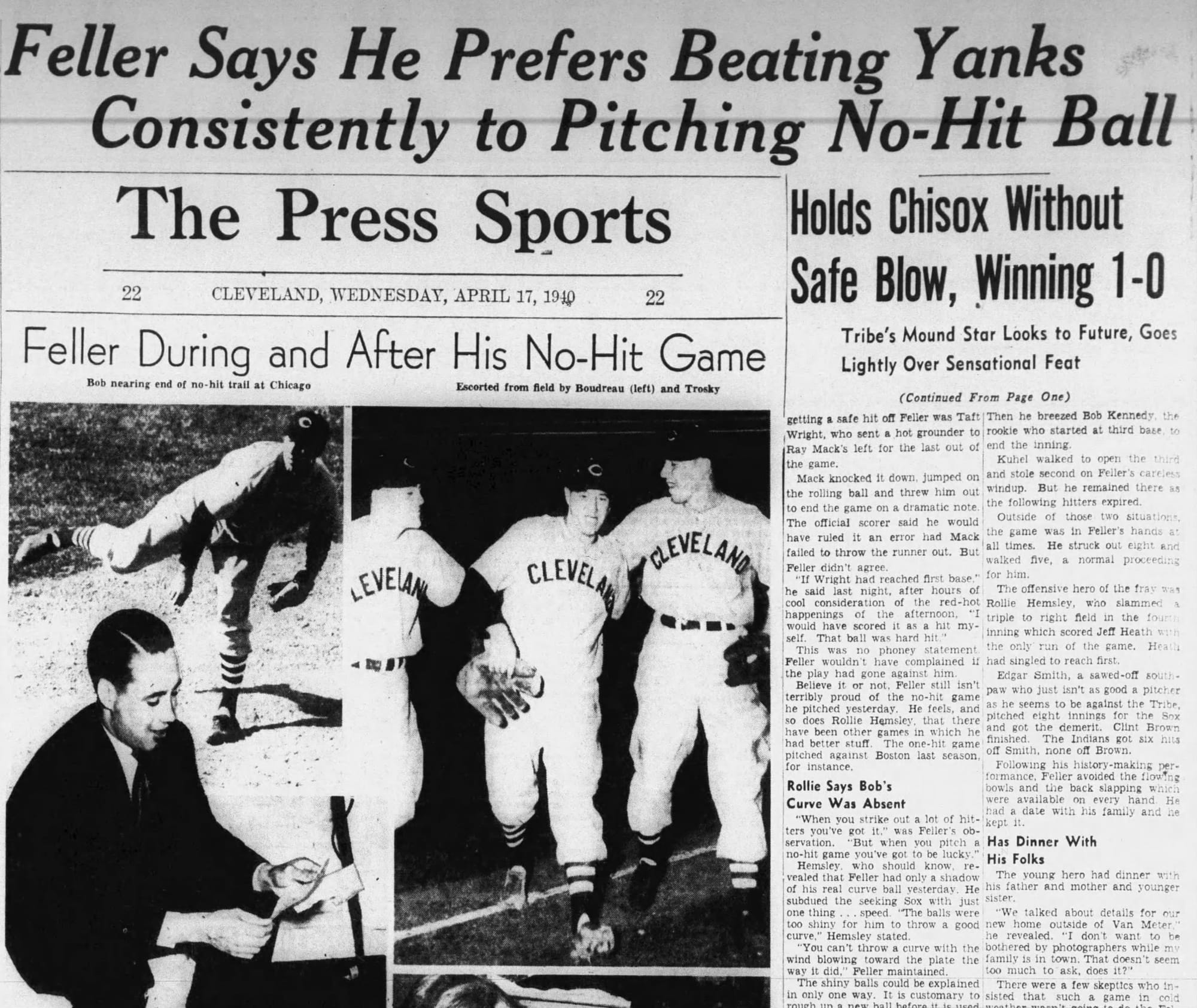
He returned in late 1945 like he'd never left: in 1946, Feller went 26-15 with 348 strikeouts. Add it up conservatively and the war cost him roughly 100 wins and a thousand strikeouts; he never once called it a sacrifice worth regretting. The final ledger still glitters: 266 wins, 3 no-hitters — including the only Opening Day no-hitter in major-league history, in 1940 — 12 one-hitters, and a first-ballot ticket to Cooperstown in 1962.
The Record's Long Life
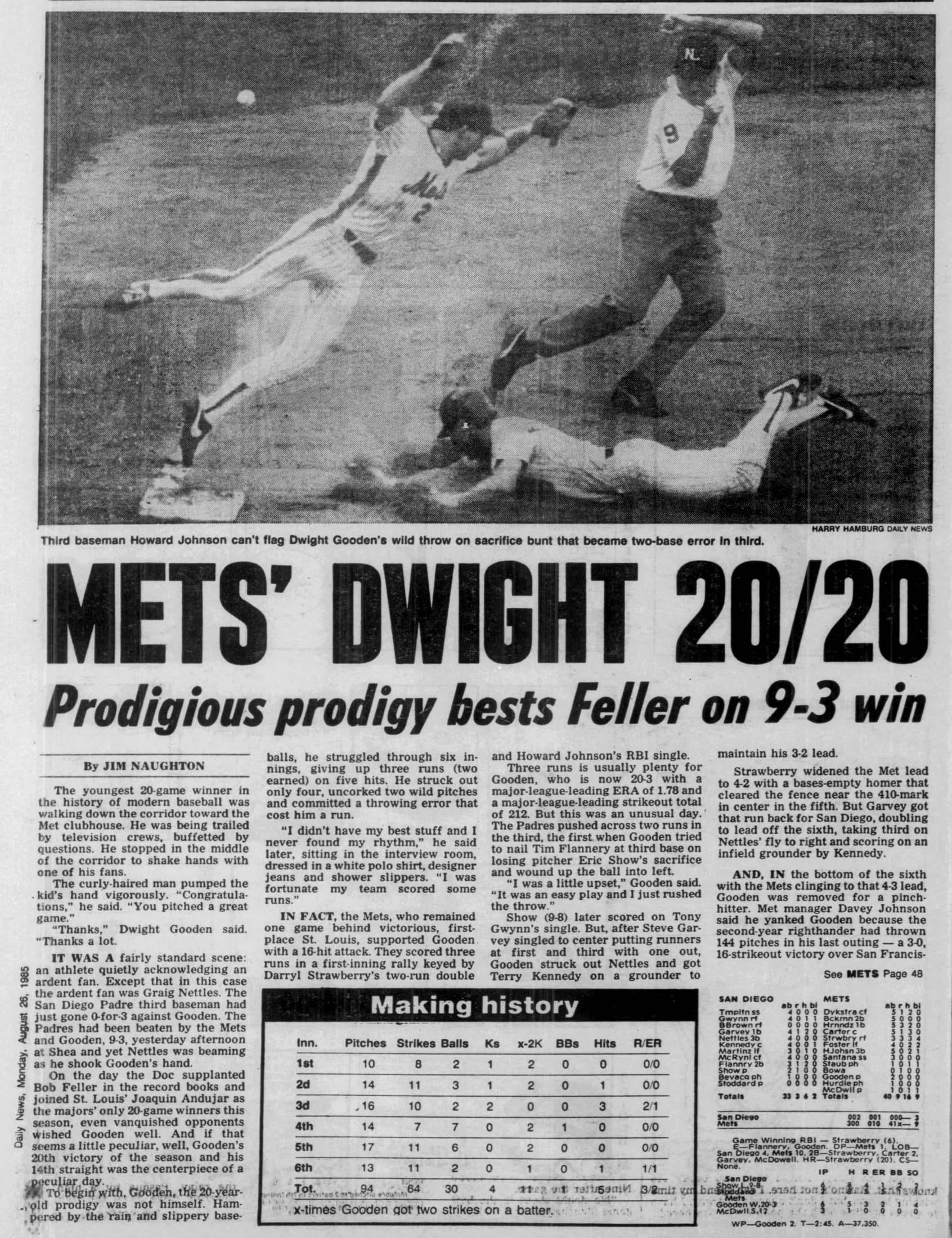
And the mark he set on this date proved nearly immortal. For 46 years, no one younger won 20 — not Koufax, not Seaver, not any of the flamethrowing kids of four decades. It finally took one of the great pitching seasons ever recorded: in August 1985, a 20-year-old named Dwight Gooden won his 20th game for the Mets at 20 years, 9 months and 9 days — sliding under Feller's age by exactly 27 days. (Purists will note a 19th-century asterisk: 17-year-old Willie McGill won 20 in 1891, back when the mound was 55 feet away and child labor was a rotation strategy.) Feller remains, to this day, the youngest 20-game winner in American League history.
On this date in 1939: a routine 12-1 win in St. Louis, a 20-year-old who'd been signed for a dollar, and a record that would outlast the war he left to fight — and 46 years of everyone else's phenoms.
Who's the greatest teenage/early-20s pitching phenom ever — Feller, Gooden, or someone else? Comments below.

Comments ()