
On This Date: Rutgers Beats Princeton in the First College Football Game (Nov. 6, 1869)
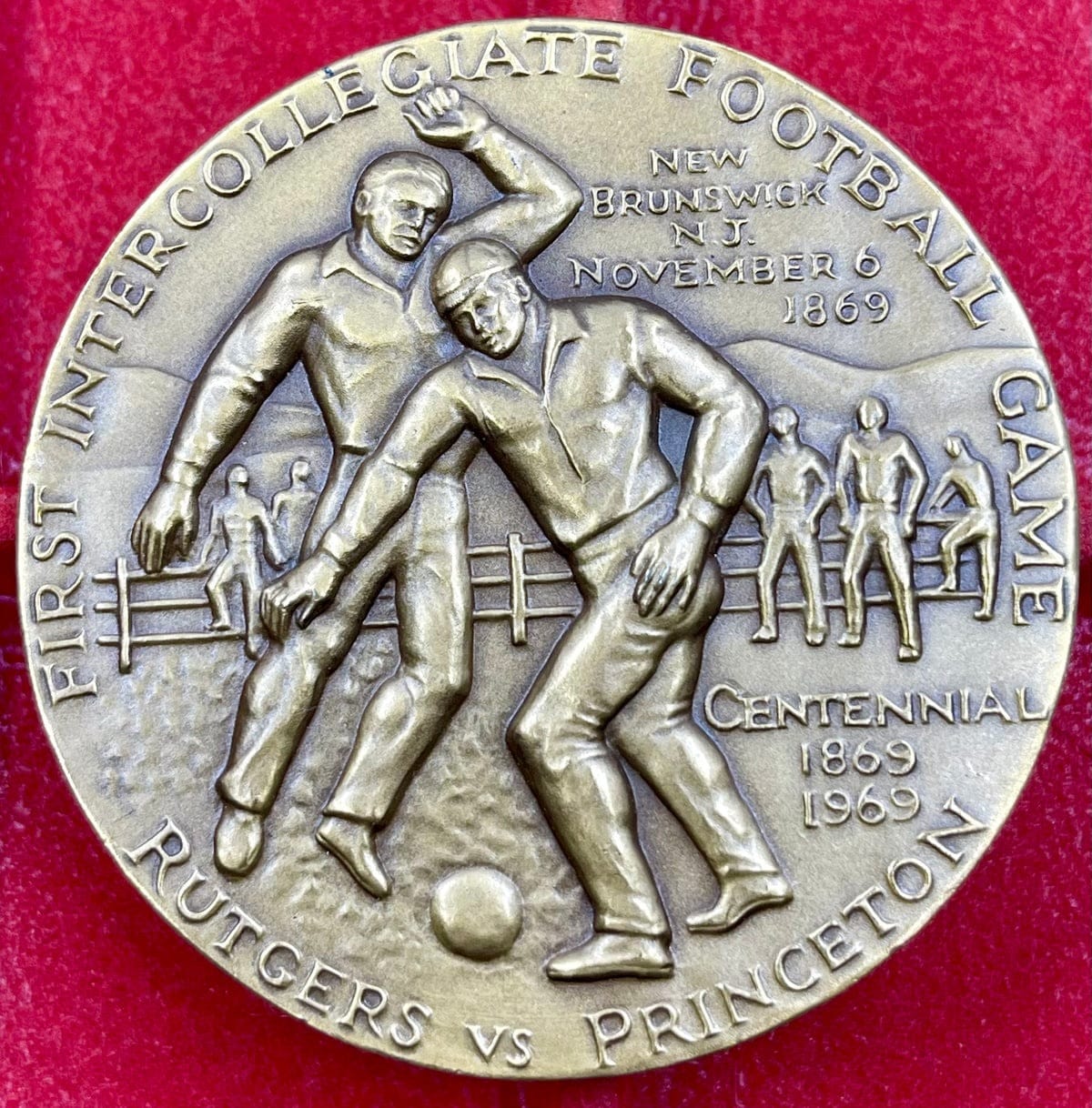
On Nov. 6, 1869, Rutgers beat Princeton 6 goals to 4 in New Brunswick, N.J., in what is remembered as the 1st college football game. It looked like soccer.
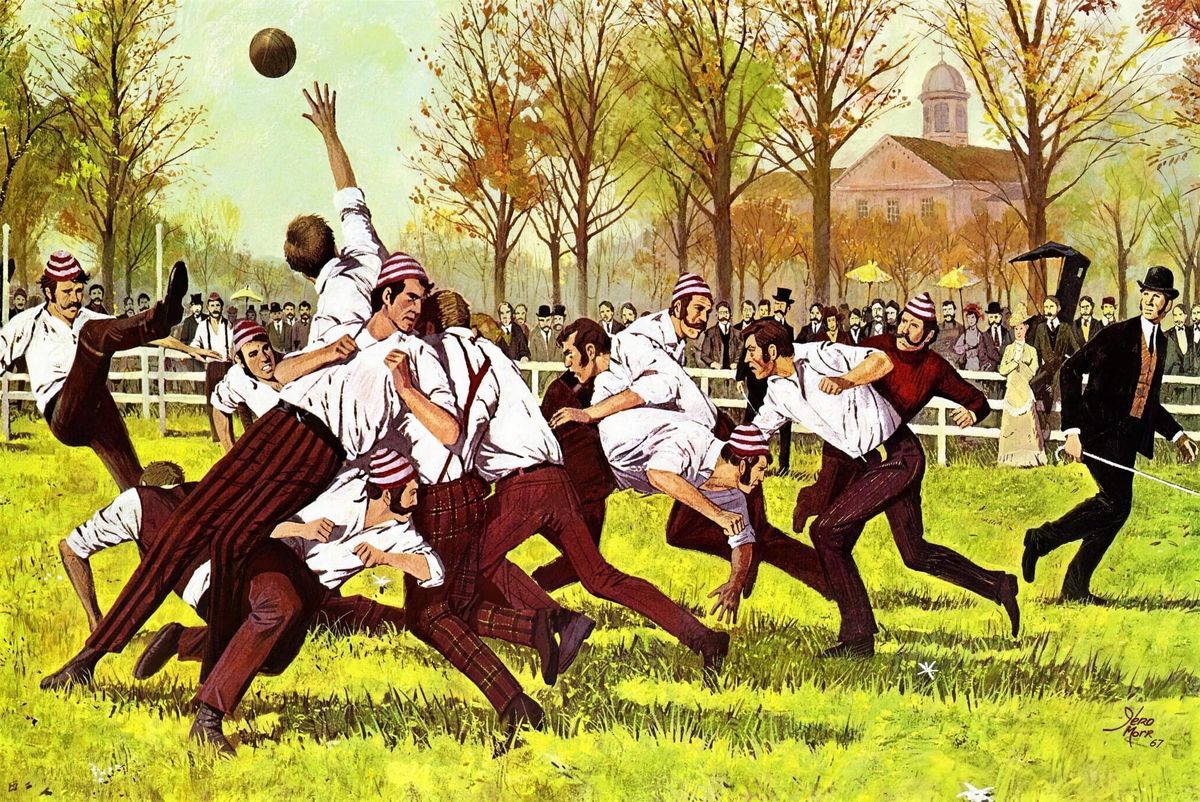
Every Saturday in the fall, more than 100,000 people pack stadiums in Michigan, Ohio and Alabama to watch college football. It started with about 100 people sitting on a fence in New Brunswick, New Jersey.
On Nov. 6, 1869, Rutgers beat Princeton, 6 goals to 4. It’s remembered as the first college football game. It didn’t look much like football.
25 Picked Men
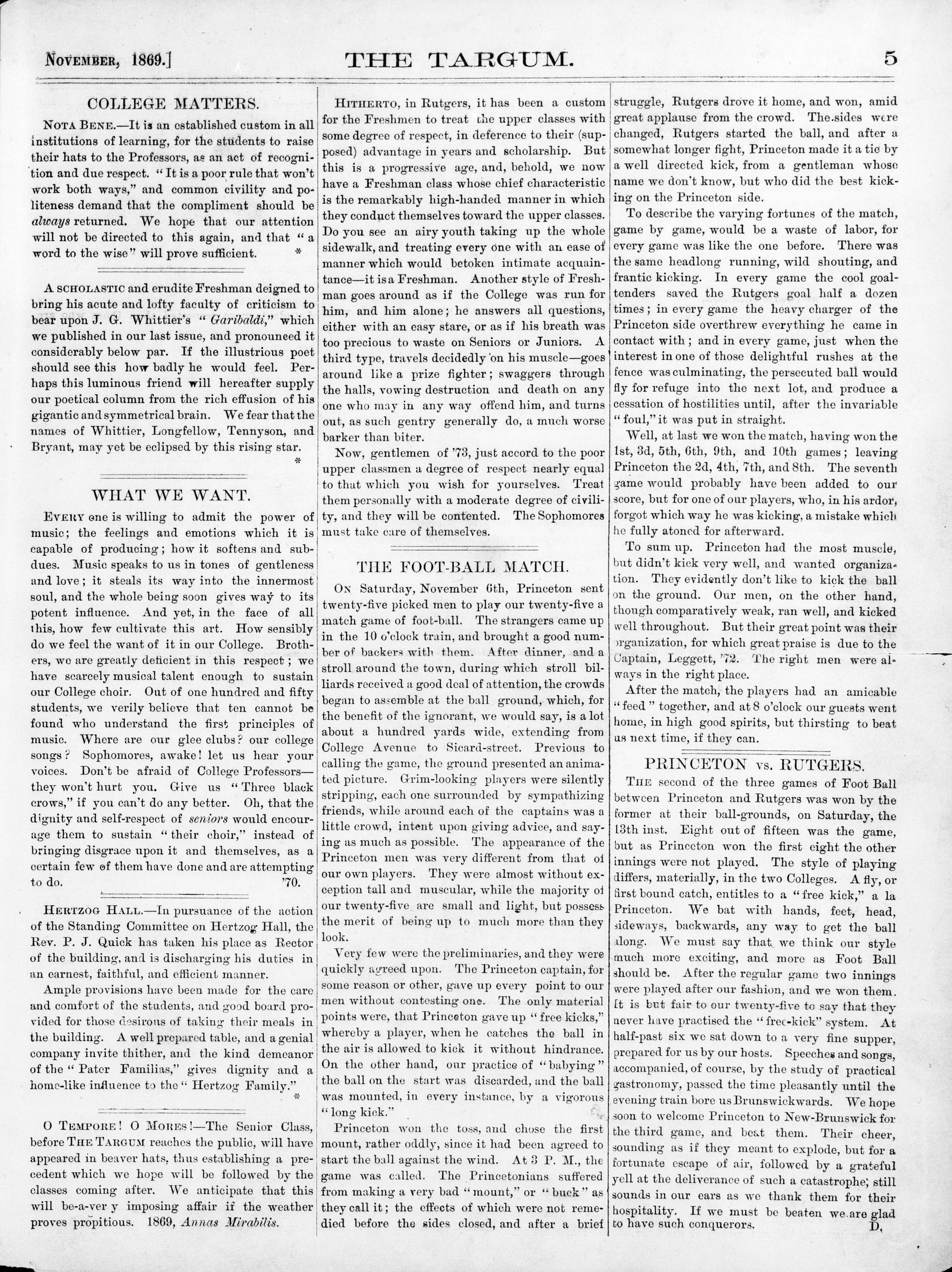
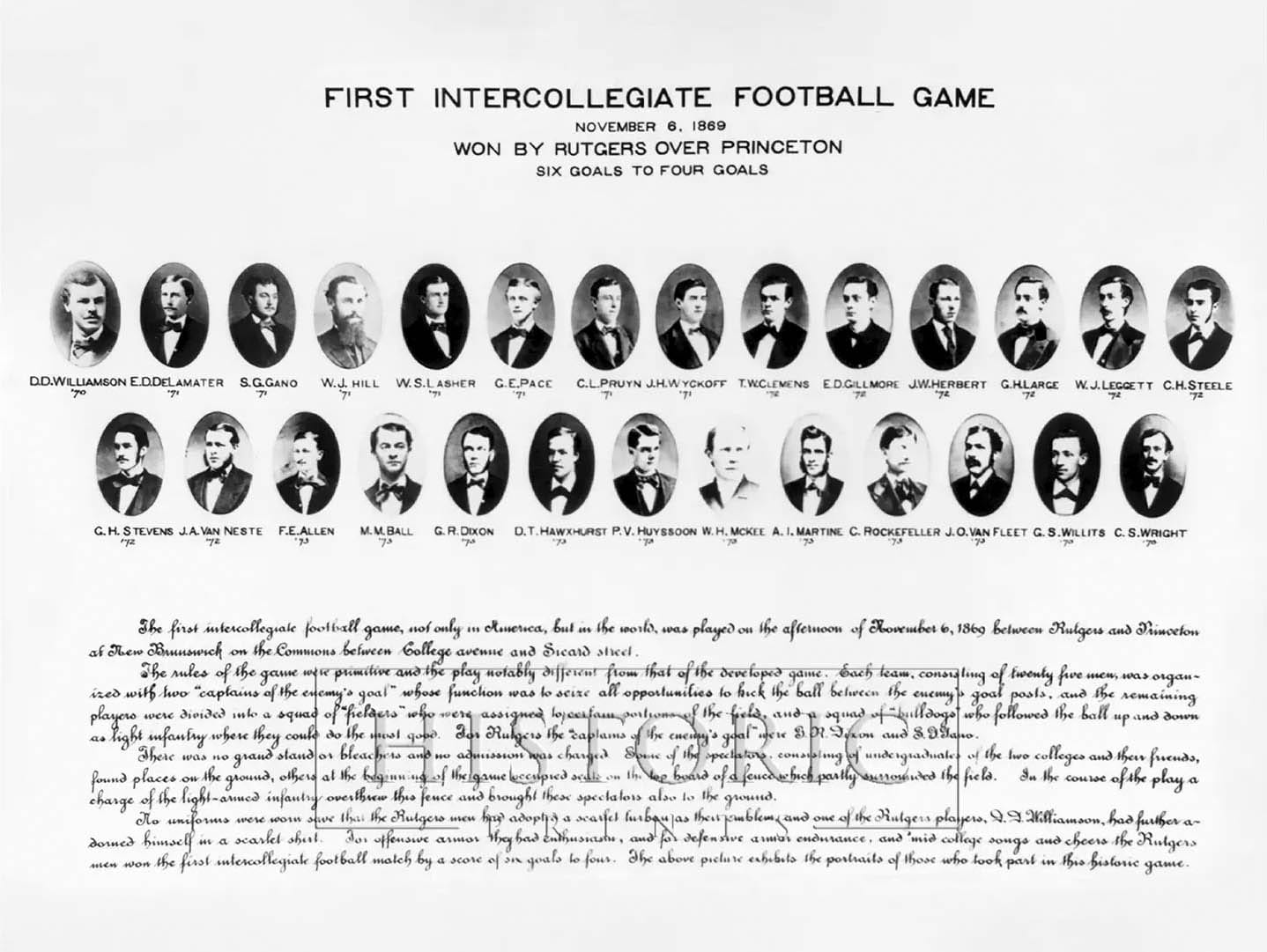
Rutgers had challenged Princeton, its neighbor about 20 miles down the road, to a series of 3 games. Princeton, the Rutgers student paper The Targum reported, “sent twenty-five picked men to play our twenty-five a match game of foot-ball.”
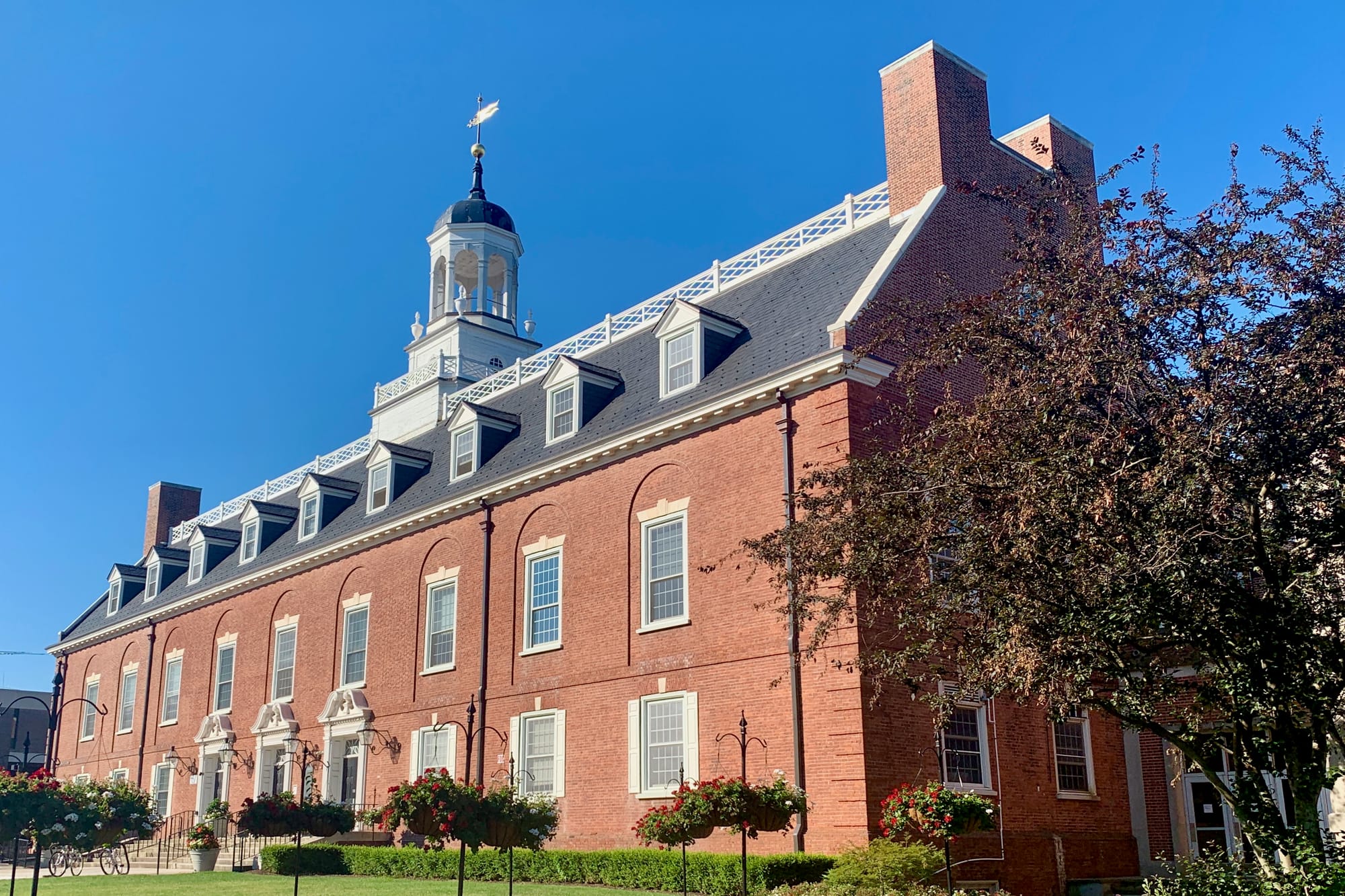
They came up on the 10 o’clock train with a crowd of backers, walked around town, played some billiards and showed up at the field that afternoon. The field was a lot about 100 yards wide off College Avenue, where the Rutgers gym stands today.
The Targum was not impressed by its own side’s size. The Princeton players were “almost without exception tall and muscular, while the majority of our twenty-five are small and light.”
A Round Ball and No Hands
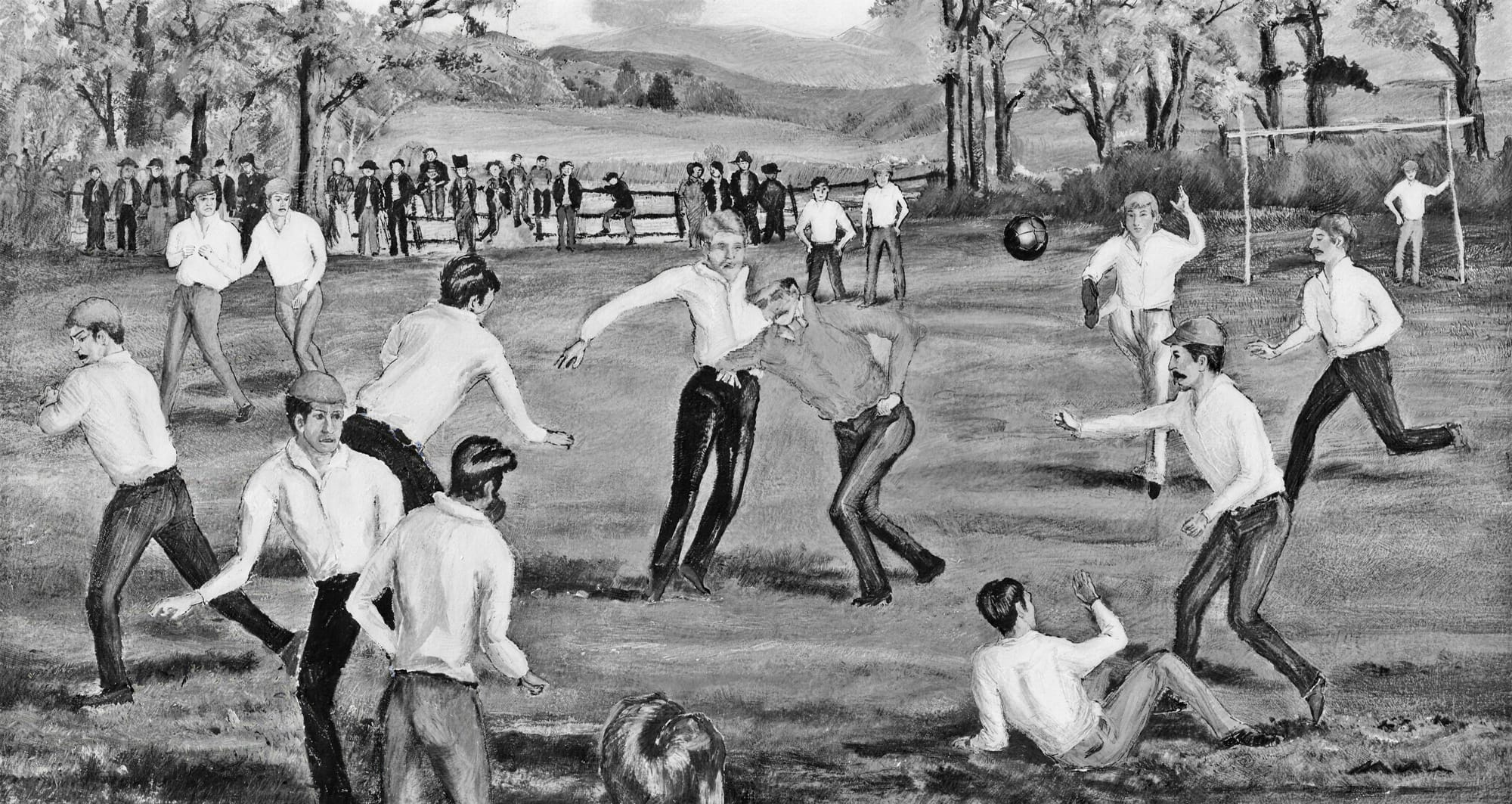
The rules were Rutgers’ rules, borrowed from the English soccer rules of 1863. The ball was round. Nobody could pick it up and run with it or throw it. Players moved it with their feet, heads and bodies, and a “game” ended every time somebody kicked a goal. The first side to 6 goals won.
To tell the sides apart, the Rutgers players tied scarlet handkerchiefs around their heads, which is where the school’s color comes from. Princeton won the coin toss, and the game was called at 3 p.m.
The Game
Rutgers scored the 1st goal. Princeton tied it with a long kick from “a gentleman whose name we don’t know, but who did the best kicking on the Princeton side.”
From there, according to The Targum, every goal looked about the same: “the same headlong running, wild shouting, and frantic kicking.” Princeton’s biggest player knocked over everybody he ran into. And every so often, “the persecuted ball would fly for refuge into the next lot,” and play stopped until somebody fetched it.
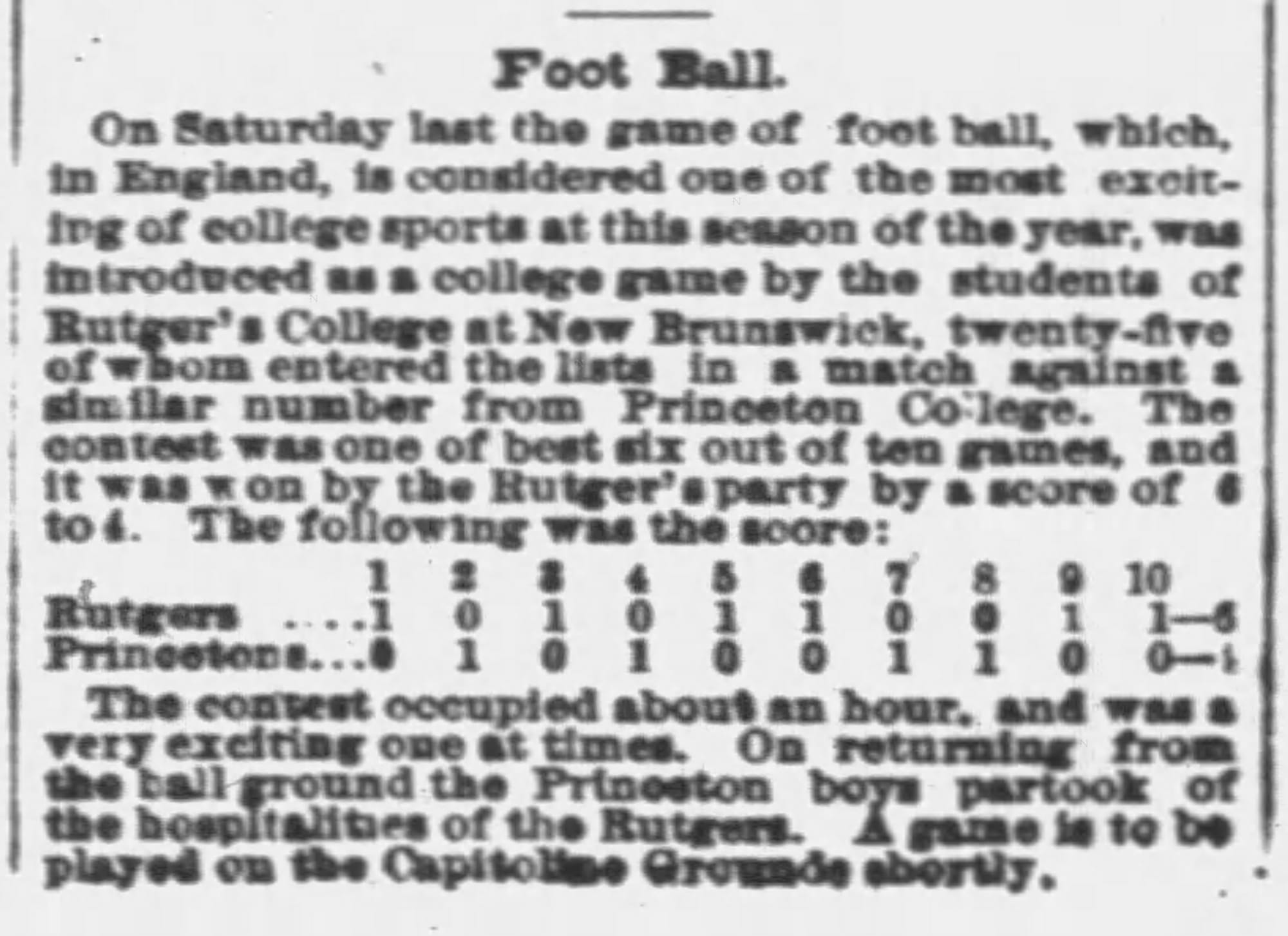
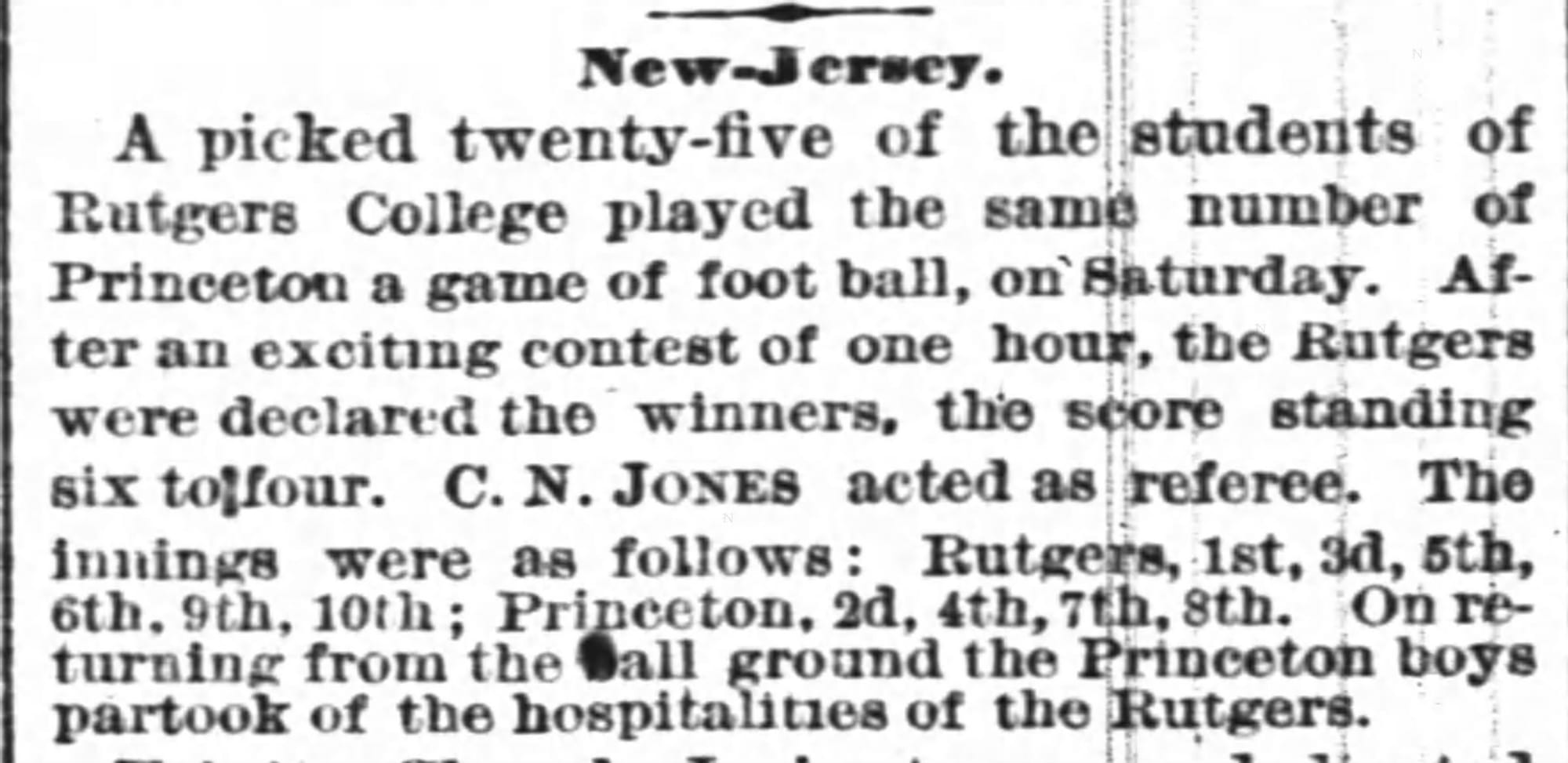
Rutgers won the 1st, 3rd, 5th, 6th, 9th and 10th goals. Princeton won the 2nd, 4th, 7th and 8th. One of Princeton’s goals came from a Rutgers player who, “in his ardor, forgot which way he was kicking.”
“Princeton had the most muscle, but didn’t kick very well, and wanted organization,” The Targum summed up. Rutgers, “though comparatively weak, ran well, and kicked well throughout.”
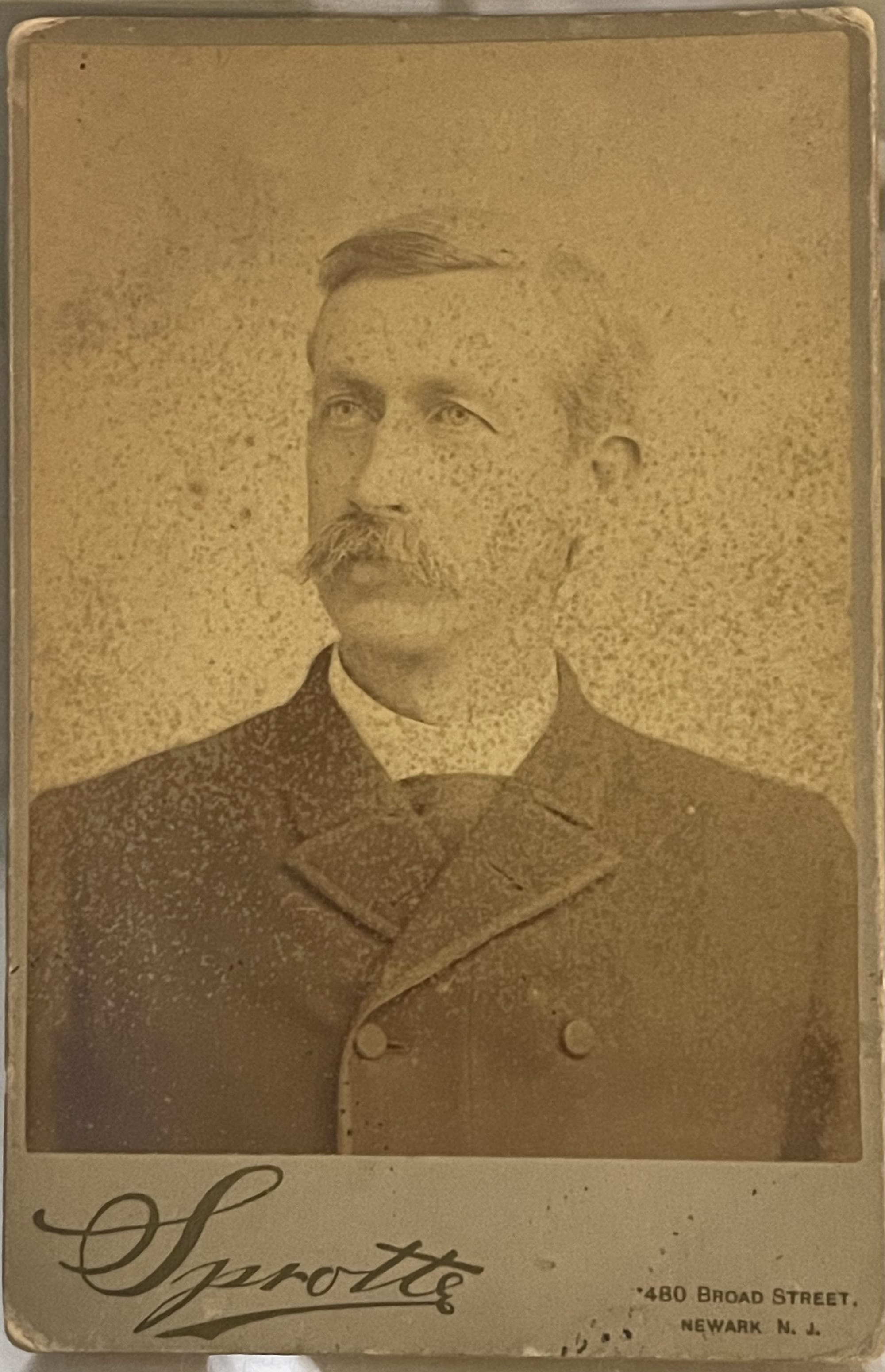
The paper gave the credit to the Rutgers captain, a junior named William J. Leggett: “great praise is due to the Captain, Leggett, ’72. The right men were always in the right place.” Leggett later became a minister.
After the game, the 2 teams ate dinner together, and at 8 o’clock the Princeton men went home “in high good spirits, but thirsting to beat us next time, if they can.”
The Rematch
They could. A week later, on Nov. 13, Rutgers went to Princeton and played under Princeton’s rules, which gave a free kick to any player who caught the ball in the air. Princeton won the first 8 goals and the game was over, 8-0.
The Rutgers paper complained that its players had never practiced the free kick. It also noticed Princeton’s cheer, “sounding as if they meant to explode.”
A 3rd game, to decide the series, was scheduled for Nov. 20. It was never played.
Is It Really the First?
Sort of. What Rutgers and Princeton played in 1869 was closer to soccer than football. The running, tackling and 11-man teams came later, when Harvard picked up rugby-style rules in the 1870s and Walter Camp turned them into American football in the 1880s.
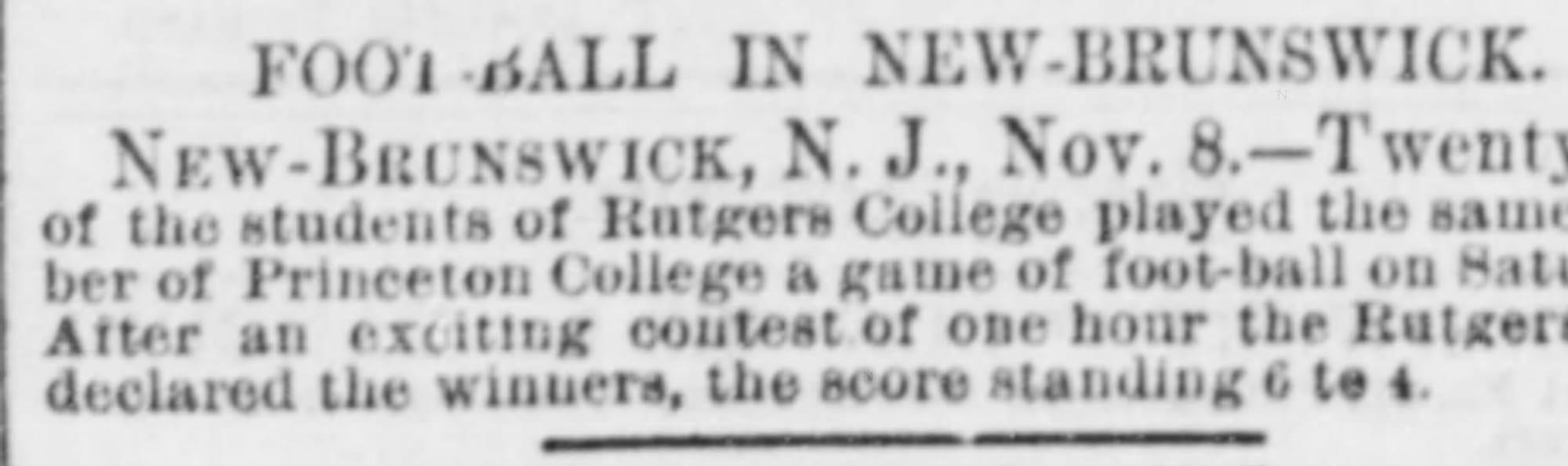
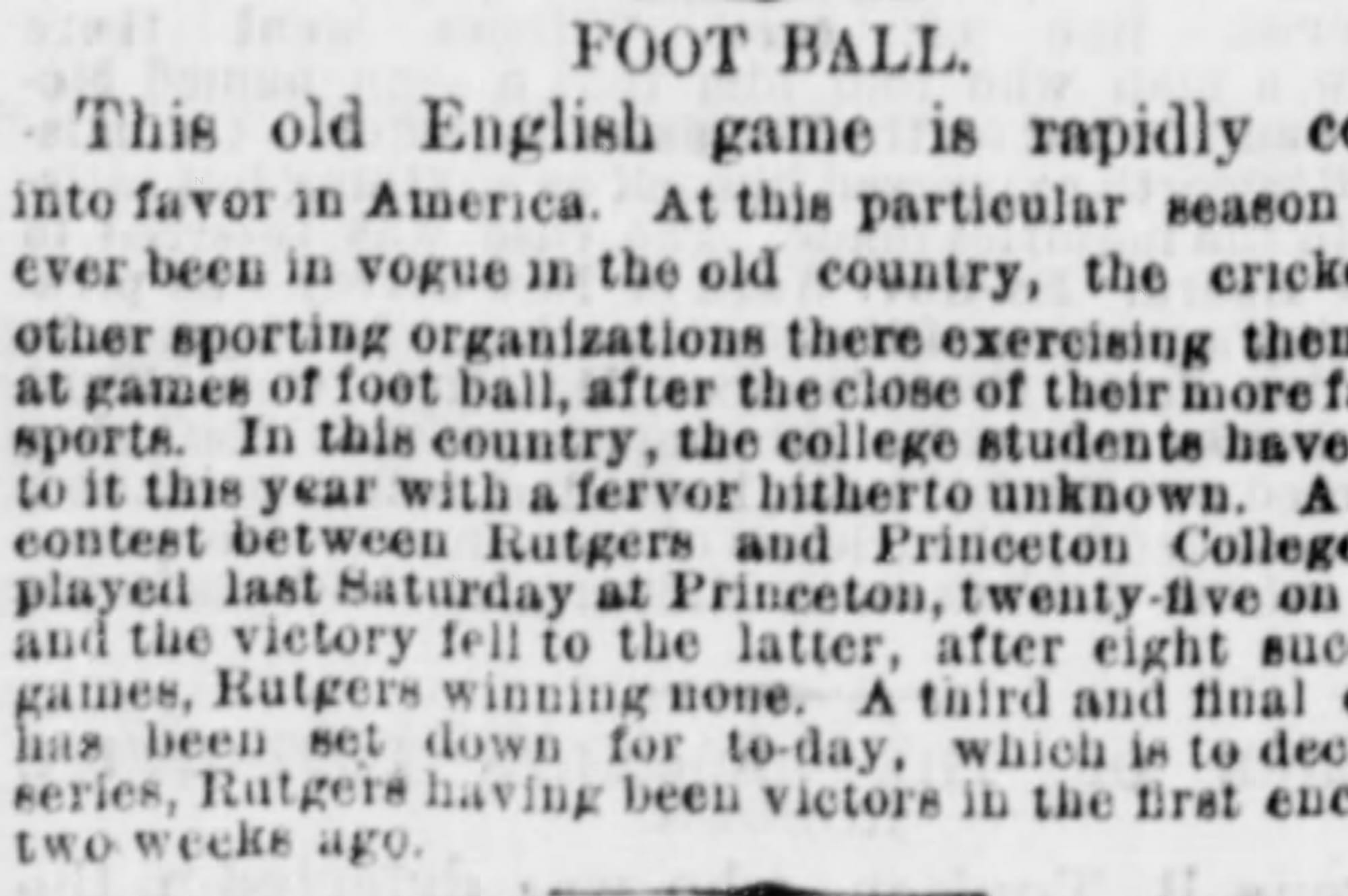
Nobody noticed much at the time. The New York Times gave the 1st game 5 sentences on page 8, 3 days later: “After an exciting contest of one hour, the Rutgers were declared the winners, the score standing six to four.”
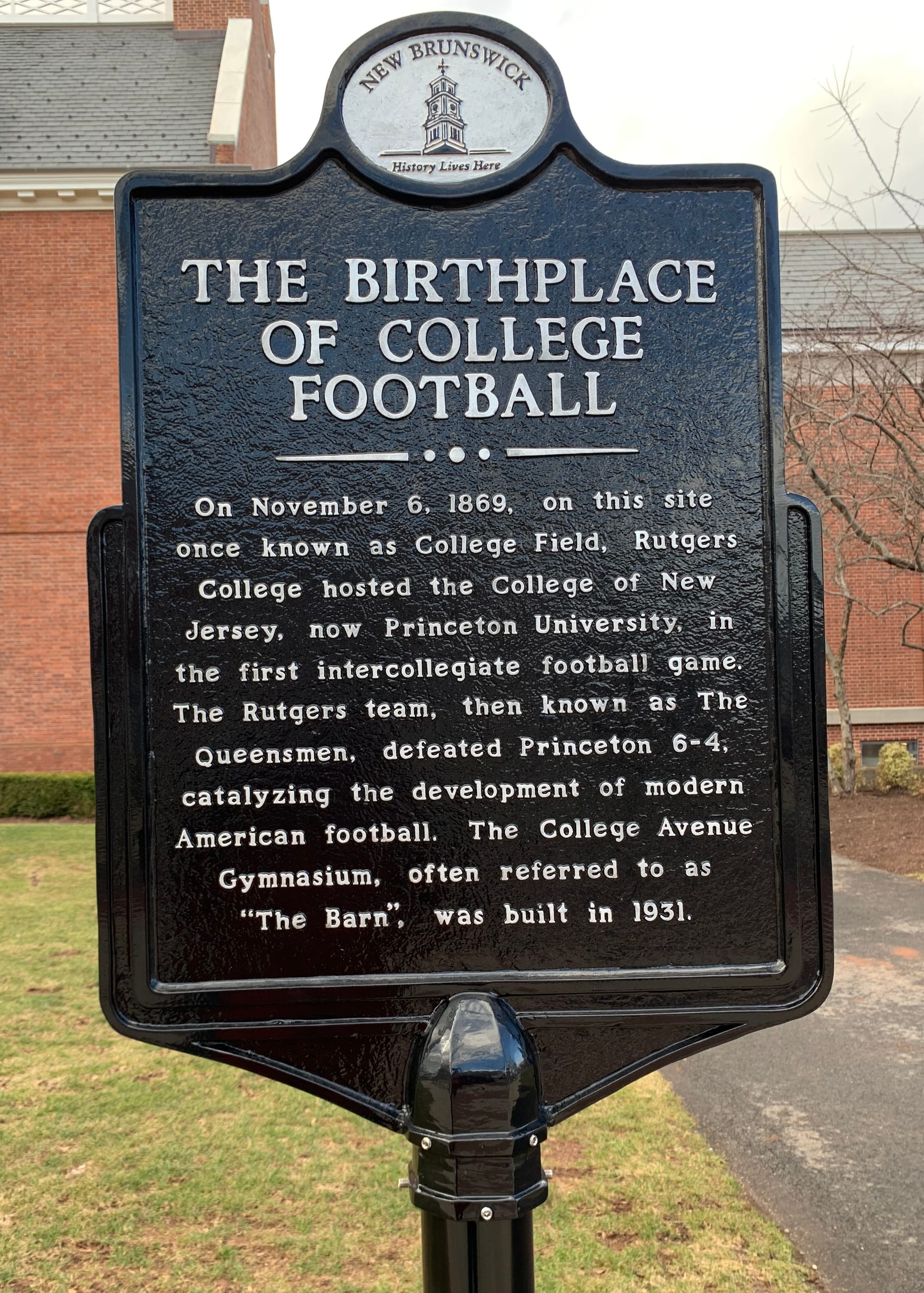
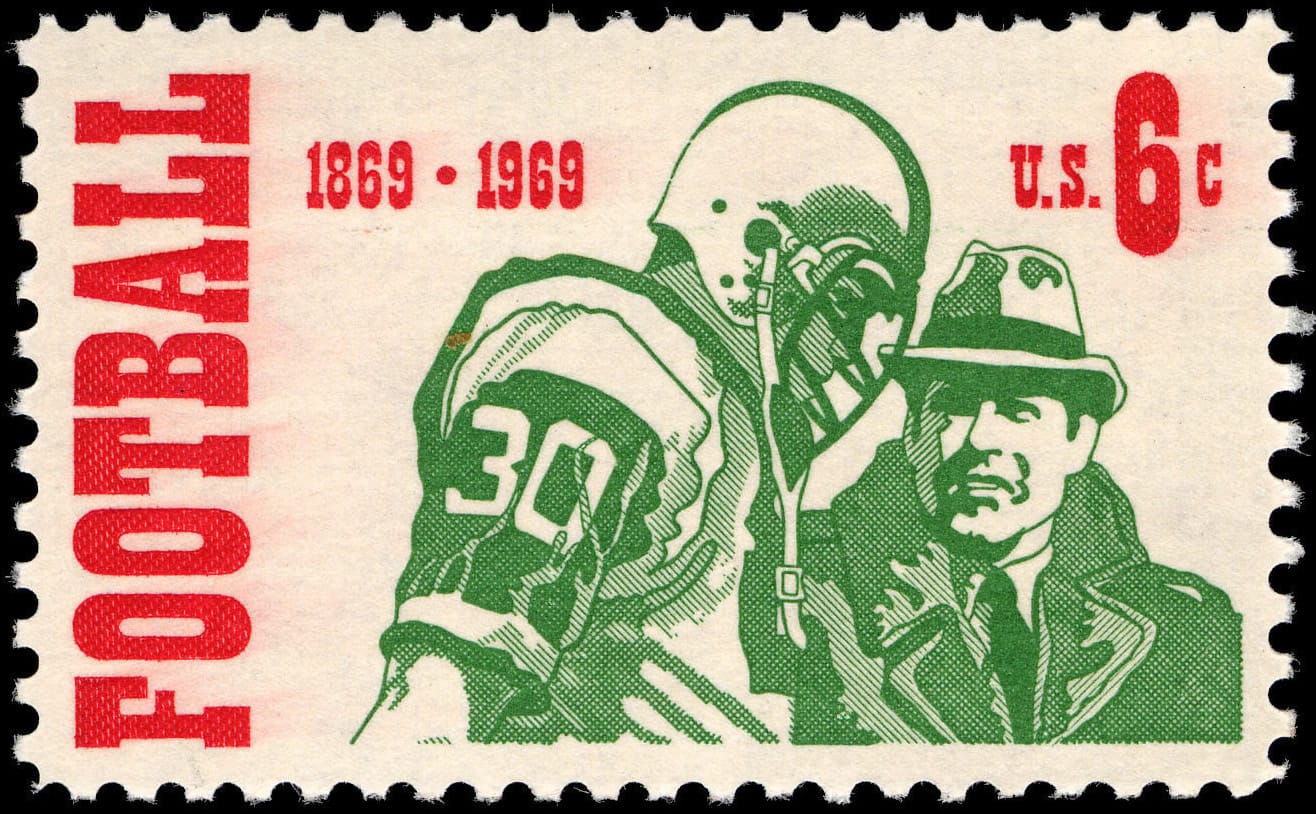
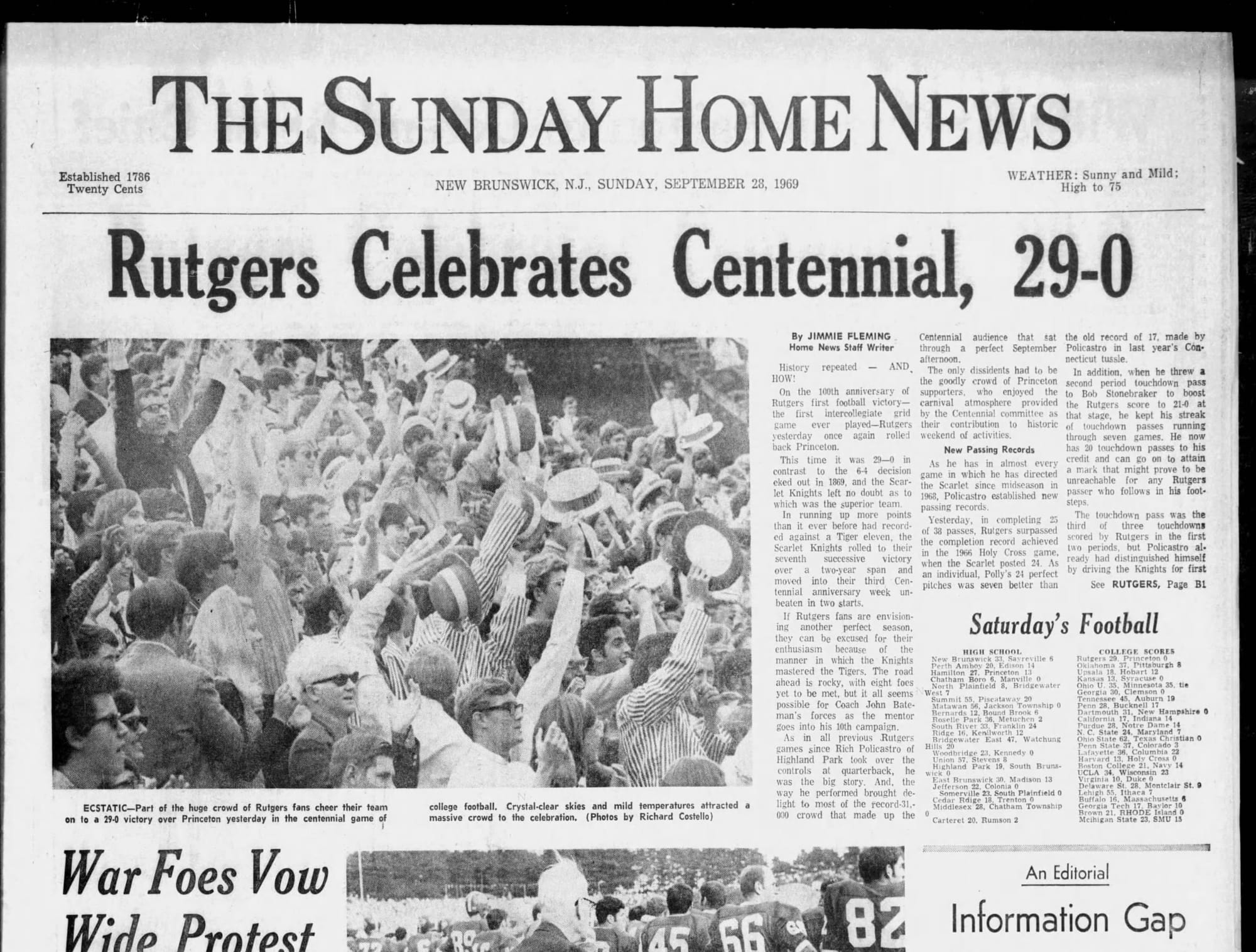
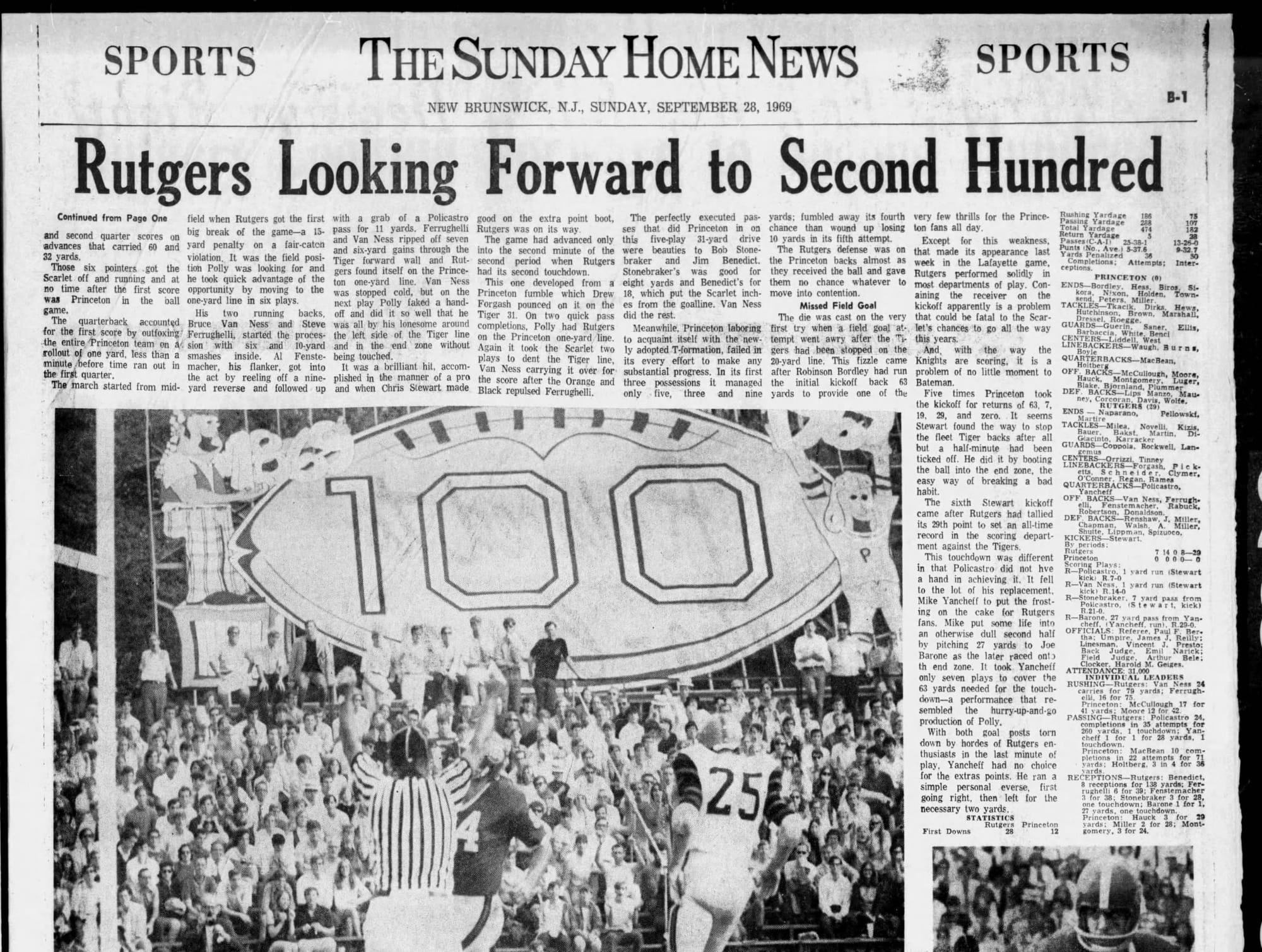
But Nov. 6, 1869, is the date college football counts from. In 1969, the Post Office issued a stamp for the centennial, and Rutgers beat Princeton 29-0 in front of a record crowd of 31,000. A plaque marks the spot on College Avenue, and Rutgers calls itself the Birthplace of College Football.
The ball has gotten a lot less round since then.


Comments ()