
On This Date: The NHL's First All-Star Game (Oct. 13, 1947)
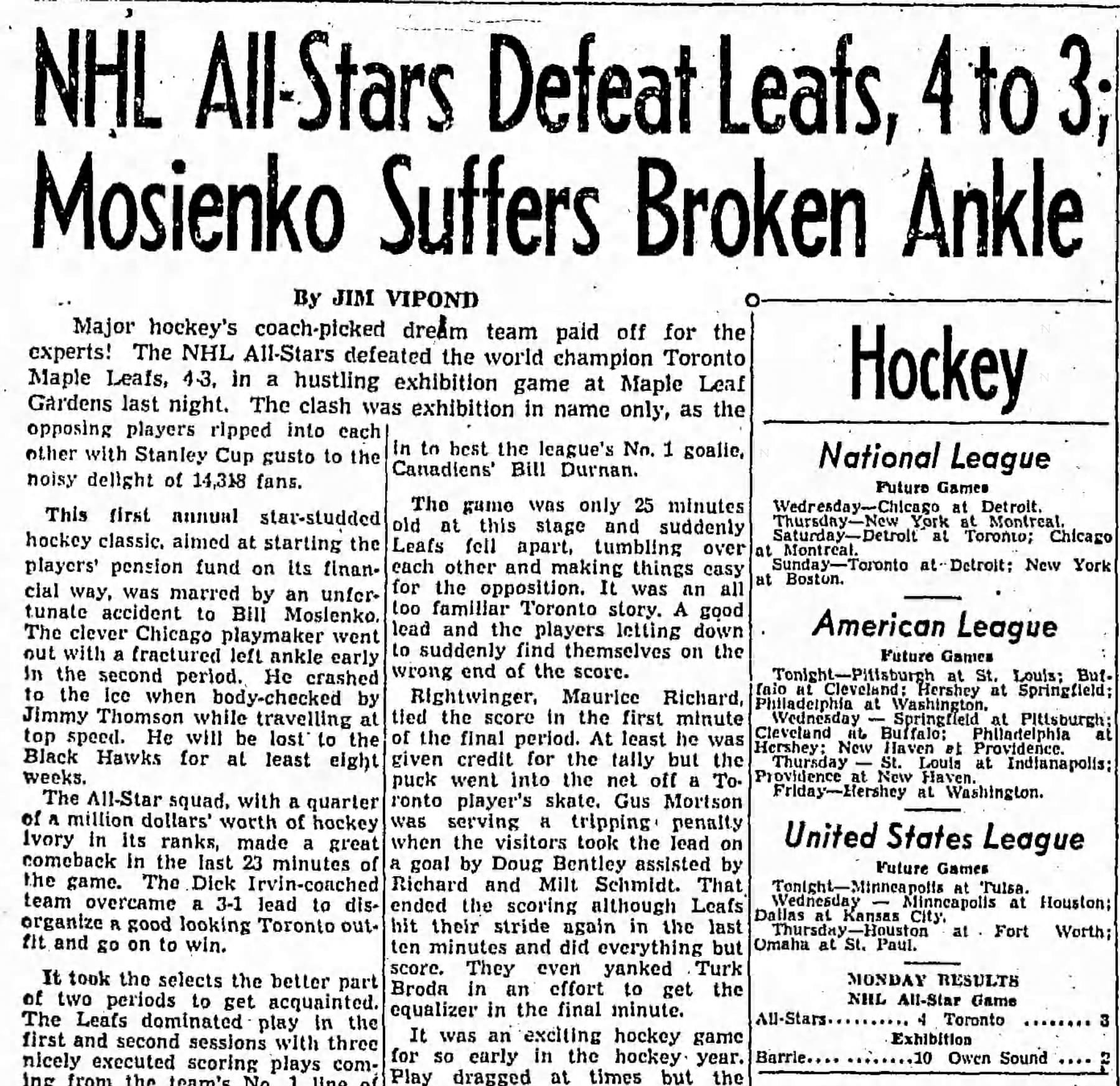
Oct. 13, 1947: the NHL's best beat the Cup champion Maple Leafs 4-3 in the first official All-Star Game. A broken ankle, a brawl and the players' pension.
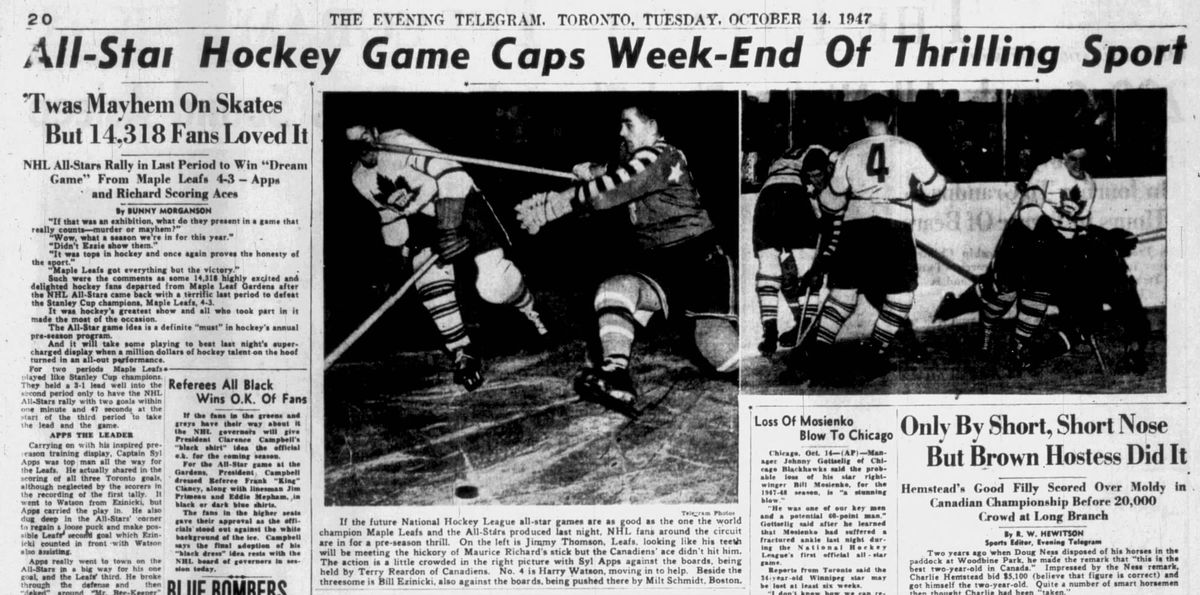
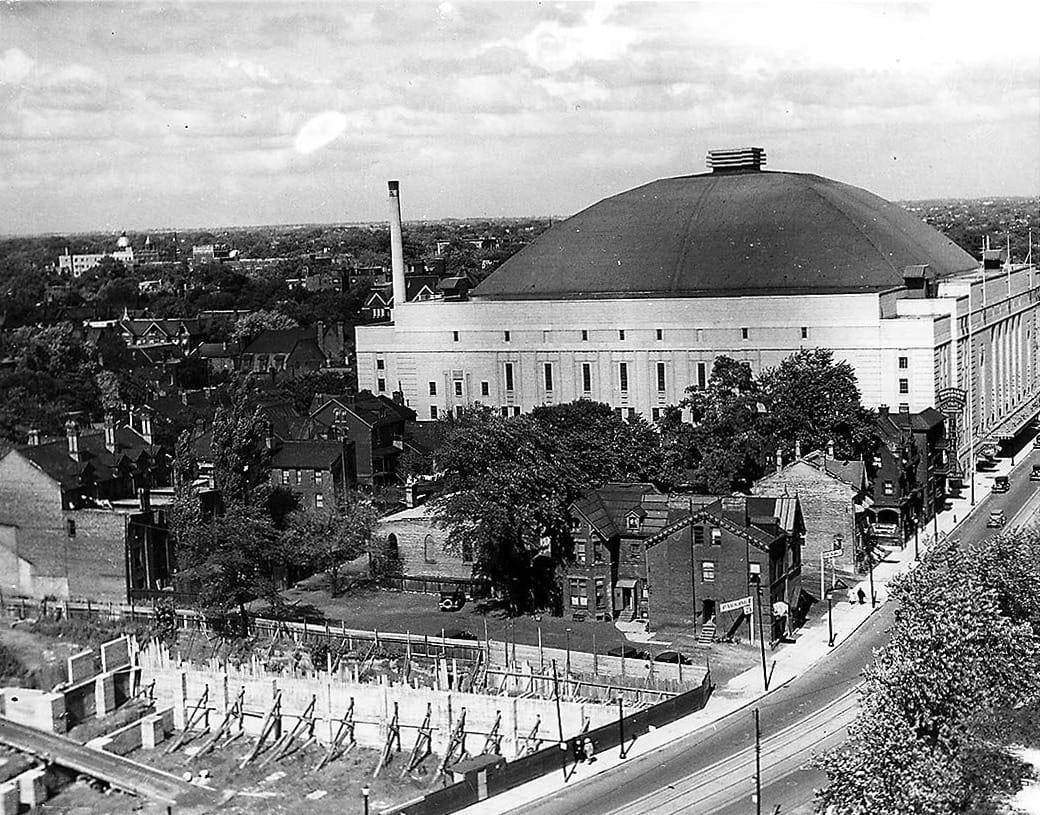
On Monday night, Oct. 13, 1947, more than 14,000 fans packed Maple Leaf Gardens in Toronto for something the NHL had never tried before. The Toronto Maple Leafs, the defending Stanley Cup champions, took on a team made up of the best players from the league's other 5 clubs. Rocket Richard. Milt Schmidt. Doug and Max Bentley. Ted Lindsay. Bill Durnan in goal.
It was the first official NHL All-Star Game. The All-Stars won it, 4-3, and the money went to a cause the players had been fighting for all year: a pension.
Champions vs. everybody
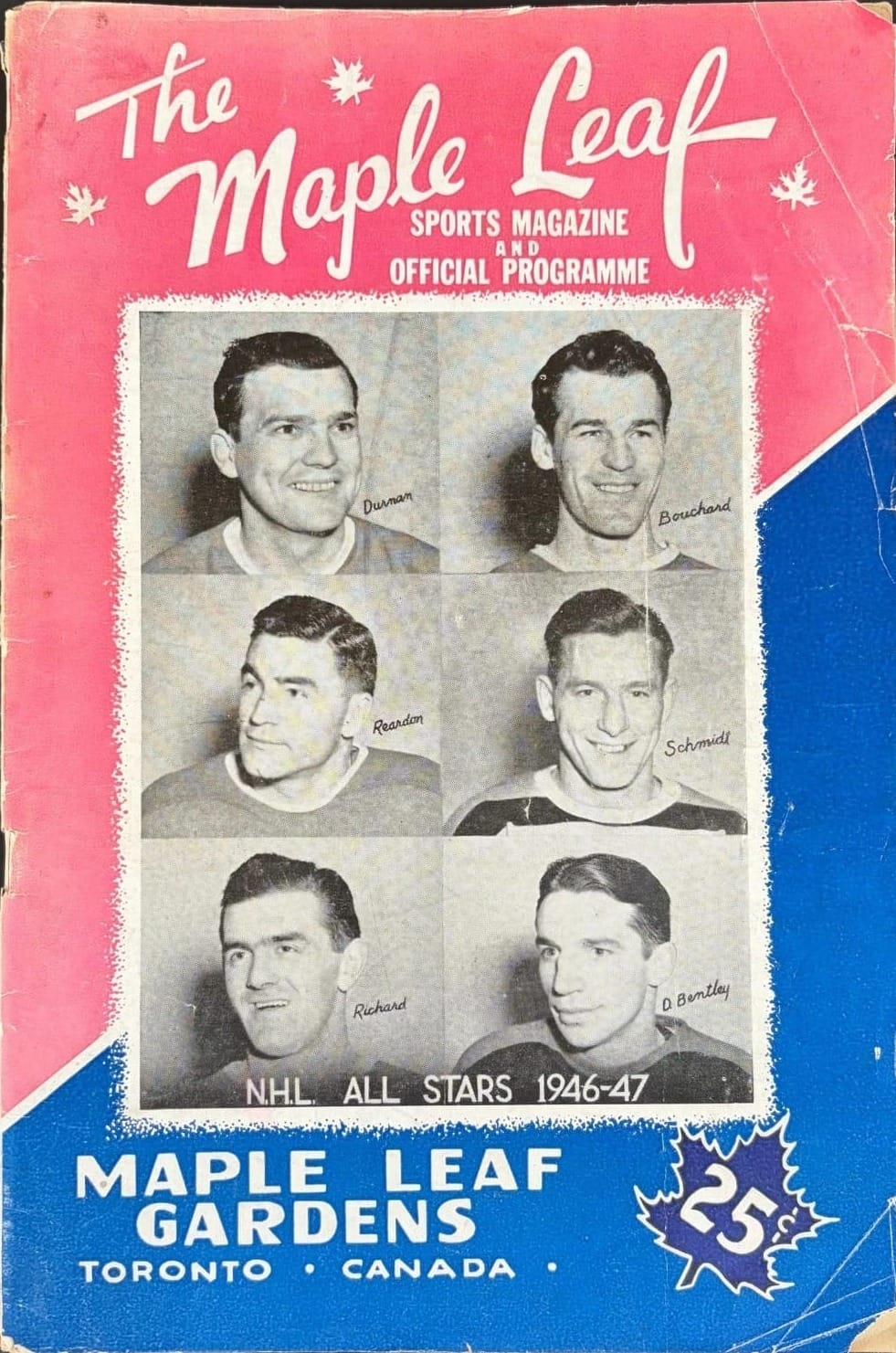
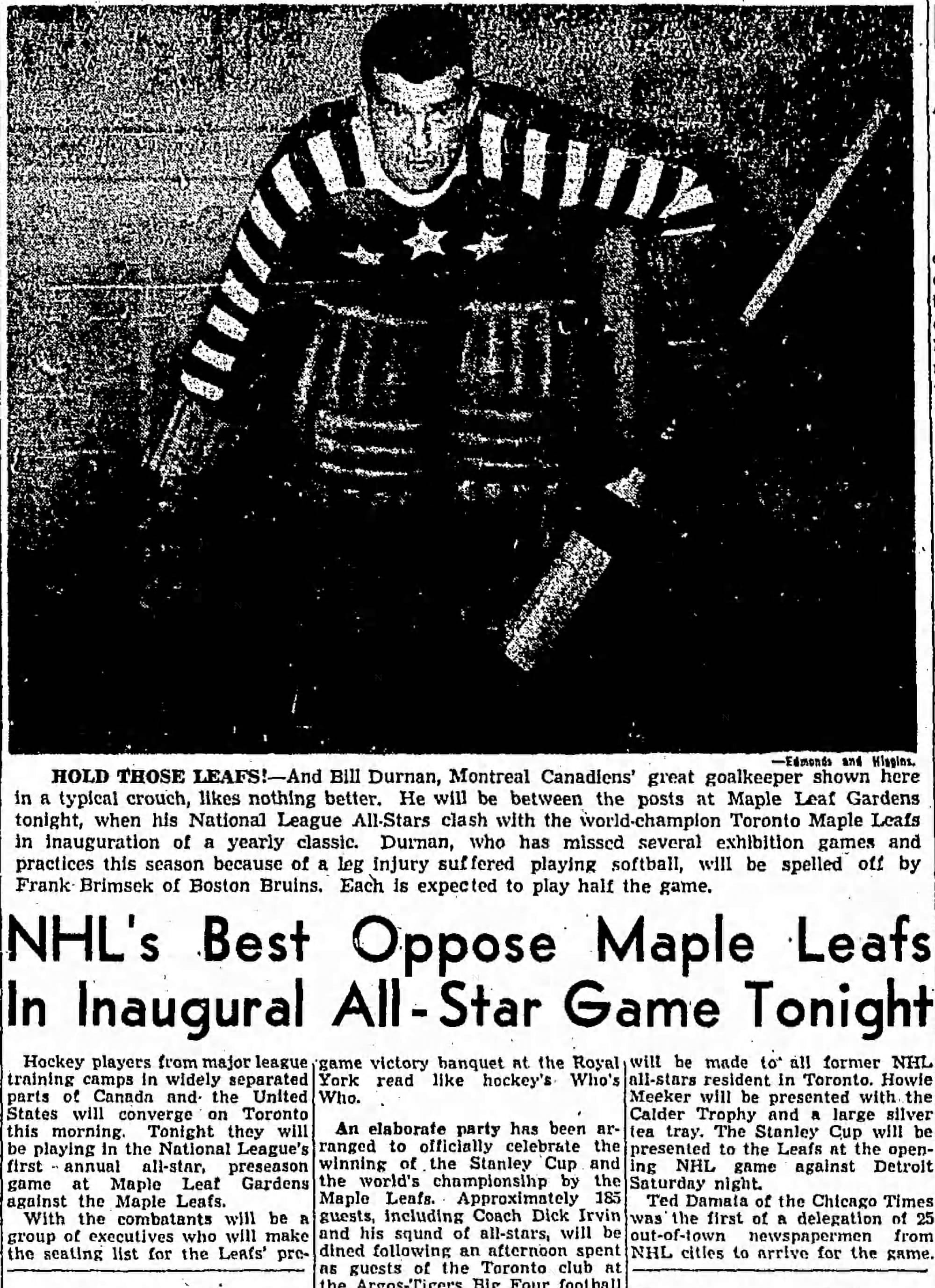
The format was simple. The Cup champions hosted, and everybody else sent their stars. All 12 players on the 1946-47 First and Second All-Star Teams suited up, and since none of them were Maple Leafs, all 12 wore the All-Stars' colors. Five more were added to fill out the bench: Bill Mosienko, Grant Warwick, Edgar Laprade, Ted Lindsay and Tony Leswick. Fifteen of the 17 All-Stars went on to the Hockey Hall of Fame. So did their coach, Dick Irvin of Montreal.
It was Canadian Thanksgiving. That afternoon both teams went to watch the Toronto Argonauts and the Hamilton Tigers play to a 6-6 tie at Varsity Stadium. That night, with King Clancy refereeing, they played a game that was supposed to be a showcase. It didn't stay friendly for long.
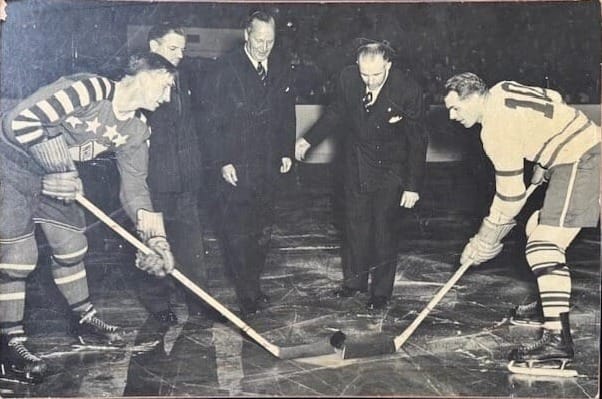
"You could almost hear the fellows grinding their teeth as they walked to the ice," Montreal defenseman Ken Reardon remembered. Richard said he and Lindsay, teammates for one night, never said a word to each other: "We didn't even say hello."
The game
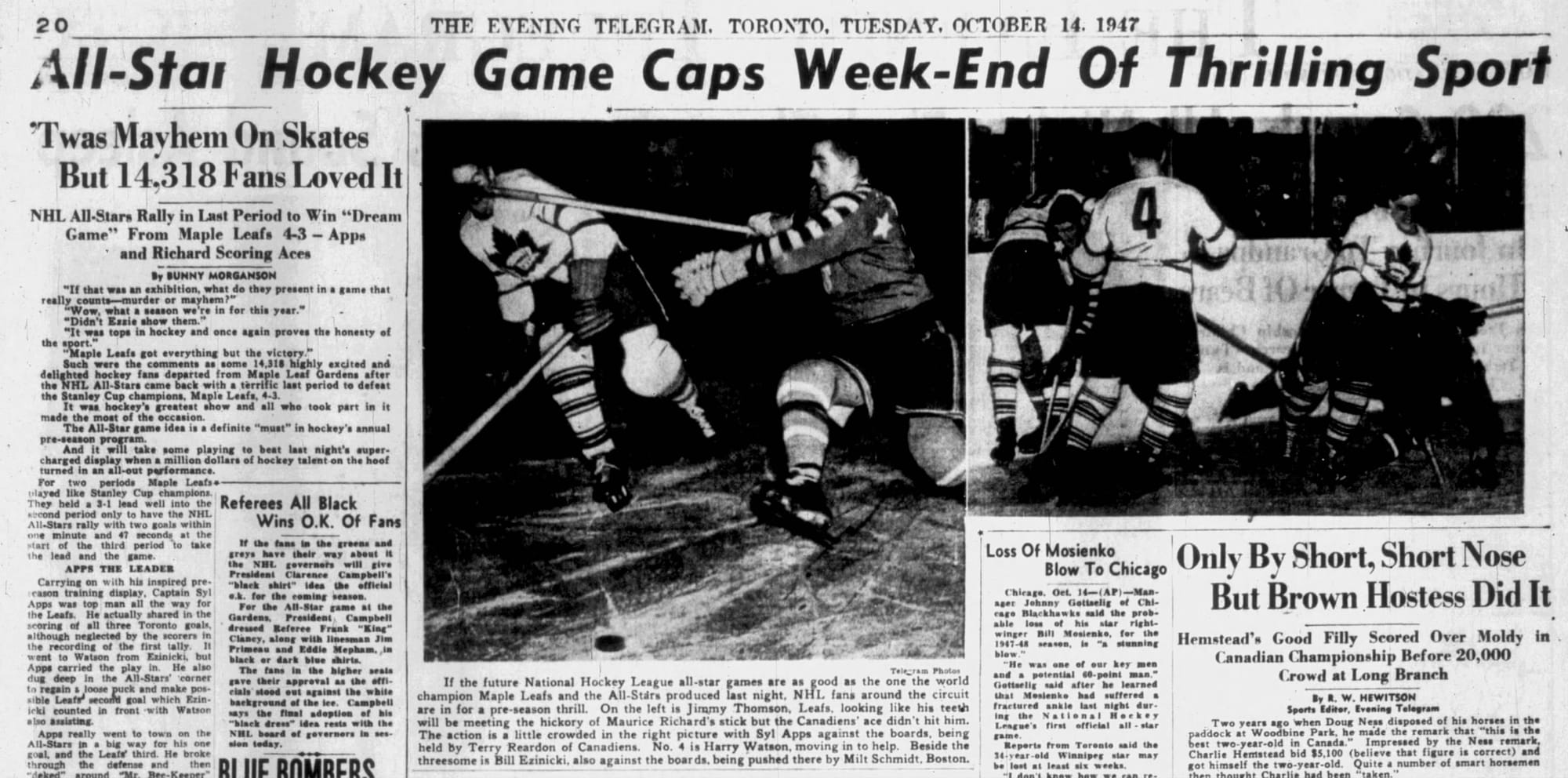
Toronto took control. Harry Watson scored the first goal in All-Star Game history at 12:29 of the 1st period. Bill Ezinicki made it 2-0 early in the 2nd. Max Bentley got one back, but Apps restored the 2-goal lead at 5:01 of the 2nd, and Grant Warwick's goal cut it to 3-2 after 2 periods.
Then the All-Stars took over. Richard tied it 28 seconds into the 3rd period, though he got a little help: the Detroit Free Press reported that Toronto's Bill Barilko pushed the puck past his own goalie. Fifty-eight seconds later, Doug Bentley scored the game-winner, set up by Schmidt and Richard. Turk Broda went the distance in goal for Toronto. For the All-Stars, Durnan, playing on a knee that had just been operated on, gave up all 3 Toronto goals before Frank Brimsek of Boston replaced him early in the 2nd period and shut the Leafs out the rest of the way.
"Nice win, gang," Irvin told his players. "That's why you're all-stars." NHL president Clarence Campbell had a different takeaway: "It was a lot rougher than I expected it would be." Reardon and Toronto's Vic Lynn both drew fighting majors in the 2nd period, and according to the Detroit Free Press, the game ended in a brawl with 1 second left on the clock.
The price: Bill Mosienko's ankle
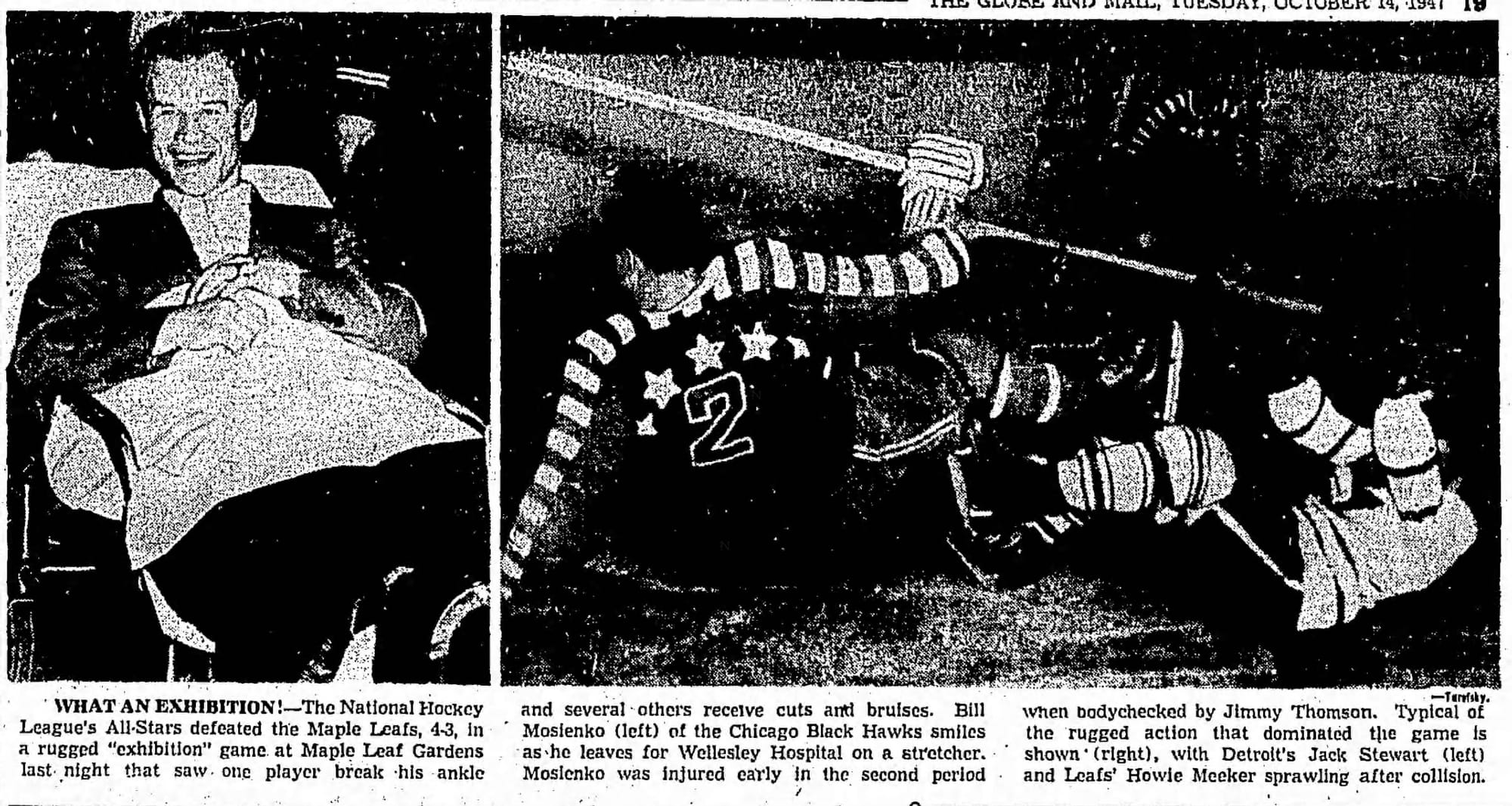
The night's real casualty came in the 2nd period. Chicago's Bill Mosienko, the right wing on the Black Hawks' famous Pony Line with Max and Doug Bentley, was checked by Toronto defenseman Jim Thomson and went down with a broken left ankle. He left on a stretcher. Campbell called the hit clean, and there was no penalty.
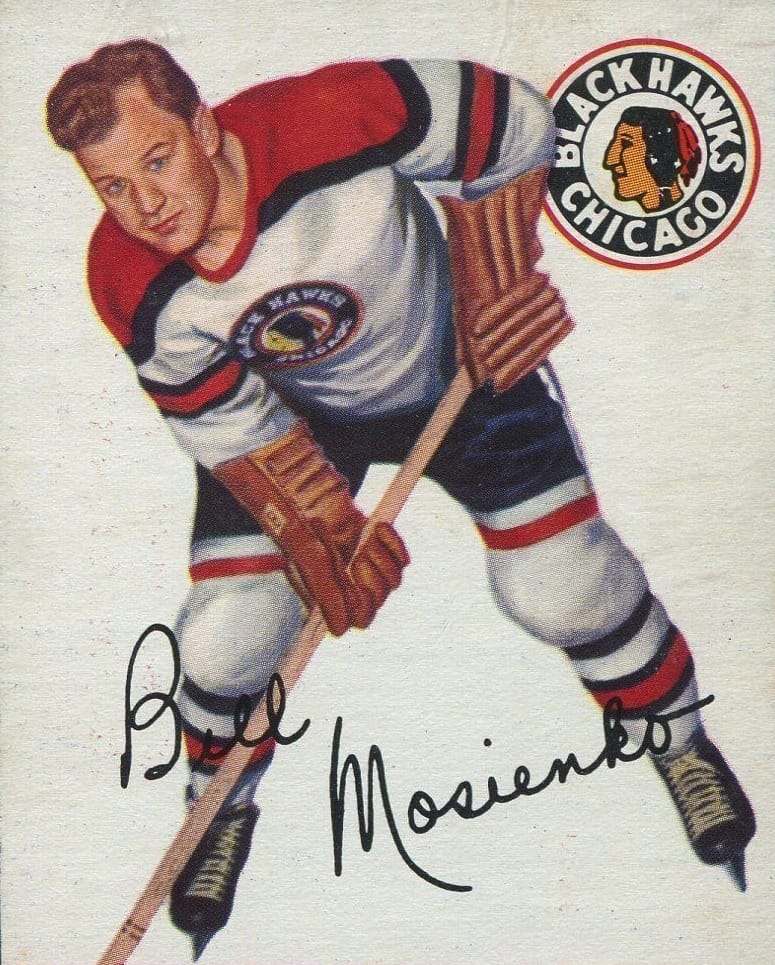
Mosienko missed the first 20 games of the season. And his injury changed the league. "It breaks up our Pony Line," said Chicago's Bill Tobin. With the line broken anyway, the Black Hawks traded Max Bentley to Toronto on Nov. 2, 1947, less than 3 weeks after the All-Star Game. Bentley won the Stanley Cup with the Leafs that spring and again in 1949. Chicago finished last.
Where the money went
The game existed because the players had pushed for a pension. A player committee proposed one in May 1947, and Campbell got the owners to go along with it. The plan was funded by $900 a year from each player, 25 cents from every playoff ticket, and two-thirds of the All-Star Game's proceeds. The other third went to the Toronto Community Chest.
The gate was $25,842, which meant roughly $17,000 for the new pension fund. The benefit itself wouldn't make anyone rich: $8 a month for each year of service, starting at age 45. But it was a start, and the All-Star Game was how the league paid for part of it.
It wasn't the first all-star team
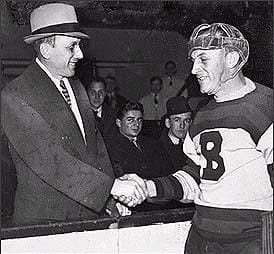
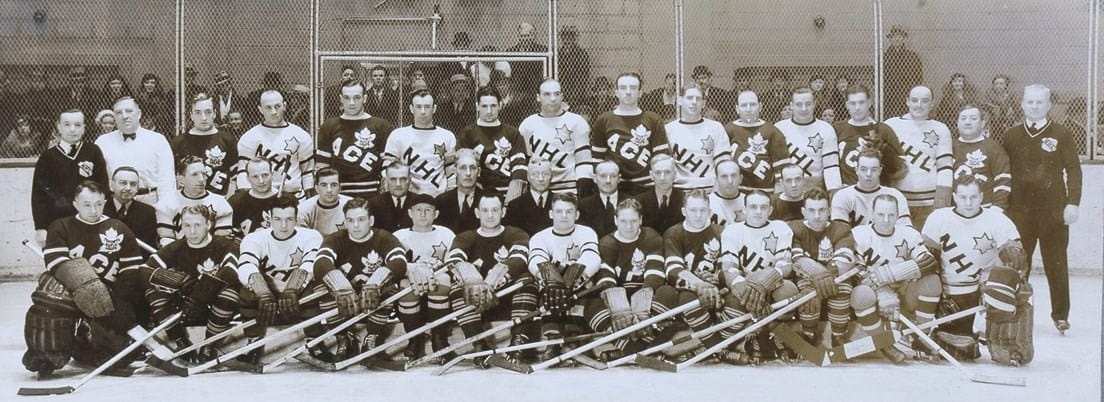
The NHL had put its stars on the same ice before, but only to raise money for a tragedy. On Feb. 14, 1934, Toronto played an all-star team in a benefit for Ace Bailey, whose career ended when Boston's Eddie Shore hit him from behind. Before the game, Bailey and Shore shook hands at center ice. The Leafs won 7-3 and raised $20,909.
Two more benefit games followed in Montreal: one for Howie Morenz's family on Nov. 2, 1937, after Morenz died following a broken leg, and one for Babe Siebert's family on Oct. 29, 1939, after Siebert drowned. They were one-time fundraisers. The 1947 game was the first one the league planned to play every year, and it's the one the NHL counts as All-Star Game No. 1.
What came after
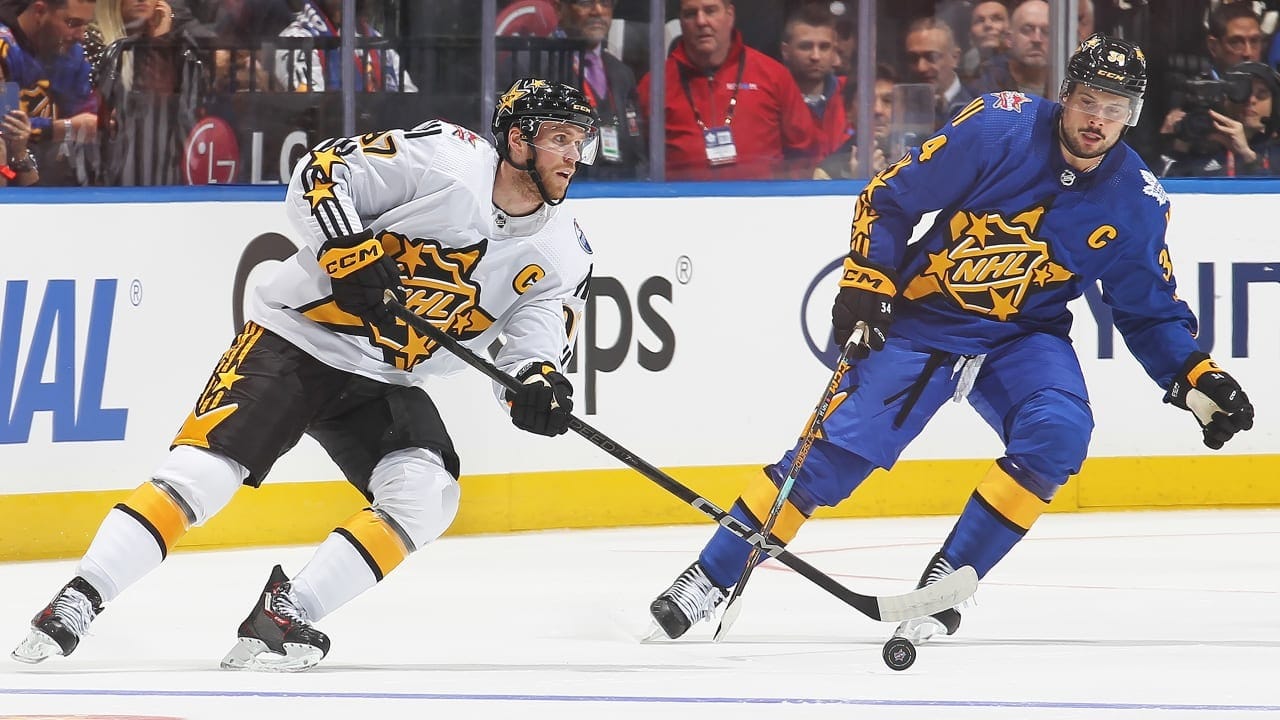
The champions-vs.-All-Stars format lasted through 1968, with the exception of 1951 and 1952, when the First Team played the Second Team. East vs. West took over in 1969. The game added an MVP award in 1962 (Toronto's Eddie Shack won the first one), moved around the league, and has been skipped for lockouts, Olympics, the pandemic and, in 2025, the 4 Nations Face-Off. The 2024 game in Toronto was the 68th.
And the Leafs? They lost the first All-Star Game and then won the 1948 Stanley Cup anyway, with Max Bentley on their roster, to make it 2 in a row. They won again in 1949.
Who would you put on an all-time All-Star team from the Original Six era? Let us know in the comments.
Comments ()