
On This Date: Tinker, Evers and Chance Take the Field Together for the First Time (Sept. 13, 1902)
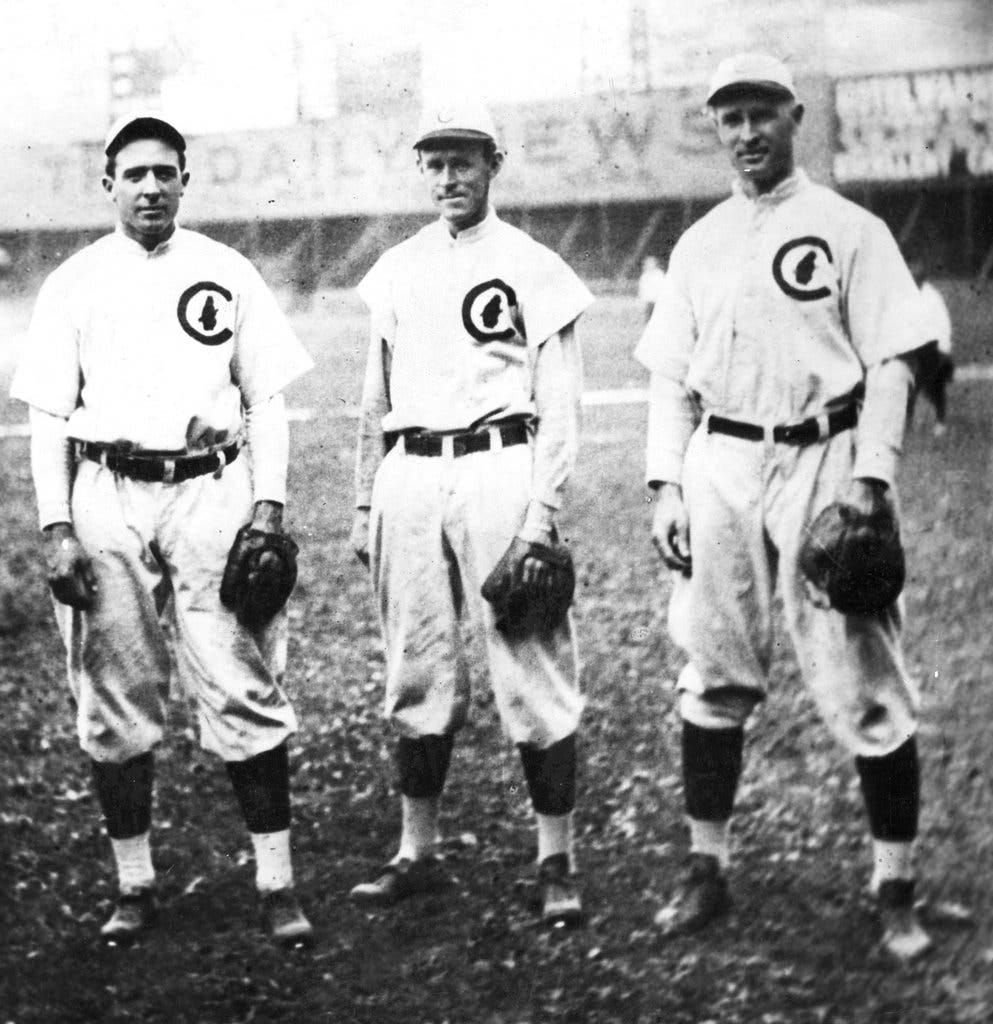
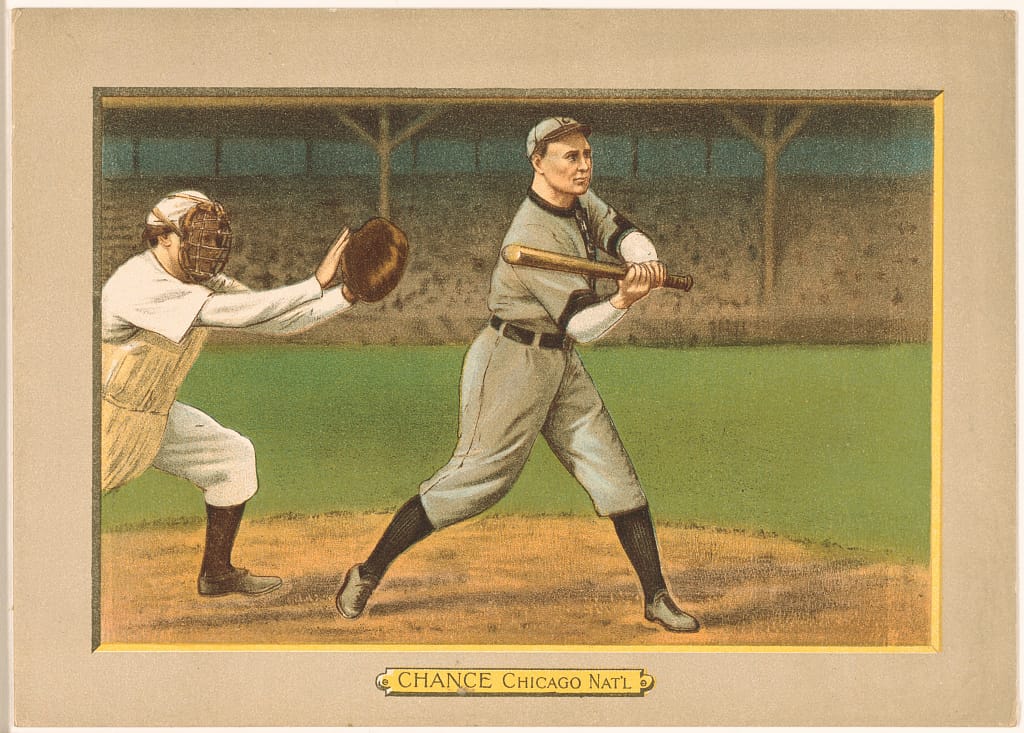
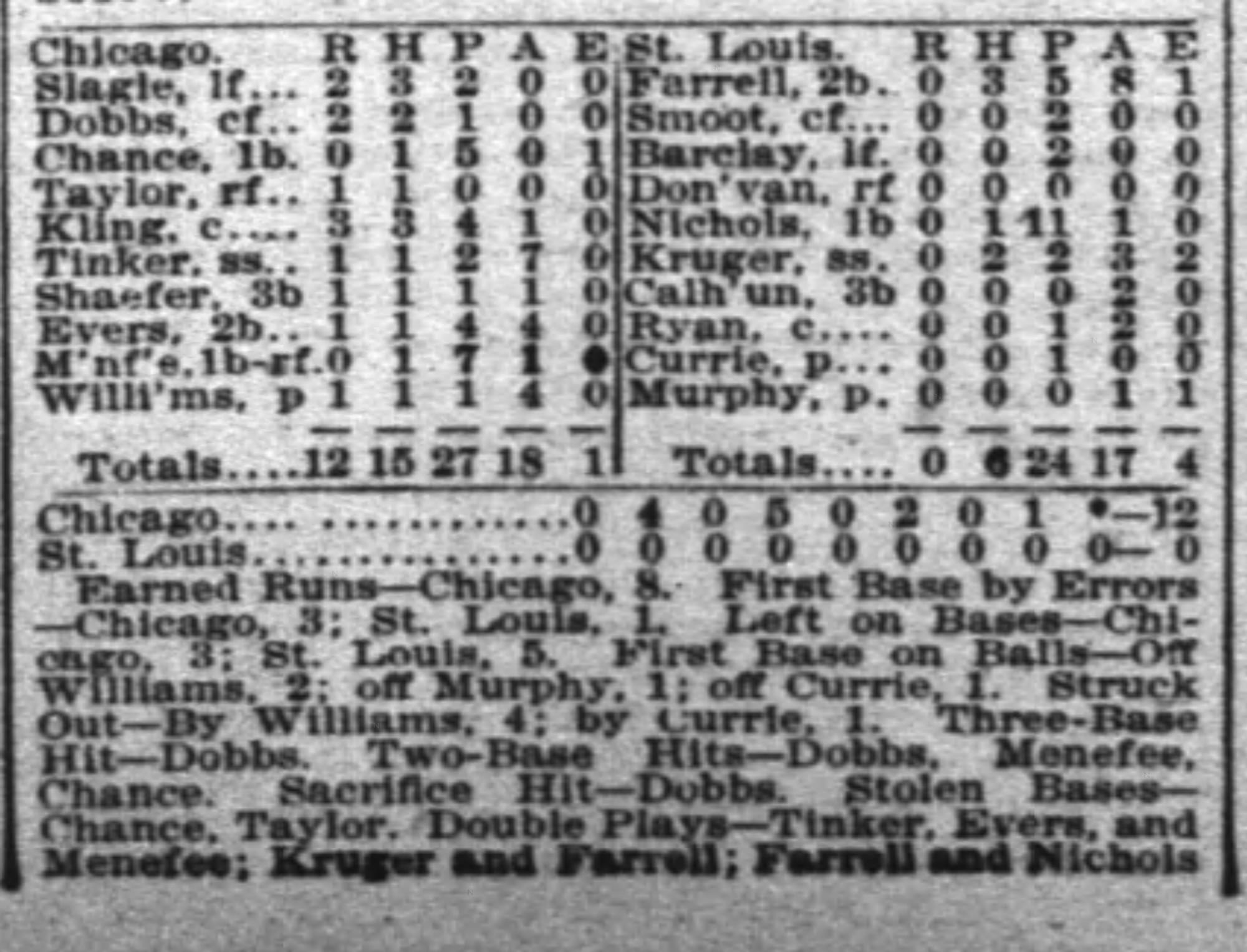
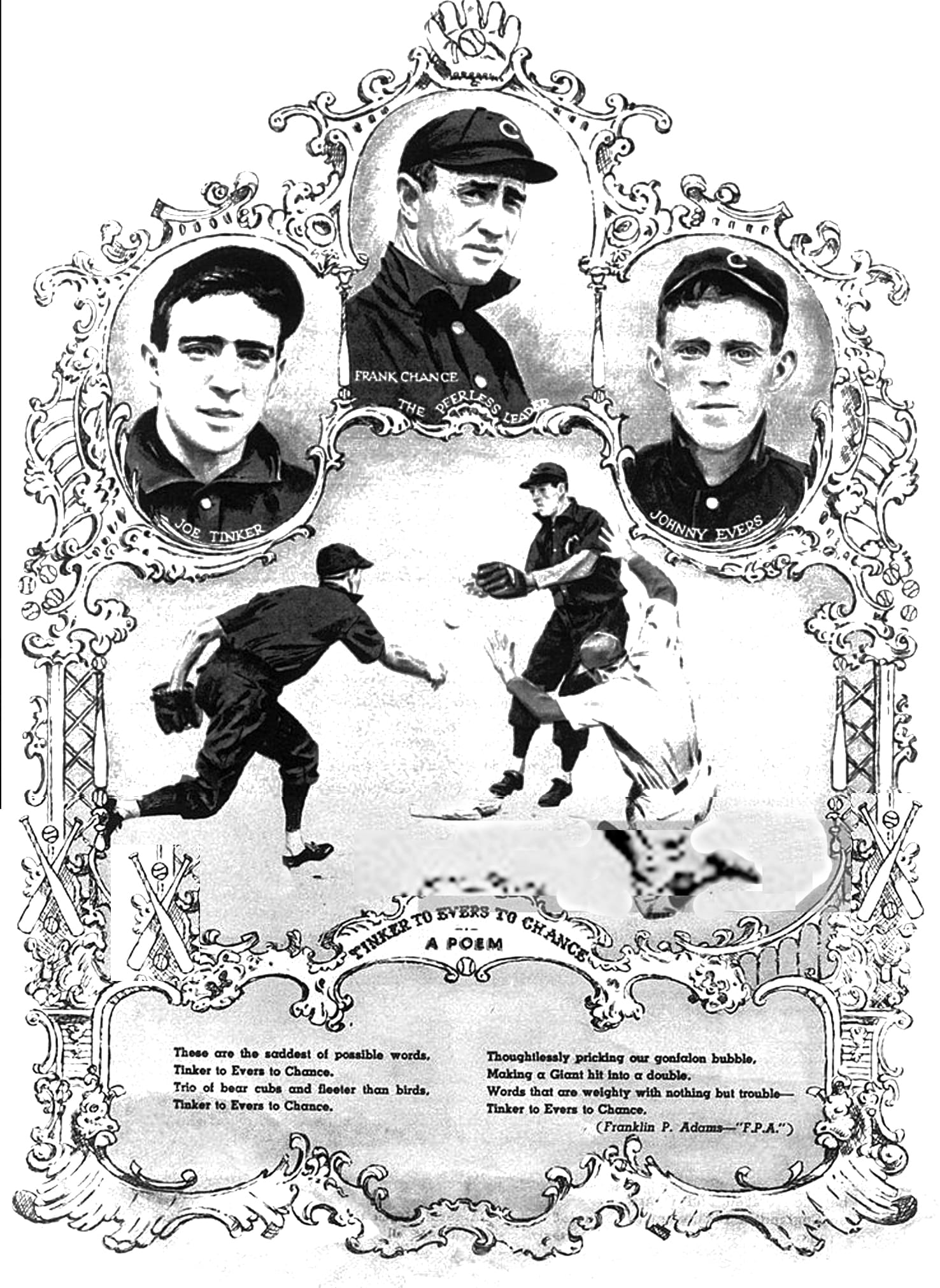
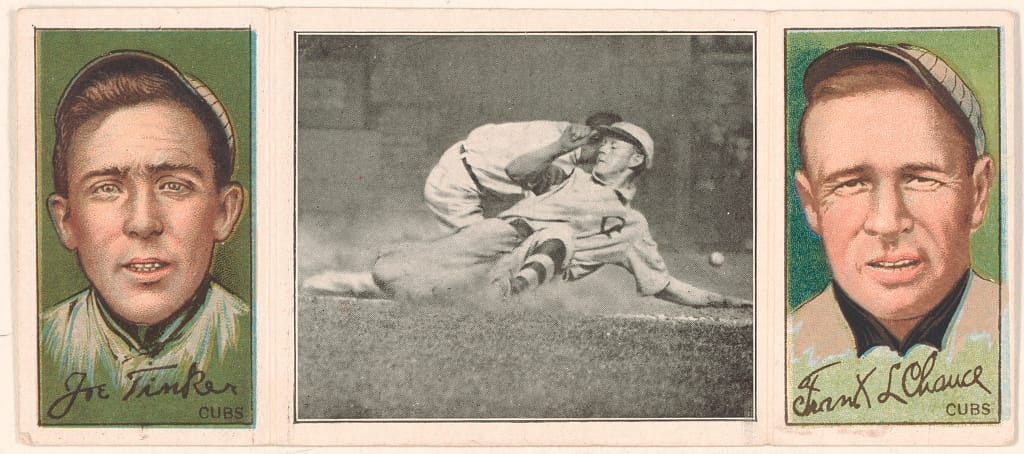
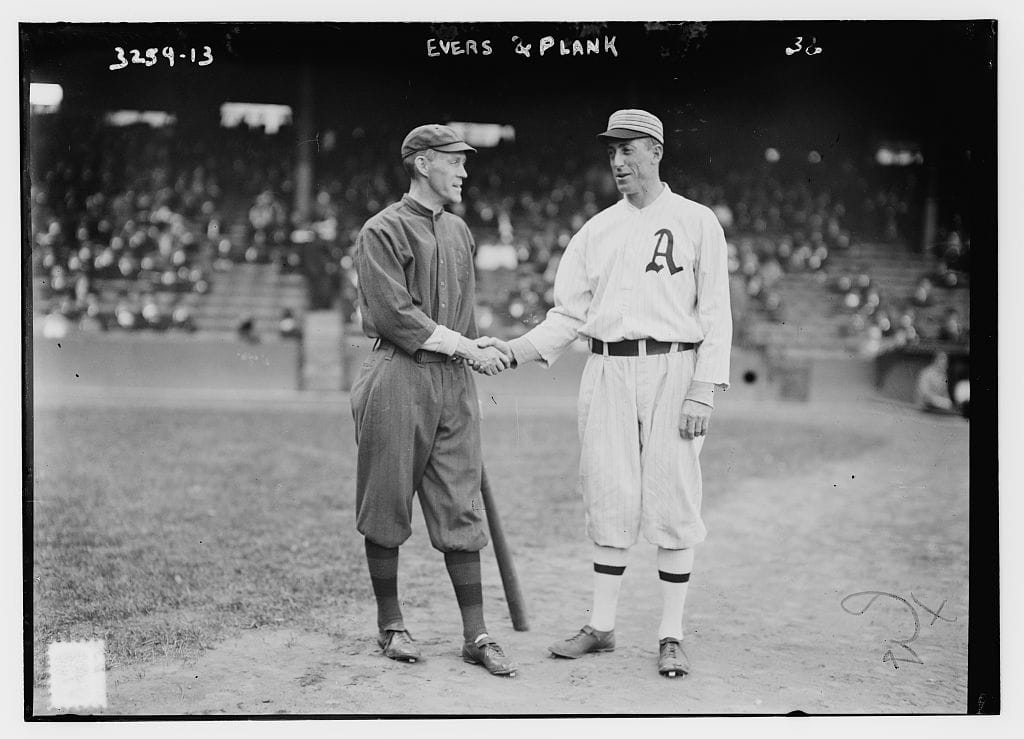
On this date in 1902, at the West Side Grounds in Chicago, the club the newspapers were just starting to call the Cubs beat St. Louis 12-0. Nobody noticed the lineup. Frank Chance, a converted catcher, played first base. Joe Tinker, a rookie, played shortstop. Johnny Evers, a 20-year-old who had been in the major leagues for twelve days, played second. It was the first time the three of them had played those three positions together.
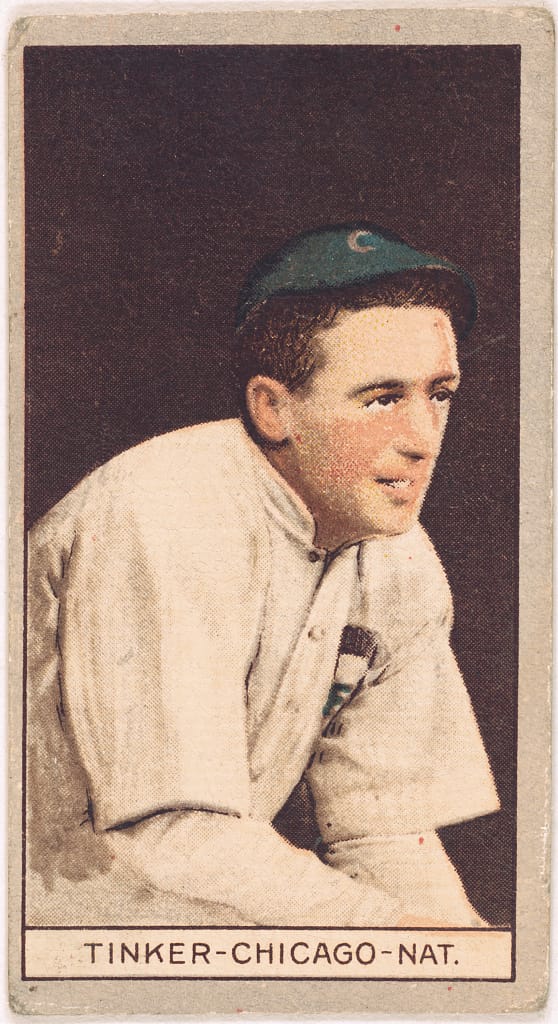
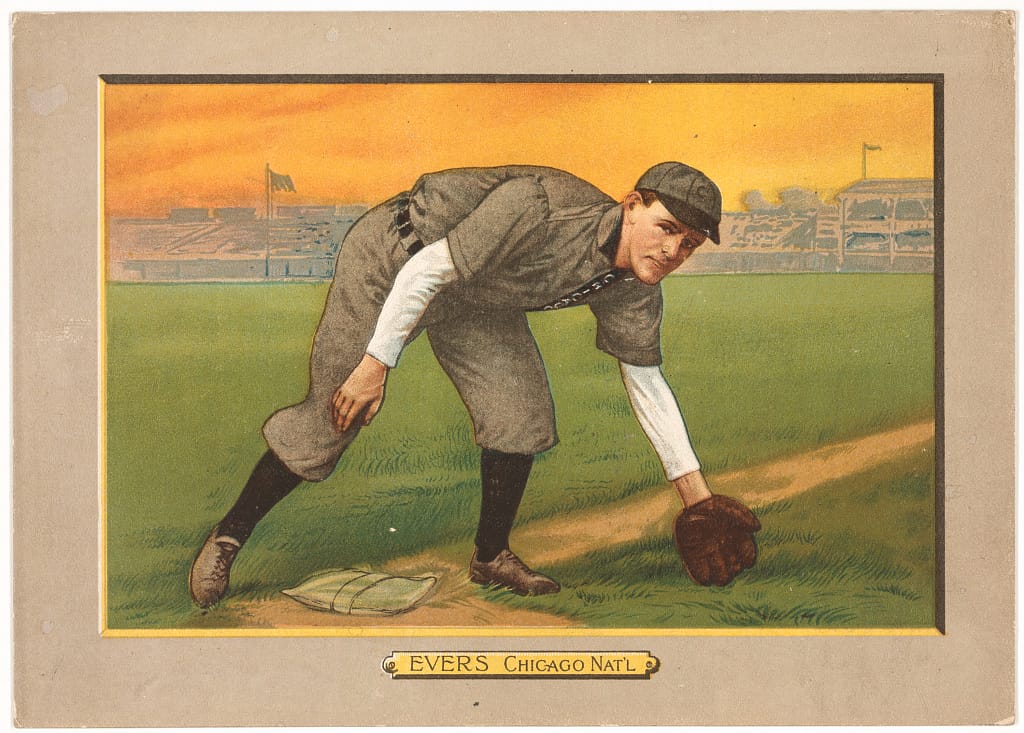
They would go on to become the most famous infield in the history of baseball. The reasons for that are eight lines of doggerel written on deadline, three men who could not stand one another, and about 54 double plays.
The Next Day
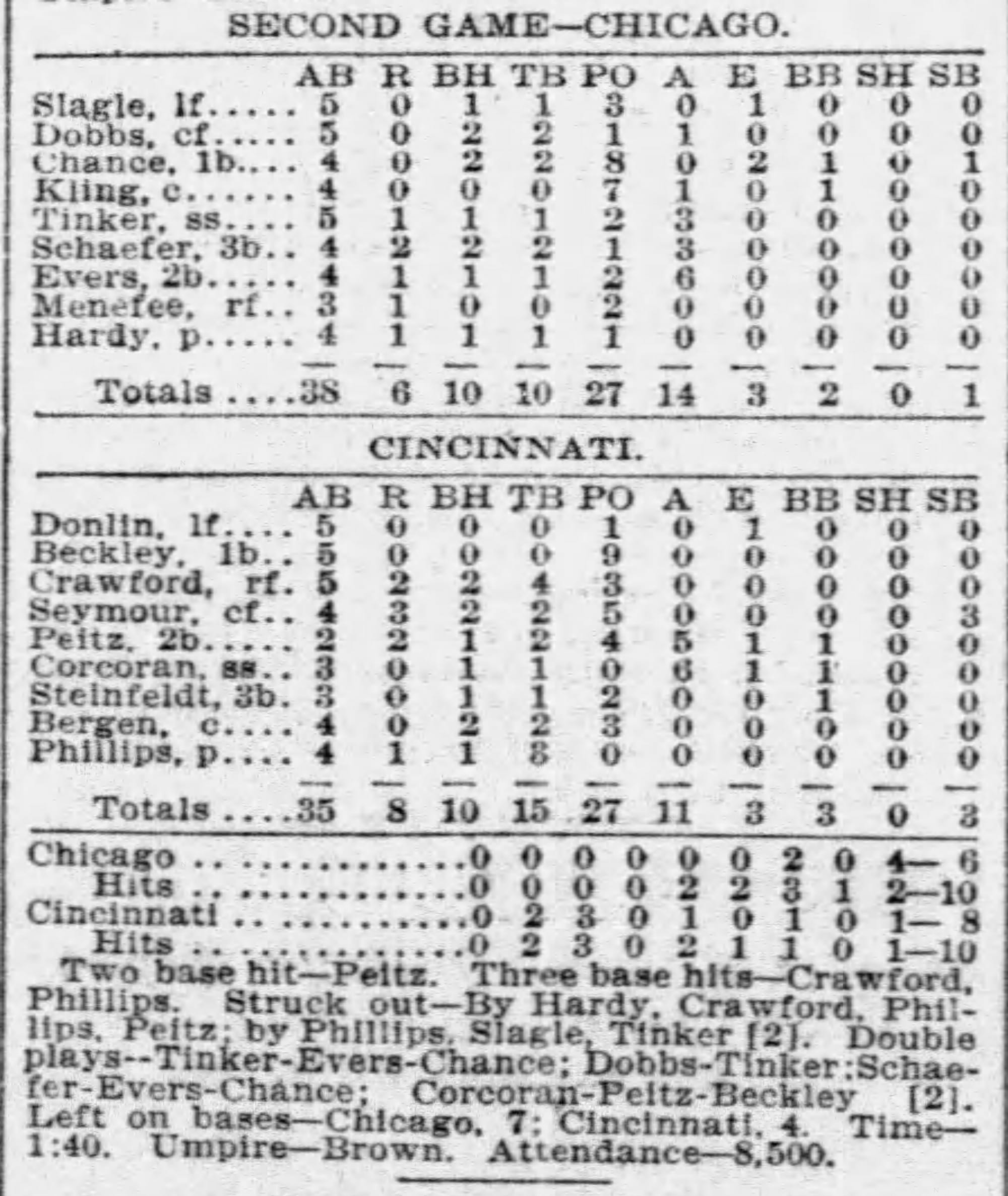
The famous double play, Tinker to Evers to Chance, was turned for the first time the very next afternoon, Sept. 14, 1902, in the second game of a doubleheader against Cincinnati. (Most references say Sept. 15. The box score says the 14th.) On the 13th itself the only double play went Tinker to Evers to a man named Menefee, who had moved to first late in the game, which is the kind of detail that would have annoyed the poem.
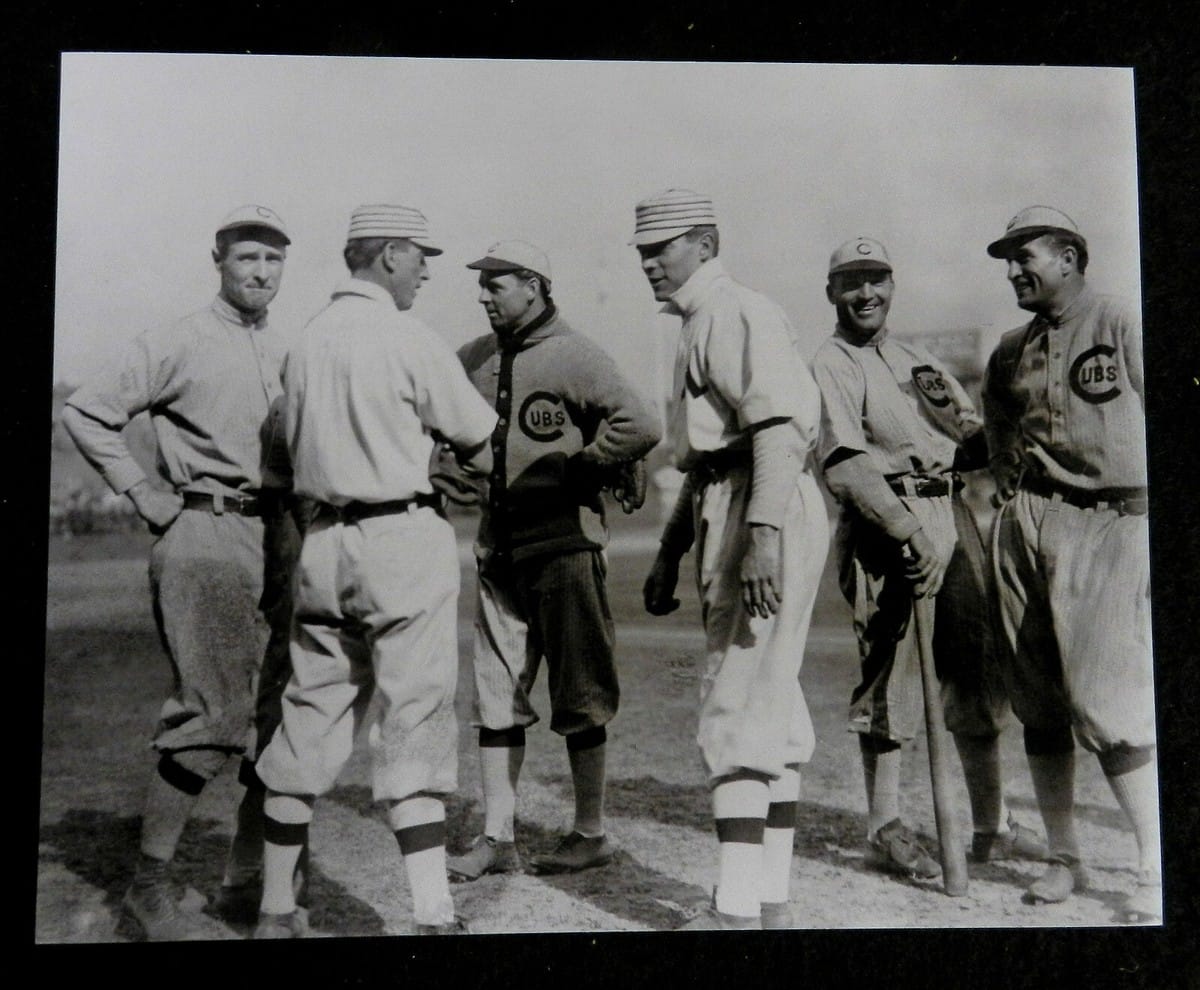
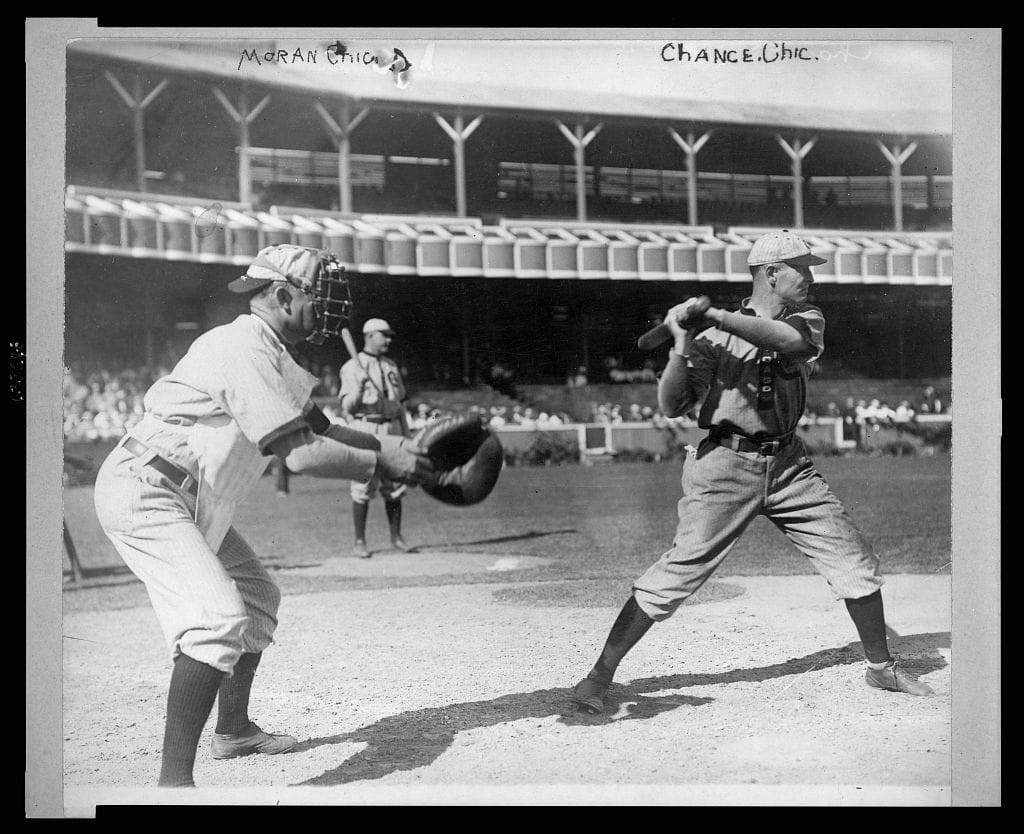
Within four years the team around them was the best in National League history. The 1906 Cubs won 116 games, a record that still stands, and lost the World Series to the White Sox across town. They won the Series in 1907 and 1908, and another pennant in 1910. The third baseman, Harry Steinfeldt, was as good as any of them, and has spent 115 years being left out of the sentence.
The Poem
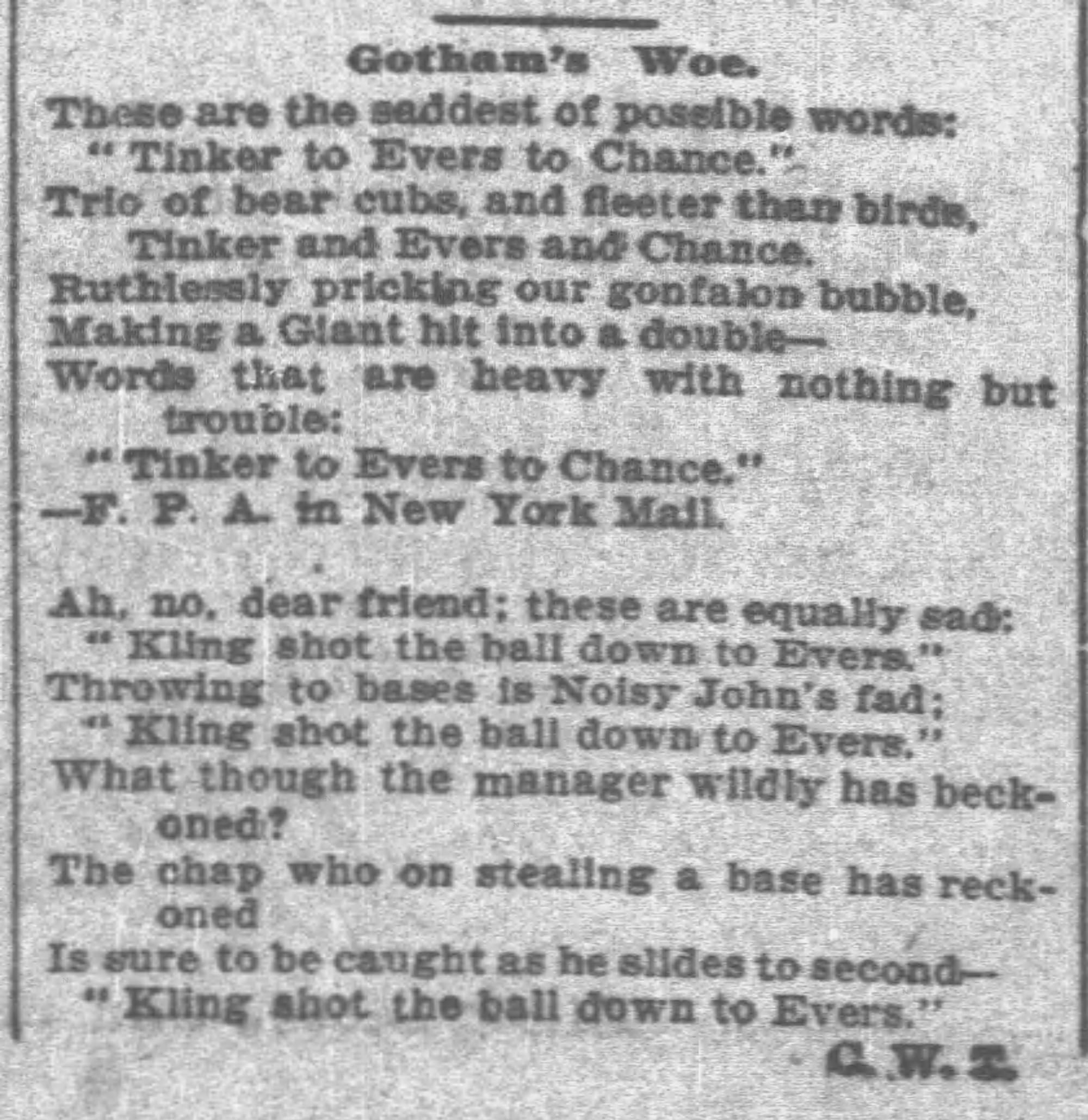
On July 12, 1910, a newspaperman named Franklin P. Adams needed eight lines to fill a hole in his column in the New York Evening Mail before the composing-room foreman would let him leave for the ballgame at the Polo Grounds. He wrote them in the voice of a Giants fan watching the Cubs' infield ruin his afternoon, headlined them "That Double Play Again," and left. The Chicago Tribune reprinted it three days later. Within a week it had its permanent title, "Baseball's Sad Lexicon":
These are the saddest of possible words:
"Tinker to Evers to Chance."
Trio of bear cubs, and fleeter than birds,
Tinker and Evers and Chance.
Ruthlessly pricking our gonfalon bubble,
Making a Giant hit into a double —
Words that are heavy with nothing but trouble:
"Tinker to Evers to Chance."
Adams, for the record, was born in Chicago and later called himself "the only Cub rooter in the Polo Grounds press box." The lament was a performance. It also made three infielders immortal.
The Feud
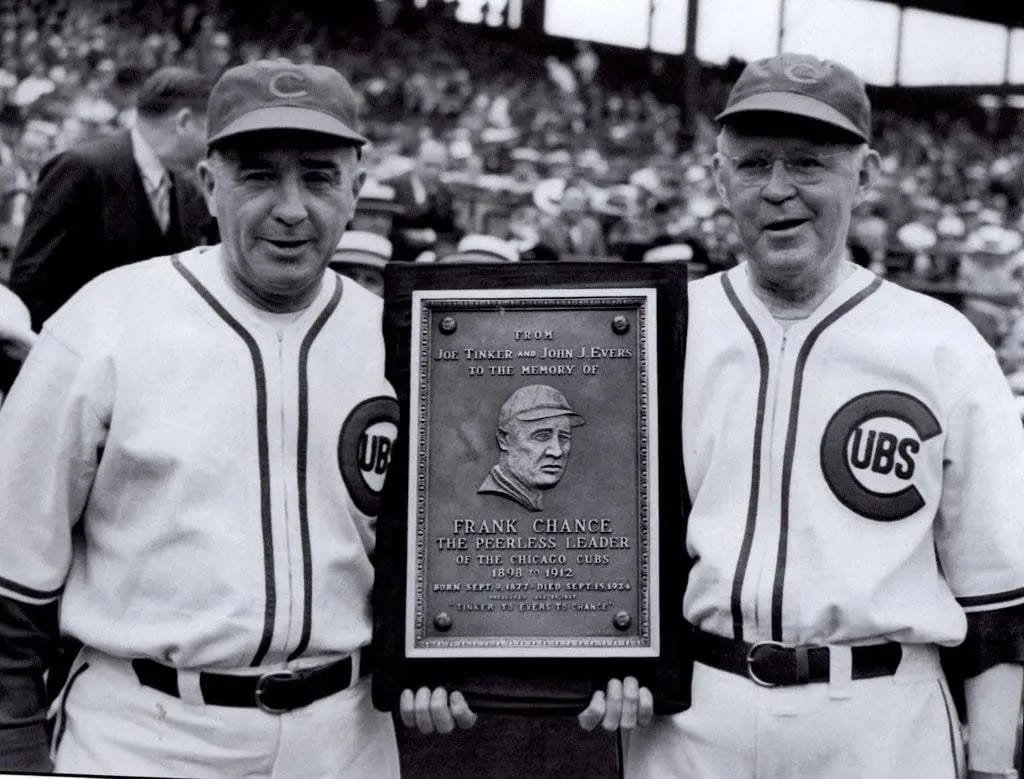
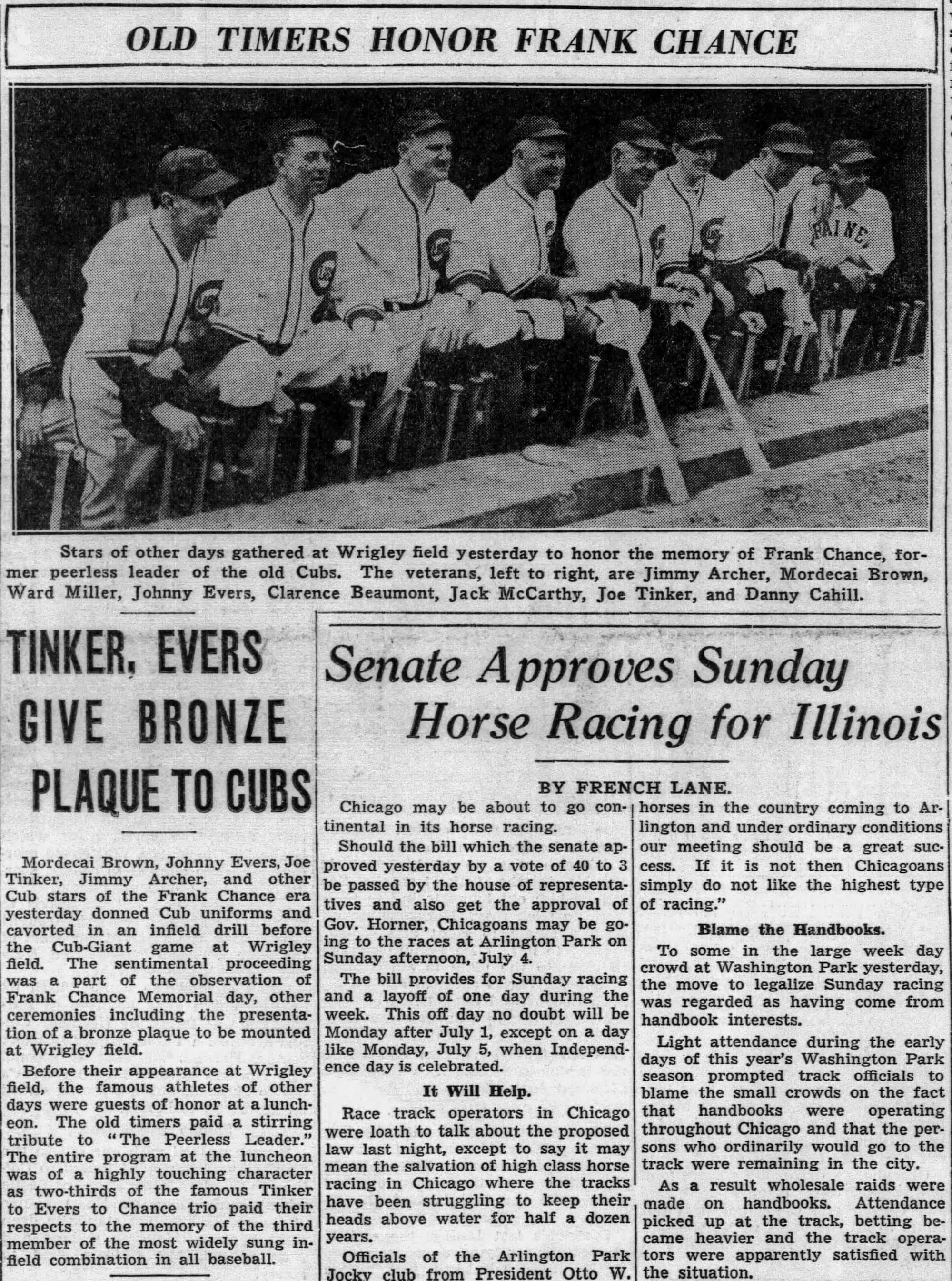
The immortals hated each other. Tinker and Evers stopped speaking sometime around 1905 or 1907, depending on which of them you asked. The popular version has Evers taking a cab to an exhibition game in Indiana and leaving Tinker behind, and a fistfight following on the field. Evers himself said it started in 1907 when Tinker fired a ball at him. Either way, they played beside each other for the better part of a decade, turned the double play that made them famous, and did not exchange a word off the field. They reconciled in 1937, at a Wrigley Field ceremony for the 1907 champions, after not seeing each other for 14 years, and reportedly wept.
About Those Double Plays
The number usually attached to them is about 54 double plays together over the five seasons from 1906 to 1910, a figure that comes from a 1963 newspaper count. That's roughly eleven a year. Plenty of forgotten infields turned more. It was never the double plays. It was the sound of the names.
In April 1946 the Hall of Fame's Old Timers Committee elected all three together. Chance had been dead for 22 years and Evers died the following spring, before the induction ceremony. Tinker lived to see it. The poem outlived them all.
Which is the most famous sentence in baseball, this one or "Who's on first"? Comments below.
Comments ()