
The Scourge of Mini Cards: 1975 Topps, the Man Who Cornered Them, and Every Other Mini Set Ever Made
The 1975 Topps minis are 3 times scarcer than the regular cards and sell for less. Why Topps shrank the set, the Michigan collector who cornered it, and every other mini set ever made.
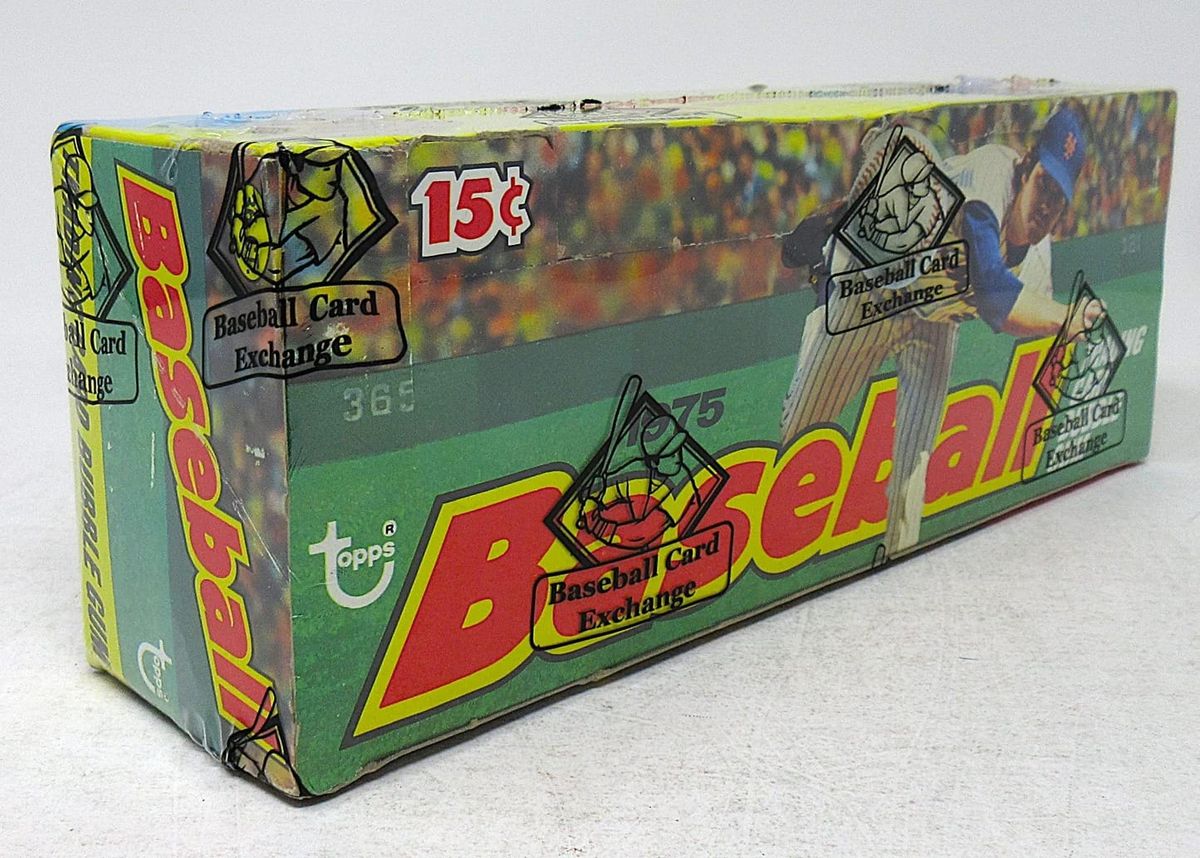
Every collector who was a kid in the 1970s has a story about the 1975 Topps minis, and most of the stories end the same way: with a card that doesn't fit the page, the box, the sleeve or the binder, sitting slightly crooked next to the regular one. The 1975 set is one of the most loved designs Topps ever made, two-tone borders in loud color combinations, and for reasons nobody has ever documented, a chunk of it was printed at 2 1/4 by 3 1/8 inches instead of the standard 2 1/2 by 3 1/2.
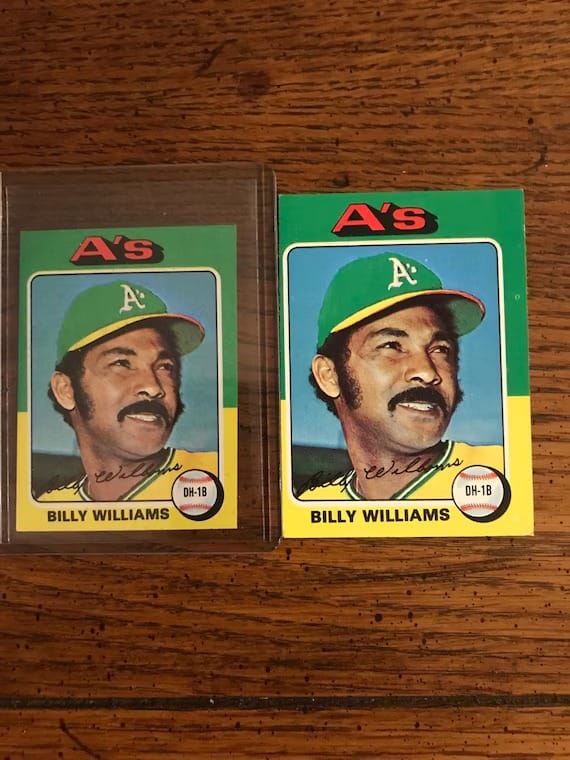
Here's what's known about why they exist, whether they worked, what they're actually worth, and the surprising number of other times card companies did the same thing.
What Topps did in 1975
The minis were a test. Topps printed the entire 660-card set at the smaller size, on the same 132-card sheets, and sold it in packs that looked exactly like the regular ones: 10 cards and a stick of gum for 15 cents, 36 packs to a box, plus 18-card cellos for a quarter and 42-card racks for 49 cents. Nothing on the card or the wrapper says "mini." The photo, the two-tone front, the cartoon and the stats on the back are identical. The only difference is a quarter inch of width, three-eighths of an inch of height, and a lifetime of bad centering.
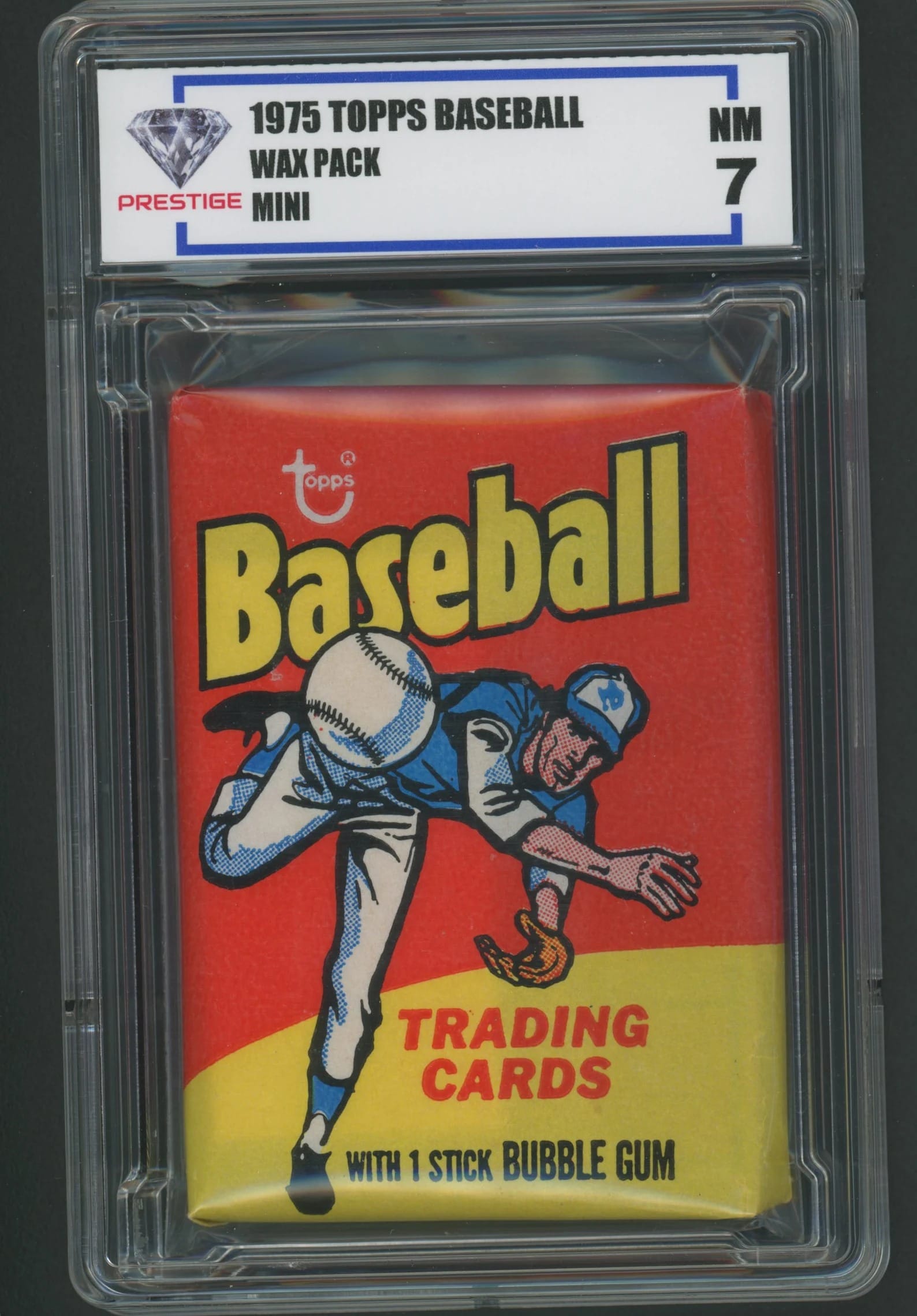
They were sold in Michigan and on the West Coast, with reports of packs turning up in Hawaii and Ohio and "sporadically elsewhere." Nobody has ever found a Topps memo, an annual report or a 1975 hobby-press story that explains the decision. The consensus guess is a cost-cutting experiment in a recession year: see whether kids would accept 20 percent less cardboard for the same 15 cents. But Baseball Card Pedia, the hobby's reference wiki, says it flat out: it is unclear why Topps issued the product, or whether it was ever meant to be annual.
Did it work?
Topps never made another mini flagship set. There was no 1976 mini, no explanation, and no second test in football, hockey or basketball. The next time Topps shrank a baseball card was 1986, in a different era and a different product. Whatever Topps learned, it kept to itself.
The hobby's answer came from a collector. Charlie Conlon, from Michigan, decided in 1975 that the minis were going to matter and bought every case he could find, for something like $1,000. He ran ads for them in The Trader Speaks in November 1976 and in Baseball Cards Magazine as late as June 1986. He held most of them for the rest of his life. When his estate went to Robert Edward Auctions in May 2009, it included 26 unopened wax cases, 2 cello cases and about 20,000 loose minis, and it brought roughly $307,000. A single lot of 7 wax cases went for $82,250.
Are they rare? Are they worth more?
They are scarcer. They are not worth more. That's the strange part.
PSA has graded about 375,000 regular 1975 Topps cards and about 115,000 to 125,000 minis, so the minis are roughly a third as common in the graded population. Print-run figures don't exist, but every dealer who handles the set says the same thing: far fewer minis were made, and the prices don't reflect it.
The George Brett rookie, card No. 228, is the test case. In PSA 9, a mini sold for $6,000 at Fanatics in August 2026; a regular sold for $10,200 the same month. In PSA 8 they're close, about $840 to $880 for the mini against about $900 for the regular. The Nolan Ryan, No. 500, runs about $7,900 mini against $10,000 regular in PSA 9. The Robin Yount rookie mini in PSA 9 brought $3,240 in September 2026; the regular's high is $5,200. At the very top the gap is a canyon: a regular Brett PSA 10 sold for $117,000 and a regular Yount PSA 10 for $152,500 in January 2026, while the last confirmed sale of a mini Yount PSA 10 was $11,352, in 2015. Unopened boxes tell the same story. In April 2026 a regular 1975 wax box sold for $37,936 and a mini box for $18,209.
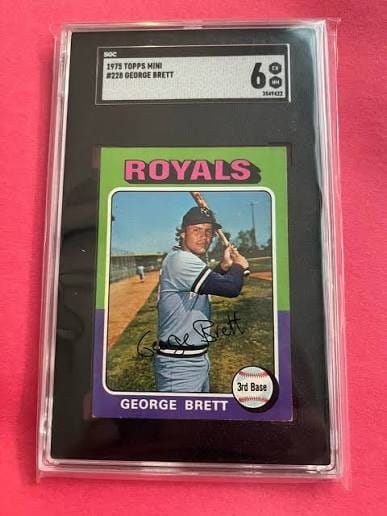
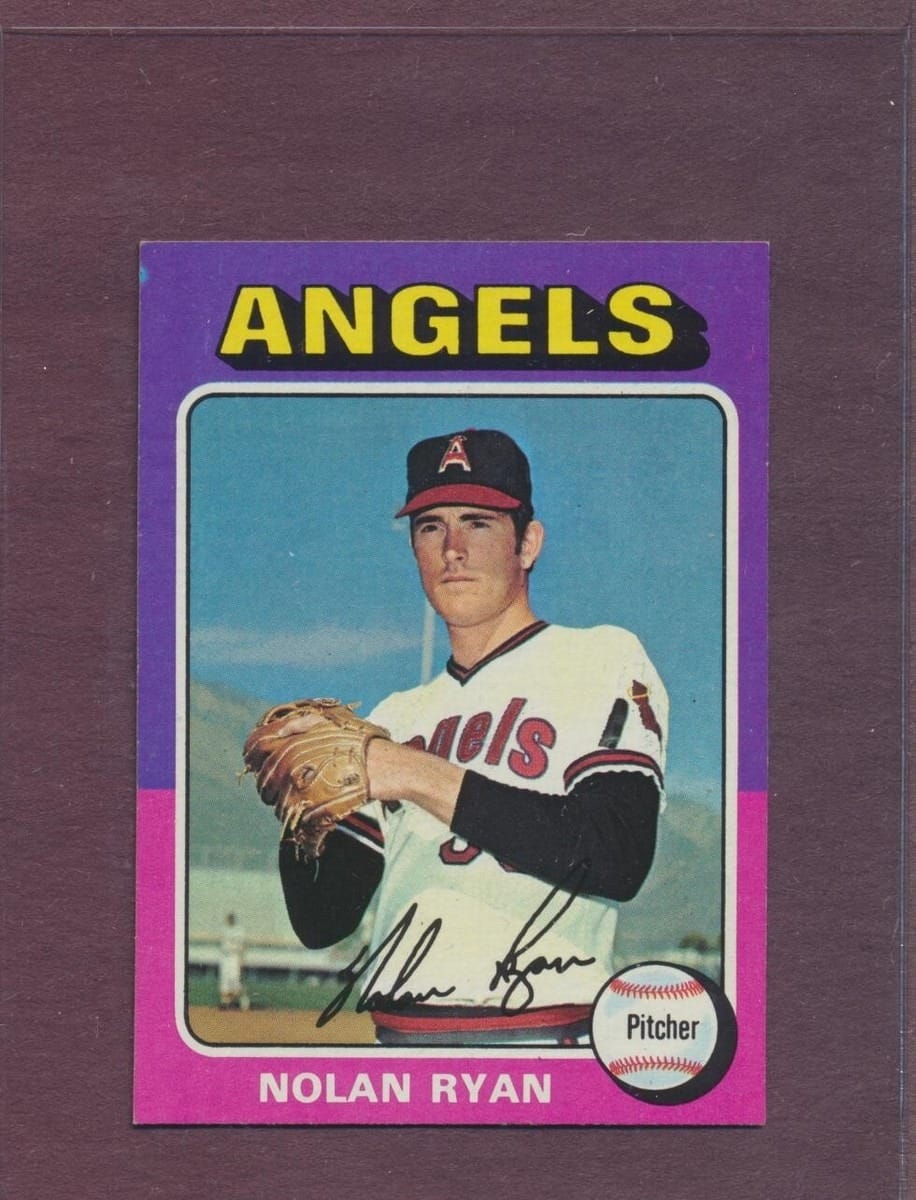
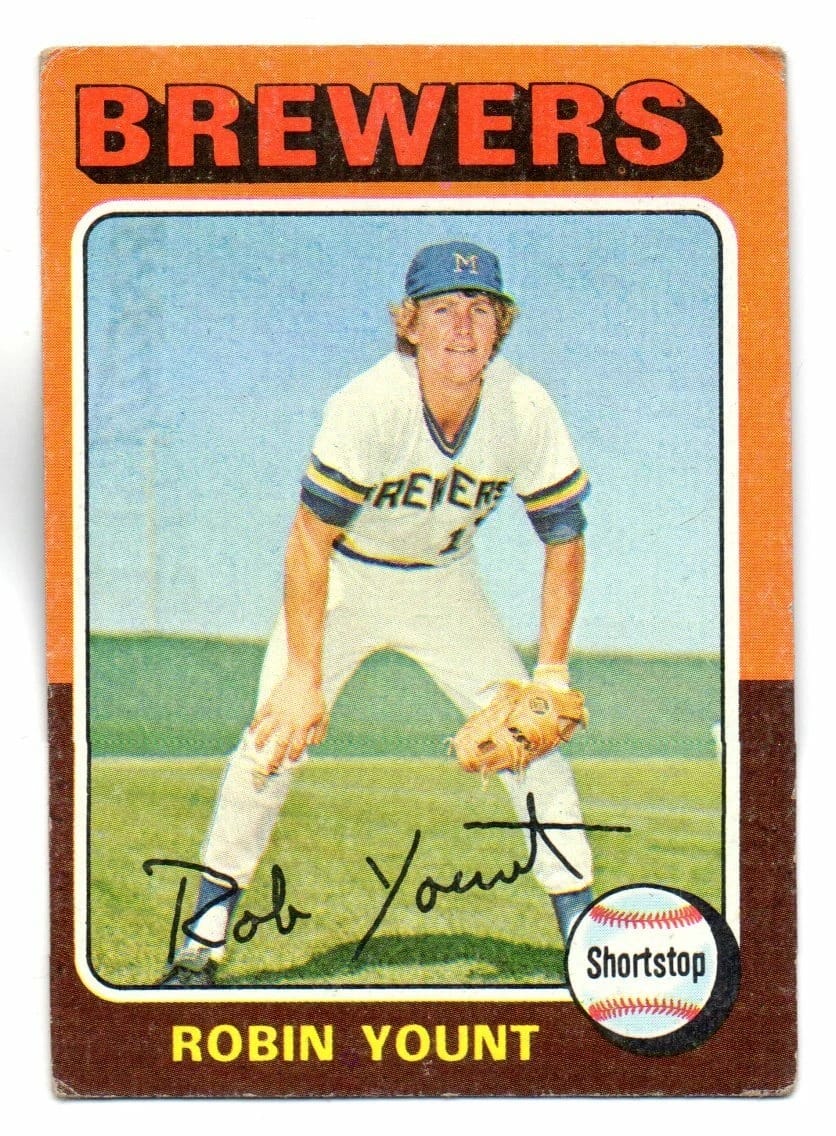
George Brett's rookie mini, No. 228 (graded SGC 6); Nolan Ryan, No. 500; and Robin Yount's rookie, No. 223.
It wasn't always this way. From the late 1970s through the 1990s the price guides carried the minis at 1.5 to 2 times the regular cards, on scarcity alone. By around 2011 they'd fallen to parity. The 2020 boom pushed the regular cards past them and left the minis behind. Two things did it. The Conlon estate put 26 cases and 20,000 loose minis on the market in one spring, and the modern hobby buys what the registry and the binder page reward, which is the regular card.
There's a condition story too. Minis were miscut and off-center right out of the pack, and the yellow-green and yellow-red border combinations are the toughest of all in gem mint. PSA has given the mini Brett a 10 only 8 times, against 11 for the regular. The mini Yount has 10 PSA 10s, the regular 6. Rarer at the top, cheaper at the top.
So the answer to the question every 1975 collector eventually asks, "should I have kept the minis?", is: for the fun of it, yes. For the money, you were fine either way. The minis are the rare case in this hobby where scarcity lost to demand.
One more thing they share with the regular set: card No. 407, Herb Washington, the only card in baseball history to list a player's position as "Pinch Runner." It exists in mini too, and it's still the best card in the set.
The other minis
Topps didn't invent the small card in 1975. It reinvented it. Here's the family tree, oldest first.
T206 (1909-11). The most famous cards ever made are minis. Tobacco cards were 1 7/16 by 2 5/8 inches because they had to fit in a cigarette pack. The Honus Wagner is a mini.
1914-15 Cracker Jack. 2 1/4 by 3 inches, one card per box of caramel corn. The 1914 cards are worth more than the 1915s because every one of them spent time in the box with the caramel.
1951 Topps Red Backs and Blue Backs. Topps' first baseball cards were 2 by 2 5/8 inches with rounded corners, because they were a card game, not a card. Topps went to a big 2 5/8 by 3 3/4 in 1952 and cut down to today's 2 1/2 by 3 1/2 in 1957, the year the standard became the standard.
1961 Topps Stamps. The first Topps pack insert, 1 3/8 by 1 3/16 inches, 208 stamps for a 10-cent album. Topps did it again in 1962 and 1969.
1968 Topps Game. 33 cards at 2 1/4 by 3 1/4, inserted in third-series packs and sold as a boxed game. Beloved, and one of the few small-format inserts with a real premium: a near-mint Mantle runs about $435.
1969 Topps Deckle Edge. Same size as the Game cards, black-and-white photos on thin stock with scalloped edges. PSA has graded about 11,800 of them and has never given one a 10. They sell for a fraction of the same player's regular card.
1969 Topps 4-in-1. Four 1-by-1 1/2-inch peel-off stickers on a standard card. The football version came one per pack and is cheap. The baseball version was an East Coast test that, in the hobby's words, "met with little enthusiasm and died," and now carries a big premium for exactly that reason.
1975 Topps Mini. The subject of this article.
1985 Topps Mini. The mini Topps never released. A 132-card test printing on white stock, one sheet's worth, that was supposed to be destroyed. Fewer than 100 of each card are thought to survive, and they sell like the test issue they are.
1986-1990 Topps Mini League Leaders. A separate product in its own packs, 6 cards for a quarter, 66 cards in 1986 and 77 to 88 in the years after, on glossy white stock at 2 1/8 by 3 inches. Commons are worth pennies. A PSA 10 1986 Mattingly brings $75 to $114, which is more than the regular card, because almost nobody bothered to grade them.
1986-1988 Fleer Classic Miniatures. The smallest cards of the decade, 1 13/16 by 2 9/16 inches, 120 to a boxed set sold to hobby dealers. A sealed set goes for $10 to $20.
1988-89 Topps UK Minis. Topps sold baseball in Britain as "American Baseball," 88 cards at 1975-mini size, 5 cards and a slab of gum for 12 pence. There was even a glossy Tiffany version. Ripken is about a dollar.
1991-93 Topps Micro. The smallest of all: the complete 792-card Topps set at 1 by 1 3/8 inches, sold as a boxed factory set for chain-store shelves. The whole set fits in one hand and is worth about $10. It is also the exact idea Topps tested in 1975, the full flagship set at a smaller size, and it was a novelty both times.
Topps 206, Allen & Ginter, Gypsy Queen (2002-present). The mini came back as an insert rather than a base set. Allen & Ginter has put a tobacco-size mini in every pack since 2006, with rarer backs and parallels, and a mini of the same player sells for 30 to 100 percent more than the base card. This is the version that finally worked: the mini as a bonus, not a substitute.
Topps Mini and Heritage Mini (2011-present). Topps has gone back to the 1975 mini size over and over: the 2011 Lineage 1975 Mini insert, an online-only full mini parallel of the flagship set most years since 2012, and a stand-alone 2024 Heritage Mini set for the 1975-design year. The 2012 Topps Mini Bryce Harper, card 661, lists for $50 to $720 against about $20 for the regular rookie. The card Topps couldn't sell in 1975 is now a selling point.
Why the mini keeps coming back
The 1975 test asked the wrong question. Kids didn't want a smaller card instead of a regular one, and 50 years later collectors still don't; they pay less for it. But collectors will happily take a smaller card in addition to the regular one, especially if it's scarcer. Every mini that has worked since, from the 1968 Game cards to Allen & Ginter to the online-only Topps Mini sets, is a parallel or an insert. Every mini that failed was a replacement.
Did you keep your 1975 minis, or trade them away? Tell us in the comments.

Comments ()