
5 Junk Wax Era Cards Actually Worth Something
The junk wax era (roughly 1987–1993) printed more cardboard than the hobby could ever absorb — billions of cards worth less than the wax they came in. These five beat the flood. (Values are ballpark as of publish; this market moves.)
The junk wax era (roughly 1987–1993) printed more cardboard than the hobby could ever absorb — billions of cards worth less than the wax they came in. These five beat the flood. (Values are ballpark as of publish; this market moves.)
5. 1985 Topps Mark McGwire #401 — The Amateur
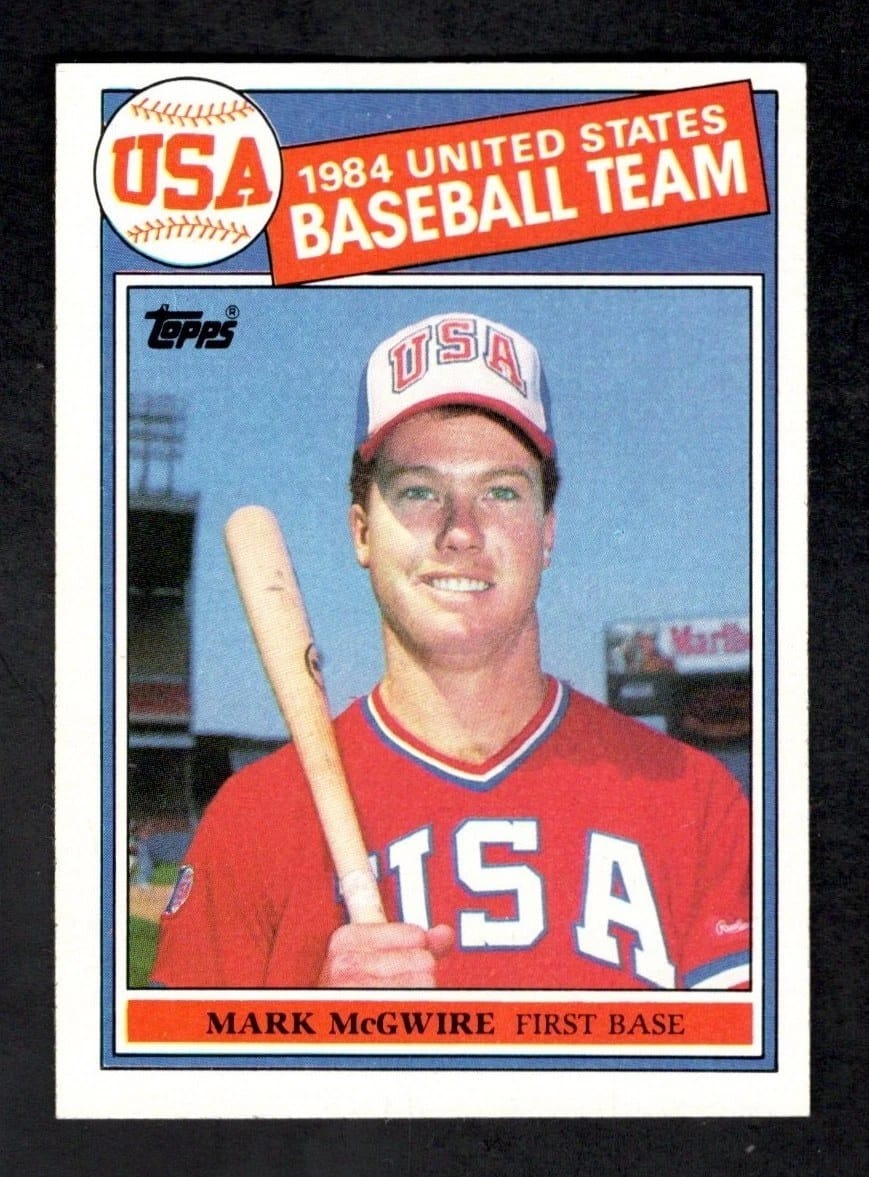
Technically the cheat code on this list: 1985 predates peak junk wax. Topps put McGwire on cardboard as a college kid on the 1984 Olympic Team USA subset — three years before his "official" 1987 rookies, which were printed into oblivion and are worth pocket lint. The USA card stayed his most valuable card straight through the 70-homer summer of '98. Raw copies run $10–25; a PSA 10 recently went ~$4,600 — and if yours has a glossy front and bright white back, look again: the Tiffany parallel hit $30,500 at Heritage.
4. 1989 Score Barry Sanders #257 — The Right Set at the Right Time
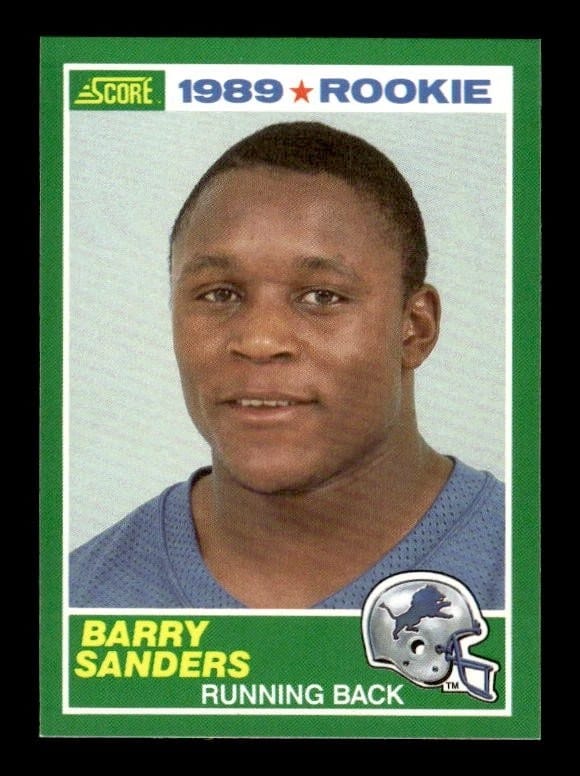
1989 was Score's first football set ever, and they beat Topps to that year's rookie class — Sanders, Aikman, Deion — as actual rookies. Deep junk-wax print runs, but brutal centering standards mean only ~7.5% of 31,000+ graded copies gem. Raw: still lunch money. PSA 10: $1,600–1,850. The defining rookie of the most electric runner who ever lived, from a set nobody respected at the time.
3. 1989 Upper Deck Ken Griffey Jr. #1 — The Icon
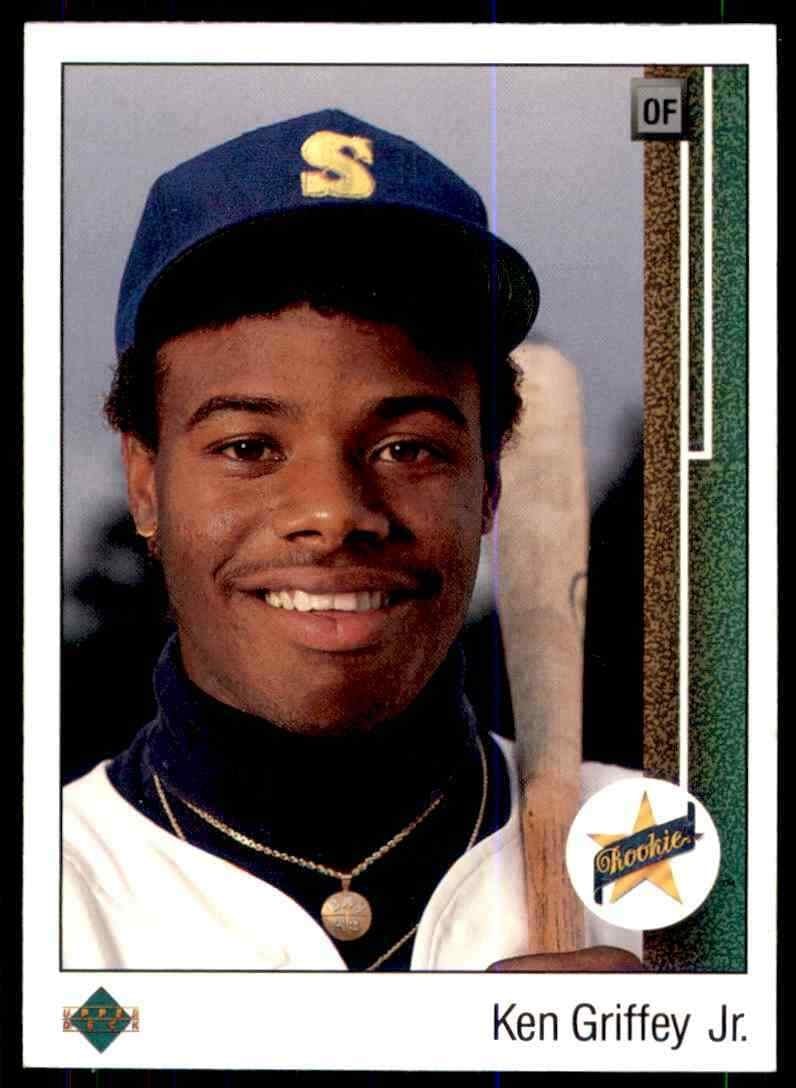
The most-graded card in PSA history — over 172,000 submissions — so scarcity has nothing to do with it. In 1989, Upper Deck launched the first "premium" card: 99 cents a pack when Topps cost 40, holograms, glossy stock — and they bet the entire launch on a 19-year-old who hadn't played a big-league game, making him card #1. Only ~4% gem. Raw: $15–30. PSA 9: ~$400. PSA 10: ~$5,000 after a 2025 run-up. The junk wax era's Mona Lisa.
2. 1986 Topps Jerry Rice #161 — The Condition Monster
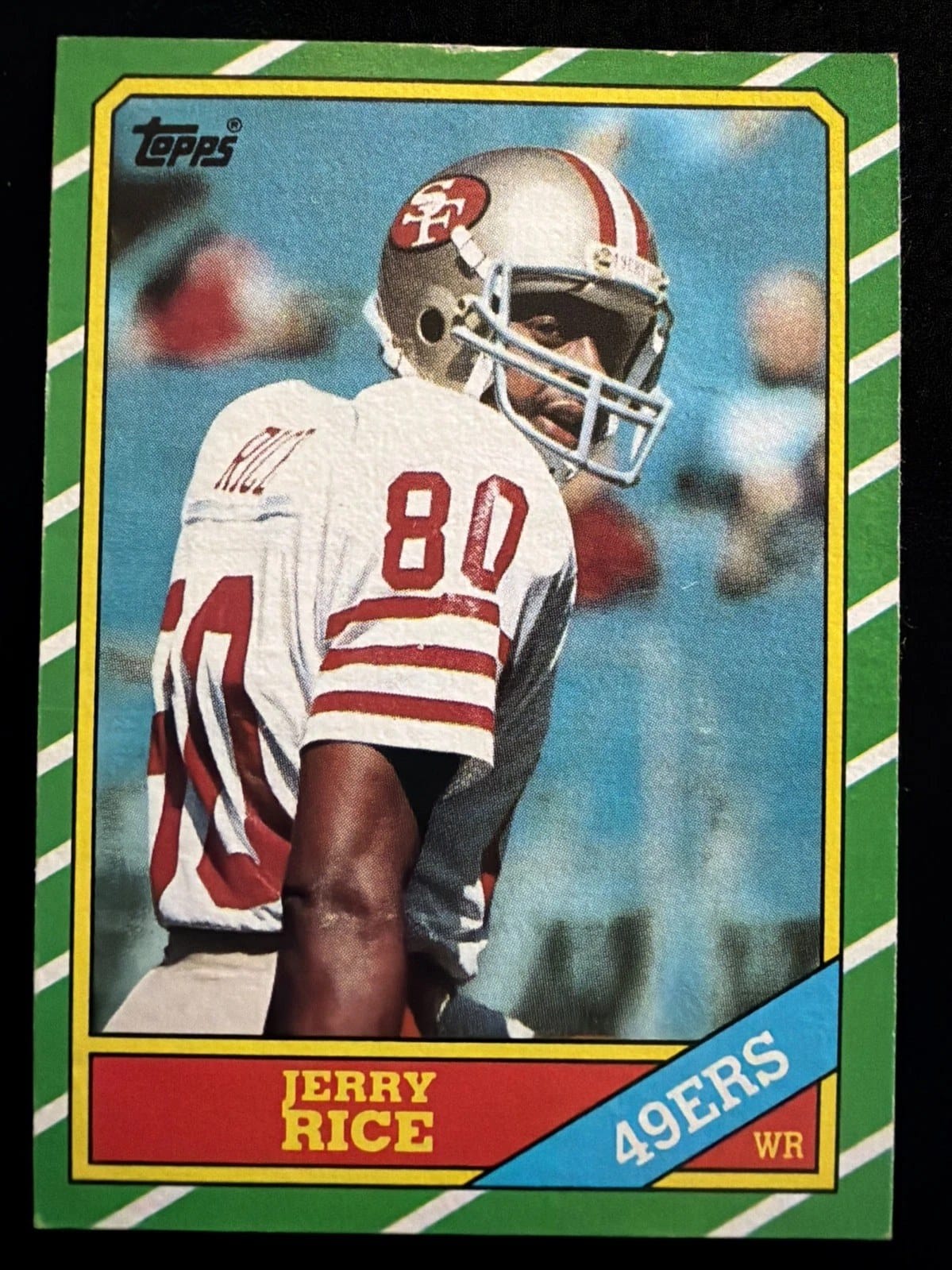
Here's where condition changes everything: those dark green borders (no, not wood grain — that's '87 baseball) chip if you breathe on them, and the set's centering was terrible off the press. Result: of 40,427 graded copies, exactly 63 are PSA 10s — a 0.16% gem rate. Raw copies are attainable; a PSA 9 runs ~$2,000; a PSA 10 has sold for $70,000–84,000. The greatest receiver ever, in a card that almost cannot exist in perfect form.
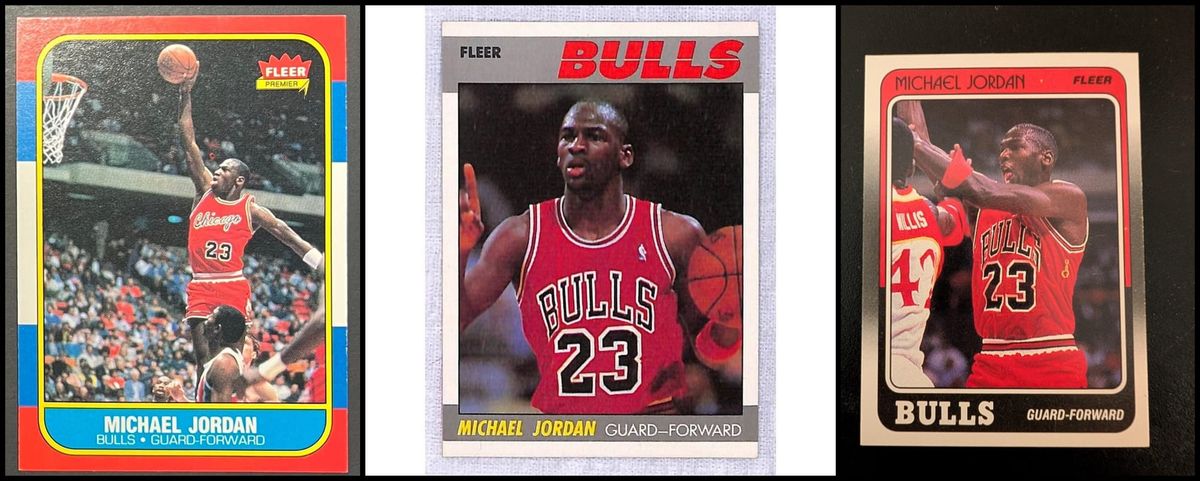
1. The Michael Jordan Fleer Trifecta (1986 #57 · 1987 #59 · 1988 #17) — The Whole Era in One Player
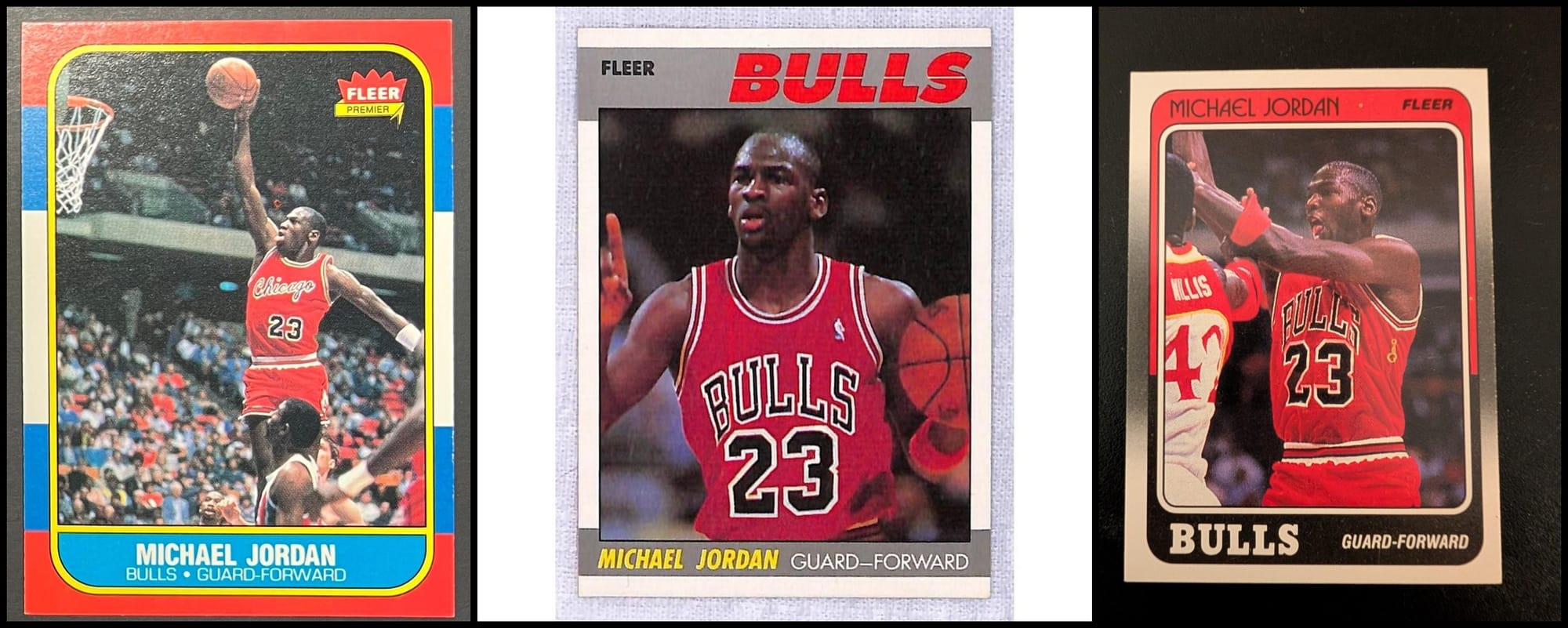
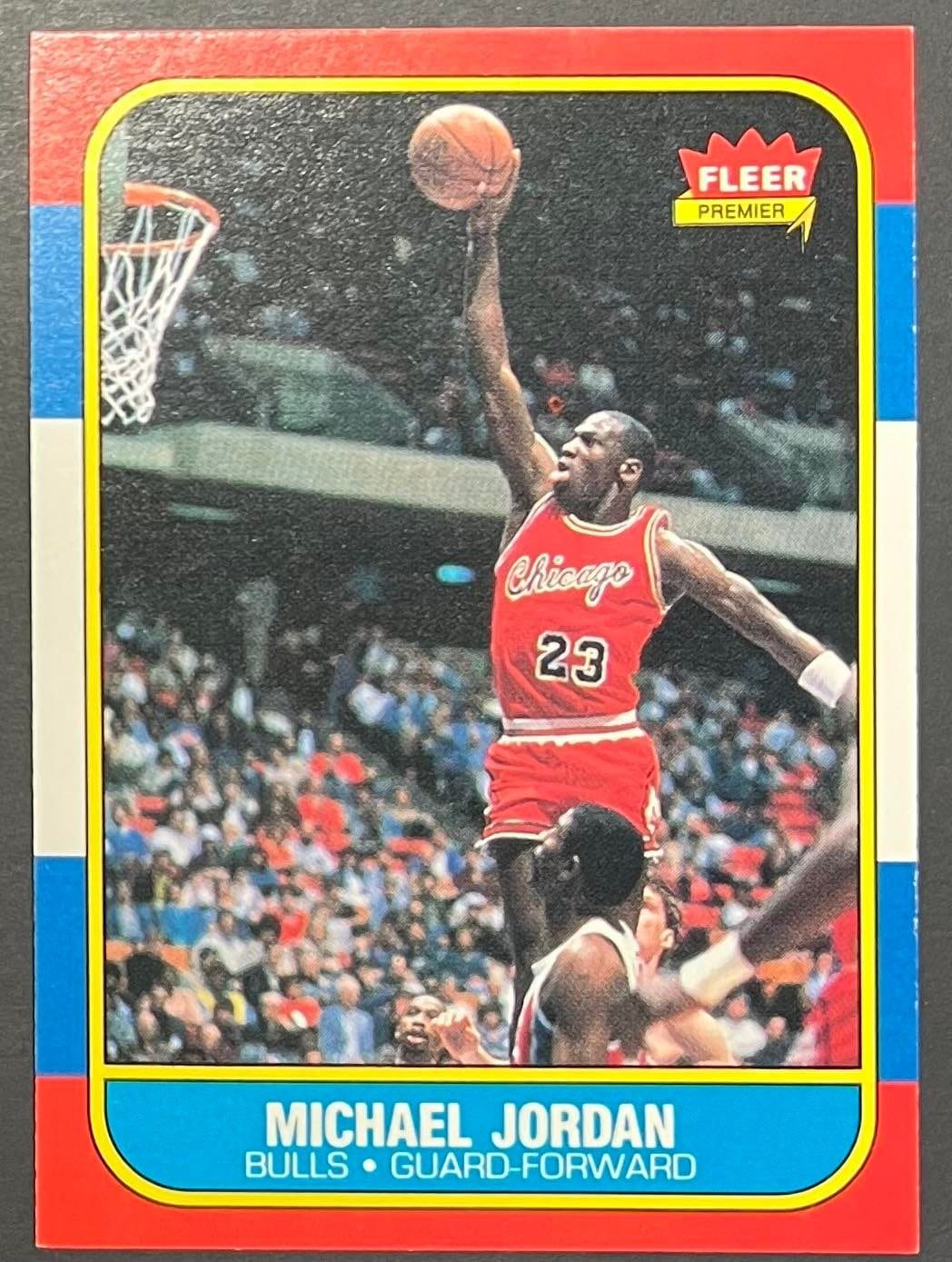
Three straight years, same player, same brand: $375,000–500,000+ → ~$29,000 → ~$5,000 in PSA 10. That price cliff is the junk wax story. The 1986 Fleer rookie isn't scarce because of clever planning — it's scarce because nobody wanted NBA cards in 1986; the license had been dead at retail for years and the set sold poorly. By 1988, print runs were climbing and the flood was coming. Buy the '88 for the price of dinner, admire the '86 from a distance — only ~1.1% of 28,000 graded rookies have ever gemmed, thanks to those chip-prone red borders.
Honorable Mentions: The Error Economy
1990 Topps Frank Thomas "No Name on Front" #414 — a printing hiccup on one early sheet run left the Big Hurt anonymous. The only PSA 10 in existence sold for $183,000 this spring. Check. Your. Commons. 1989 Fleer Bill Ripken #616 "FF" — the infamous bat-knob card, with a whole taxonomy of frantic corrections (black box, white scribble, black scribble, saw-cut). A white-scribble PSA 10 brought $4,915. 1990 Leaf Frank Thomas #300 — the honest one: the best rookie in the era's most "premium" set tops out around $260 in PSA 10. That's the junk wax ceiling without an error or a miracle.
What's the best card sitting in YOUR junk wax box? Wrong answers get graded harshly.

Comments ()