
Best Baseball Hitting Aids for Kids: 5 Little League Batting Tools Worth Buying (Ages 6 to 13)
The 5 baseball hitting aids worth buying for a Little League kid, ages 6 to 13, from a $30 tethered trainer to the tee the pros use, organized by T-ball, coach-pitch and kid-pitch.
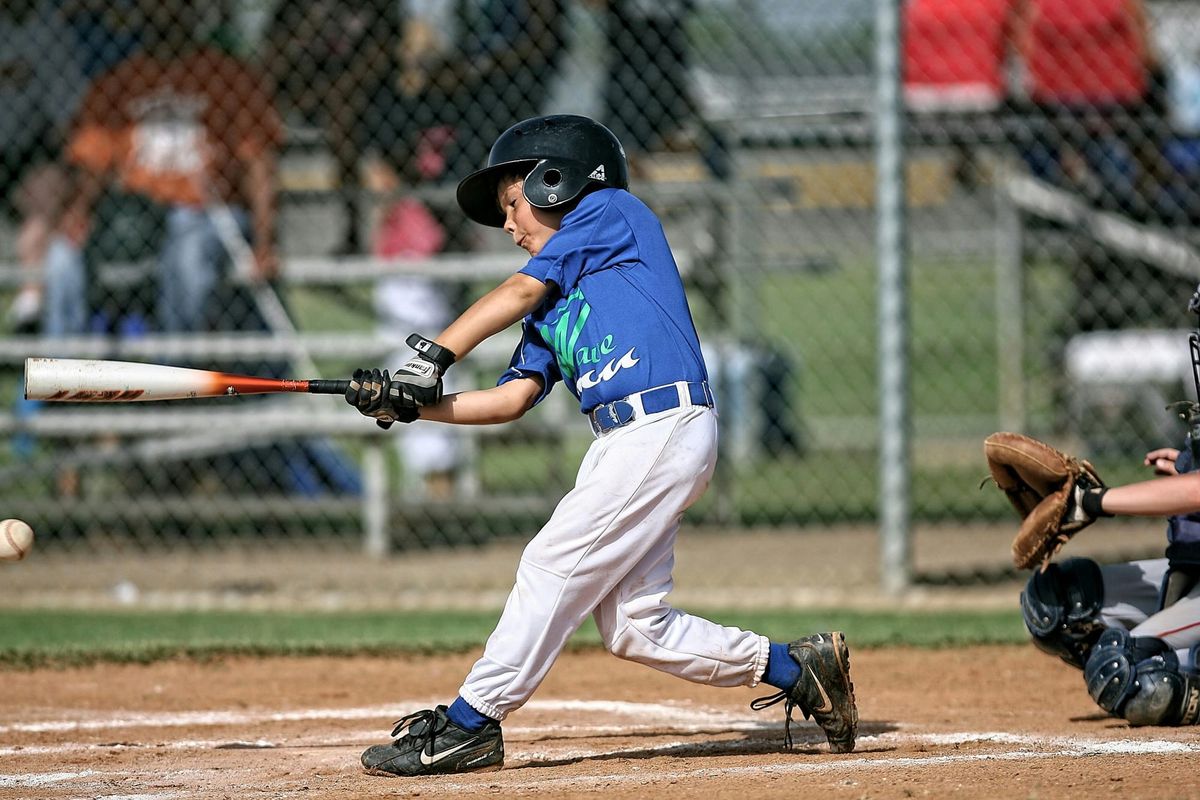
Every spring, a few million parents sign a kid up for Little League and then stand in a sporting goods aisle wondering which of the 40 plastic things on the wall will actually help. Most of them won't. Hitting a baseball is a repetition problem, and the tools worth owning are the ones that turn a bored kid and a bored parent into 200 swings before dinner without anyone chasing a ball across the yard.
We own these. Here are the 5 that have earned their space in the garage, organized by what your kid is actually facing this season.
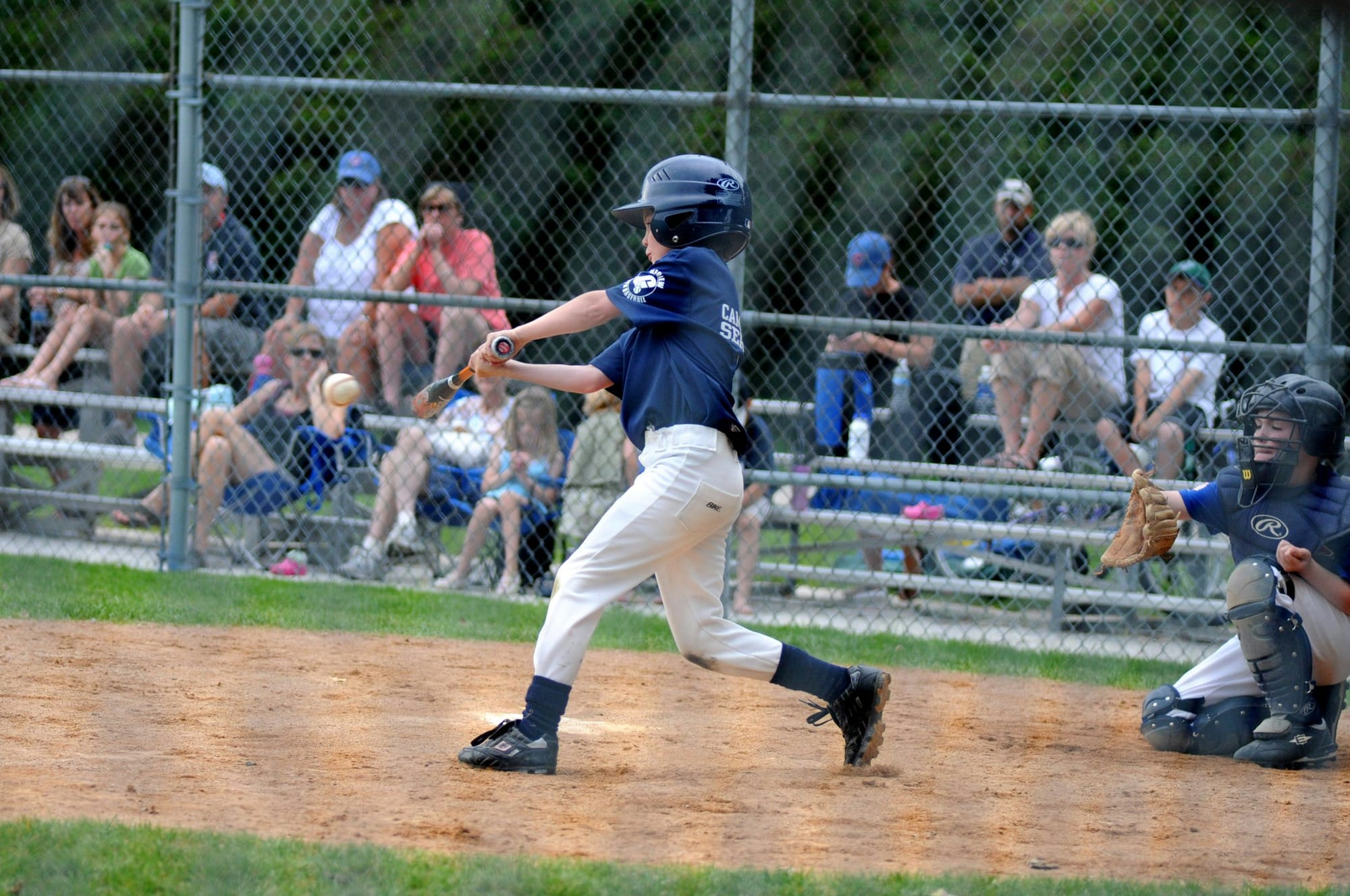
The short version
- Under $40 and it changes everything: the SKLZ Hit-A-Way, a ball on a cord that straps to a basketball goal.
- The one tee to buy: the Tanner Tee, the same tee the pros use.
- For the backyard: a PowerNet 7x7 net so the tee work has somewhere to go.
- For kid-pitch: the Louisville Slugger Blue Flame, a pitching machine that needs no power.
- For everything: a 4-pack of Blitzballs, the best $19 in youth baseball.
First, what age your kid is
Little League runs in 3 stages, and the right tool depends on which one you're in.
T-ball, ages 6 to 7. The ball doesn't move. The job is a swing that repeats: feet, hands, eyes on the ball. A tee and a soft ball do all of it.
Coach-pitch, ages 8 to 9. Now the ball moves, slowly, and timing becomes the problem. This is where a tethered trainer or a slow machine earns its money, because a parent's arm gives out long before a kid's attention does.
Kid-pitch, ages 10 to 13. Real pitching, real speed, and the first time the kid gets beat by a fastball. Now you want a machine that throws hard enough to matter and a swing trainer that fixes the bat path that worked at 8 and doesn't at 11.
Little League's own hitting drill progression starts every age on the tee and builds out from there. So does this list.
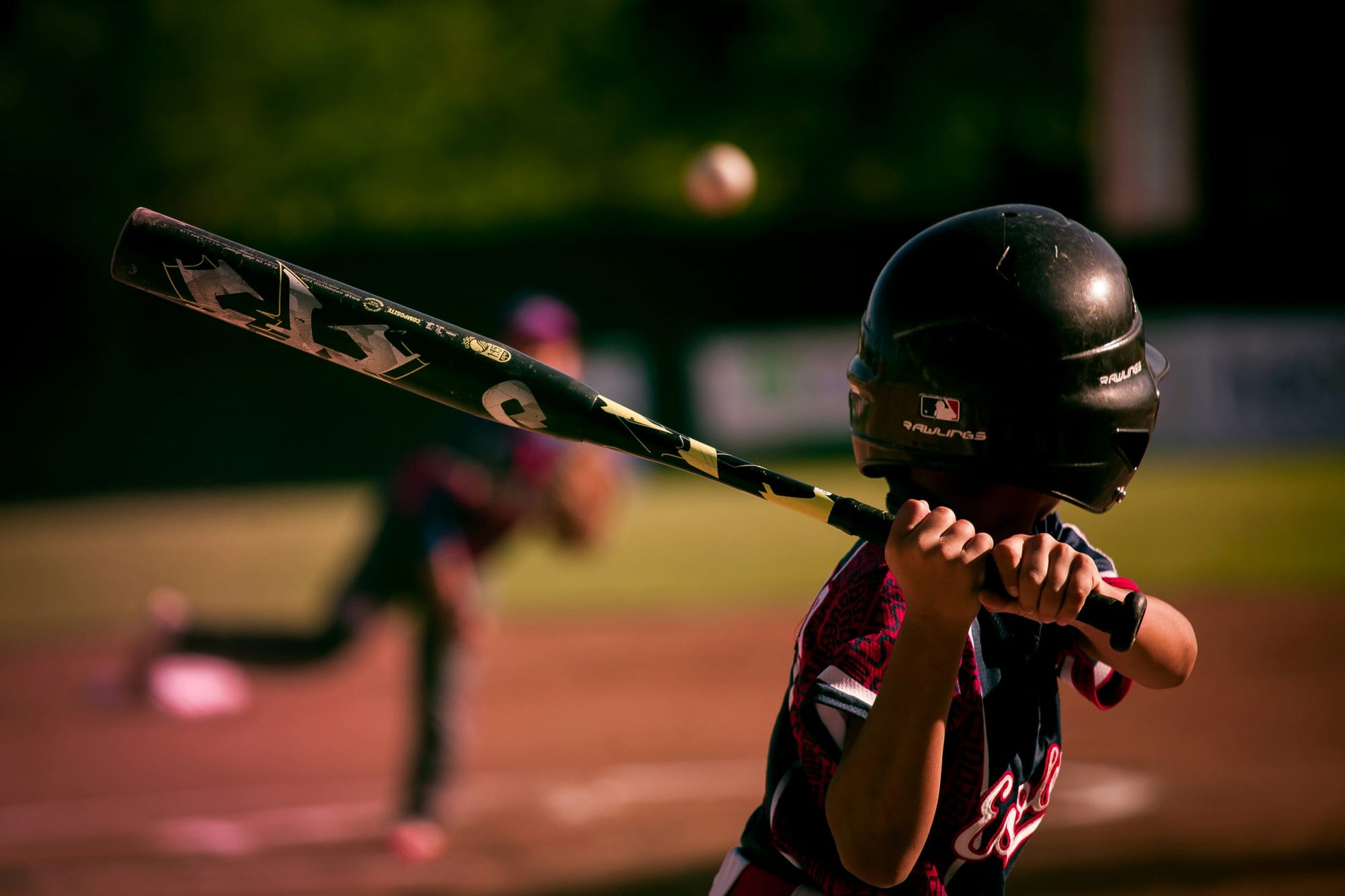
1. SKLZ Hit-A-Way Swing Trainer
Best for: ages 7 to 13, and any parent who's tired of shagging balls. About $30 to $40.
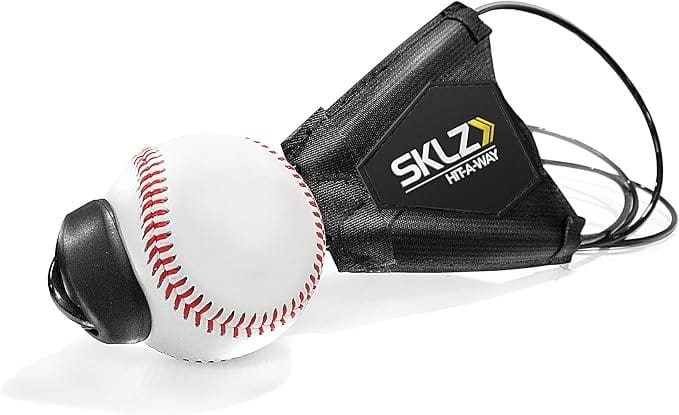
A real-weight ball on a cord, with a strap that wraps around a pole, a tree, or the post of a basketball goal. The kid hits it, it whips around the pole, it comes back. SKLZ says up to 500 swings an hour, and that's not marketing; a 9-year-old will happily stand there until it's dark.
My wife bought this for our son just ahead of his 10-year-old season. He went from a limp-noodle upper-cut swing to whipping the bat through the zone with authority — and pounding the ball to the fences. This product sits at No. 1 because it really delivers results. (We've used both the version that ties to a basketball goal pole and the standalone version, which is more expensive but just as effective.)
What to know: the knock on it in reviews is the cord. On some units it knots or frays after a season, and the height slider can creep down on a cheaper pole. Wrap the strap tight and check the cord where it meets the ball every few weeks. If you don't have a pole, the Hit-A-Way Select, built for ages 13 and under, is the same idea on its own stand for about twice the price.
Link: SKLZ Hit-A-Way on Amazon
2. Tanner Tee, The Original
Best for: ages 8 and up. About $100 to $120.
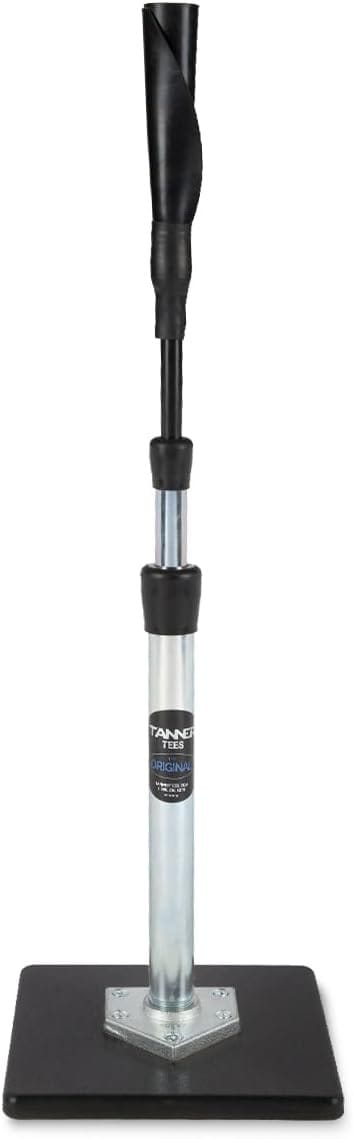
There are $25 tees and there is the Tanner, and the difference is that the Tanner is still standing in 5 years. A steel shaft, a composite base you can kick over without breaking, and a hand-rolled rubber top that lets the bat go through the ball instead of catching on the tee. It adjusts from 26 to 43 inches, which covers a tall 8-year-old through high school. It's the tee you'll see in every big-league cage, and replacement tops and stems are sold separately, so the thing never wears out.
One of the simplest and most effective drills a kid can do is hit balls off a tee one arm at a time: a round with the left arm only, a round with the right arm only, then both hands together. Swinging with each arm by itself teaches the correct path for whipping the bat through the zone, because a kid can't muscle a one-handed swing; the barrel has to go where the hand leads it. It's a drill that works at 7 and still works at 17, and it needs a tee that holds still for it.
What to know: 26 inches is the floor, and that's tall for a small 6-year-old. For T-ball, Tanner makes a shorter junior version, or you can start with a $30 plastic tee and buy the Tanner when the kid outgrows it, which is about when he starts hitting the plastic one hard enough to tip it.
3. PowerNet 7x7 Practice Net with Travel Tee
Best for: any age with a backyard, a driveway, or a garage. About $110 to $140.
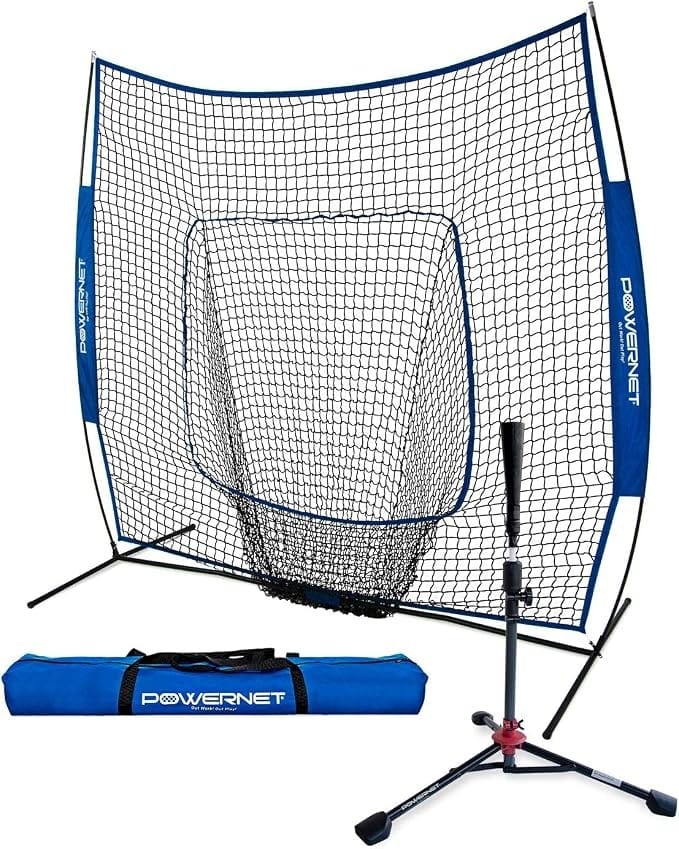
A tee is only half of tee work. The other half is somewhere to hit the ball that isn't the neighbor's fence. The PowerNet is the standard 7-by-7 pop-up net: it sets up in 2 minutes with no tools, folds into a carry bag, and the double-stitched netting holds up for years; it's not unusual to find reviewers on their 7th season with the same one. It comes with a travel tee, which is fine for the road and flimsy for daily use. Pair it with the Tanner and the backyard is a cage.
What to know: stake it or weight it in the wind. And budget for a bucket of balls; a kid will hit 30 in a row into a net and the whole point is not stopping to pick up.
Link: PowerNet 7x7 Net with Tee on Amazon
4. Louisville Slugger Blue Flame Pitching Machine
Best for: ages 6 to 13, coach-pitch and up. About $150 to $230.
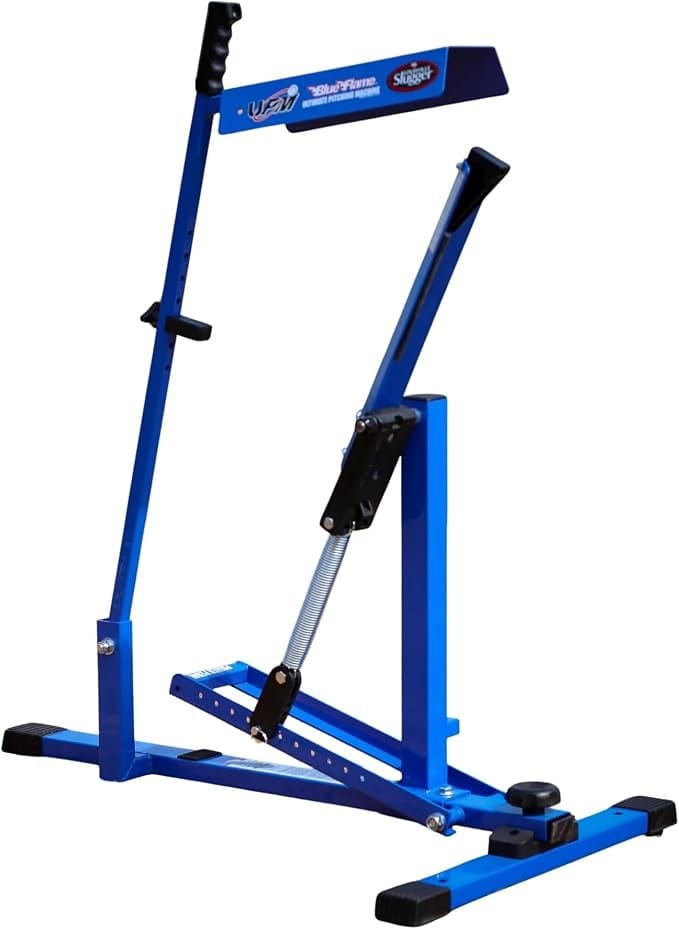
The Blue Flame is the machine Little League uses for machine-pitch divisions, and the reason is simple: it's a spring-loaded arm. No power, no batteries, no cord. You pull the lever and it throws, anywhere from 18 to 45 miles an hour, and it throws baseballs, softballs, or plastic balls. A parent can feed it from behind a screen for an hour without a sore arm, and it folds up and goes in the trunk.
What to know: the springs lose tension over time, and a replacement spring kit is about $20 a year if the machine gets real use. It's also only as accurate as the balls you feed it, so use one kind of ball and keep them matched. The cheaper plastic-ball machines in the $50 range throw 10 to 20 miles an hour and get wildly inconsistent reviews; for a 6-year-old they're a toy, and for anyone older they're a frustration.
Link: Louisville Slugger Blue Flame on Amazon
5. Blitzball 4-Pack
Best for: ages 5 and up, every day. About $19.
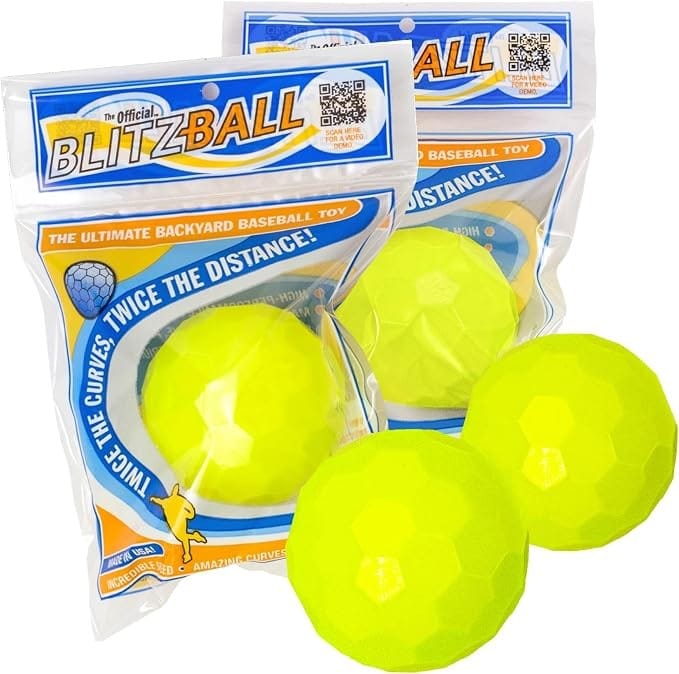
A Blitzball weighs less than an ounce, so it can't break a window or a nose, and it curves like a cartoon, which is the point. Backyard games with a Blitzball are the most reps a kid will ever take without knowing they're practicing, and the exaggerated movement is real pitch-recognition work. They're made in the USA, they don't crack, and the only thing that kills one is a summer in the sun. Four of them is a season.
What to know: if you want something that feels like a real ball for tee and net work, the SKLZ Impact limited-flight baseballs are the realistic-weight option. The Blitzball is for the game in the yard.
Link: Blitzball 4-Pack on Amazon
Honorable mentions
SwingRail swing trainer, about $30. A strap that connects the hands to the lead arm and pops open when the kid casts the bat away from the body. Coaches' association best-of-show, and it works. But the maker says 9 and up, and it means it; under 9 it pops open constantly and the kid gives up. For a 6-to-8-year-old, the Insider Bat does the same job as a training bat they just swing.
Jugs T, about $90 to $110. The other pro tee. Heavier base than the Tanner, 1-year guarantee, a fine choice if the Tanner is out of stock.
Heater Sports Junior pitching machine, about $200 to $250. A powered machine with an auto-feeder for kid-pitch ages. More to go wrong than the Blue Flame, but the feeder means the kid can hit alone.
What we'd skip
Any plastic-ball pitching machine under $60. The reviews on consistency are brutal, and a 7-year-old learns nothing from a pitch that's a strike one time and in the dirt the next. Save the money and buy the Hit-A-Way.
If you only buy one
The Hit-A-Way, and it isn't close. Everything else on this list needs a second person, a backyard, or both. The Hit-A-Way needs a pole and a kid.
What's in your garage? Tell us in the comments.
Comments ()