
On This Date: Billie Jean King Becomes the First Woman to Earn $100,000 in a Year (Oct. 3, 1971)
On Oct. 3, 1971, Billie Jean King beat Rosie Casals in Phoenix and became the first woman athlete to earn $100,000 in a year. The $1 contracts that started it, the Nixon call, and the pay gap that remained.
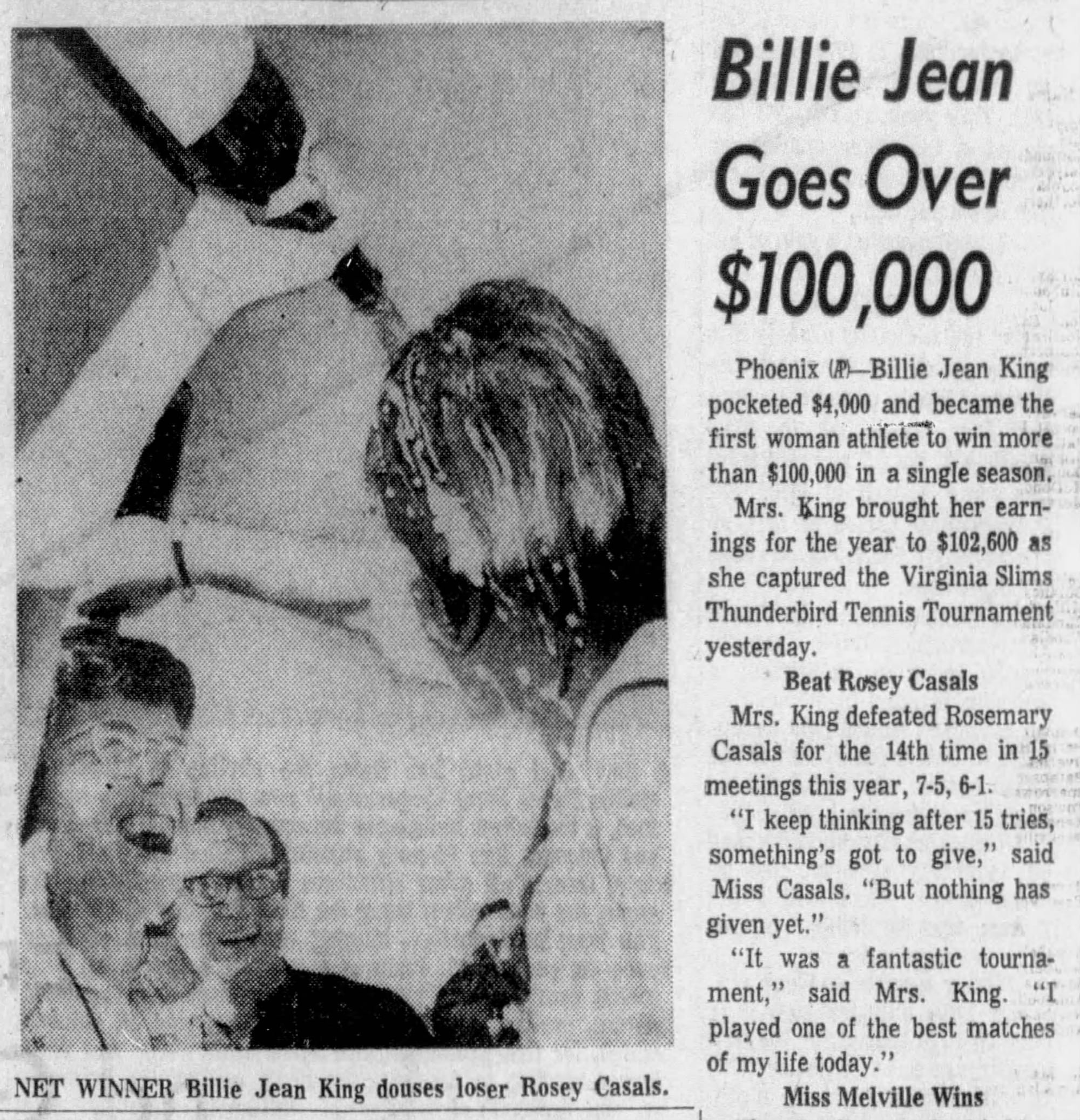
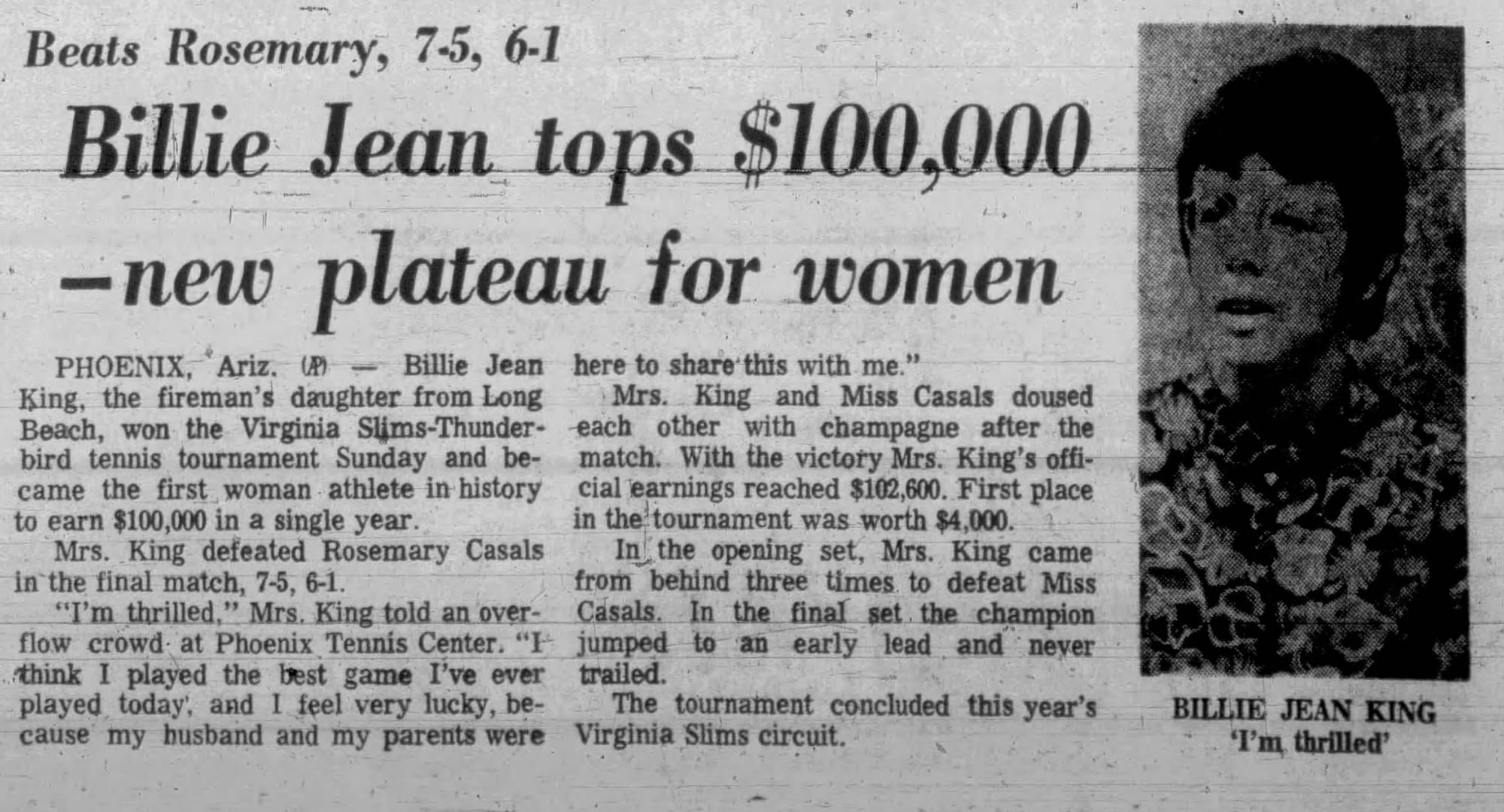
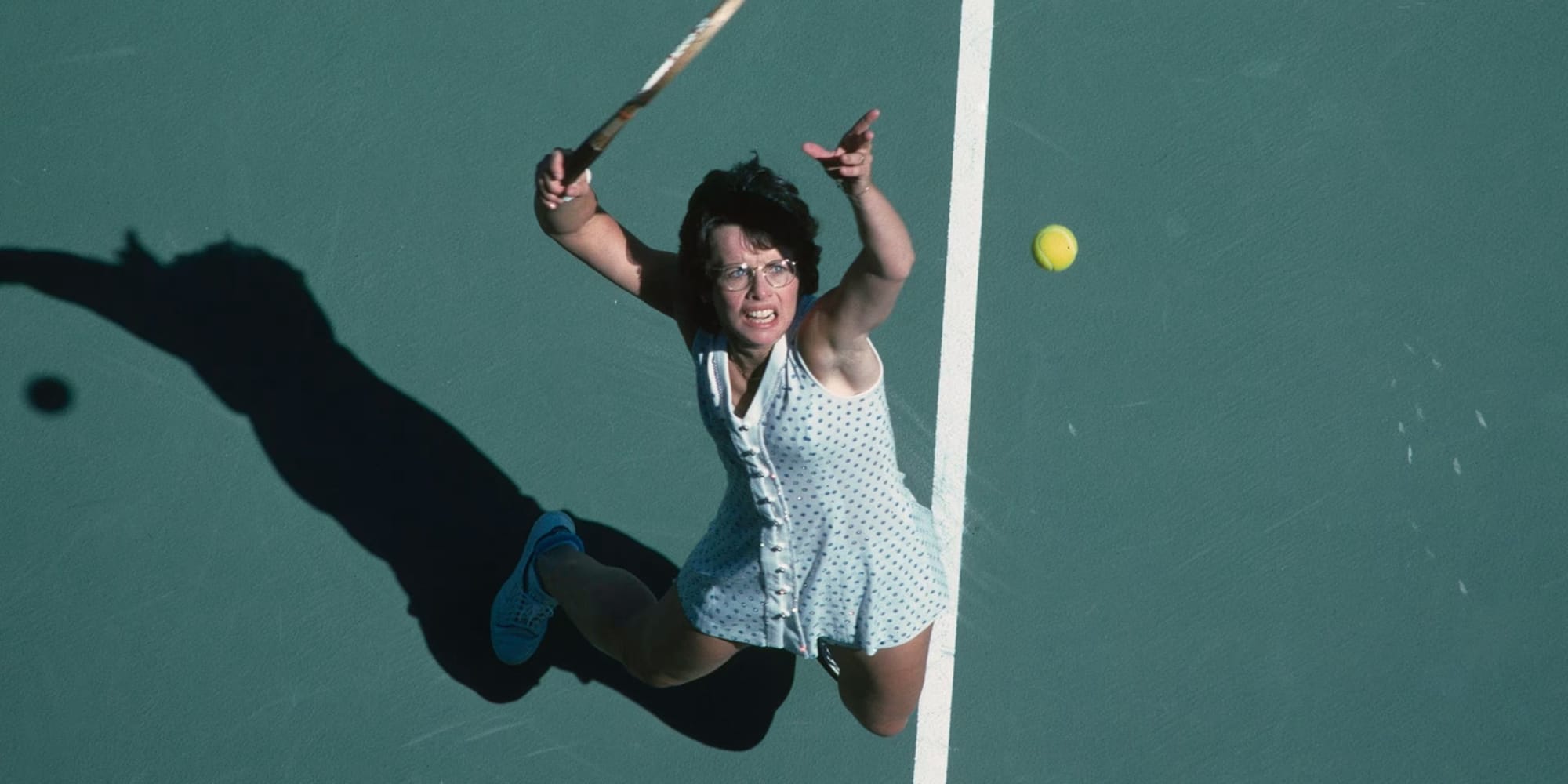
On Oct. 3, 1971, in Phoenix, Billie Jean King beat Rosie Casals, 7-5, 6-1, in the final of the Virginia Slims Thunderbird Classic. Then she and Casals went back out and won the doubles. The $4,000 winner's check pushed King's prize money for the year to $102,600, past $100,000. No woman in any sport had ever earned that much in a season.
She'd said in advance she was going to do it. That was the point.
The goal she announced
King set the $100,000 target on purpose, and said so, because a number was something newspapers would print. "By that point we were focused on getting me over $100,000 in prize money for the year," she said later, "so I would be the first woman athlete to achieve that." The women's tour was 9 months old and needed a headline. She gave it one, and she gave it in Phoenix by beating her own doubles partner.
It was the 14th time in 15 meetings that year she'd beaten Casals. "I keep thinking after 15 tries, something's got to give," Casals said. "But nothing has given yet." King told the crowd she thought she'd "played the best game I've ever played today." Then the 2 of them doused each other with champagne.
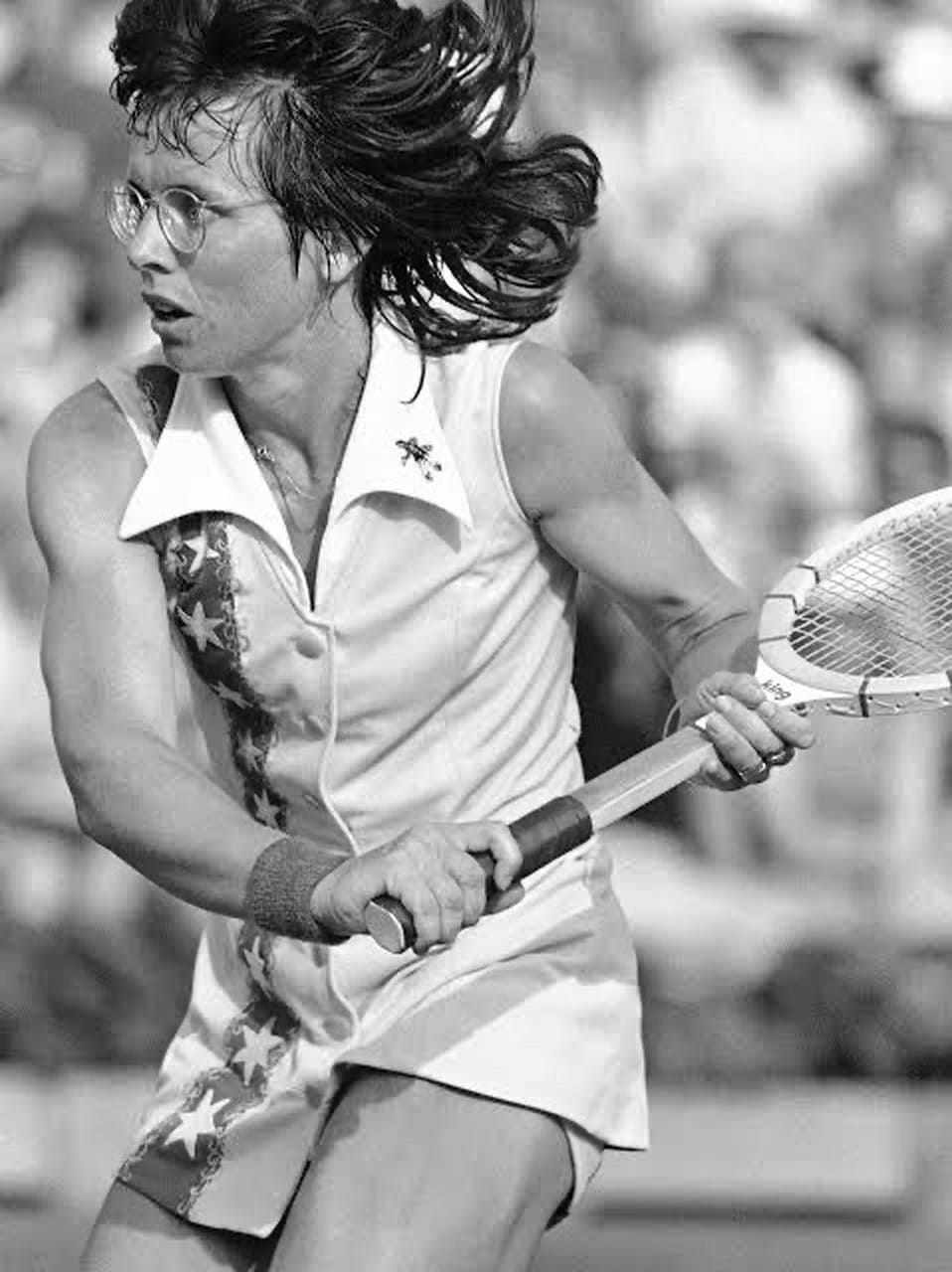
She finished 1971 with $117,000. Casals was third on the tour at $62,000. King won 17 of the 31 tournaments she entered that year, went 112-13, and won the U.S. Open, over Casals again, in September.
Where the money came from
The money came from a fight that had started 54 weeks earlier. In September 1970 the Pacific Southwest tournament in Los Angeles offered its men's champion $12,500 and its women's champion $1,500, an 8-to-1 gap. King and 8 other players, the "Original 9," walked away from it and signed $1 contracts with World Tennis publisher Gladys Heldman to play their own event in Houston instead. Heldman found the sponsor with a letter to Philip Morris chief Joe Cullman that ended "Joe, show us some dough!" He put up $2,500 for the naming rights, and the Houston tournament became the Virginia Slims Invitational.
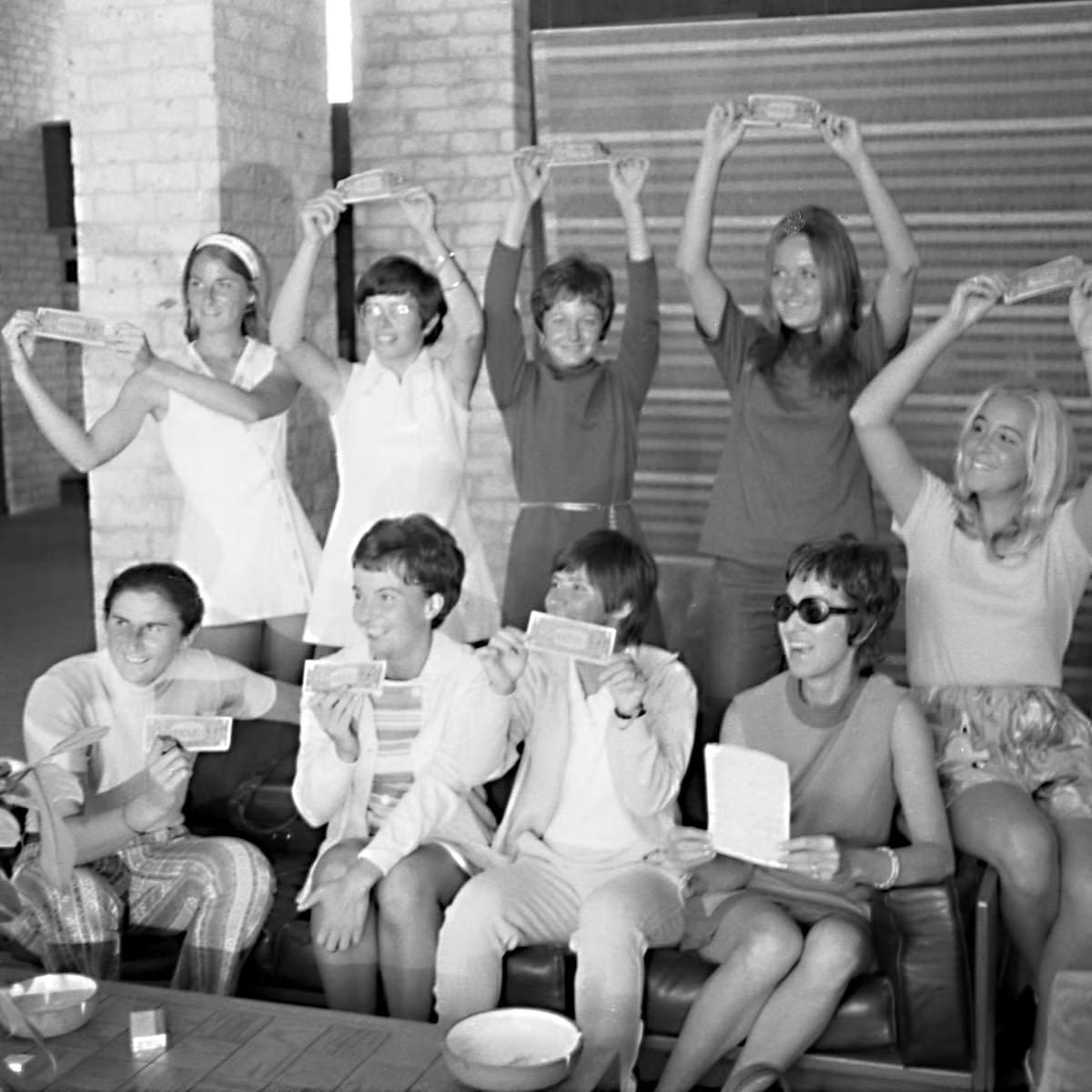
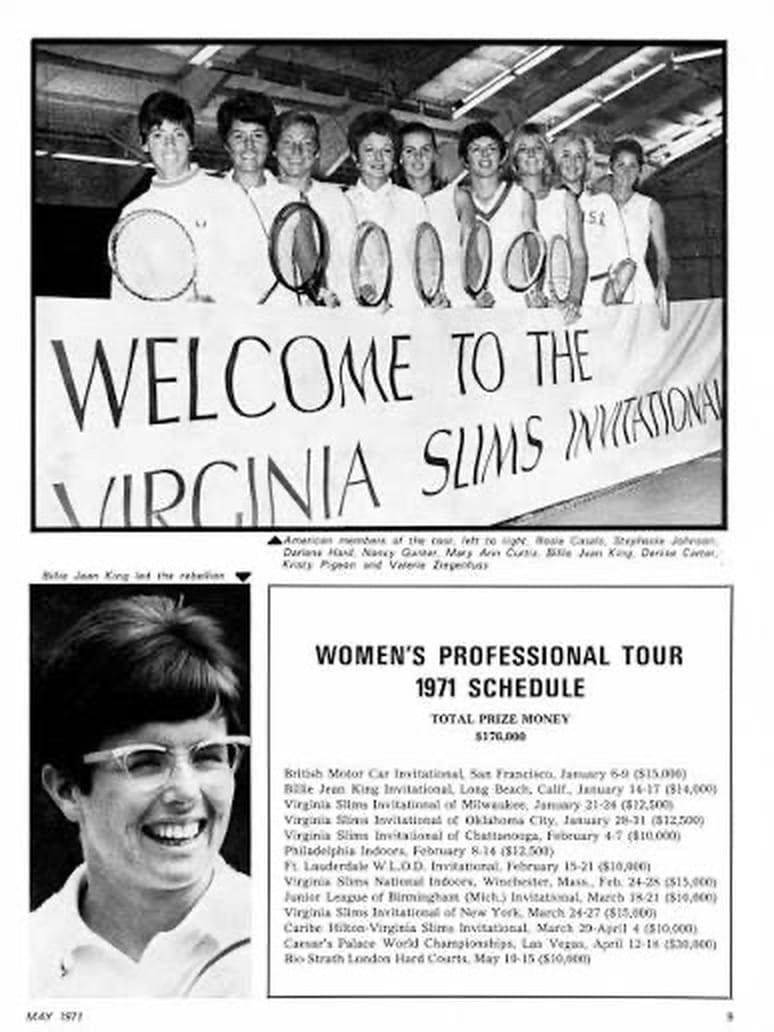
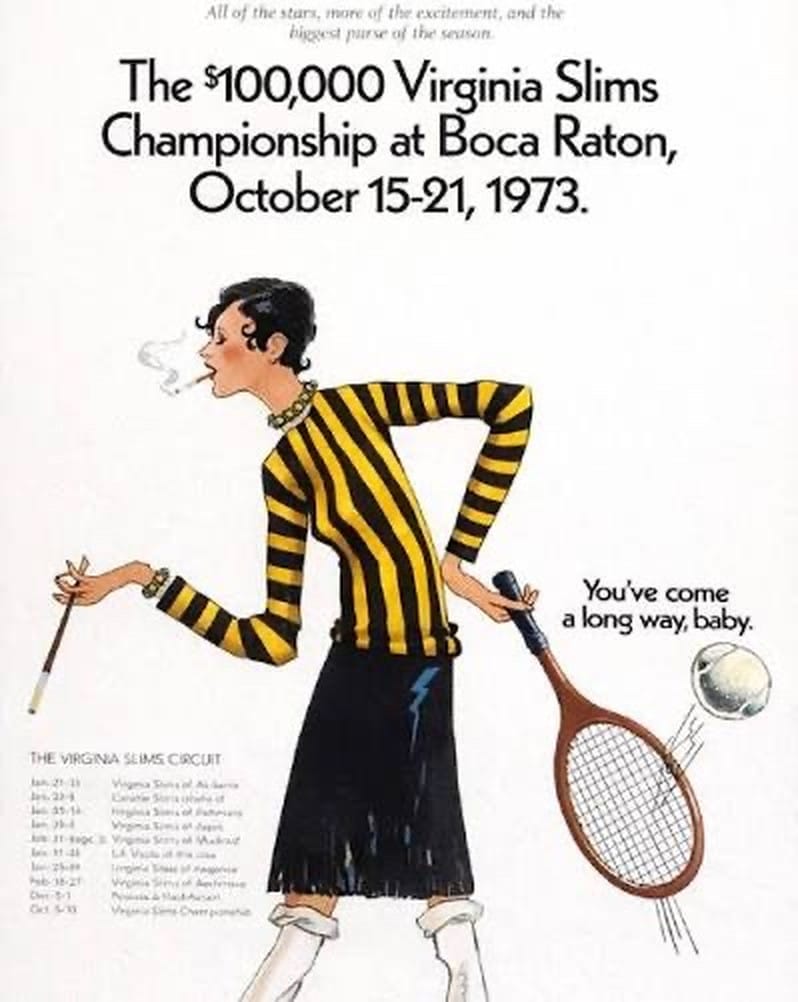
By January 1971 it was the Virginia Slims Circuit: 19 tournaments, $309,100 in total prize money, and King playing nearly all of them. The Thunderbird Classic in Phoenix had a $20,000 purse, with 32 players on hard courts. That was a big week on the 1971 women's tour.
The phone call
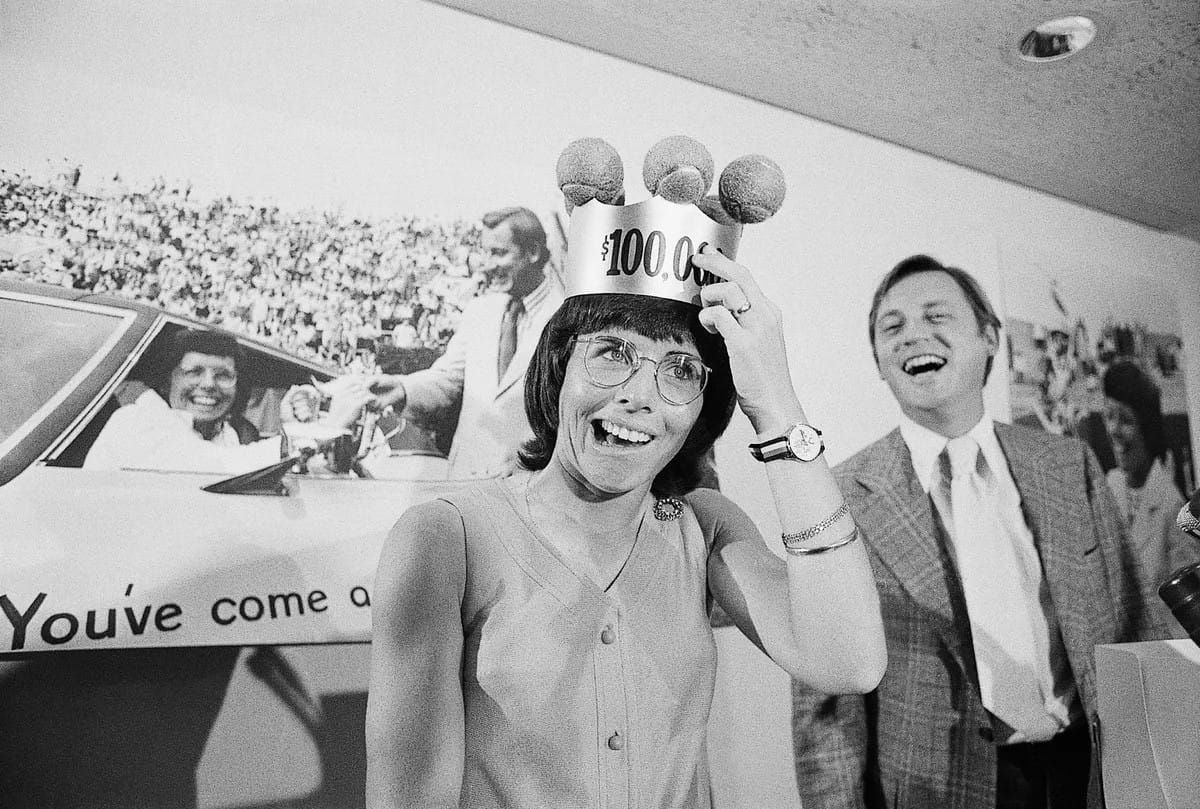
The next day, Oct. 4, King was at a Philip Morris press conference in New York, wearing a paper crown with "$100,000" on it and standing next to a cake with the number on top, when the phone rang. It was President Nixon. "He was really thrilled that I had done it," she said. "I took the call at Philip Morris's offices."
The call shows up in H.R. Haldeman's diary the next day: the president, who had just congratulated the first woman to win $100,000, now wanted to stage a tennis exhibition on the White House court with King and Stan Smith.
The New York Times ran it on page 58 the morning after Phoenix: "Mrs. King Posts Earnings Record."
What $117,000 was, and wasn't
It was about 10 times the average American income that year. It was more than Johnny Bench, the National League MVP, made from the Reds. It was less than Willie Mays.
It was also a fraction of what the men on her own sport's tour made. Rod Laver had cleared $100,000 two years earlier, and in 1971 he earned $292,717, about 2 1/2 times King's total. At the U.S. Open she'd just won, her champion's check was $7,500. Stan Smith's was $20,000. The number King hit was a milestone. The gap around it was the argument.
What came next
- December 1972: Sports Illustrated named King its Sportsman of the Year, shared with John Wooden. First woman, first tennis player.
- June 1973: a week before Wimbledon, about 70 players met at the Gloucester Hotel in London and founded the Women's Tennis Association. King was its first president.
- 1973 U.S. Open: the first major with equal prize money, $25,000 to each champion, after Ban deodorant put up $55,000 to close the gap.
- Sept. 20, 1973: King beat Bobby Riggs, 6-4, 6-3, 6-3, in the Houston Astrodome in front of 30,492 people.
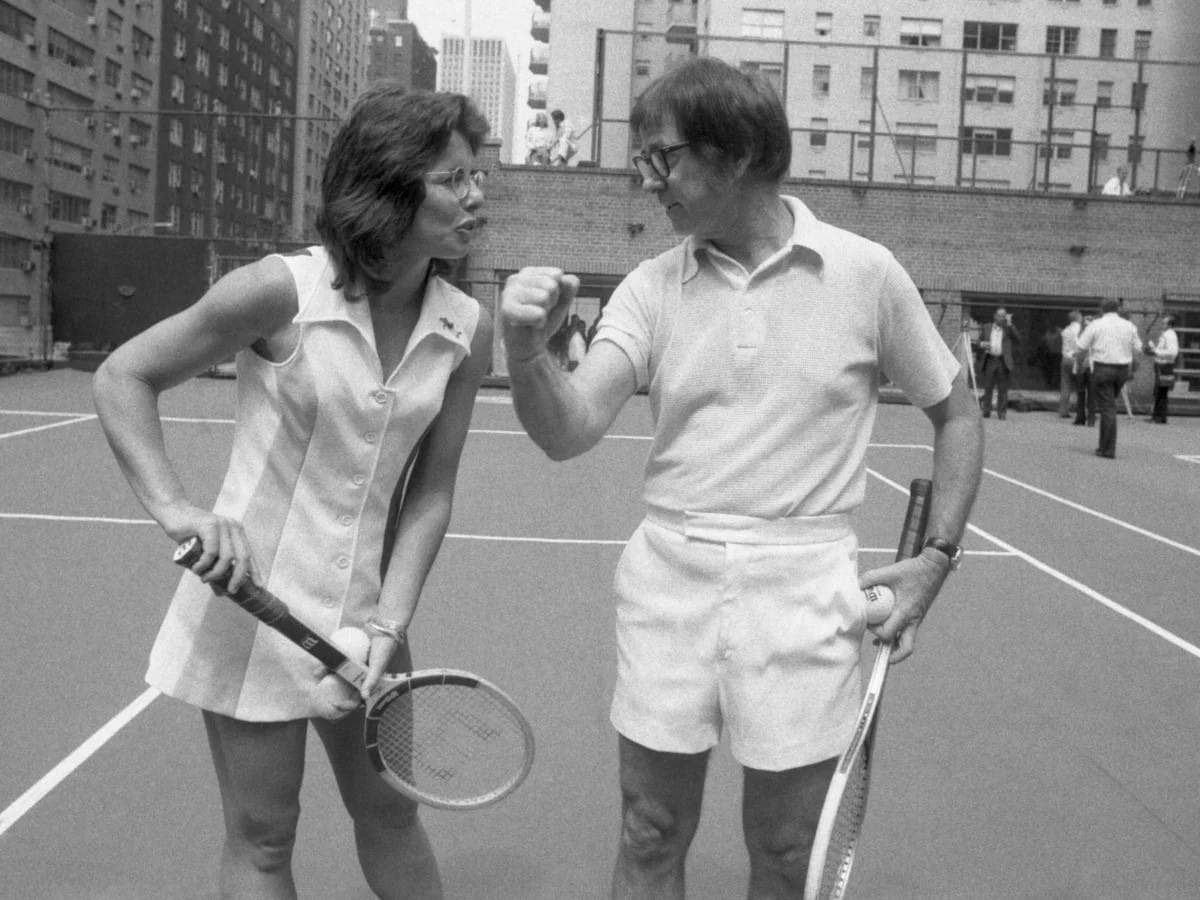
Two years after the crown and the cake, the crumbs were the other side's problem.
Who's the most important athlete in the history of women's sports? Tell us in the comments.
Comments ()