
On This Date: Dempsey, Firpo, and the Wildest Four Minutes in Boxing History (Sept. 14, 1923)
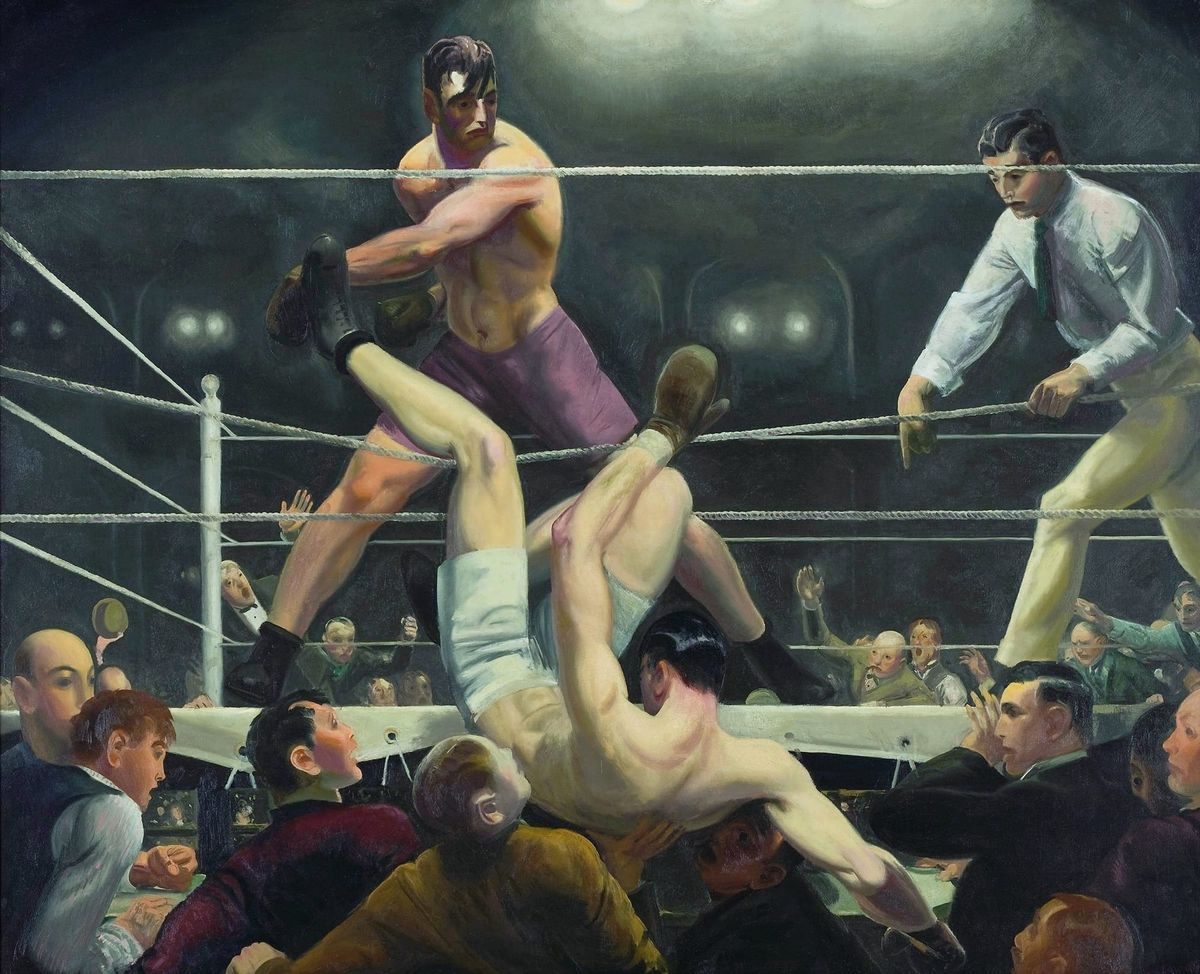
On this date in 1923, at the Polo Grounds in New York, Jack Dempsey defended the heavyweight championship against Luis Ángel Firpo of Argentina. The fight lasted three minutes and 57 seconds. In that time there were eleven knockdowns, the champion was thrown clean out of the ring onto a sportswriter's typewriter, and roughly 88,000 paying customers, plus a crowd rioting outside the gates, saw the most violent title fight anyone had ever witnessed.
It ended 57 seconds into the second round with Firpo on the canvas, and it has been argued about ever since, mostly by people who get the rules wrong.
The Wild Bull
Firpo was 29, six-foot-two and 216 pounds, a former pharmacy clerk from Junín who had fought his way through the American heavyweight ranks in 1922 and 1923 with one punch, a clubbing right hand, and almost no technique. Damon Runyon is usually credited with the nickname: the Wild Bull of the Pampas. He was the first Latin American ever to fight for the heavyweight title, and the gate he drew, about $1.19 million, was the second million-dollar gate in boxing history, two years after Dempsey's fight with Georges Carpentier had produced the first.
Round One
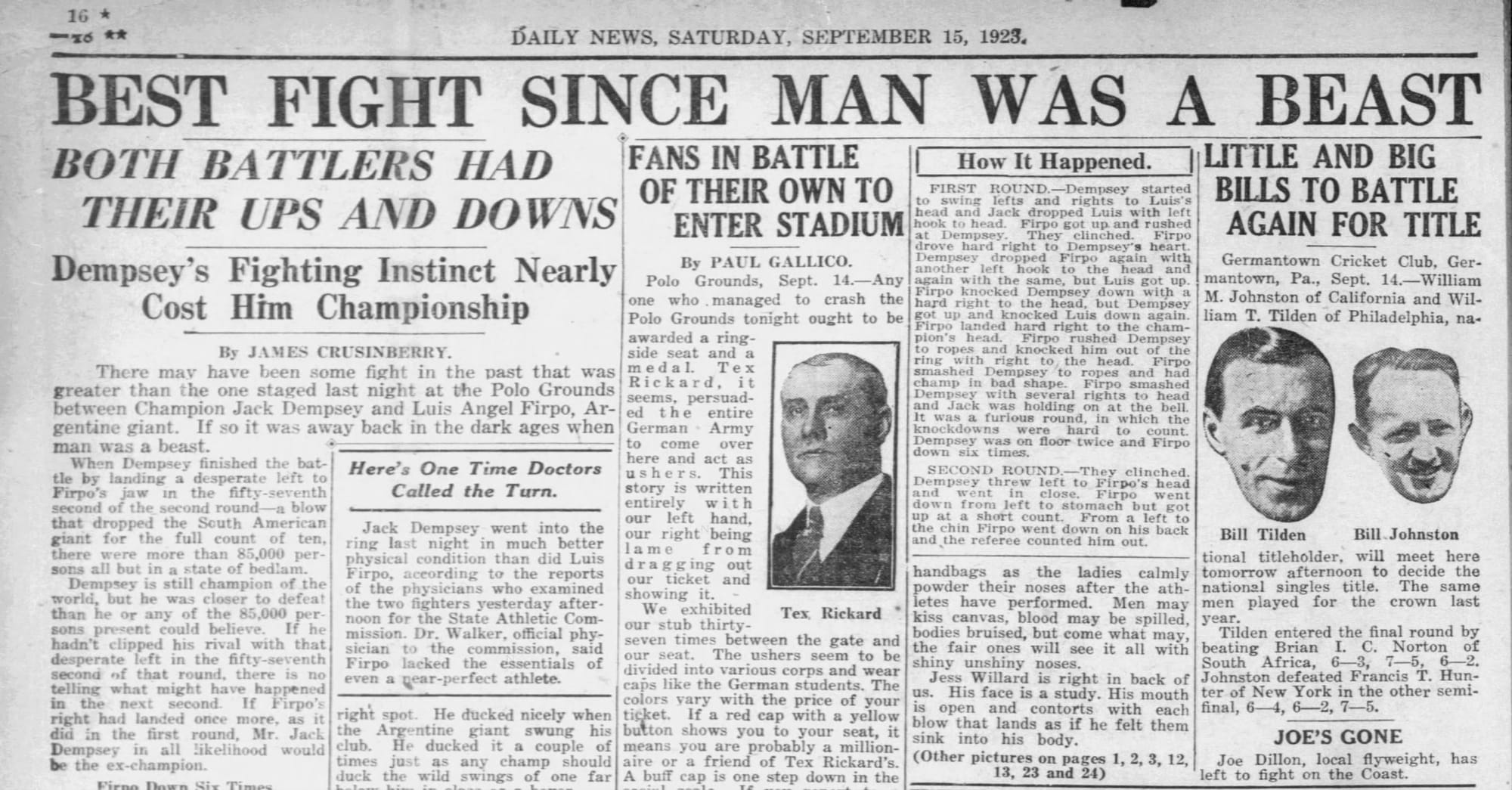
Seconds after the opening bell, Firpo caught Dempsey with a right and put him down. It was the first time Dempsey had been floored as champion. He got up and did what Jack Dempsey did: he knocked Firpo down seven times in the round, standing over him and hitting him the instant he rose, because in 1923 there was no rule that said he couldn't. Nat Fleischer, the founder of The Ring, thought Dempsey should have been disqualified for it.
Then, late in the round, Firpo landed one of his long swinging rights and Dempsey went through the ropes and out of the ring, landing on the press row and the typewriter of Jack Lawrence of the New York Tribune. The writers shoved him back in, which was against the rules. Referee Johnny Gallagher had reached four when Dempsey's feet touched the canvas again; ringside stopwatches claimed 14 seconds; the Argentine press said 17.
Here is the part the legend leaves out. Under the rules in force that night, a fighter knocked out of the ring had 20 seconds to get back in. Even the longest count on offer was legal. Dempsey later said the only thing that saved him was the crowd throwing him back into the ring, and he may have been right, but he was not saved by a slow count.
Round Two
Dempsey came out and finished it. Two more knockdowns; the second one ended the fight at 0:57. Eleven knockdowns in total, nine of them Firpo's, in three minutes and fifty-seven seconds of boxing. The New York Times headline the next morning ran across the top of page one: "Dempsey Whips Firpo in Second Round of Fiercest of Heavyweight Battles; 90,000 in Polo Grounds, 25,000 Riot Outside." Gallagher was suspended by the New York commission. New York adopted a neutral-corner rule not long after, and it was a version of that rule, four years later in Chicago, that gave Gene Tunney the Long Count and Dempsey the loss that defined the end of his career.
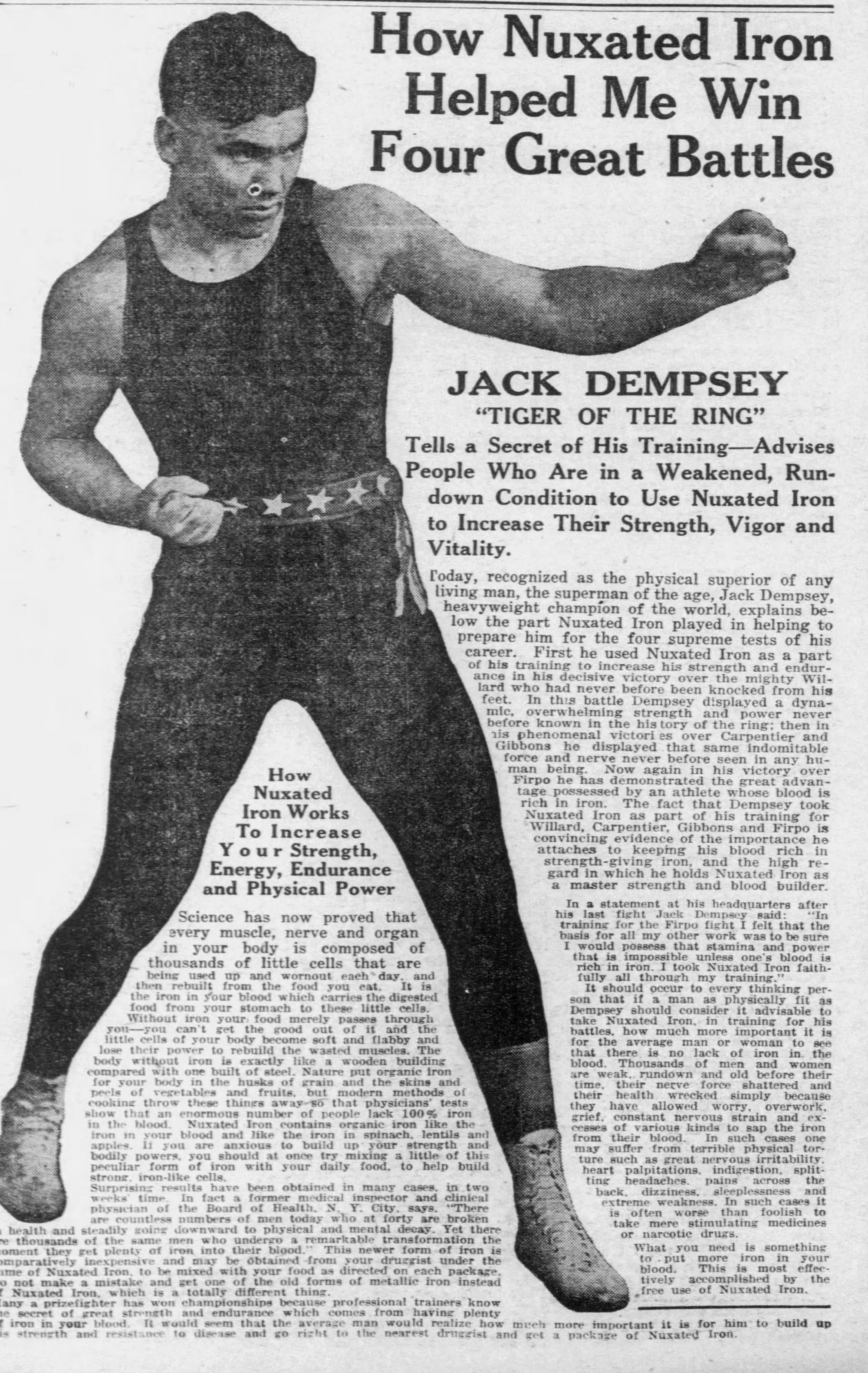
Dempsey did not fight again for three years. The man who had been the busiest, most feared champion alive made movies, married an actress, and never defended the title again until Tunney took it from him in Philadelphia in September 1926.
The Painting
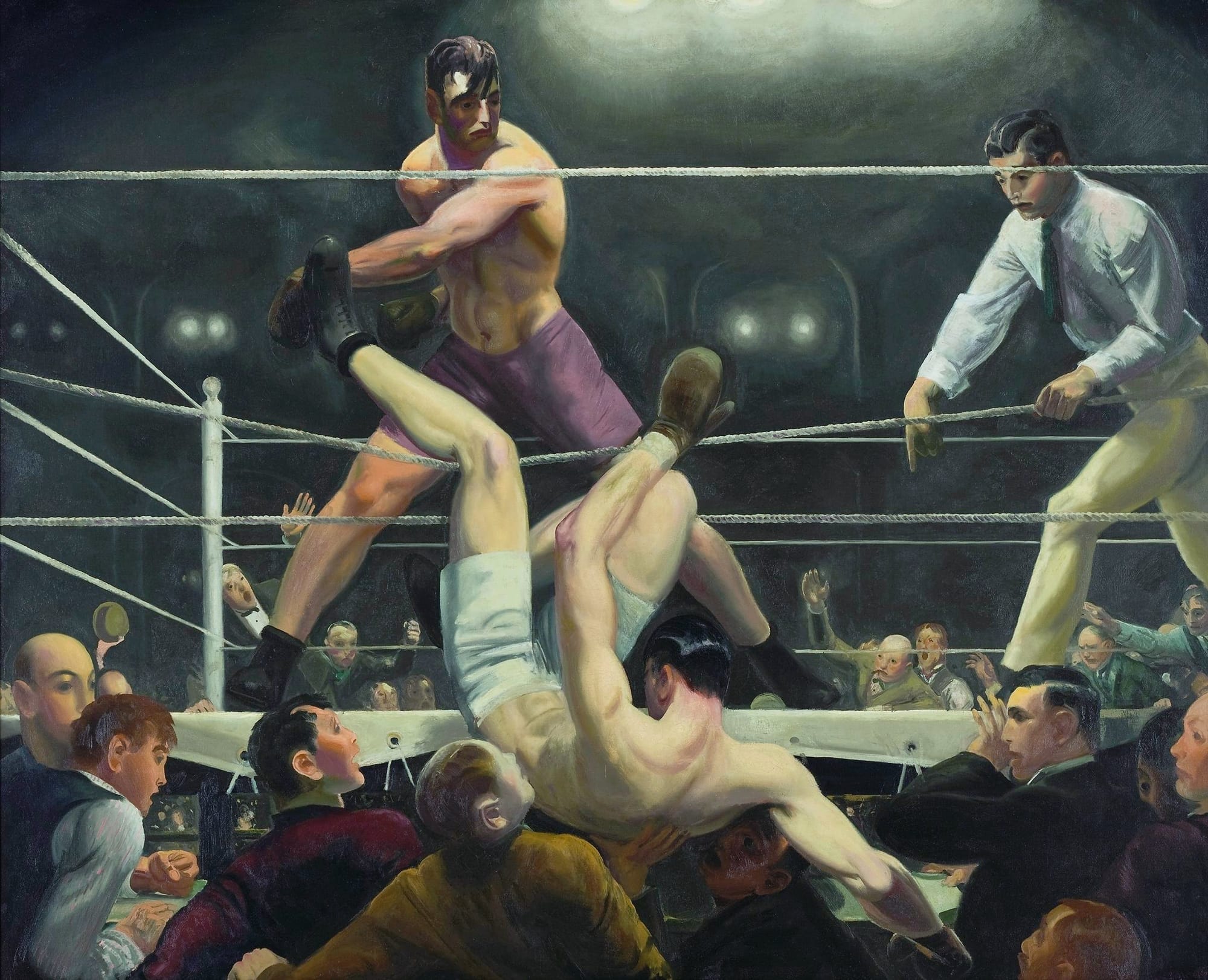
The fight's afterlife belongs to art. George Bellows, the great painter of American boxing, was at the Polo Grounds that night. In 1924 he finished Dempsey and Firpo, an oil that freezes the moment the champion goes through the ropes, Firpo's left arm still extended, the crowd's faces turned up in the light. Bellows painted himself into the picture, the balding man at the far left of the press row. It hangs in the Whitney Museum in New York and is probably the most famous painting of a sporting event ever made by an American. Bellows died the next year.
Firpo went home to Argentina a national hero, fought a few more years, and became a wealthy rancher and car dealer. He died in 1960 and is buried in Recoleta Cemetery in Buenos Aires, near Eva Perón. The four minutes at the Polo Grounds are the reason anyone outside Argentina knows his name.
Was Dempsey saved by the rules, the writers, or his own chin? Comments below.
Comments ()