
On This Date: Jim Thorpe Kicks 4 Field Goals on a Bad Leg, and Carlisle Beats Harvard (Nov. 11, 1911)
On Nov. 11, 1911, Jim Thorpe kicked 4 field goals on an injured leg, the last from 48 yards against Harvard's regulars, and the Carlisle Indian School beat Harvard 18-15.
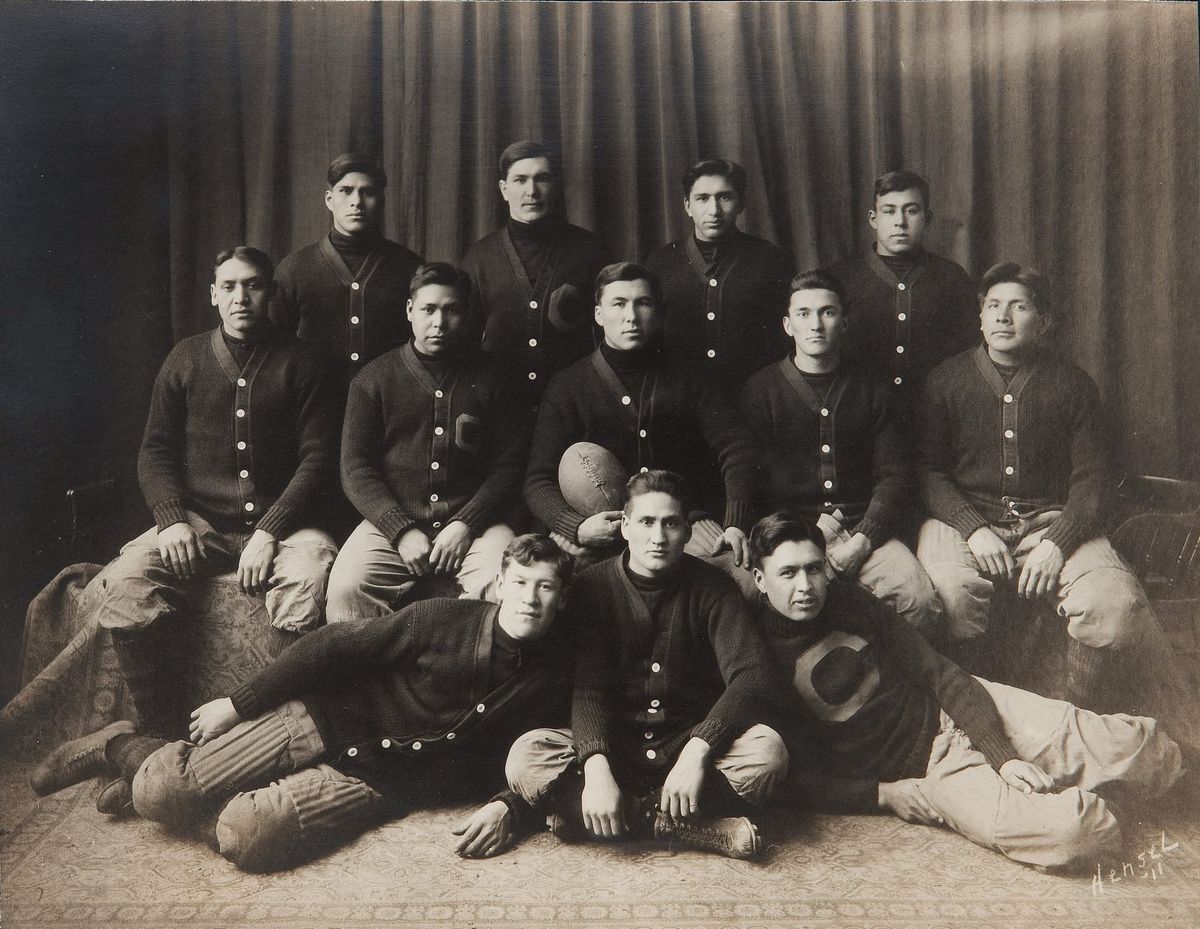
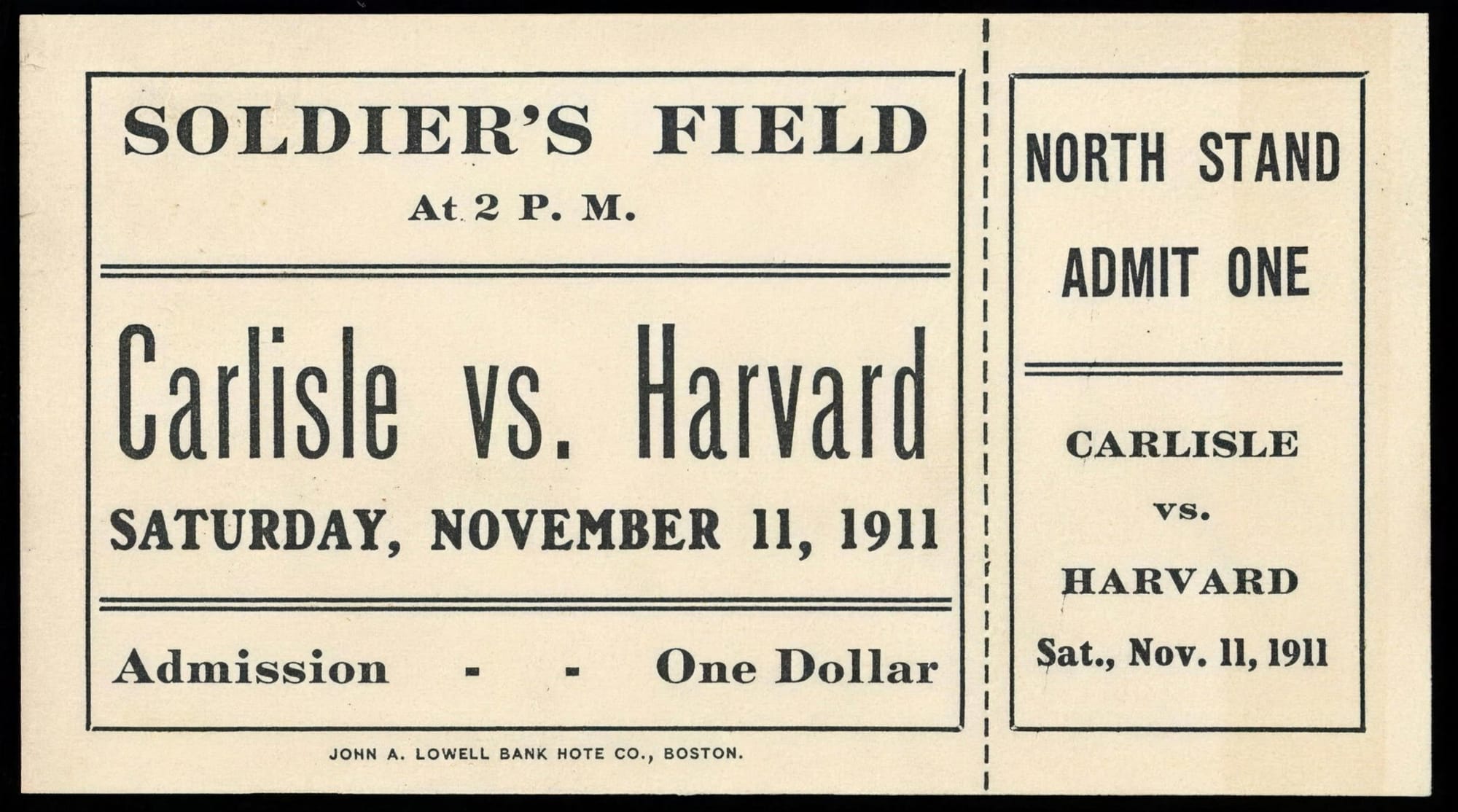
On Nov. 11, 1911, the Carlisle Indian School went to Harvard Stadium and beat Harvard 18-15. Jim Thorpe, playing on an injured leg wrapped from his toes to his knee, kicked 4 field goals and scored 13 of Carlisle’s 18 points.
The last of those field goals came from 48 yards out, against Harvard’s best players, and it was the difference in the game.
Carlisle
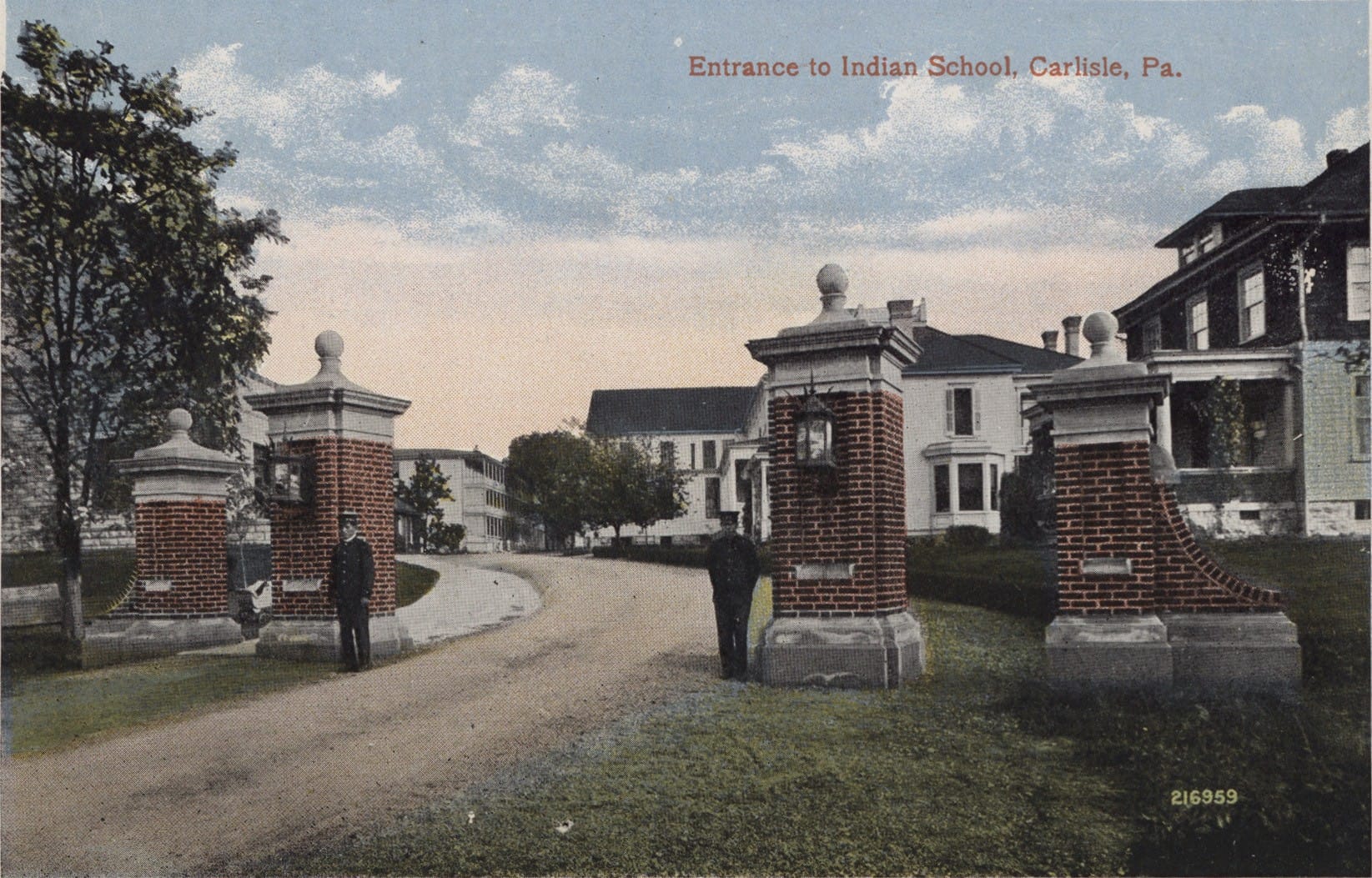
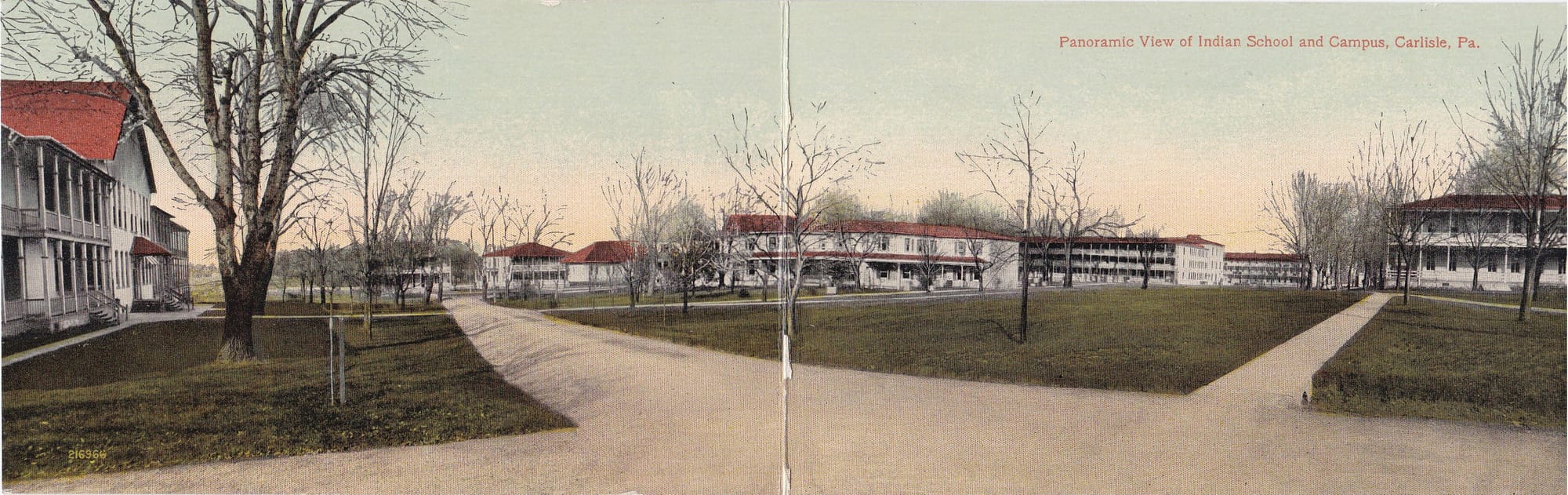
The Carlisle Indian Industrial School opened in 1879 in Carlisle, Pa. It was the first federal off-reservation boarding school for Native American children, and it became the model for many more. Its founder, an Army officer named Richard Henry Pratt, described its mission in 1892: “Kill the Indian in him, and save the man.”
Children were taken from their families and nations and sent hundreds or thousands of miles away. Many of them died at the school, and many are buried there. That’s the history Carlisle’s football team came out of.
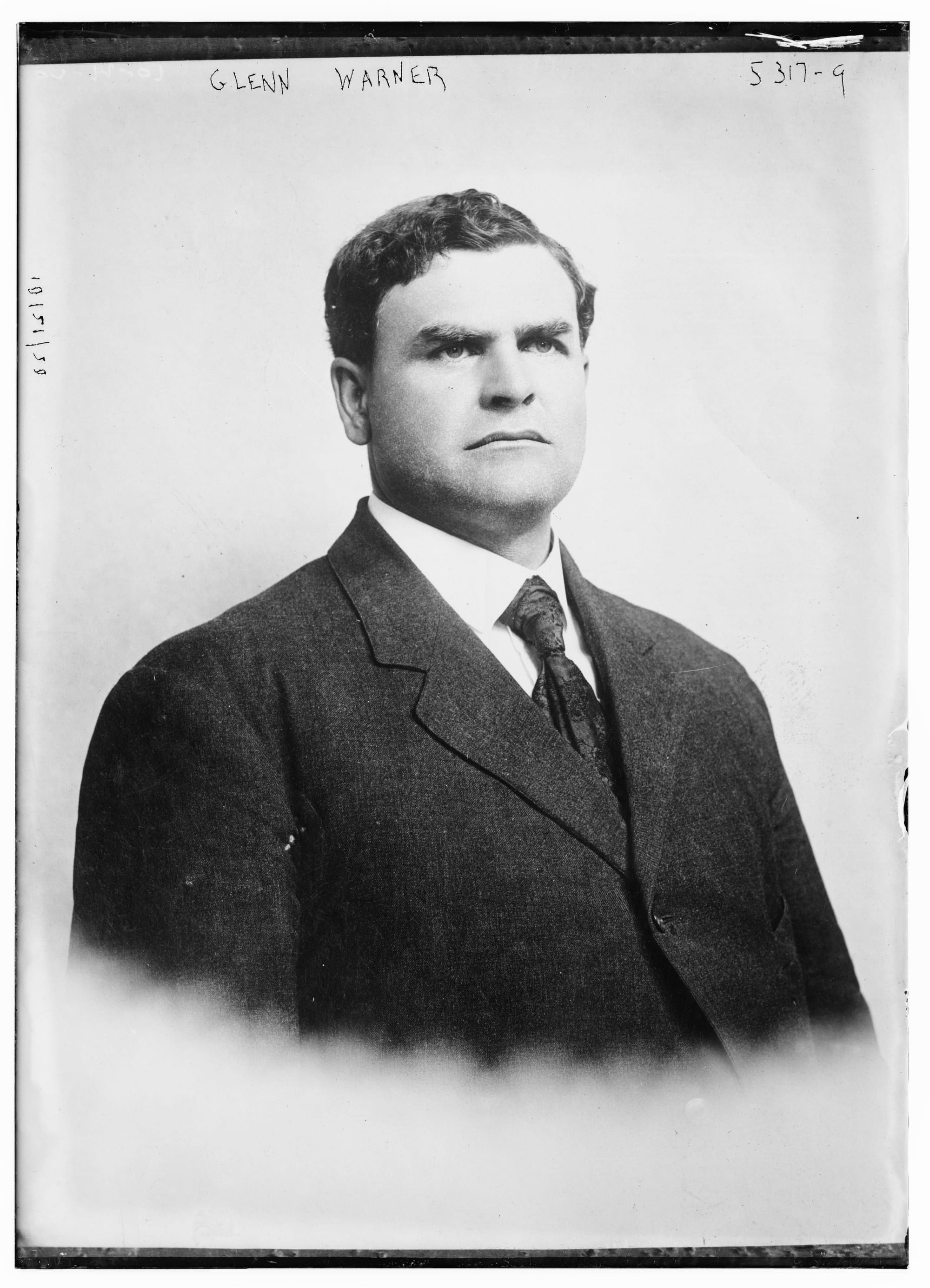
The team itself was one of the best in the country. Coach Glenn “Pop” Warner’s Indians were fast, inventive and well coached, and they beat the big Eastern powers regularly. Thorpe, a member of the Sac and Fox Nation from Oklahoma, was their star. In 1911, Carlisle came into the Harvard game 8-0.
Harvard’s Gamble
Harvard was one of college football’s Big Three, along with Yale and Princeton. It had been a national champion in 1910, and it was coached by Percy Haughton.
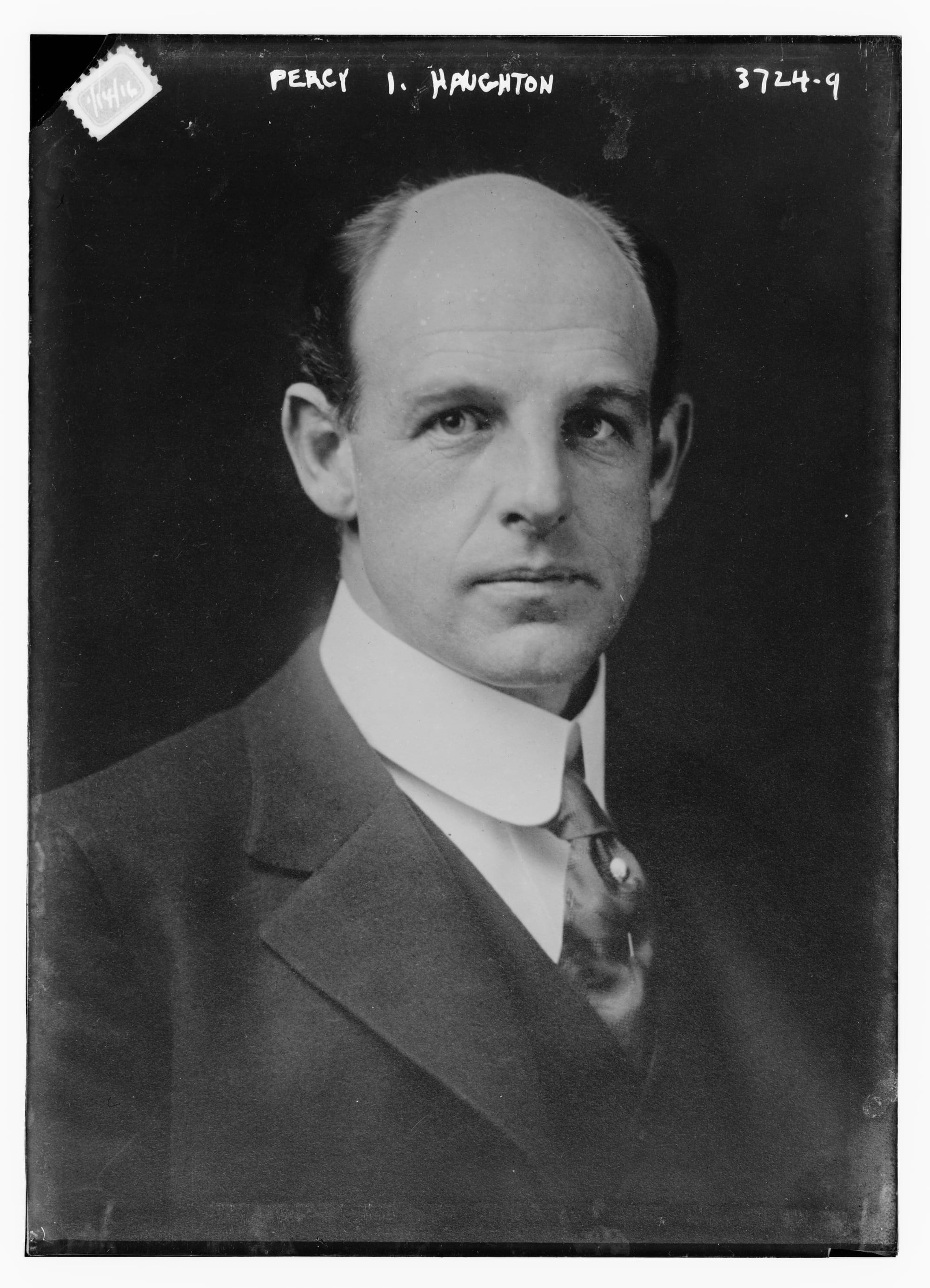
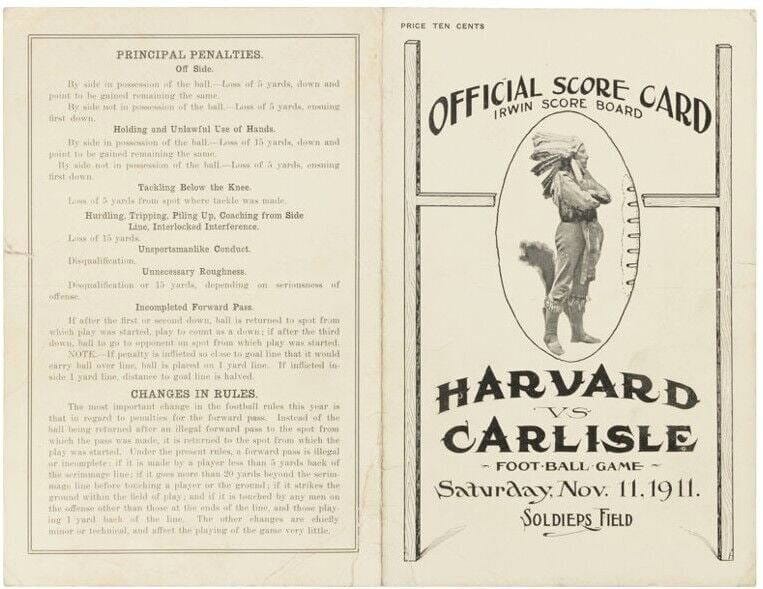
Harvard had already lost once in 1911, 8-6 at Princeton the week before. With Dartmouth and Yale still ahead, Harvard decided to rest its regulars and start its substitutes against Carlisle. Haughton reportedly wasn’t even at the game. He was in New Haven, scouting Yale.
3 Quarters Against the Scrubs
Thorpe had hurt his leg and ankle. Warner taped him heavily, and he played anyway.
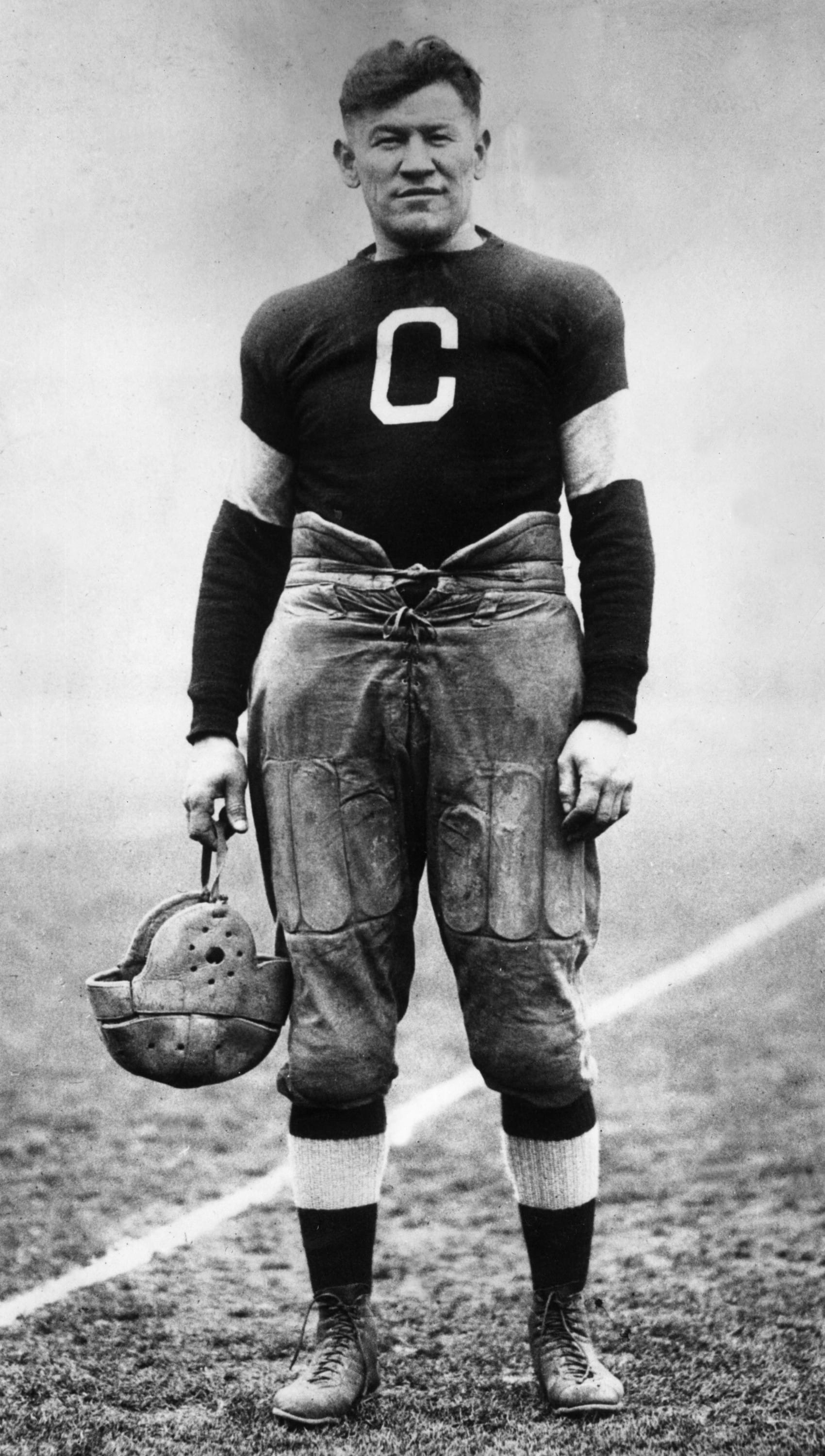
He kicked a field goal in the 1st quarter and another in the 2nd. But Harvard’s backups hung in. They kicked a field goal of their own, recovered a Thorpe fumble, and broke a long touchdown run, and Harvard led 9-6 at the half.
In the 3rd quarter, Carlisle drove 70 yards in 9 plays for a touchdown and took a 12-9 lead. Thorpe kicked his 3rd field goal to make it 15-9.
Thorpe later said the sore leg “sort of helped me, because it made me more deliberate.”
Harvard Sends In the Regulars
At the start of the 4th quarter, Harvard sent in its first string, fresh varsity players it had been saving for Yale.
Within about 5 minutes, Carlisle moved into Harvard territory, and Thorpe answered with his 4th field goal. The New-York Tribune said he kicked it “from a point just forty-eight yards down the field,” sending the ball “skimming over one of the Harvard uprights.” Carlisle led 18-9.
Harvard’s regulars came back. They blocked a Thorpe punt and returned it for a touchdown, and it was 18-15. Harvard got the ball back, but its last drive ended when a forward pass sailed out of bounds.
“Harvard was outplayed at every angle,” the Tribune wrote. The Washington Evening Star’s headline said Thorpe “Practically Beats Harvard by Himself.”
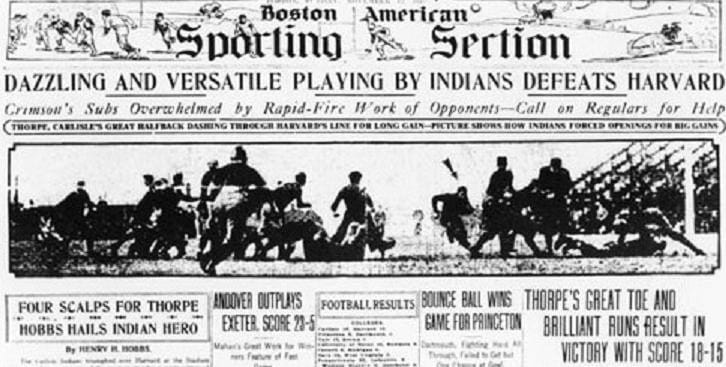
Haughton later called Thorpe “the theoretical superplayer in flesh and blood.” Thorpe called it one of the 2 greatest games he ever played.
What Came After
Carlisle lost the next week at Syracuse, 12-11, and finished 11-1.
The next summer, Thorpe went to the Olympics in Stockholm and won the pentathlon and the decathlon. In January 1913, newspapers reported that he had played minor league baseball for pay in North Carolina, and he was stripped of his gold medals. The International Olympic Committee restored him as a co-champion in 1982, 29 years after his death, and in 2022, it declared him the sole champion of both events.
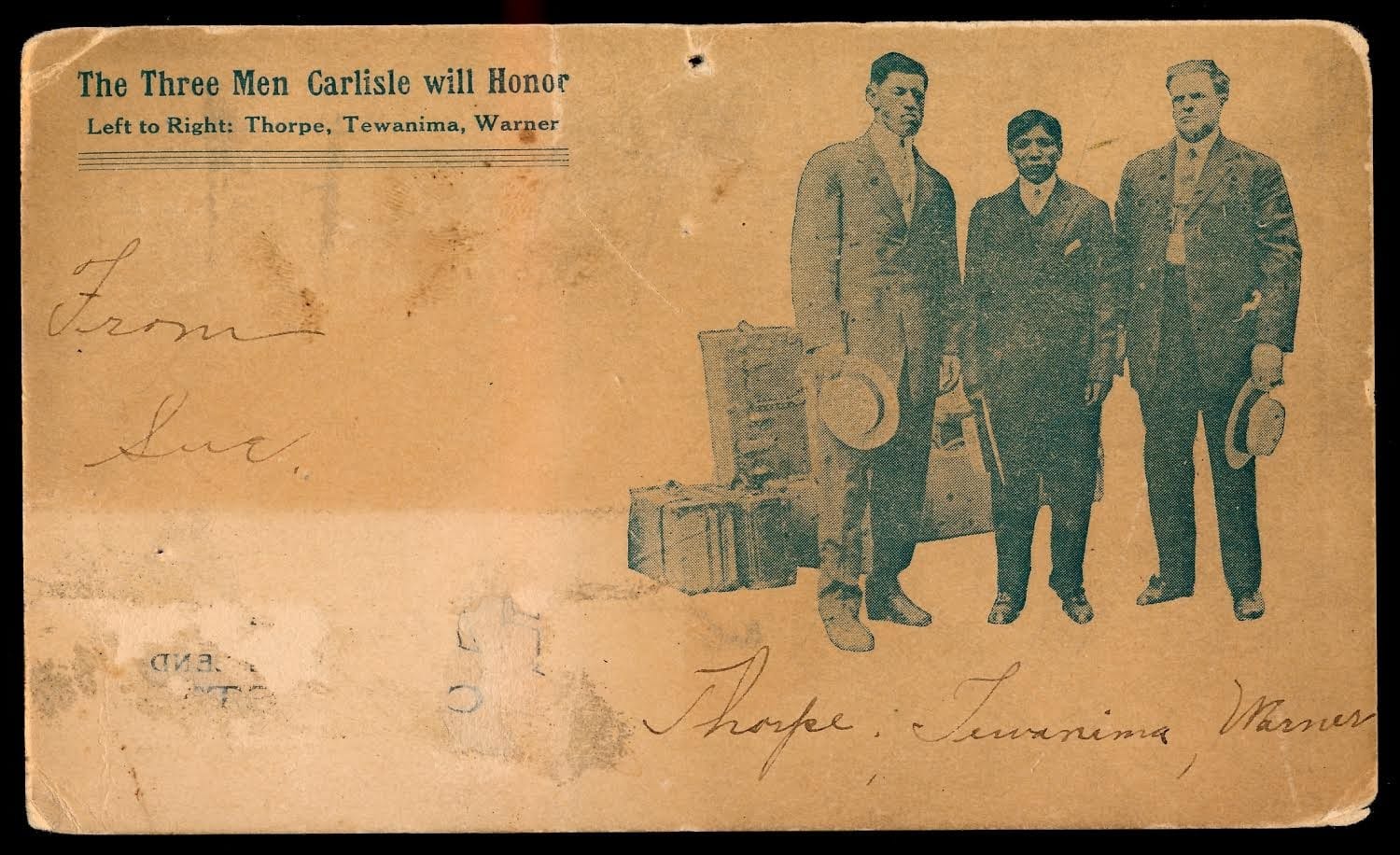
In the fall of 1912, Thorpe scored twice as Carlisle beat Army 27-6 at West Point. One of the Army players who tried to tackle him that day, and got knocked out of the game, was a halfback named Dwight Eisenhower.
The Carlisle Indian School closed in 1918. More than 10,000 children had been sent there.
Comments ()