
On This Date: Mark Spitz Wins His 7th Gold — 12 Hours Before Munich Changed Forever (Sept. 4, 1972)
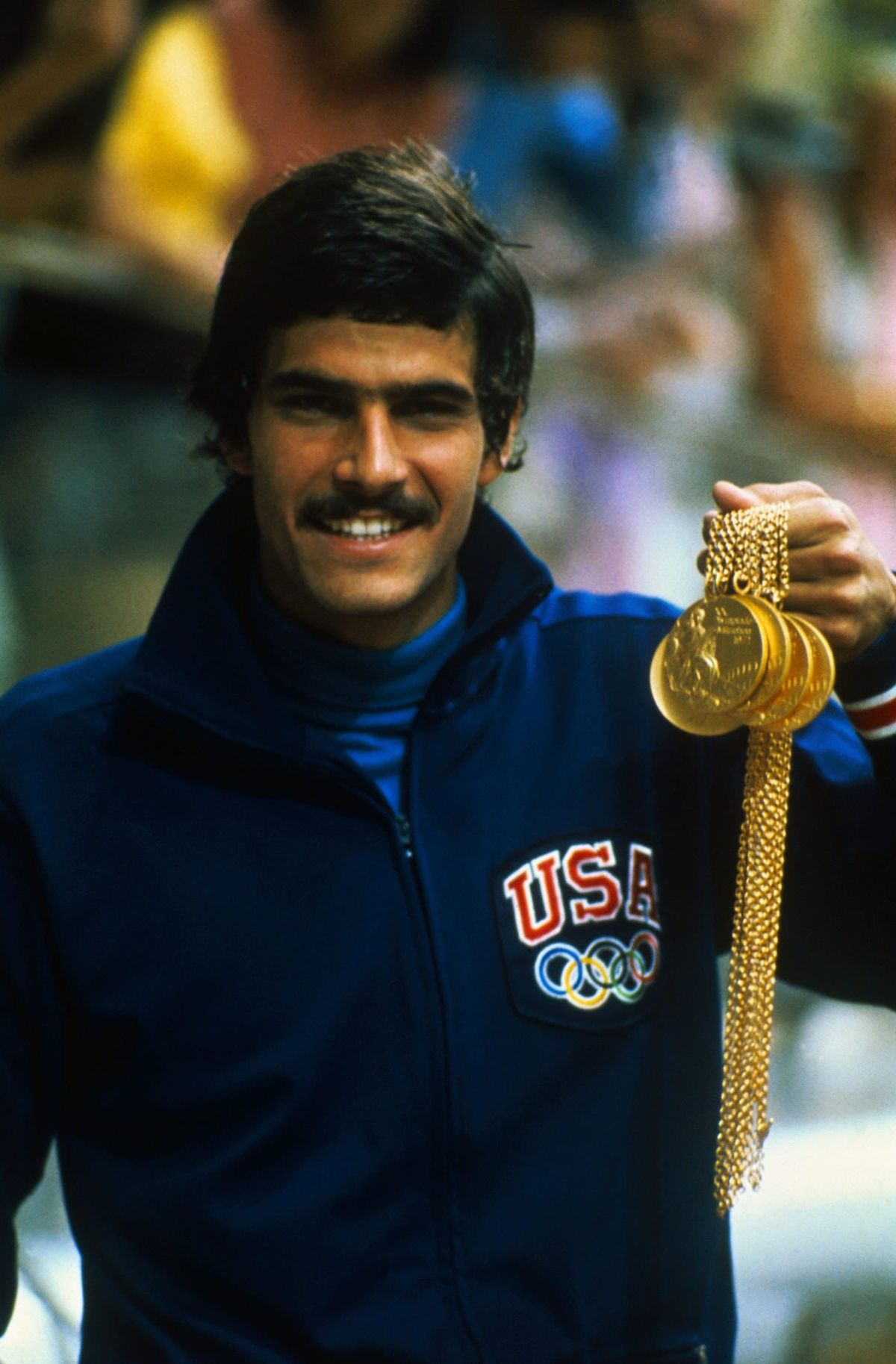
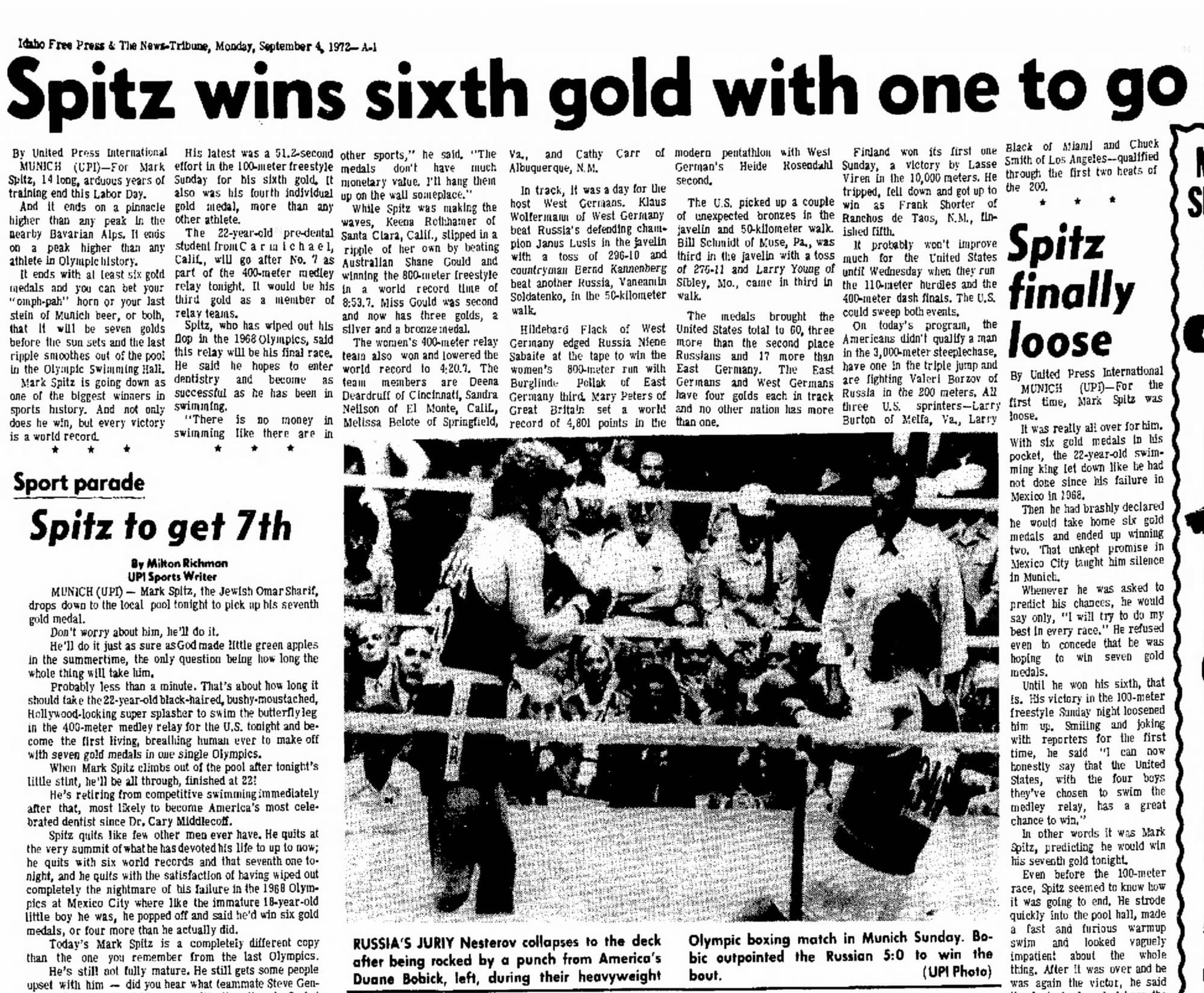
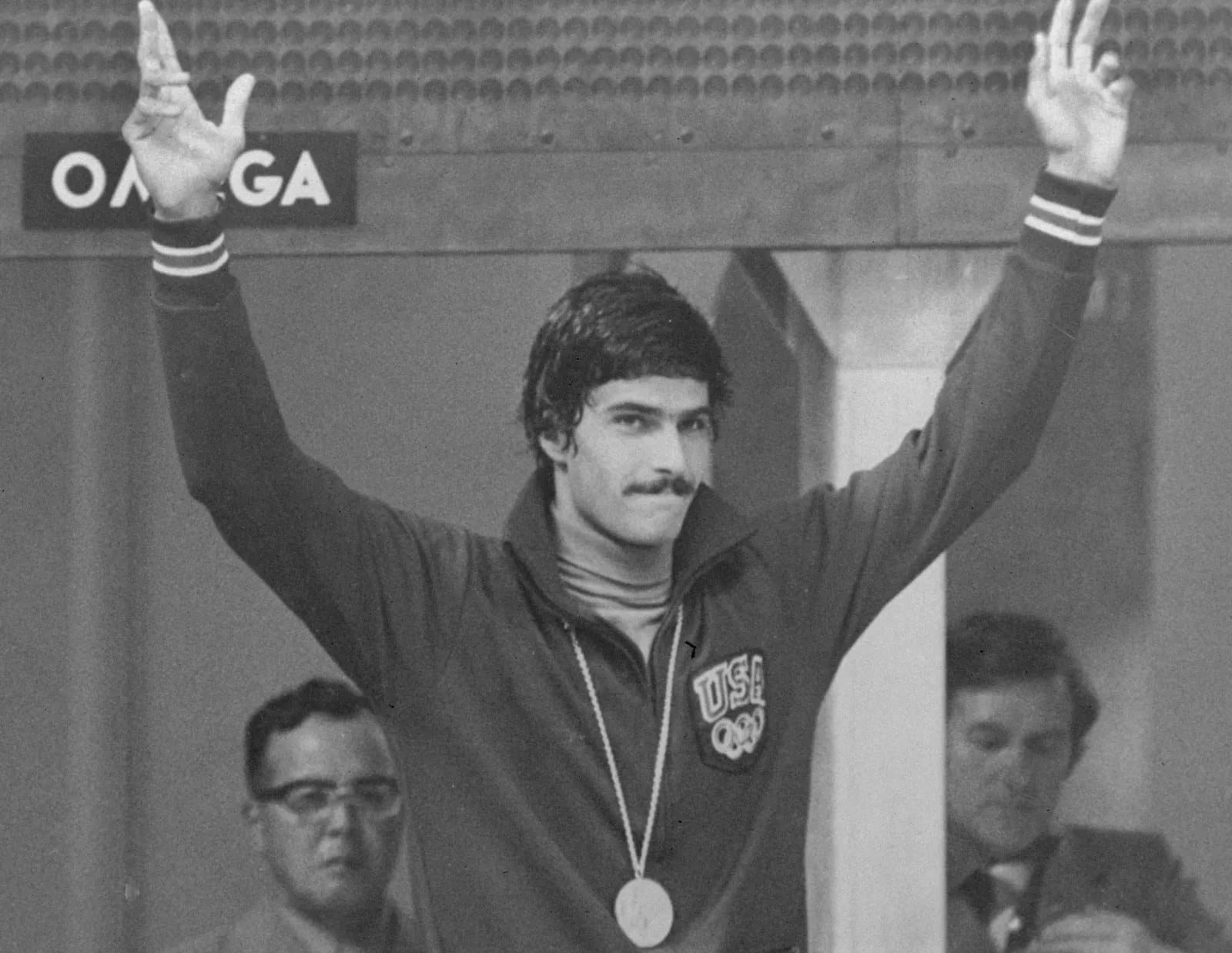
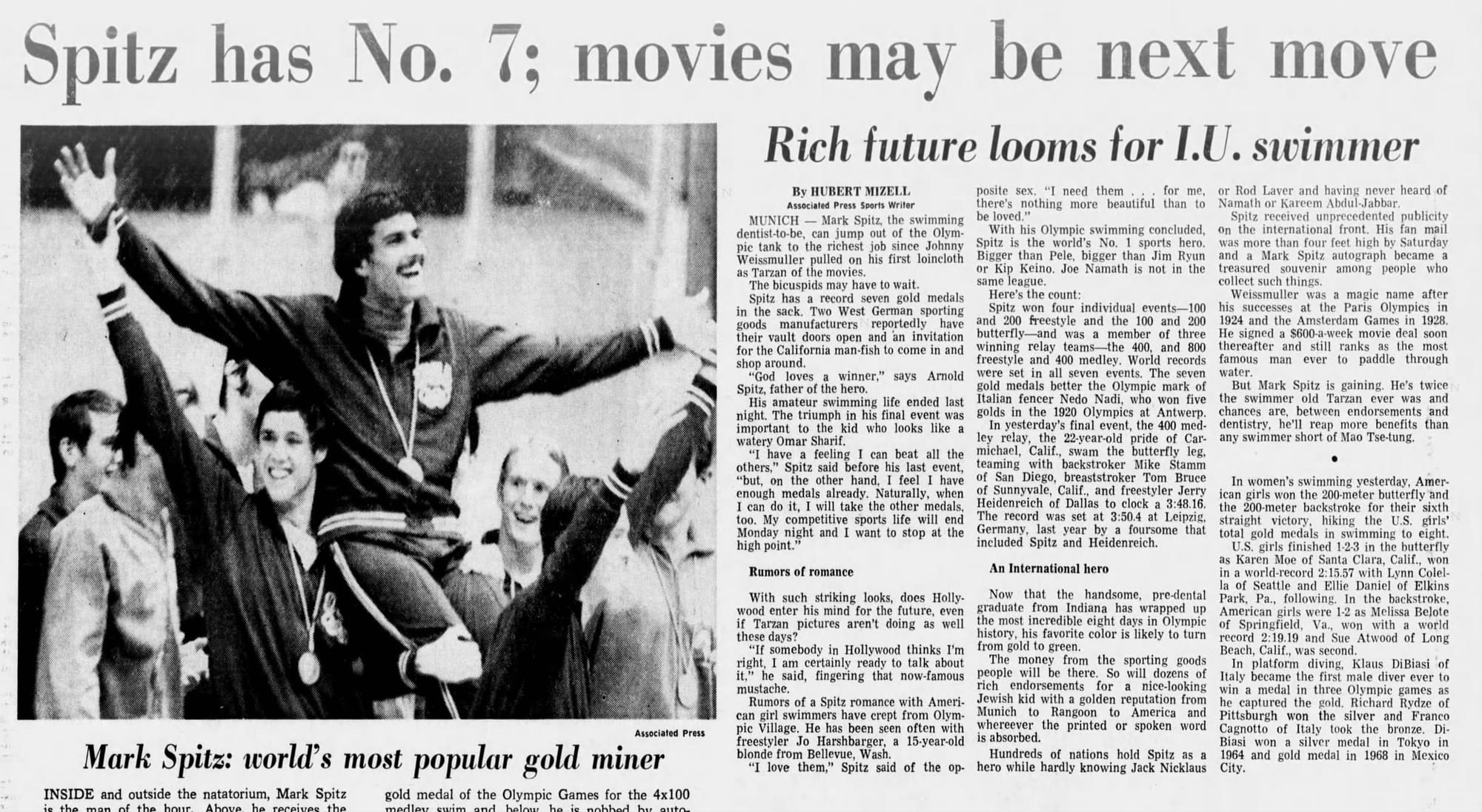
On this date in 1972, Mark Spitz swam the butterfly leg of the 4x100 medley relay in Munich, the United States won by nearly 4 seconds, and a 22-year-old from California owned a record no one had touched: 7 gold medals in a single Olympics. Every one of them in world-record time. Seven races, seven golds, seven world records — the only perfect Olympics anyone had ever swum.
He had roughly half a day to enjoy it.
The Ghost of Mexico City
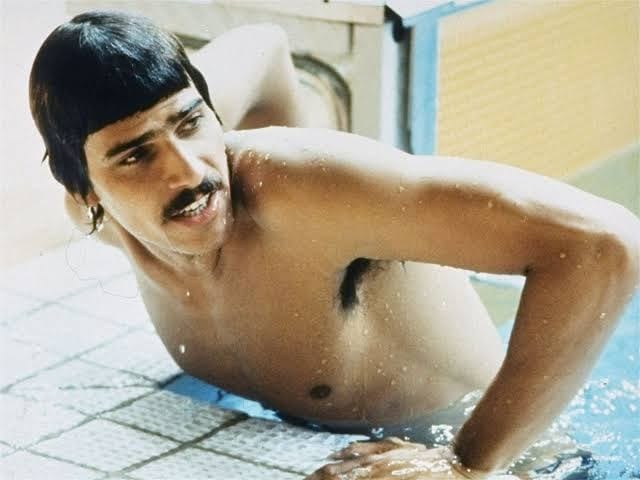
The Munich story starts with a humiliation. In 1968, a 18-year-old Spitz arrived in Mexico City holding 10 world records and publicly predicting 6 golds. He won 2 — both relays, where his teammates could carry him — plus a silver and a bronze. In his last individual final, the 200 fly, his best event, he finished dead last. The brashest talent in swimming had face-planted on the biggest stage.
He spent the next 4 years at Indiana University under legendary coach Doc Counsilman, planning a future in dentistry and rebuilding himself for one more shot.
Seven for Seven
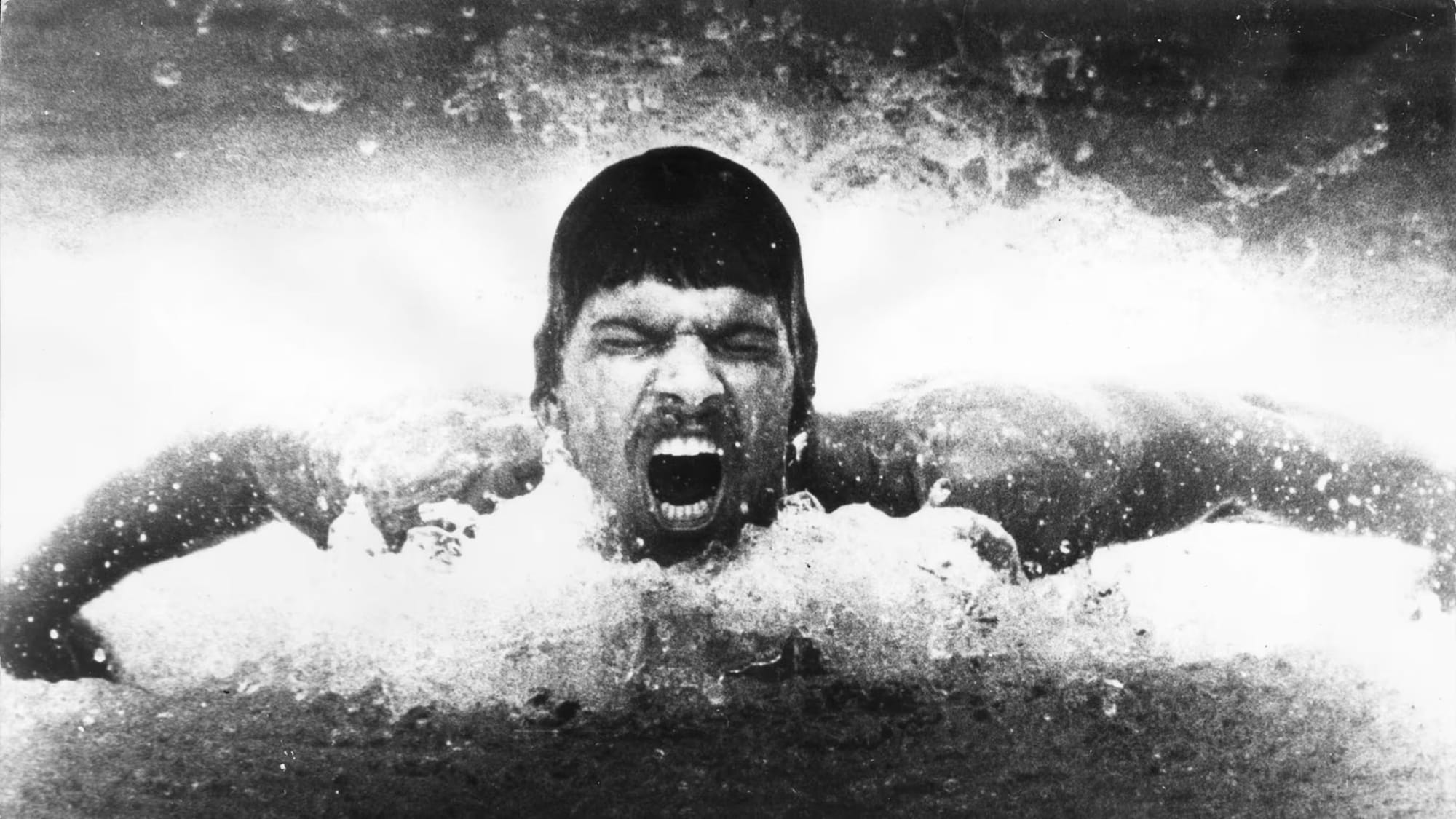
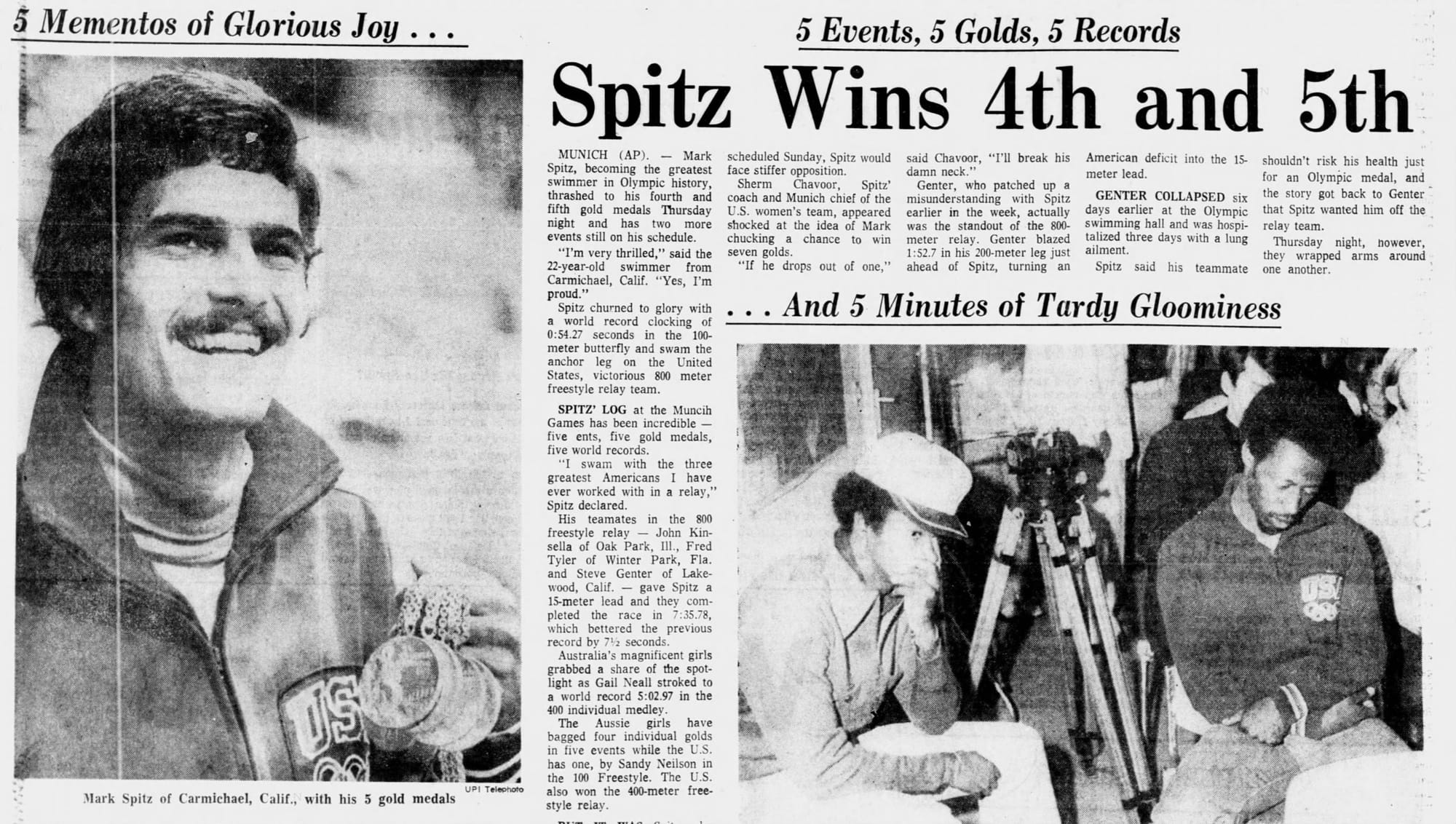
Munich was the answer, delivered in 8 days:
- Aug. 28 — 200 butterfly, gold, world record (2:00.70). The event he'd finished last in at Mexico City. That night: 4x100 free relay, gold, world record.
- Aug. 29 — 200 freestyle, gold, world record (1:52.78).
- Aug. 31 — 100 butterfly, gold, world record (54.27). Then the 4x200 free relay: gold, world record.
- Sept. 3 — 100 freestyle, gold, world record (51.22).
- Sept. 4 — 4x100 medley relay: gold, world record (3:48.16).
The 100 free nearly didn't happen. With 5 golds banked, Spitz privately asked coach Sherm Chavoor whether he should skip it — teammate Jerry Heidenreich was dangerous, and a perfect record felt safer than a possible silver. Chavoor told him ducking the race would look exactly like what it was. Spitz swam, beat Heidenreich by 0.43 — about half a stroke — and the next night Heidenreich anchored Spitz's 7th gold in the medley relay. The previous single-Games record of 5 golds had stood since 1920. Spitz's 7 would stand until Michael Phelps won 8 in 2008.
And yes, the mustache. Asked by a Soviet coach why a world-class swimmer would wear one, Spitz — as he tells it — joked that it deflected water from his mouth and made him faster. At the world championships the following year, the Soviet men showed up mustachioed.
Sept. 5
Spitz touched the wall for the last time on the evening of Sept. 4. Around 4:30 the next morning, Black September gunmen entered the Israeli team's quarters at 31 Connollystrasse, killed two men, and took nine hostages. Spitz walked into his scheduled morning press conference not yet knowing the Games had changed forever.
He was the most famous athlete in Munich, and he was Jewish. Officials feared he was a target. Within hours the greatest performance in Olympic history ended not with a parade but with an armed guard, and Spitz was flown out to London on Sept. 5, before the closing ceremony, a guard posted at his hotel door. By the next morning the world knew the full horror: 11 Israeli team members murdered.
After
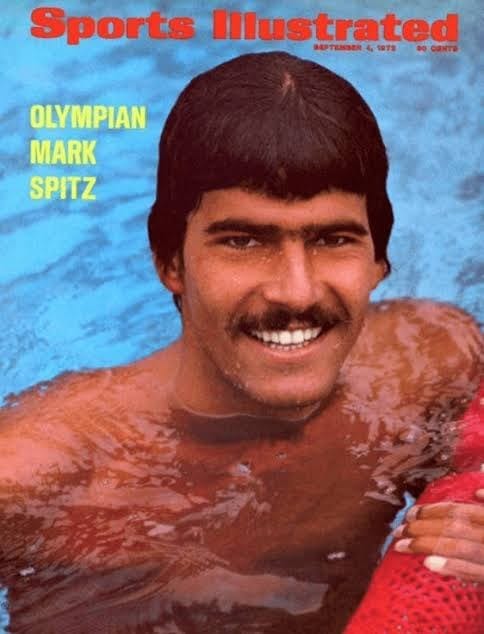
Spitz never raced again. He retired at 22 — dental school abandoned — and became one of the first athletes to convert Olympic glory directly into endorsement millions, roughly $5-7 million in 2 years. At 41 he attempted a comeback for Barcelona 1992 and missed the trials qualifying standard by about 2 seconds — a middle-aged man 2 seconds off an Olympic trials cut, which is its own kind of remarkable.
But on this date in 1972, for about 12 more hours, sport was the whole story: 7 races, 7 golds, 7 world records. Nobody has ever swum a more perfect meet. Nobody has ever had less time to celebrate one.
Is 7-for-7 with 7 world records the greatest single-Games performance ever — or does Phelps' 8 top it? Comments below.


Comments ()