
On This Date: Michael Jordan Walks Away at 30 (Oct. 6, 1993)
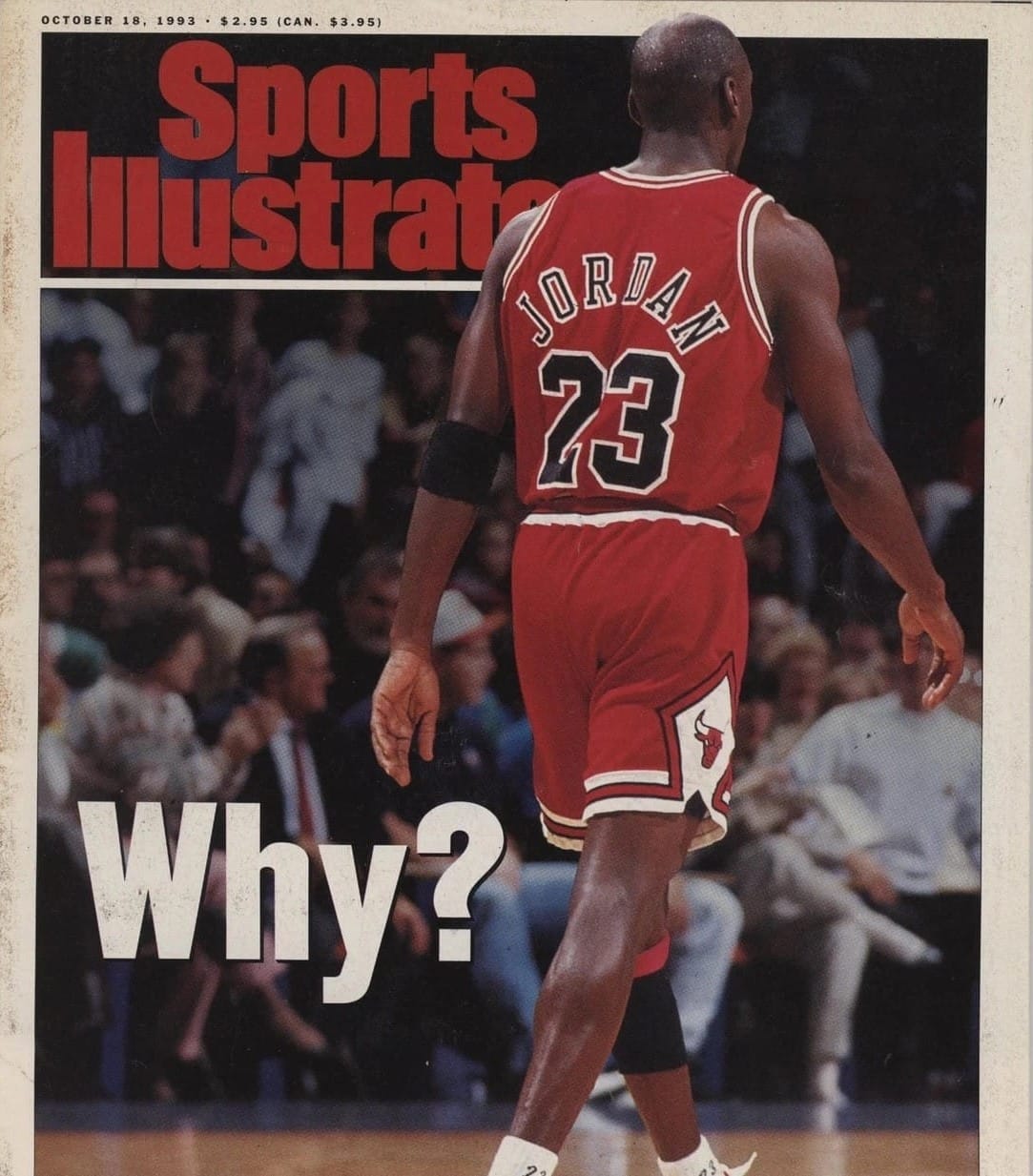
On Oct. 6, 1993, Michael Jordan retired at 30 with 3 straight titles and 7 straight scoring titles. The leak at Comiskey, his father's murder, the gambling inquiry, the Barons, and the 2-word fax that brought him back.
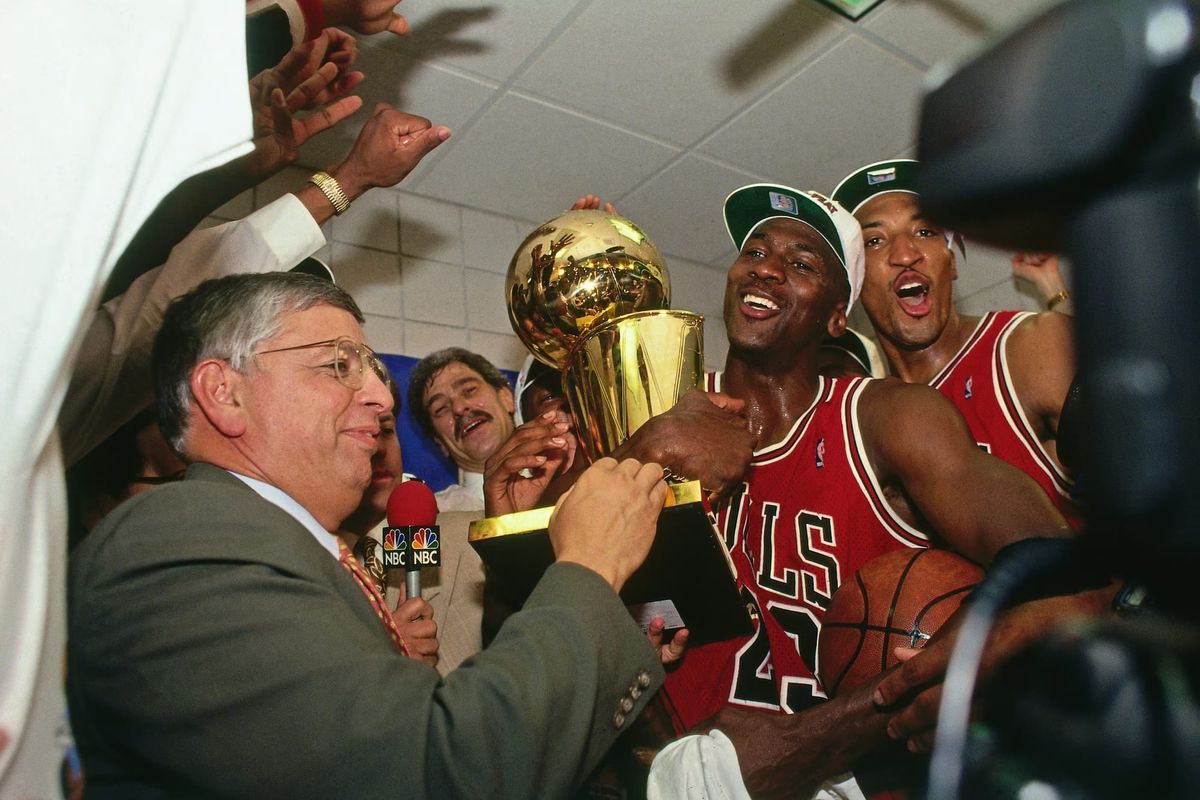
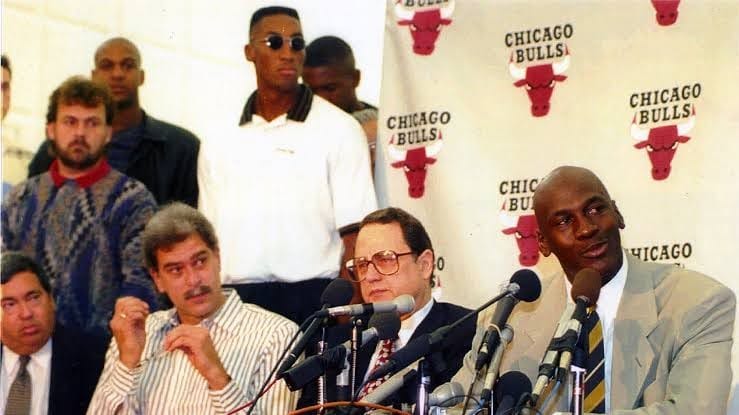
On Oct. 6, 1993, at 10 in the morning, Michael Jordan sat down at a table in the Chicago Bulls' practice facility in Deerfield, Ill., with his wife Juanita on one side and NBA commissioner David Stern, owner Jerry Reinsdorf, general manager Jerry Krause and coach Phil Jackson around him. He was 30 years old. He had just won his 3rd straight championship, his 3rd straight Finals MVP and his 7th straight scoring title. And he told a room packed with cameras that he was done.
"I have always stressed that when I lose the sense of motivation and the sense to prove something as a basketball player," he said, "it's time to leave."
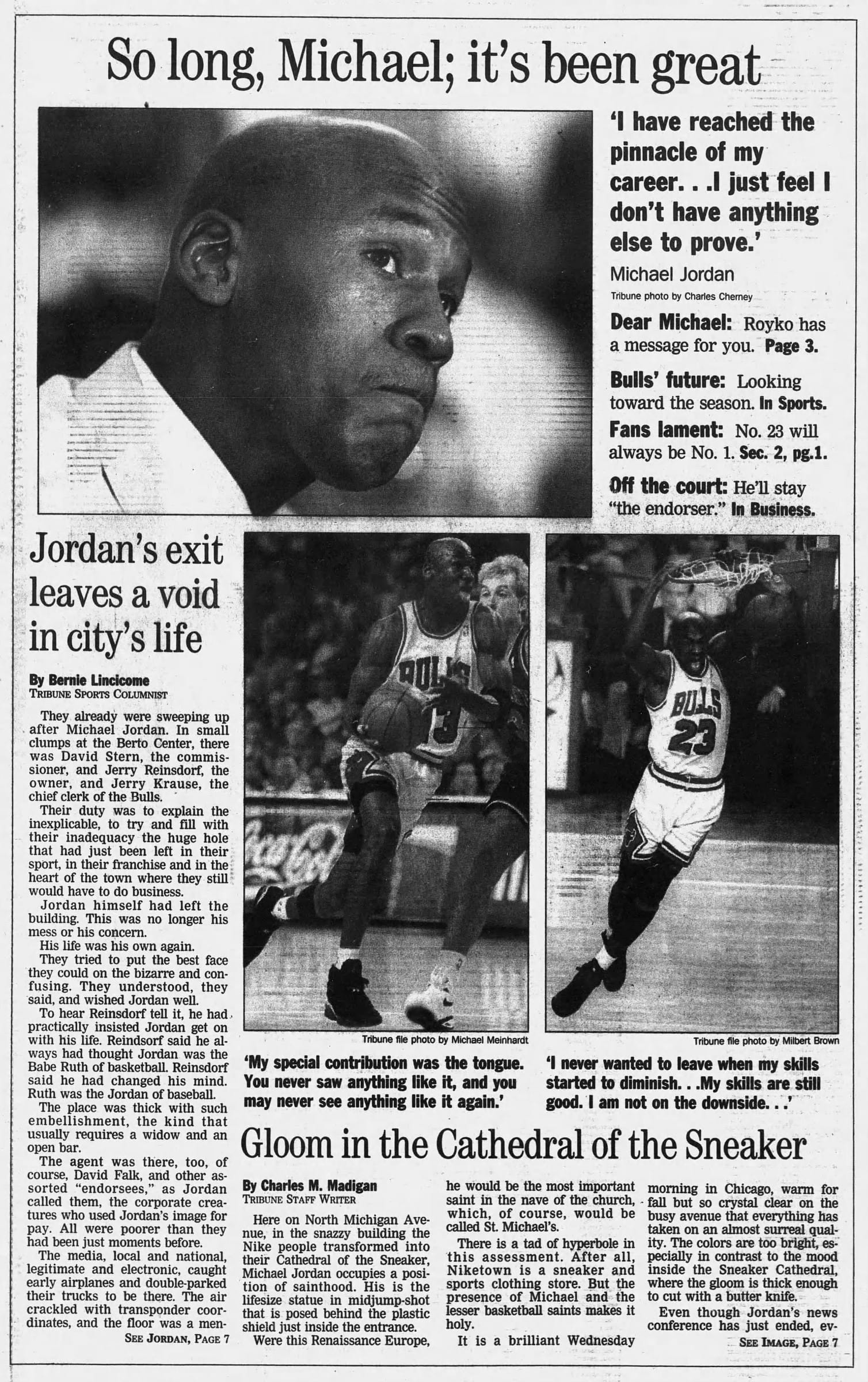
"I have reached the pinnacle of my career," he said. "I just feel I don't have anything else to prove."
The night before
The story got out before he could tell it. On the night of Oct. 5, Jordan threw out the first pitch at Comiskey Park before Game 1 of the American League Championship Series between the White Sox and the Blue Jays. While the game was on, the Denver Post reported he was about to retire, and CBS broke in during the 7th inning to say a news conference had been called for the next morning. Jordan left the ballpark in the 7th. The White Sox lost 7-3, and fans found out what had happened when they got to their cars and turned on the radio.
He gave the Chicago Sun-Times a few words that night. "It's time for me to move on to something else," he said. "I'm at peace with myself about this decision." Reinsdorf wouldn't confirm it. He told CBS only that there would be a "major, major announcement" in the morning.
What he was walking away from
Jordan had just finished the best run any player had ever put together. Three titles in a row, 1991 through 1993. In the 1993 Finals against Phoenix, he averaged 41 points a game, still a Finals record, and the Bulls won it on John Paxson's 3-pointer with 3.9 seconds left in Game 6 on June 20. He had led the league in scoring 7 straight seasons, tying Wilt Chamberlain's record, at 32.6 points a game in 1992-93. He had 3 MVP awards, 2 Olympic gold medals and 6 straight first-team All-Defensive selections. His career average, 32.3 points, was the highest in NBA history. He was 30.
"I never wanted to leave when my skills started to diminish," he said that morning. "My skills are still good. I am not on the downside."
The summer that changed it
Two things happened between the parade and the press conference.
The first was the gambling. During the Eastern Conference finals against the Knicks in May, Jordan was spotted in an Atlantic City casino the night before a game in New York. Then a San Diego businessman named Richard Esquinas published a book claiming Jordan owed him $1.25 million from golf bets. Jordan admitted losing to him and disputed the amount. Esquinas later said he settled for $300,000. The league opened an inquiry. Jordan told Ahmad Rashad he didn't have a gambling problem. "I have a competition problem," he said.
The second was his father. On July 23, James Jordan Sr., 56, was shot to death while he slept in his Lexus at a rest stop on U.S. 74 near Lumberton, N.C. His body was found in a swamp across the state line in South Carolina in early August and identified by dental records on Aug. 13. Two 18-year-olds were convicted of the murder in 1996. Investigators called it a robbery. James Jordan had been at nearly every big game of his son's career, including the 3 title celebrations.
At the press conference, Jordan said the murder was not the main reason he was leaving, and that he had thought about retiring right after the Finals. "I guess the biggest positive thing I can take out of my father not being here today is that he saw my last basketball game," he said. "That meant a lot."
He also said something that nobody in the room could have fully appreciated at the time. "The word retire means you can do anything you want from day one," he said, "and if I decide to come back and play again, maybe that's what I will want to do." He added that it would be up to Stern whether to let him. "Ending my NBA career does not mean I won't play basketball somewhere else."
Two days later, Stern announced the league had closed its gambling inquiry. There was, he said, "absolutely no evidence Jordan violated league rules." People have been connecting those 2 dates ever since. Jordan and the league have denied for 33 years that one had anything to do with the other.
Chicago, and everywhere else
The White House put out a statement that afternoon. President Clinton called Jordan's game "incandescent" and said, "We will miss him -- here and all around America, in every small-town backyard and paved city lot where kids play one-on-one and dream of being like Mike."
The Bulls played the season anyway. Without him, they went 55-27, 2 wins fewer than the year before, and Scottie Pippen finished 3rd in the MVP vote. They lost to the Knicks in 7 games in the second round, a series remembered for referee Hue Hollins calling Pippen for a foul on Hubert Davis with 2.1 seconds left in Game 5. New York won that game 87-86. On Nov. 1, 1994, the Bulls retired No. 23 and unveiled a bronze statue outside the new United Center.
What he did instead
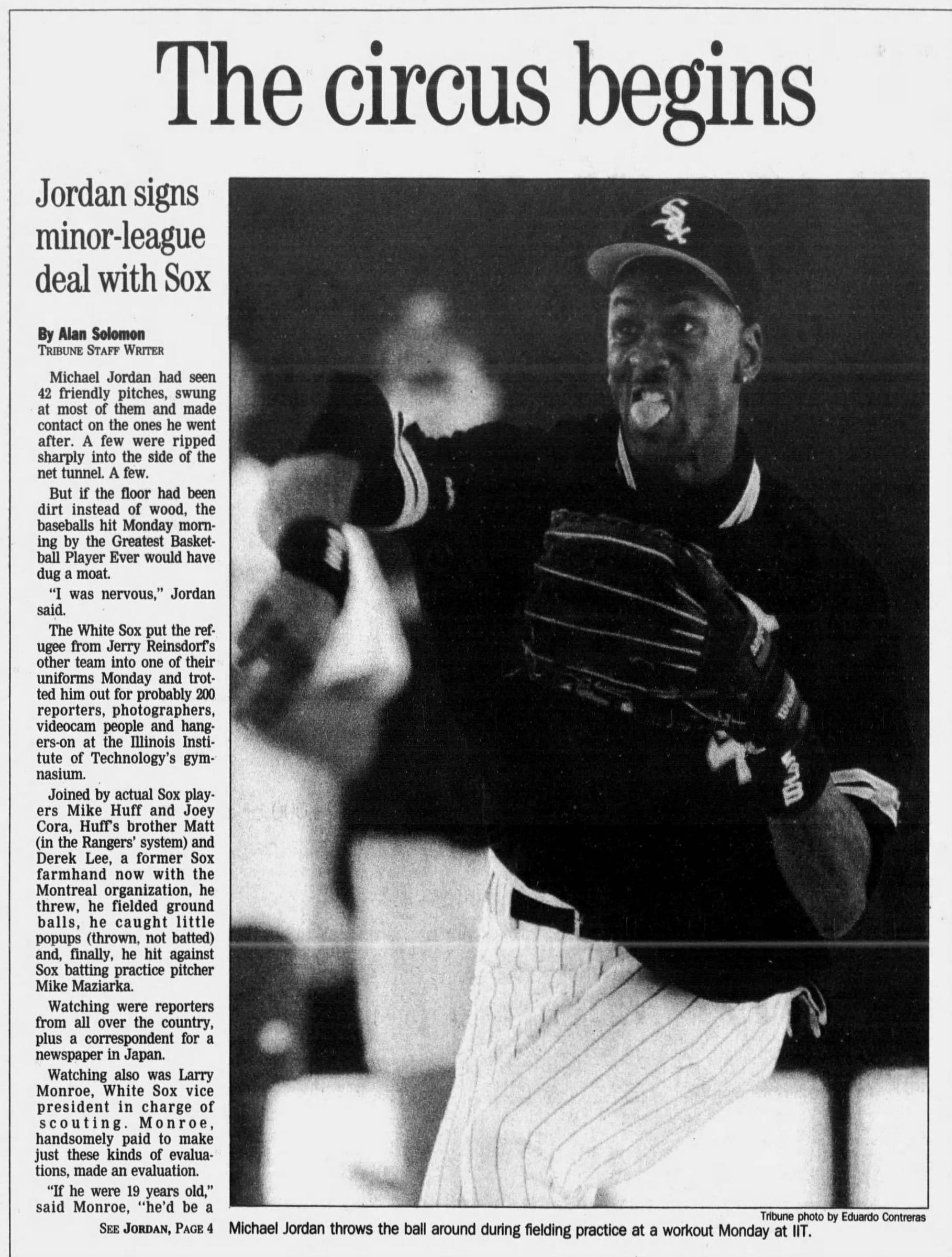
He played baseball. On Feb. 7, 1994, Jordan signed a minor-league contract with the White Sox, who were also owned by Reinsdorf, and worked out that morning in a gym at the Illinois Institute of Technology in front of about 200 reporters and photographers. "I was nervous," he said. He spent the summer with the Class AA Birmingham Barons, played 127 games and hit .202 with 3 home runs, 51 RBIs and 30 stolen bases.
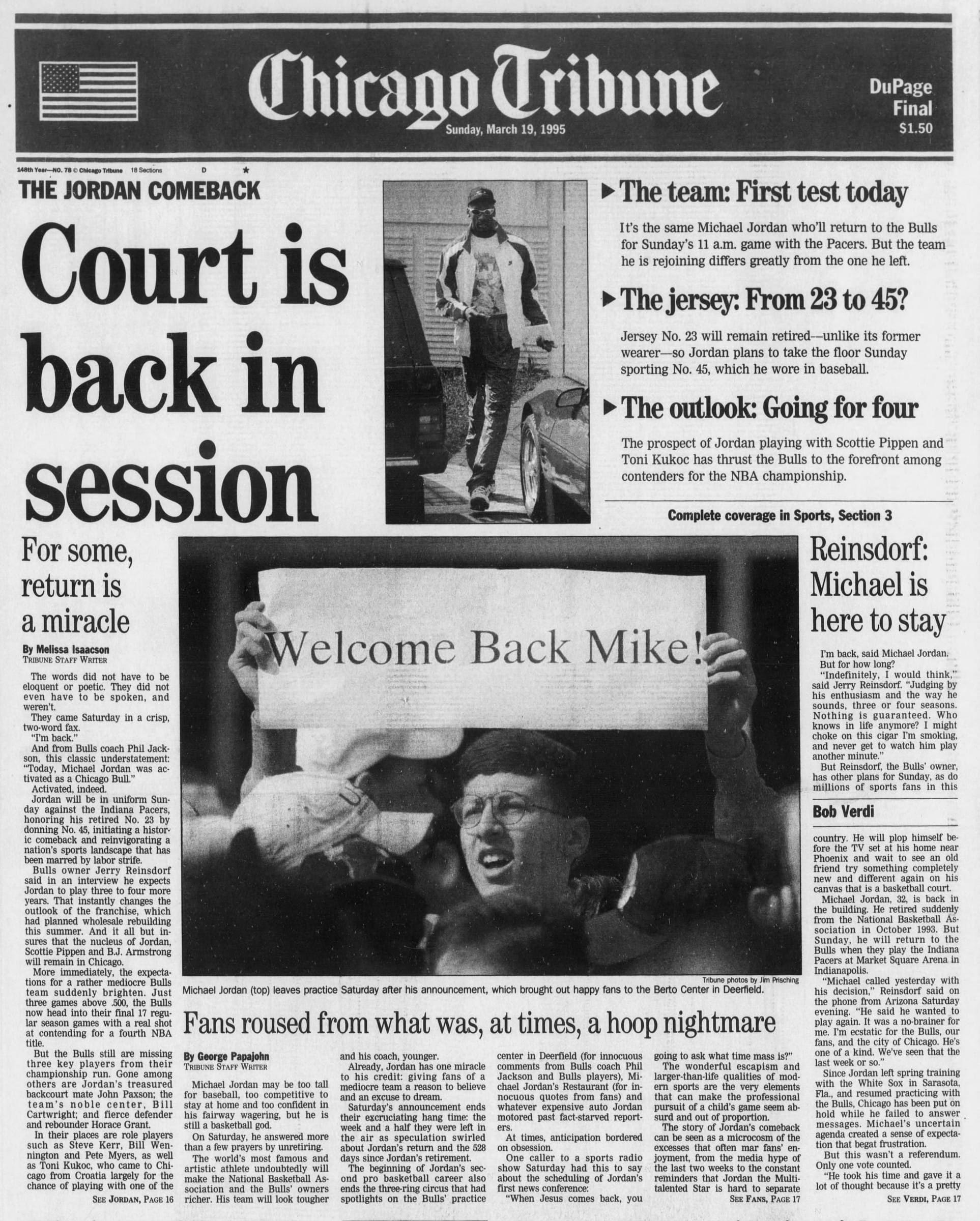
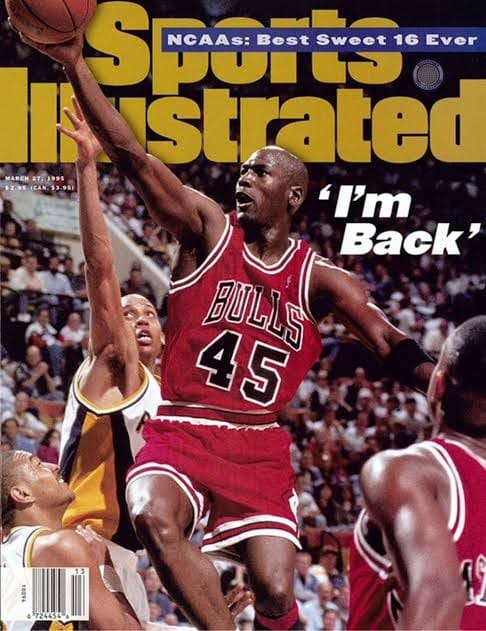
On Saturday, March 18, 1995, 528 days after the press conference, the announcement came by fax. It was 2 words: "I'm back." He played the next morning in Indianapolis against the Pacers, wearing No. 45, the number he'd worn in baseball, because the Bulls had retired 23. He switched back to 23 during the 1995 playoffs and won 3 more championships in 1996, 1997 and 1998. The retirement that was supposed to be the end lasted 17 months.
Meanwhile, that same afternoon
At Comiskey Park, the Blue Jays beat the White Sox 3-1 in Game 2 of the ALCS behind Dave Stewart, and Toronto went up 2-0 on its way to a second straight World Series title. In Philadelphia, the Phillies opened the National League Championship Series by beating the Braves 4-3 in 10 innings on Kim Batiste's walk-off double at Veterans Stadium.
33 years later
Jordan retired for good, the third time, in 2003, with 6 titles, 6 Finals MVPs and 10 scoring titles. The first retirement is the one people still argue about. He was 30, he was the best player alive, and he walked out of a press conference saying he had nothing left to prove. Then he spent a summer in Birmingham proving he could still want something.
Where were you when you heard Jordan was retiring? Tell us in the comments.
Comments ()