
On This Date: The Last Game at the Polo Grounds — and the 1,752 People Who Showed Up (Sept. 18, 1963)
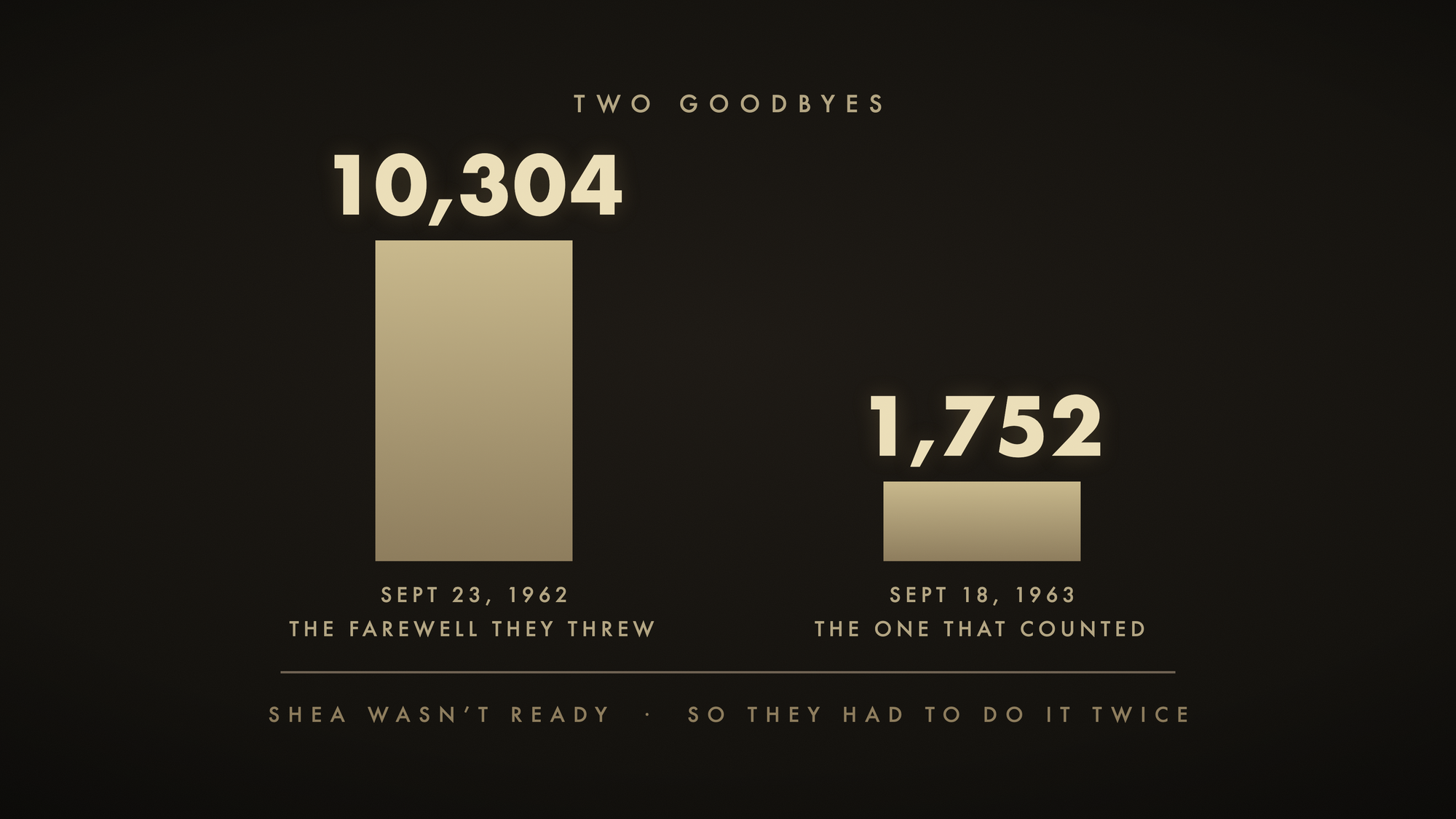
Sept. 18, 1963: the Phillies beat the Mets 5-1 in the last major league game at the Polo Grounds, in front of 1,752 people. The Daily News called it a wake. New York had already held the funeral once.
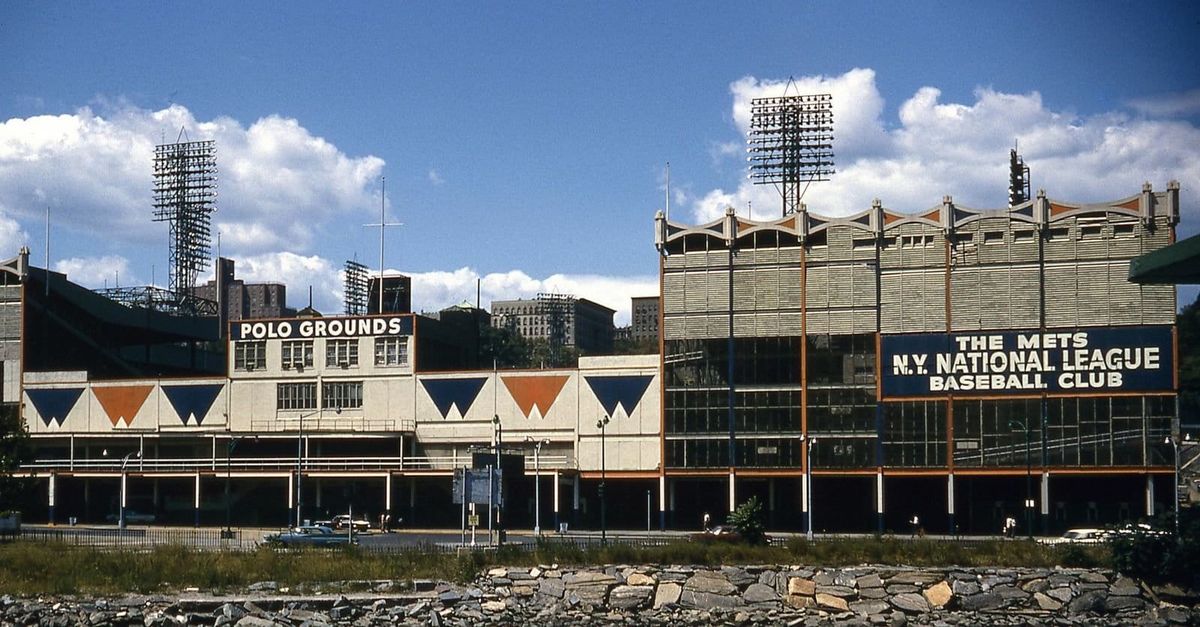
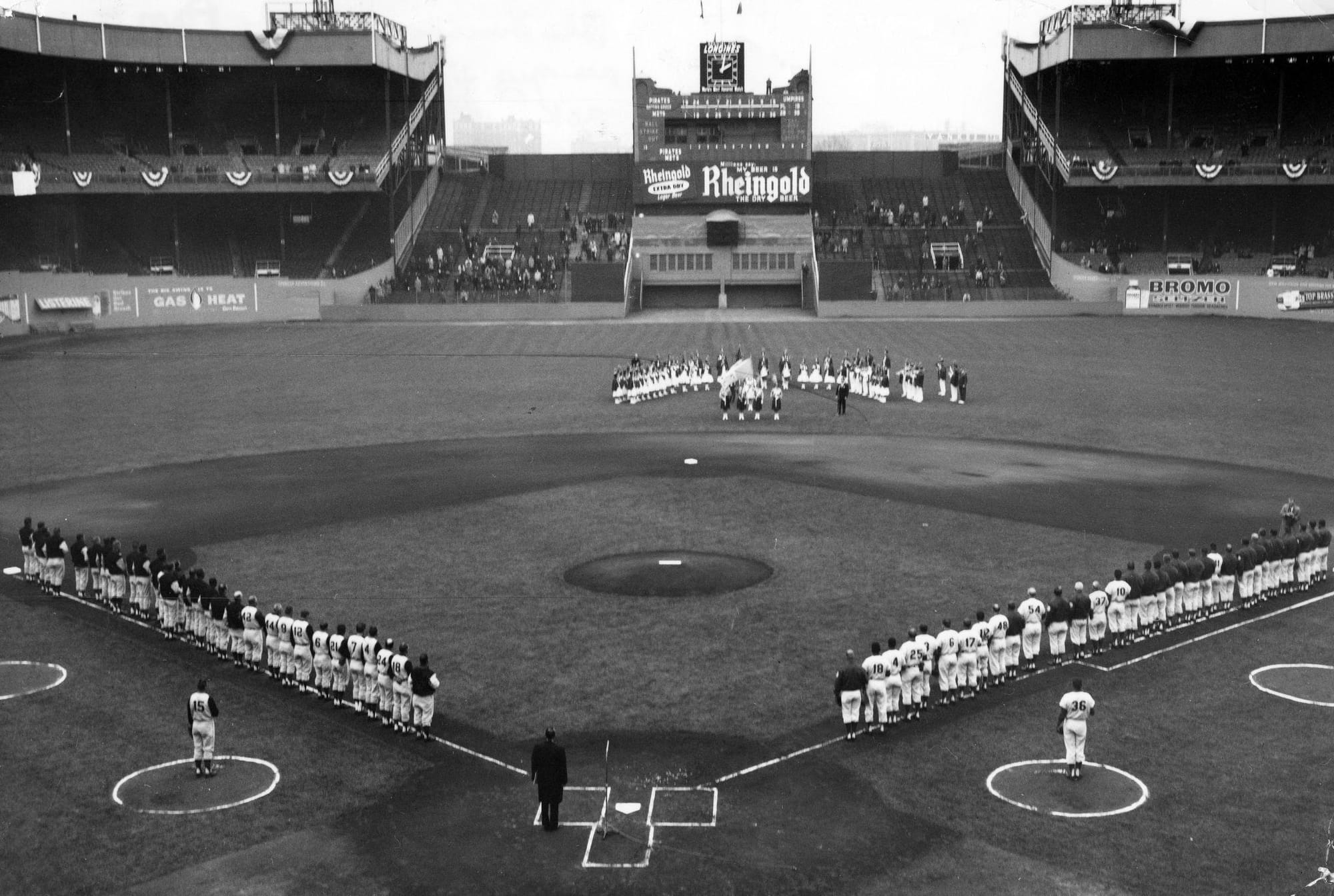
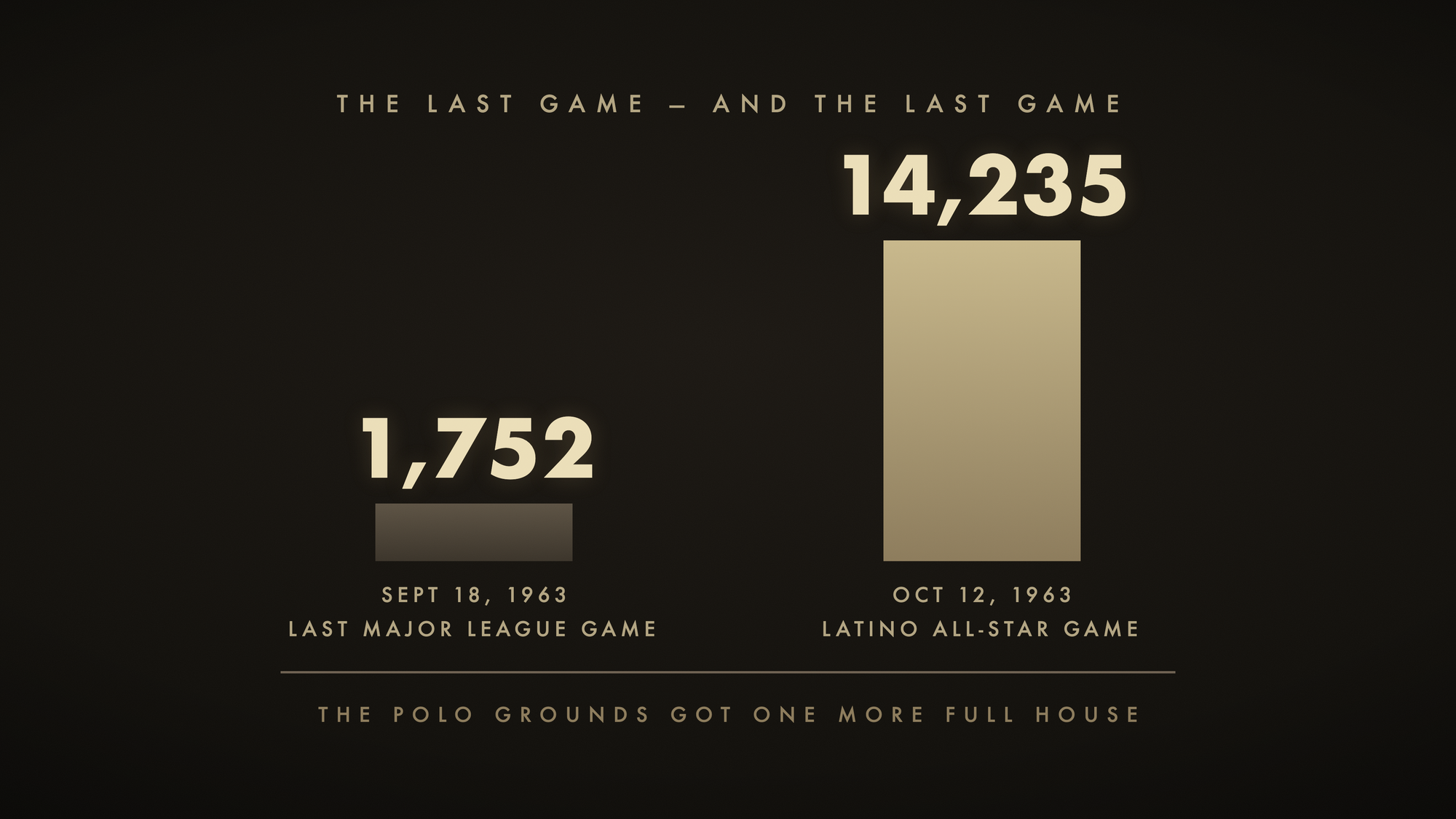
On this date in 1963, the Philadelphia Phillies beat the New York Mets 5-1 in the last major league baseball game ever played at the Polo Grounds. 1,752 people came.
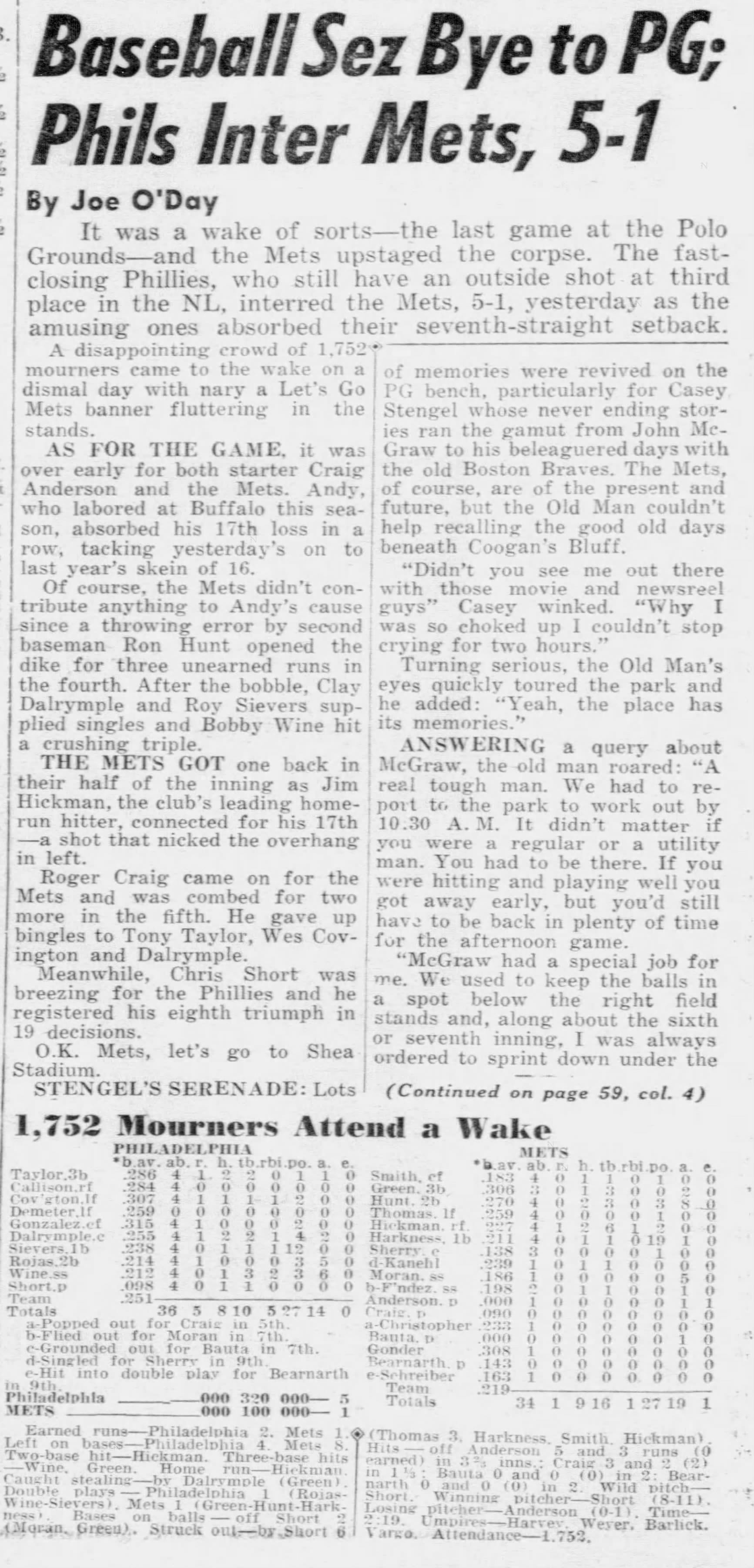
The New York Daily News put it about as bluntly as a newspaper can. "Baseball Sez Bye to PG; Phils Inter Mets, 5-1," ran the headline over Joe O'Day's story, and above the box score the paper ran a second line: "1,752 Mourners Attend a Wake." O'Day's first sentence: "It was a wake of sorts—the last game at the Polo Grounds—and the Mets upstaged the corpse."
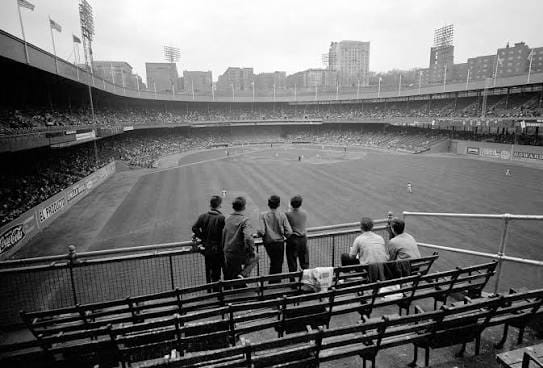
The ballpark had been standing in Coogan's Hollow since before the Giants won anything. Bobby Thomson hit the Shot Heard 'Round the World there. Willie Mays made The Catch there. Jack Dempsey got knocked through the ropes there and climbed back in to knock out Luis Firpo. The football Giants played there for 31 seasons. Babe Ruth hit 59 home runs in a season there, back when the Yankees were tenants without a stadium of their own.
On the afternoon it closed, fewer than 1,800 people were in a building that held 55,000.
They Had Already Said Goodbye Once
Part of the reason is that New York had already been to this funeral.
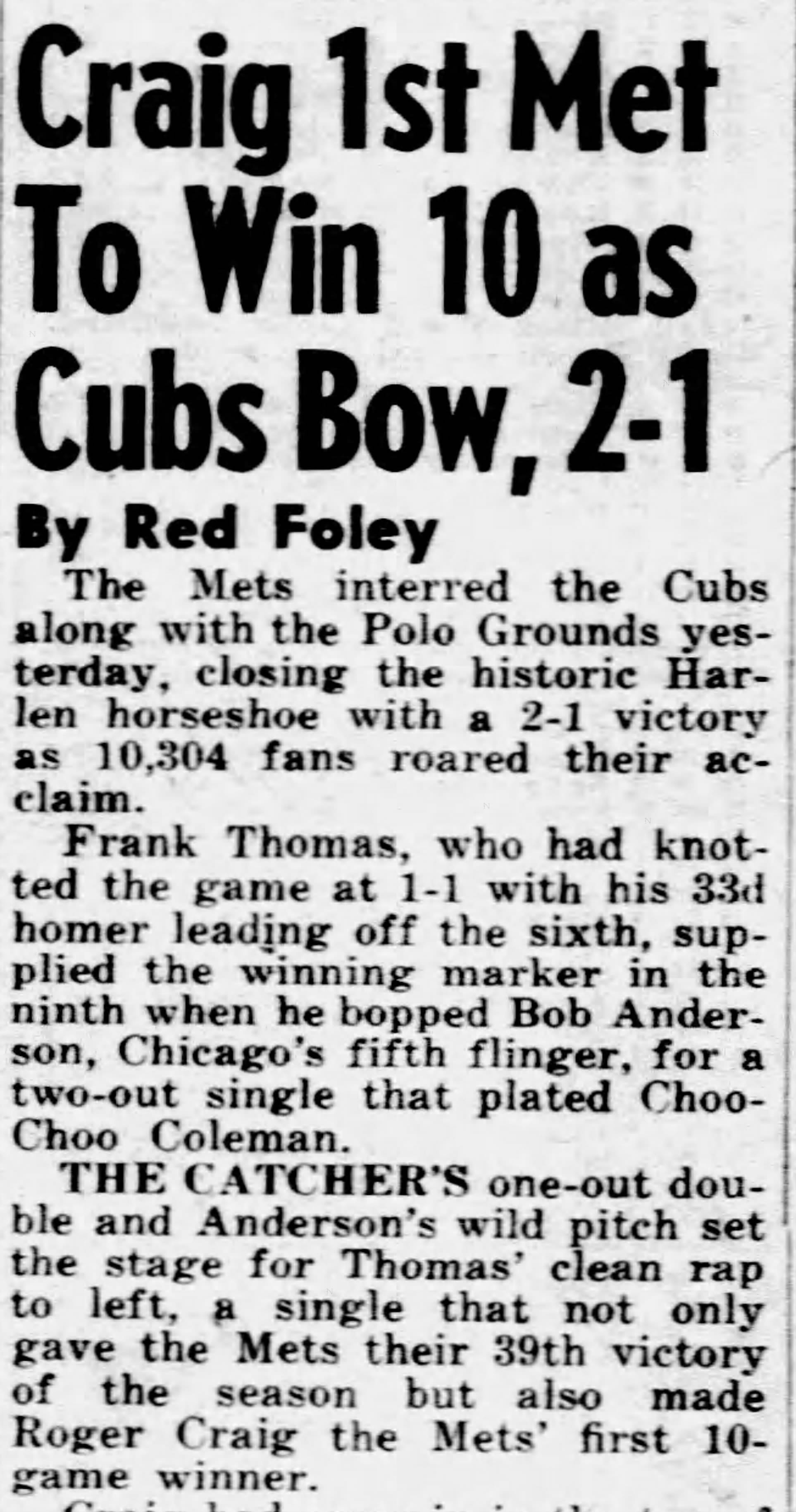
On Sept. 23, 1962, the Mets closed their first season with a 2-1 win over the Cubs in front of 10,304 fans, and everyone involved understood it to be the end. Red Foley's story in the Daily News the next morning began: "The Mets interred the Cubs along with the Polo Grounds yesterday, closing the historic Harlem horseshoe with a 2-1 victory as 10,304 fans roared their acclaim."
Shea Stadium was supposed to open in Flushing in 1963. It didn't. The winter of 1962-63 was brutal, two subcontractors went bankrupt, and there was a labor fight on top of it. The Mets and the Jets got one more year in a ballpark that had already been eulogized in print.
So when the real ending arrived eleven months later, nobody wanted to sit through it twice.
A Ballpark Shaped Like a Bathtub
The Polo Grounds was the strangest field in the major leagues, and its dimensions are the reason half its famous moments are famous. It was 279 feet down the left field line and 258 feet down the right — a pop fly with intent. Dead center field was 483 feet away, with the clubhouse out there behind it.
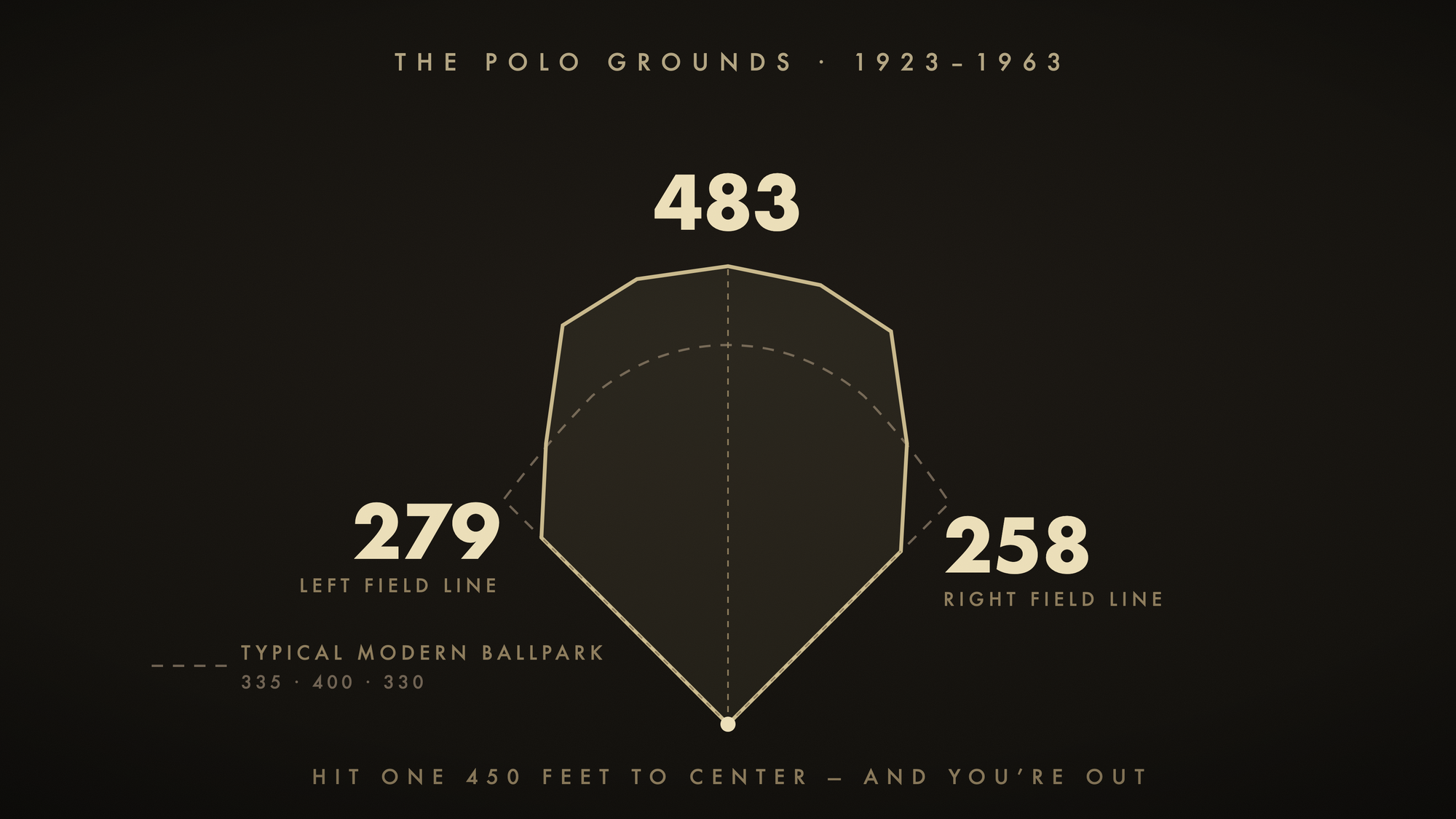
You could hit a ball 450 feet in that park and be out. That is why The Catch is The Catch.
The Game
Chris Short started for Philadelphia and went the distance — nine innings, nine hits, one run, six strikeouts, his eighth win in 19 decisions.
Craig Anderson started for New York. Anderson had been an original Met, he had won both ends of a doubleheader in 1962, and he had not won a game since. As O'Day noted in the Daily News, this one was "his 17th loss in a row, tacking yesterday's on to last year's skein of 16." He never did win another one in the majors.
The Phillies broke it open in the fourth. Ron Hunt threw one away at second, and after the error came singles by Clay Dalrymple and Roy Sievers and then a bases-clearing triple by Bobby Wine — three unearned runs. Two more came home in the fifth off Roger Craig. Philadelphia 5, New York 1.
The Mets' run also came in the fourth, and it turned out to be the last one that mattered in the building's history. Jim Hickman led off and, in O'Day's words, "connected for his 17th — a shot that nicked the overhang in left." It was Hickman's 17th home run of the year, the most on the club, and the last home run ever hit at the Polo Grounds.
New York put two men on with one out in the ninth — a Rod Kanehl single looped over the shortstop, a ground single by Chico Fernandez. Casey Stengel sent up Ted Schreiber, a 25-year-old infielder from Brooklyn by way of St. John's who would finish his entire major league career with eight hits. Schreiber grounded into a 4-6-3 double play, Rojas to Wine to Sievers, and major league baseball at the Polo Grounds was over. Time of game: 2:19.
A recording of "Auld Lang Syne" played over the public address system. One writer on the scene noted that the eyes were dry.
Stengel's Serenade
The best thing in the Daily News that morning wasn't the game. O'Day filed a sidebar he headed "STENGEL'S SERENADE," and it is the only part of the day that sounds like a goodbye.
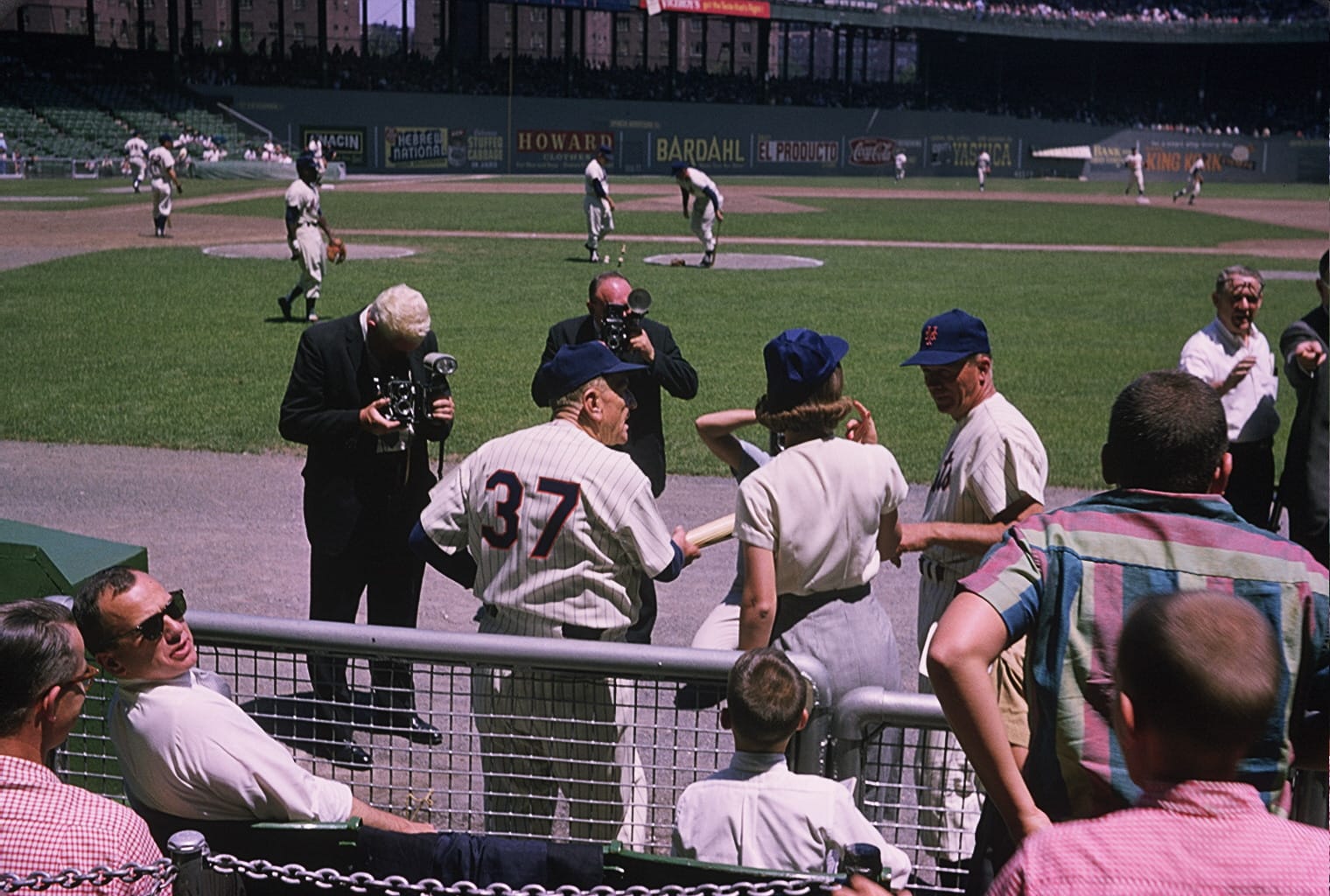
Casey Stengel had managed the Polo Grounds as a young man's ballpark and was finishing a 51-111 season in it at 73. He held court on the bench before the last game, running through the whole history from John McGraw to his own beleaguered days with the Boston Braves.
"Didn't you see me out there with those movie and newsreel guys?" Casey winked. "Why I was so choked up I couldn't stop crying for two hours."
Then, O'Day wrote, the Old Man's eyes quickly toured the park and he turned serious. "Yeah," Stengel said. "The place has its memories."
O'Day ended his game story with one line of his own: "O.K. Mets, let's go to Shea Stadium."
The Mets did finish 51-111 that year. They also drew 1,080,108 fans, fourth-best in the National League and about 157,000 more than the year before. New York had not stopped loving baseball. It had stopped coming to that building.
The Wrecking Crew Wore Giants Jerseys
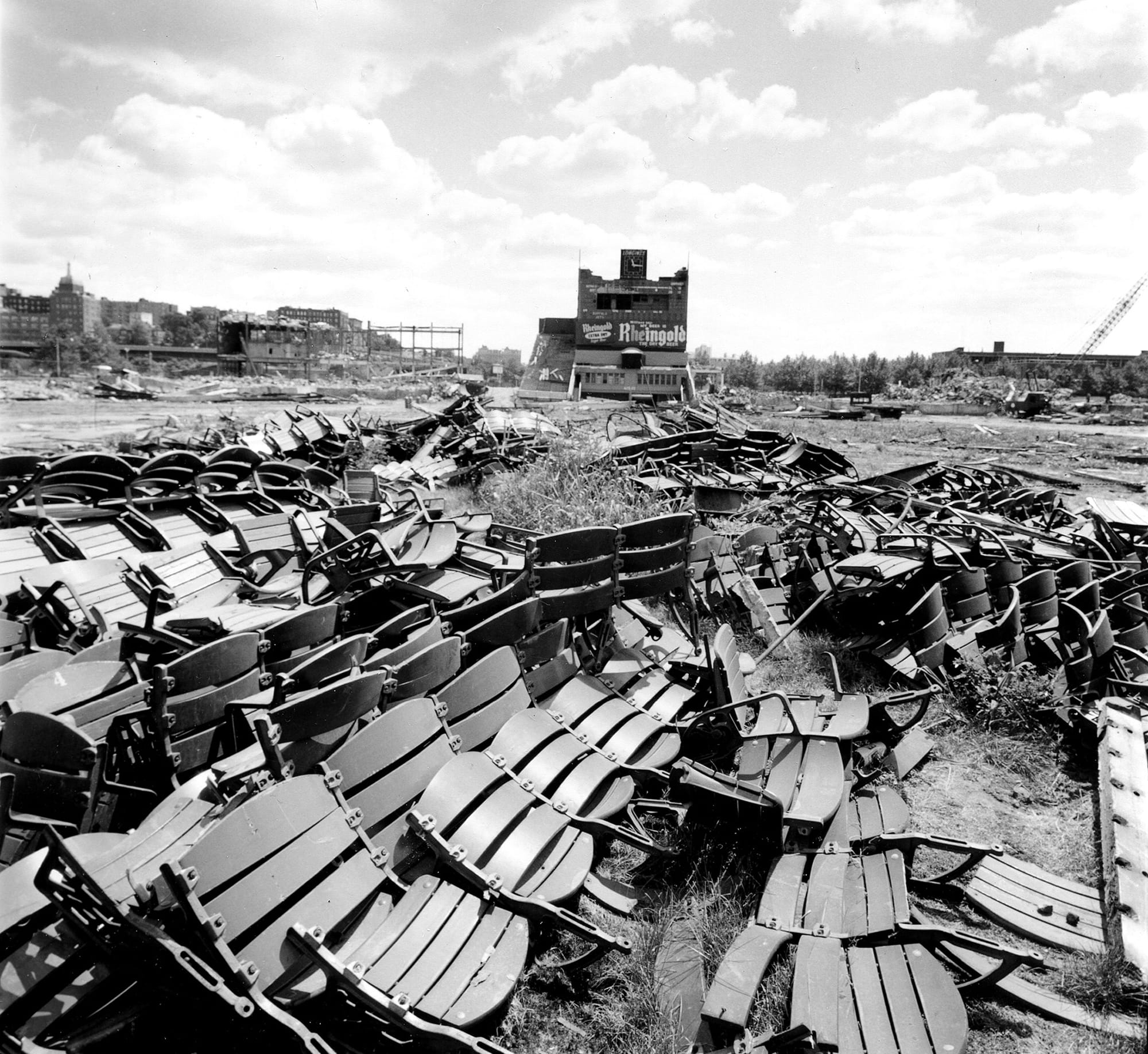
On April 10, 1964, the Polo Grounds went under the hammer. The Daily News sent photographer Ed Giorandino and ran a full page the next morning under the headline "A Giant Undertaking."
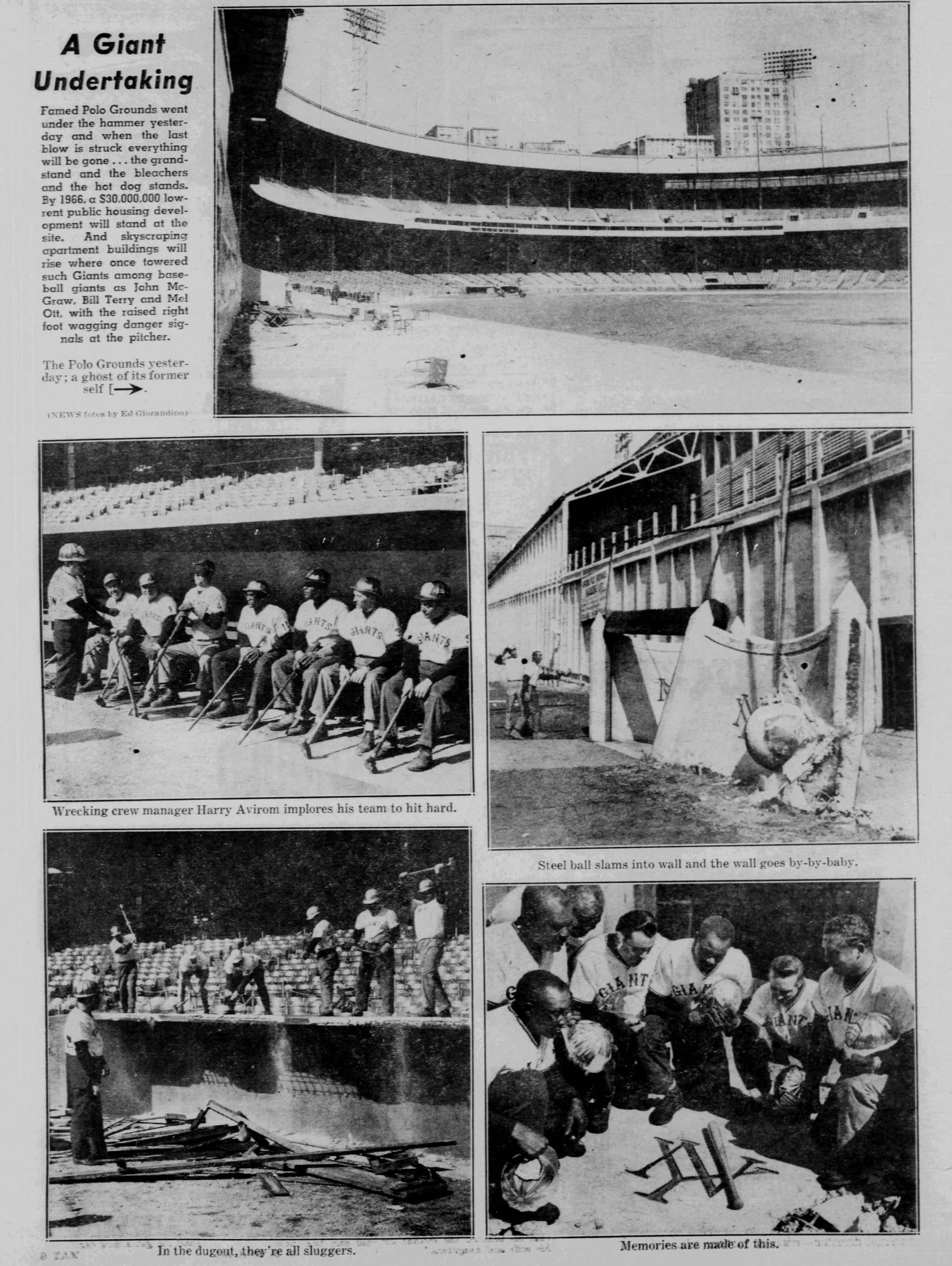
The crew worked in New York Giants uniforms. One photo caption reads: "Wrecking crew manager Harry Avirom implores his team to hit hard." Another, under a shot of the ball tearing into a wall: "Steel ball slams into wall and the wall goes by-by-baby." A third, of the men sitting in the dugout with sledgehammers across their knees: "In the dugout, they're all sluggers."
The wrecking ball was painted to look like a baseball. It was the same one that had knocked down Ebbets Field four years earlier.
The News told its readers that by 1966 a $30 million low-rent housing development would stand on the site, and that "skyscraping apartment buildings will rise where once towered such Giants among baseball giants as John McGraw, Bill Terry and Mel Ott." The projection was optimistic by two years. Polo Grounds Towers opened in 1968 and is still there.
The Last Game Was Not the Last Game
Here is the part that gets us.
Sept. 18, 1963 was the last major league game at the Polo Grounds. It was not the last game.
On Saturday, Oct. 12, 1963 — Columbus Day — the ballpark hosted the first and only Latino All-Star Game, a charity benefit for the Hispanic-American Baseball Federation organized by the broadcaster Guy LeBow and the publisher O. Roy Chalk. Twenty-seven Latin American major leaguers played. Roberto Clemente managed the National League side and played in the game. So did Juan Marichal, Orlando Cepeda, Luis Aparicio, Tony Oliva and Minnie Miñoso — six men who would end up in Cooperstown. Tito Puente and Tito Rodríguez played before first pitch. The players were paid $175 apiece.
The National League won 5-2. Marichal threw four scoreless innings. The announced crowd was 14,235.
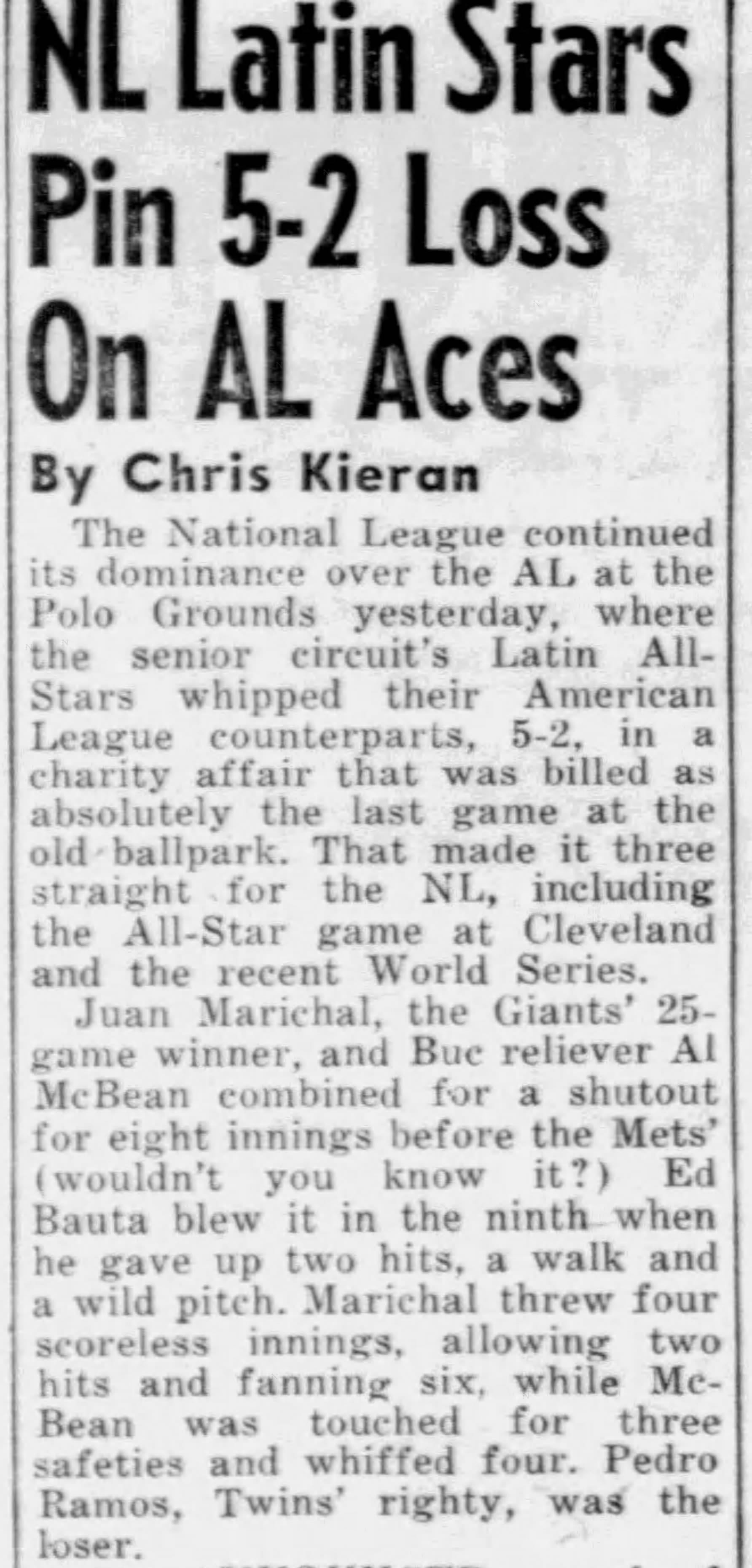
Chris Kieran's story in the Daily News described it as "a charity affair that was billed as absolutely the last game at the old ballpark." By then the Polo Grounds had been closed twice already. The third time, somebody had to put the word "absolutely" in front of it.
And even that wasn't the end of the goodbyes. On April 15, 1964 — five days after the wrecking ball started swinging — WABC-TV Channel 7 ran an hour in prime time called "The Polo Grounds: Requiem for an Arena," with Bobby Thomson, Ralph Branca, Willie Mays, Joe Louis and Floyd Patterson turning up to remember "a great arena where everything but polo was played."
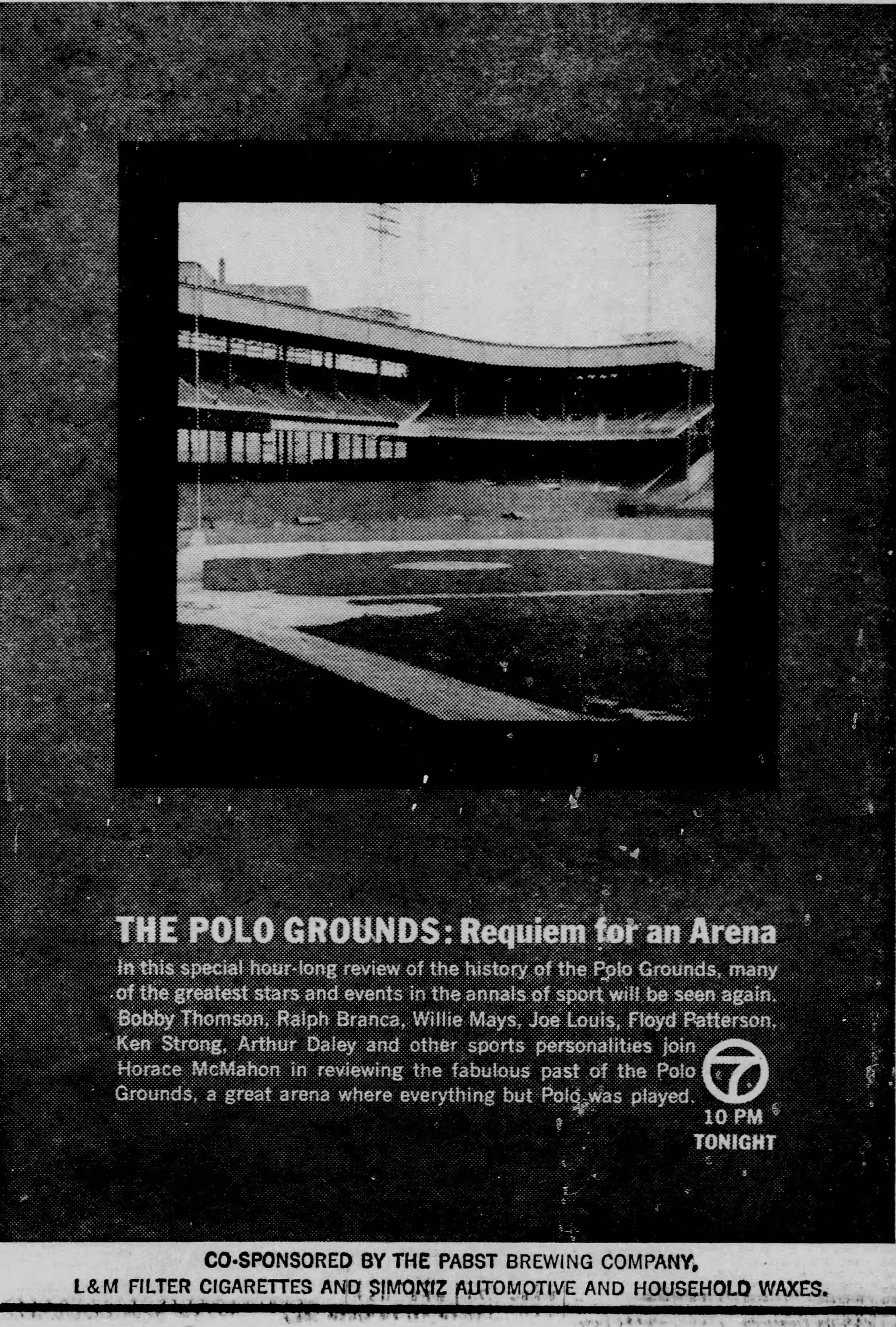
More people watched that than watched the last game.
The Mets' goodbye drew 1,752. The building's actual last game drew eight times that, and the television requiem a few months later almost certainly beat them both. New York loved the Polo Grounds. It just loved it as a memory, which is cheaper and requires no subway ride.
What's the emptiest crowd you've ever been part of? Comments below.
Comments ()