
On This Date: The Milwaukee Braves Vote to Leave for Atlanta (Oct. 21, 1964)
On Oct. 21, 1964, the Braves' board voted 12-6 to leave Milwaukee for Atlanta, 11 years after the city set NL attendance records. How Milwaukee lost its team, and got baseball back.
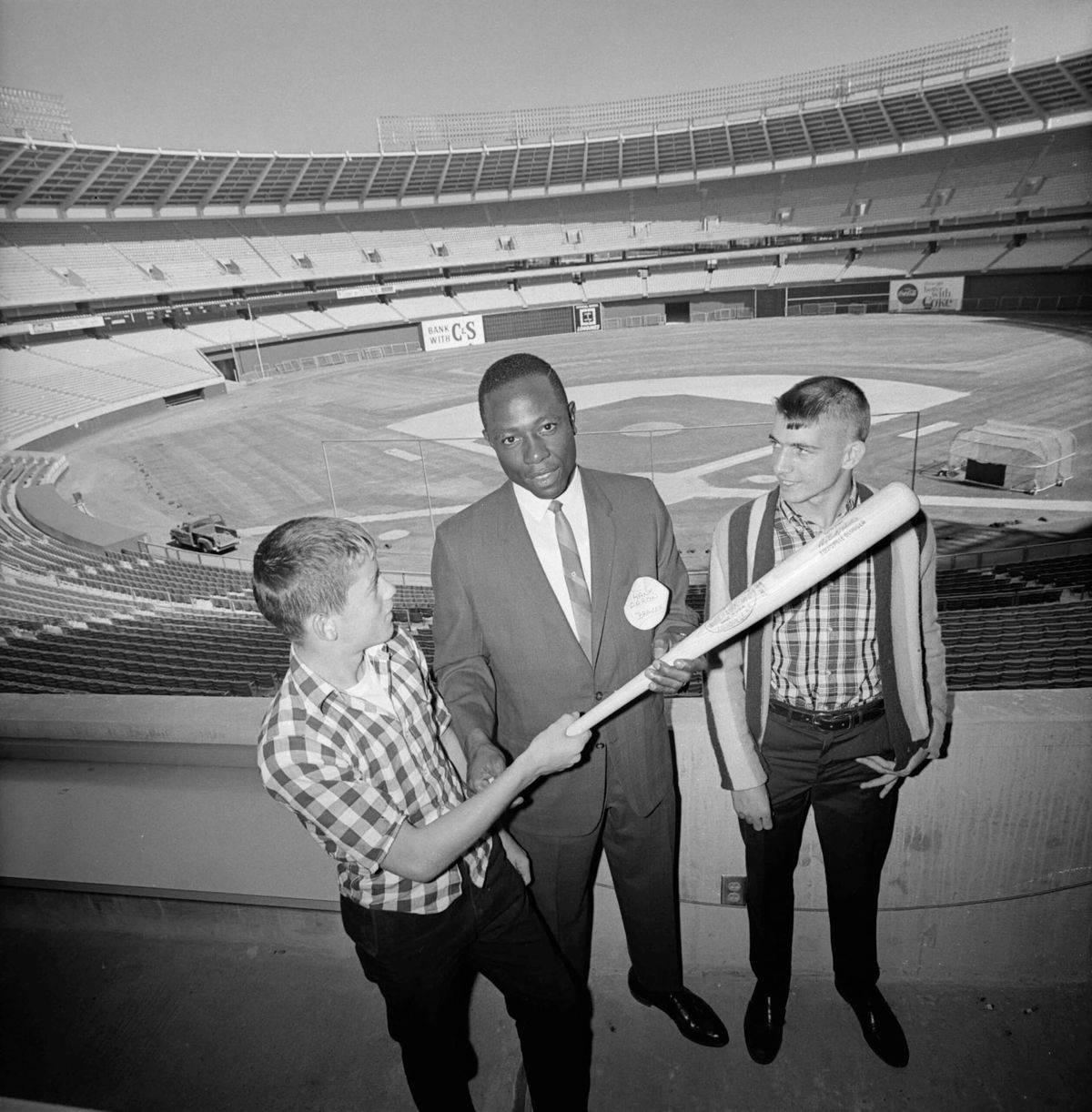
Eleven years earlier, Milwaukee had been the best baseball town in America. On Oct. 21, 1964, the men who owned its team voted to leave it.
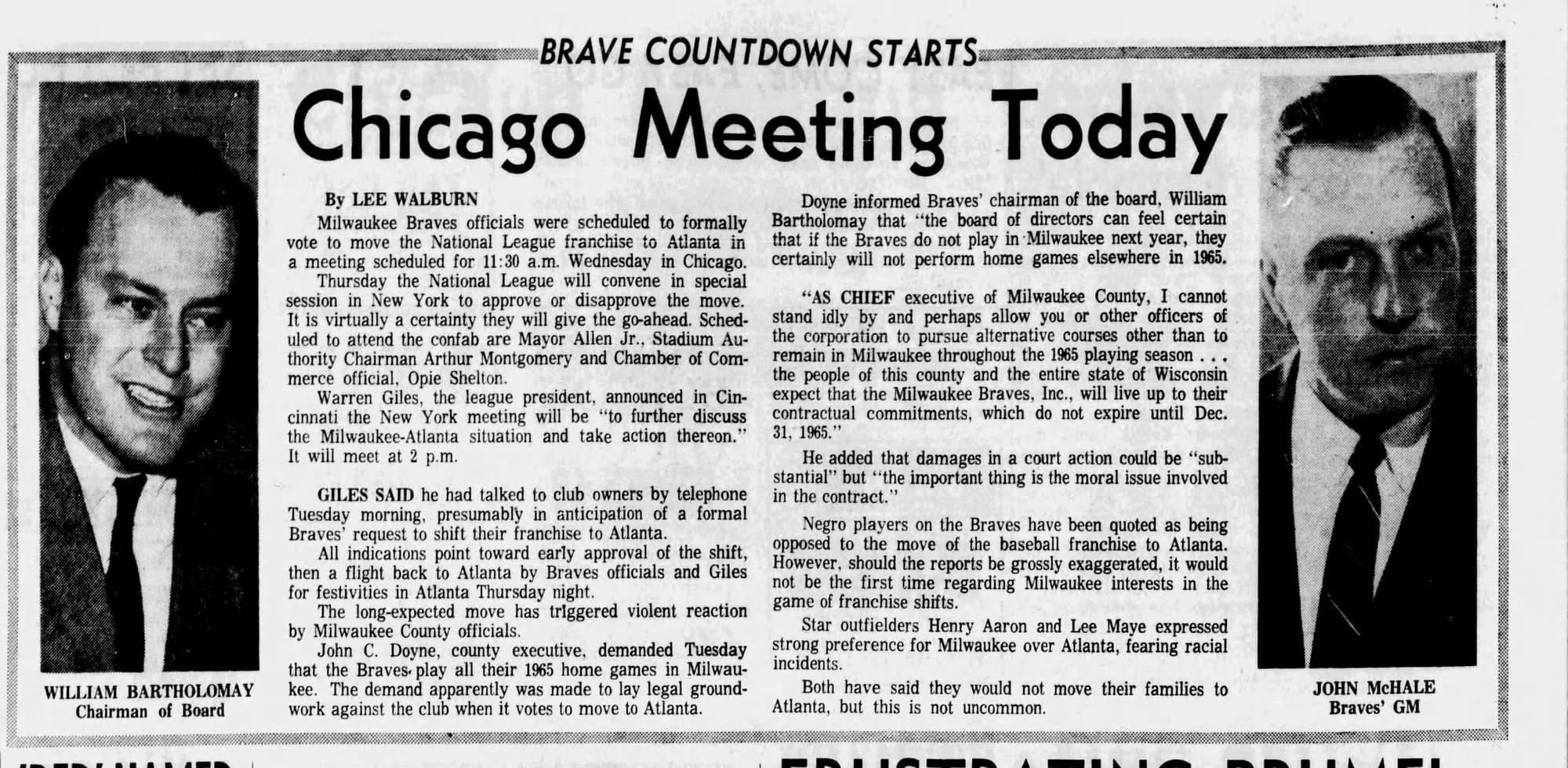
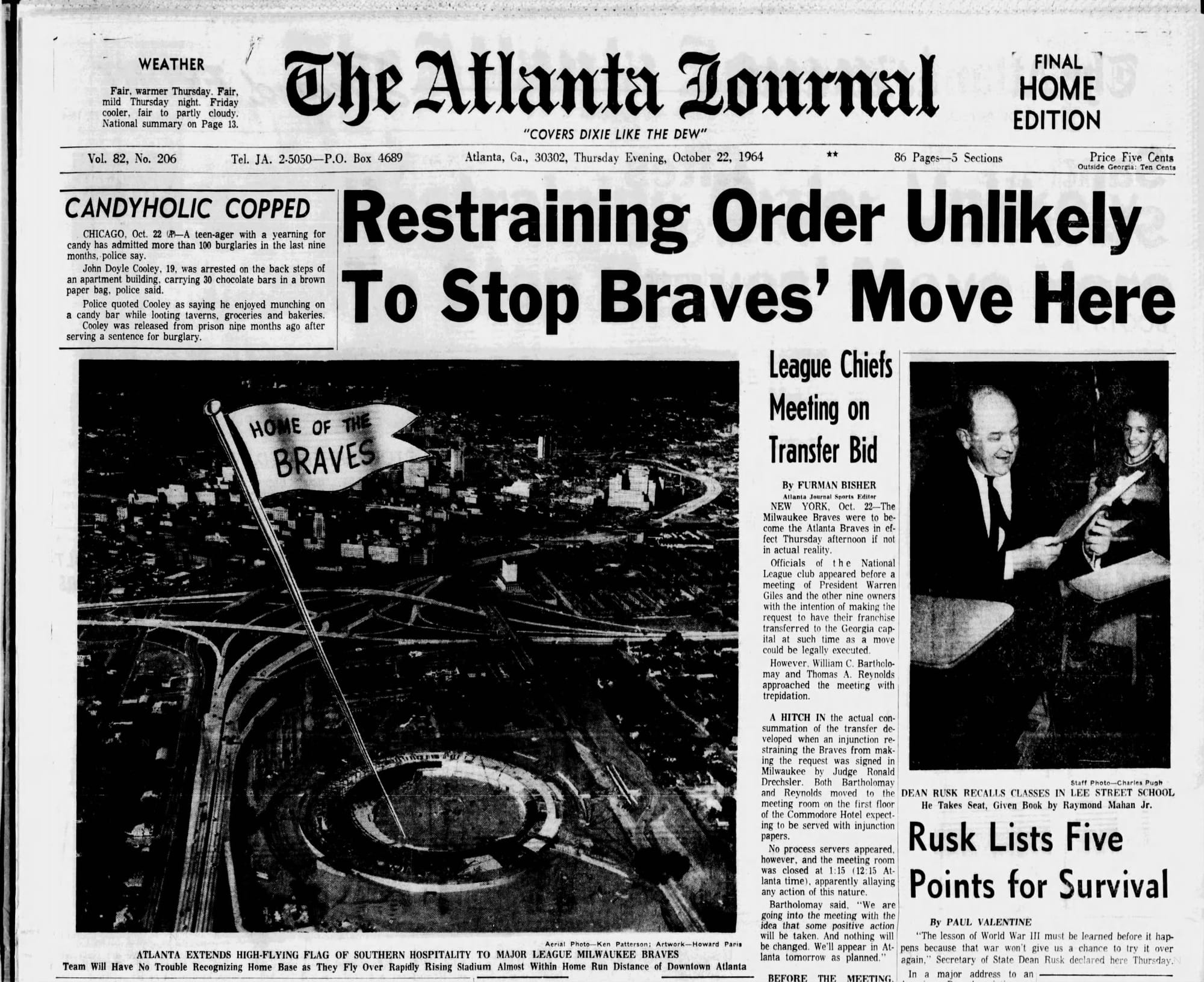
The Braves' board of directors met at a club on Chicago's North Side that Wednesday and voted 12-6 to ask the National League for permission to move the franchise to Atlanta in time for the 1965 season. All 6 of the no votes came from the Milwaukee directors. Nobody from the front office stood up to explain it. The team's publicity director, Ernie Johnson, handed reporters a short prepared statement with no reasons in it, because the league's president had asked the club to say nothing until the owners met.
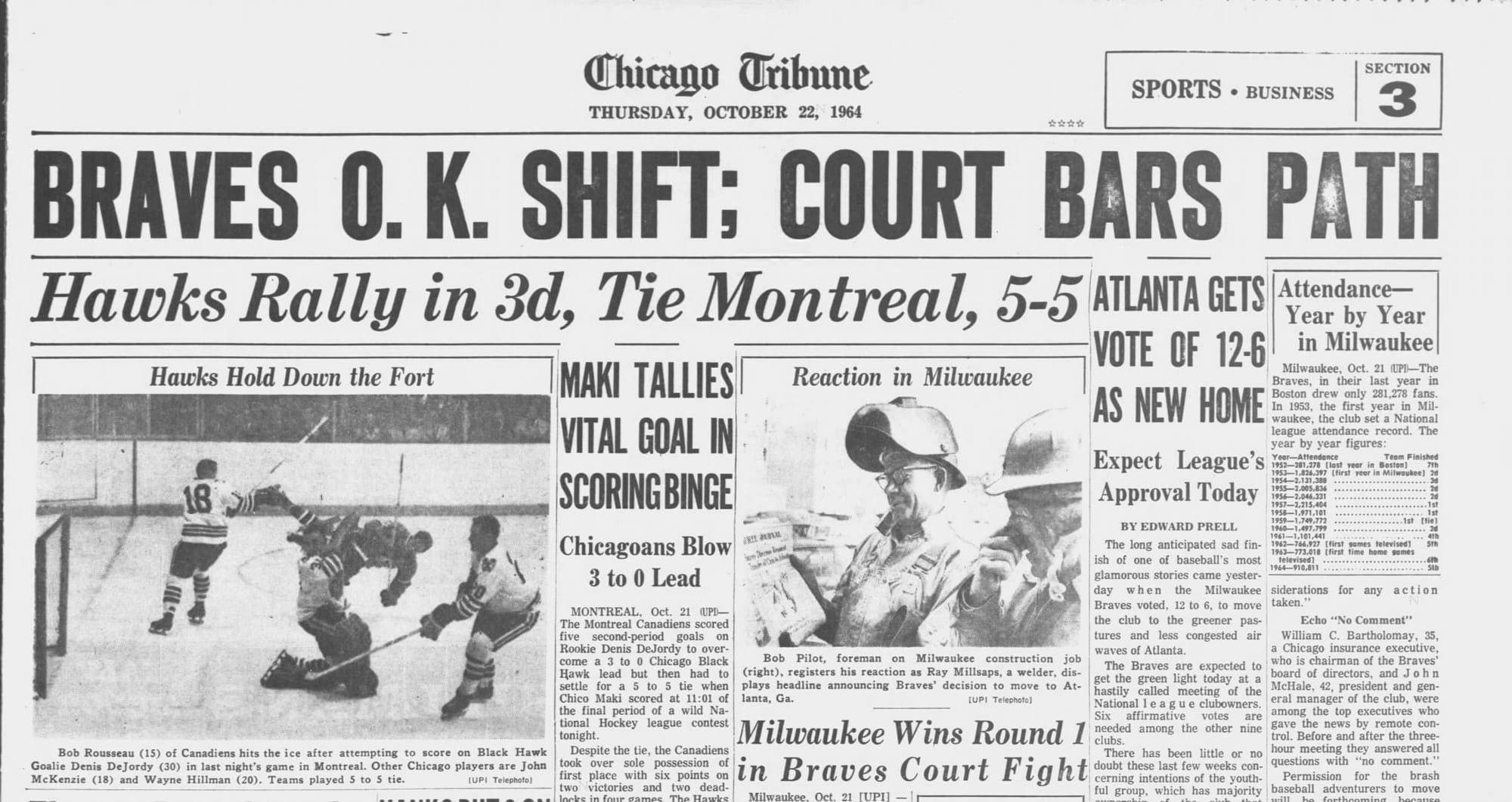
Milwaukee didn't need the reasons. Atlanta had a new $18 million stadium going up downtown. Milwaukee had a team that had drawn fewer than a million fans in each of the last 3 seasons, owned by a group from Chicago.
How it started
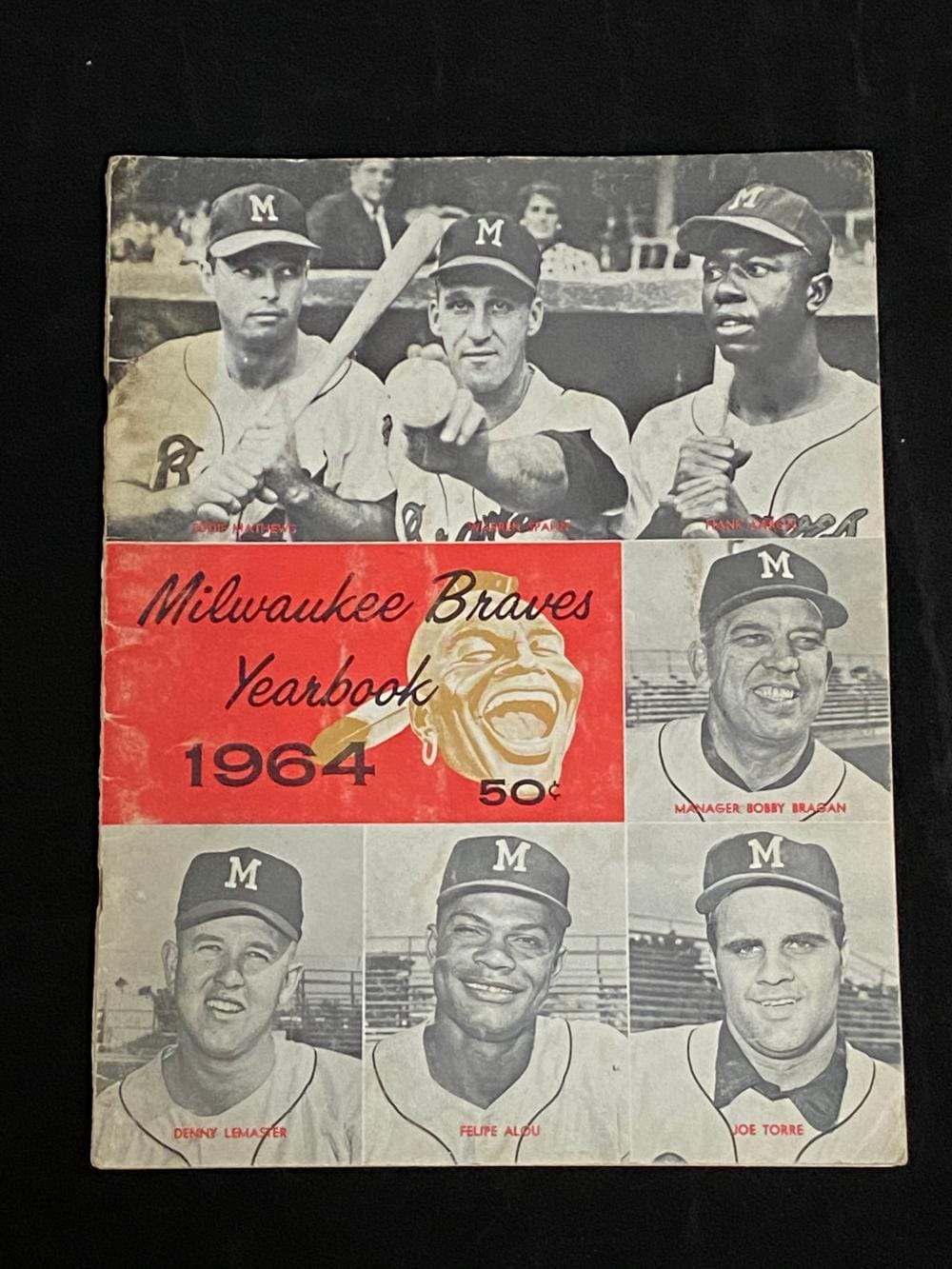
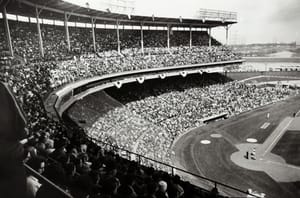
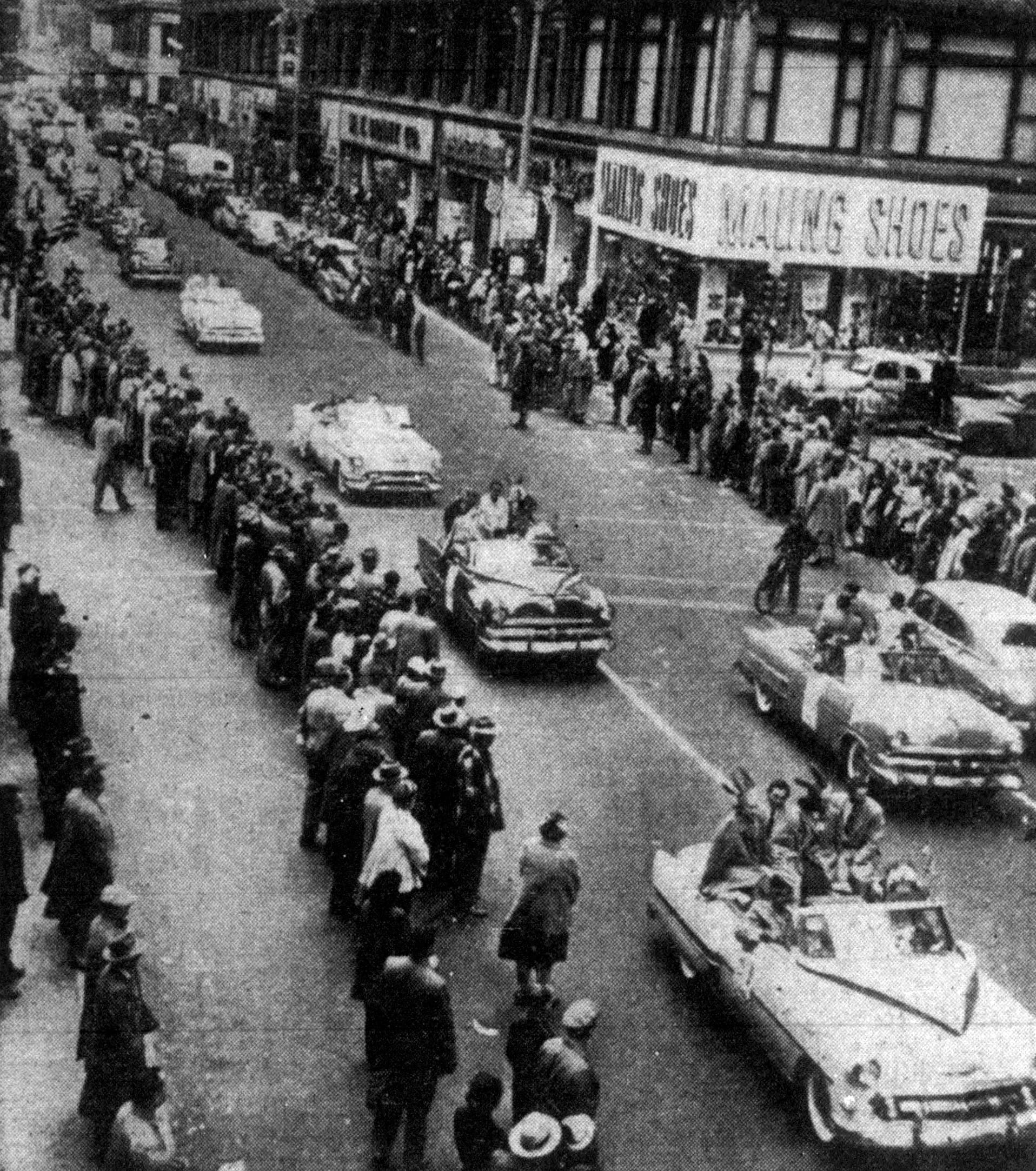
The Braves had come to Milwaukee from Boston in March 1953, the first time a major league team had changed cities in 50 years. Milwaukee had built County Stadium hoping to lure a team, and when Lou Perini moved his Braves there a few weeks before Opening Day, the city threw them a parade.
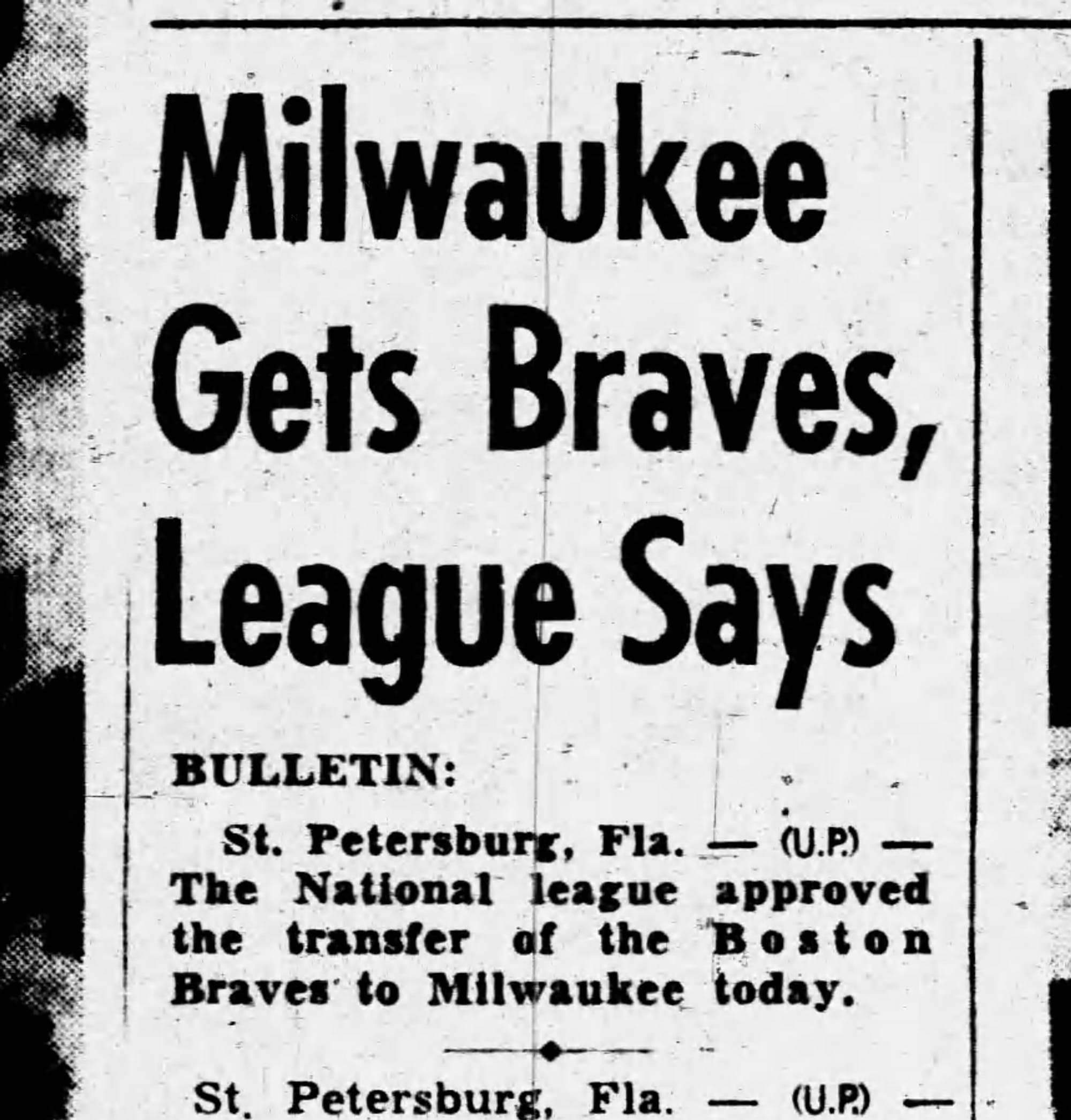
They drew 1,826,397 that first season, a National League record, after drawing 281,278 in Boston the year before. Then they drew more than 2 million in each of the next 4 years, topping out at 2,215,404 in 1957.
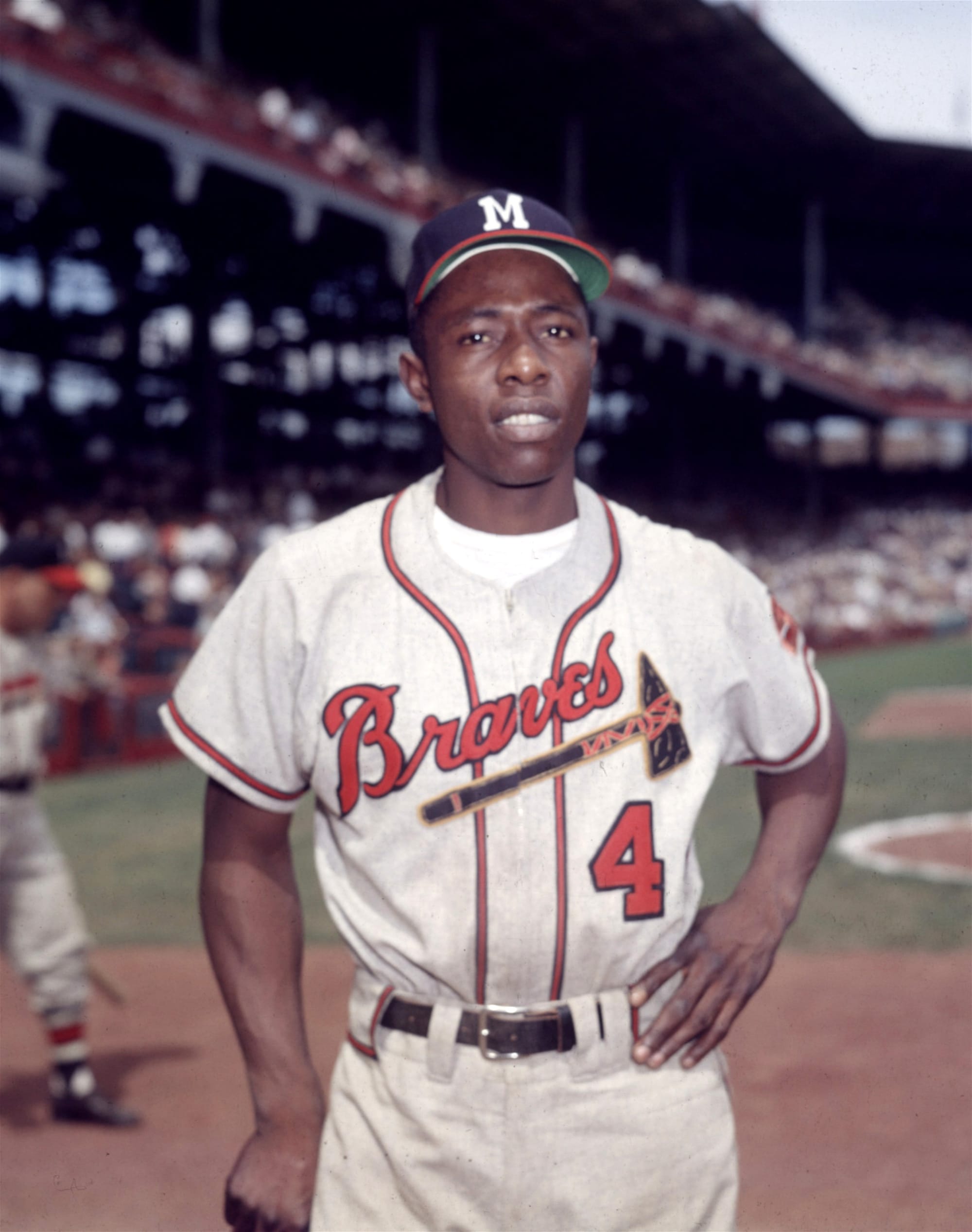
The team was good, too. With Hank Aaron, Eddie Mathews and Warren Spahn, Milwaukee beat the Yankees in the 1957 World Series, after Casey Stengel's Yankees had supposedly called the place "Bushville." Fans celebrated downtown under signs that read "Bushville Wins!" The Braves won the pennant again in 1958.
How it soured
The crowds didn't last. The Braves finished second in 1959 and 1960 and then fell out of the race, and attendance fell with them. In 1962 they drew 766,921, ninth in a 10-team league.
That November, Perini sold the club for about $5.5 million to a group led by Bill Bartholomay, a 34-year-old Chicago insurance executive. A public stock offering meant to bring in Wisconsin owners flopped the next spring. Of 115,000 shares, about 13,000 sold. The Milwaukee papers called the new owners the "Rover Boys."
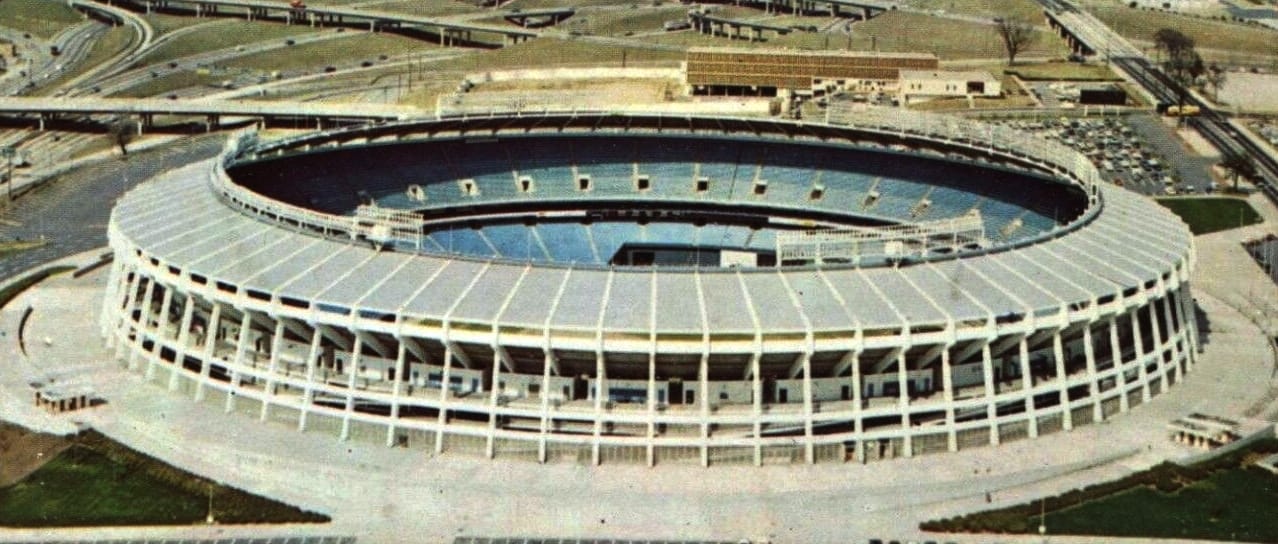
Atlanta was waiting. Mayor Ivan Allen Jr. had campaigned on building a stadium and was willing to build it before he had a team. He had already shown the site to the Kansas City A's, until the American League blocked that move in 1963. The Braves gave Atlanta a verbal commitment in early 1964. Ground was broken on April 15, 1964, and the stadium was finished 51 weeks later, built, as Allen liked to say, with money the city didn't have, on land it didn't own, for a team it hadn't signed.
The vote
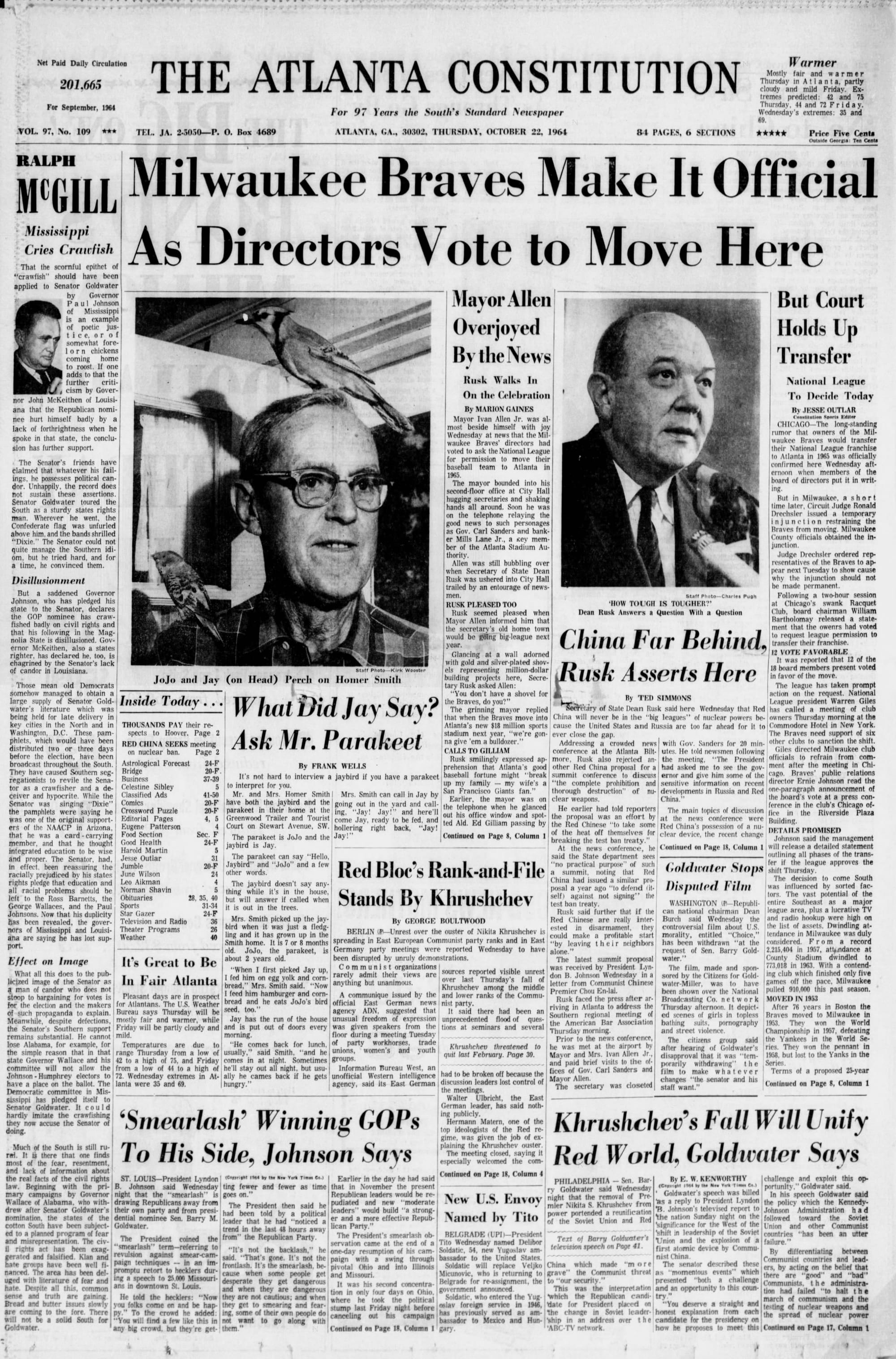
The vote came 6 days after the 1964 World Series ended. In Atlanta, a wire photographer caught Allen grinning on the phone, calling friends with the news.
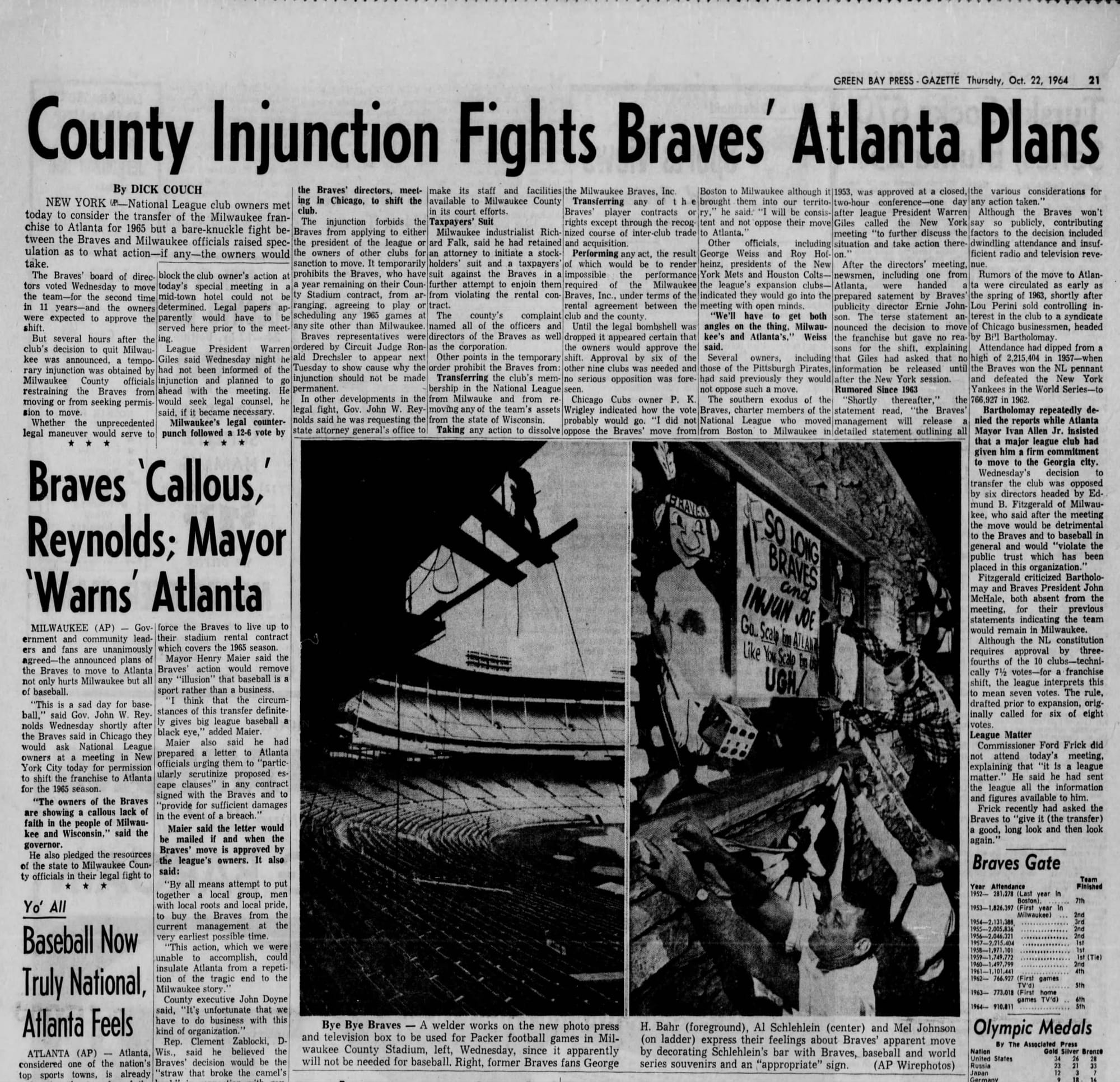
Wisconsin was furious. Gov. John Reynolds called it "a sad day for baseball" and promised the state's help. Milwaukee Mayor Henry Maier said it gave big league baseball "a black eye." That same night, Milwaukee County went to court and got a restraining order that barred the Braves from even asking to leave while their County Stadium lease still had a year to run.
Some of the players weren't eager to go either. Atlanta in 1964 was still a Jim Crow city. Lee Maye, a Black outfielder from Alabama, said, "I hope and pray we don't go," and Aaron, who had come up through the Sally League in the early 1950s, said he did not want to play under segregation again.
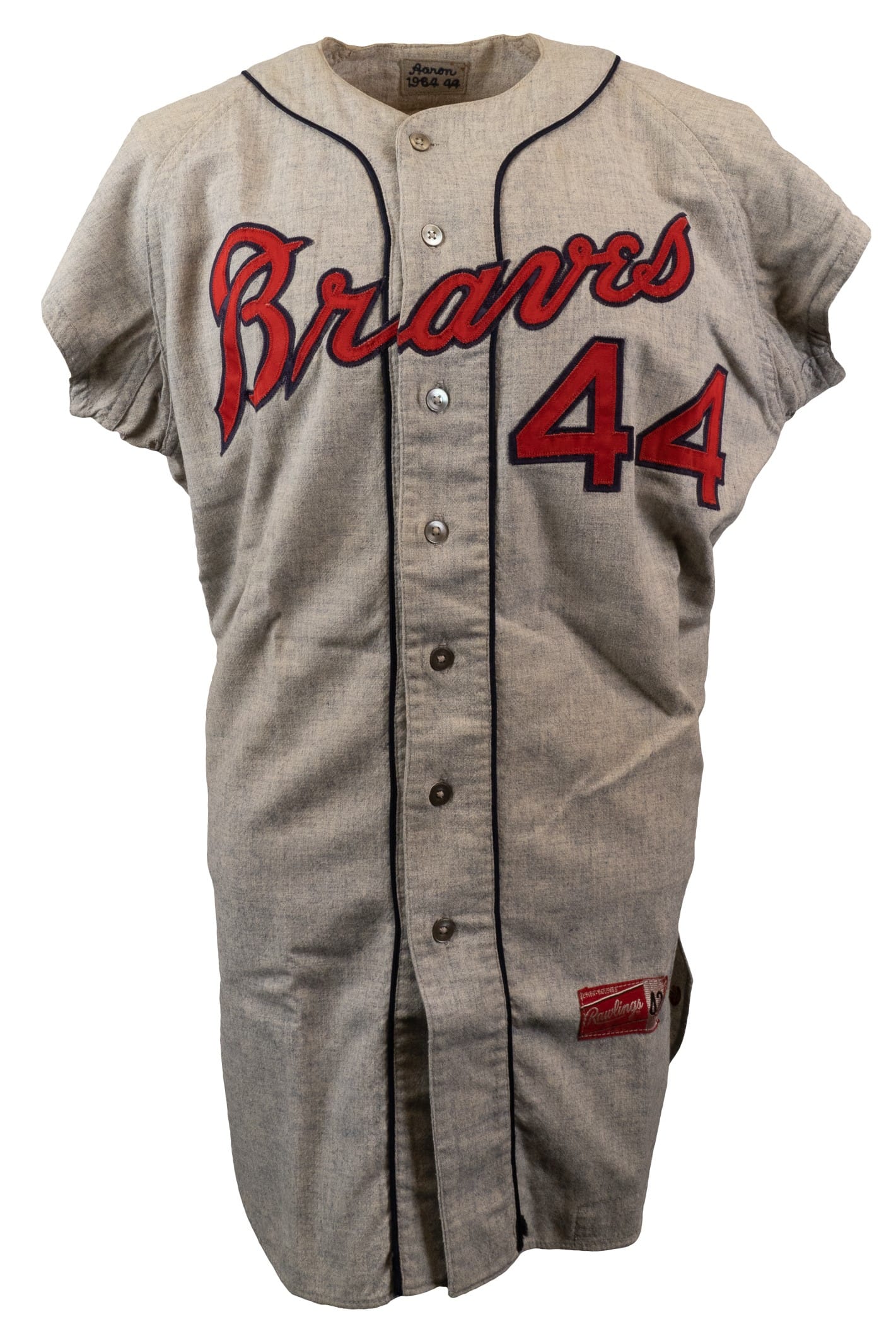
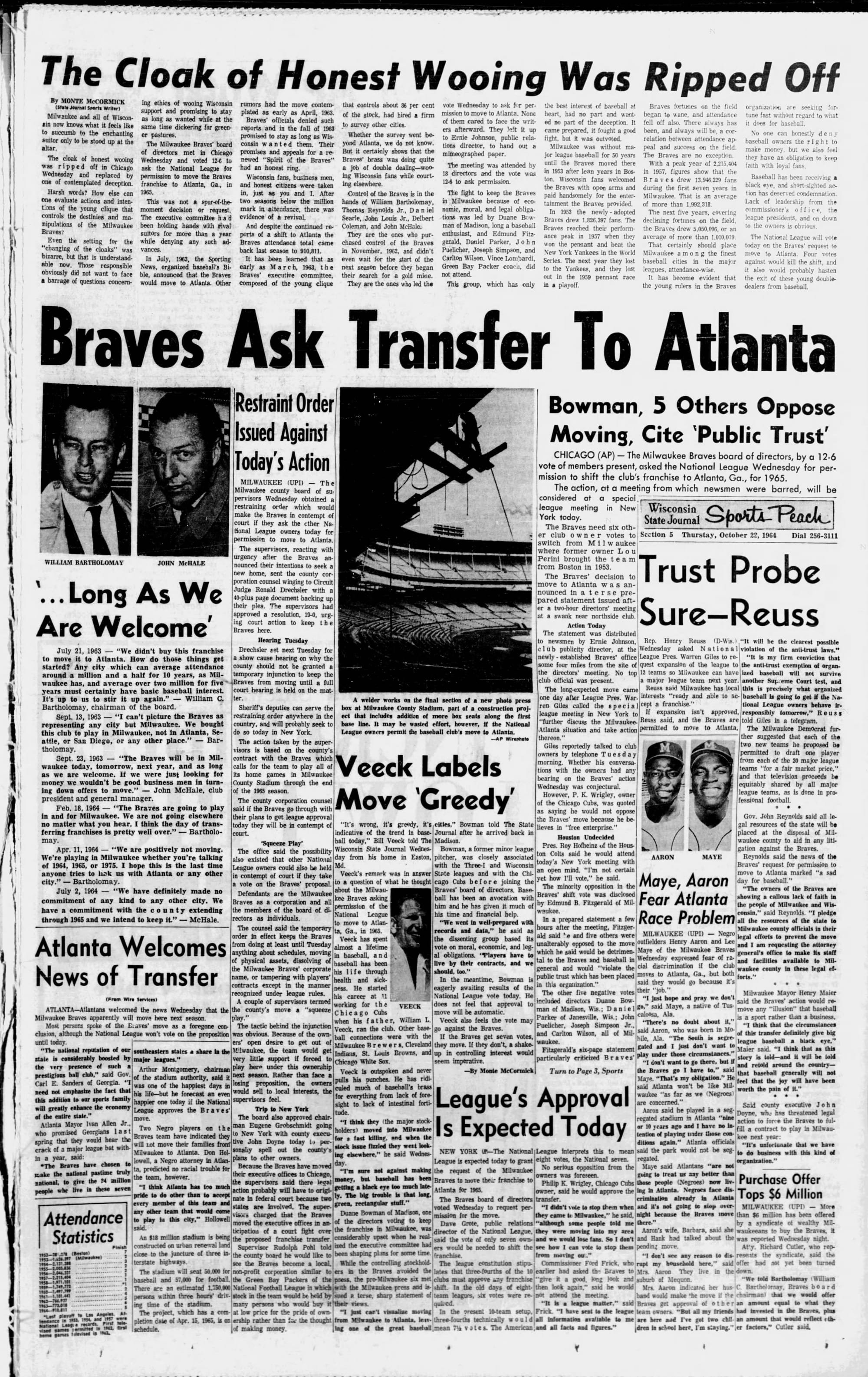
The National League's answer came in early November. The Braves could go to Atlanta, but not until 1966. First they had to play out the lease in Milwaukee.
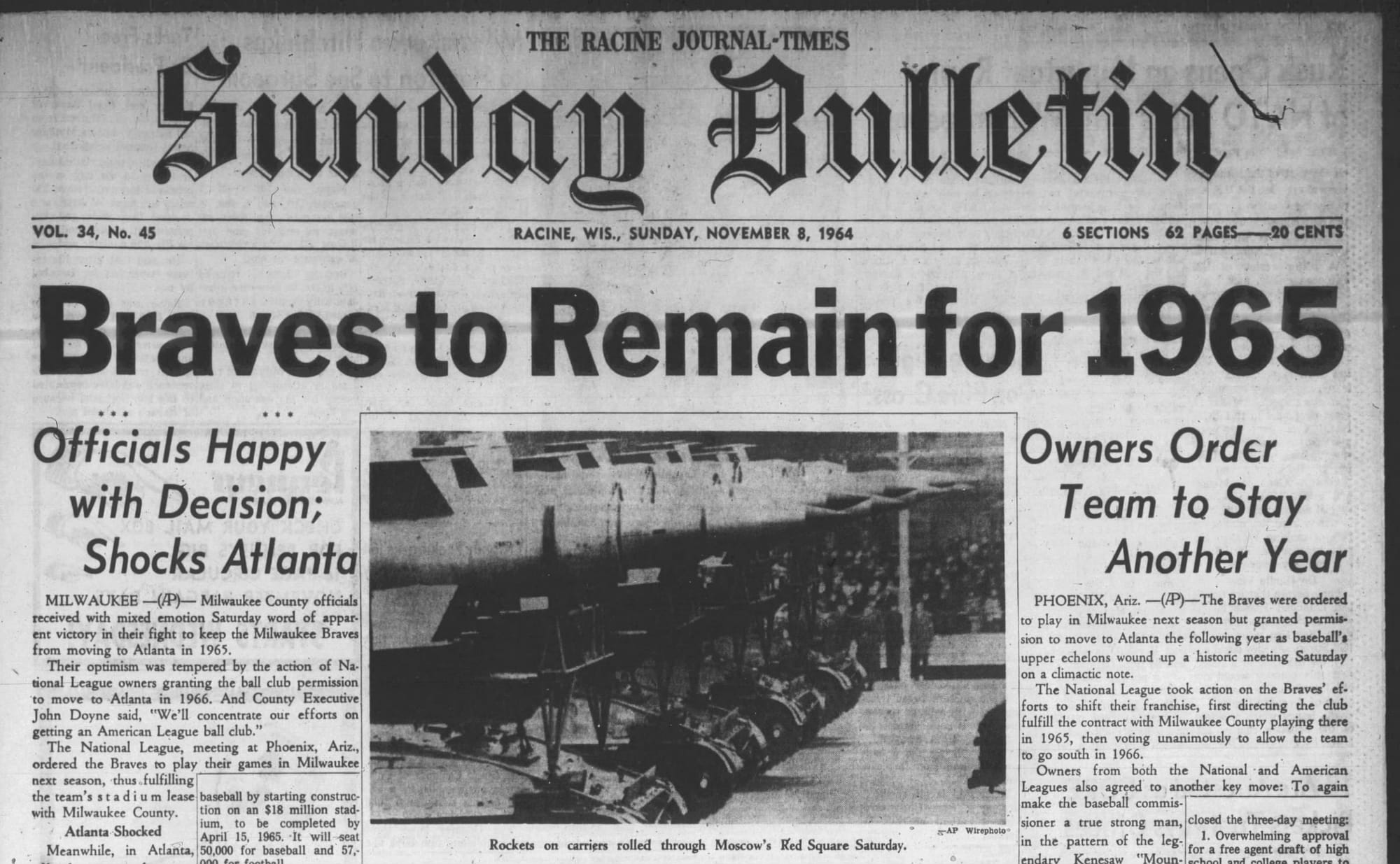
The lame duck
It was as miserable as it sounds. The 1965 Braves were a good team, 86-76, the franchise's 13th straight winning season, and almost nobody came. They drew 555,584, last in the league. The last game at County Stadium was on Sept. 22, 1965, against the Dodgers, in front of 12,577. The Braves lost 7-6 in 11 innings.
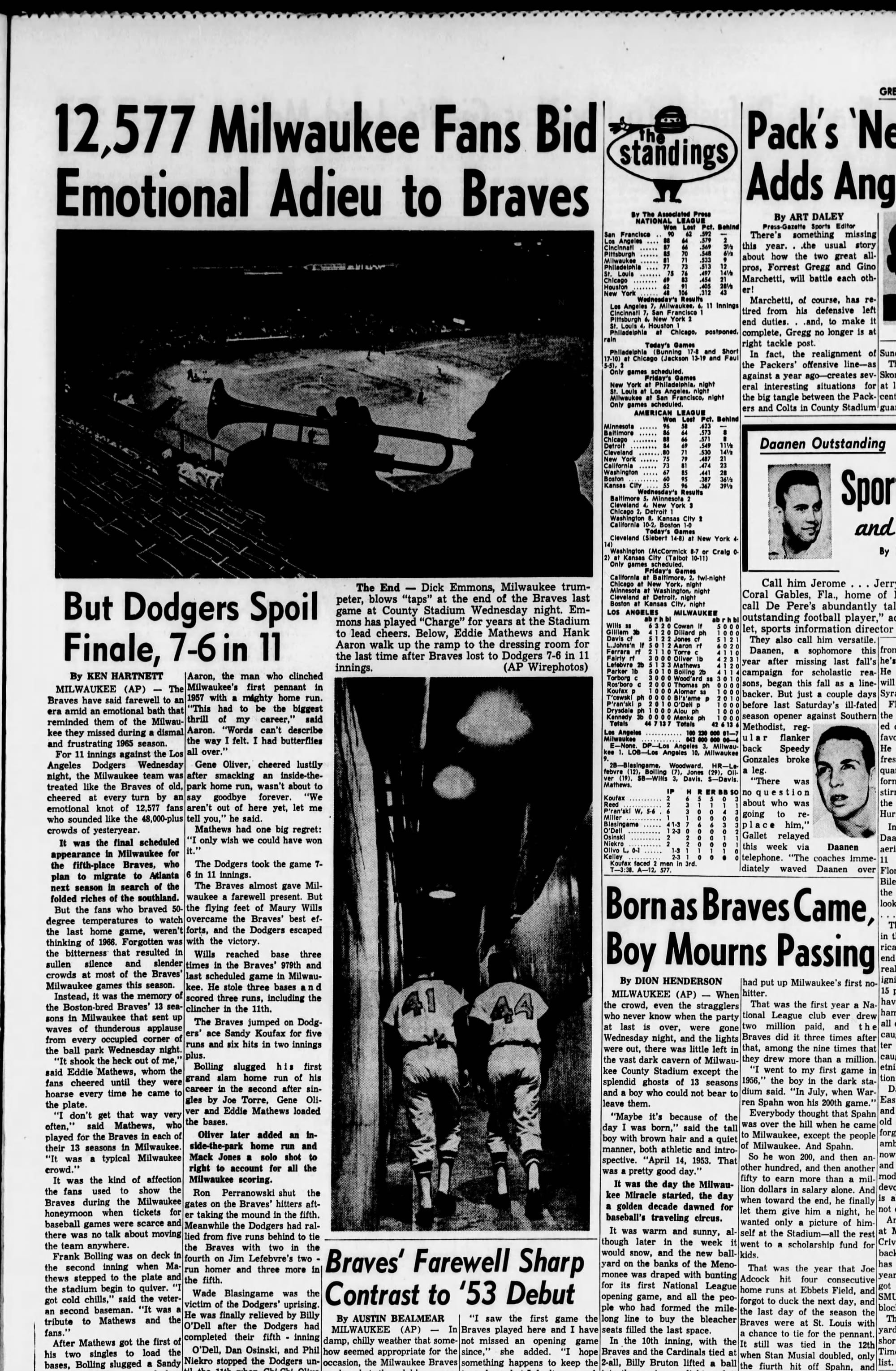
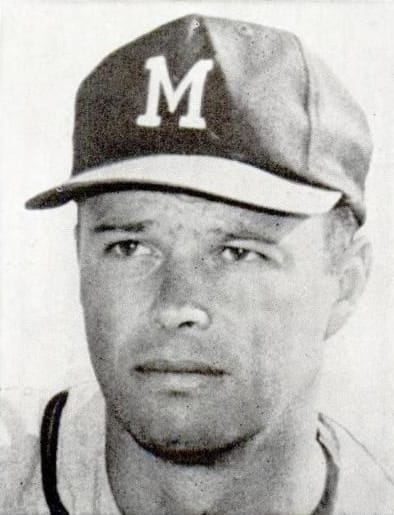
Eddie Mathews was the only man who played for the Braves in Boston, Milwaukee and Atlanta.
The court fight
The State of Wisconsin sued the Braves and the National League under the state's antitrust law. The trial started in March 1966. The day after the Braves' first game in Atlanta, Circuit Judge Elmer Roller ruled for the state, fined the Braves and the league $55,000, and ordered them to either bring the team back or promise Milwaukee an expansion team for 1967. The Wisconsin Supreme Court threw out the ruling that July, 4-3, and in December the U.S. Supreme Court declined to hear the case.
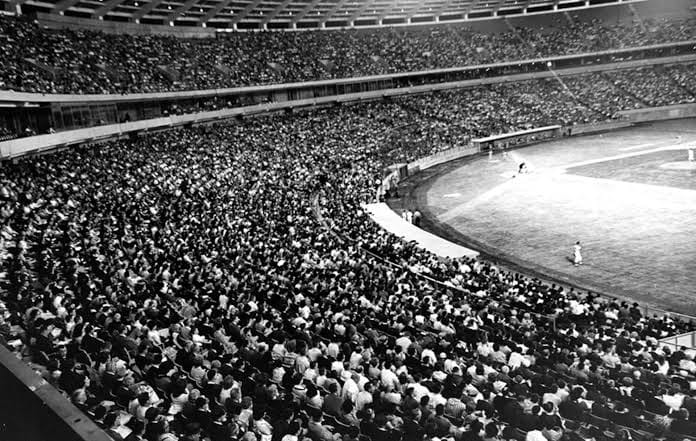
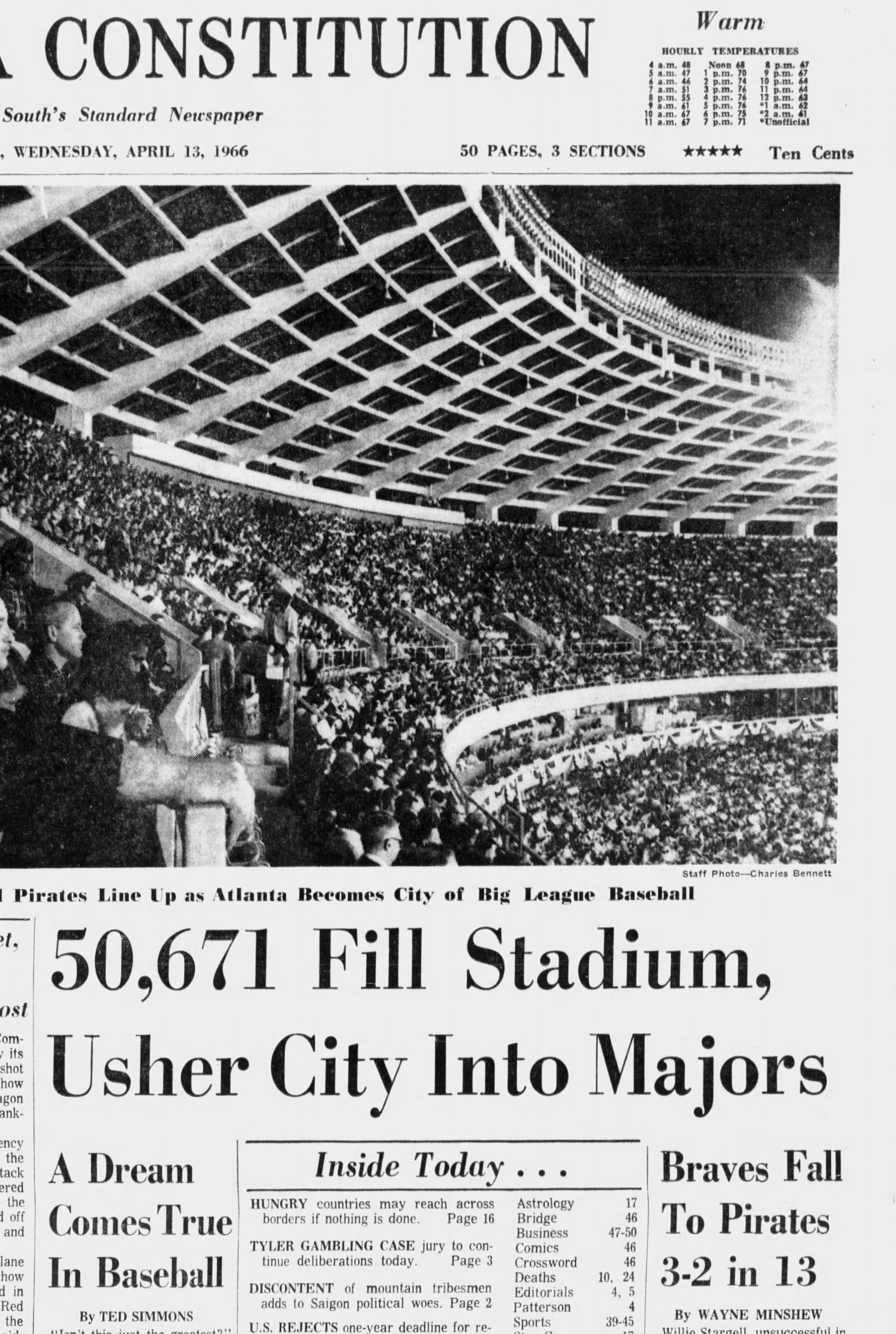
That first game in Atlanta was on April 12, 1966. A crowd of 50,671 watched Tony Cloninger pitch all 13 innings. Joe Torre homered twice for the Braves, and they lost to the Pirates anyway, 3-2. Torre wrote later, "I shed no tears about leaving Milwaukee."
What happened next
Milwaukee didn't stay empty for long. Bud Selig, a car dealer who had been the Braves' largest public stockholder, organized a group to get a team back. He brought the Chicago White Sox to County Stadium for 9 games in 1968 and 11 more in 1969, and in the spring of 1970 he bought the bankrupt Seattle Pilots out of federal court a week before Opening Day. They became the Milwaukee Brewers.
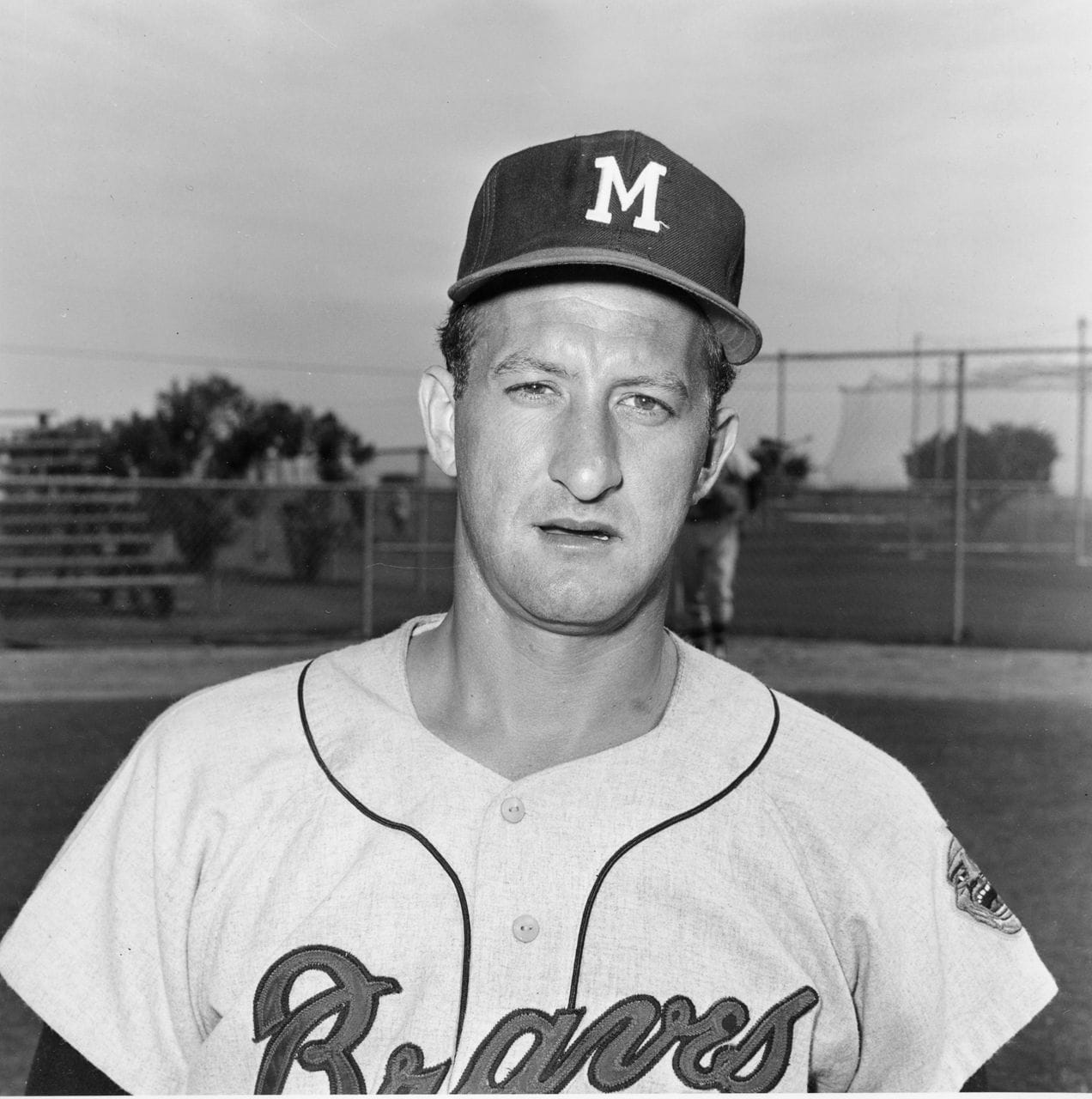
Hank Aaron came back, too. The Braves traded him to the Brewers after the 1974 season, and he finished his career in the city where it started. He hit the last of his 755 home runs at County Stadium on July 20, 1976.
The Braves won the World Series in Atlanta in 1995 and 2021. Add Boston in 1914 and Milwaukee in 1957, and they are the only franchise to win it in 3 different cities.
October 21, 1964. This date in sports history.
Comments ()