
On This Date: Wilma Rudolph Wins Her First Gold — 11 Seconds That Started It All (Sept. 2, 1960)
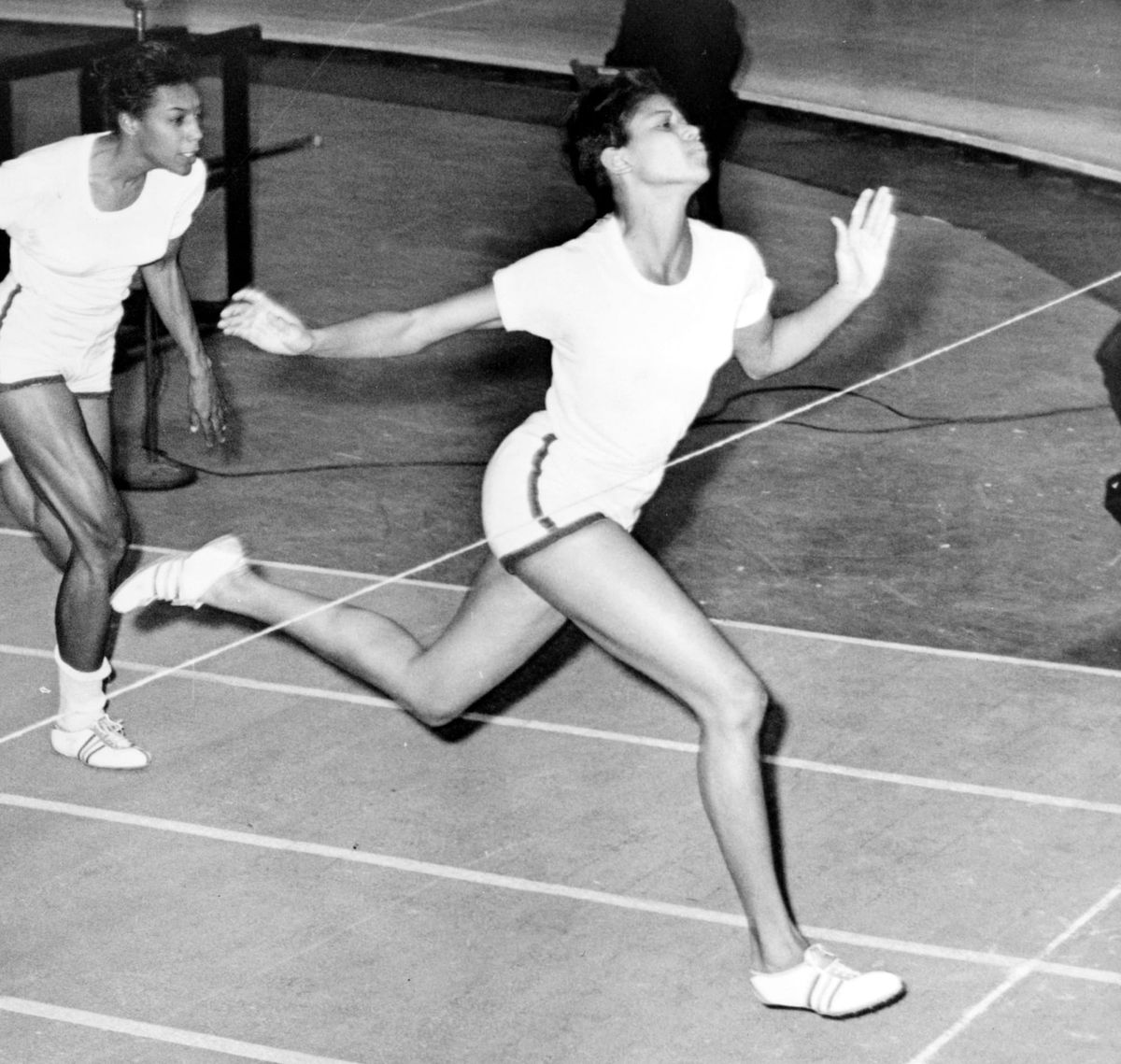
On this date in 1960, the fastest woman in the world crossed the finish line at Rome's Stadio Olimpico in 11.0 seconds flat — a quarter of a second clear of the field, which in a 100-meter dash is a canyon. Wilma Rudolph's first Olympic gold medal took 11 seconds to win.
It took 20 years to become possible. Because the woman who ran away from everyone in Rome spent her childhood being told she might never walk without a brace.
The Slowest Start in Sports History
Wilma Rudolph was born June 23, 1940, in St. Bethlehem, Tennessee, just outside Clarksville — premature, 4.5 pounds, the 20th of her father's 22 children. Her parents feared she wouldn't survive her first night. Then came the childhood illnesses, one after another, and finally polio, which left her left leg partially paralyzed.
The nearest hospital that would treat a Black child was Meharry Medical College in Nashville — 50 miles away. So every week, for years, Wilma and her mother Blanche rode the bus to Nashville and back, sitting in the back of the segregated bus, for heat and massage therapy. At home, her brothers and sisters took shifts massaging the leg daily. She wore a metal leg brace until she was 9, an orthopedic shoe for about two years after that, and didn't walk fully unaided until she was 12.
Four years later, she was in the Olympics.
The Tigerbelle
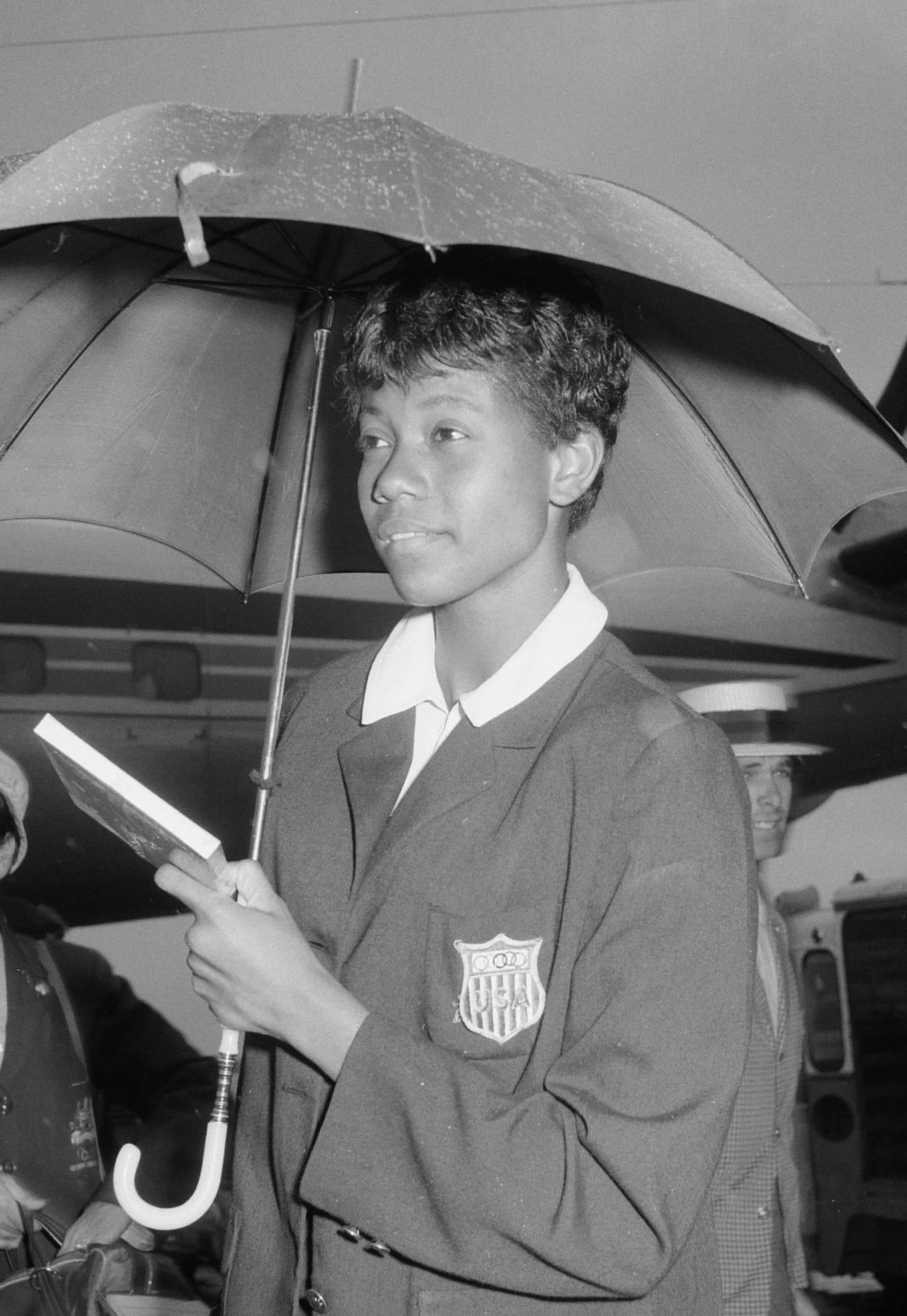
That's not a typo. At 16, still a high school junior, Rudolph made the 1956 U.S. team as one of coach Ed Temple's Tennessee State Tigerbelles and came home from Melbourne with a bronze medal in the 4x100 relay. Bronze wasn't the point. The point was what she saw: teammates winning gold, and no reason she couldn't.
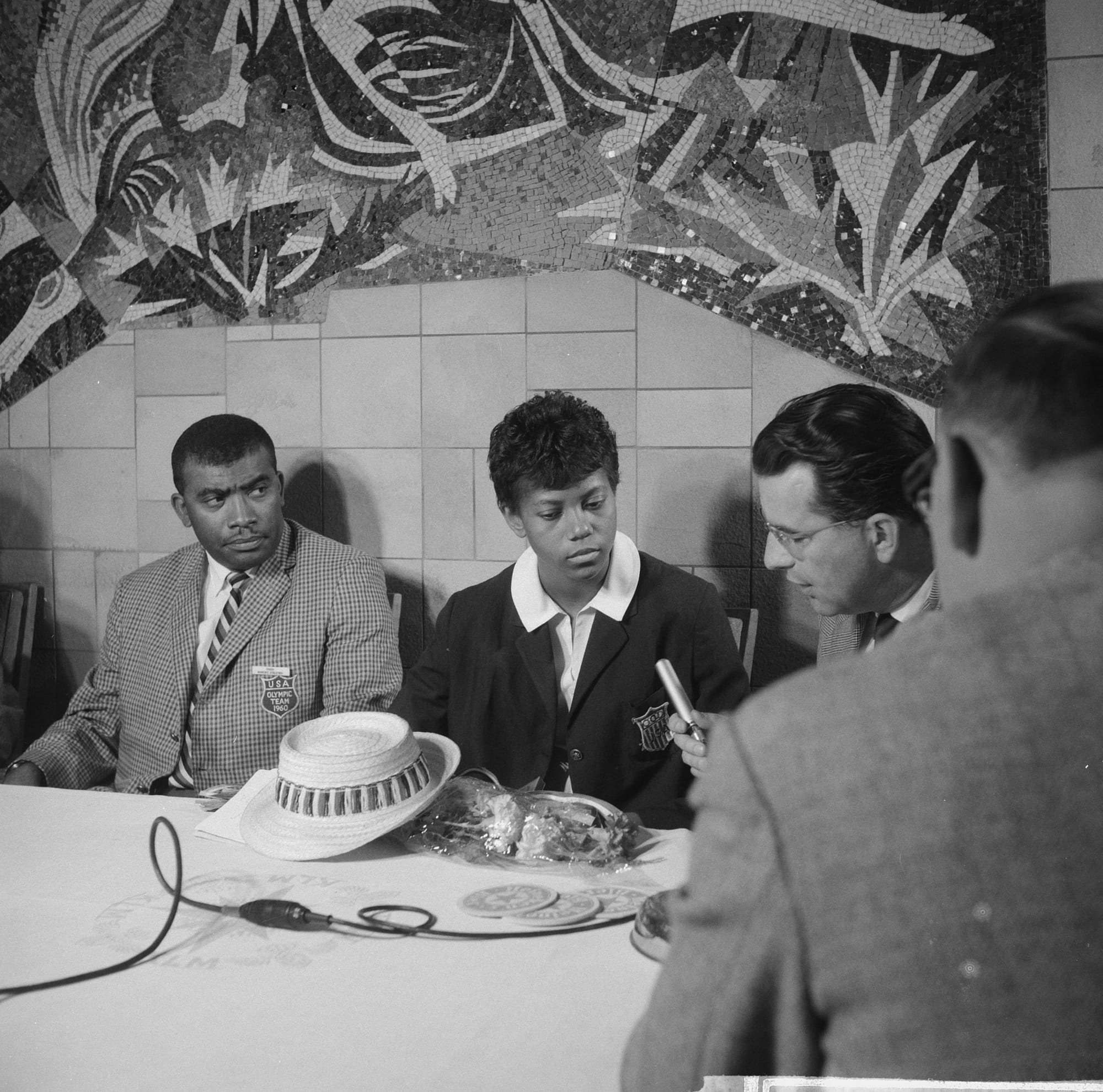
By 1960 she was the best sprinter alive, and Rome — brutally hot, packed, and the first Summer Olympics widely televised in the United States — was about to find out all at once.
Sept. 2, 1960
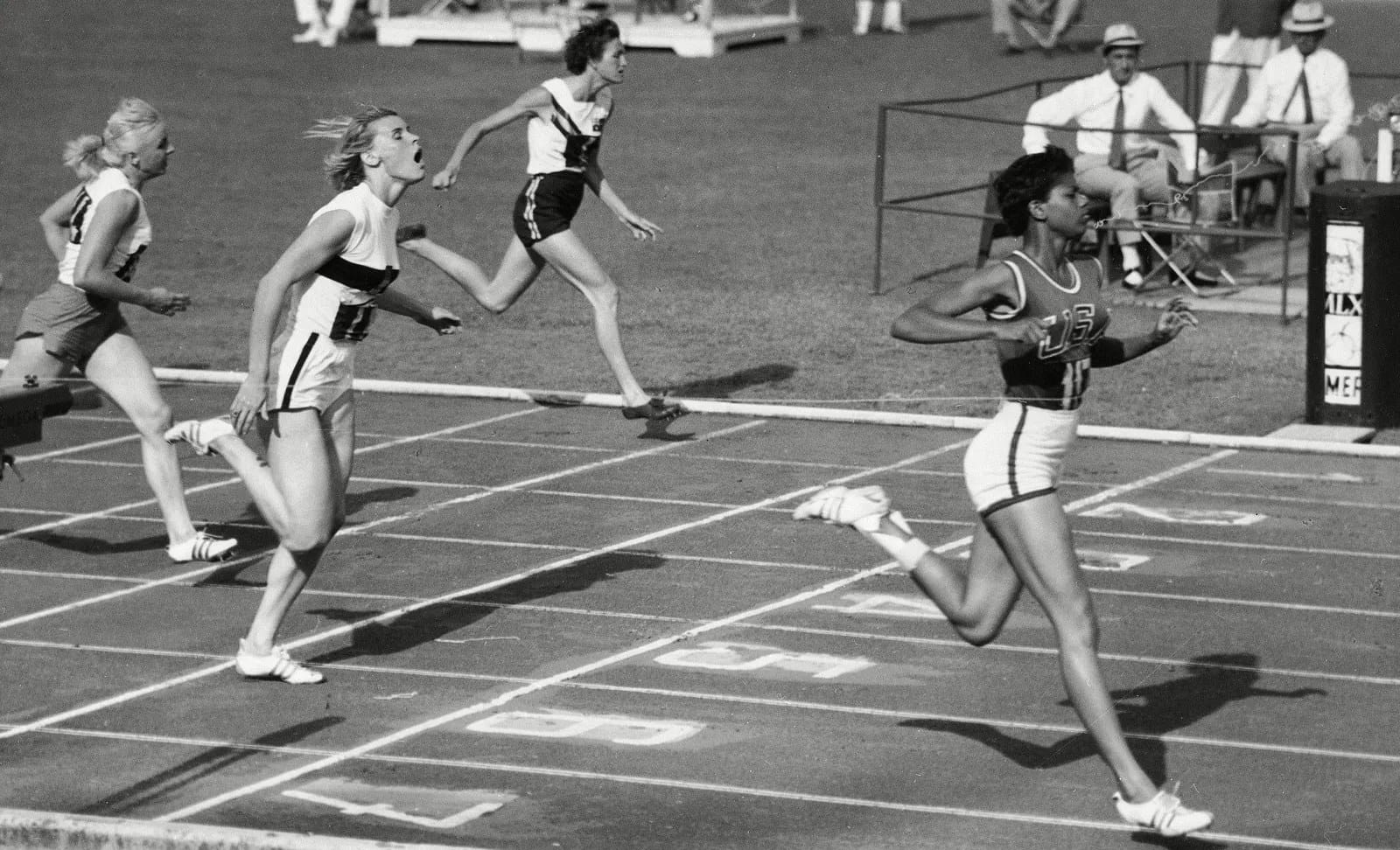
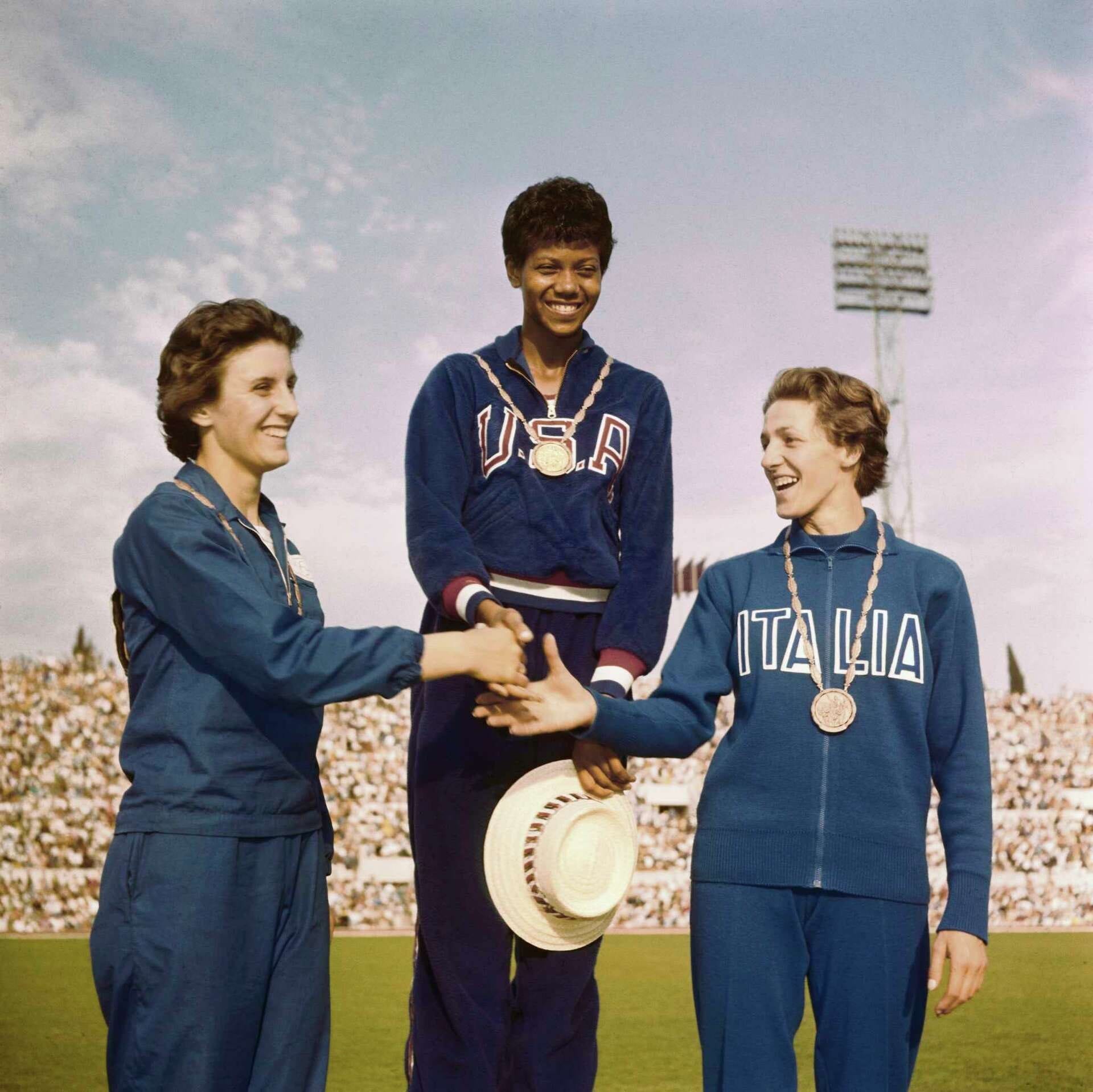
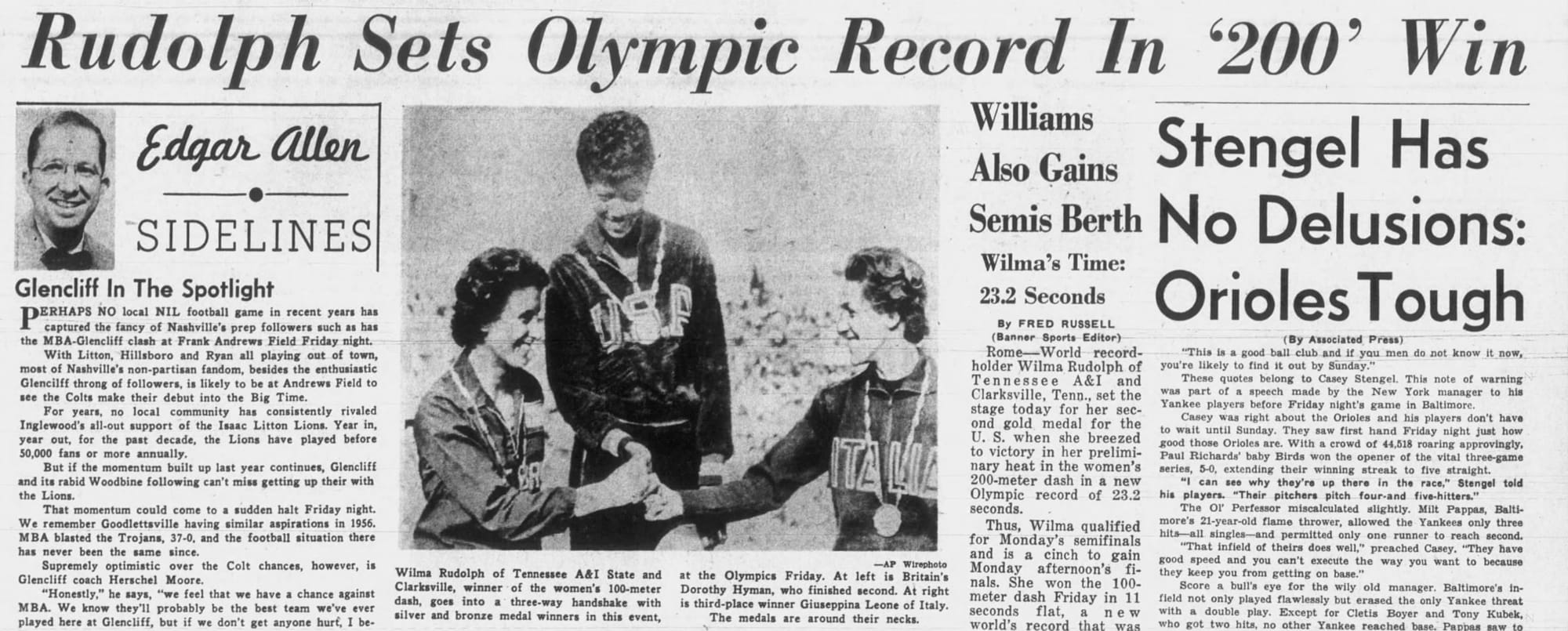
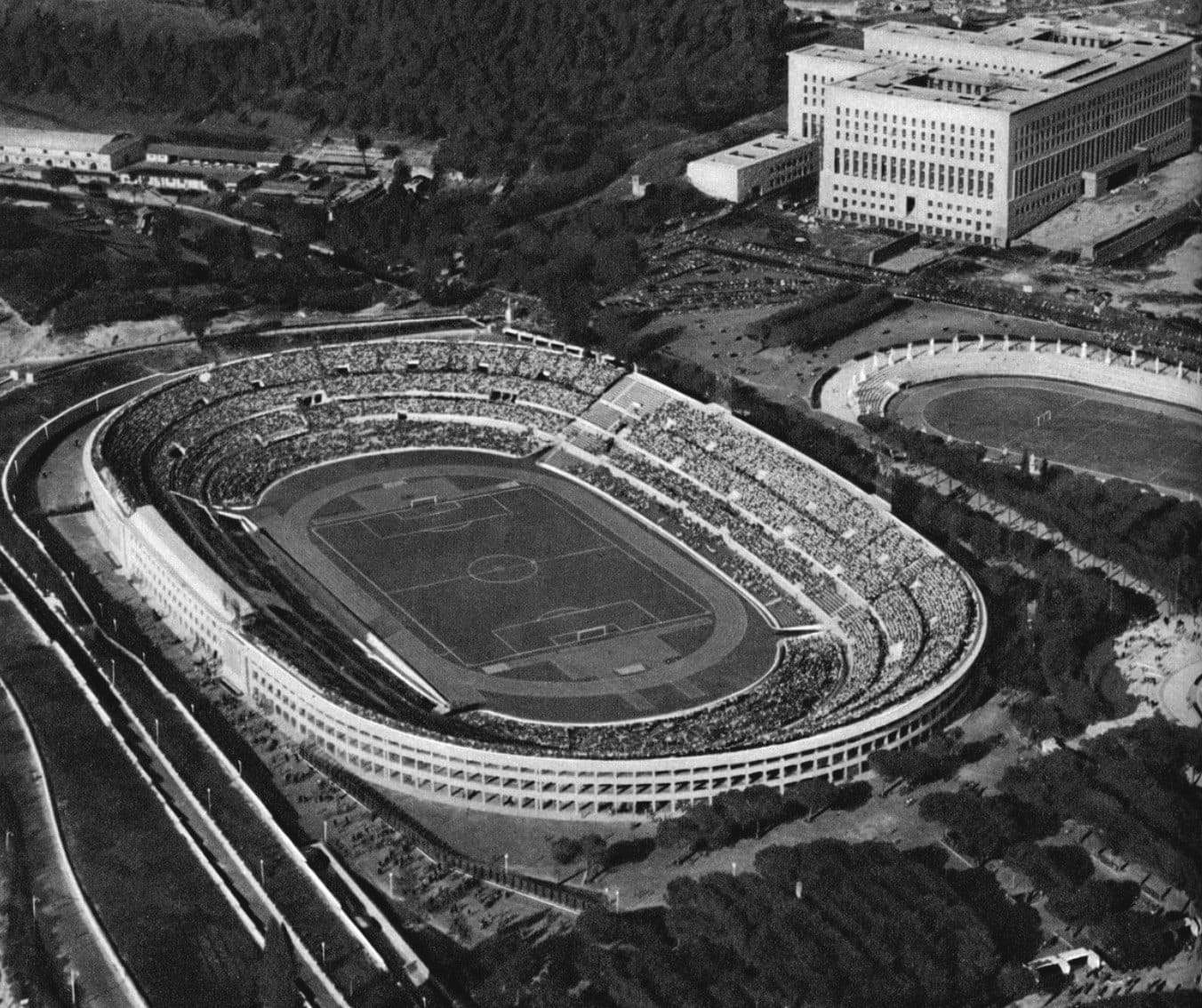
What gets lost in the legend: she did it twice in one day. In the morning semifinal, Rudolph ran 11.3 and equaled the world record. Hours later came the final — the famous slow start, then the long, devouring stride that made the rest of the race look like it was happening in a different gear. She hit the line in 11.0. Britain's Dorothy Hyman took silver a quarter-second back; Italy's own Giuseppina Leone took bronze. The 11.0 was never ratified as a world record — a 2.8 meter-per-second tailwind, just over the legal limit — but nobody in the stadium needed a ratified number to understand what they'd seen.
The Italians named her on the spot: La Gazzella Nera — the Black Gazelle. The French went with La Perle Noire. CBS had paid $660,000 for the American TV rights and flew footage to New York daily, and a country that had never watched the Olympics on television got Wilma Rudolph as its first star.
Three Golds in Six Days
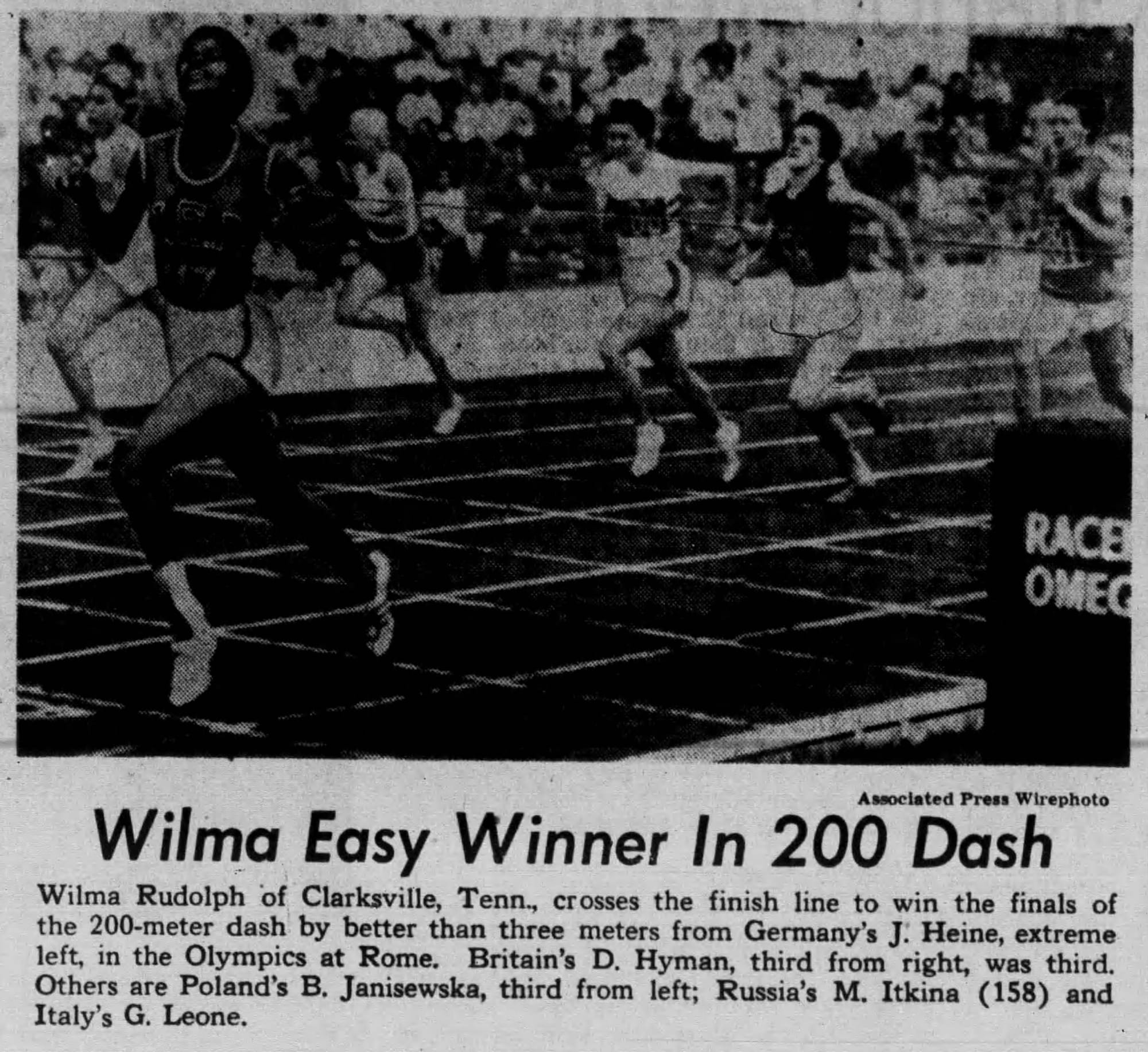
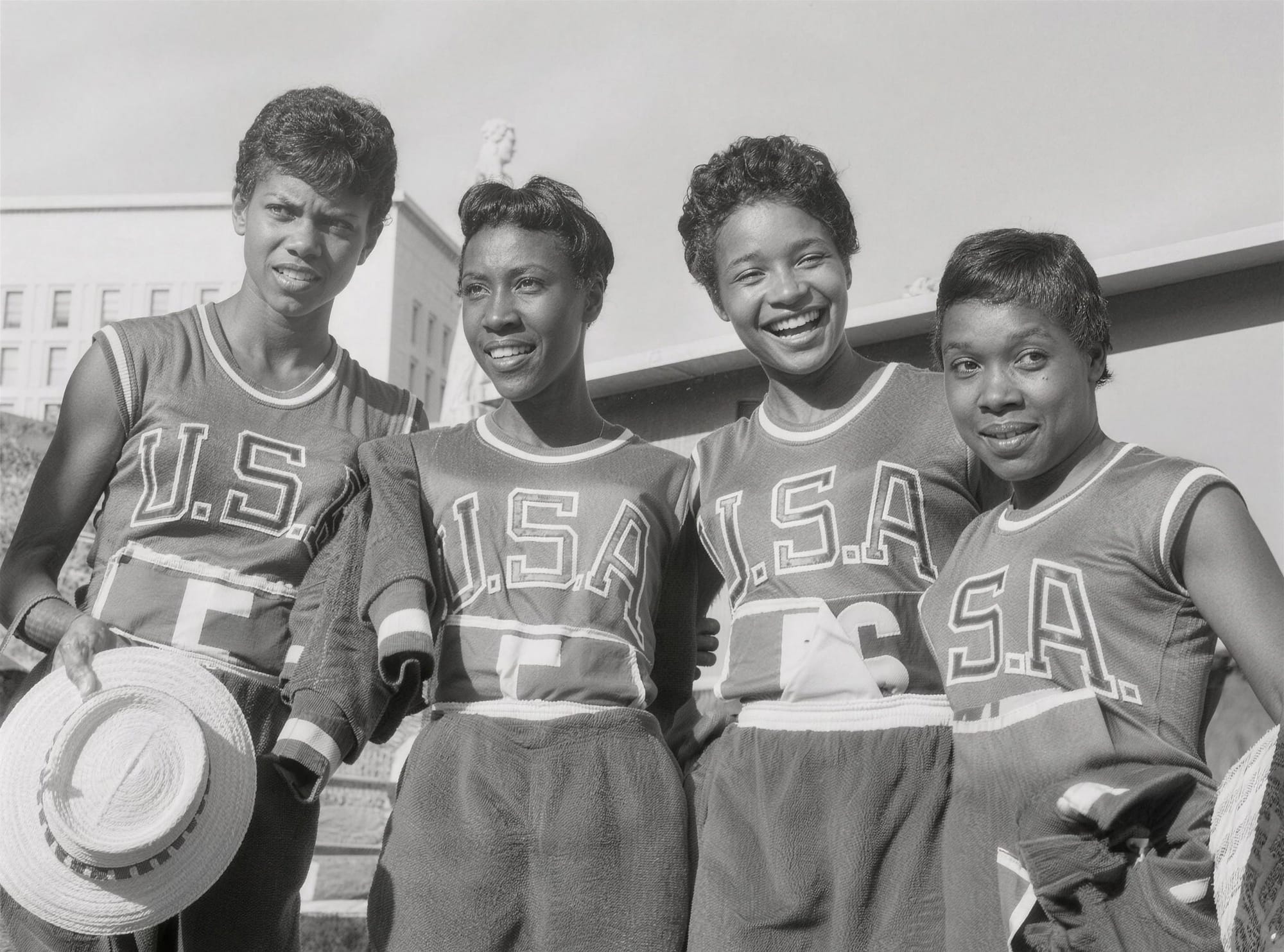
She wasn't done. On Sept. 5 — the same day an 18-year-old named Cassius Clay won light heavyweight boxing gold across town — Rudolph won the 200 meters in 24.0, into a headwind, after setting an Olympic record 23.2 in the opening heat. Then, on Sept. 8, the 4x100 relay: an all-Tigerbelle team of Martha Hudson, Barbara Jones, Lucinda Williams and Rudolph on the anchor, one day after they'd set a world record of 44.4 in the heat. The final nearly came apart — the last exchange to Rudolph was almost dropped — but she recovered the baton and ran down Germany's Jutta Heine anyway.
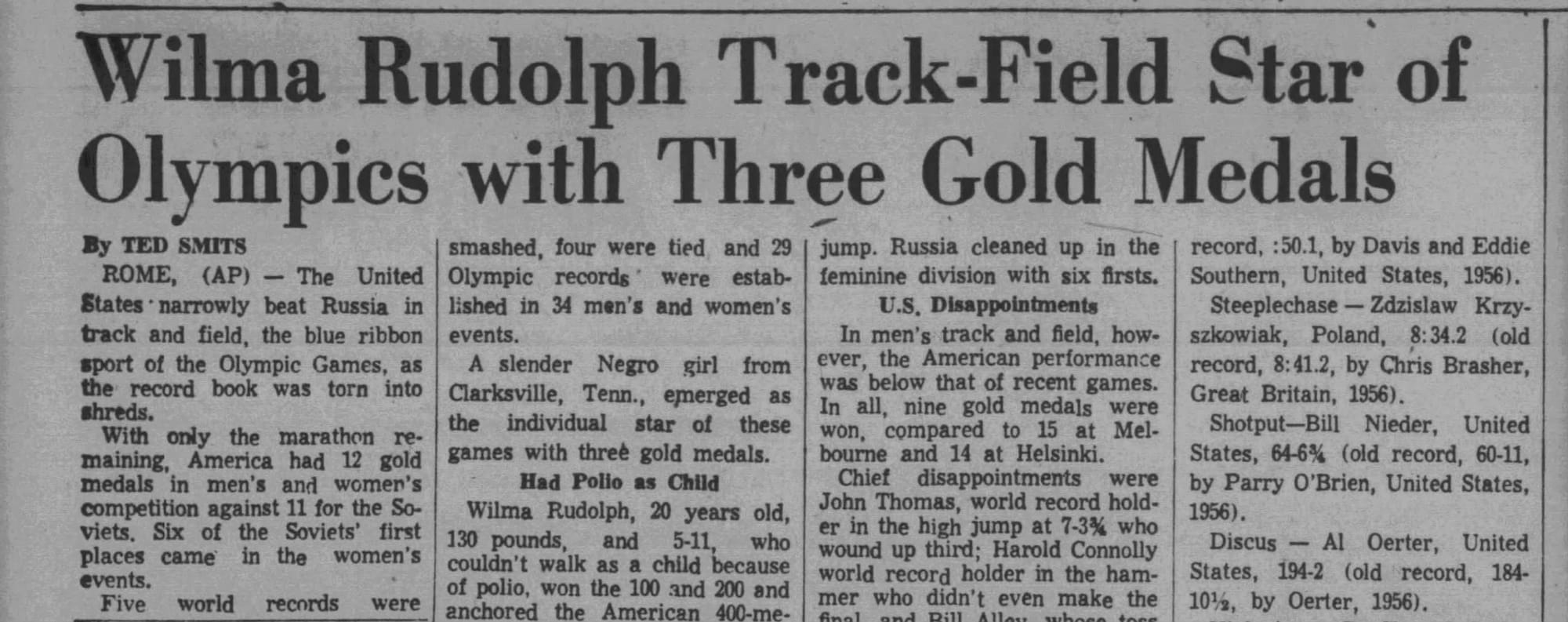
Three gold medals. No American woman had ever won three in track and field at a single Olympics.
The Parade She Integrated
The kicker isn't in Rome. It's in Clarksville. When her hometown planned "Welcome Wilma Day" for Oct. 4, 1960, Rudolph refused to attend a segregated celebration — so the parade and banquet went forward integrated, the first fully integrated municipal events in the city's history. Roughly 1,100 people attended the banquet; thousands more lined the streets. The little girl who rode the back of the bus to Nashville for leg treatments came home and quietly desegregated her own victory party.
Rudolph retired from track at 22, spent the rest of her life teaching and coaching, and died of brain cancer on Nov. 12, 1994, at just 54. But on this date in 1960, she was 20 years old, the brace was 11 years gone, and the fastest field in the world was looking at her back.
What's the greatest single-day performance in Olympic history? Tell us in the comments.

Comments ()