
On This Date: Wilt Chamberlain Jumps to the ABA's San Diego Conquistadors (Sept. 26, 1973)
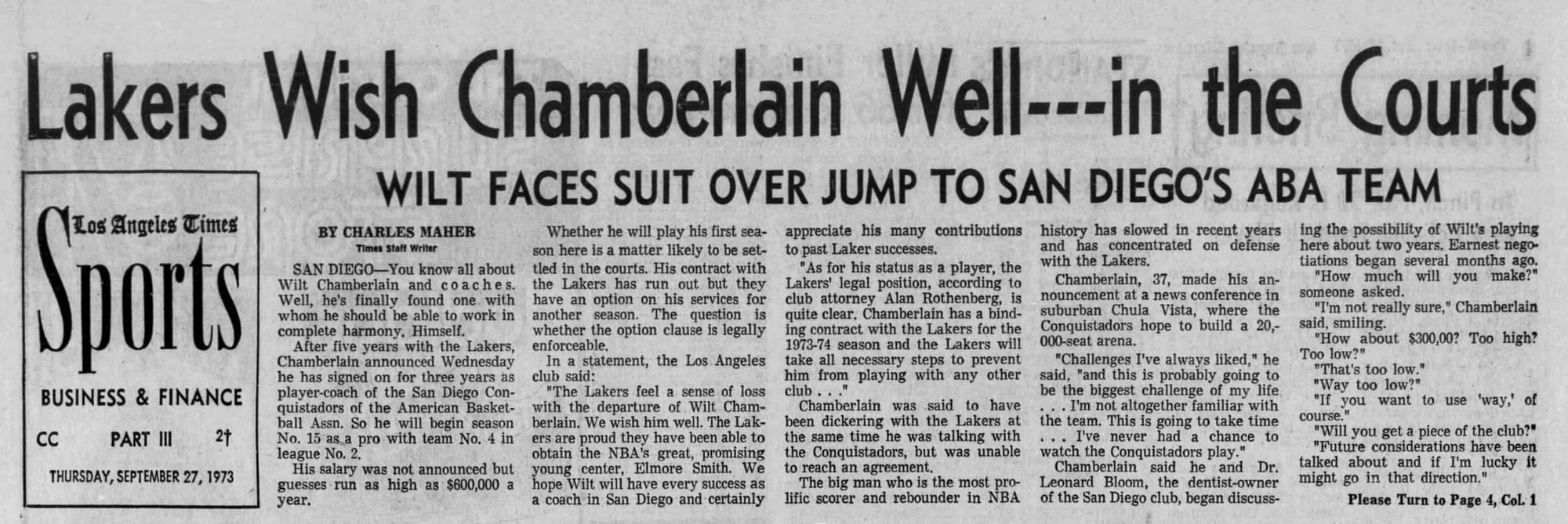
On Sept. 26, 1973, Wilt Chamberlain signed a 3-year deal, reported at $600,000 a year, to be player-coach of the ABA's San Diego Conquistadors. A court let him coach but not play.
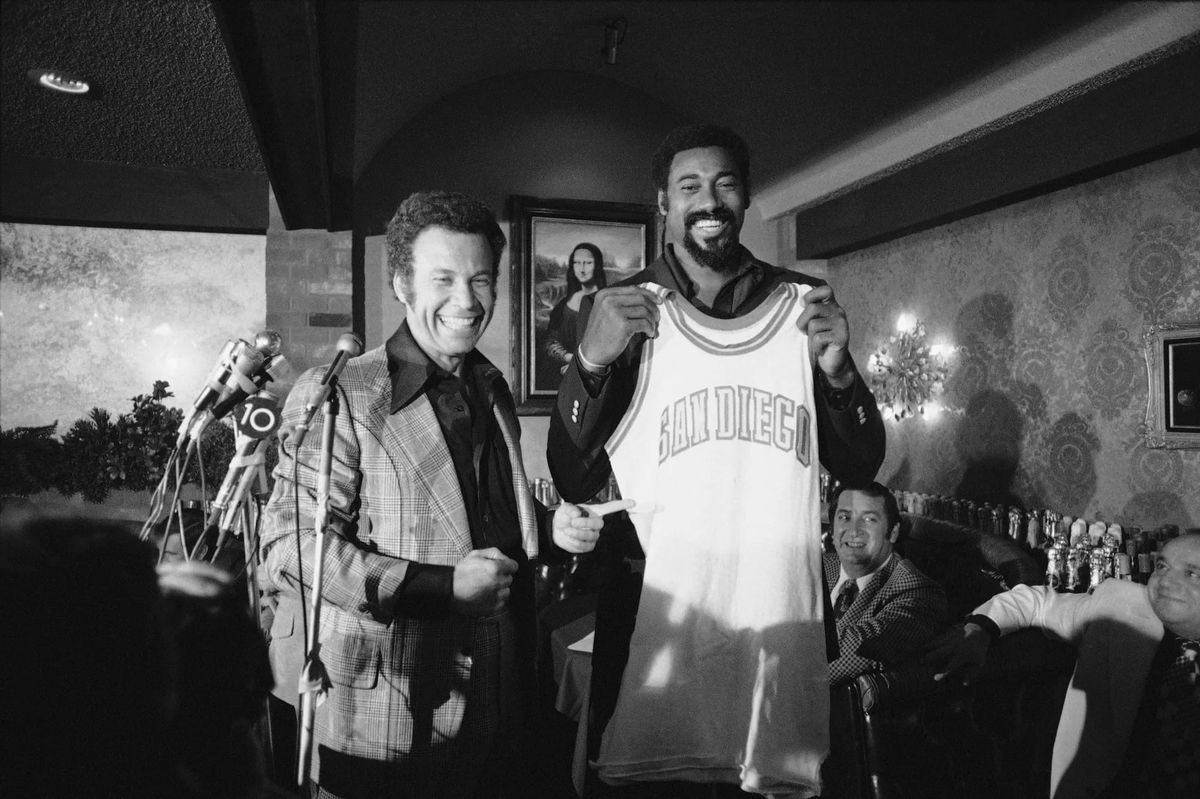
In May 1973, Wilt Chamberlain played his last NBA game. He had 23 points and 21 rebounds in Game 5 of the Finals, the Lakers lost to the Knicks, and nobody knew it was the end.
On Sept. 26, 1973, the 37-year-old Chamberlain announced he'd signed with the San Diego Conquistadors of the American Basketball Association to be their player-coach. He never played a minute for them.
Why Wilt walked away from the Lakers
He'd just led the NBA in rebounding for the 11th time.
Chamberlain wasn't washed up. In 1972-73 he averaged 18.6 rebounds, the best in the league, and made 72.7% of his shots, an NBA record at the time. The year before, he'd been the Finals MVP when the Lakers won the 1972 title.
But he believed he'd earned a new contract after that championship, and he was annoyed that the Lakers spent the following summer chasing UCLA's Bill Walton before they came to him. So when the ABA called, he listened.
The Qs
The ABA's newest team, and a whole lot of money.
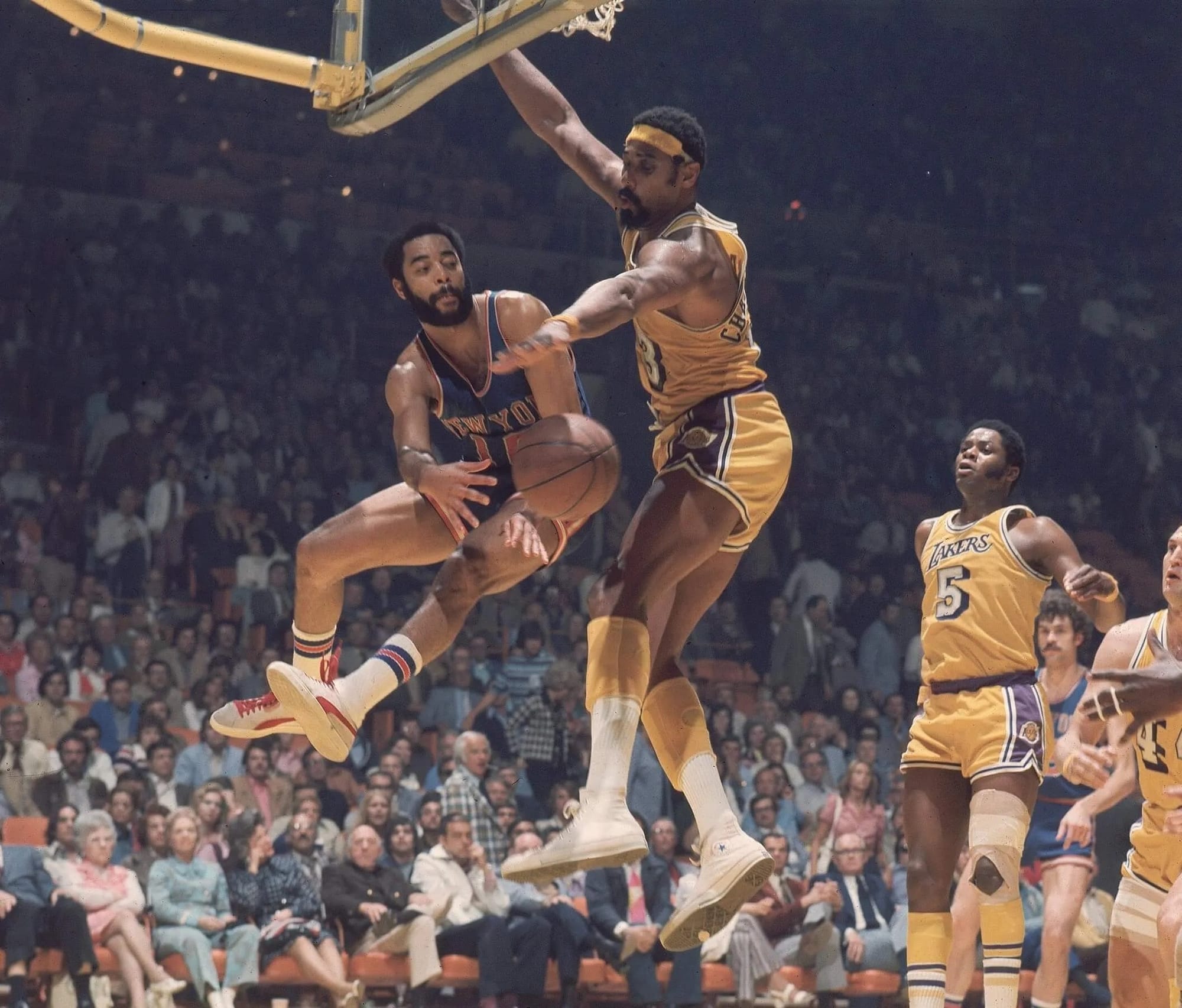
The Conquistadors, known as the Qs, were brand new. Their owner, Leonard Bloom, was a 38-year-old San Diego orthodontist and financier who had paid $1 million for the ABA's only expansion franchise in 1972. He needed a star, and there wasn't a bigger one in basketball.
"Wilt's my player-coach," Bloom liked to say, "with the emphasis on player."
The press conference
"This is probably going to be the biggest challenge of my life."
Chamberlain made it official on Wednesday, Sept. 26, at a news conference in Chula Vista, the San Diego suburb where Bloom planned to build a 20,000-seat arena. He'd signed for 3 years as player-coach.
"Challenges I've always liked," he said, "and this is probably going to be the biggest challenge of my life." He also admitted he'd never actually seen the Conquistadors play.
The team didn't announce his salary. The San Francisco Examiner, which had broken the story a week earlier, reported it at $600,000 a year, a staggering number for a second-year team in a league that was always one bad season from folding. When reporters asked Chamberlain, he played along.
"How much will you make?"
"I'm not really sure."
"How about $300,000? Too high? Too low?"
"That's too low."
"Way too low?"
"If you want to use 'way,' of course."
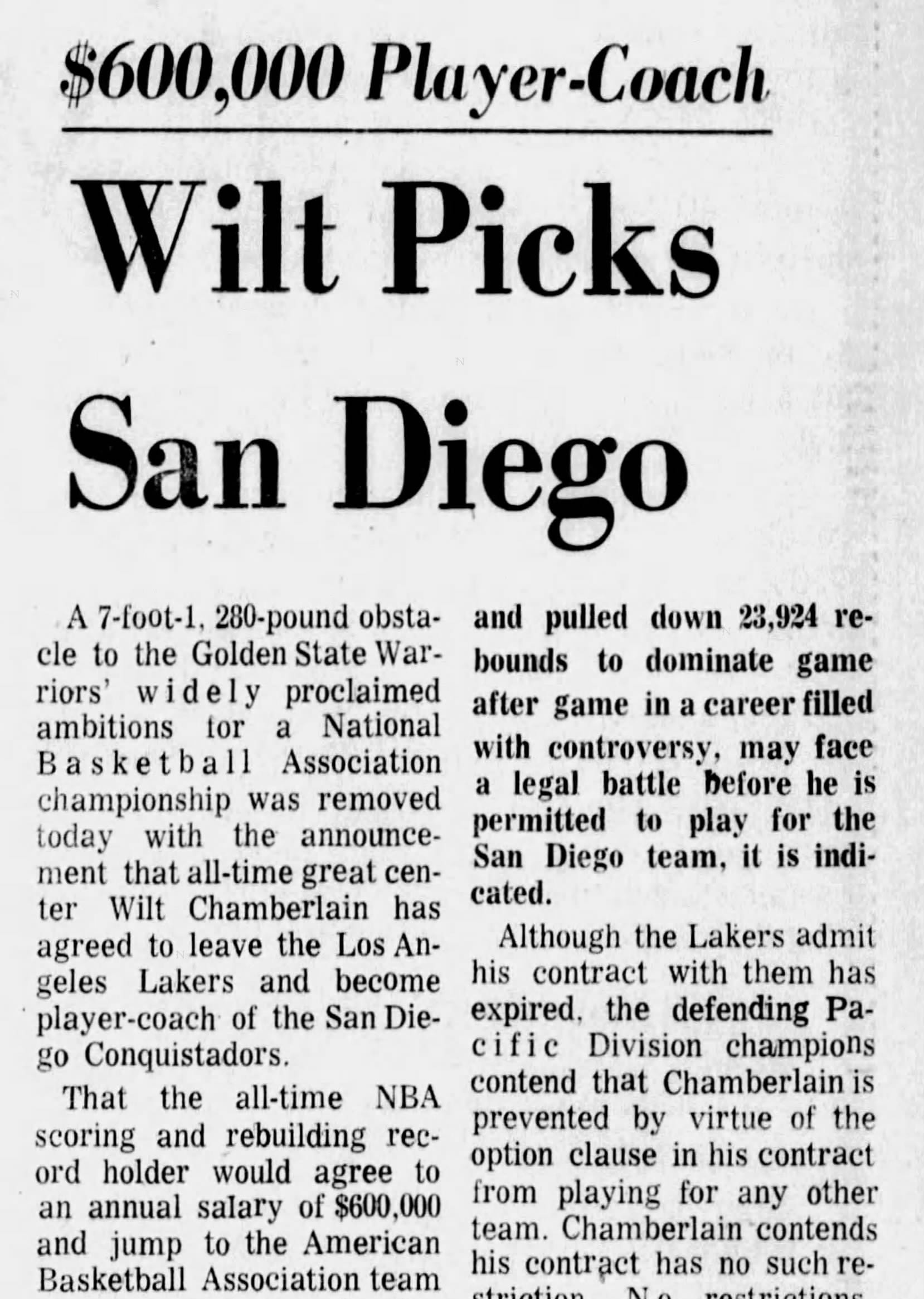
His old teammate Jerry West wasn't surprised. "I knew Wilt was going to do it," West told the Los Angeles Times. "He told me Tuesday night he'd decided to go to San Diego."
Then the Lakers sued
He could coach. He couldn't play.
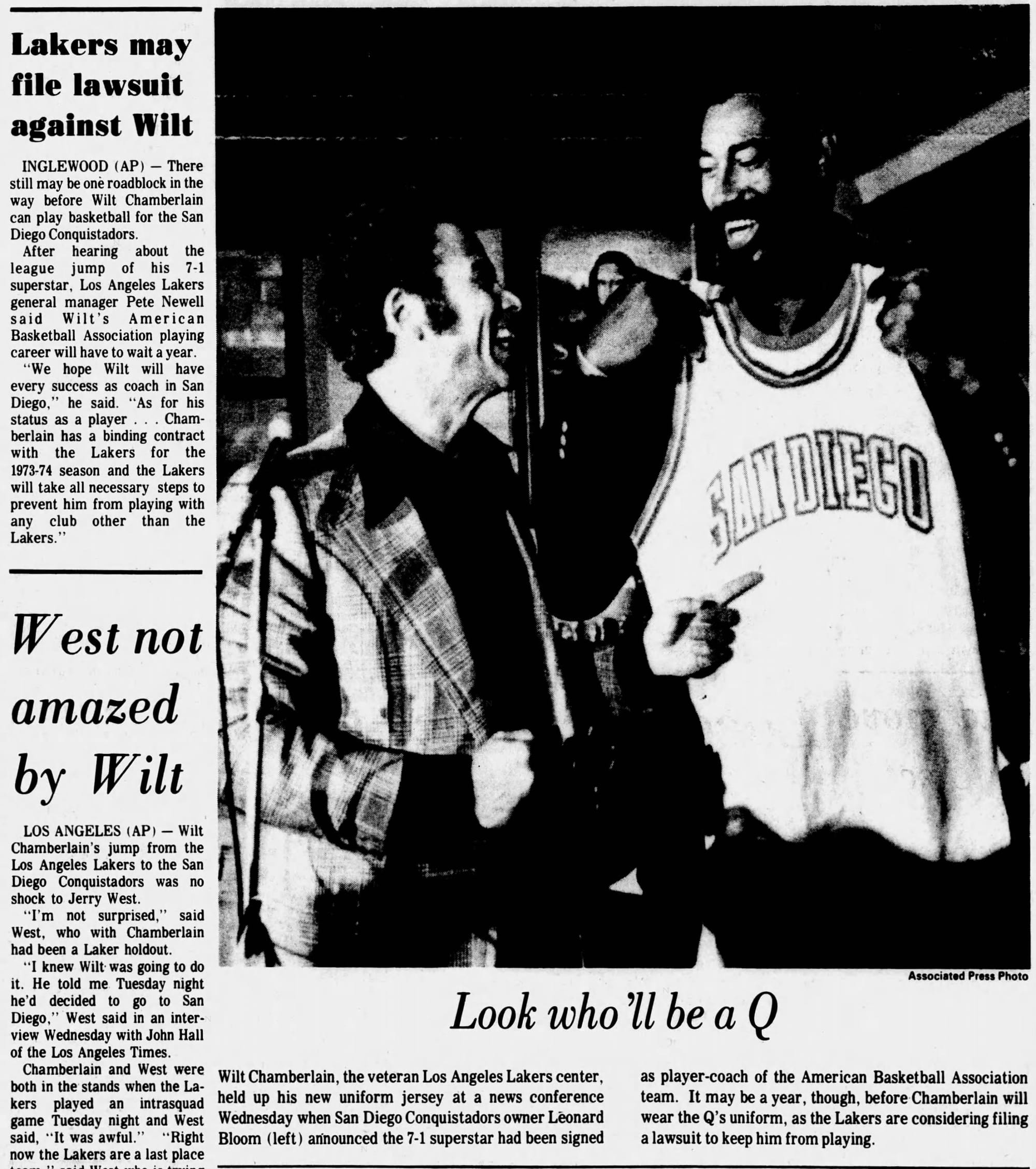
The Lakers' statement started out polite. "The Lakers feel a sense of loss with the departure of Wilt Chamberlain," it said. "We wish him well." Then it got to the point: Chamberlain had "a binding contract with the Lakers for the 1973-74 season and the Lakers will take all necessary steps to prevent him from playing with any other club."
The next morning's Los Angeles Times put it best: "Lakers Wish Chamberlain Well—in the Courts."
Both sides agreed his old contract had run out. But the Lakers said an option clause gave them one more season, and they'd mailed him a new contract in July that he never signed. Chamberlain said his contract had no such clause. The Lakers had seen this coming. The week before, they'd traded Jim McMillian to Buffalo for 7-foot center Elmore Smith, just in case.
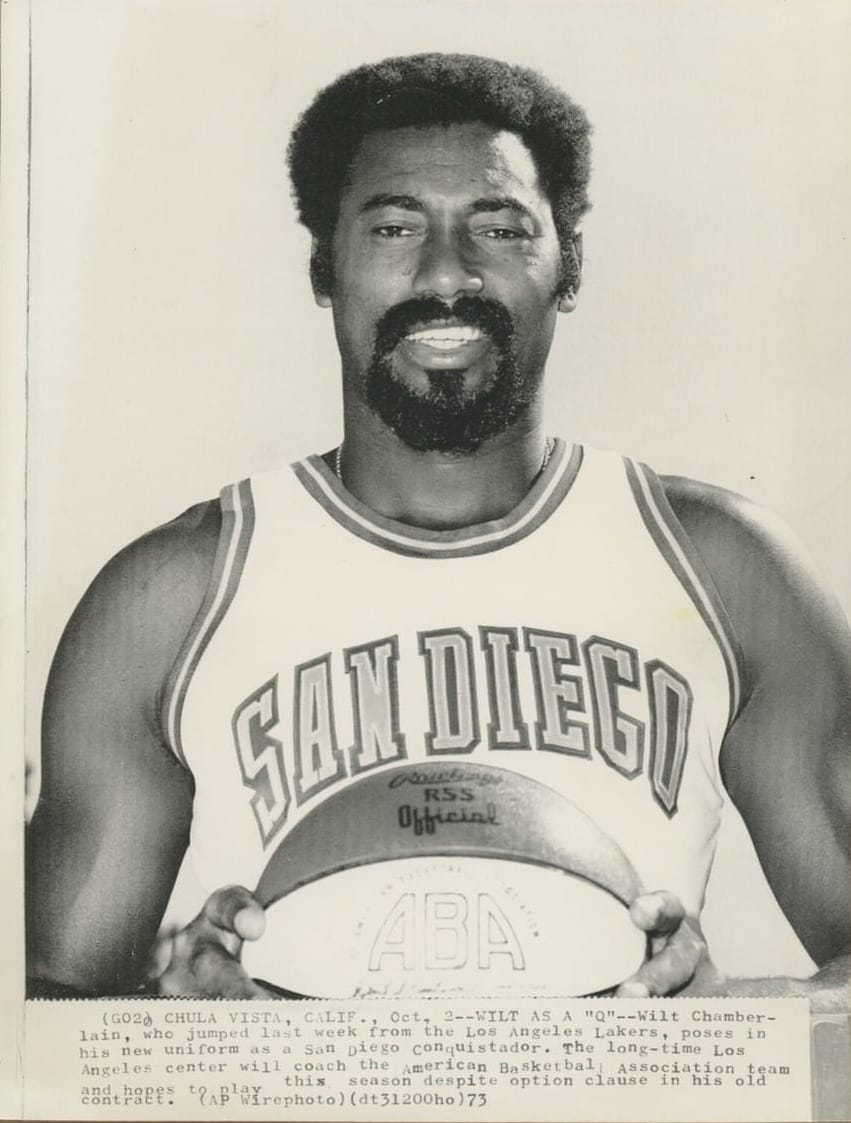
On Oct. 10, 1973, opening night of the ABA season, a judge ruled that Chamberlain could coach the Conquistadors, but he couldn't play for anyone except the Lakers in 1973-74. That night the Qs won their opener, 121-106, with the most famous player in basketball wearing street clothes on the bench.
He never did play for them.
The tallest coach in the smallest arena
3,200 seats. Crowds of under 2,000.
The Qs should have played in the San Diego Sports Arena, which held about 14,000. But Bloom was feuding with the man who ran it, and the team got locked out. So the Qs played in Golden Hall, a convention hall downtown with about 3,200 seats. The team called its coach "The Tallest Coach in the Smallest Arena."
Bloom's Chula Vista arena never got built. Voters turned it down in November 1973 by 294 votes.
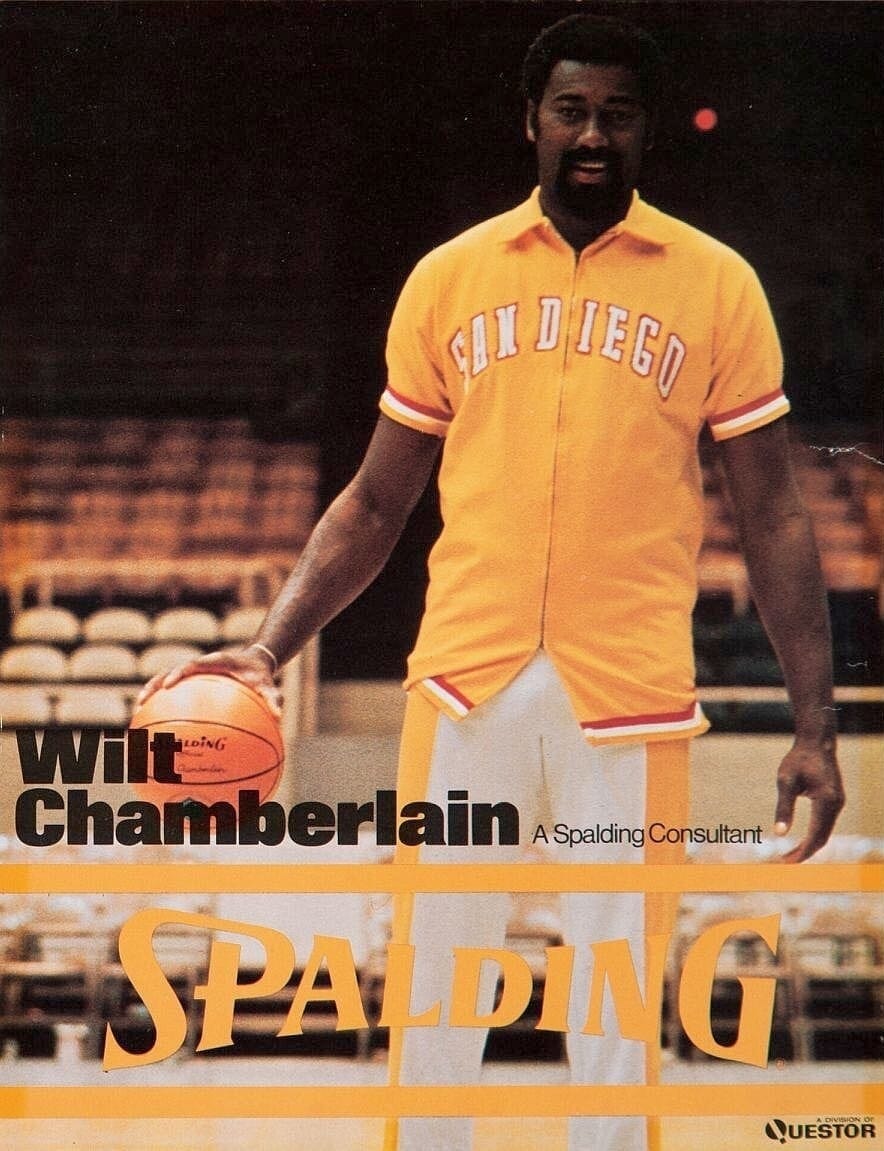
As for the coaching, Chamberlain was more of a figurehead. Assistant Stan Albeck ran much of the day-to-day. "It just bored him," Albeck later said of the job. "He did not have the patience." At one point Chamberlain missed a road game, officially sick, and was reported to be signing copies of his new autobiography in Los Angeles.
How it turned out
37-47. A playoff series. And then goodbye.
It wasn't a disaster. The Qs went 37-47, tied Denver for the last playoff spot in the West, and beat the Nuggets in a one-game tiebreaker. Then Utah beat them in 6 games in the first round.
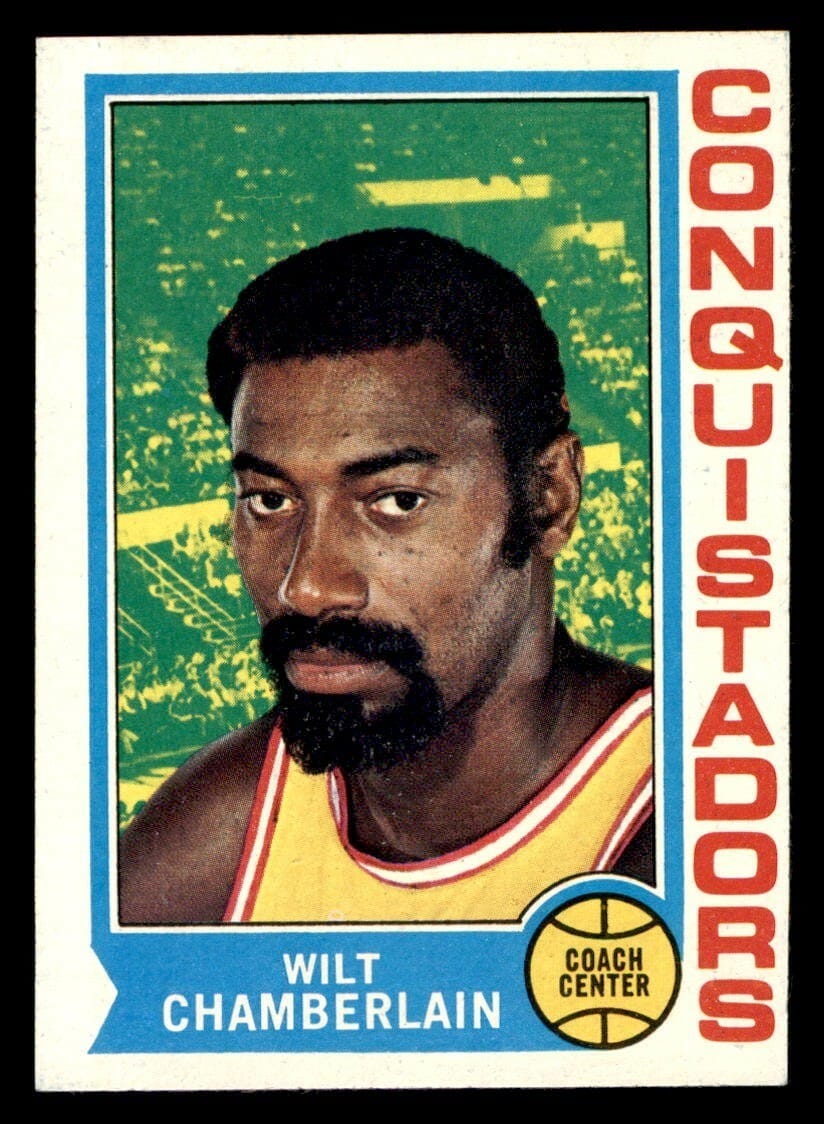
Chamberlain didn't come back as coach. The team changed owners and changed its name to the San Diego Sails in 1975, and 11 games into that season, the Sails folded.
Over the years, NBA teams, including the Cleveland Cavaliers and the New Jersey Nets, reportedly offered him a chance to come back as a player. He never took one. The last game Wilt Chamberlain played was that loss to the Knicks, 102-93, when he was still one of the best players alive.
Should Wilt have taken one more shot at playing? Tell us in the comments.

Comments ()