
Sports Card Grading Tools: The 5 Things to Own Before You Buy, Sell or Grade a Raw Card
The loupe, calipers, centering tool, UV light and inspection light that tell a PSA 10 candidate from a 9, catch trimmed and altered cards, and size your top loaders.
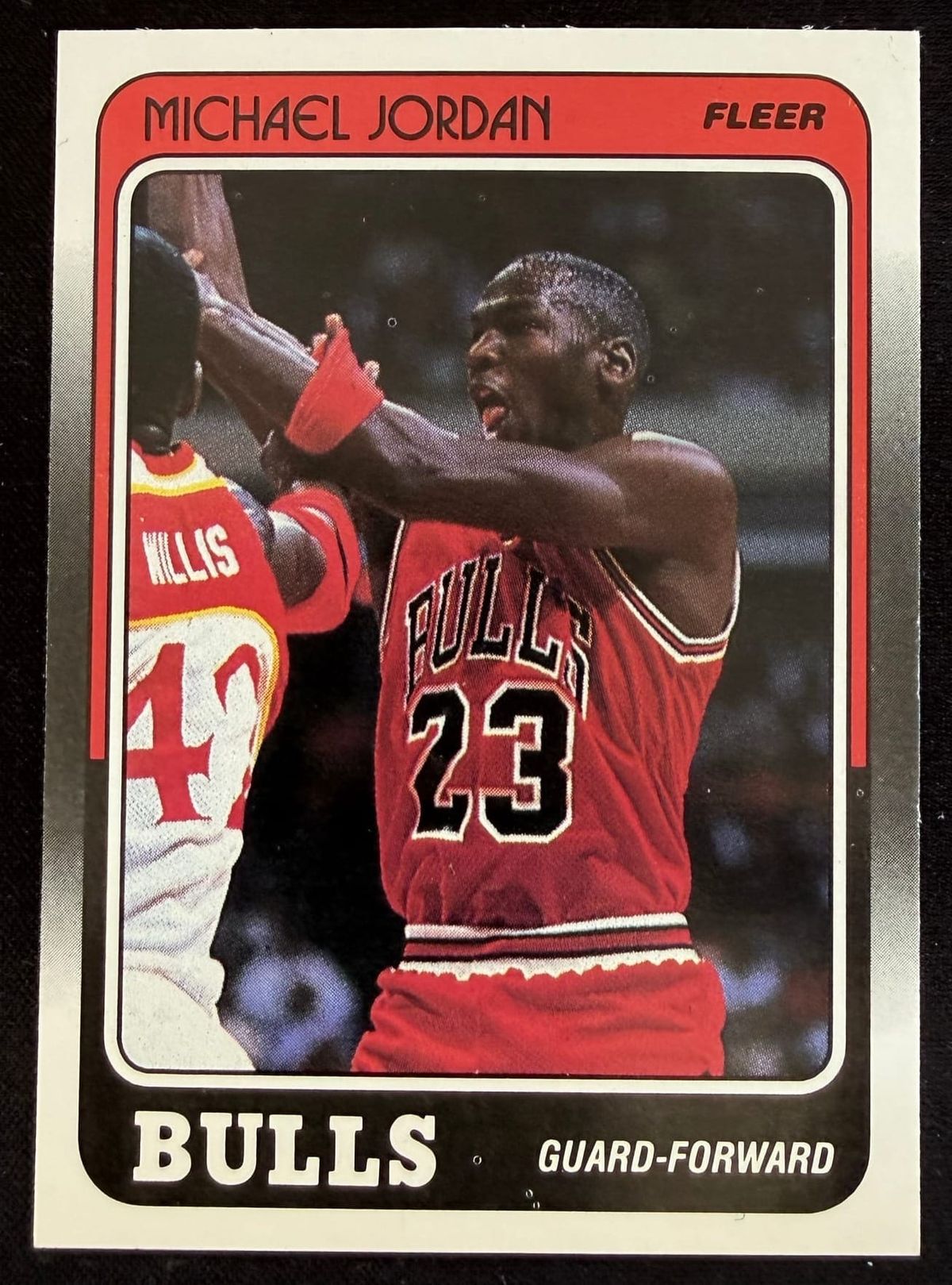
A PSA 10 and a PSA 9 can be the same card, the same player and the same year, and one of them is worth 3 times the other. The difference is usually something you can't see from arm's length: a corner that's a hair soft, a print line across the back, a border that's 58/42 instead of 55/45. Graders find those things with a loupe, a ruler and a good light. You can too, for less than the cost of one grading submission.
Here's the kit, what each tool actually catches, and what to buy.
The short version
- The one tool everybody needs: a 10x jeweler's loupe with LED and UV light, about $20.
- For trimming and holder sizes: Neiko digital calipers, about $28.
- For centering: an acrylic card centering tool, about $10.
- For alterations: a 365nm UV flashlight, about $25.
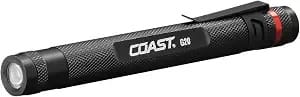
- For surfaces: a Coast inspection penlight, about $14, and a magnifying desk lamp if you grade at a desk.
First, what the graders are looking for
PSA grades on 4 things: centering, corners, edges and surface. Its published standard for a PSA 10 is centering "within a tolerance not to exceed approximately 55/45 percent on the front, and 75/25 percent on the reverse." A PSA 9 gets "approximately 60/40 or better on the front and 90/10 or better on the reverse." Older versions of the standard allowed 60/40 for a 10, so if you learned the old number, update it.
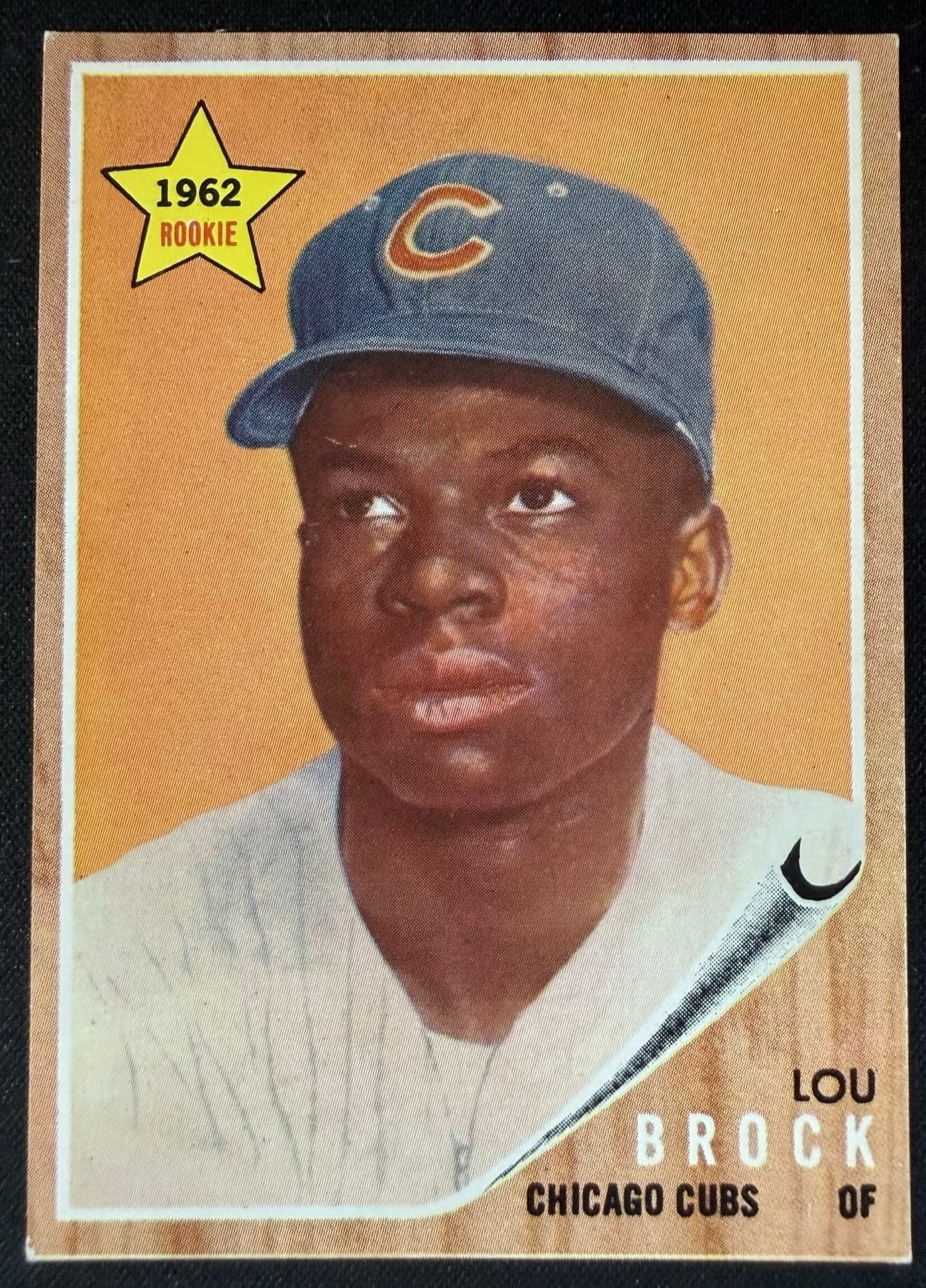
Then there's the stuff that keeps a card out of a numbered slab entirely. PSA won't put a grade on a card with evidence of trimming. Its graders look for "a hooked appearance along the edge, unusually sharp or uncommon edges," an inconsistent tone, or a "wavy, unnatural look." Recoloring and altered card stock get the same treatment. Those cards come back in a slab marked "Authentic Altered," if they come back in a slab at all.
Every tool on this list answers one of those questions before you spend $25 or more to have a grader answer it for you.
1. Jeweler's loupe, 10x triplet
Best for: everybody. Corners, edges, print quality and fakes. About $20.
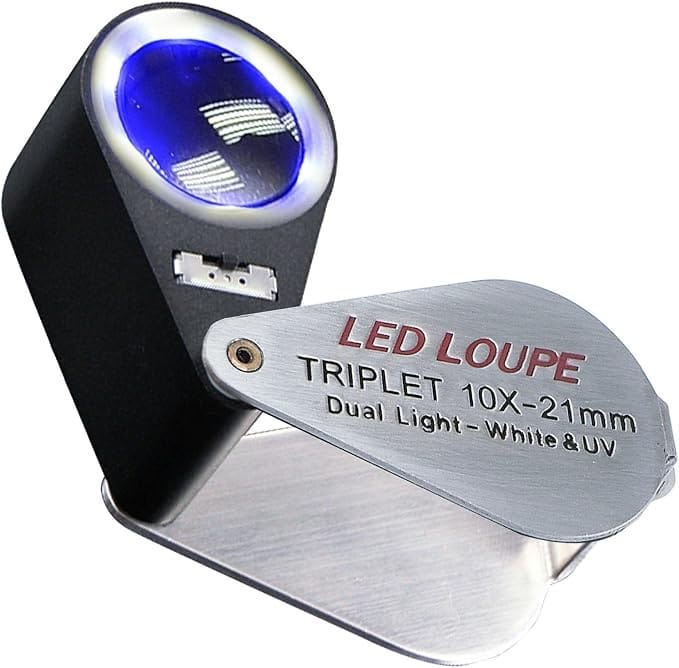
The Gain Express 10x triplet loupe has a metal body, 6 white LEDs around the lens, and a UV LED built in, which makes it a 2-tool loupe for the price of one. Ten power is the hobby standard, and there's a reason it isn't higher: the more you magnify, the smaller the patch of card you can see. At 10x you see a whole corner. At 60x you see a few fibers of it.
What a loupe catches:
- Corner and edge wear. A corner that looks sharp to the eye can show white fraying at 10x. That's the difference between a 10 and a 9.
- Print lines and fisheyes. Faint lines and little ink voids show up under magnification and in the LED light.
- Fakes. Real cards are printed in tiny dots of 4 ink colors that form a rosette pattern at 10x. Most counterfeits are inkjet or laser prints, and the dots look coarse, blurry, or wrong, and the small type looks fuzzy.
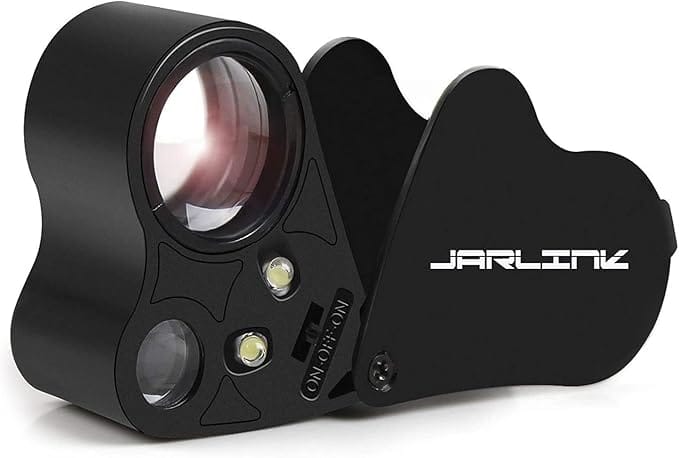
What to know: the LEDs eat batteries, so keep spares in the case. If you want a second loupe for close-up confirmation, the Jarlink 30x/60x lighted loupe is about $9 and has more than 30,000 reviews. Use the 10x to find a problem and the 30x to confirm it.
Link: Gain Express 10x Triplet Loupe on Amazon
2. Digital calipers
Best for: checking for trimming, and buying the right size holder. About $28.
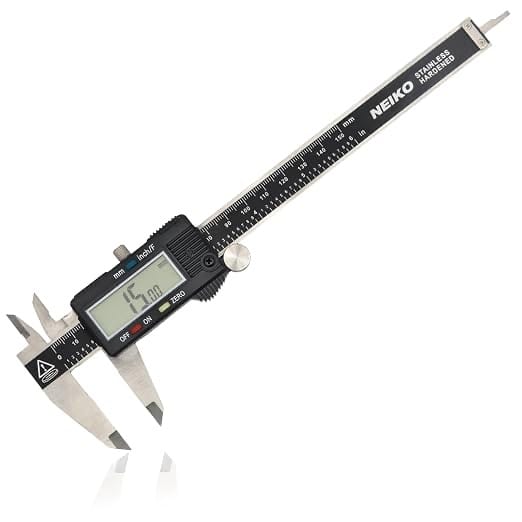
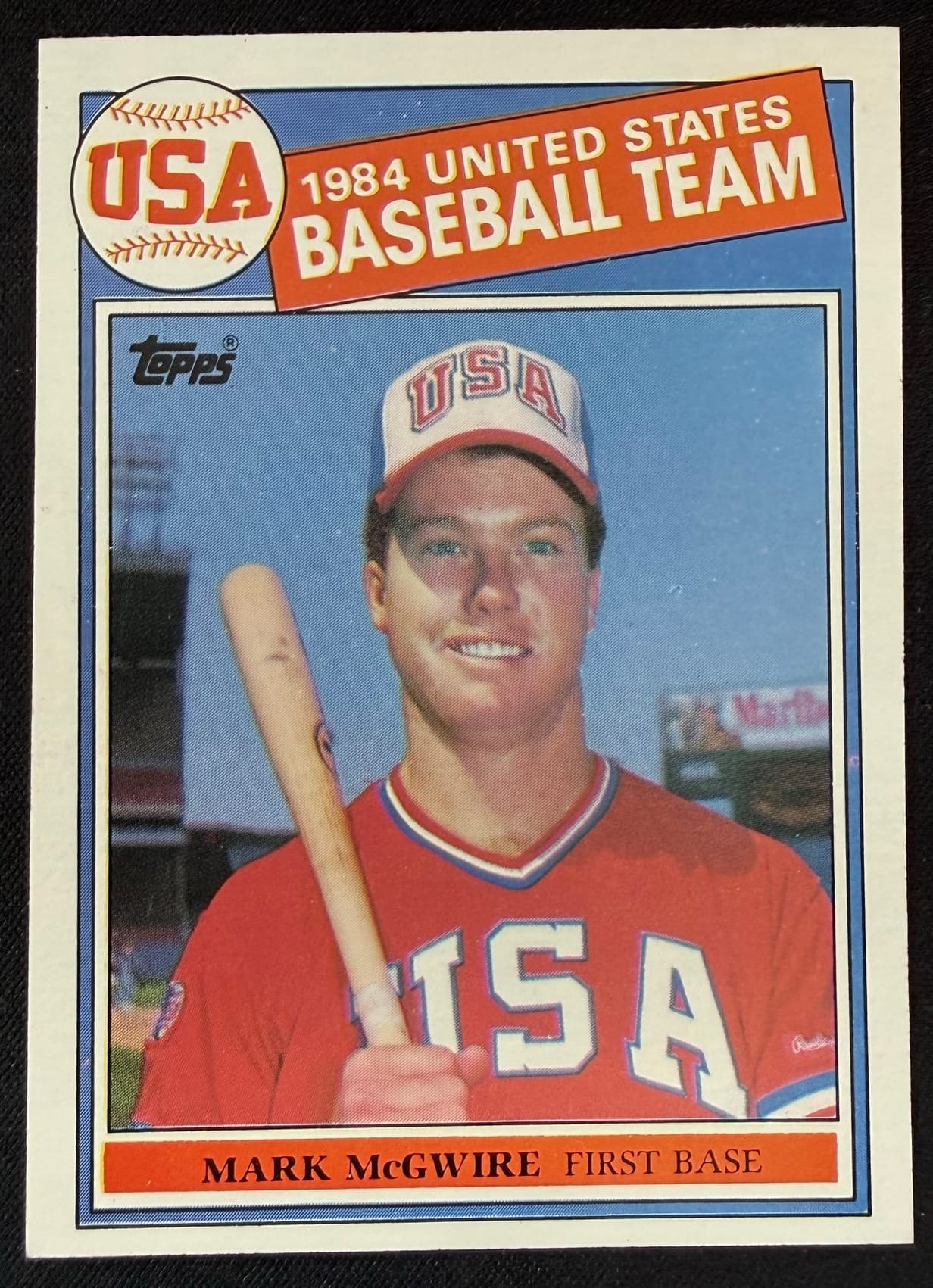
A standard modern card is 2.5 by 3.5 inches, and a trimmed card is usually short by about 1/32 to 1/16 of an inch, the kind of thing nobody sees and calipers catch instantly. The Neiko 01407A reads to 0.01 millimeters (0.0005 inches) and has nearly 20,000 reviews. Measure the card you're buying against a card you know is clean from the same set, and if it comes up short, walk away.
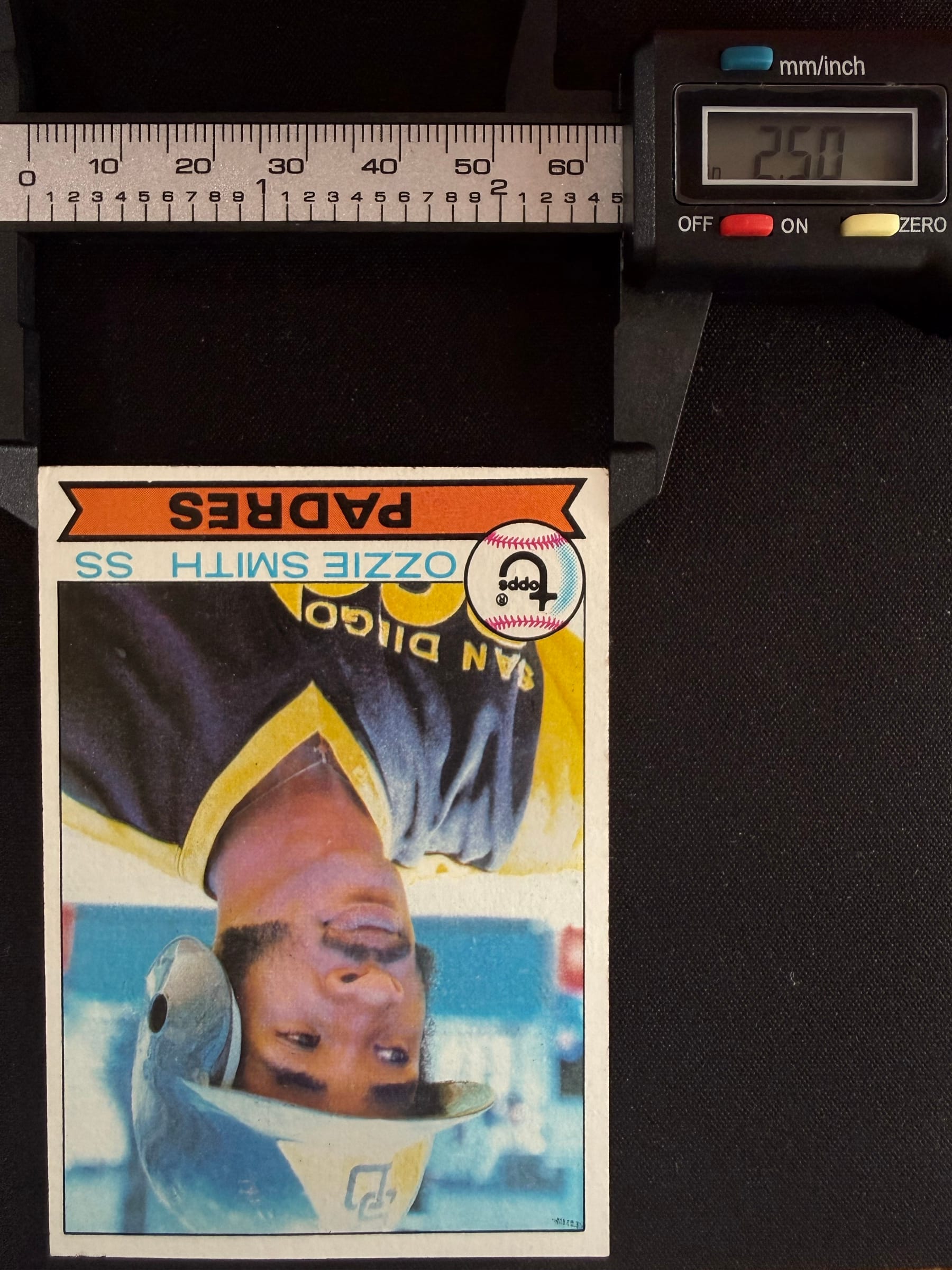
Calipers also answer the question that matters every time you buy a top loader or a magnetic holder: how thick is this card? Card thickness is measured in points, and 1 point is 0.001 inches. A regular base card is about 20 points and fits a standard 35-point top loader. Chrome and Prizm cards want a 55, thick chrome and thin relics a 75, jersey cards a 100, and patch cards 130 or more. The number on the holder is the thickest card it fits, so measure first. (We wrote a whole guide on top loaders vs. Card Savers if you're shipping cards to a grader.)
What to know: vintage cards aren't 2.5 by 3.5, so don't call a 1952 Topps trimmed because it's big. The 1952 Topps cards are 2 5/8 by 3 3/4 inches, 1933 Goudey cards are 2 3/8 by 2 7/8, and 1948 Bowman cards are 2 1/16 by 2 1/2. Look up the set before you measure. If you'll use calipers a lot, the iGaging Absolute Origin, about $48, keeps its zero when you turn it off.
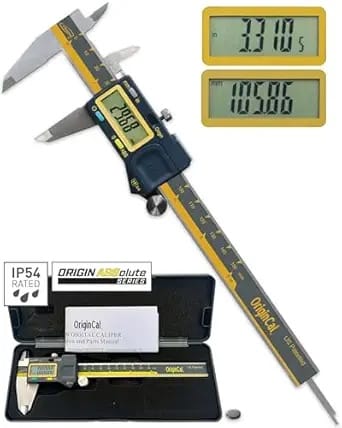
Link: Neiko 01407A Digital Calipers on Amazon
3. Card centering tool
Best for: deciding whether a card is a 10 candidate at all. About $10.
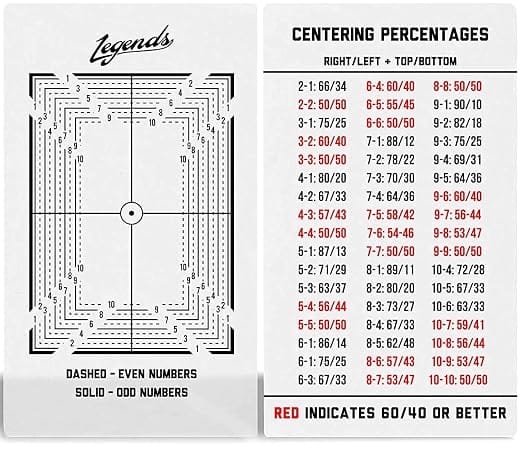
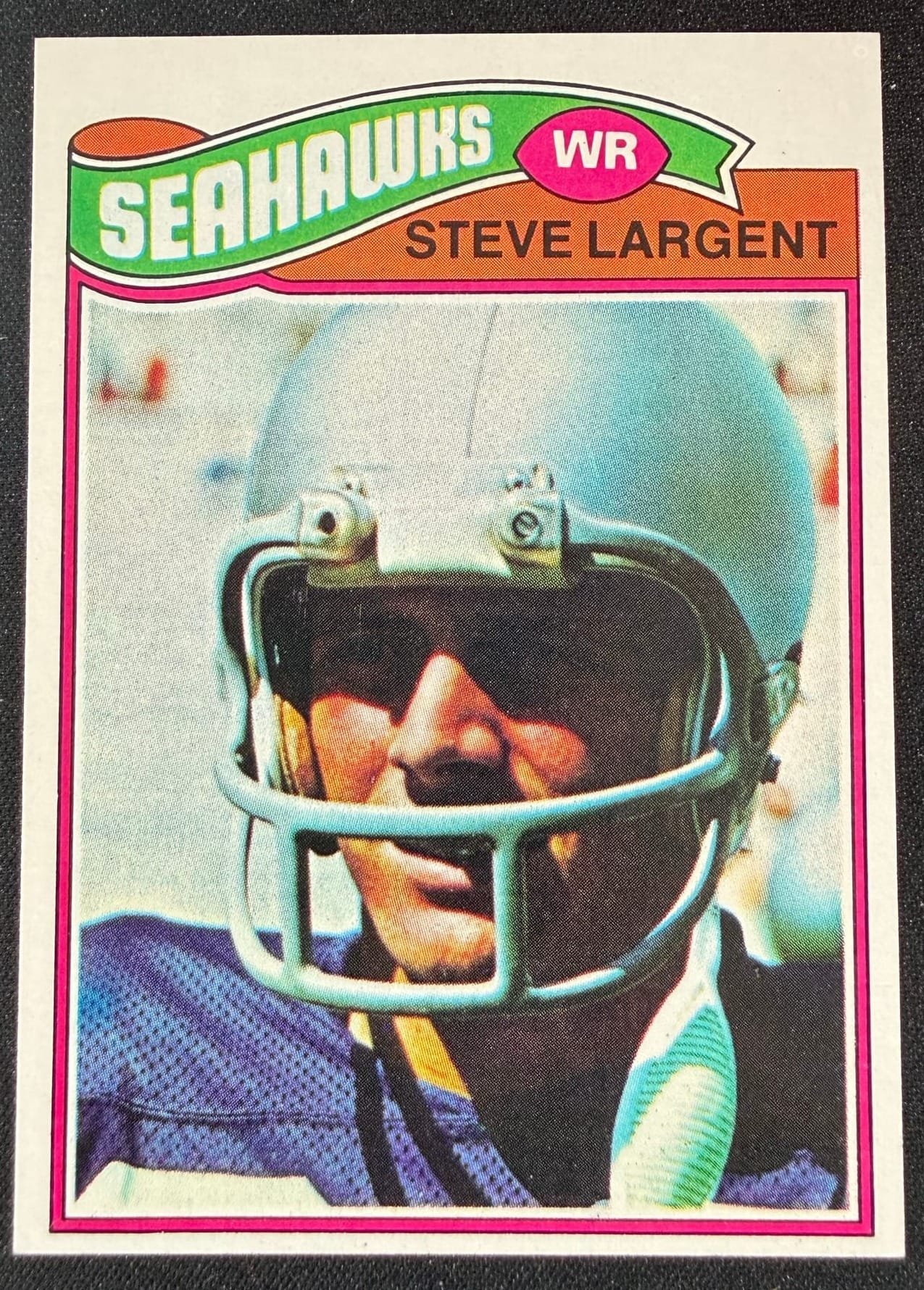
Centering is the easiest thing to get wrong by eye and the easiest thing to measure. The Legends centering tool by Envy Born Games is a clear acrylic overlay with a percentage grid. You lay it over the card, line up the edges, and read the left/right and top/bottom split straight off the grid. If the front isn't inside 55/45, it isn't a PSA 10, and you've saved the submission fee.
What to know: it doesn't work on borderless cards, because there's no border to measure. There's also a version bundled with a thickness gauge for about $17, if you'd rather skip the calipers for sizing holders. And if you just want a quick check, the free Card Centering Calculator app does the math from a photo.
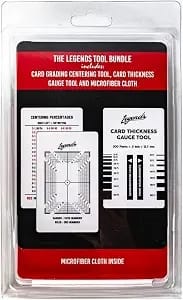
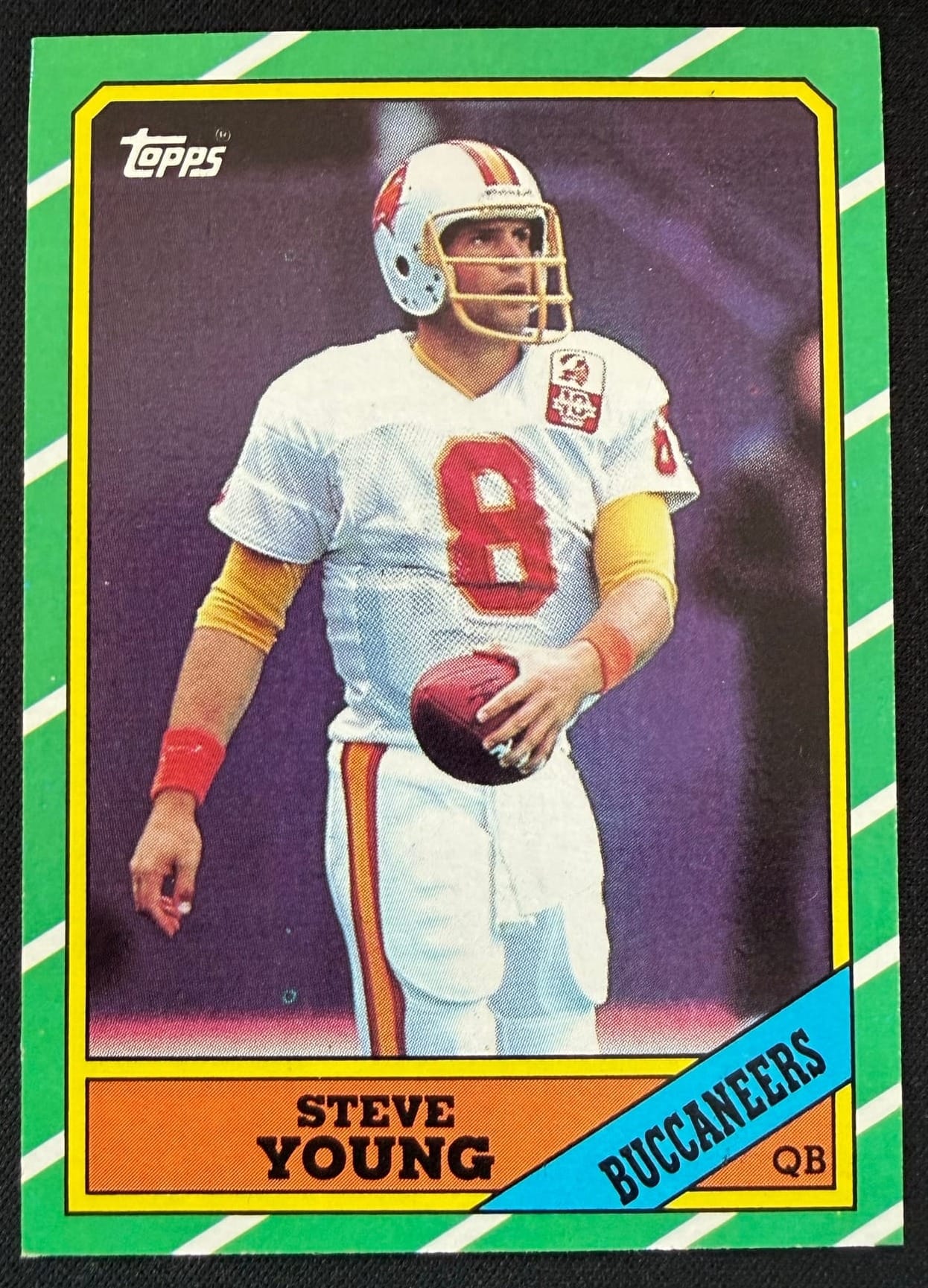
Link: Legends Centering Tool on Amazon
4. UV flashlight, 365nm
Best for: spotting recoloring, glue, restoration and reprints. About $25.
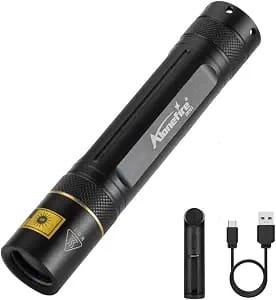
Paper makers started adding optical brighteners in the late 1940s, and those brighteners glow blue-white under ultraviolet light. That's what makes a UV light useful: a restored area, a touched-up border, a spot of glue, or a reprint on modern paper will glow brighter or darker than the original card stock around it.
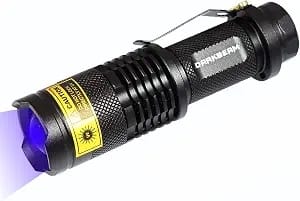
Buy a 365-nanometer light, not a 395. A 395nm light puts out a lot of visible purple light, and that washes out the faint glow you're looking for. A 365nm light is almost all invisible UV, so the fluorescence pops. The Alonefire SV003 is filtered, rechargeable and 365nm, with nearly 2,000 reviews.
What to know: use it in a dark room, and compare the card to a known-original card from the same year. The Darkbeam 365nm mini is about $13 and runs on 1 AA battery if you want one for the card-show bag. (The loupe above has a UV LED too, which is handy at a table but not as strong.)
Link: Alonefire 365nm UV Flashlight on Amazon
5. Inspection light
Best for: surface dents, scratches, creases and print lines. About $14 for a penlight, about $42 for a lamp.
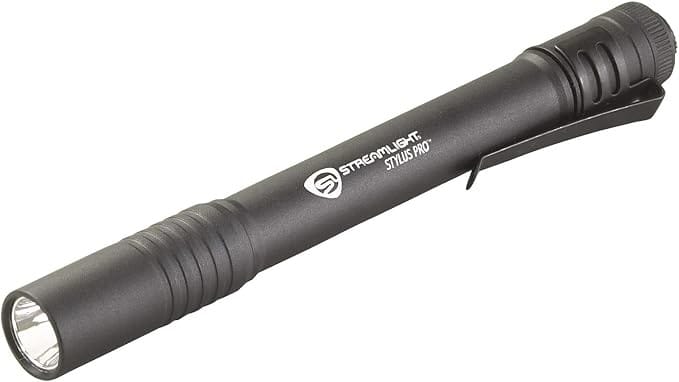
Most surface problems are invisible under ceiling lights and obvious under a low, sideways beam. It's called raking light: hold a small flashlight almost flat to the card and sweep it across. Dents, indentations and wax stains throw shadows, and a crease you never noticed will look like a canyon. The Coast G20 inspection penlight is built for inspection work, with an even beam and no hot spot. The Streamlight Stylus Pro is the brighter upgrade at about $22.
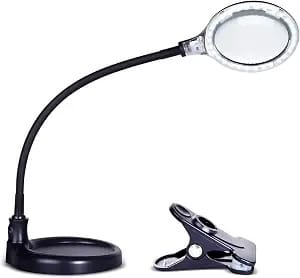
If you look at cards at a desk, a lighted magnifier does the same work hands-free. The Brightech LightView Pro Flex is a 2.25x magnifying lamp with an adjustable arm and about 8,800 reviews.
Link: Coast G20 Inspection Penlight on Amazon
Honorable mentions
A microfiber cloth. For wiping fingerprints off sleeves, top loaders and slabs. Don't put anything on the card itself. PSA rejects cards with evidence of "cleaning spray or wax."
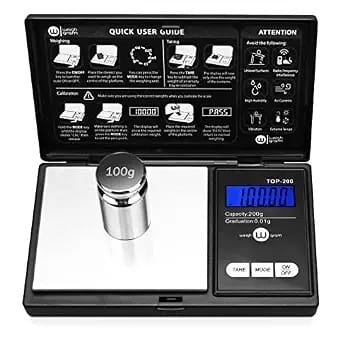
A 0.01-gram pocket scale, about $10. Some collectors have used them to weigh unopened packs and pick out the heavy ones with a thick relic card inside, which most of the hobby considers bad form. For evaluating a single card, a scale doesn't tell you anything a loupe won't.
What we'd skip
Gloves. A few blogs recommend them for handling raw cards, but clean, dry hands and holding the card by the edges does the job, and gloves make it easier to drop the card.
If you only buy one
The loupe. It catches corners, edges, surface problems and most fakes, and the one above throws in a UV light. Add the centering tool and you can tell a real 10 candidate from a 9 at your kitchen table.
What's in your grading kit? Tell us in the comments.
Comments ()