
The 10 Best Rookie Cards in 1986-87 Fleer — the Set That Caught a Whole Lost Generation
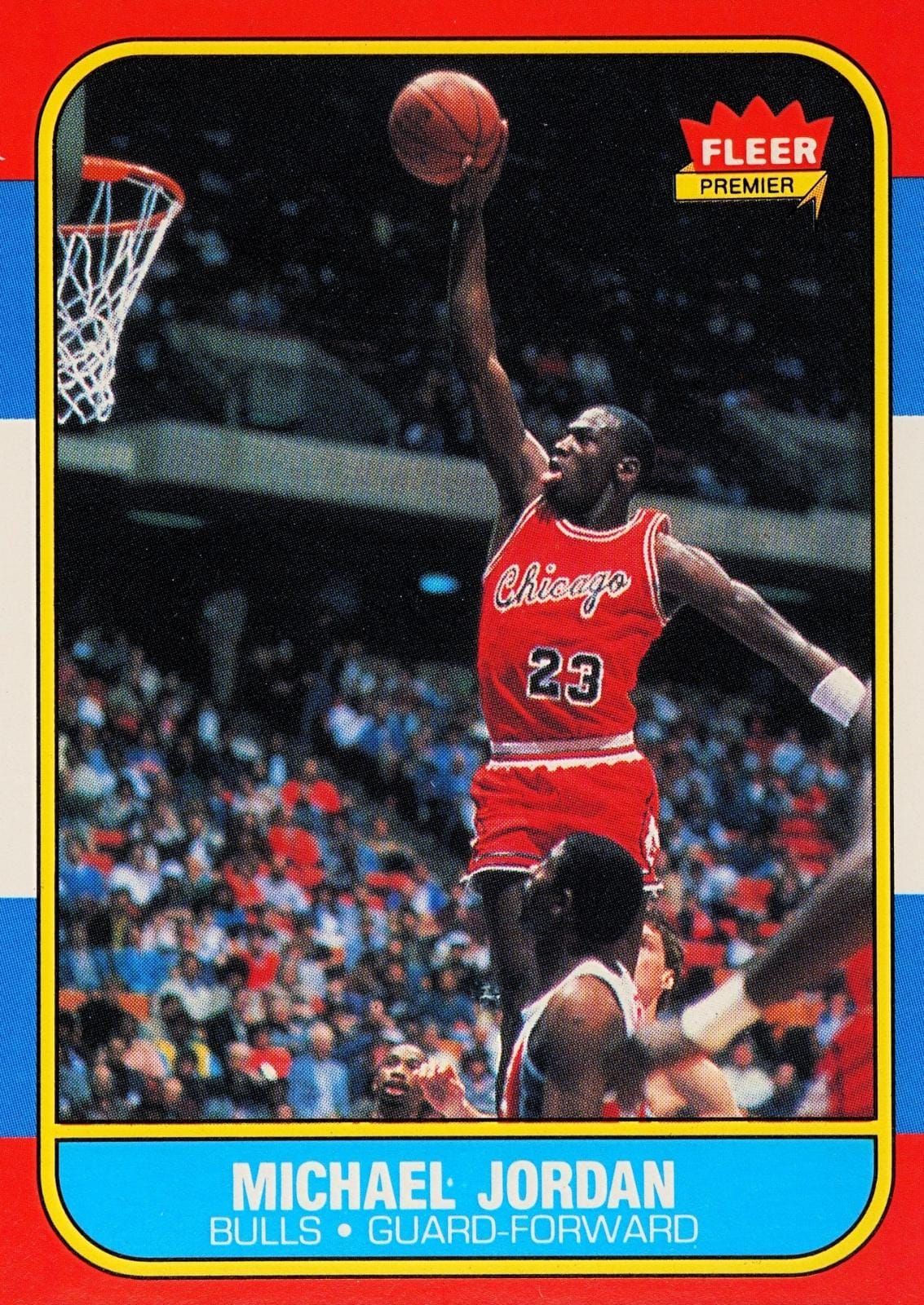
Here's the strangest fact about the most important basketball card set ever made: not one player in it was actually a rookie.
The 1986-87 Fleer set is 132 cards, and it contains the recognized rookie card of Michael Jordan, Charles Barkley, Hakeem Olajuwon, Patrick Ewing, Karl Malone, Isiah Thomas, Dominique Wilkins and Clyde Drexler. Jordan had already won Rookie of the Year — two years earlier. Isiah Thomas had been in the league five seasons and was a four-time All-Star. James Worthy had already won a championship.
They were all "rookies" for one reason: for most of five years, nobody in America was making basketball cards at all.
Basketball Cards Were Never a Sure Thing
Baseball had Topps every single year, like a utility. Basketball had spasms.
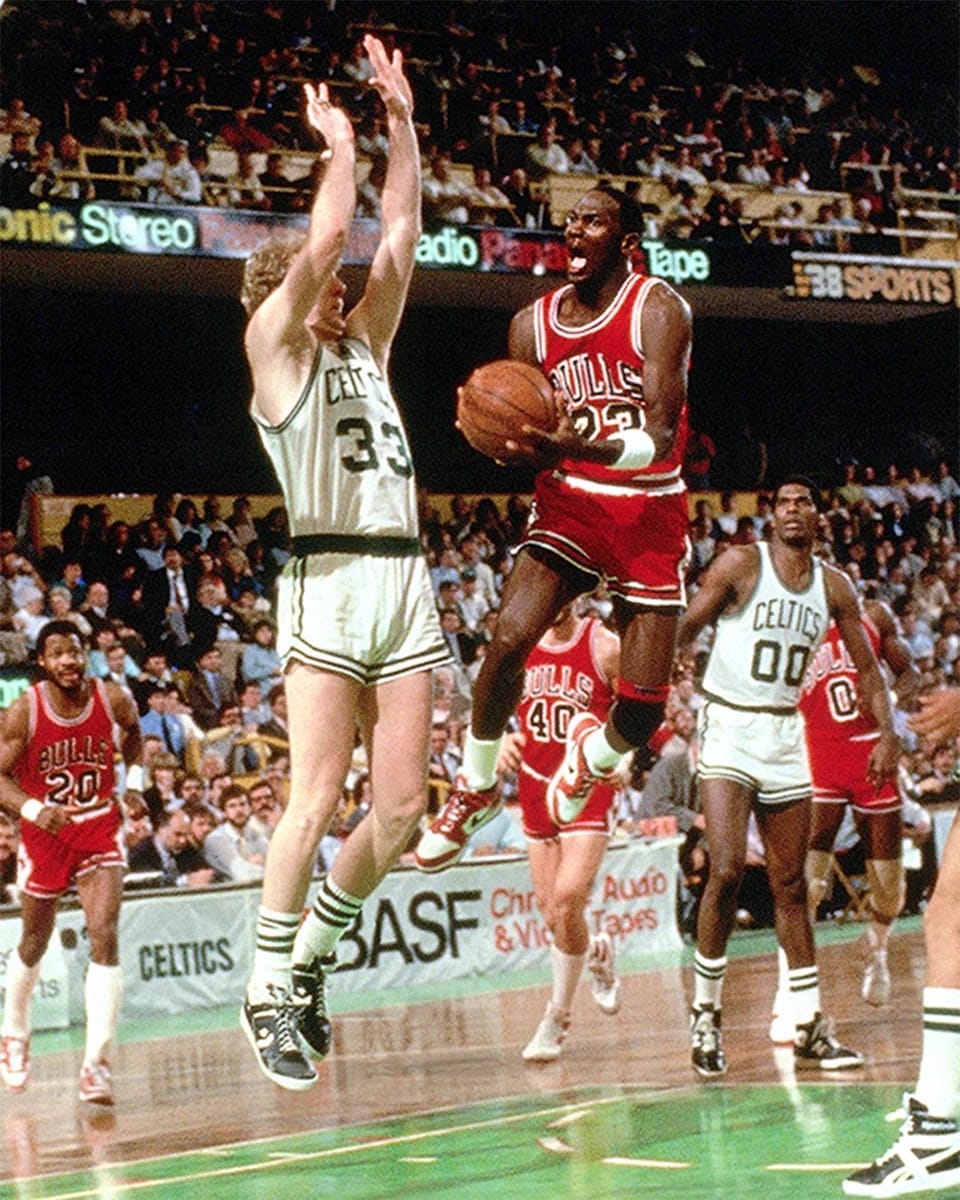
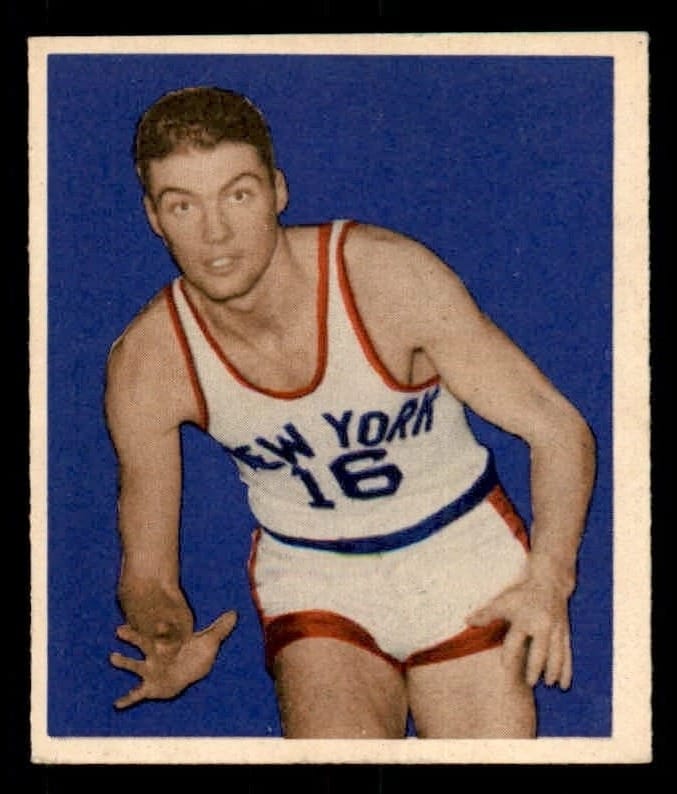
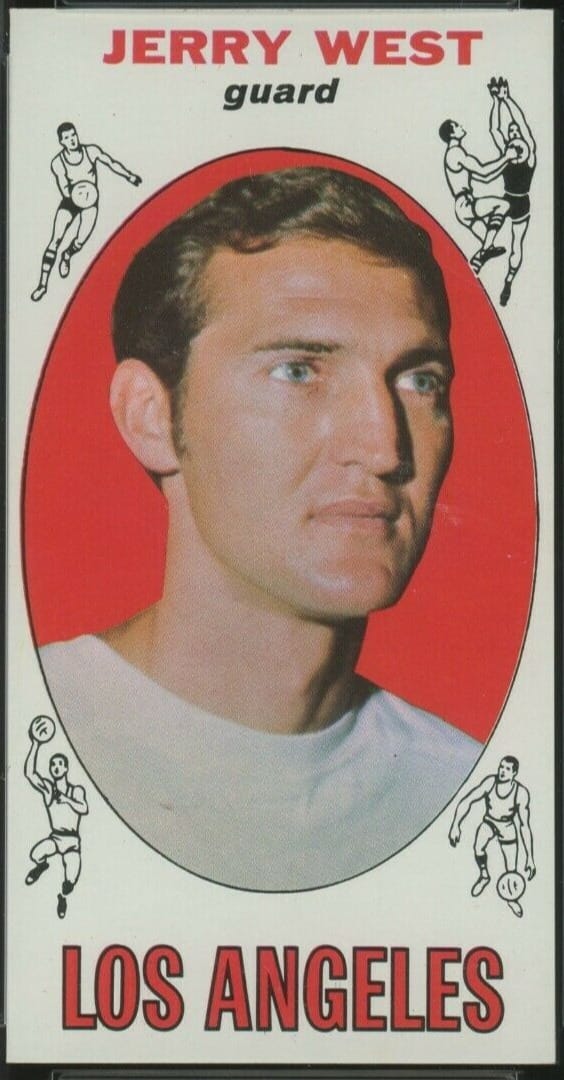
1948 Bowman was the first major national basketball set — 72 cards, the George Mikan rookie at #69. Bowman made it for exactly one year and quit. 1957-58 Topps arrived nine years later with the Bill Russell rookie at #77, and Topps promptly quit for twelve years. 1961-62 Fleer gave us rookies of Wilt Chamberlain (#8), Oscar Robertson, Jerry West and Elgin Baylor — a set so good that a Chamberlain sold for $1.7 million in 2024 — and then Fleer made no basketball cards for twenty-five years.
When Topps finally returned in 1969-70, it couldn't stop fidgeting with the format:
- 1969-70 and 1970-71: "tall boys" — cards measuring 2½ by 4-11/16 inches, absurdly elongated, allegedly to fit basketball players. Lew Alcindor's rookie is 1969-70 #25.
- 1976-77: the biggest of all — a 144-card set at 3⅛ by 5¼ inches, roughly a postcard. It is generally considered the largest flagship sports card set ever produced in any sport.
- 1980-81: the perforated experiment — every card was a three-panel strip you tore apart, 264 numbered mini-cards across 88 panels. That's where the Larry Bird and Magic Johnson rookies live, sharing a panel with Julius Erving. Of 16,424 submitted to PSA, exactly 24 have graded a perfect 10.
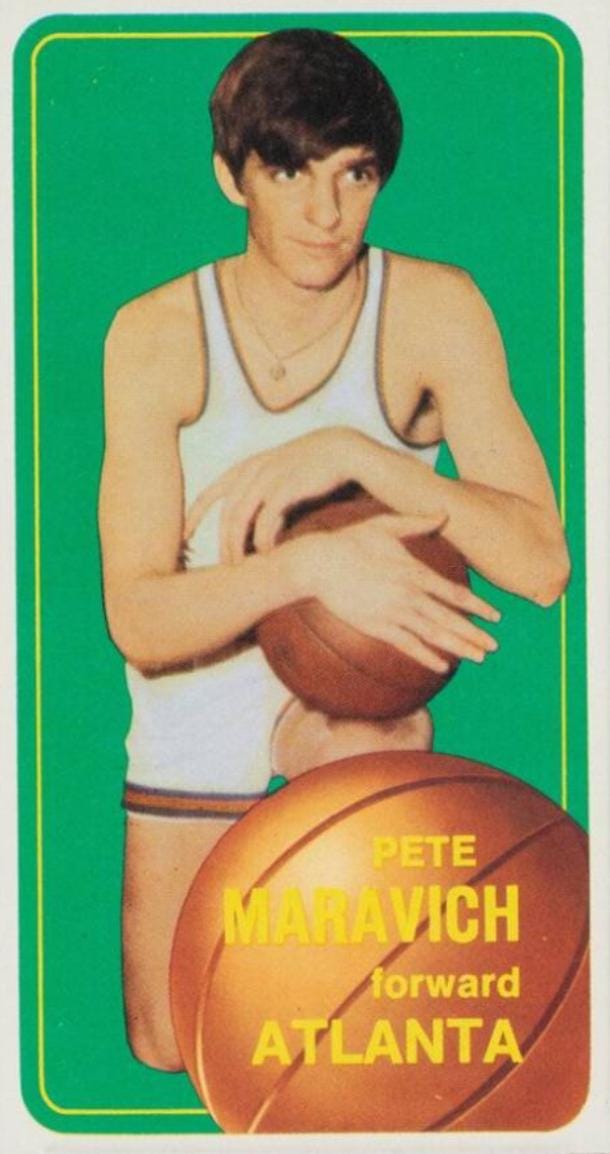
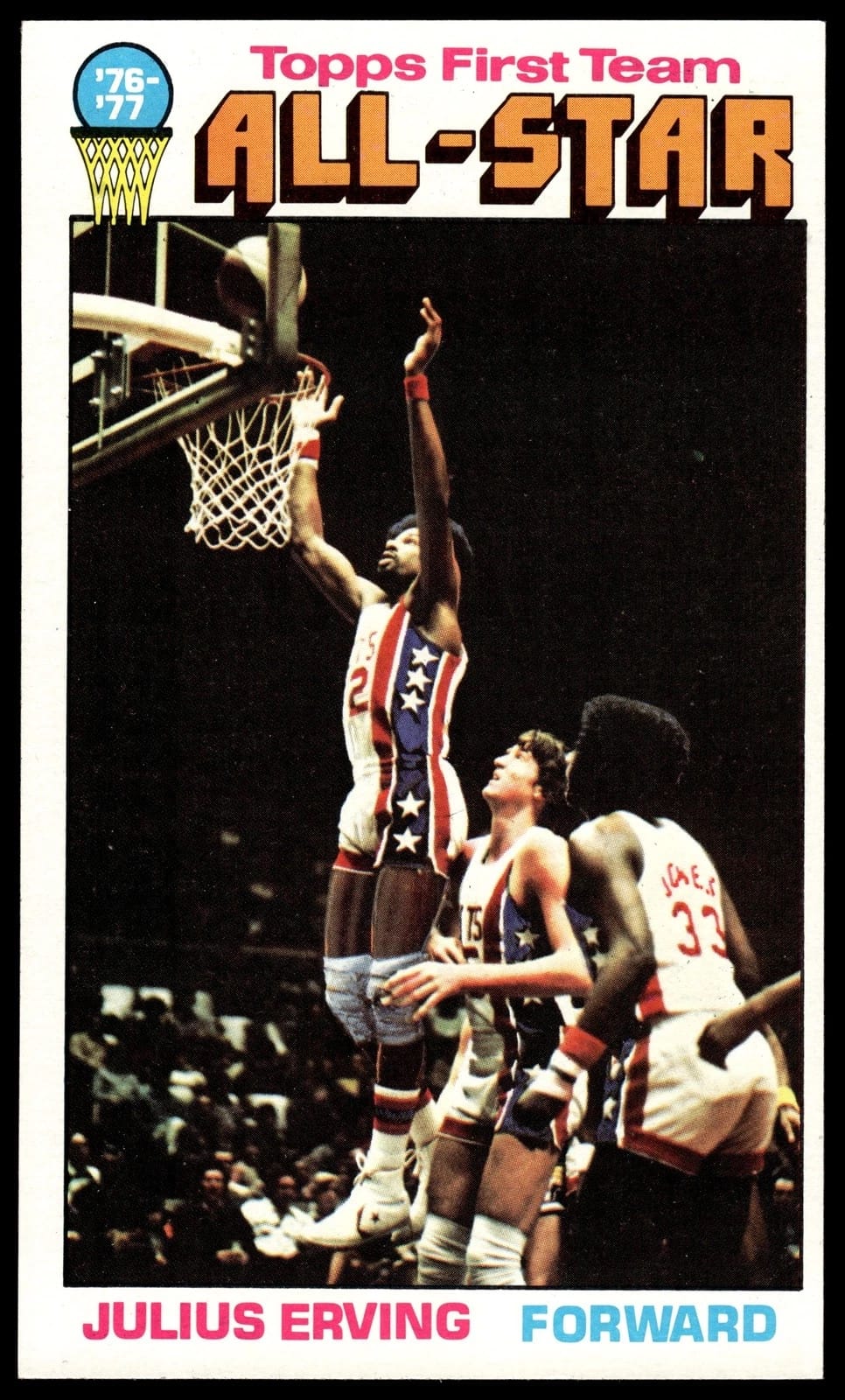
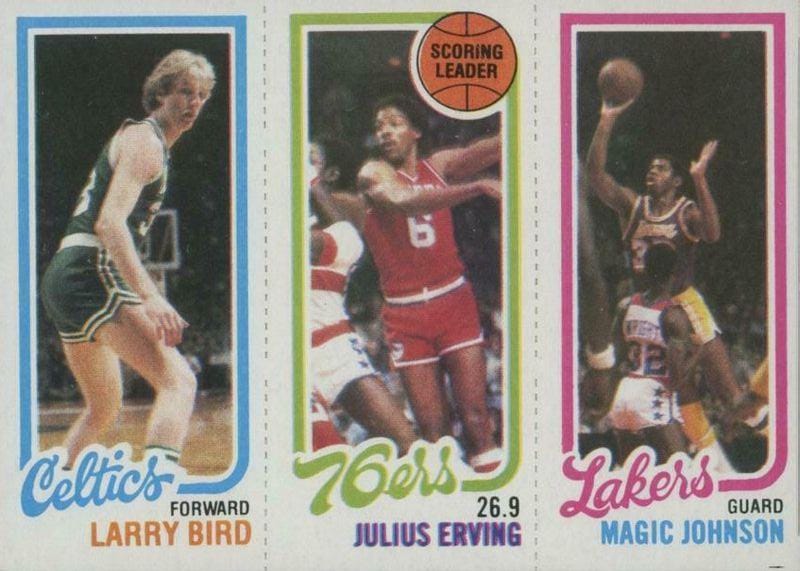
Then, after the 1981-82 set, Topps quit basketball entirely and stayed gone for eleven years.
The Five-Year Blackout
From 1982 through 1986, no company made a nationally distributed, wax-pack basketball set. A small outfit called Star Company held the license from 1983-86, but sold poly-bagged team sets to dealers and by mail order — no store shelves, tiny print runs, and later a counterfeiting problem so severe that PSA refused to grade Star cards at all until 2022. Jordan's 1984-85 Star #101 exists, but the hobby files it as a pre-rookie, not a rookie card.
So here is the rule that explains everything: Topps' final set covered players active through the 1980-81 season. Anyone who reached the NBA in 1981-82 or later simply had no mainstream card — until Fleer came back in 1986.
The blackout happened to fall exactly across the greatest talent influx in league history. Five years of Hall of Famers piled up behind a dam, and in 1986 it broke all at once.
The 10 Best Rookie Cards in the Set
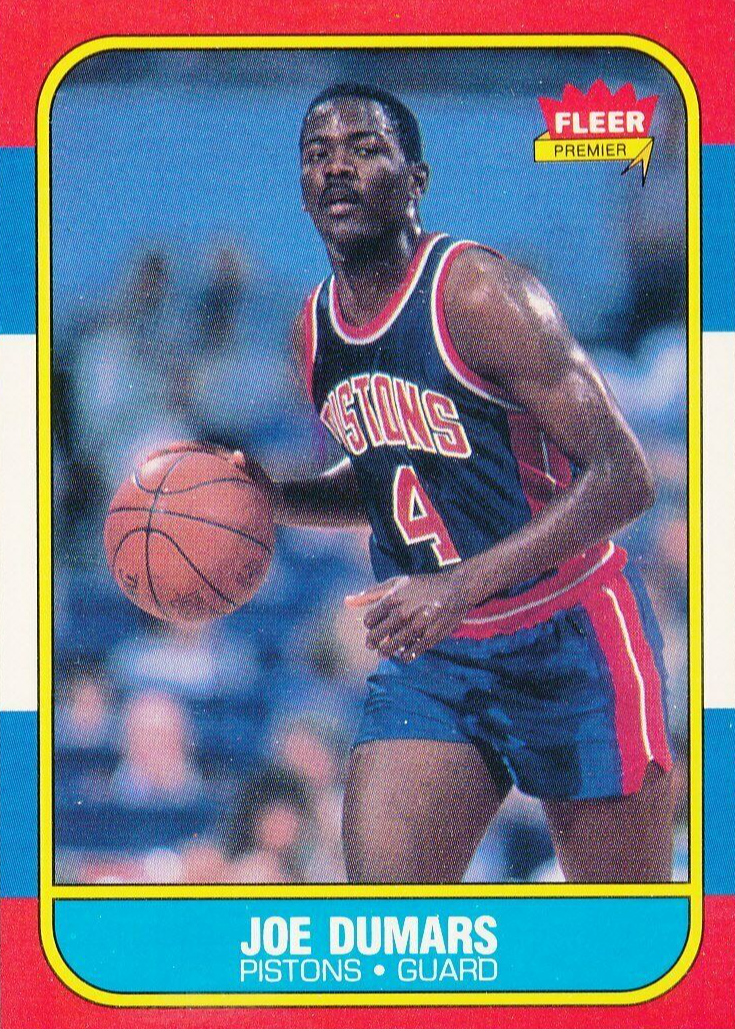
10. Joe Dumars (#27) — Three-time All-Defensive first team, Finals MVP, the quiet half of the Bad Boys. The most underrated card in the set.
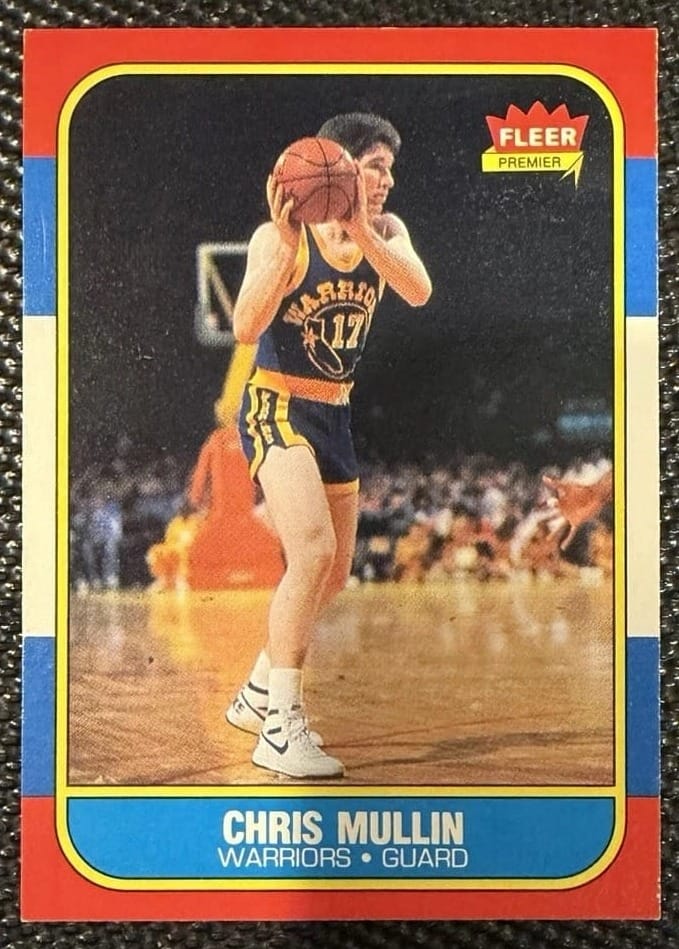
9. Chris Mullin (#77) — Golden State's sweet-shooting Dream Teamer, one season into his career.
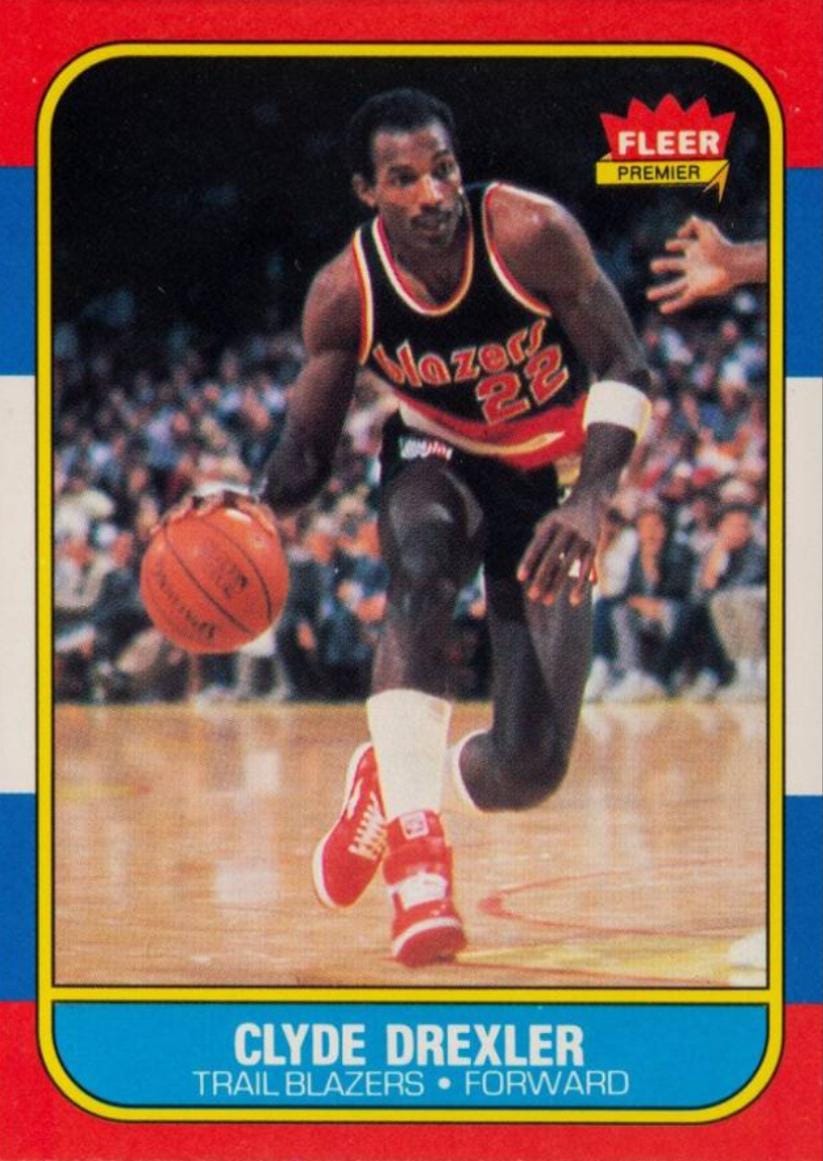
8. Clyde Drexler (#26) — Three years and an All-Star berth into his career before his first card.
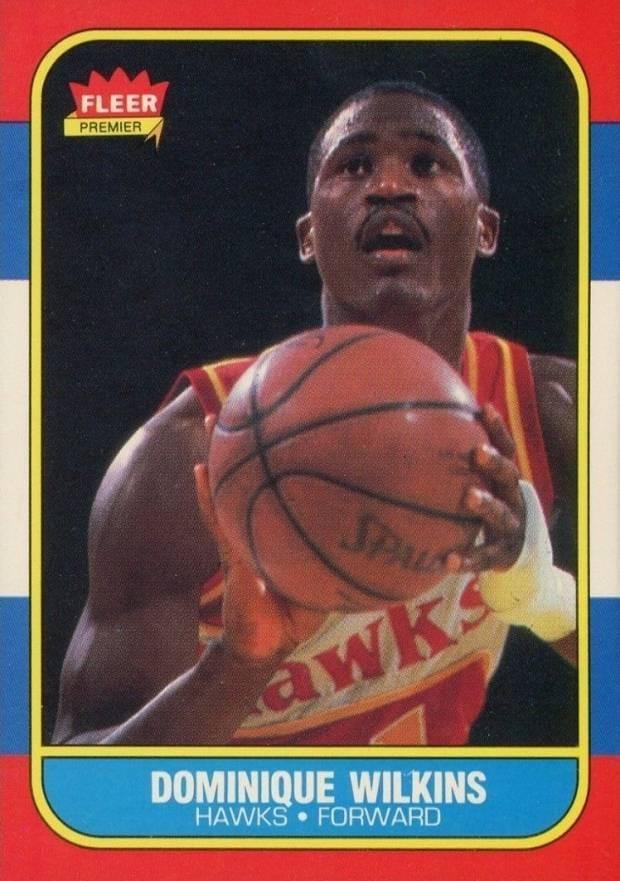
7. Dominique Wilkins (#121) — Four NBA seasons deep. He'd already been an All-Star and would lead the league in scoring that very year. No card until now.
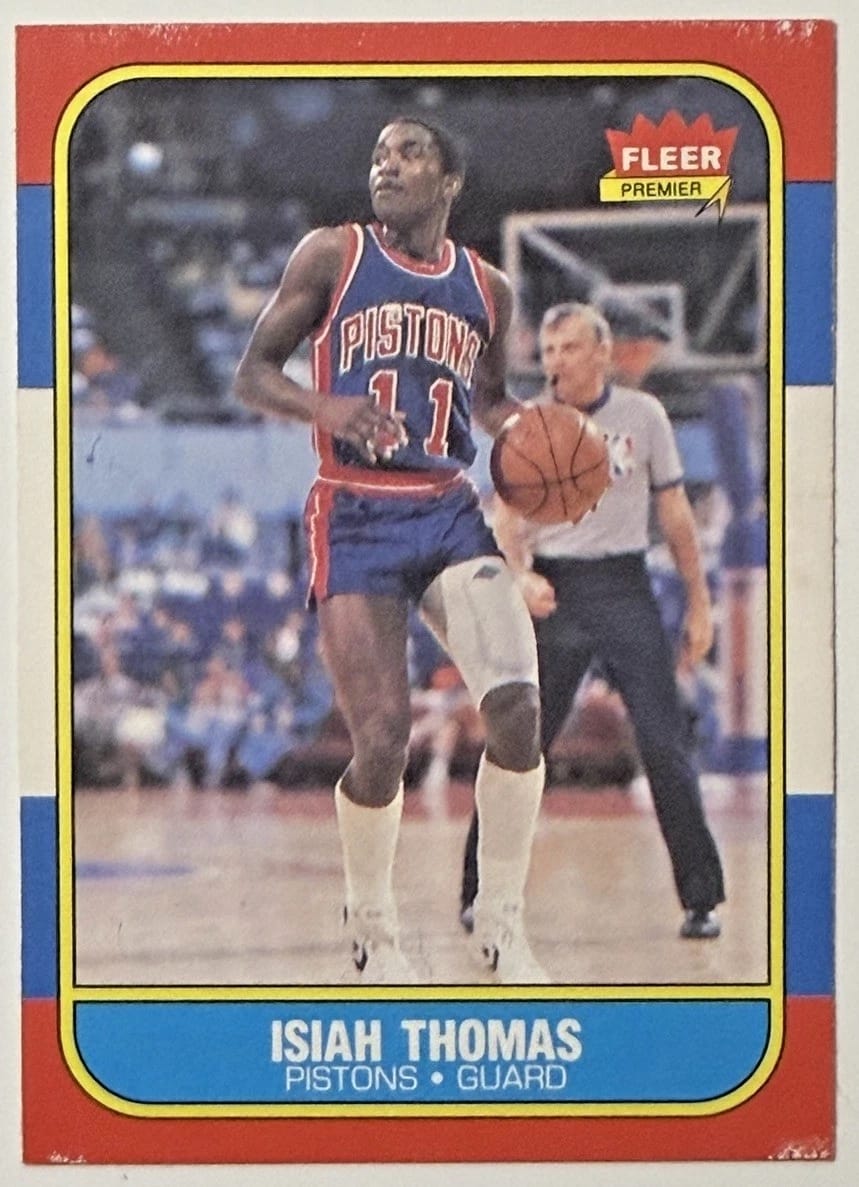
6. Isiah Thomas (#109) — The purest example of the blackout. Five seasons in the NBA. Four All-Star selections. An All-Star Game MVP. And this is the first card the hobby recognizes.
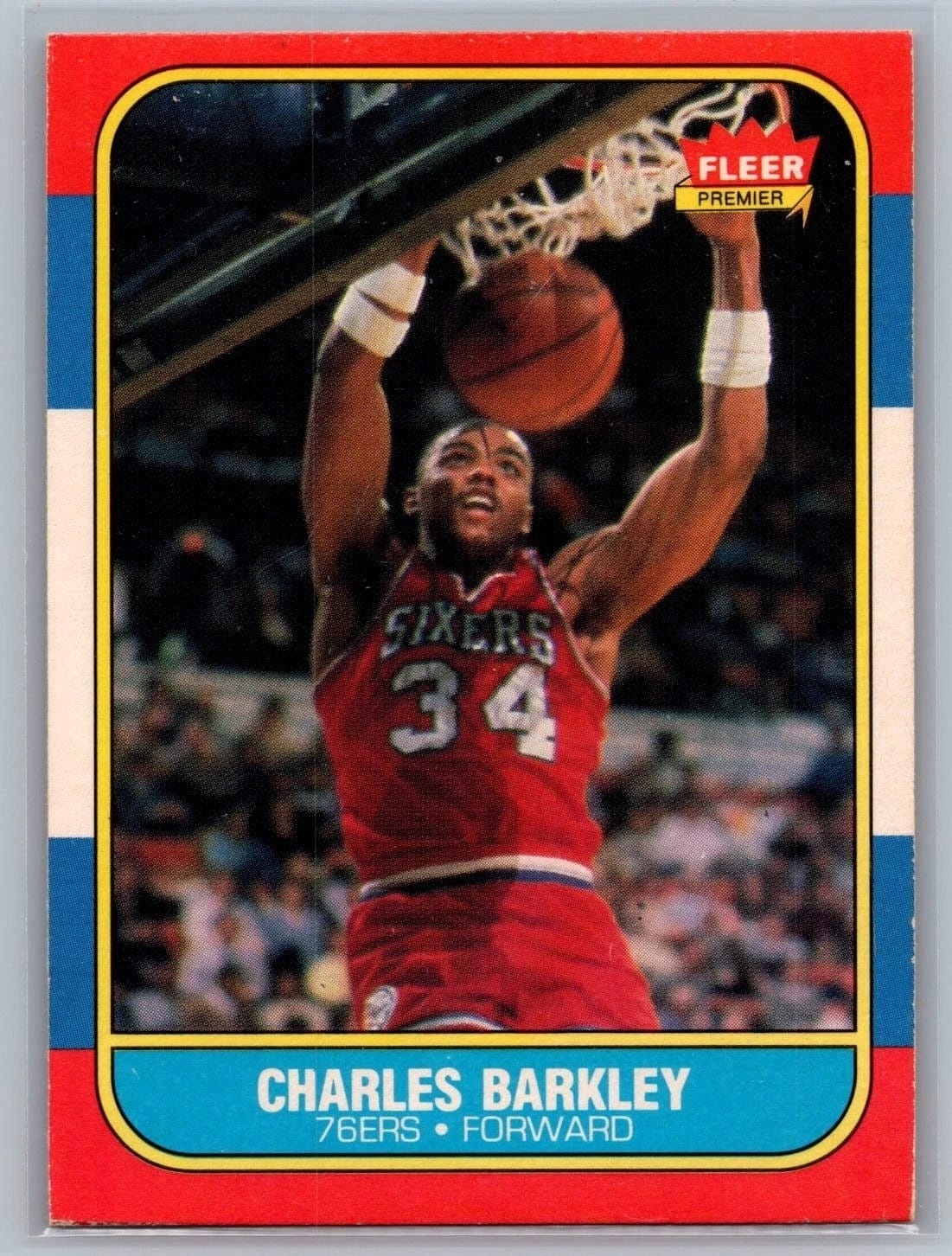
5. Karl Malone (#68) — Two career points behind only Kareem at the time of his retirement, and it starts here.
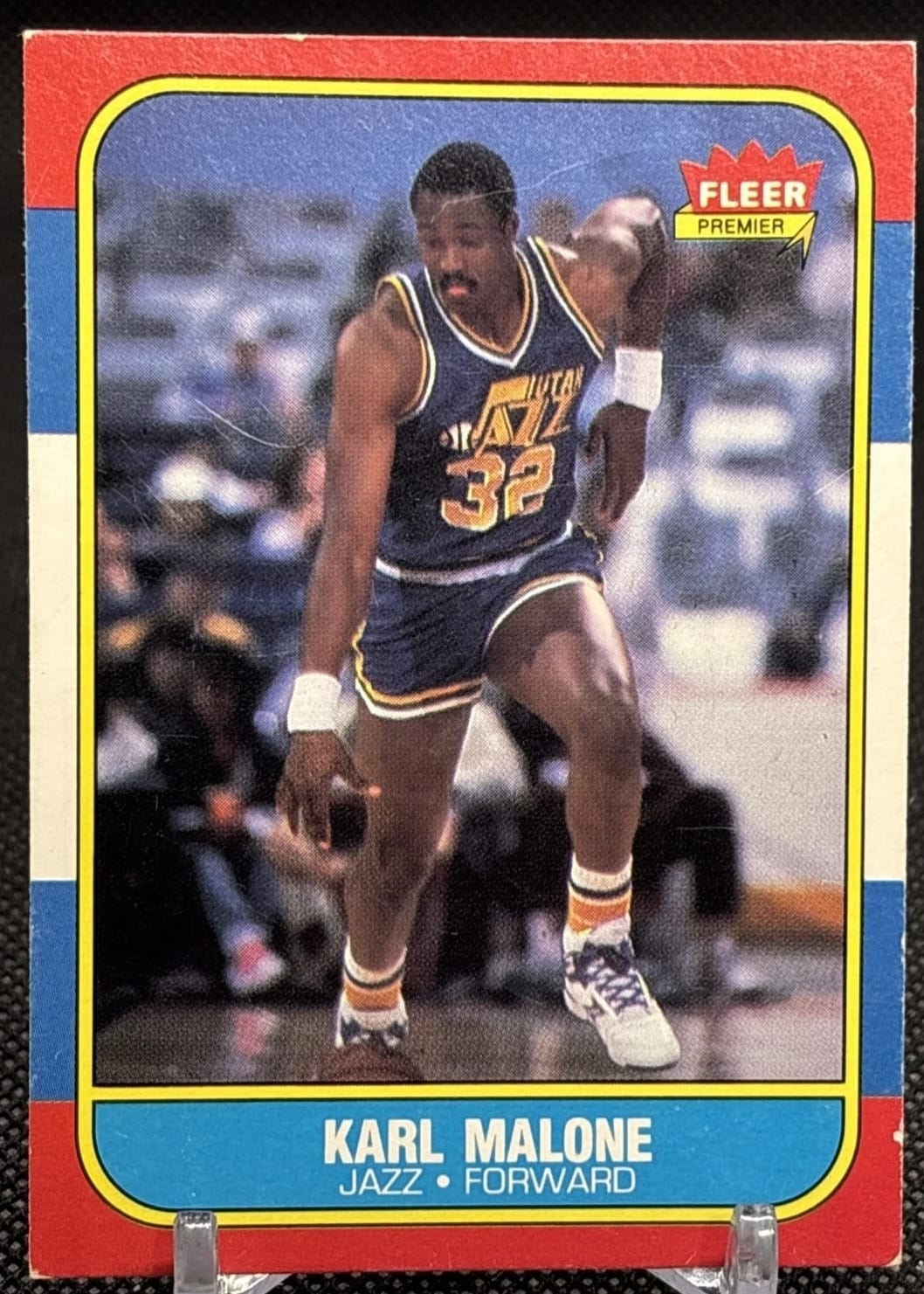
4. Patrick Ewing (#32) — The most hyped college player of his generation, already Rookie of the Year.
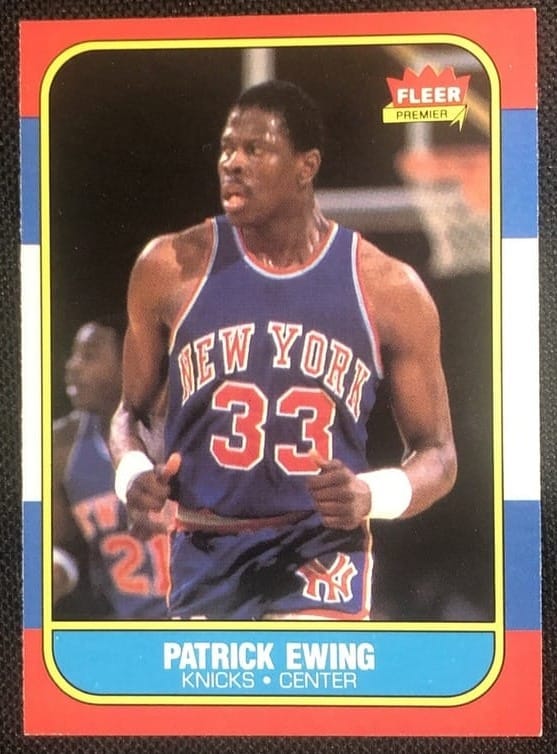
3. Hakeem Olajuwon (#82) — Printed as "Akeem," which is how he spelled it until 1991. A great tell for spotting fakes and a great piece of trivia.
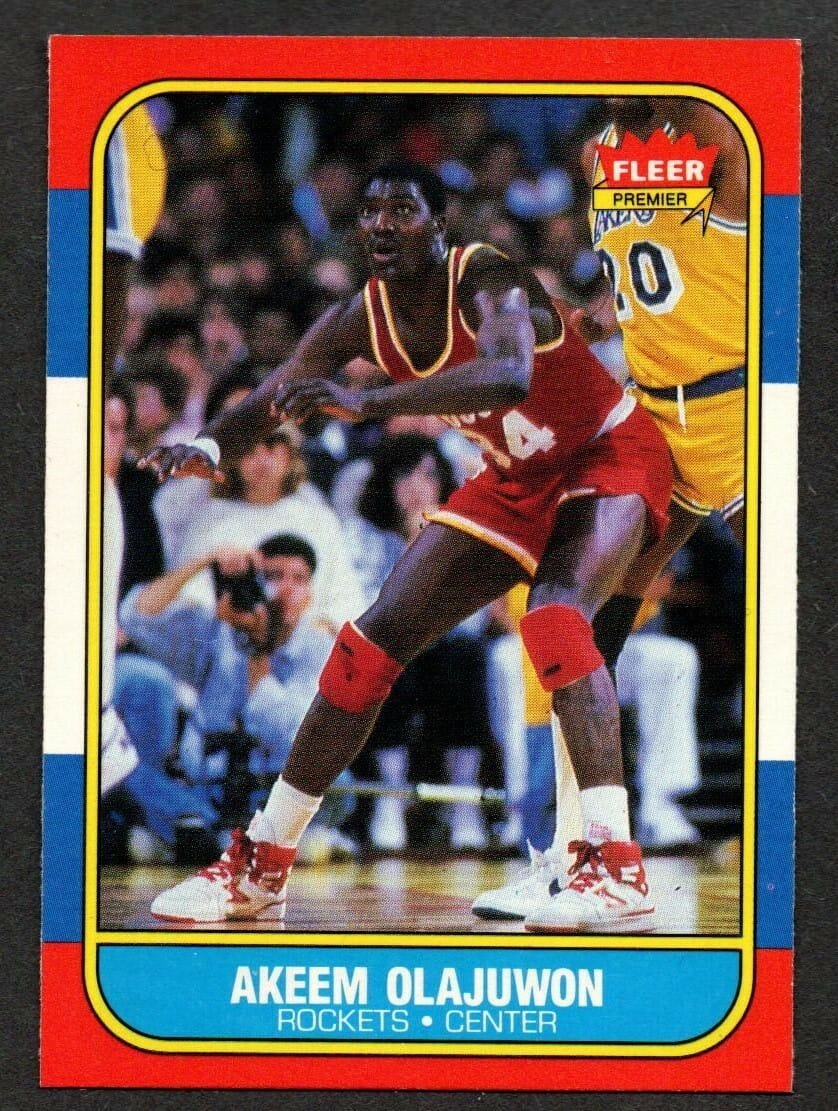
2. Charles Barkley (#7) — Two seasons in, about to become the most quotable player alive.
1. Michael Jordan (#57) — The most valuable modern sports card in existence. Recent PSA 10 sales cluster around $390,000-$410,000, with roughly 335 gem copies out of more than 28,000 graded. Jordan also appears as sticker #8 in the 11-sticker insert set, a legitimate second chase card.
Honorable mentions: James Worthy (#131), already an NBA champion; Mark Aguirre (#3), five seasons in; Xavier McDaniel (#72); Ralph Sampson (#97); and Manute Bol (#12), because everyone needs a 7-foot-7 card.
The Set Nobody Wanted
The punchline: 1986-87 Fleer flopped. Boxes sat at $10. Dealers sold them back to Fleer around $6. Fleer offered refunds on unsold cases and cut the next year's print run roughly in half.
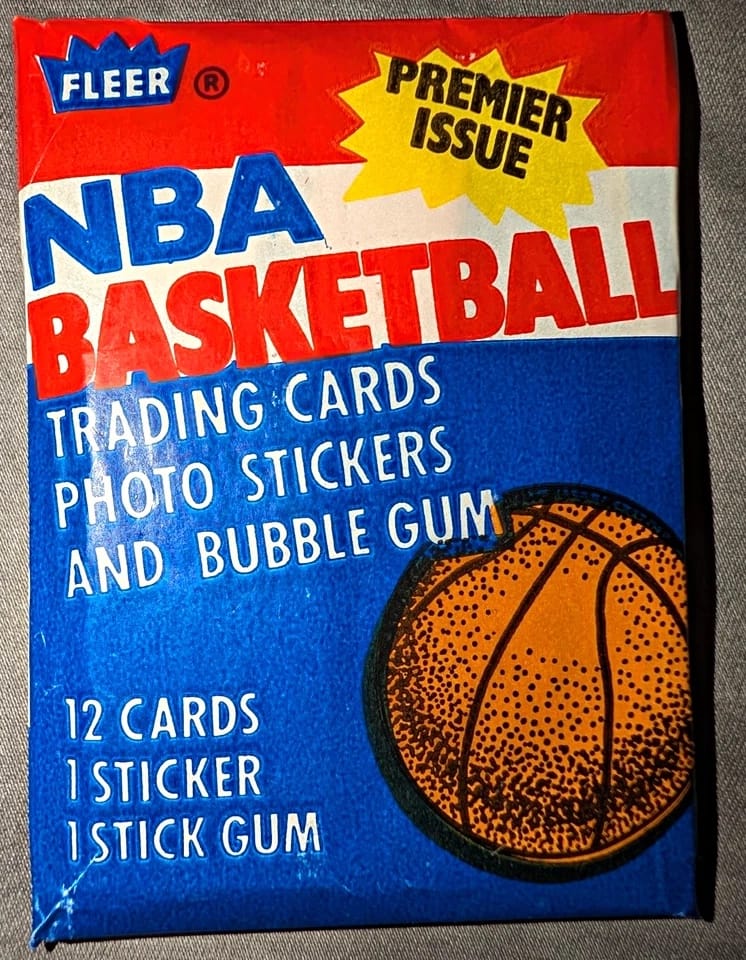
The design didn't help its own cause either — red, white and blue borders running flush to the card edge, which means any handling at all produces visible chipping, compounded by chronic centering problems and wax stains. That's why gem copies are so scarce from such an enormous graded population.
Two numbers tell the whole story of what happened next. A complete set in PSA 9 — all 132 cards, Mint — sold for about $26,000. A complete set in PSA 10 brought $390,000. The difference between very good and perfect, on cardboard nobody wanted in 1986.
Do you still have yours? And did you know the borders chip if you look at them wrong? Comments below.

Comments ()