
The 10 Greatest Error Cards of All Time — and the Two Famous Stories About Them That Aren't True
Every card collector has a mental museum of mistakes. The batboy who got a big-league card. The obscenity that made it through Fleer's quality control. The rookie whose name fell off. Errors are the hobby's folklore: they're the cards people tell stories about, and the stories are frequently wrong.
A quick definition, because the hobby is picky. An error is a printed mistake: a typo, the wrong photo, a flipped negative, the wrong team. If the company fixed it mid-run, you get two variations, and the scarcer one carries the premium. If nobody ever fixed it, it's an uncorrected error, which usually means there's only one version and no premium at all, just a good story. Here are the ten best, ranked by some blend of fame, money and how good the story is.
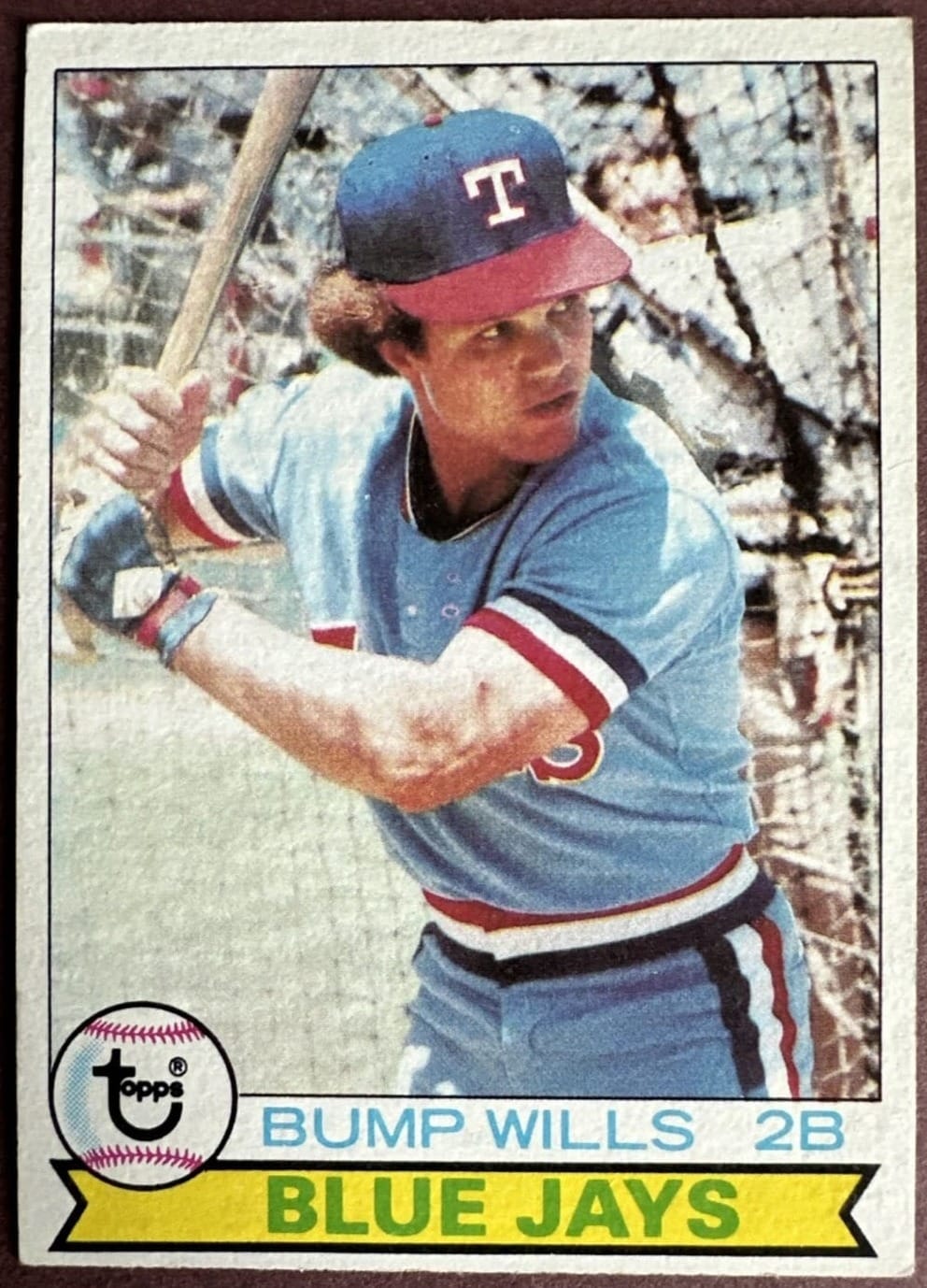
10. 1979 Topps #369 Bump Wills, "Blue Jays"
Bump Wills was a Texas Ranger. Topps printed him as a Toronto Blue Jay because Sy Berger, the man who ran Topps' baseball operation for decades, heard from a friend that a trade was done. It wasn't. Topps corrected it to "Rangers" mid-run, and the Blue Jays version became the first error card a whole generation of kids ever chased. Fewer than ten have graded PSA 10.
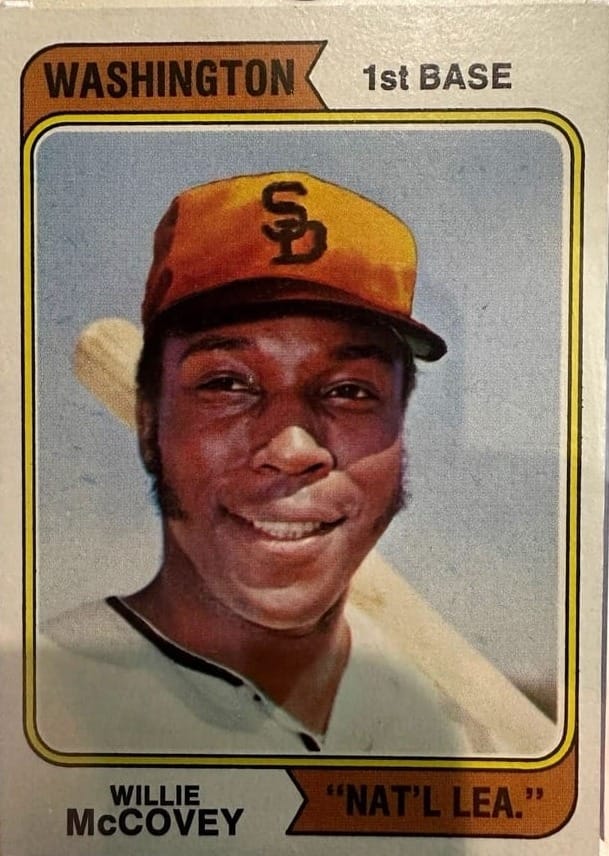
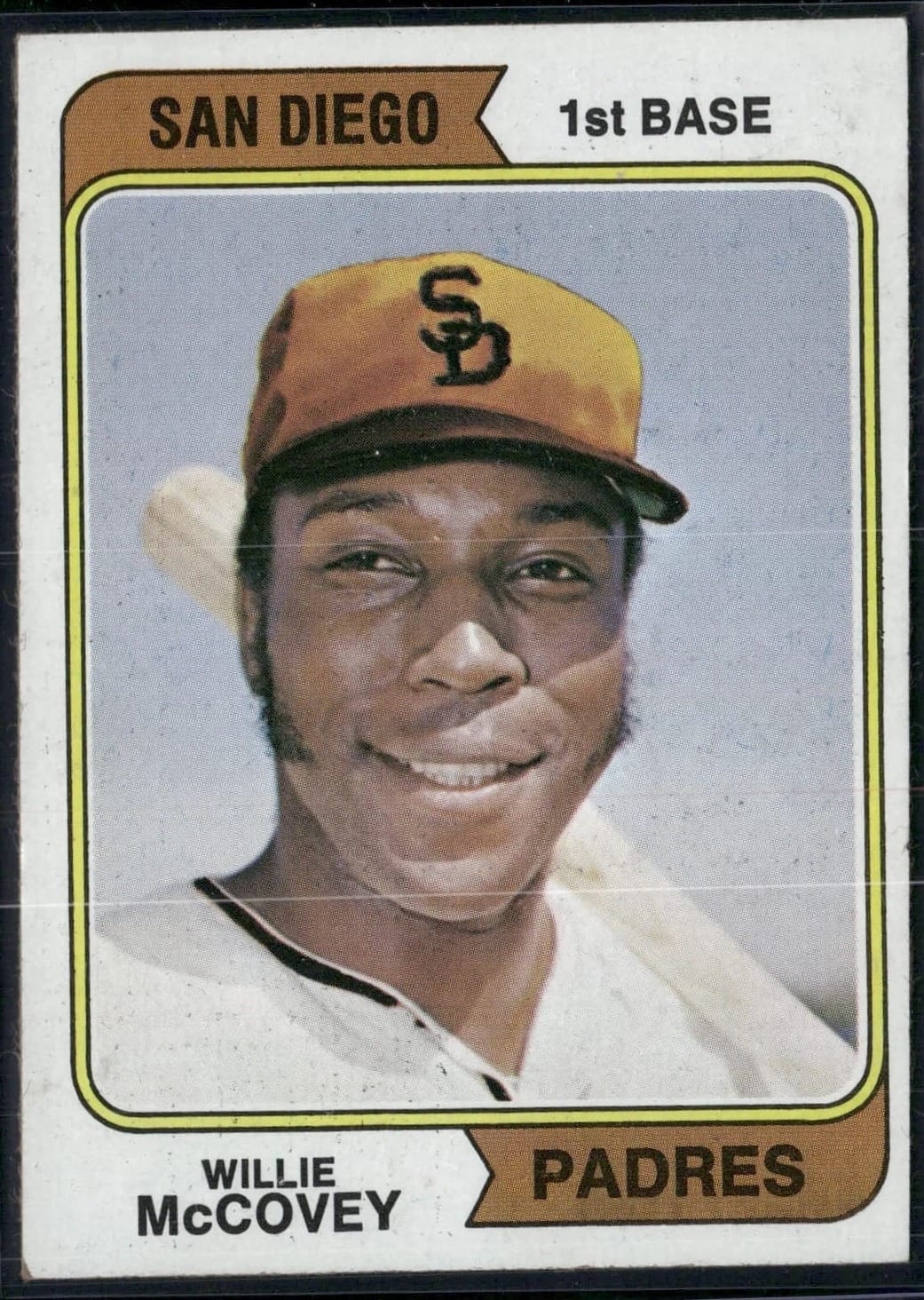
9. 1974 Topps "Washington, Nat'l Lea."
In the winter of 1973-74, the San Diego Padres were sold to a group that planned to move them to Washington, D.C. Topps, printing early, hedged: 15 Padres cards in the first run carry the team name "Washington, Nat'l Lea." with no nickname, because nobody had picked one. Then Ray Kroc, the McDonald's founder, bought the Padres instead and kept them in San Diego. Topps reprinted the 15 with "San Diego Padres," and the Washington versions, including a Willie McCovey, became cards of a team that never existed.
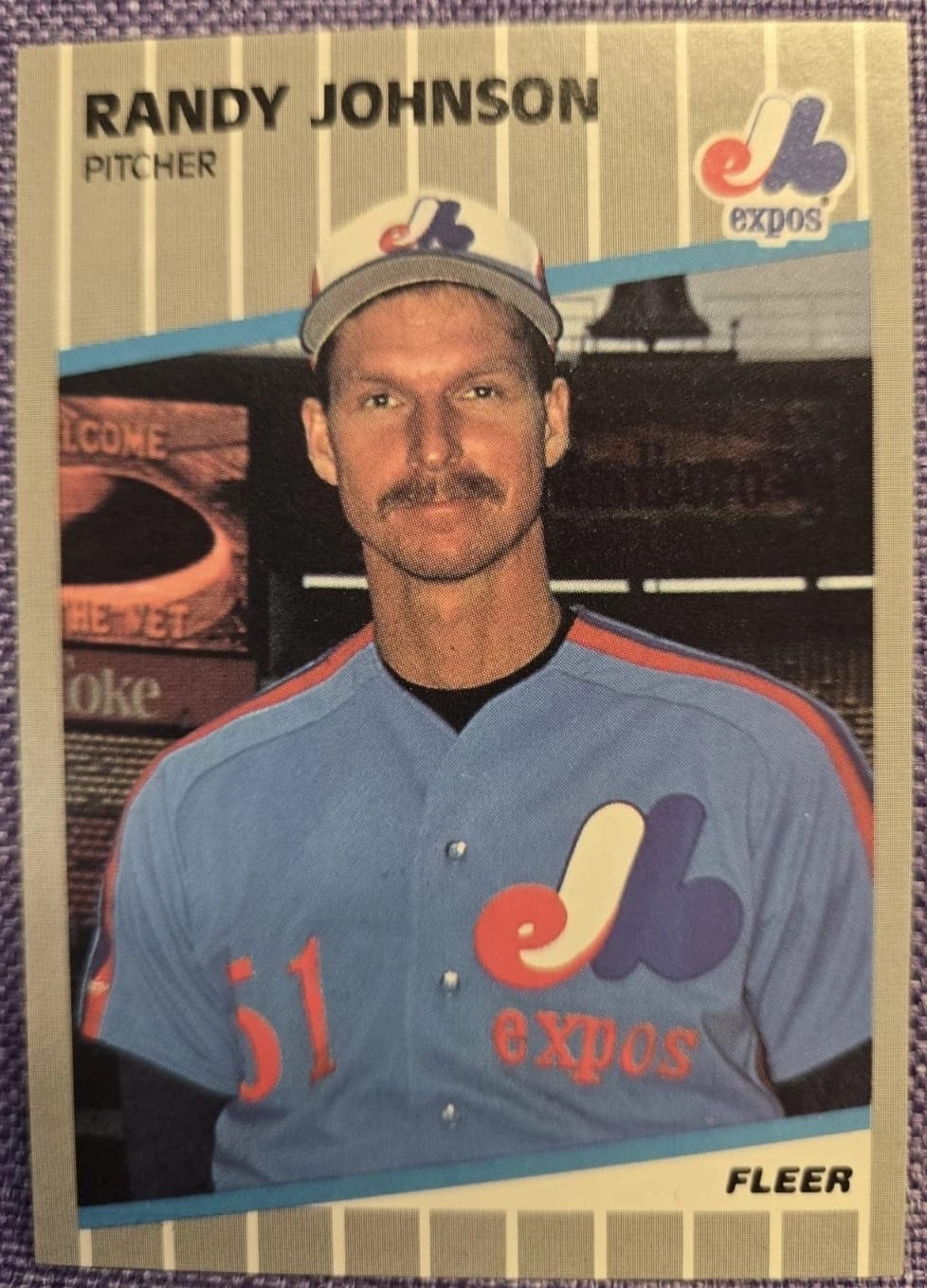
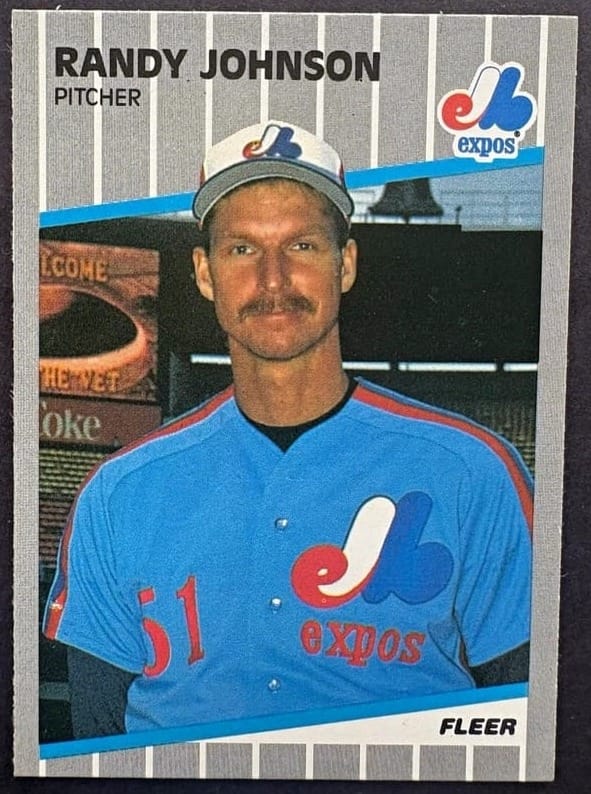
8. 1989 Fleer #381 Randy Johnson, Marlboro
Early prints of Randy Johnson's rookie card show a Marlboro billboard on the scoreboard behind him. Fleer, sensitive about cigarette ads on cards sold to children, went back and obscured it, again and again: red shading, a black line, a black blob, a full black box. Collectors have catalogued more than a dozen sub-variants. The clean, untouched Marlboro version is the scarce one, and the whole thing wasn't even noticed until Beckett's graders spotted it a decade later.
7. 1957 Topps #20 Hank Aaron
Hank Aaron bats right-handed. On his 1957 Topps card he's batting left-handed, with the 44 on his jersey mirrored, because Topps printed the negative backwards. Nobody fixed it, so there's only one version and no premium. It's on this list because it is Hank Aaron, wrong, forever.
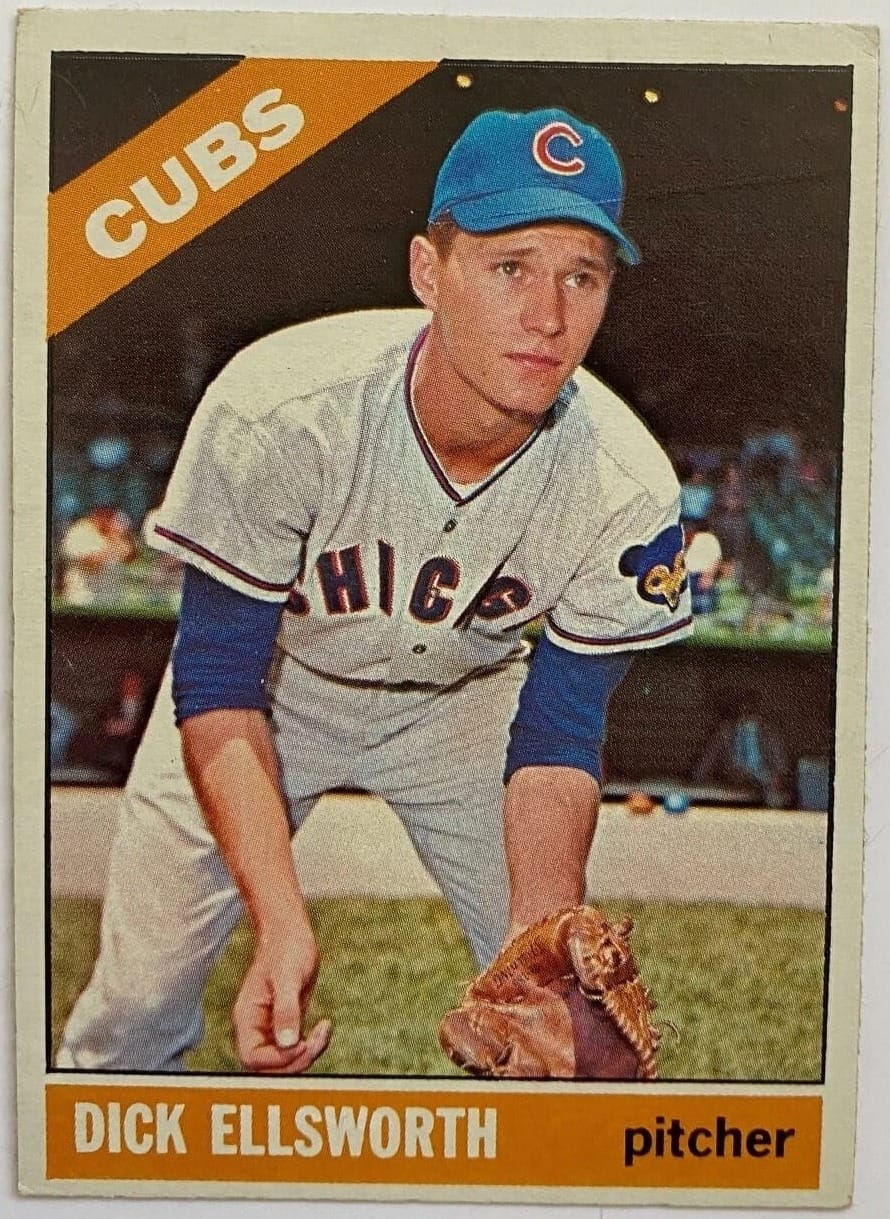
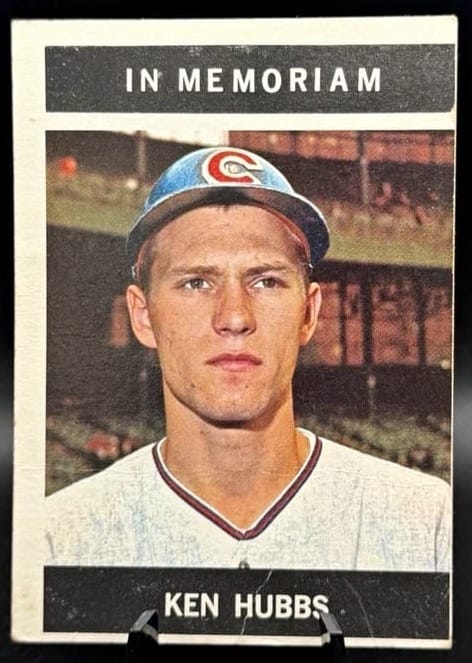
6. 1966 Topps #447 Dick Ellsworth
The photo on Dick Ellsworth's card is Ken Hubbs, the Cubs' second baseman, who had died in a plane crash in February 1964. Topps had already issued Hubbs a memorial card in the 1964 set. Two years later they put his face on a teammate's card and never corrected it.
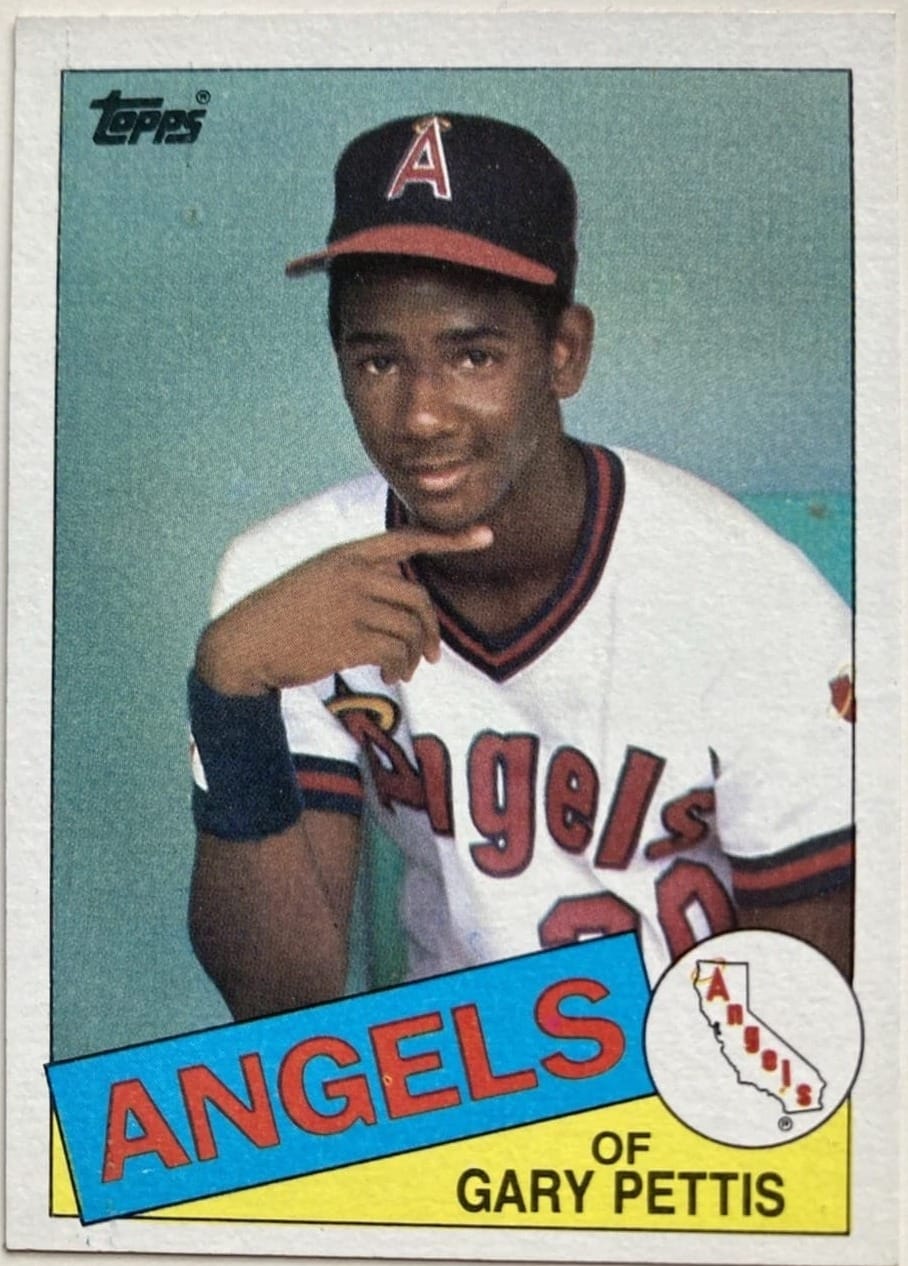
5. 1985 Topps #497 Gary Pettis
That is not Gary Pettis. That is his 14-year-old brother, Lynn, wearing Gary's uniform on Angels Family Day, when Topps happened to be shooting. Pettis has said he had no idea the photographer was there that Sunday. Topps never corrected it, and Lynn Pettis remains the youngest person ever to appear on a mainstream major league card.
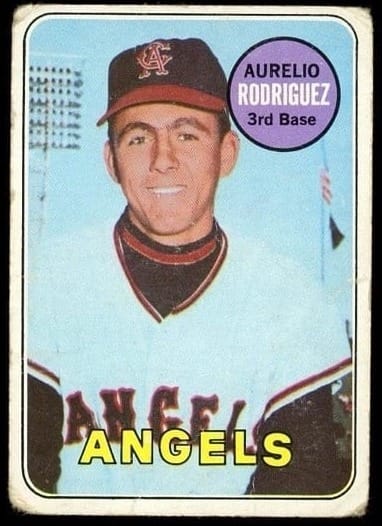
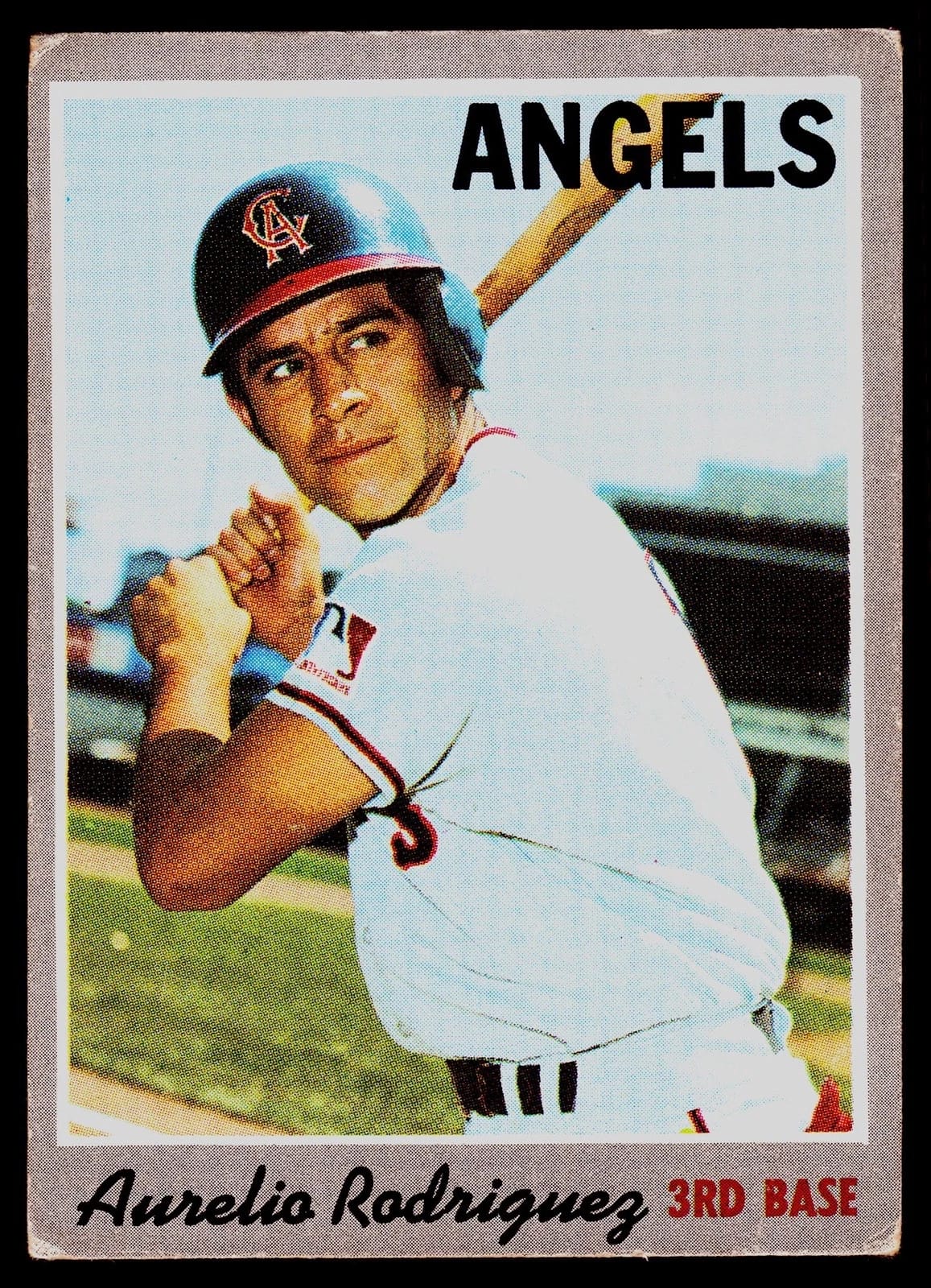
4. 1969 Topps #653 Aurelio Rodriguez
The best-known wrong-photo card in the hobby. The man pictured is Leonard Garcia, the Angels' batboy. The photographer, George Brace, had shot Rodriguez and Garcia playing catch in 1967 and swapped the names in his notebook. When it came out, Sy Berger wrote to the Angels apologizing for "our monumental boo-boo." Garcia, who lives in Arizona, still has the letter and the negative. The card was never corrected, and it's worth about $20. The story is worth more.
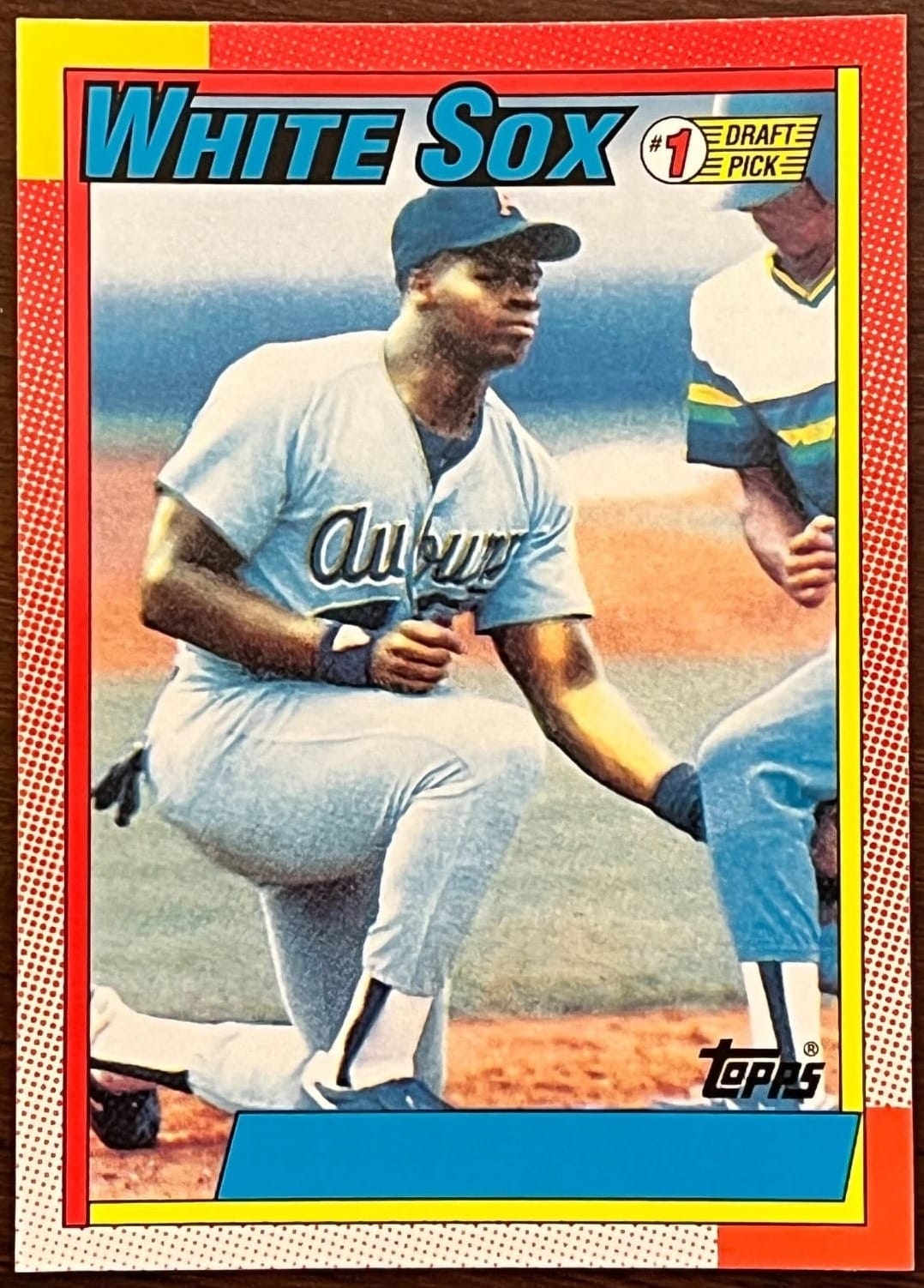
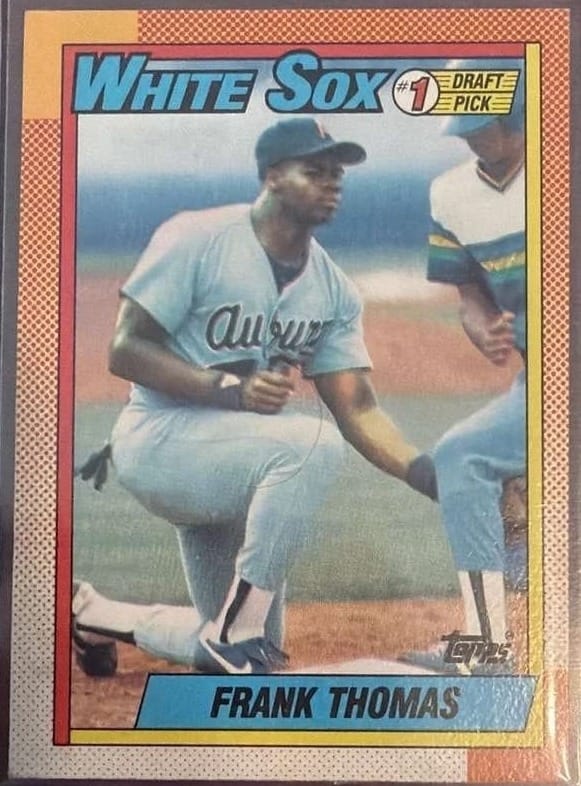
3. 1990 Topps #414 Frank Thomas, No Name on Front
On a small number of Frank Thomas rookie cards, the black ink that prints his name at the bottom simply isn't there. The cause is still argued; the leading theory is a smear of solvent on the press blanket. Roughly 437 have been graded by PSA. Exactly one is a PSA 10, and in March 2026 it sold for $183,000, a record for a modern error. A PSA 8 goes for around $21,000. It is, per square inch of missing ink, the most valuable printing defect in the history of the hobby.
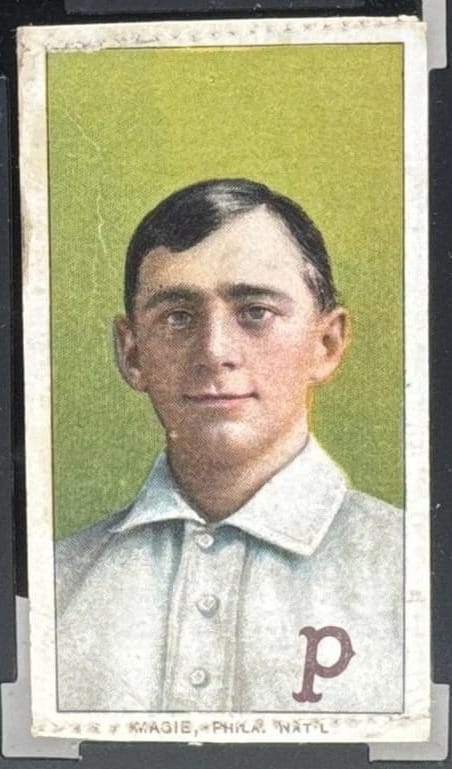
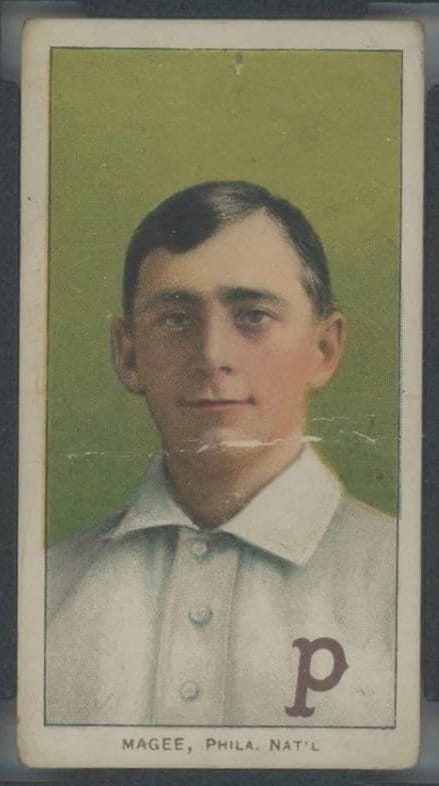
2. 1909-11 T206 Sherry "Magie"
Sherry Magee was a fine outfielder for the Phillies. On the earliest T206 sheets, the American Tobacco Company spelled his name "Magie." They caught it fast, which is why every real example has a Piedmont 150 back, and only about 200 have ever been graded. The lone PSA 8 sold for $660,000 in 2018. It's the oldest famous error, the most valuable, and the one most often faked: beware any "Magie" whose second "e" looks like it used to be an "e."
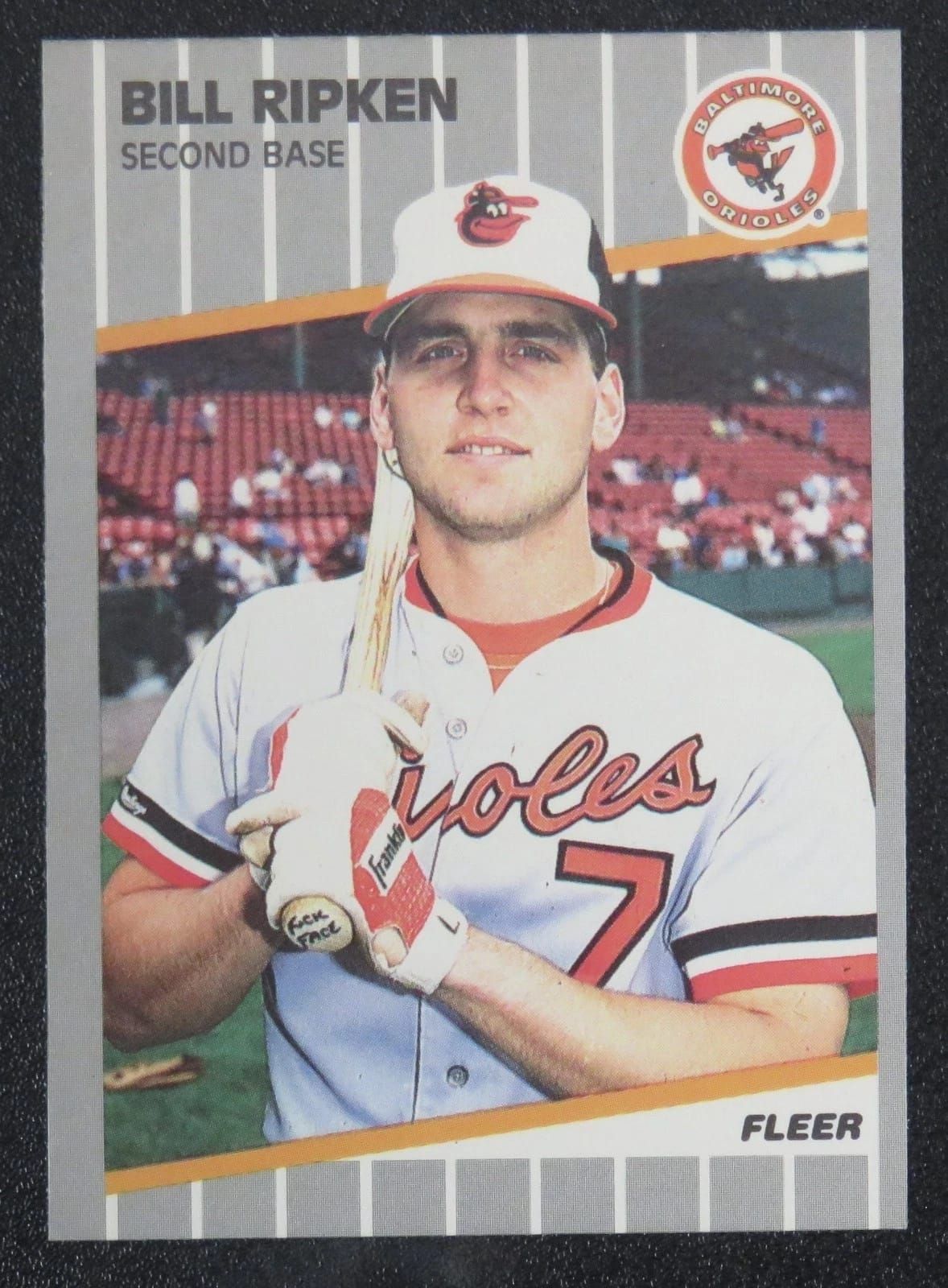
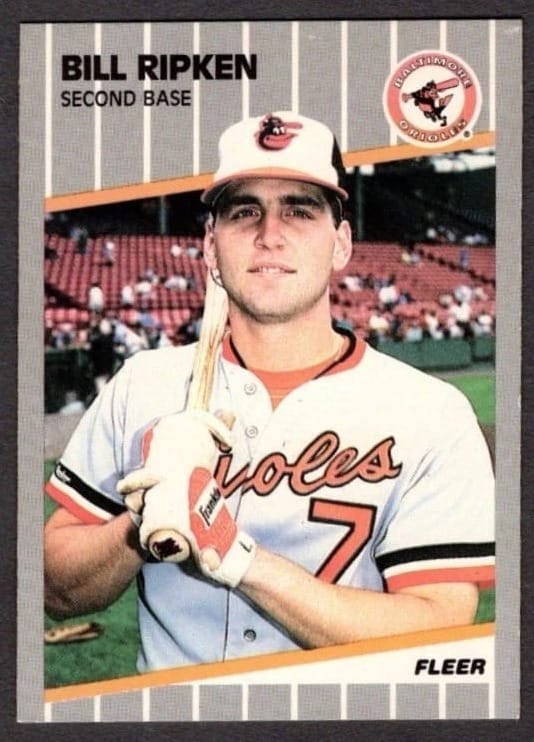
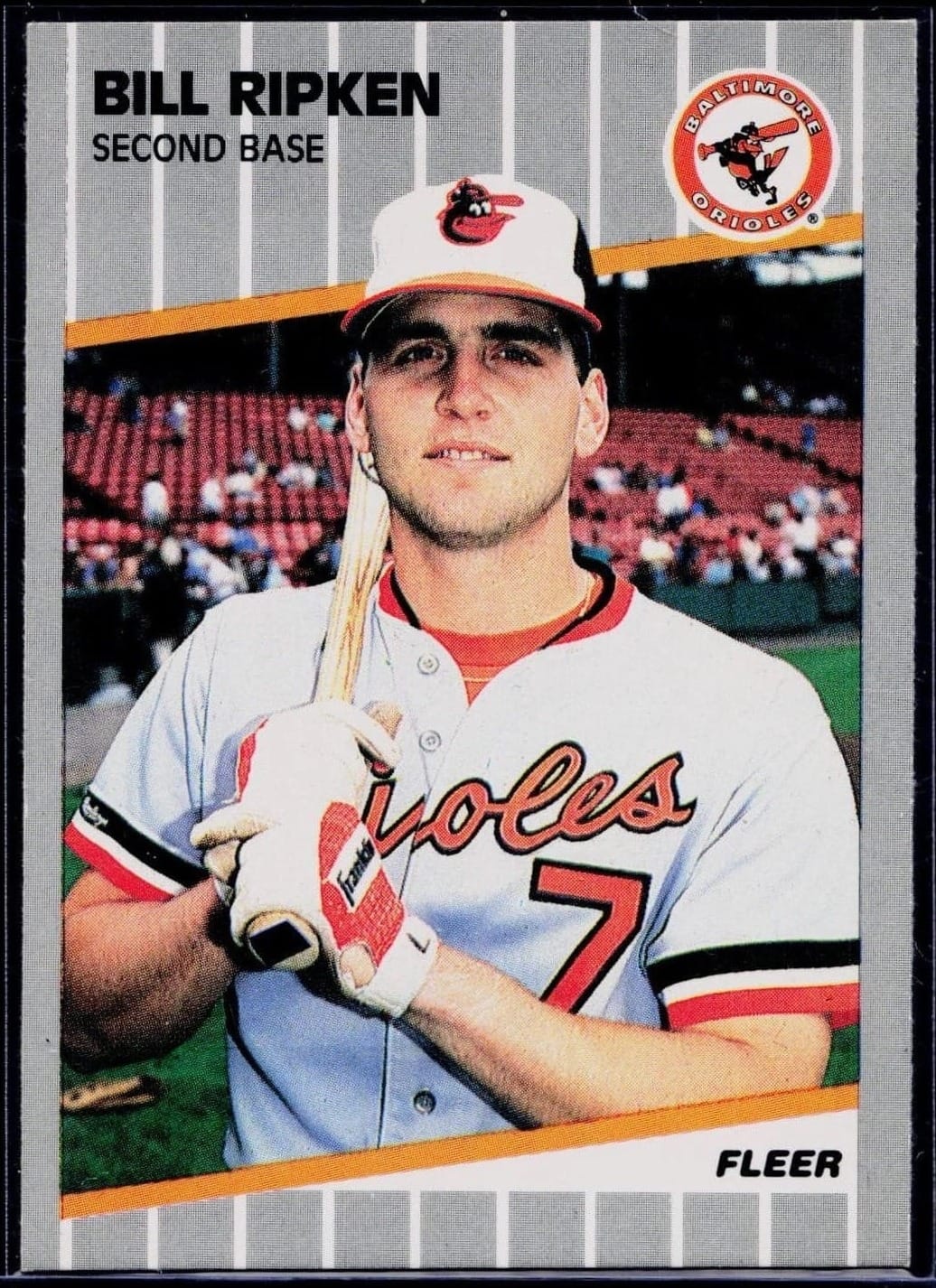
1. 1989 Fleer #616 Bill Ripken
The knob of the bat says what you think it says. Fleer discovered it after the cards were already in packs, and spent the rest of 1989 fixing it in every way a panicked company can: a white-out blob, a white scribble, a black scribble, a physical saw cut across the knob, and finally the tidy black box that most of the corrected versions carry. The white scribble is the rarest, with roughly 134 graded; a PSA 10 sold for $4,915 in 2025.
For 19 years the story was that a teammate had written it as a prank. That was Ripken's story, and in December 2008 he retracted it: he'd written it himself, on a batting-practice bat, so he could find it in the rack. The Fleer photographer shot him with the wrong bat at Fenway. It is the most famous error card ever made, and the reason is that a 24-year-old utility infielder labeled his own equipment.
Two Famous Cards That Aren't Errors
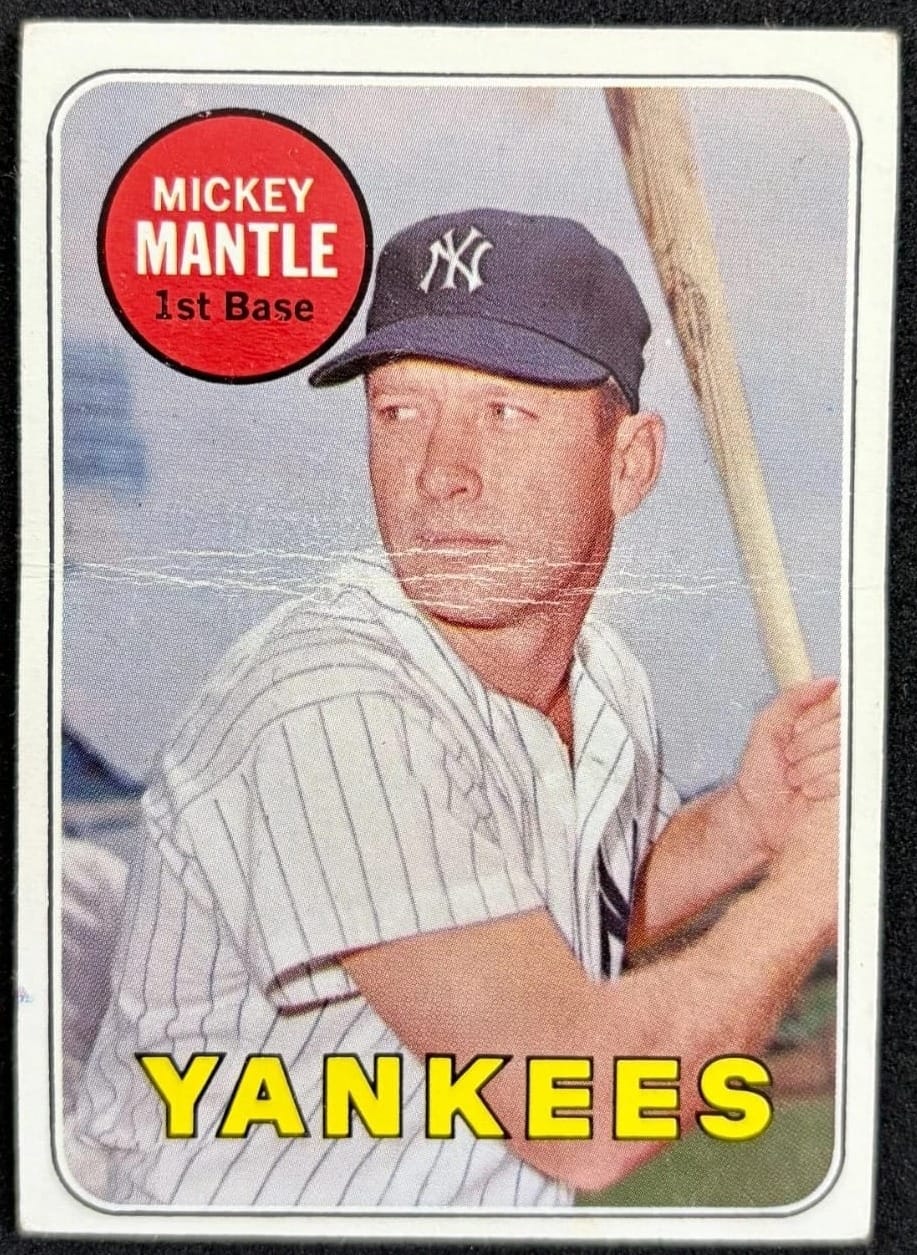
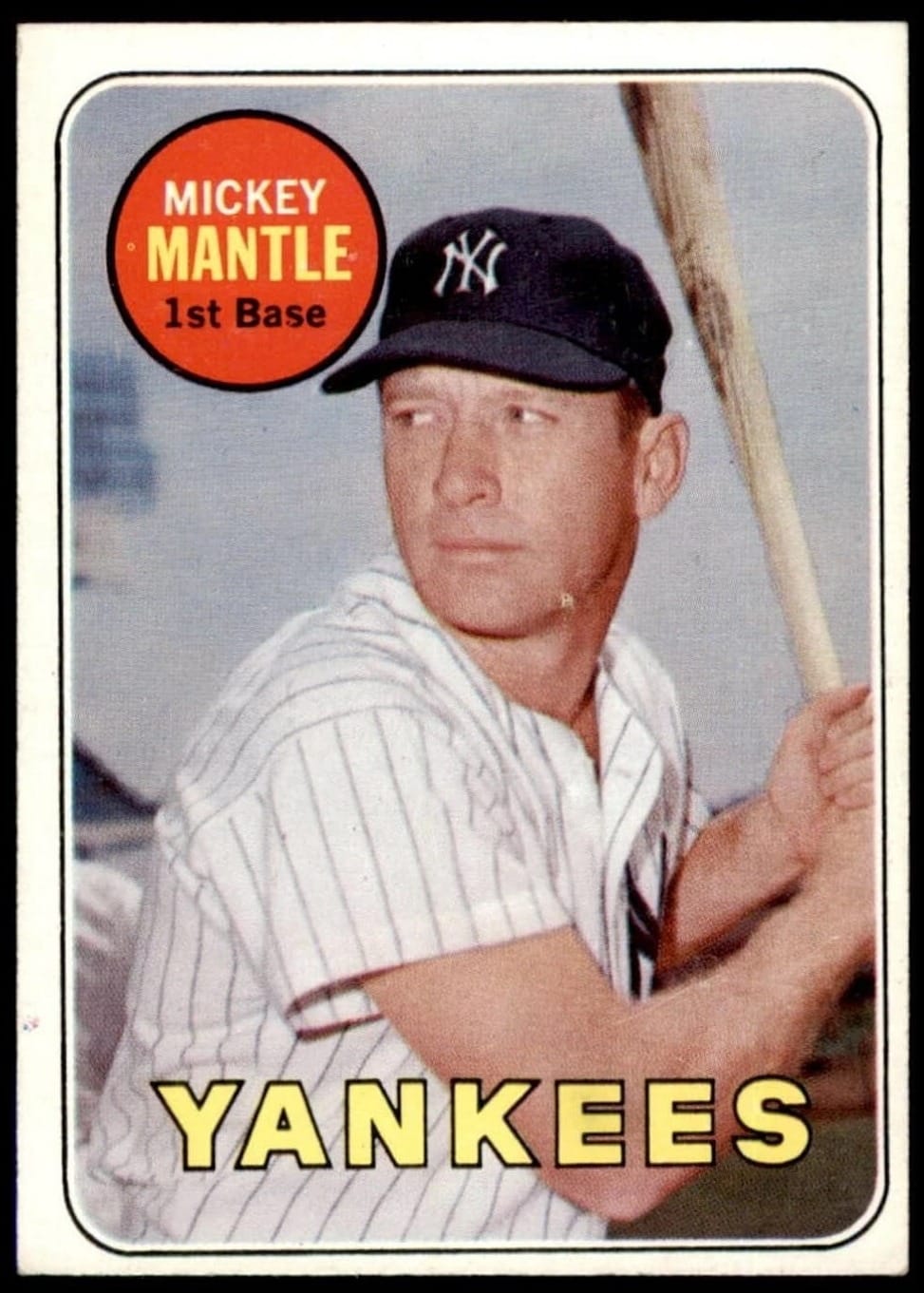
1969 Topps #500 Mickey Mantle, white letters. One of 23 cards in the set printed with white last names instead of yellow. It's a variation, not a mistake, and the difference in phrasing is worth about $900,000: a PSA 9 sold for $915,000 in 2025.
1990 Pro Set Santa Claus. Not an error. It was an insert. The Pro Set card that actually got pulled was Eric Dickerson's #338, because the NFL Players Association hadn't cleared him, which is licensing, not a typo.
Which error did you pull from a pack as a kid? Comments below.
Comments ()