
The 10 Greatest Topps All-Star Rookie Classes, Ranked by the Little Gold Cup
Ranking every Topps All-Star Rookie Team by what the cups became — only counting years the trophy was printed on the card. Seaver and Carew, Pujols and Ichiro, Lynn and Rice, and the 1979-86 rookies who never got one.
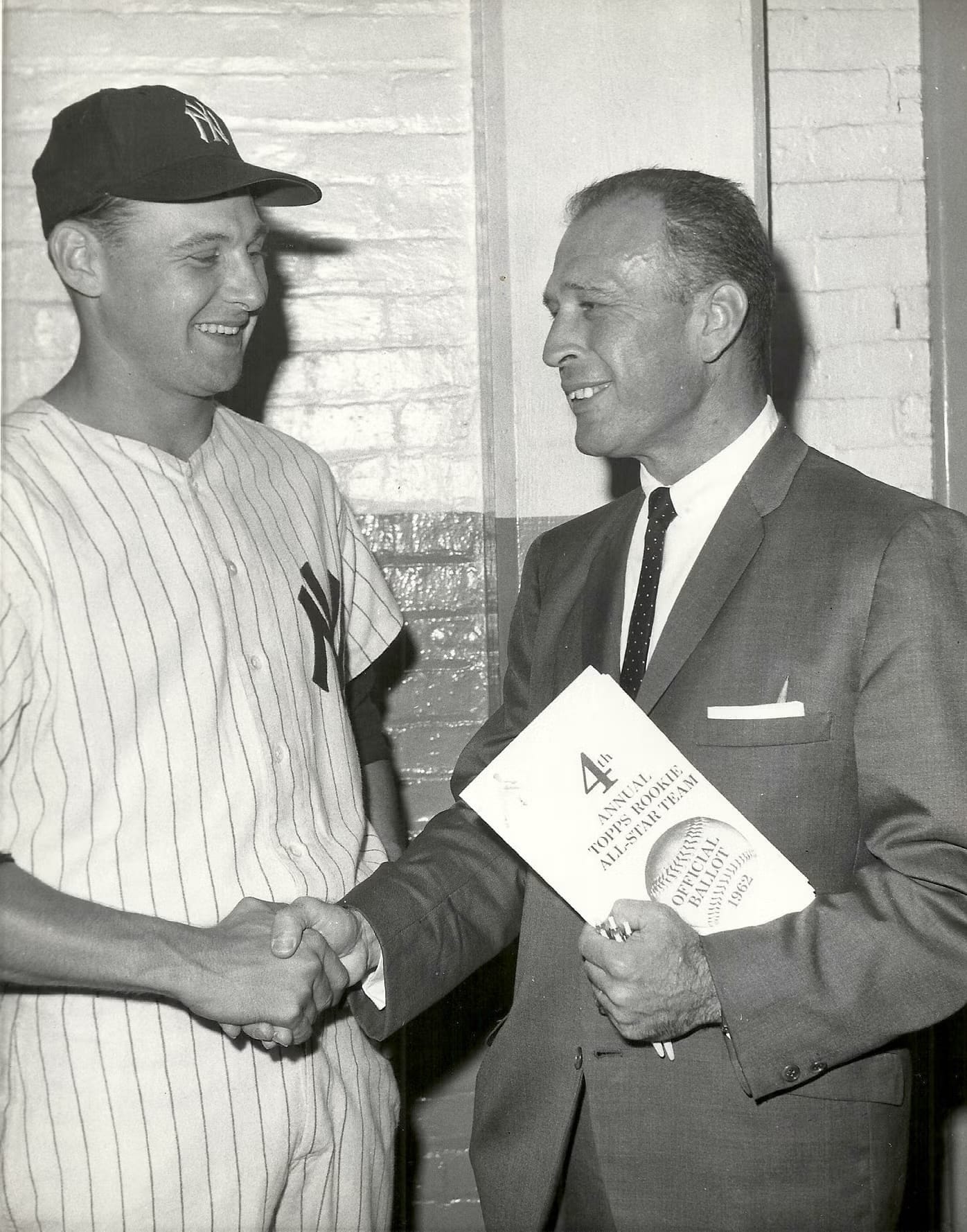
Since 1959, Topps has picked an All-Star Rookie Team at the end of every season: a catcher, four infielders, three outfielders, and a couple of pitchers, chosen for the year they just had, not the career they might have. The next spring, each of them gets a small trophy printed on his card. It's the only award in baseball that lives on cardboard, and it is a wonderful way to be wrong. The cup has gone to Mark Fidrych and Joe Charboneau and Kevin Maas. It has also gone to Tom Seaver.
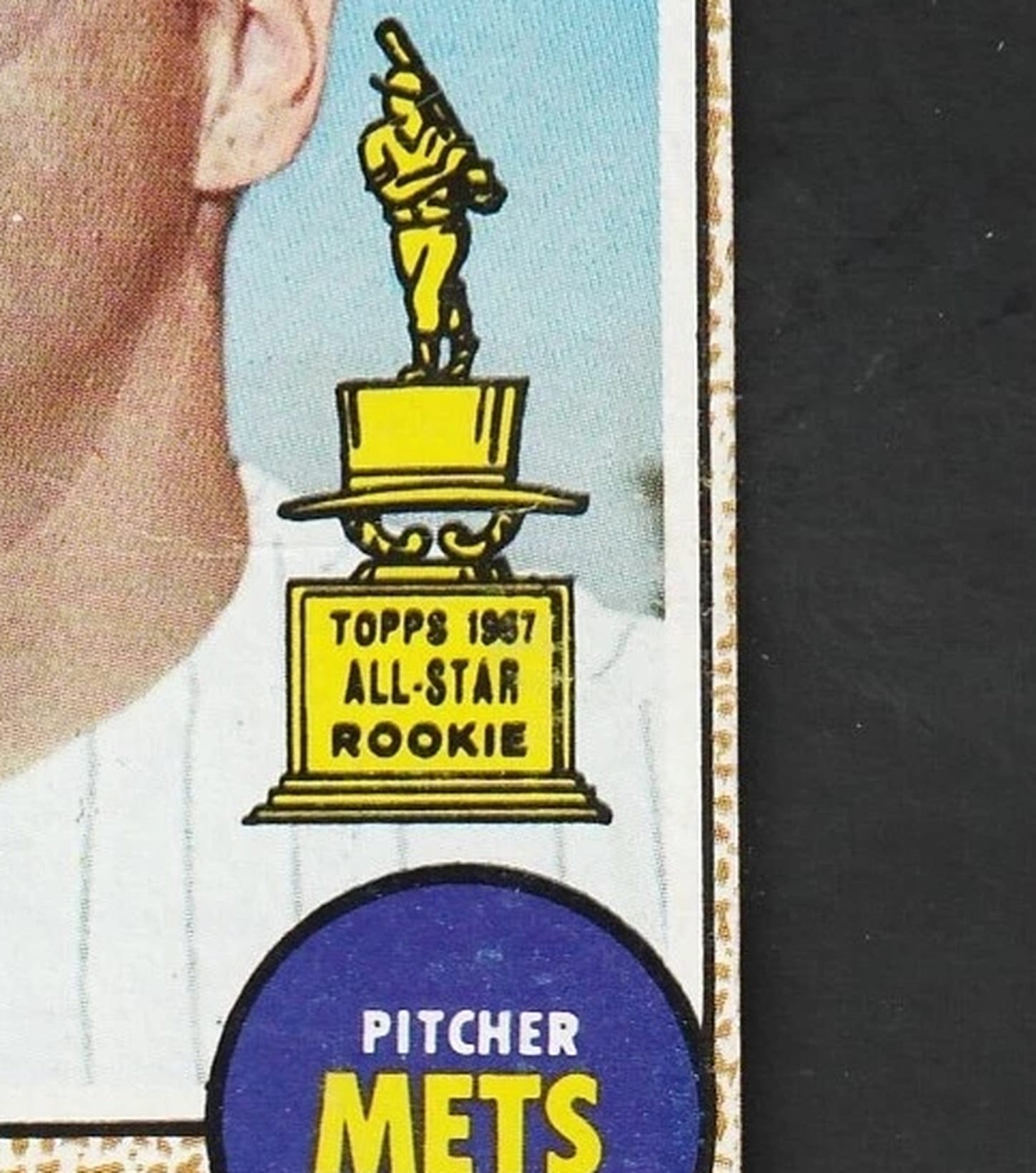
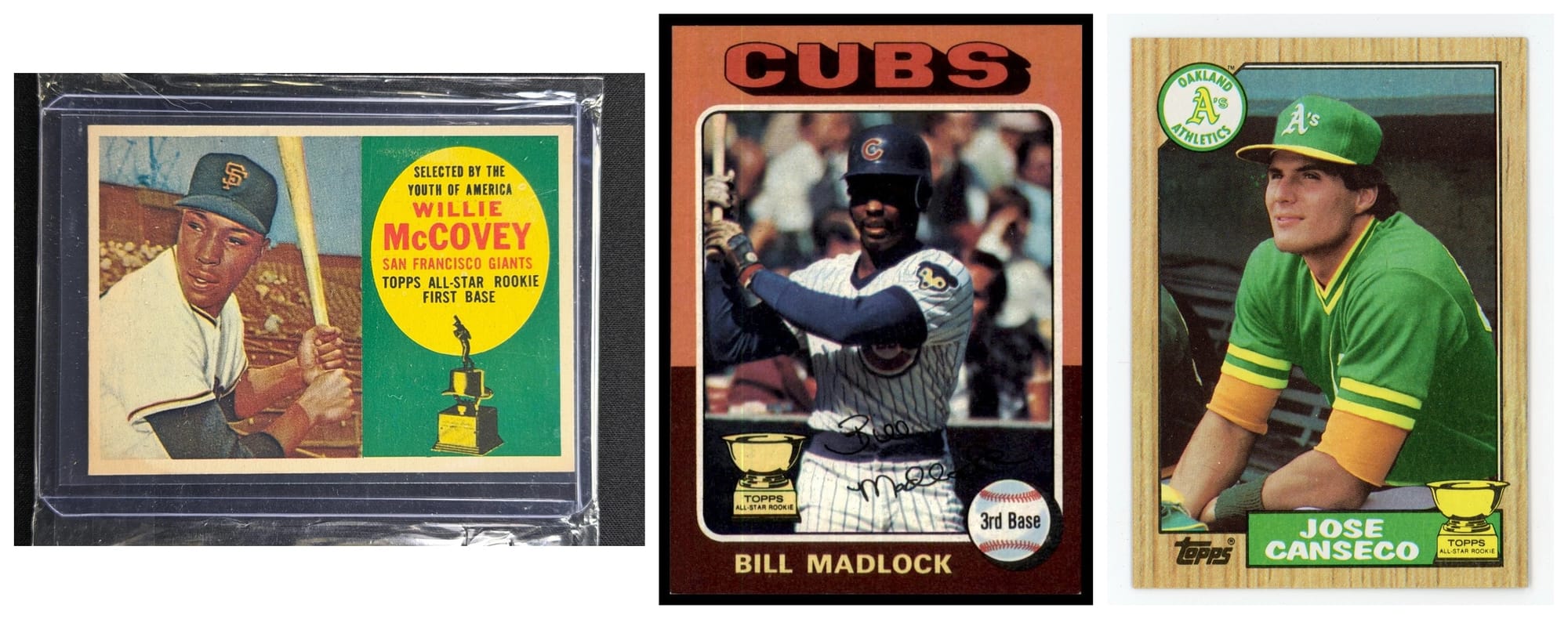
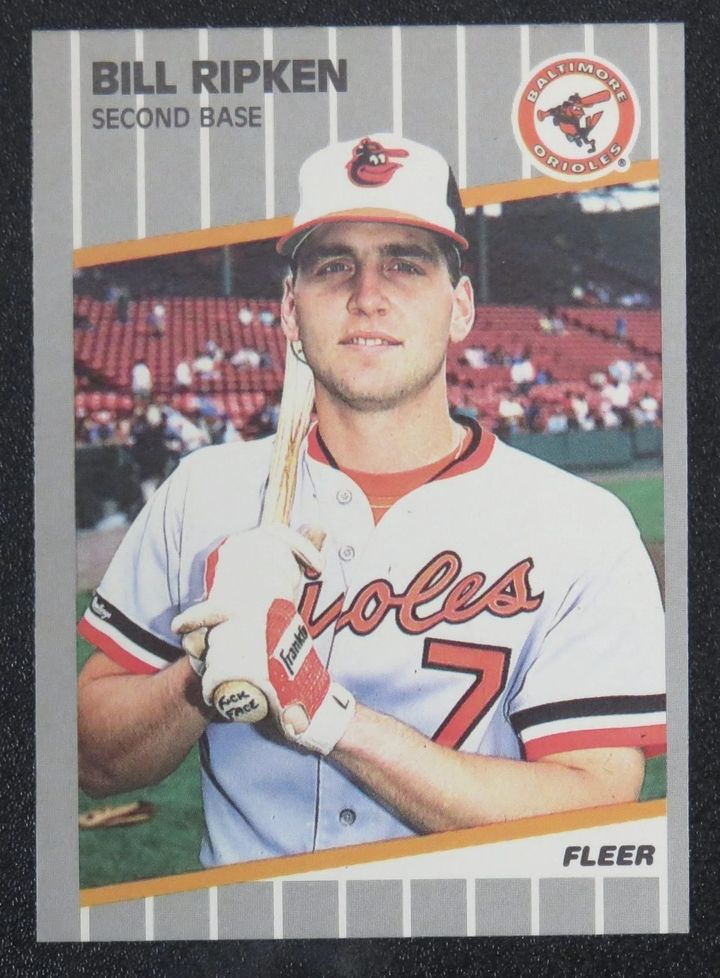
One rule for this list: we're only counting years when the trophy actually appeared on the cards. Topps printed it from 1960 through 1978 (with a one-year lapse in 1974), dropped it for eight years, and brought it back in 1987, where it has stayed. The design changed along the way: a little gold batter standing on a top hat from 1960 through 1972, and the gold cup everybody pictures from 1973 on. So the great 1979-86 rookie crops (Rickey Henderson, Cal Ripken, Wade Boggs, Tony Gwynn, Ryne Sandberg, Kirby Puckett, Roger Clemens) don't qualify, because there's no cup on the card. Sorry. Those are the rules Topps made.
Card year listed first; the team was picked the previous fall.
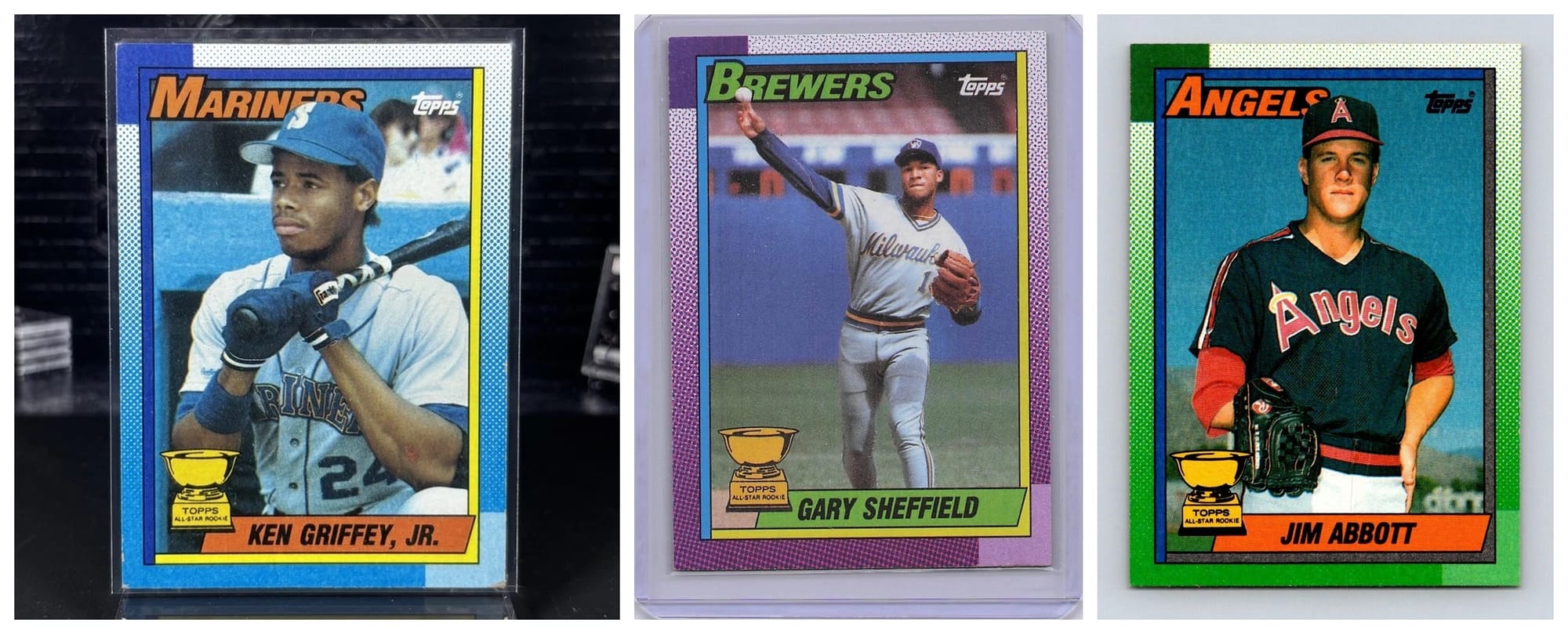
10. 1990 Topps (1989 team): Griffey, Sheffield, Abbott
The most-printed cup in history. Ken Griffey Jr.'s 1990 Topps #336 is the card every kid of the era owned, and the trophy in the corner is part of why it looks the way it does. Gary Sheffield, listed as a shortstop, went on to hit 509 home runs. Jim Abbott, born without a right hand, won 12 games as a rookie without ever pitching in the minors. Jerome Walton was the NL Rookie of the Year, Gregg Jefferies was the most hyped prospect in baseball, and Tom Gordon won 17 games at 21. One Hall of Famer, but a class the whole hobby remembers.
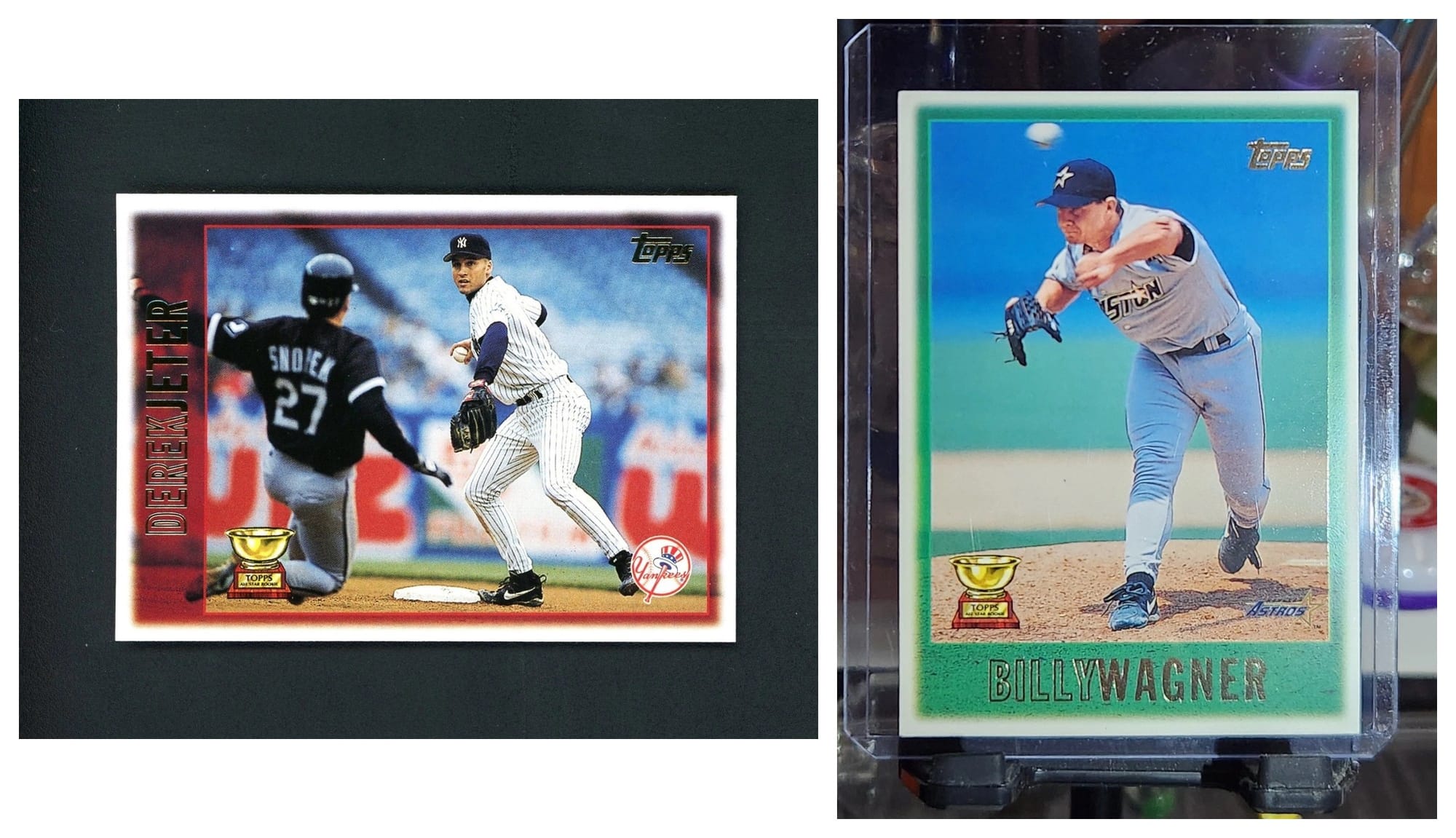
9. 1997 Topps (1996 team): Jeter and Wagner
Two Hall of Famers who couldn't be more different. Derek Jeter, #13, was the AL Rookie of the Year and the shortstop on a World Series winner at 22; he went into Cooperstown with 99.7 percent of the vote. Billy Wagner, #22, was a 5-foot-10 left-hander who threw 100 and had to wait until his last year on the ballot, 2025, to get in. Jason Kendall, Jermaine Dye and Todd Hollandsworth, the NL Rookie of the Year, round it out. The Jeter card is one of the few cups from the '90s that still costs real money.
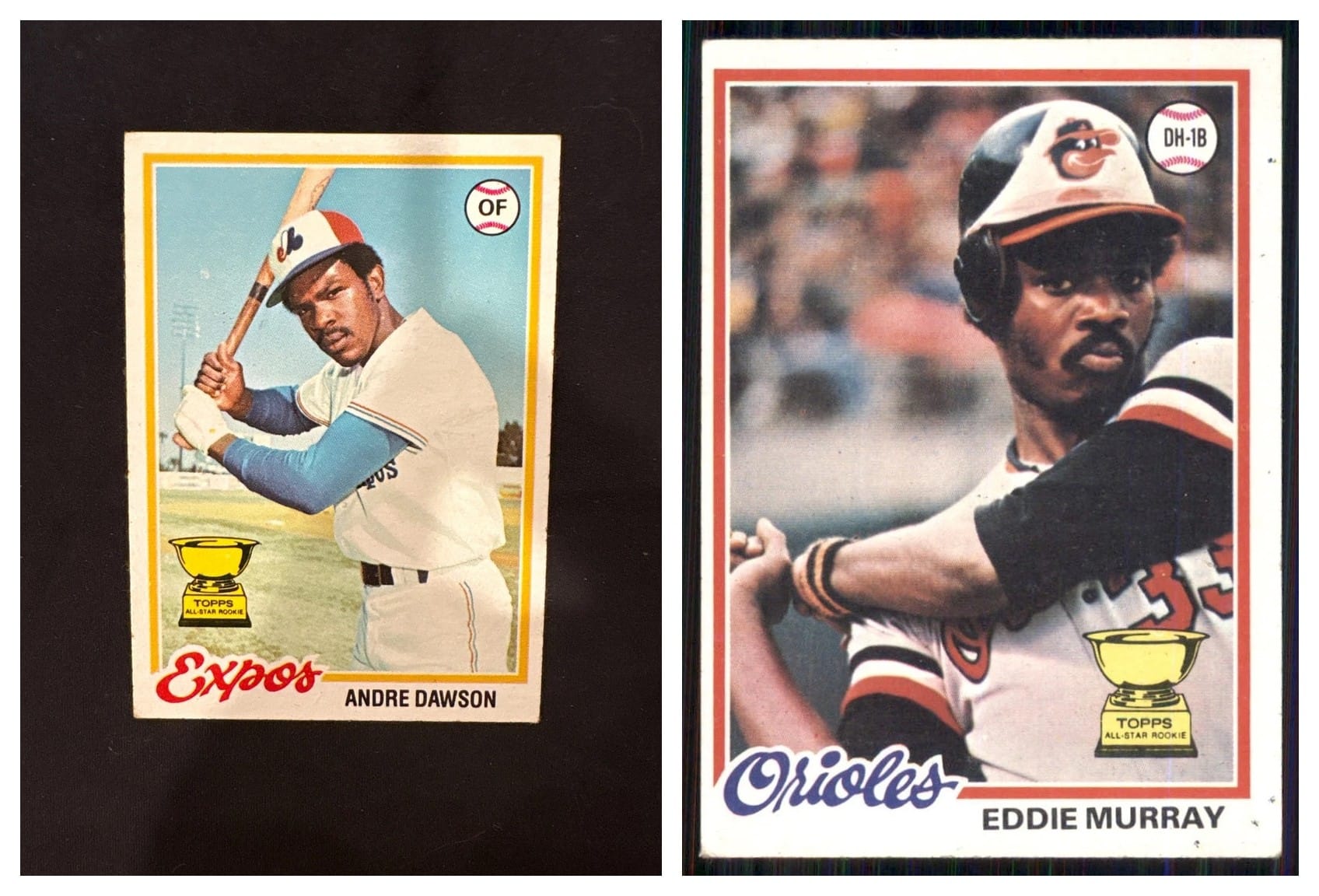
8. 1978 Topps (1977 team): Dawson and Murray
Both leagues' Rookies of the Year, both in the Hall of Fame. Andre Dawson's 1978 Topps #72 and Eddie Murray's #36 are two of the most important cards of the late '70s, and the cup is part of the design. Murray, who was listed on the team as a designated hitter, would hit 504 home runs and drive in 1,917; Dawson won an MVP for a last-place team. They shared the team with Mitchell Page, who finished second to Murray in the voting and had the better rookie year, and Bump Wills, whose card in this set is famous for a different reason.
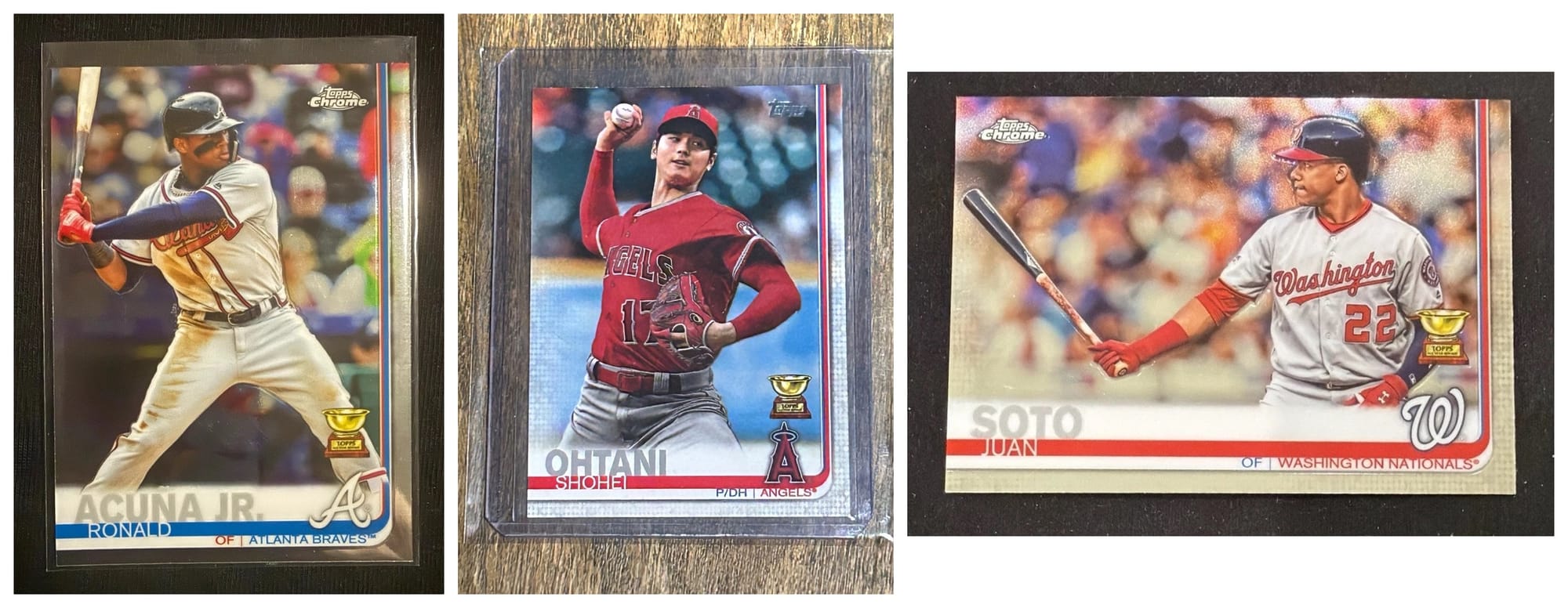
7. 2019 Topps (2018 team): Acuña, Ohtani, Soto
Three MVPs on one rookie team, none of them 21 yet when they were picked. Ronald Acuña Jr. (#1) and Shohei Ohtani (#250, listed as "P/DH" because Topps had to invent a slot for him) were the Rookies of the Year; Juan Soto (#213) was 19 and hit .292 with 22 homers. Gleyber Torres and Walker Buehler are on the team too. Ask again in 2040 where this class ranks.
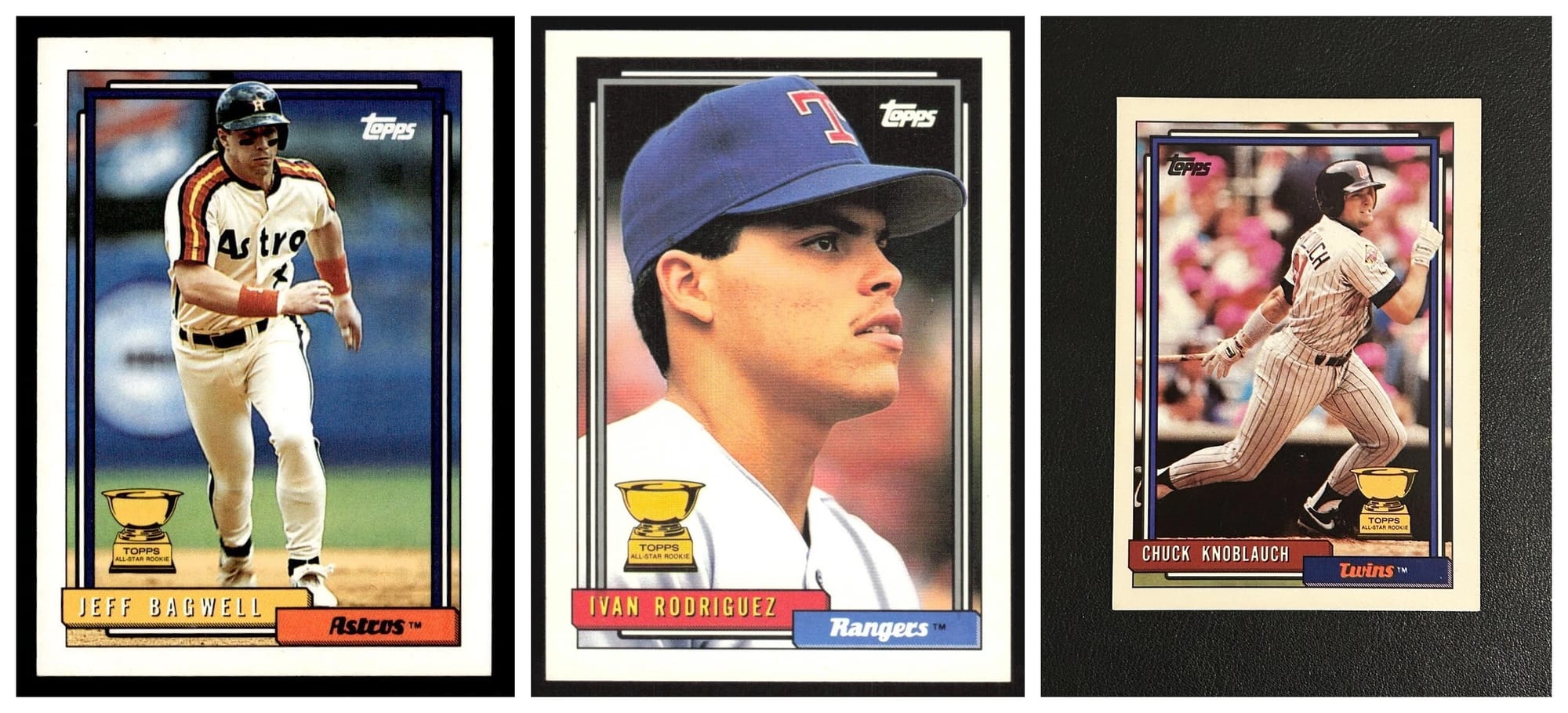
6. 1992 Topps (1991 team): Bagwell, Rodriguez, Knoblauch
Two Hall of Famers who went in together in 2017, plus the AL Rookie of the Year. Jeff Bagwell (#520) was the NL Rookie of the Year and later an MVP. Ivan Rodriguez (#78) was 19 years old and already throwing out runners at a rate nobody had seen. Chuck Knoblauch (#23) was the second baseman on a World Series winner. Luis Gonzalez and Ray Lankford filled out the outfield. The 1992 set is the last Topps flagship printed on the old gray cardboard, which makes these the last of the old-school cups.
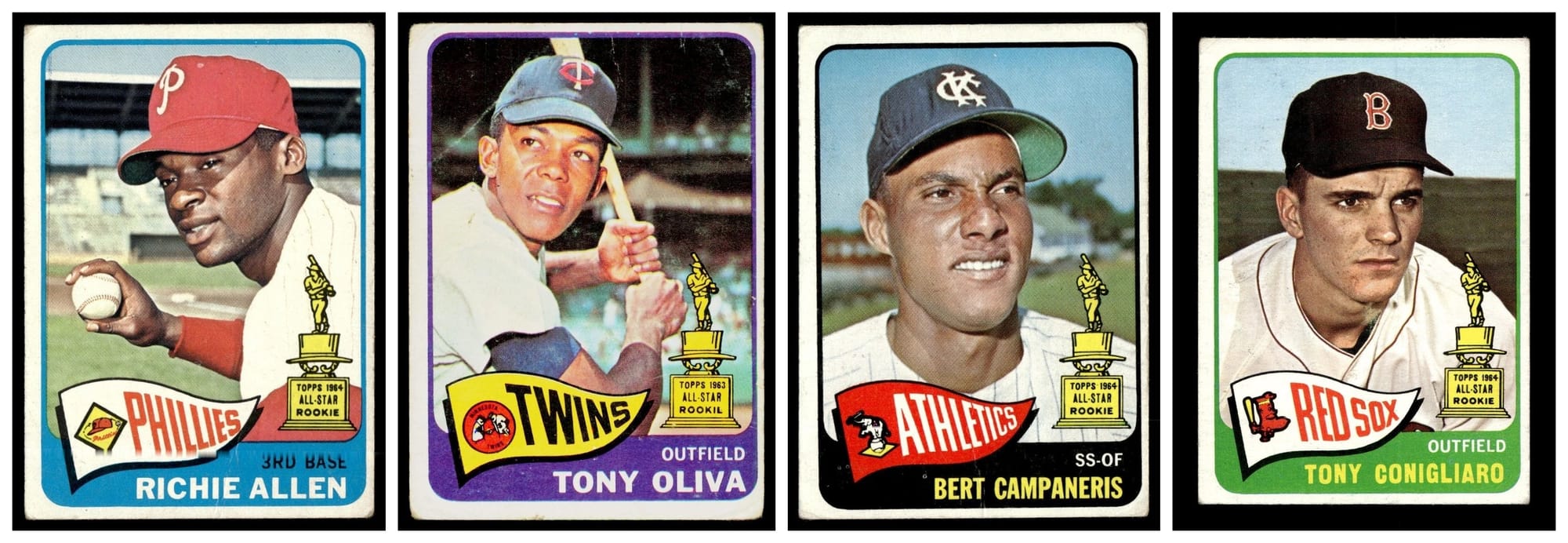
5. 1965 Topps (1964 team): Allen, Oliva, Campaneris, Conigliaro
Dick Allen hit .318 with 29 homers and won the NL Rookie of the Year. Tony Oliva won the AL batting title and the AL Rookie of the Year, the first rookie ever to win a batting title. It took until the 2020s for the Hall of Fame to admit both of them, Oliva in 2022 and Allen, posthumously, in 2025. The same team carried Bert Campaneris (#266, his rookie card), who'd homered twice in his first big-league game, and Tony Conigliaro (#55), who hit 24 home runs at 19. The 1965 set is the prettiest Topps ever made, and these are its best cards.
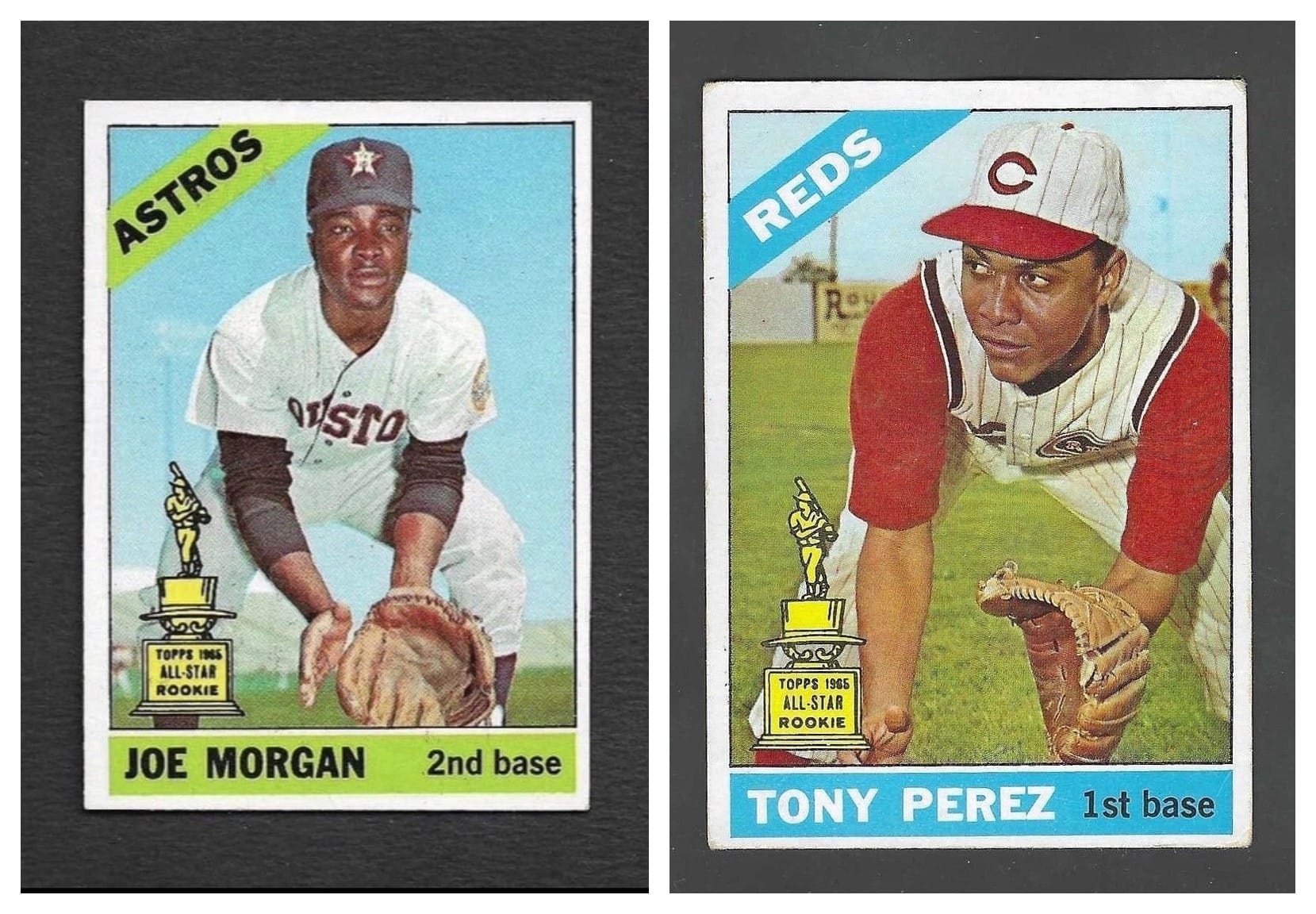
4. 1966 Topps (1965 team): Morgan and Perez
The infield of the Big Red Machine, five years early. Joe Morgan (#195), a 5-foot-7 second baseman with the Houston Astros, was named to the team the year the Astrodome opened. Tony Perez (#72) was a Reds first baseman who hit 12 home runs. Nobody looking at the 1966 cards would have guessed they'd be teammates, two-time World Series champions and Hall of Famers. Curt Blefary, the AL Rookie of the Year, and Rico Petrocelli are on the team with them. Morgan's cup card is the best card he has.
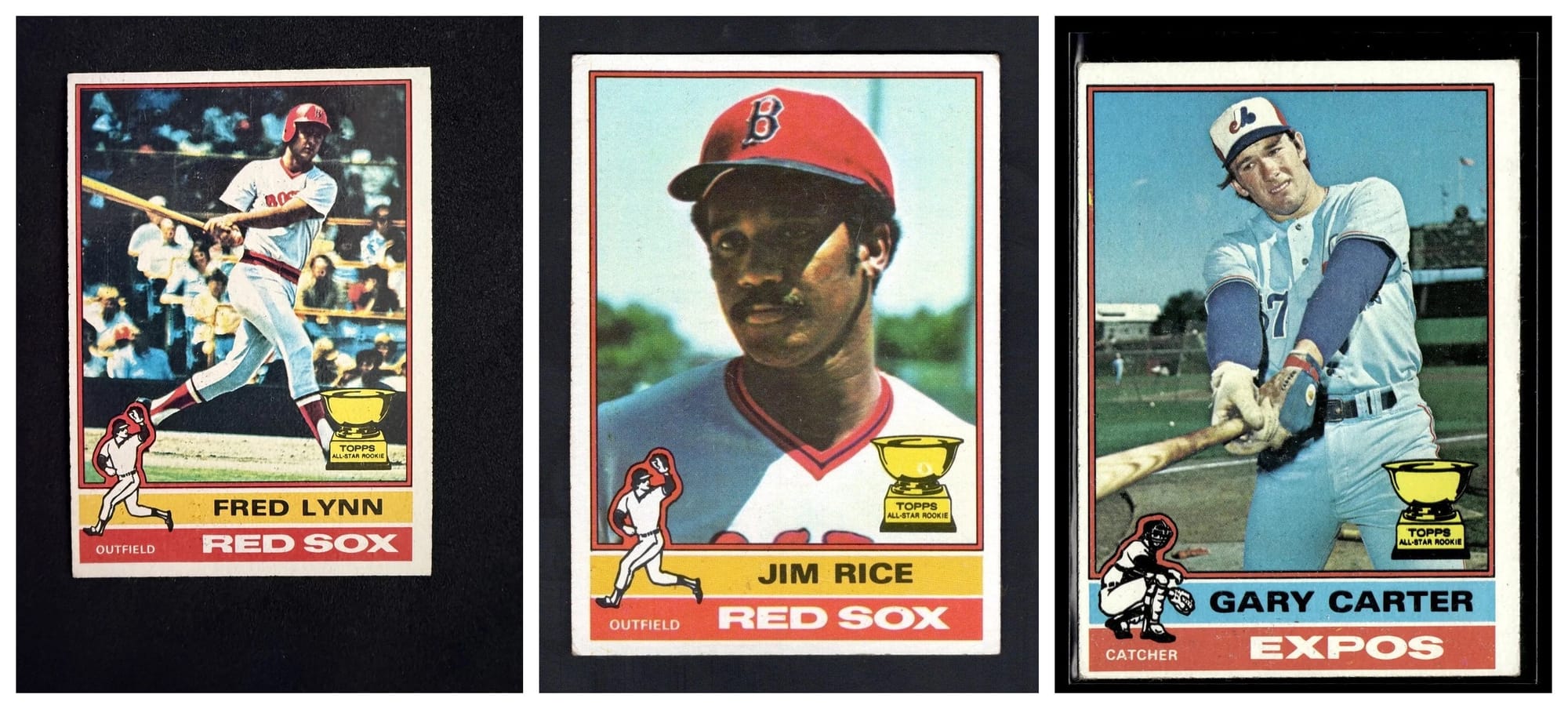
3. 1976 Topps (1975 team): Lynn, Rice, Carter
The only rookie team with an MVP on it at the time. Fred Lynn (#50) hit .331 with 21 homers and won the Rookie of the Year and the MVP for the pennant-winning Red Sox, the first rookie ever to do it; his teammate Jim Rice (#340) hit 22 homers and finished second in the rookie voting. Gary Carter (#441) was an Expos rookie who played the outfield as much as he caught. John Montefusco, the NL Rookie of the Year, is the pitcher. Two Hall of Famers, and the Lynn cup is one of the most photographed cards of the decade.
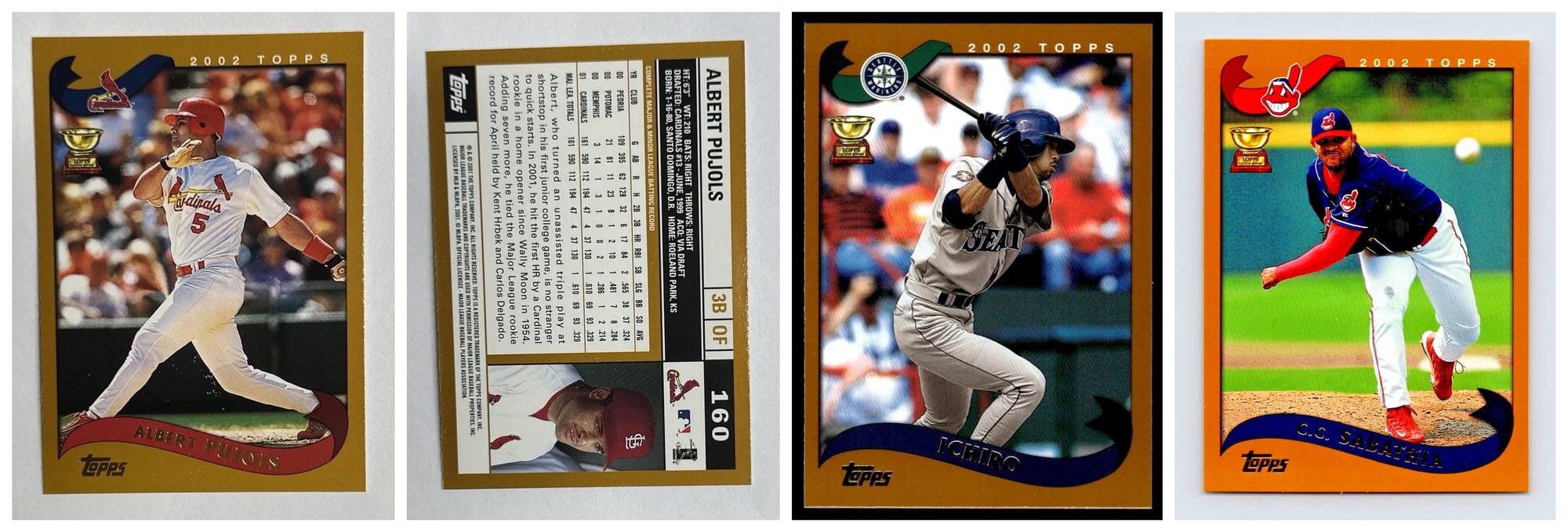
2. 2002 Topps (2001 team): Pujols, Ichiro, Sabathia
The deepest class ever printed. Albert Pujols (#160, listed as a third baseman, with a photo of Placido Polanco on the back by mistake) hit .329 with 37 homers and 130 RBI. Ichiro Suzuki (#225) won the AL Rookie of the Year, the batting title and the MVP in the same season. A 20-year-old CC Sabathia (#163) went 17-5. Ichiro and Sabathia went into the Hall of Fame together in 2025; Pujols follows the moment he's eligible, which would make this the only class with three. And that's before you get to Alfonso Soriano, Jimmy Rollins, Roy Oswalt and Adam Dunn, who are all on the team too.
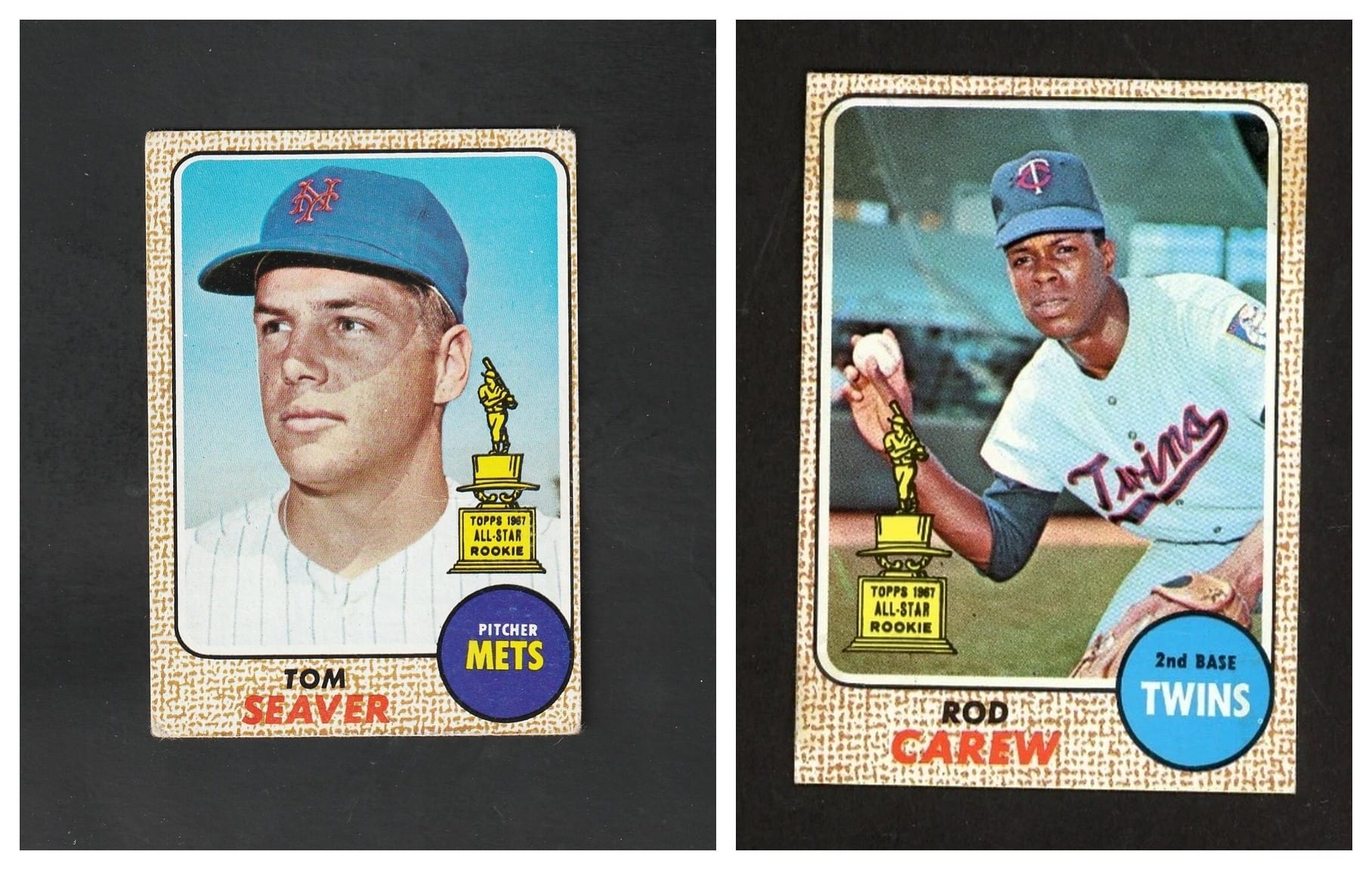
1. 1968 Topps (1967 team): Seaver and Carew
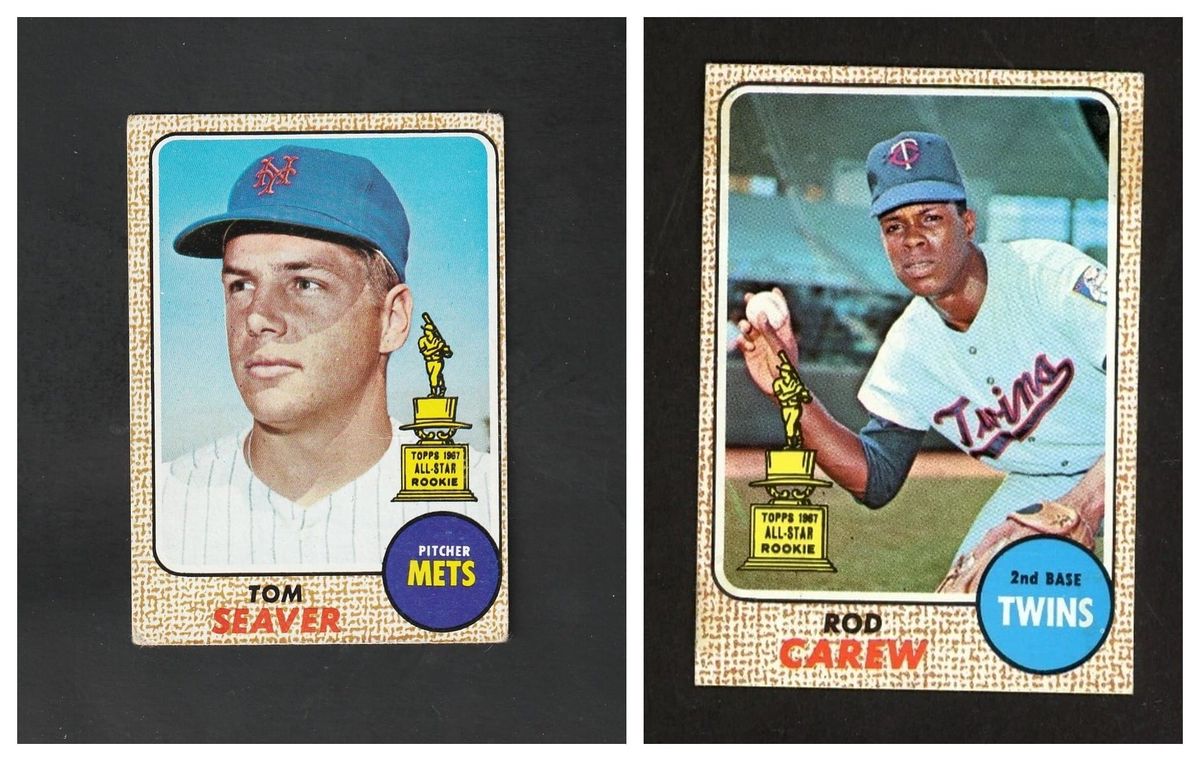
Only two Hall of Famers, but which two. Tom Seaver (#45), 16-13 for a 101-loss Mets team, won the NL Rookie of the Year and became the greatest pitcher of his generation; his 98.8 percent of the Hall of Fame vote stood as the record for 24 years. Rod Carew (#80), the AL Rookie of the Year, retired with 3,053 hits and seven batting titles. The Seaver cup, on that burlap background, is the most recognizable second-year card of the 1960s, and the Carew sits right beside it. Reggie Smith (#61), who'd play 17 seasons, and Rick Monday, the first player ever taken in the draft, are the other names. No other class has two players in the inner circle of the Hall.
The Ones Just Outside
2013 Topps (2012 team): Mike Trout (#27) and Bryce Harper (#1), both Rookies of the Year, both future first-ballot picks; wait ten years and this class moves up. 1964 Topps (1963 team): Pete Rose, whose #125 with the trophy is the second-year card of the all-time hit king, with Rusty Staub. 1969 Topps (1968 team): Johnny Bench (#95), Jerry Koosman, and Bobby Bonds' rookie card. 1962 Topps (1961 team): Billy Williams and Joe Torre. 1973 Topps (1972 team): Carlton Fisk, the first unanimous AL Rookie of the Year.
Which cup card do you still own from a pack? Comments below.
Comments ()