
The 1984 Topps USFL Set: 132 Cards From the League That Stole Three Heisman Winners and Died in Court
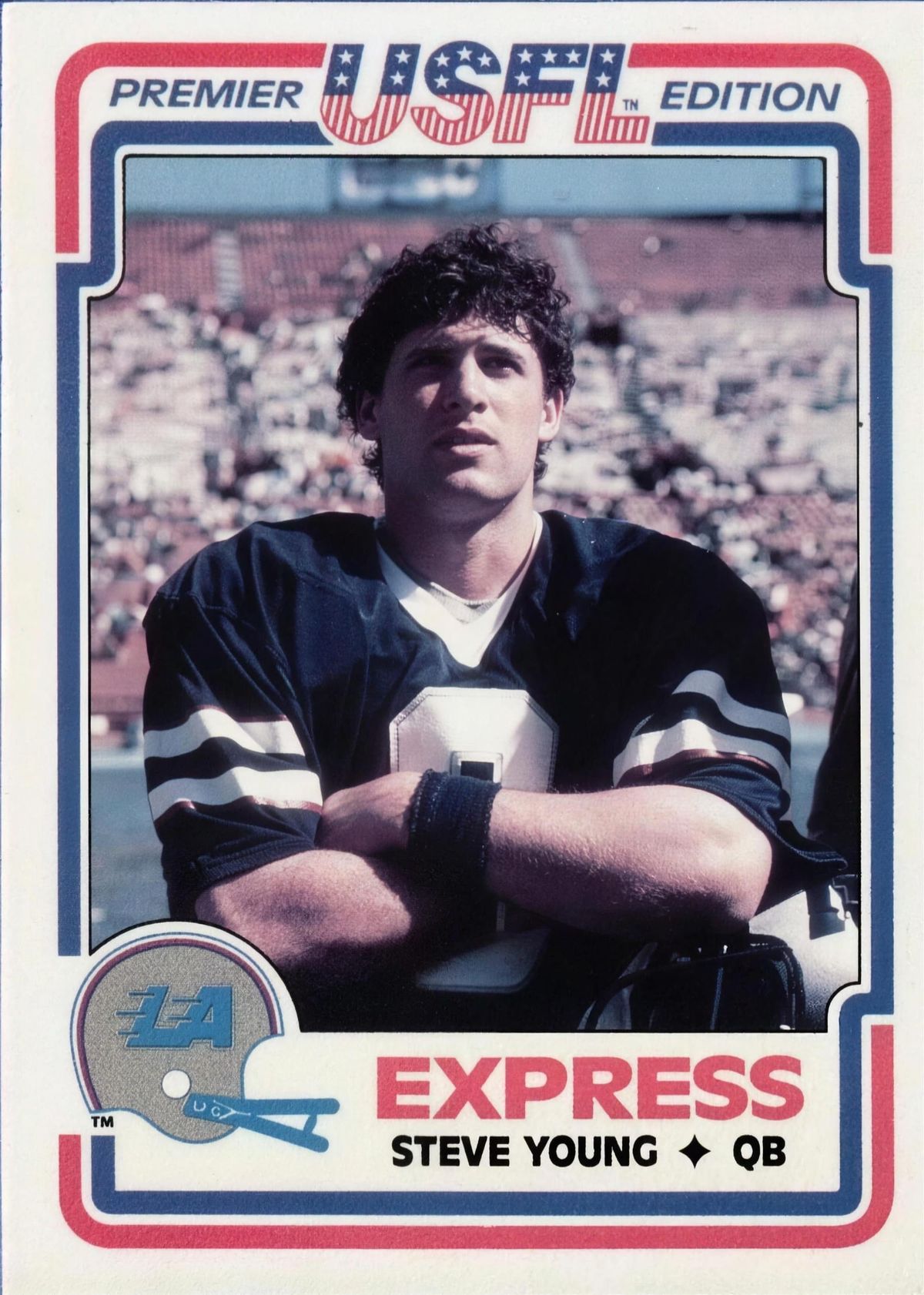
The box says "Topps Premier Edition — USFL Football Picture Cards — Complete Set — 132 Cards." It never came in wax packs. You bought the whole thing at once, sealed, the way Topps sold its Traded sets, and most people didn't.
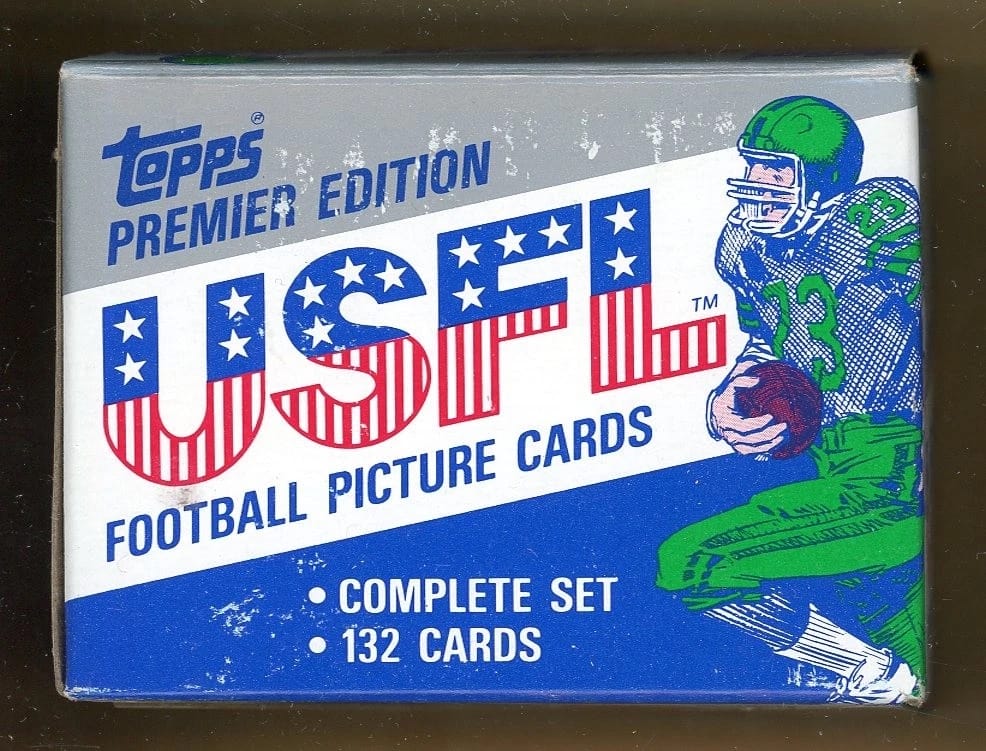
Inside are the first cards of Steve Young, Jim Kelly, Reggie White and Herschel Walker. Two Hall of Fame quarterbacks, the best defensive lineman who ever lived, and a Heisman winner, none of them in an NFL uniform, all of them wearing helmets for teams that would not exist in two years. The 1984 Topps USFL set is the only place those four men will ever share a checklist, and it exists because, for about 30 months, a spring football league with no business plan went out and bought the best young players in America.
The Wild West
The United States Football League was announced at the "21" Club in New York on May 11, 1982, by a New Orleans businessman named David Dixon, whose idea was simple: football in the spring, when there isn't any. Twelve teams. ABC and ESPN paid about $13 million for the first season. The first game was March 6, 1983: Los Angeles Express 20, New Jersey Generals 15, in front of 34,002 at the Coliseum.
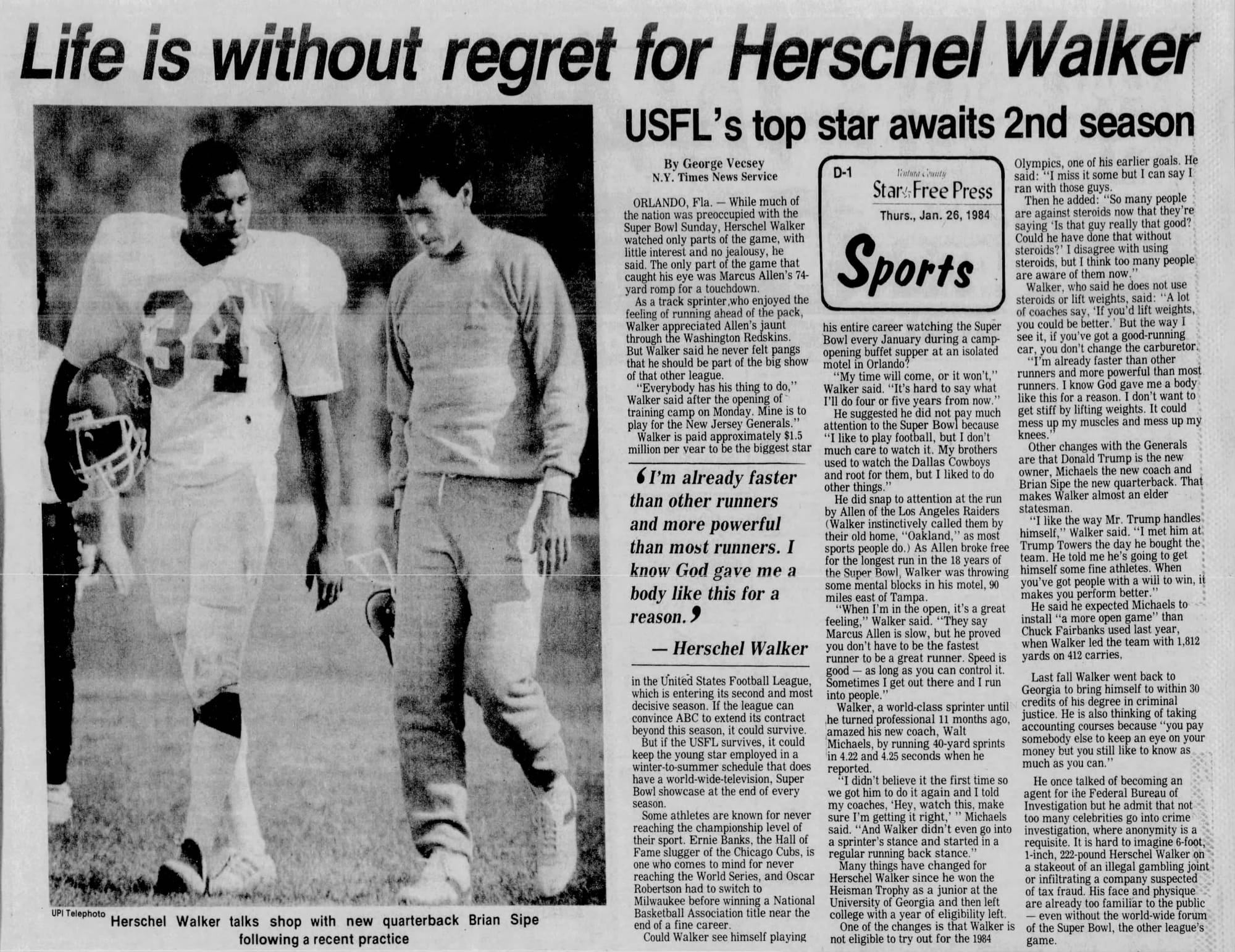
It was a real league and a chaotic one. It expanded to 18 teams in its second year and contracted to 14 in its third. Franchises moved, merged, changed owners and changed names. Average attendance sat around 25,000, which was respectable and nowhere near enough. The Los Angeles Express, the flagship, was taken over by the league itself in 1984 and played its final home game in June 1985 at Pierce College, a community college, in front of about 8,200 people. And in September 1983 a New York developer named Donald Trump bought the Generals, which turned out to matter.
The Talent Grab
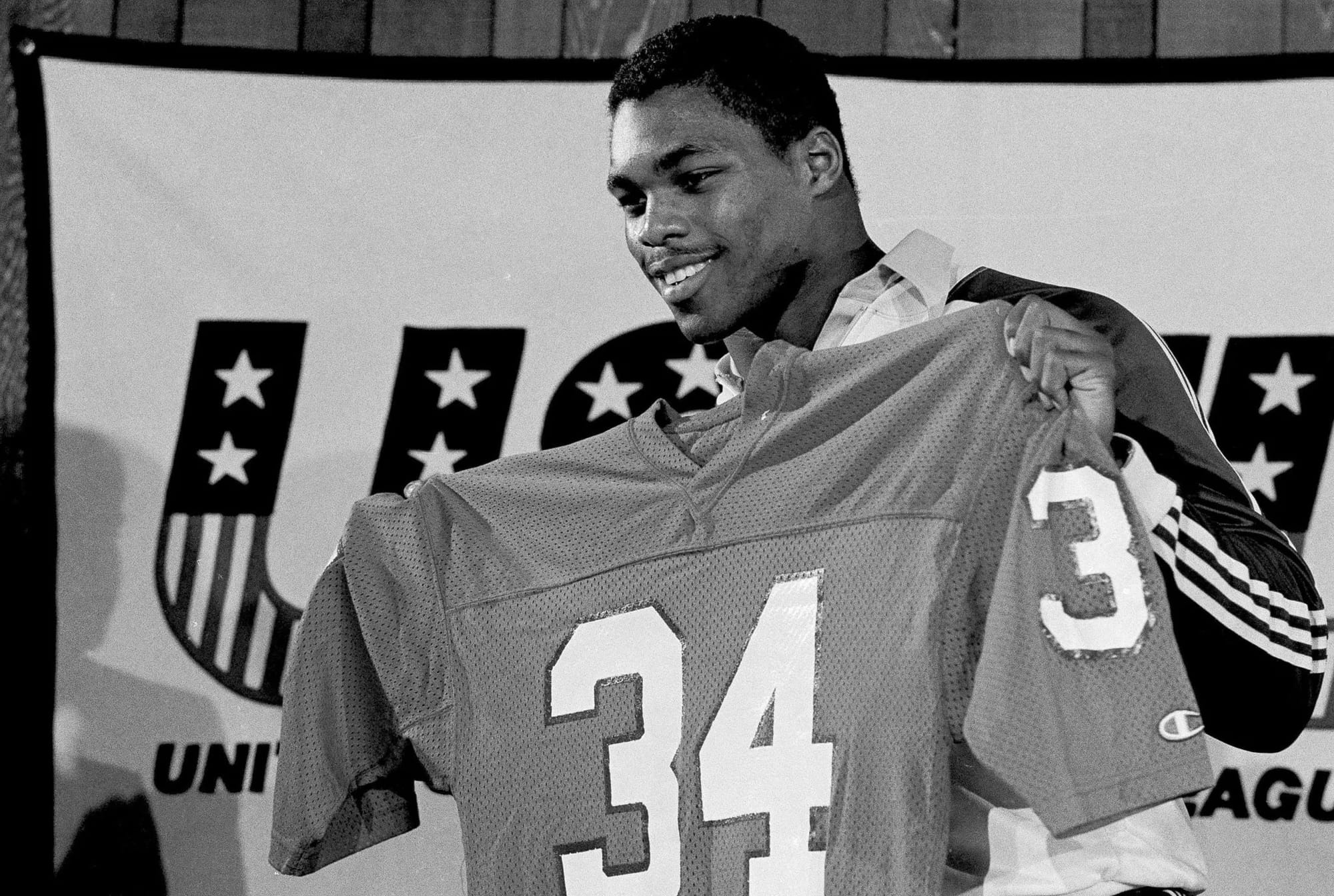
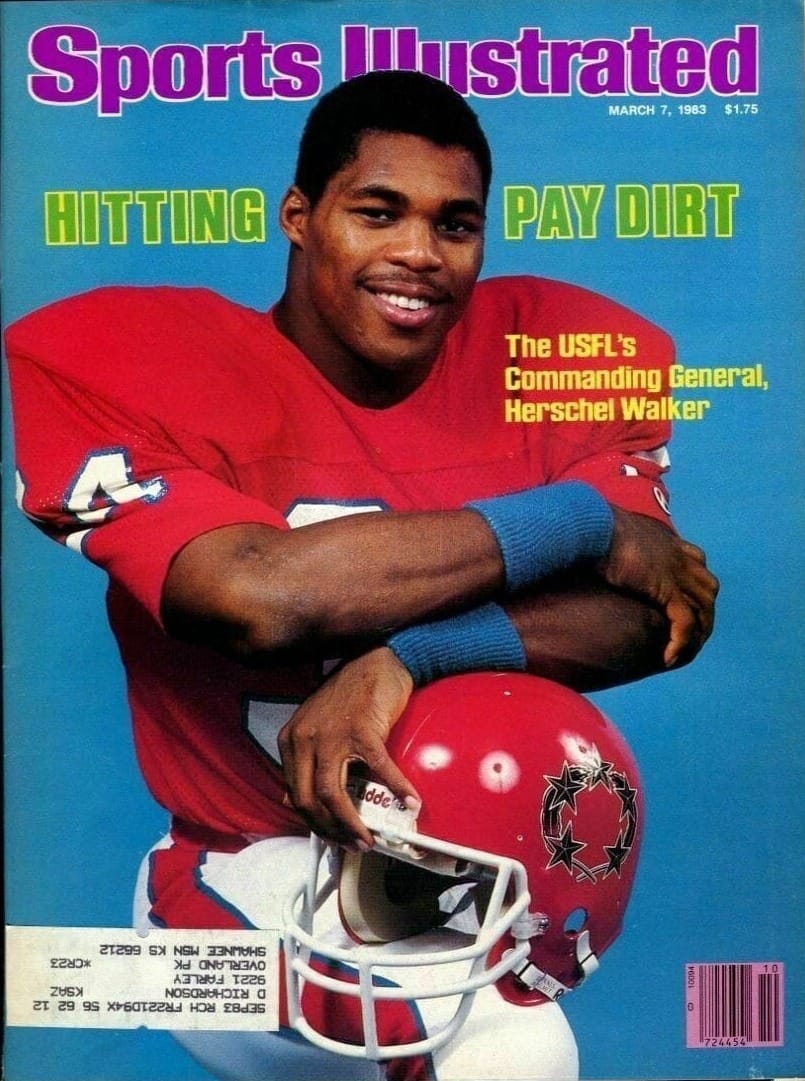
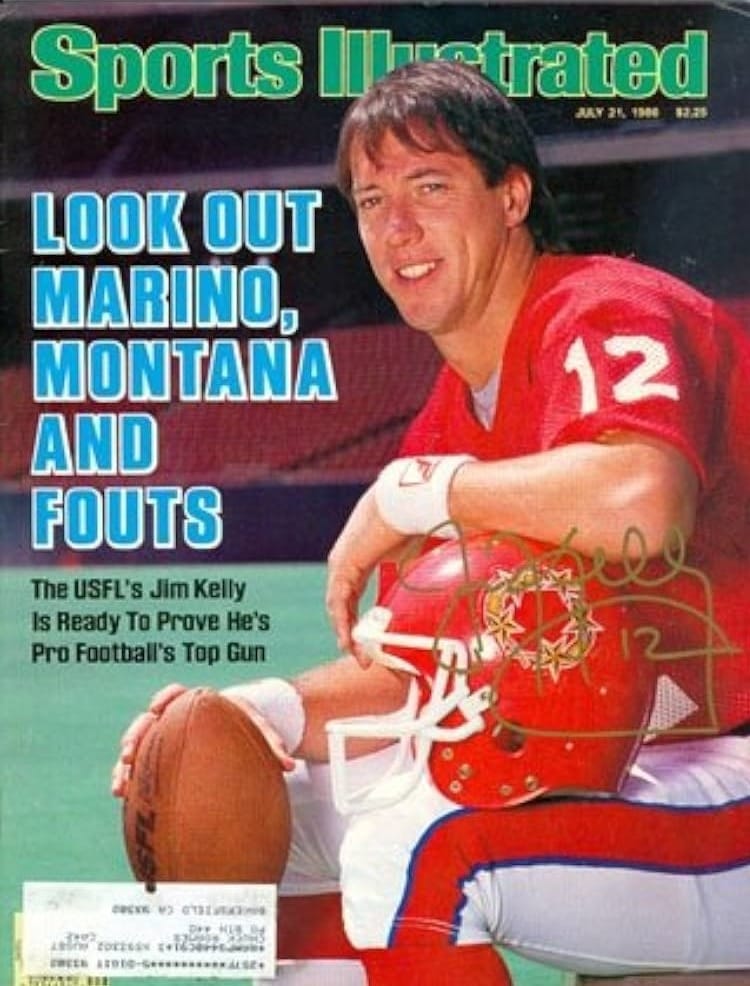
What the USFL did brilliantly, for a while, was sign players. It broke the underclassman rule first: on Feb. 23, 1983, Herschel Walker, the reigning Heisman winner with a year of eligibility left at Georgia, signed with the Generals for three years and roughly $4 million. Sports Illustrated put him on the cover under the headline "Hitting Pay Dirt."
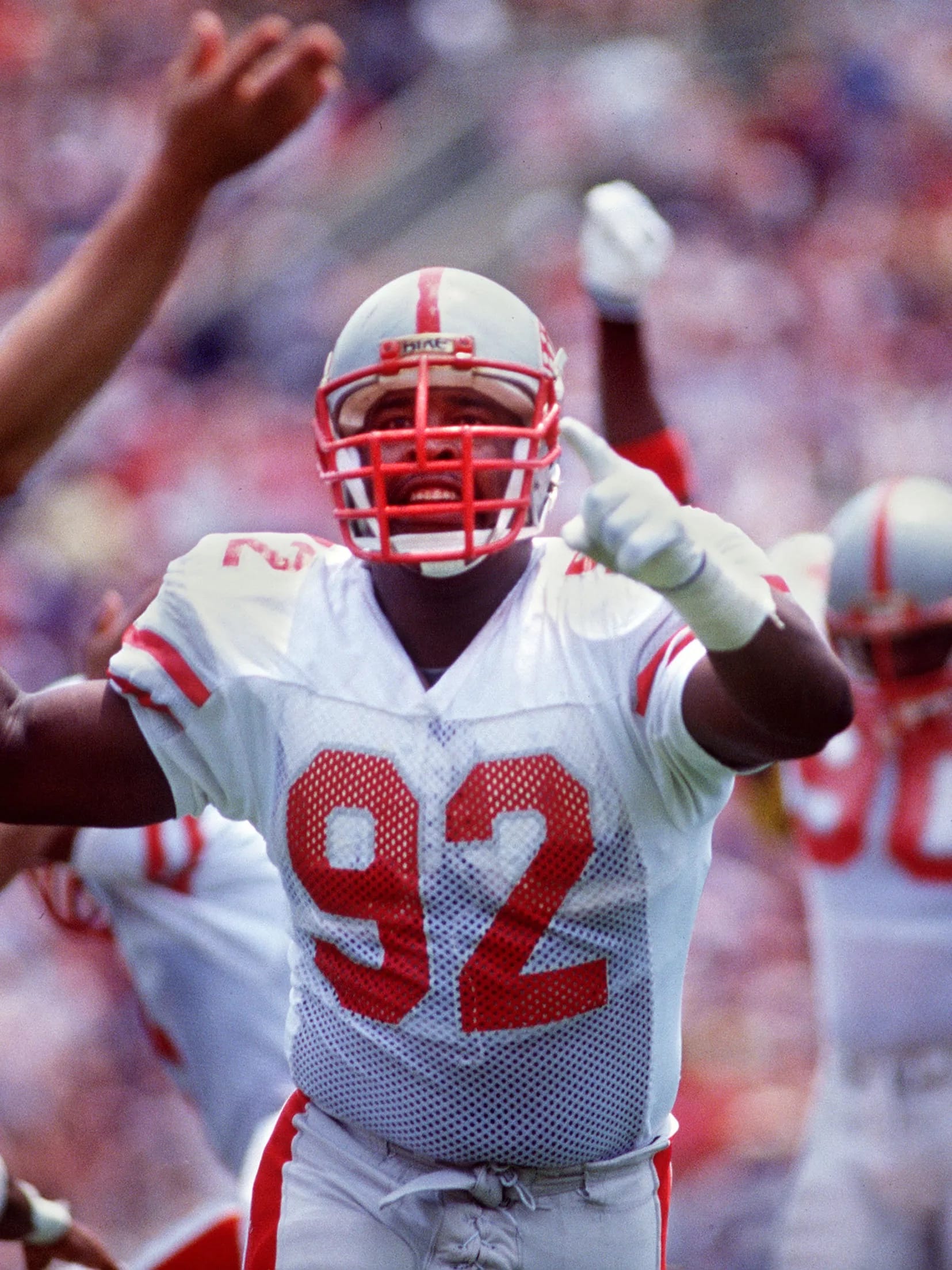
Then the league went after the whole draft. Jim Kelly, a first-round NFL pick who did not want to play in Buffalo, signed with the Houston Gamblers in June 1983 and, in Mouse Davis's run-and-shoot, threw for 5,219 yards and 44 touchdowns in 1984. Reggie White signed with the Memphis Showboats in January 1984 for $4 million over five years. Mike Rozier, the 1983 Heisman winner, went to Pittsburgh the same month.
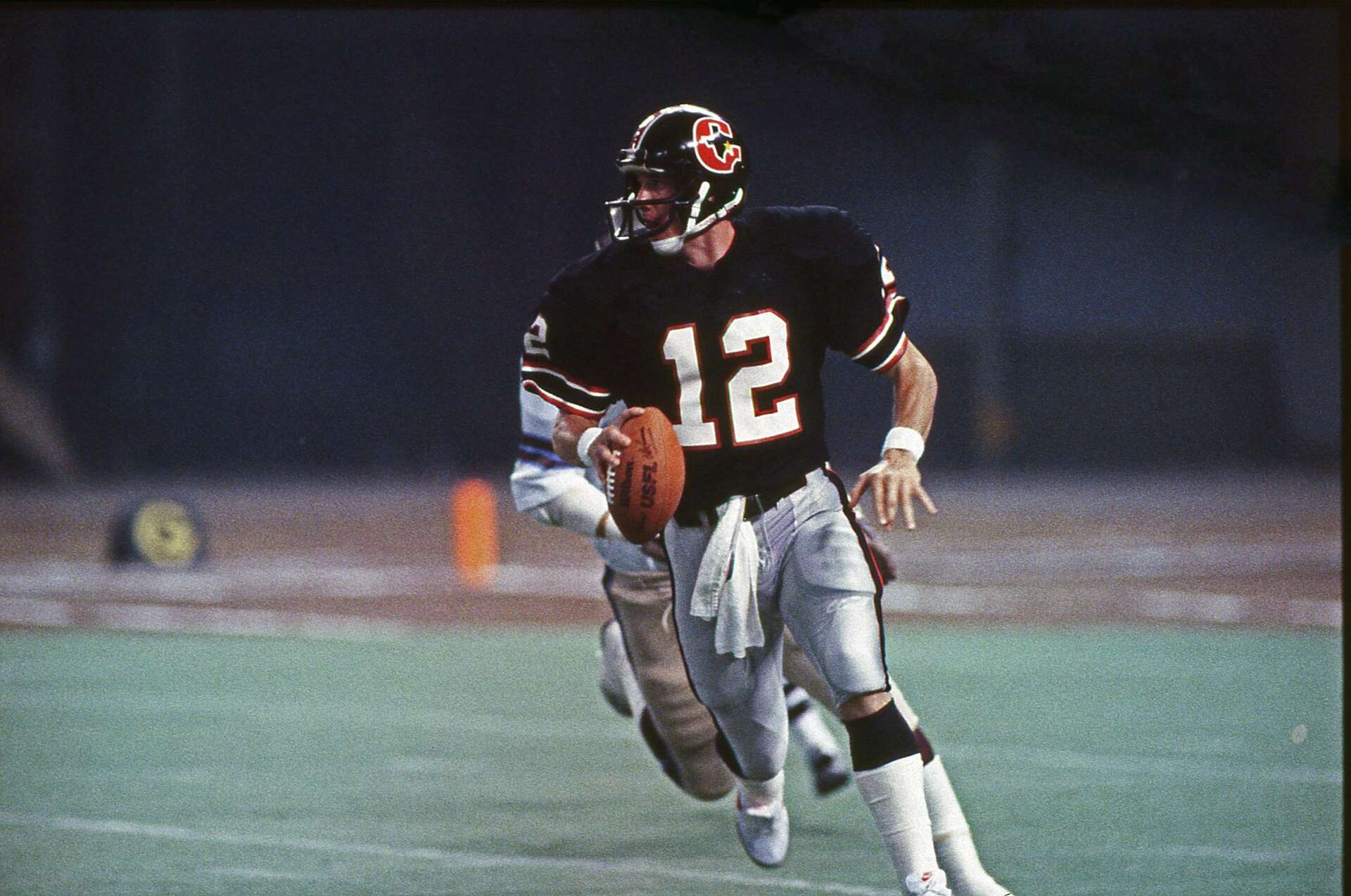
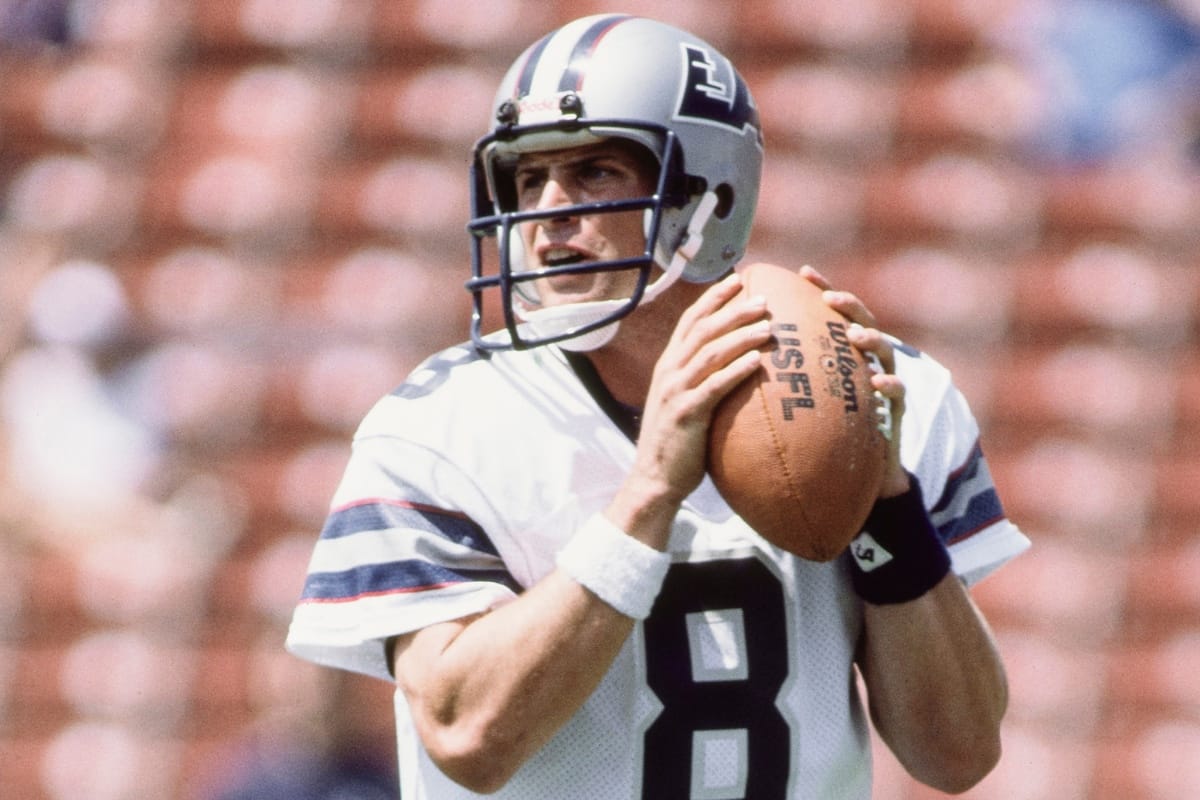
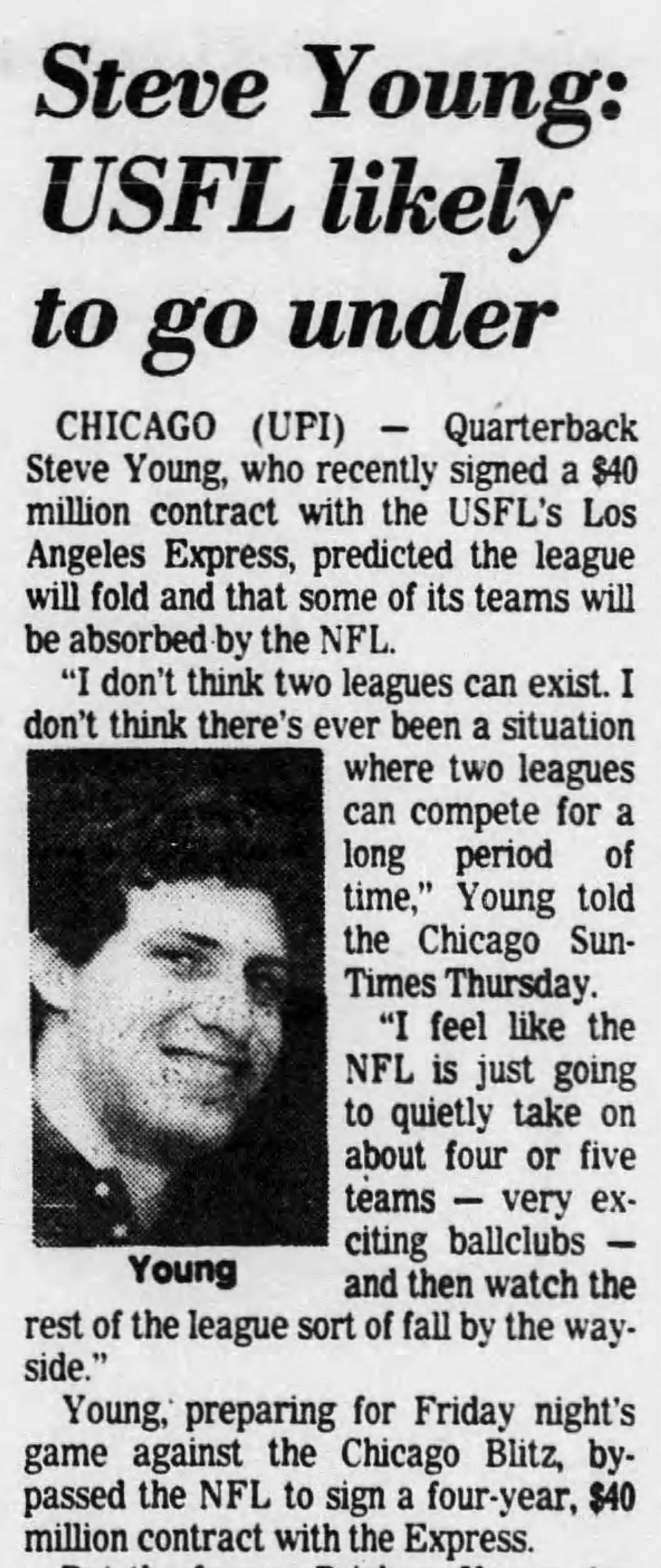
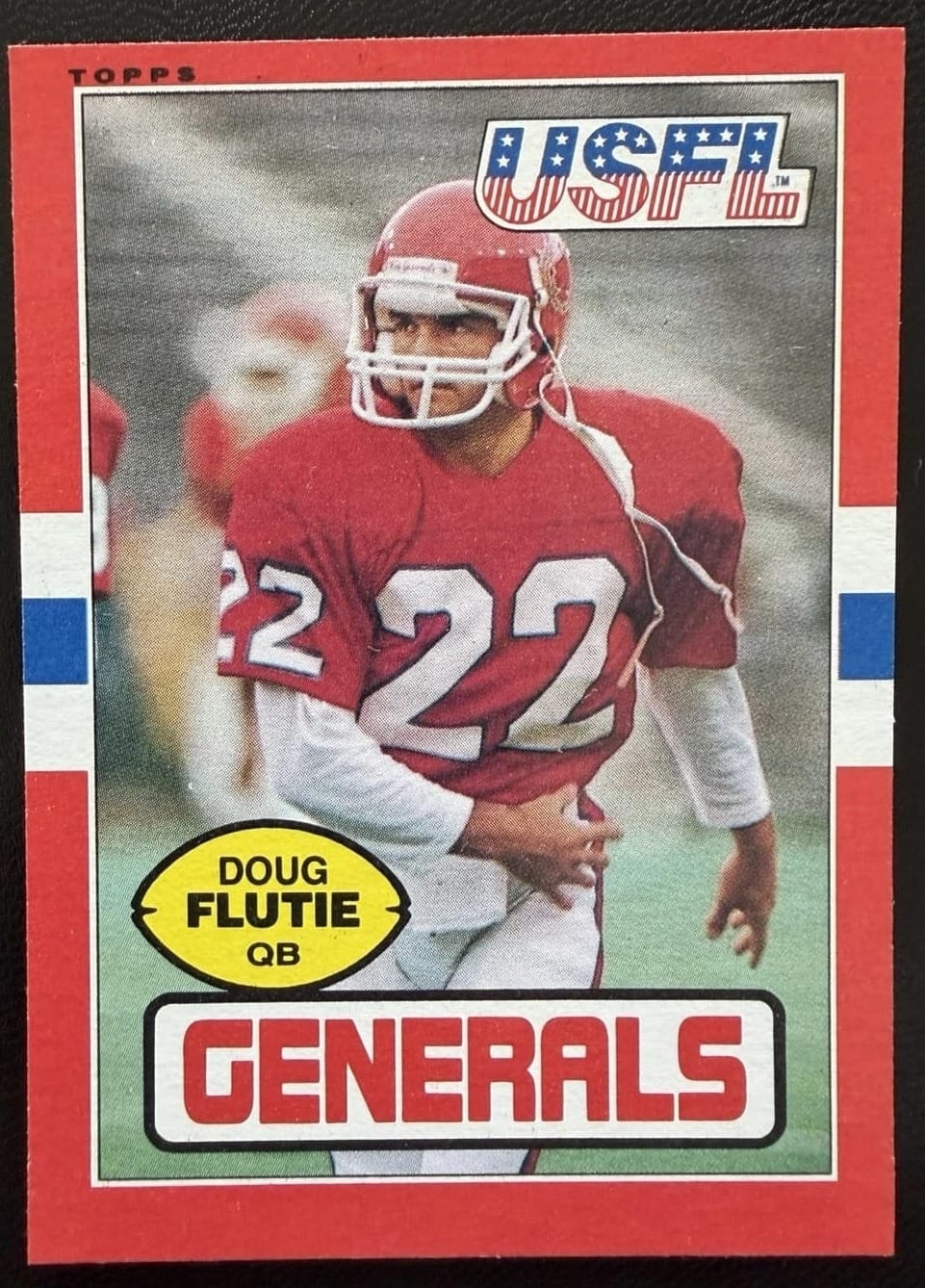
And on March 6, 1984, Steve Young signed with the Express for the most famous contract in the league's history: $40 million over 43 years, almost all of it a deferred annuity that was never funded. Young saw a few million in cash and eventually settled for about $1 million when the Express collapsed. He could see it coming: six weeks after signing, he told the Chicago Sun-Times, "I don't think two leagues can exist," and predicted the NFL would absorb four or five USFL teams and let the rest fall by the wayside. Then, in January 1985, the Generals signed Doug Flutie, the 1984 Heisman winner, for $7 million. Three straight Heisman Trophy winners had turned down the NFL. The NFL noticed.
The Set
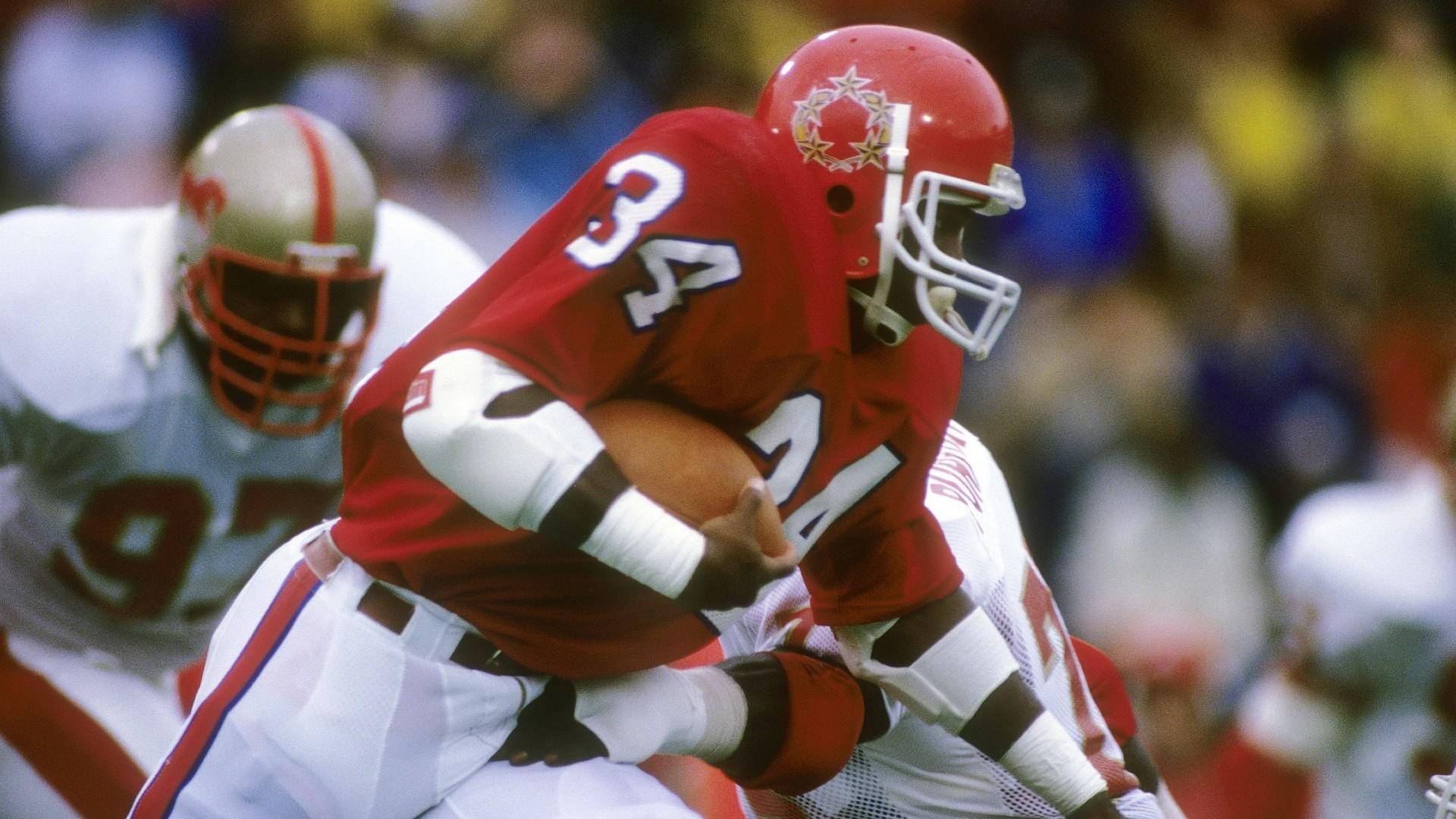
Topps had the license, and in 1984 it produced the only real card set the league would get: 132 cards, team by team from Arizona to Washington, with a "Premier Edition" banner across the top, the stars-and-stripes USFL logo, a red-and-blue ribbon border, and the team helmet in the corner. It's a handsome design, more patriotic than anything Topps was putting on its NFL cards.
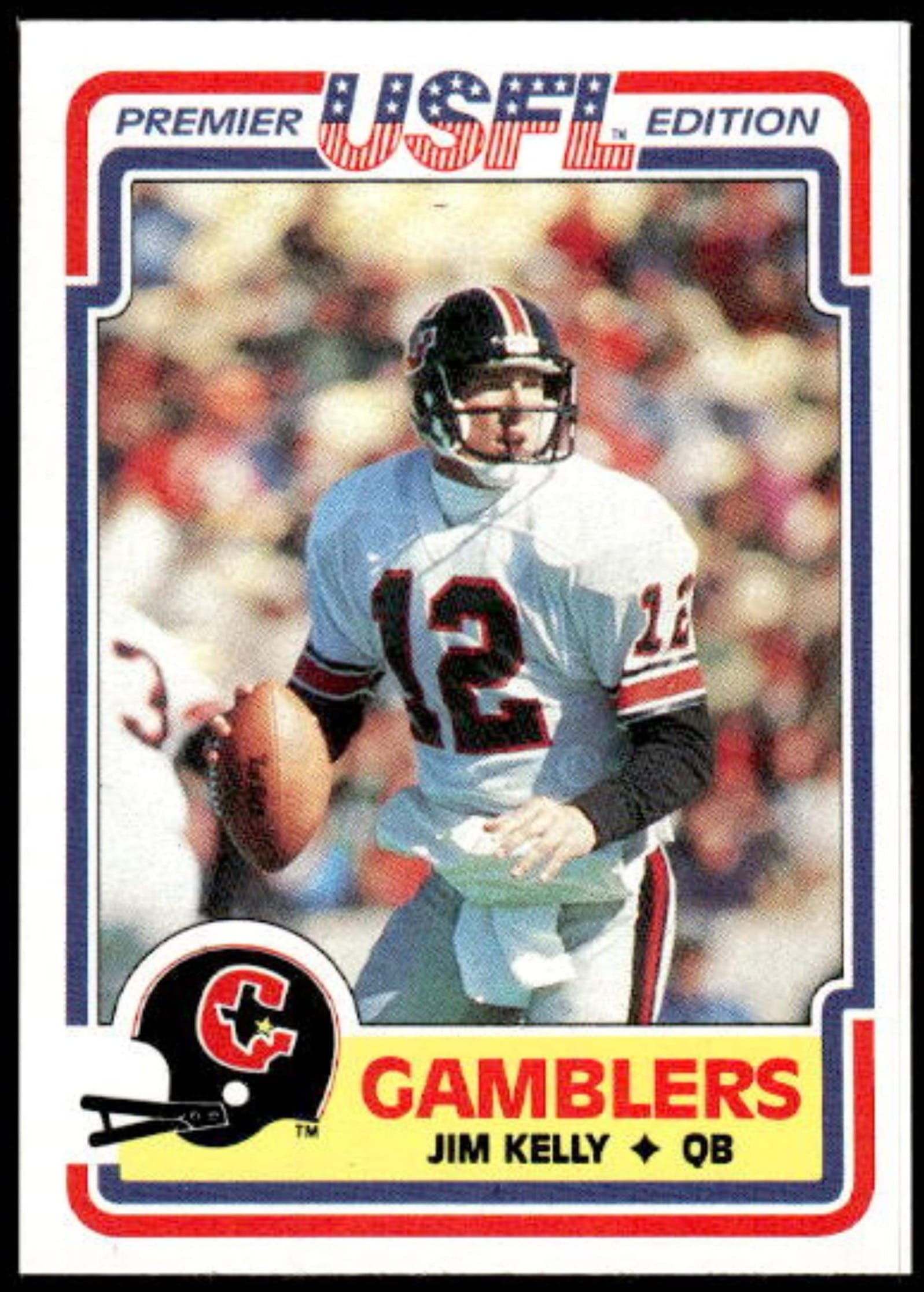
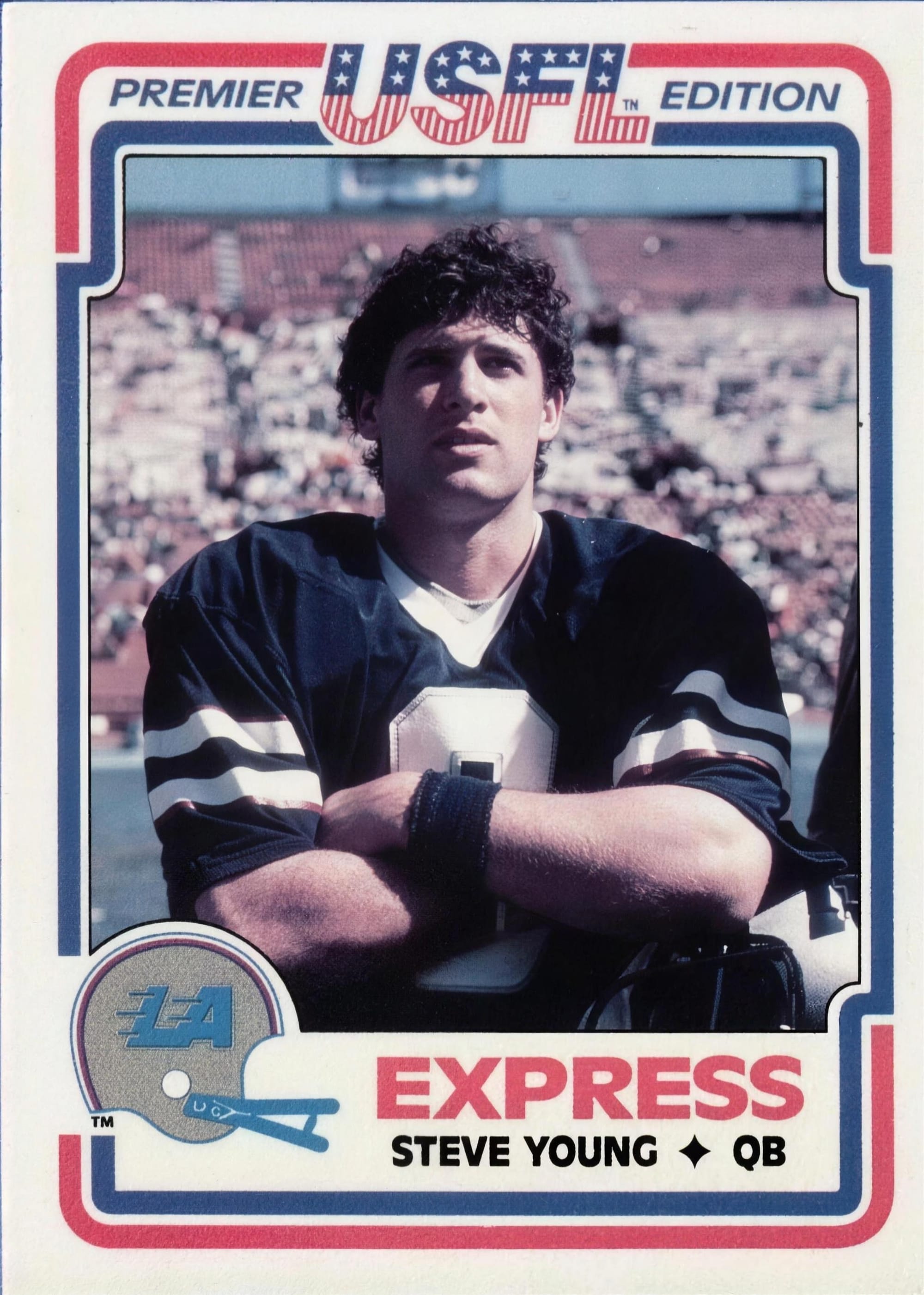
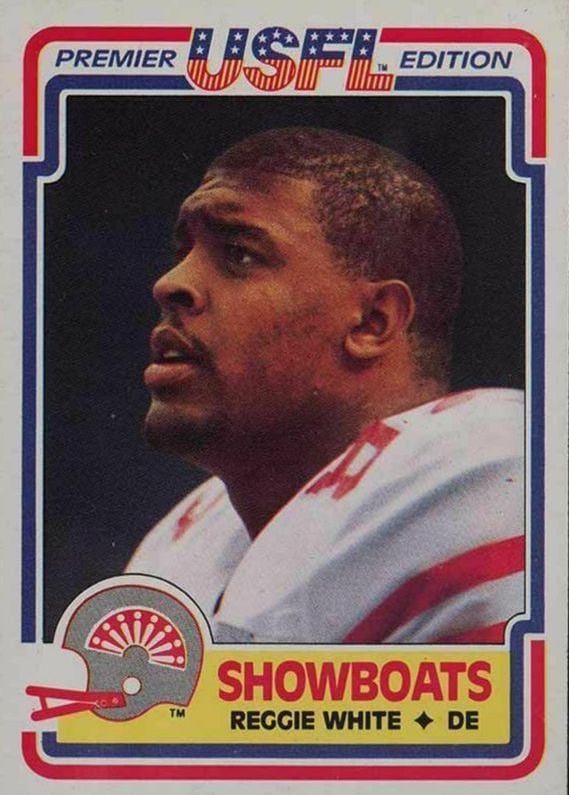
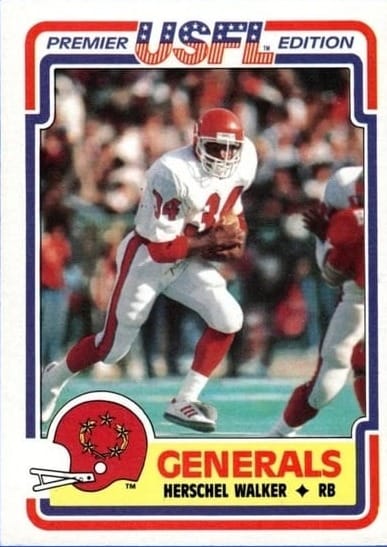
The checklist is why it matters. Jim Kelly is card #36. Steve Young is #52. Reggie White is #58. Herschel Walker is #74. Anthony Carter, Bobby Hebert, Kelvin Bryant, Joe Cribbs and Mike Rozier are in there too. Because it was sold only as a factory set, the cards survive in decent shape, but far fewer were made than the NFL set that year, and the market treats them accordingly. A high-grade Young has sold for $10,000. A gem-mint Walker brought $5,250. A perfect Reggie White is nearly a unicorn: only a handful exist out of nearly 2,000 graded.
Topps did it again in 1985, and the second set is a footnote. It has Doug Flutie's first card (#80), plus Sam Mills and Gary Clark, and second-year cards of the 1984 stars that go for the price of a lunch. The magic was in the first one.
The Collapse
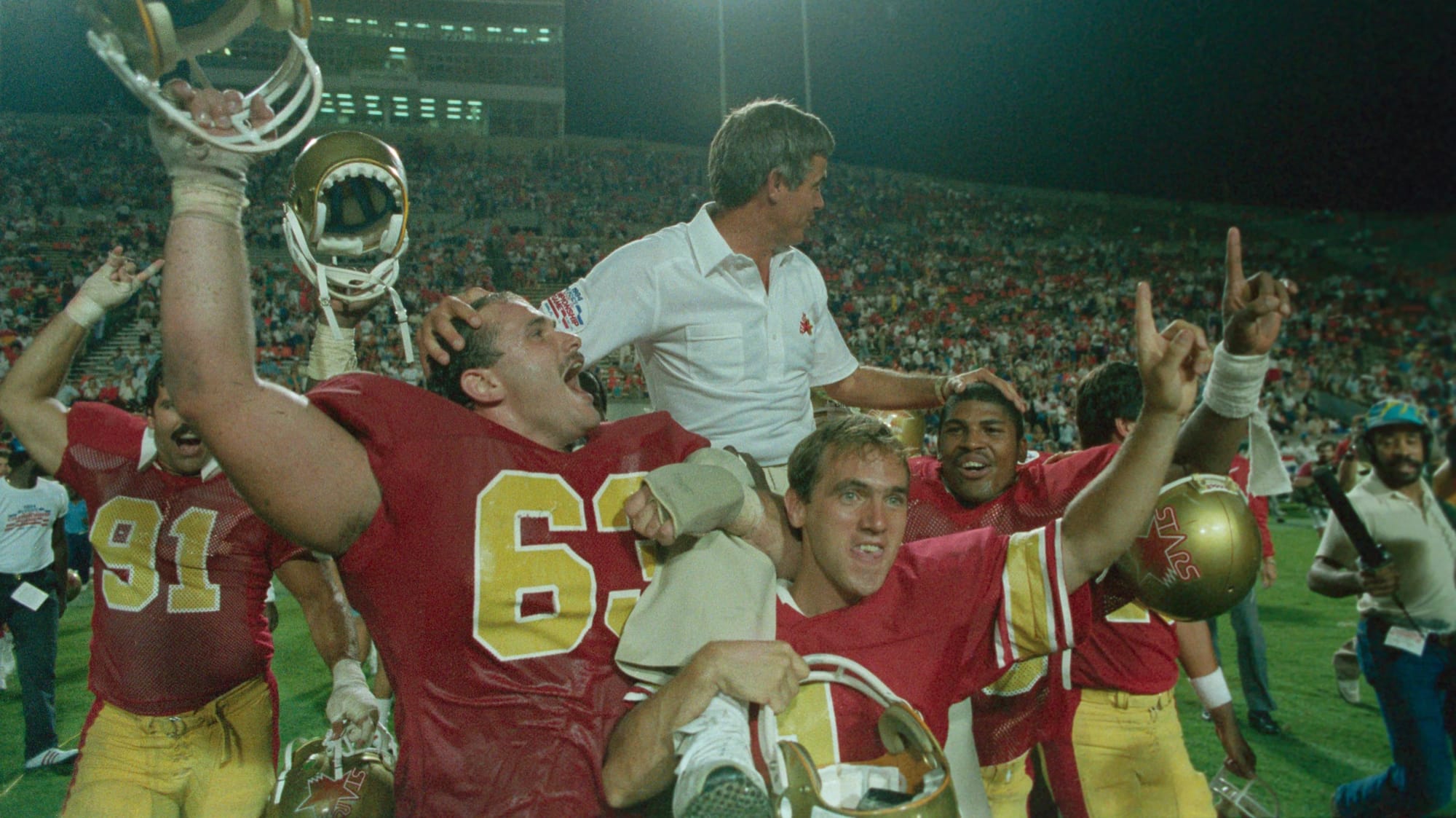
On Aug. 22, 1984, the owners, pushed by Trump, voted to abandon spring football and move to the fall for 1986, head-to-head with the NFL. In October the league sued the NFL for $1.32 billion under antitrust law. The last USFL game ever played was the 1985 championship on July 14, 1985: Baltimore Stars 28, Oakland Invaders 24, at Giants Stadium. Nobody in the building knew it was the last one.
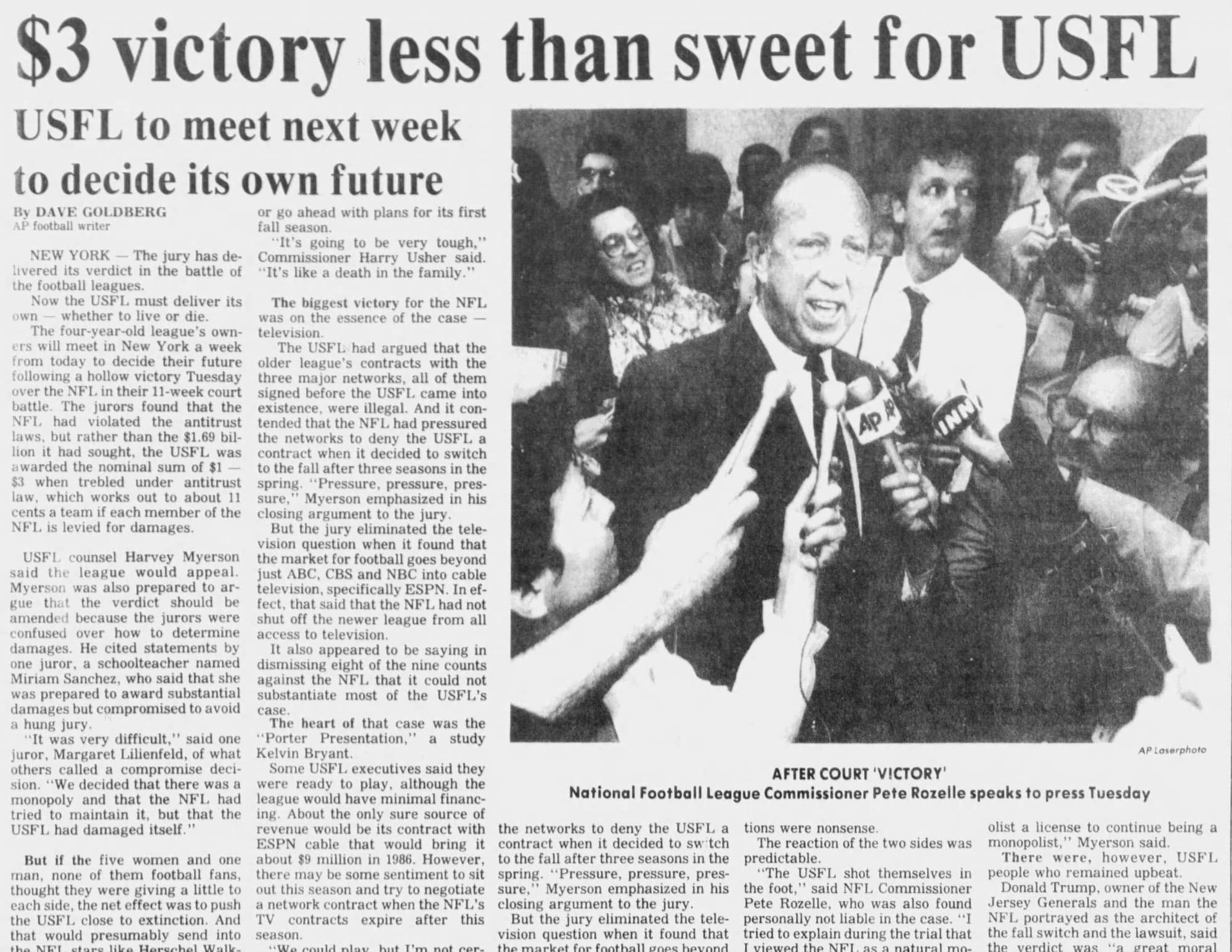
The suit went to a jury in the summer of 1986. On July 29 the jury found that the NFL was, in fact, an illegal monopoly, and awarded the USFL damages of one dollar. Trebled under antitrust law: three dollars, or about 11 cents per NFL team. "It's like a death in the family," Commissioner Harry Usher said. Six days later the league canceled its 1986 season. Three days after that it released its players.
The Second Rookie Cards
Which is how the hobby ended up with two rookie cards for the same men. Within weeks of the fold, Young was a Tampa Bay Buccaneer, Kelly a Buffalo Bill after all, Walker a Dallas Cowboy; White had already jumped to the Eagles in 1985. Topps, which had been printing them as USFL players, now printed them as NFL players, and those cards got the "rookie" label too: Steve Young, 1986 Topps #374. Reggie White, 1986 Topps #275. Kelly and Walker came a year later, 1987 Topps #362 and #264.
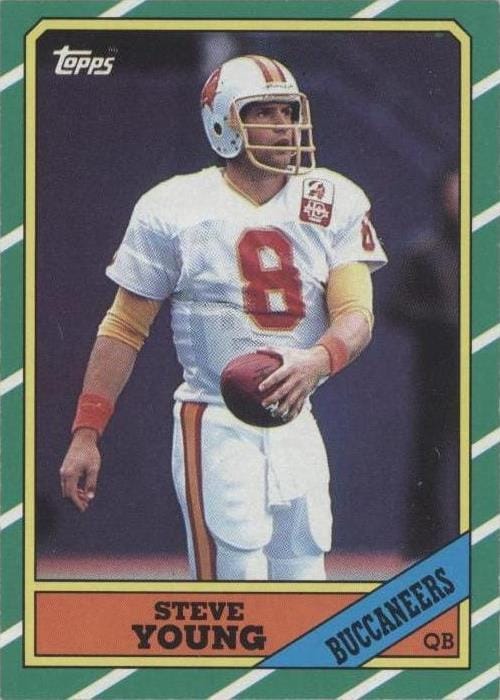
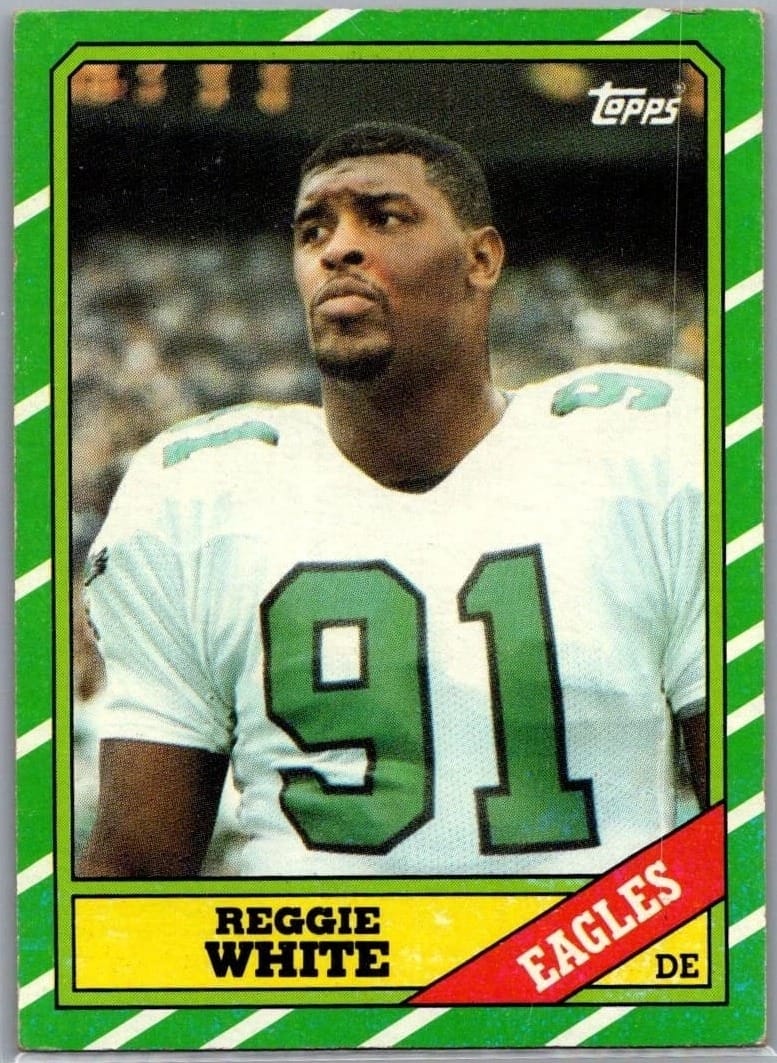
Beckett's compromise was to call the 1984 USFL cards "XRCs," extended rookie cards, a category invented mostly to describe this exact problem. Collectors argue about it to this day. The 1984 set doesn't care. It has the first cardboard of four Hall of Famers in helmets nobody remembers, from a league that lasted three seasons, and it's the only proof that for one spring, the best young football players in the world were somewhere other than the NFL.
Which counts, the USFL card or the NFL card? Comments below.


Comments ()