
Earl Campbell Has Exactly One Football Card — Here's Why
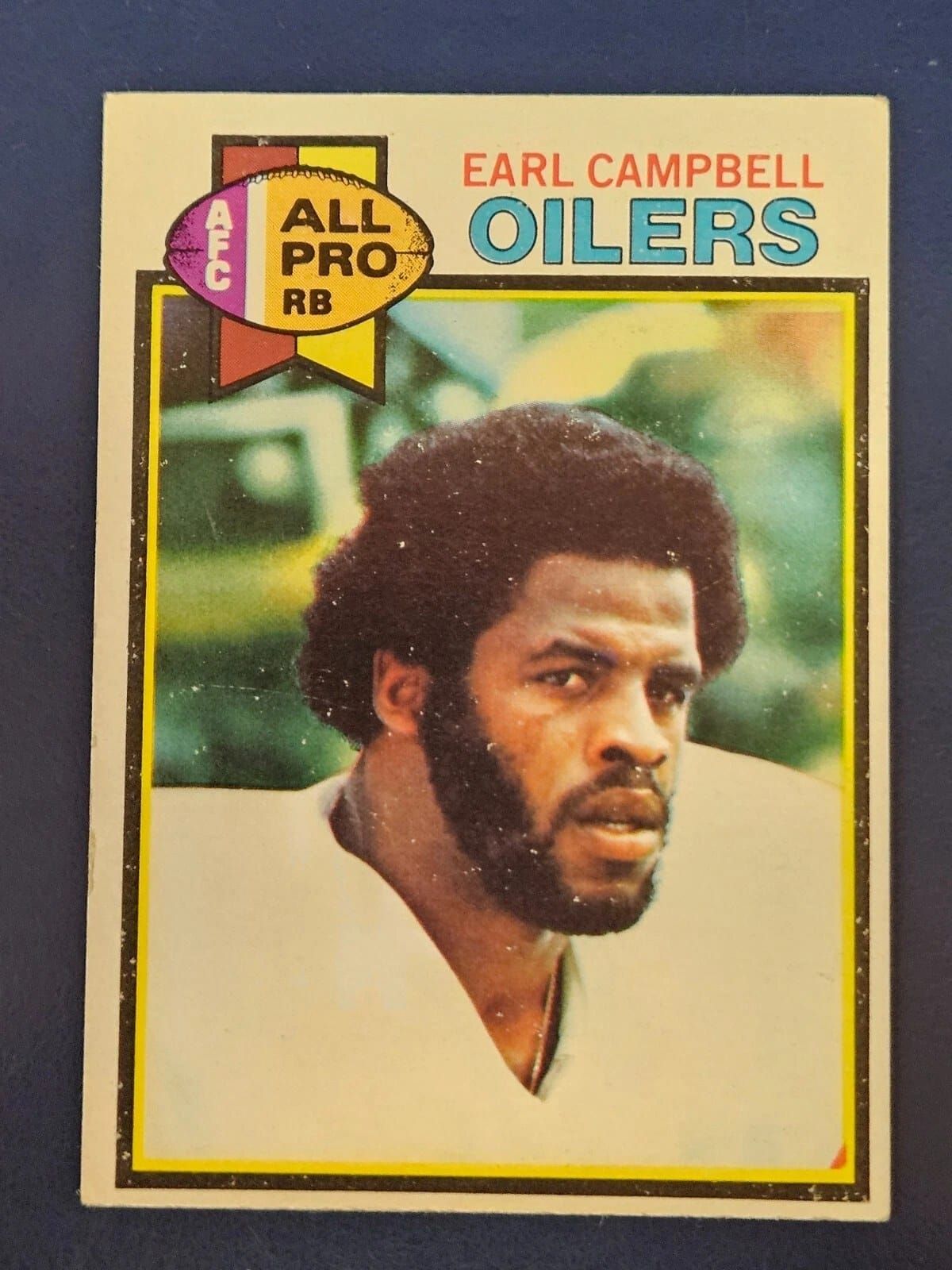
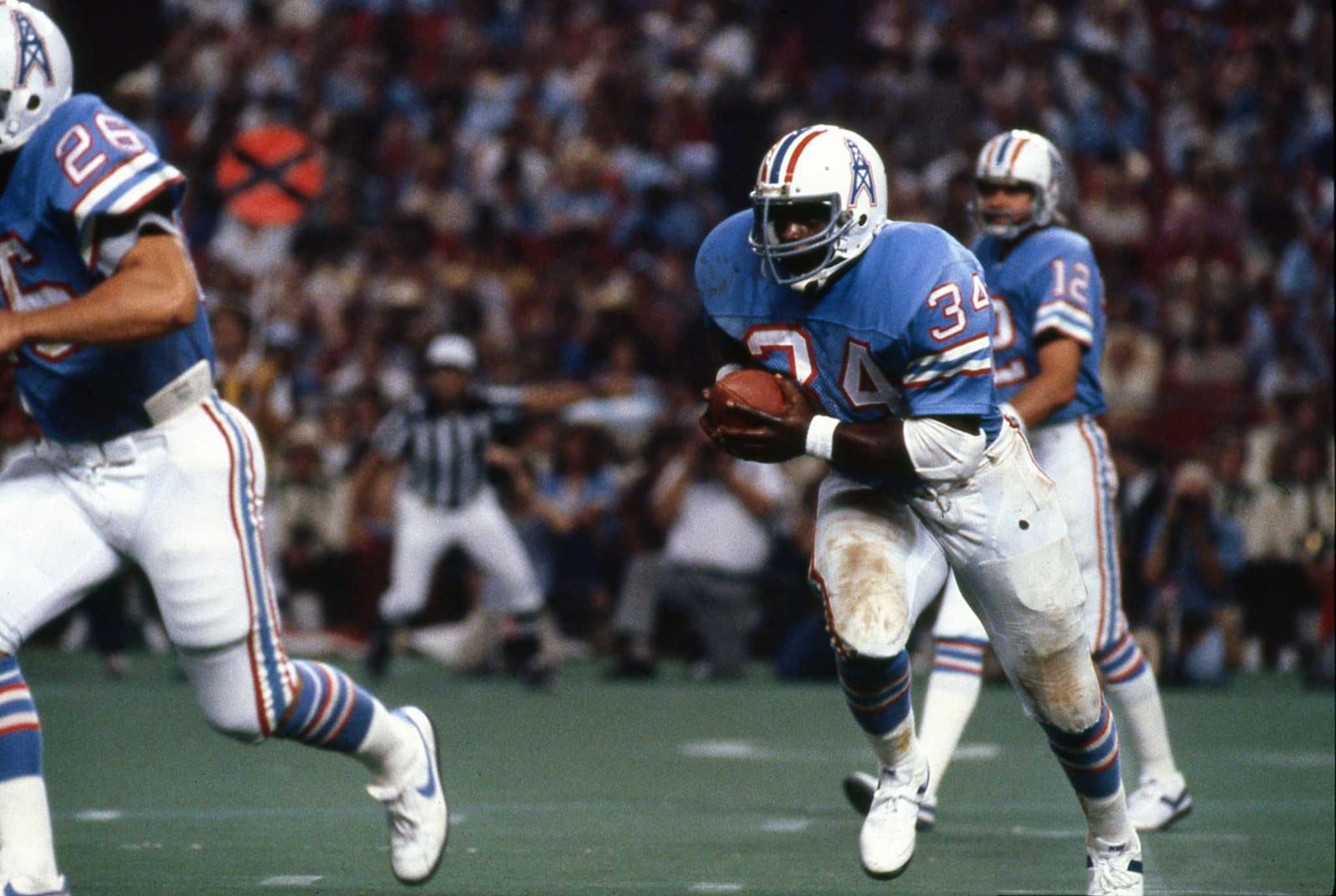
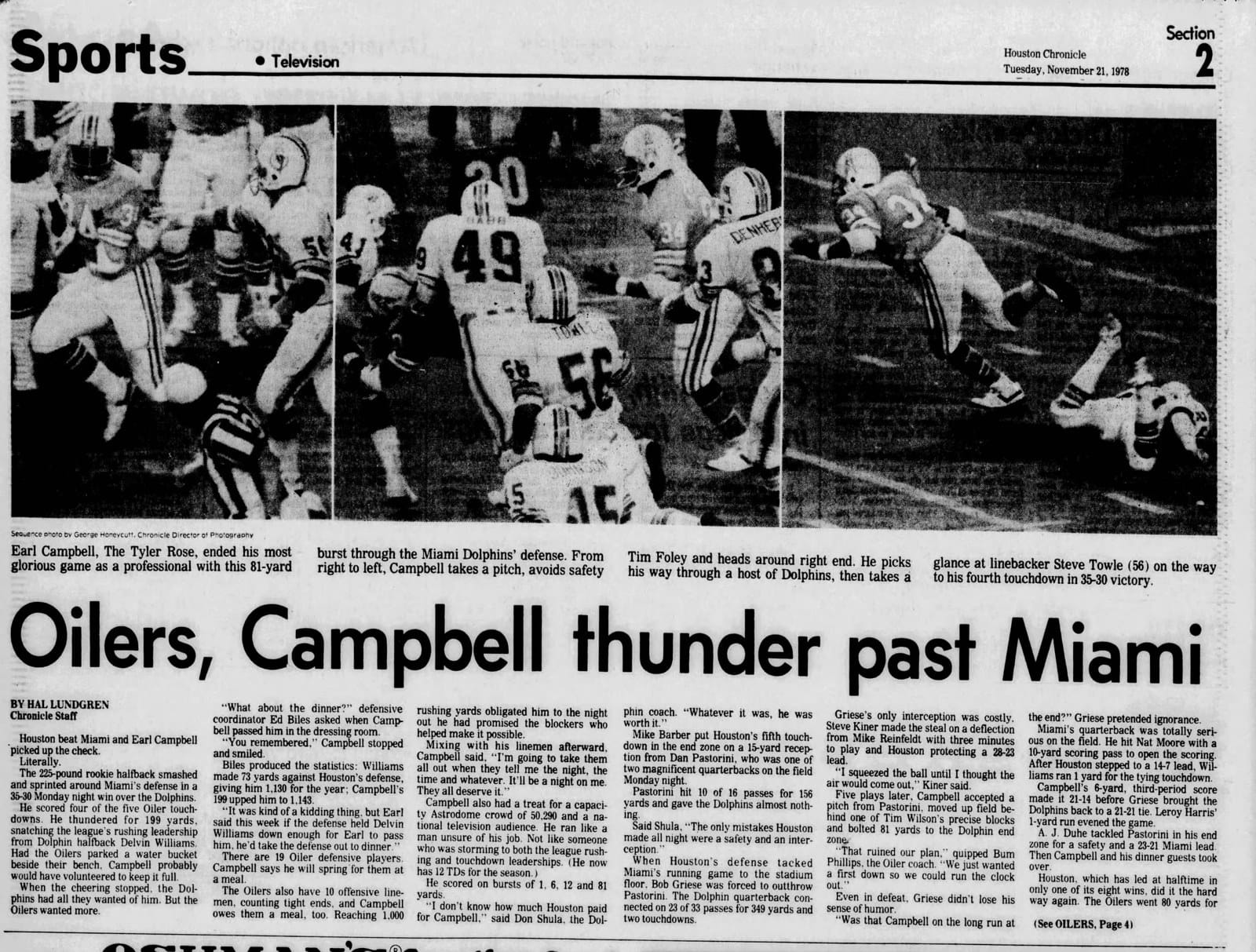
Earl Campbell won Rookie of the Year in 1978, the MVP in 1979, and 3 straight rushing titles. He ran over defenders on Monday Night Football, carried the Luv Ya Blue Oilers to back-to-back AFC title games, and retired as one of the most feared runners the sport has ever seen.
And if you were a kid ripping football packs anywhere between 1980 and 1986, you could not pull his card. Not once. The best player in football simply wasn't in the box.
The Card: 1979 Topps #390
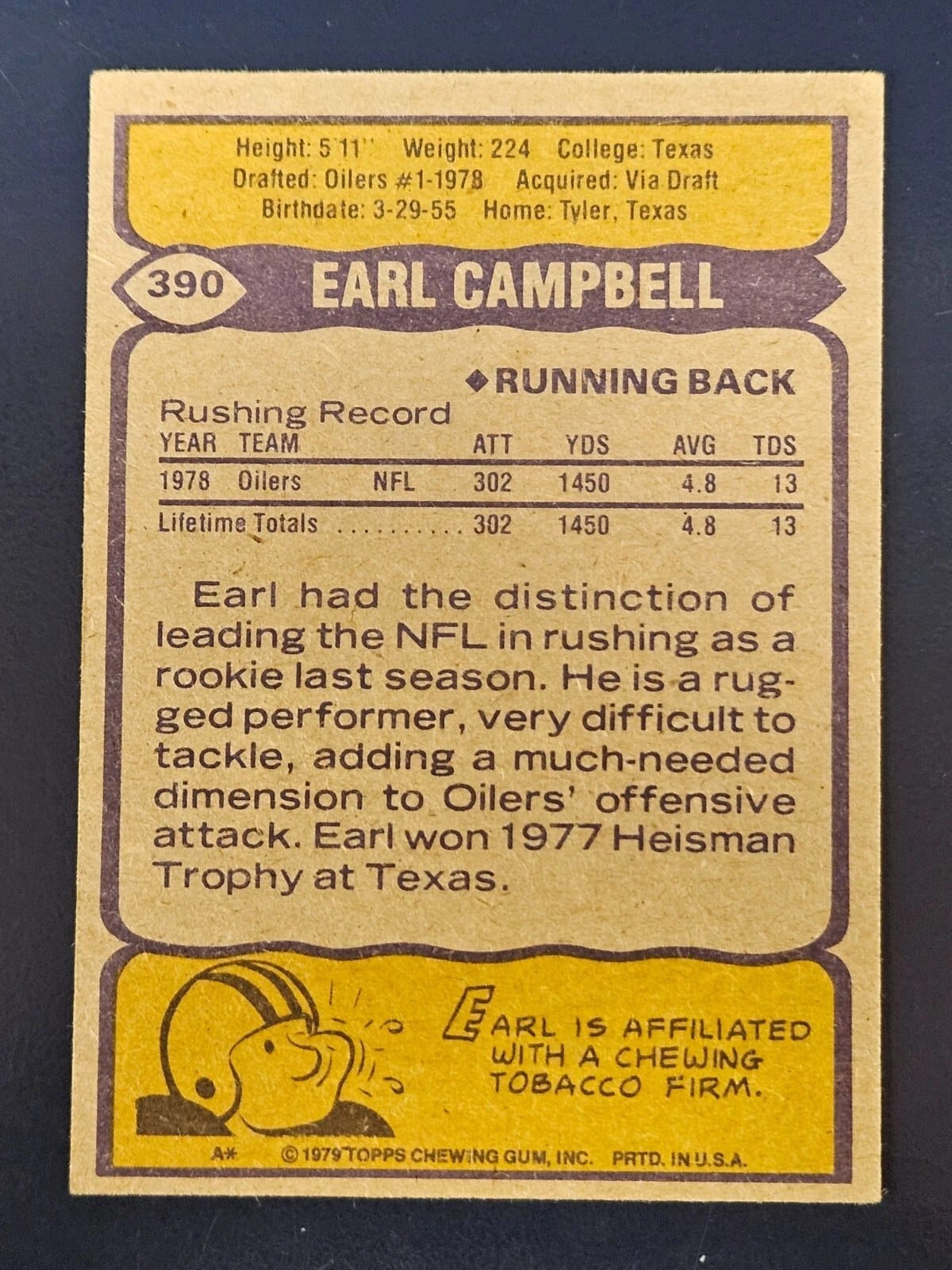
Campbell's rookie card is the key to the entire 1979 Topps set — the last great football rookie card of the 1970s. There he is in that famous powder blue, no helmet logo (more on that in a minute), listed at 5-foot-11 and 224 pounds of bad intentions.
Technically, 1979 Topps gave you 4 Campbells: the #390 rookie, a Rushing Leaders card he shares with Walter Payton (#3), a Record Breaker for most rushing yards by a rookie (#331), and the Oilers Team Leaders checklist (#301). It felt like the start of a decade of Campbell cardboard.
It was the end of it.
Why His Rookie Card Came a Year Late
First, the quirk Campbell shared with every star of his era: he debuted in 1978, but his first card is a 1979. That's not a Campbell story — that's just how football cards worked.
Topps built its football sets on a long lead time, using the previous season's photos and stats, with checklists locked before anyone knew which rookies would matter. And unlike baseball, football had no traded or update set to add newcomers midseason. So every rookie waited a year: Walter Payton debuted in 1975 and got his first card in 1976 Topps. O.J. Simpson debuted in 1969, first card 1970. Some players waited even longer — Roger Staubach played his first game in 1969 and didn't get cardboard until 1972.
The "true rookie card" — a card of a drafted player who hadn't taken an NFL snap — basically didn't exist until 1984 Topps USFL beat everyone to Steve Young and Reggie White, and 1989 Score finally put Barry Sanders, Troy Aikman, and Deion Sanders in packs before their first pro game.
Then He Vanished
Here's the part that makes Campbell unique. In that era, Topps didn't just need a league deal — it signed players to individual licensing contracts. After Campbell's rookie year, his contract negotiations with Topps broke down. He never signed again.
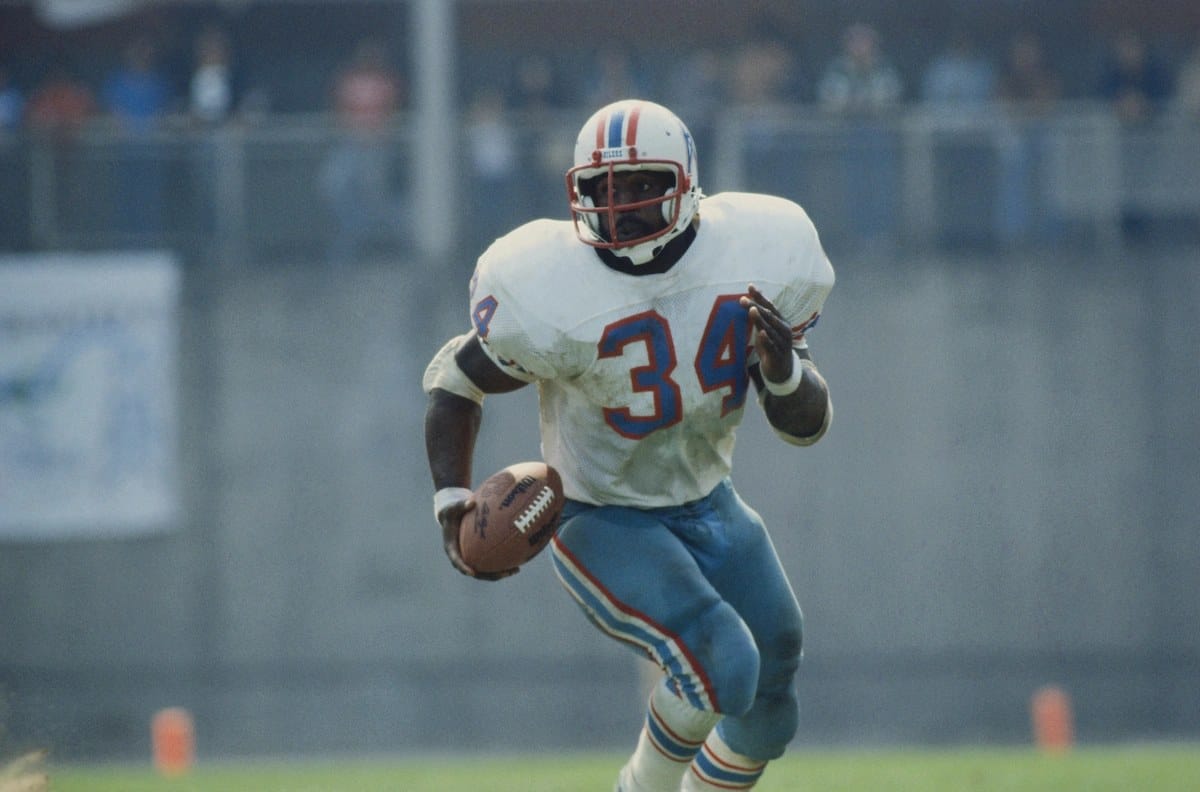
The result is one of the strangest gaps in the hobby: no 1980 Topps Earl Campbell. No 1981. None in 1982, 1983, 1984, or 1985 — through an MVP season, a 1,934-yard season, the trade to New Orleans, all of it. The most famous running back in football spent his entire prime invisible to the card aisle. The exact sticking point was never made public — hobby lore says money, and given what Campbell meant to the sport, it's hard to blame him — but the paper trail ends at "negotiations broke down."
He Wasn't Alone (But Almost)
Two other superstars pulled the same disappearing act. Joe Namath's last card is 1973 Topps — he played through 1977, and Topps even had a 1974 Namath card designed and proofed before the deal died; the unissued proof later sold at auction. Lynn Swann shows up in 1975, 1976, and 1977 Topps, then never again despite playing through 1982.
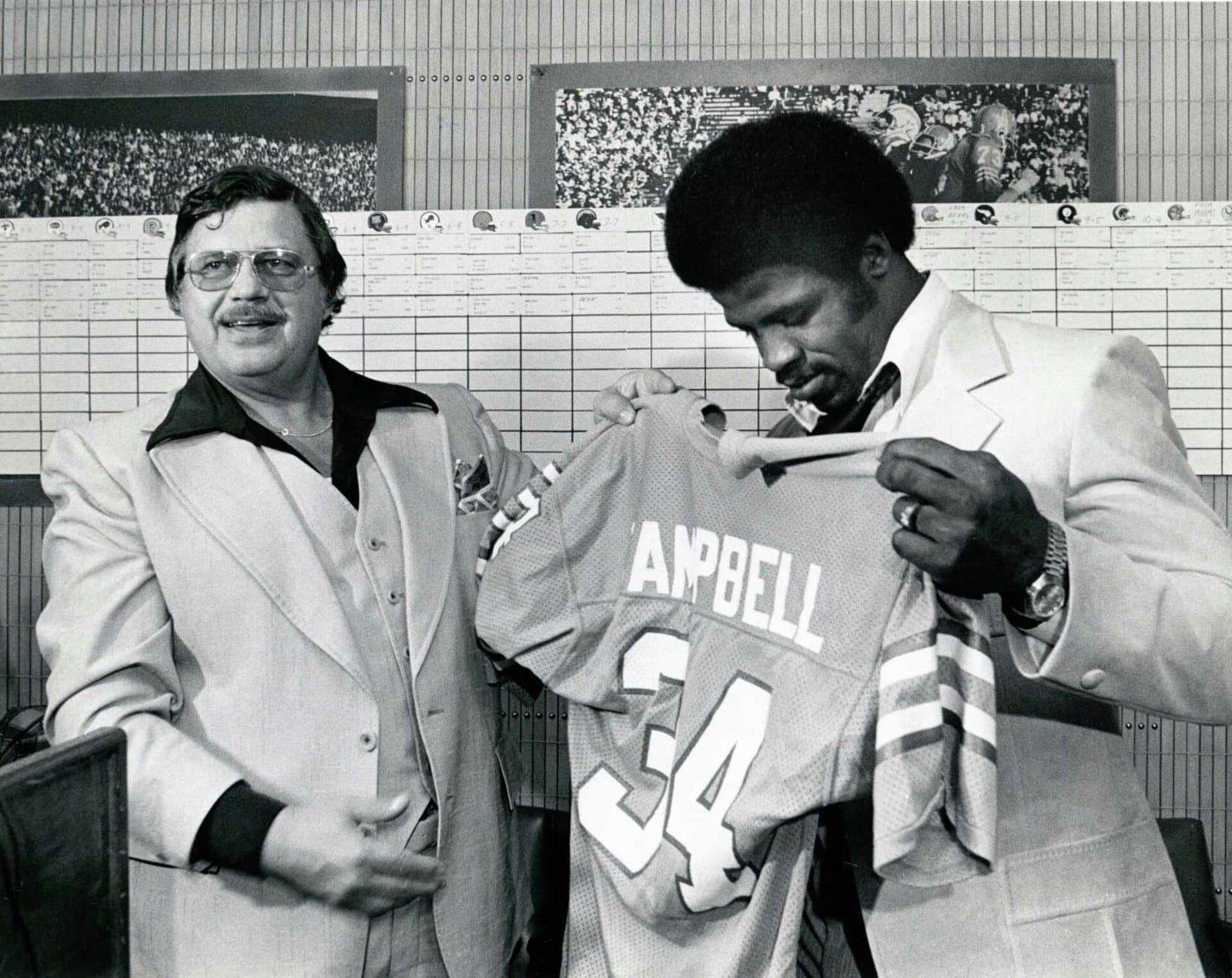
One name that doesn't belong on this list: John Riggins. Collectors sometimes remember him as a Topps holdout, but he's in the set nearly every year of his career. He's only missing from 1981 Topps — because he sat out the entire 1980 season in a contract dispute with the Redskins. No season, no card. The cardboard was just telling the truth.
The Logo Wars Made It Weirder
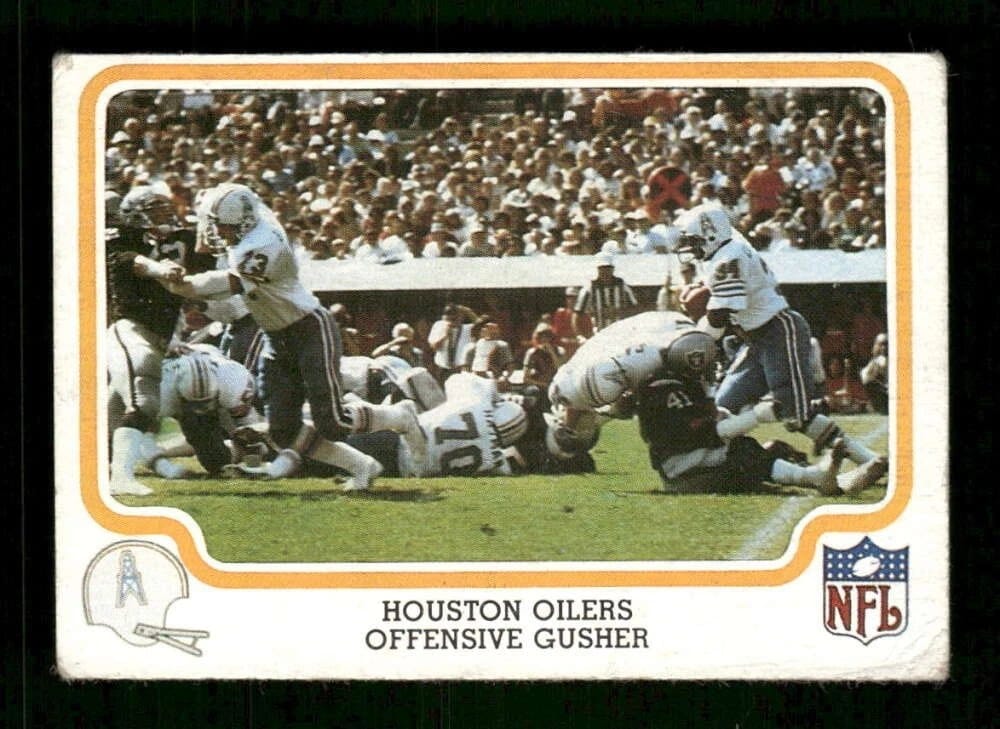
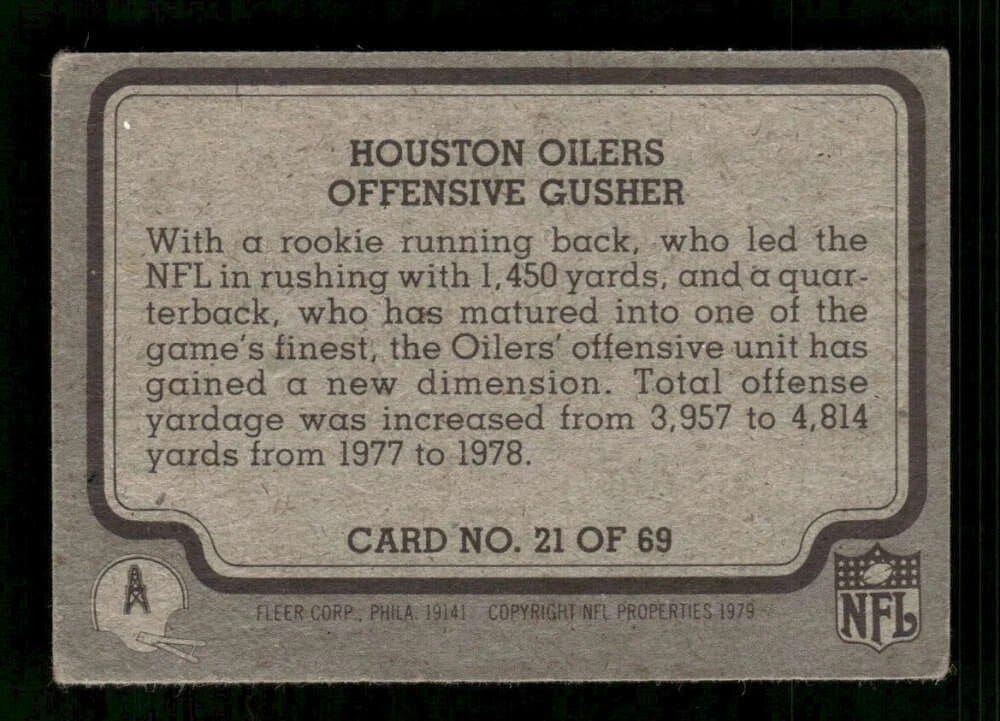
The whole era was a licensing mess. Topps had the players but no NFL Properties deal, which is why every helmet from 1970 to 1981 is airbrushed blank — logos didn't return until 1982. Fleer had the opposite problem: its Team Action sets licensed the league but not the players, so it could show every logo in football and couldn't name a single player. Which means the only "cards" of Campbell from 1980-85 are Fleer team shots where he appears as an unnamed blur of powder blue.
The Kicker
Collectors eventually fixed what Topps couldn't. Today you can buy a 7-card set of 1980-1986 "Topps" Earl Campbell cards on eBay — customs, printed decades later by hobbyists, in each year's exact Topps design. Cards that never were, for the 7 years the best player in football didn't exist on cardboard.
It's also why that 1979 rookie card carries the weight it does. For most Hall of Famers, the rookie card is the first chapter. For Earl Campbell, it's the whole book.
Comments ()