
On This Date: Bobby Orr Scores His First NHL Goal (Oct. 23, 1966)
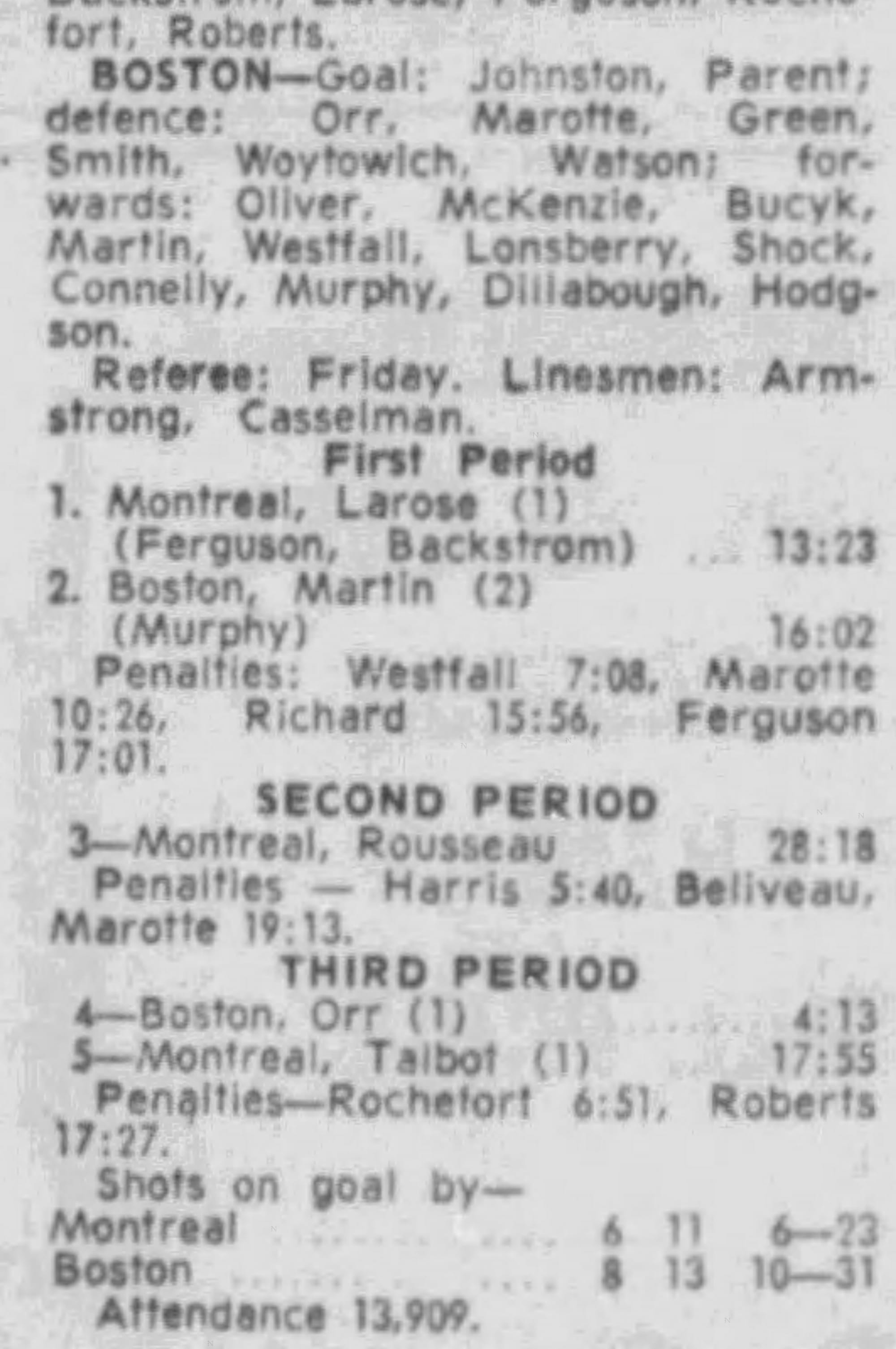
On Oct. 23, 1966, 18-year-old Bobby Orr scored his first NHL goal, past Gump Worsley at Boston Garden. Plenty of sources say Oct. 22. The box score says otherwise.
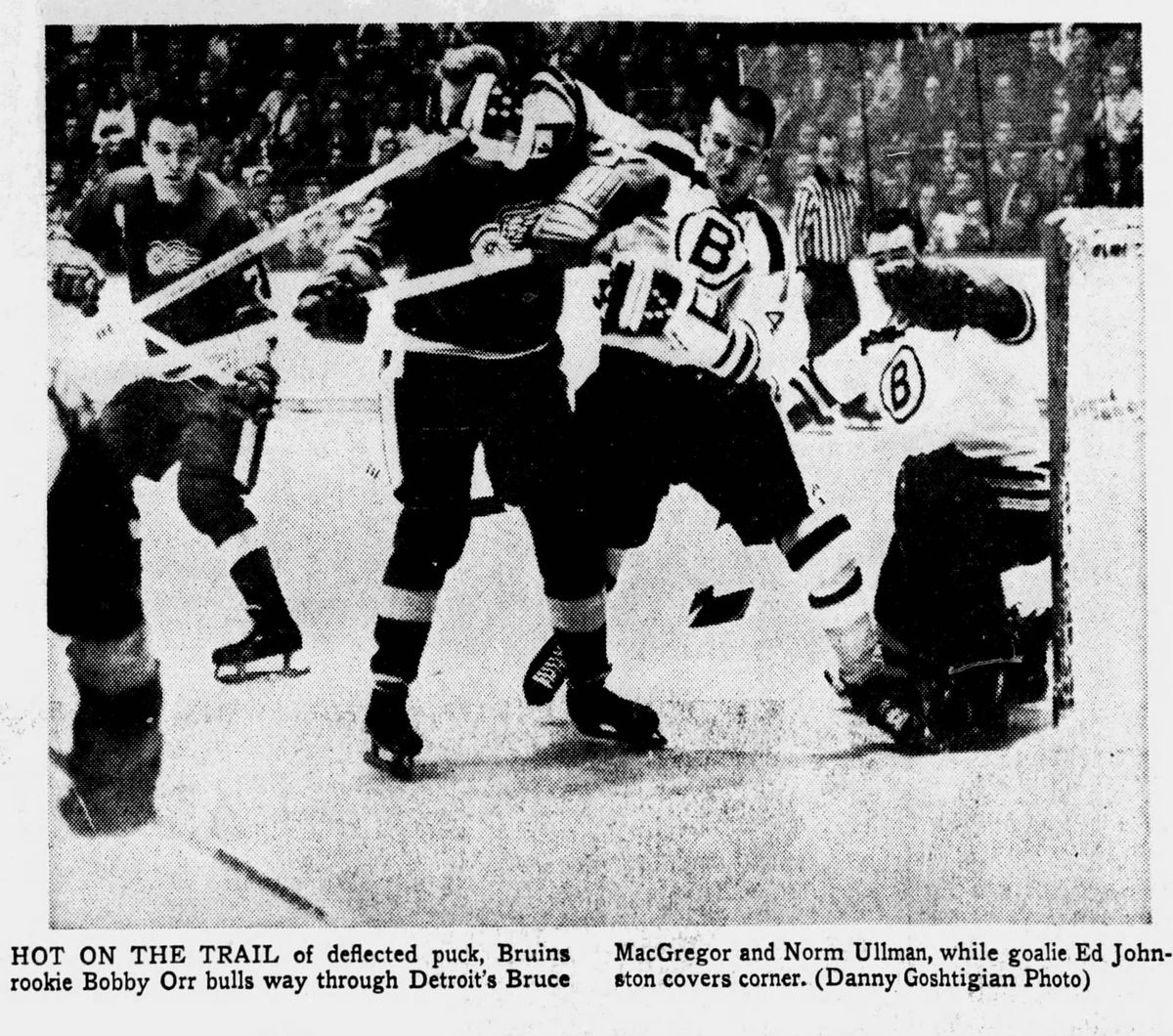
Bobby Orr is the only defenseman who ever led the NHL in scoring, and he did it twice. He won 8 straight Norris Trophies, 3 straight Hart Trophies and 2 Stanley Cups, and he scored the most famous goal in hockey history while flying through the air in overtime.
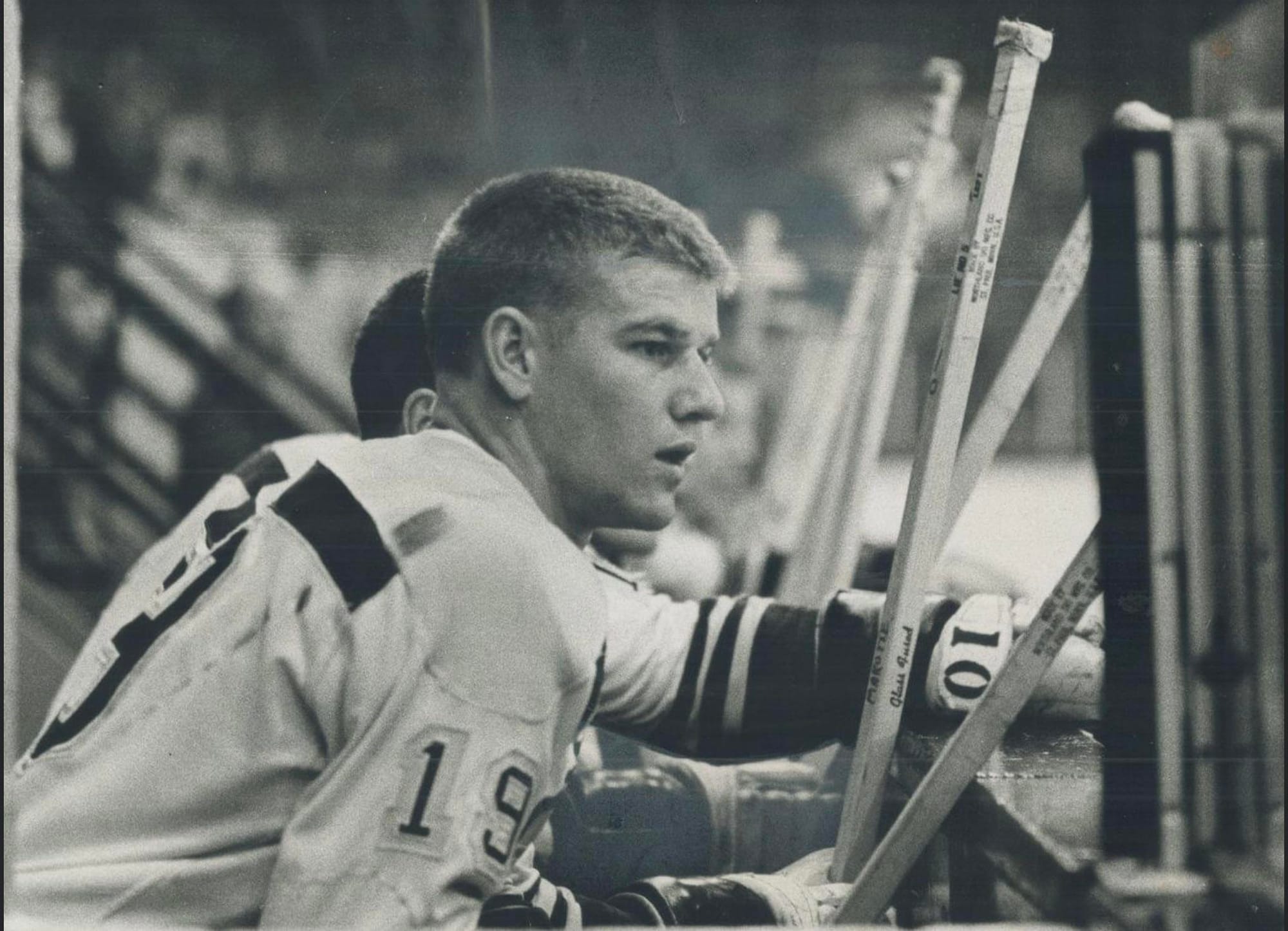
But on Oct. 23, 1966, he was an 18-year-old playing his third NHL game, and he hadn't scored yet.
The goal
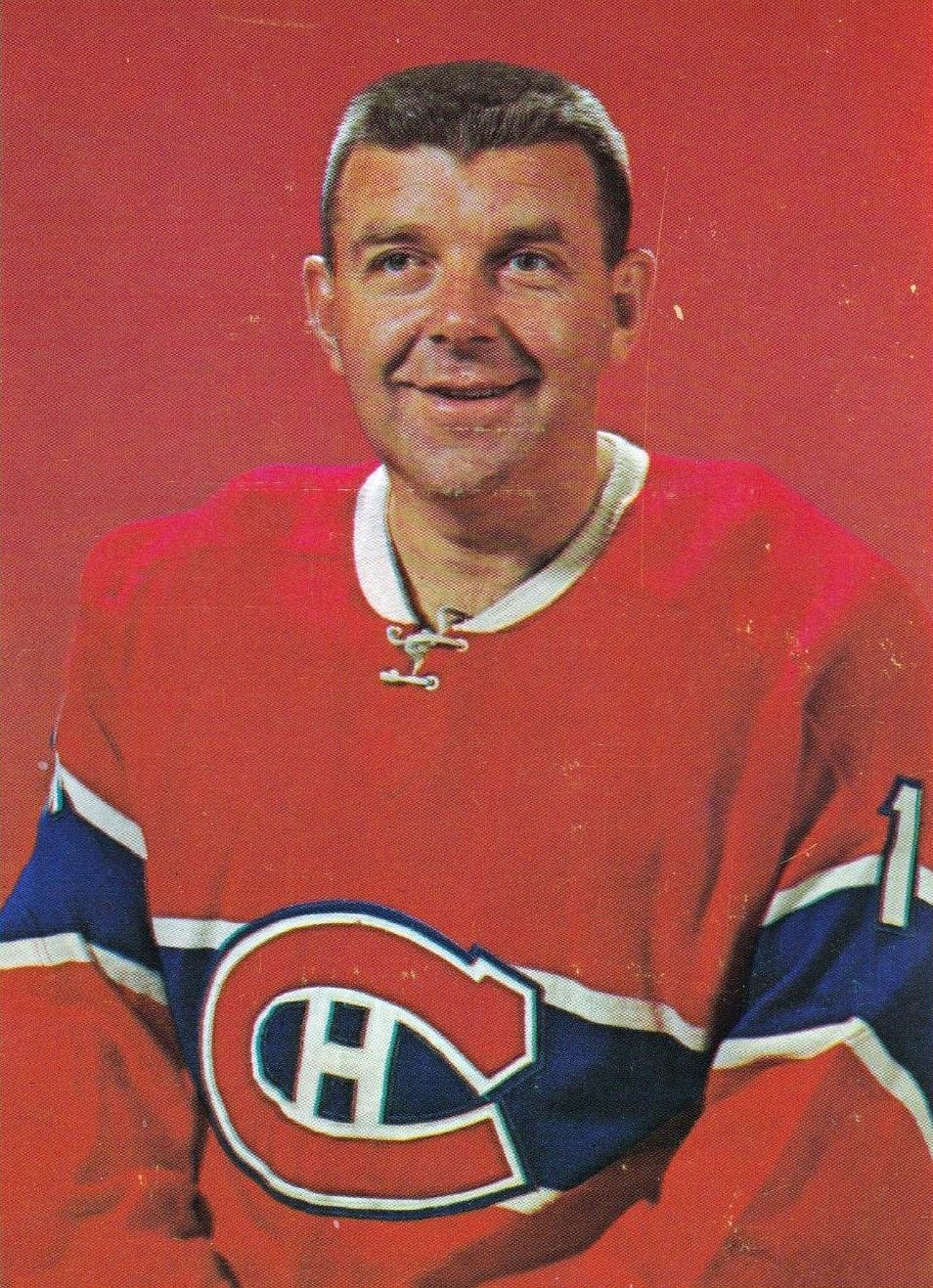
The Bruins and the Montreal Canadiens played a home-and-home that weekend. On Saturday night at the Forum, Montreal won 3-1 and Orr didn't get a point. Afterward, Montreal coach Toe Blake called the Bruins "a hell of an improved club." On Sunday night they played again at Boston Garden, in front of 13,909.
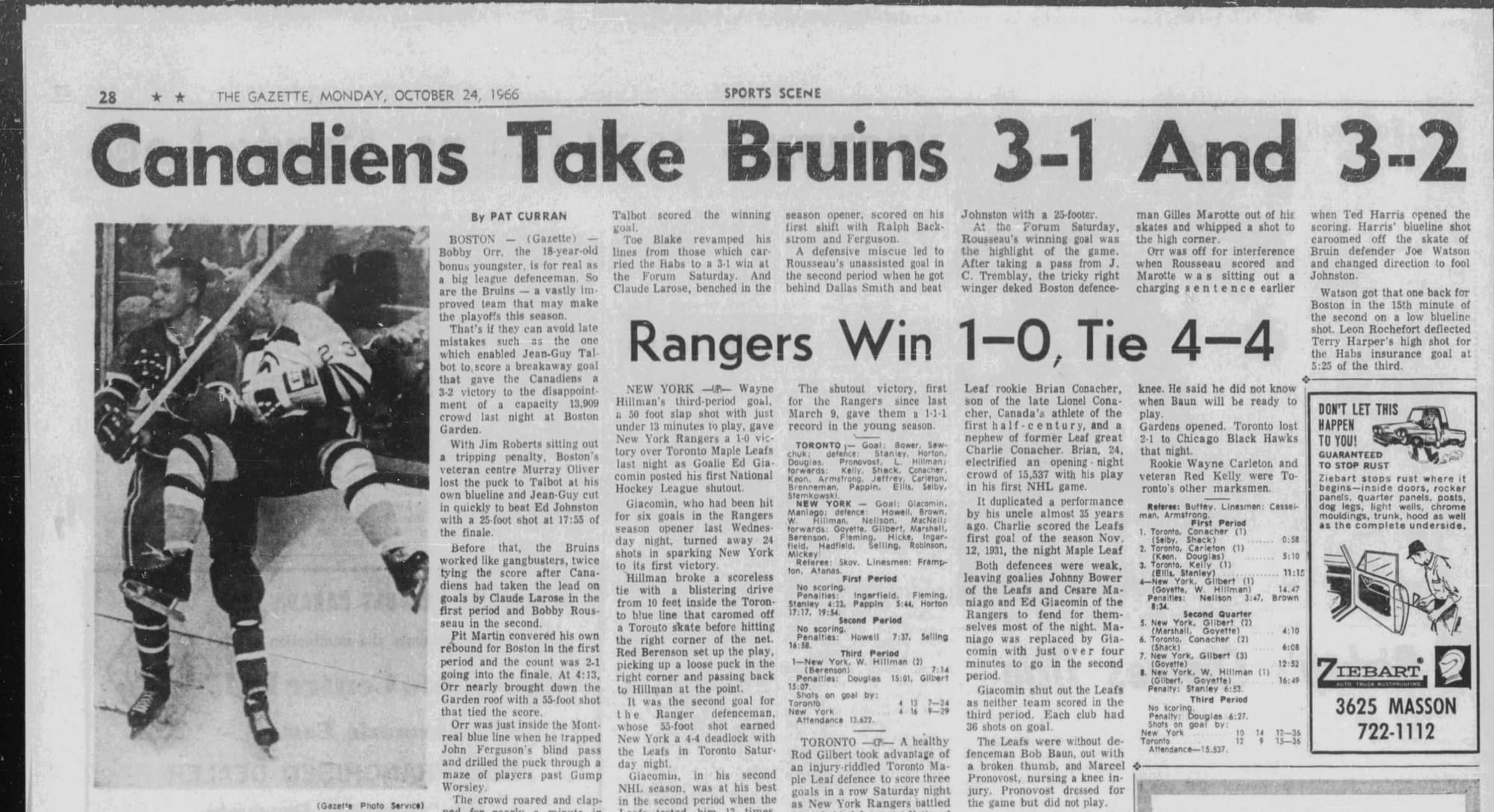
Montreal led 2-1 going into the third period. At 4:13, Orr trapped a Montreal clearing pass at the right point and wound up. "The boy unleashed a slap shot and the puck burst into the back of the net so powerfully that Gump Worsley seemed practically chained to the spot," Tom Fitzgerald wrote in the next morning's Boston Globe. Nobody assisted on it. It tied the game 2-2, and the ovation, Fitzgerald wrote, was "enthusiastic and sustained." By other accounts it went on for more than a minute, with the 18-year-old looking almost embarrassed.
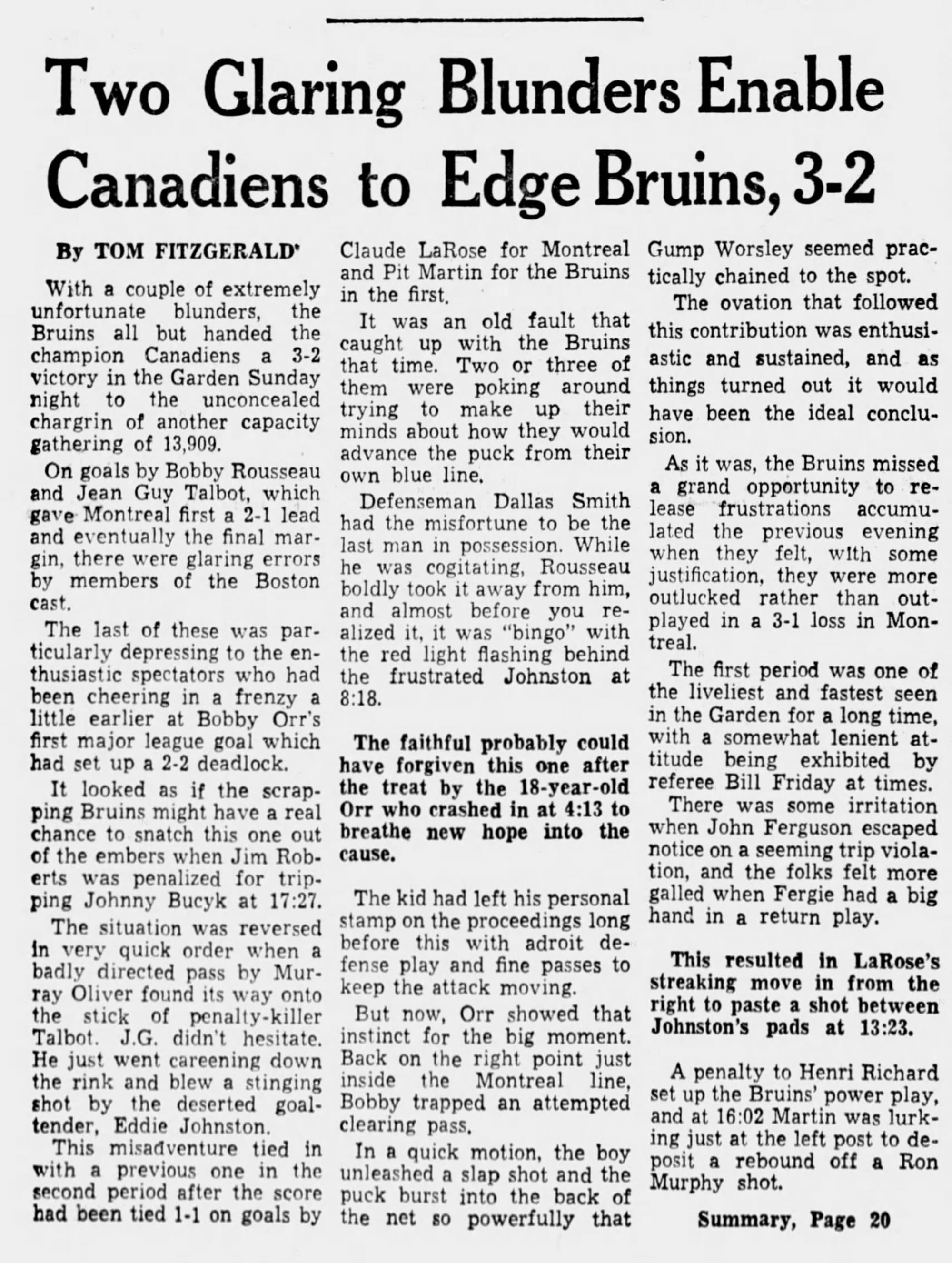
"The fans at the Garden were on their feet, not because the goal was a work of art," Orr wrote years later in his autobiography. He took it as Boston welcoming him.
Jean-Guy Talbot won it for Montreal with a short-handed goal at 17:55, 3-2. Nobody remembers that part.
The kid
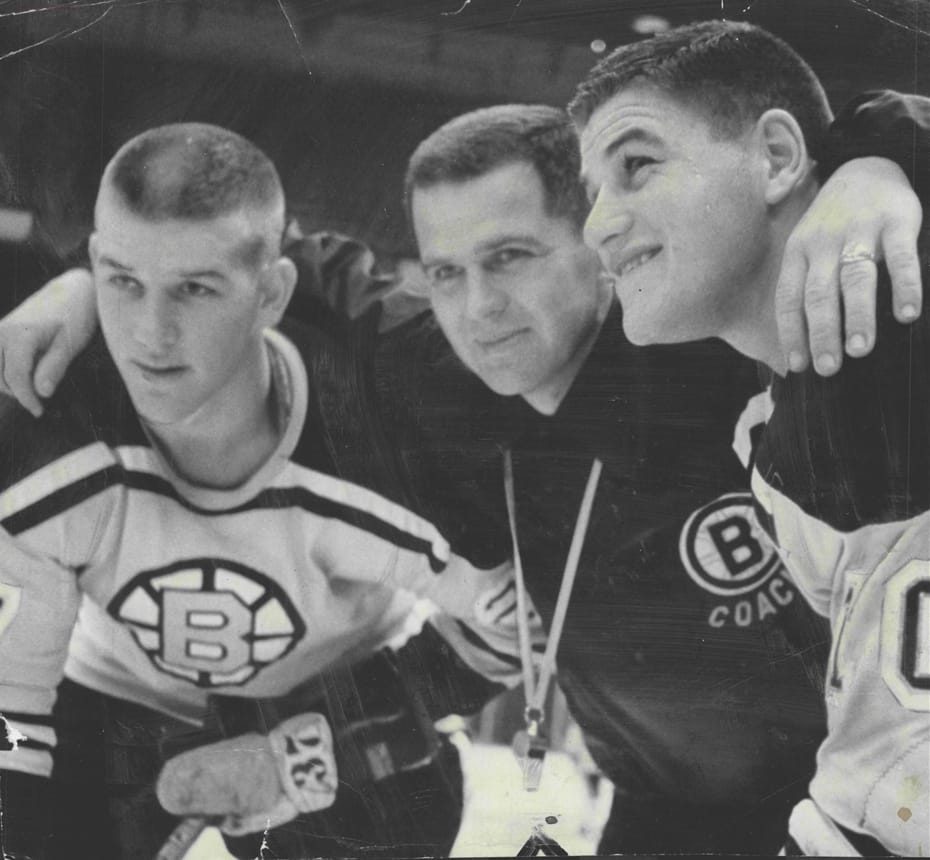
Boston had been waiting for him for years. Bruins scouts first saw him at a bantam tournament in Gananoque, Ontario, playing for his hometown of Parry Sound, a small, quiet kid on defense who carried the puck the length of the ice. Wren Blair called him "a combination of Doug Harvey and Eddie Shore." The Bruins put $1,000 into sponsoring Parry Sound's minor hockey program, and to get the family's signatures they agreed to re-stucco the Orrs' house. He joined Boston's junior team, the Oshawa Generals, at 14.
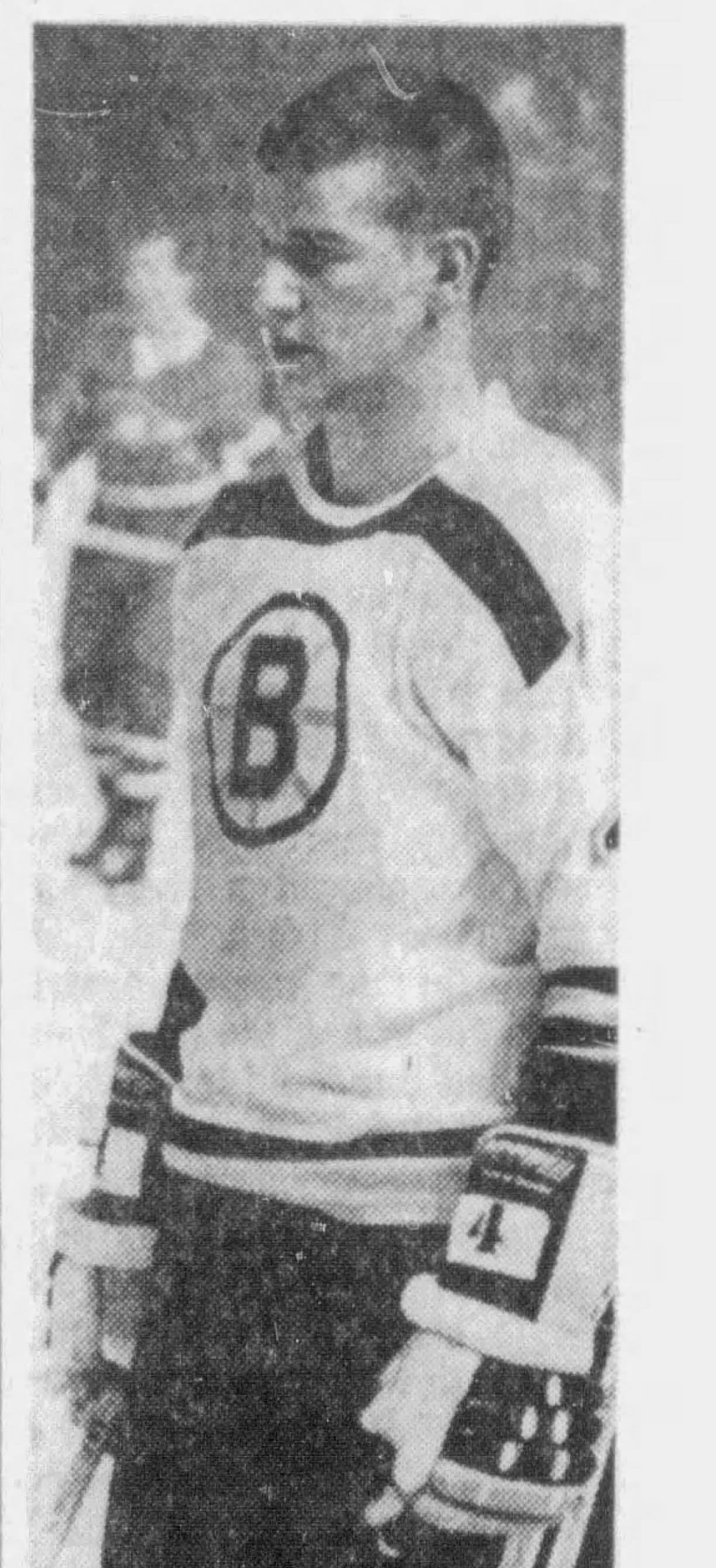
The Bruins needed him. They had missed the playoffs 7 years in a row and finished dead last in 5 of them.
When it came time to sign, Orr brought a Toronto lawyer named Alan Eagleson to negotiate with general manager Hap Emms, which almost nobody in the NHL did in 1966. The 2-year deal he signed on Sept. 3 was reported at $70,000 or more, several times the going rate for a rookie.
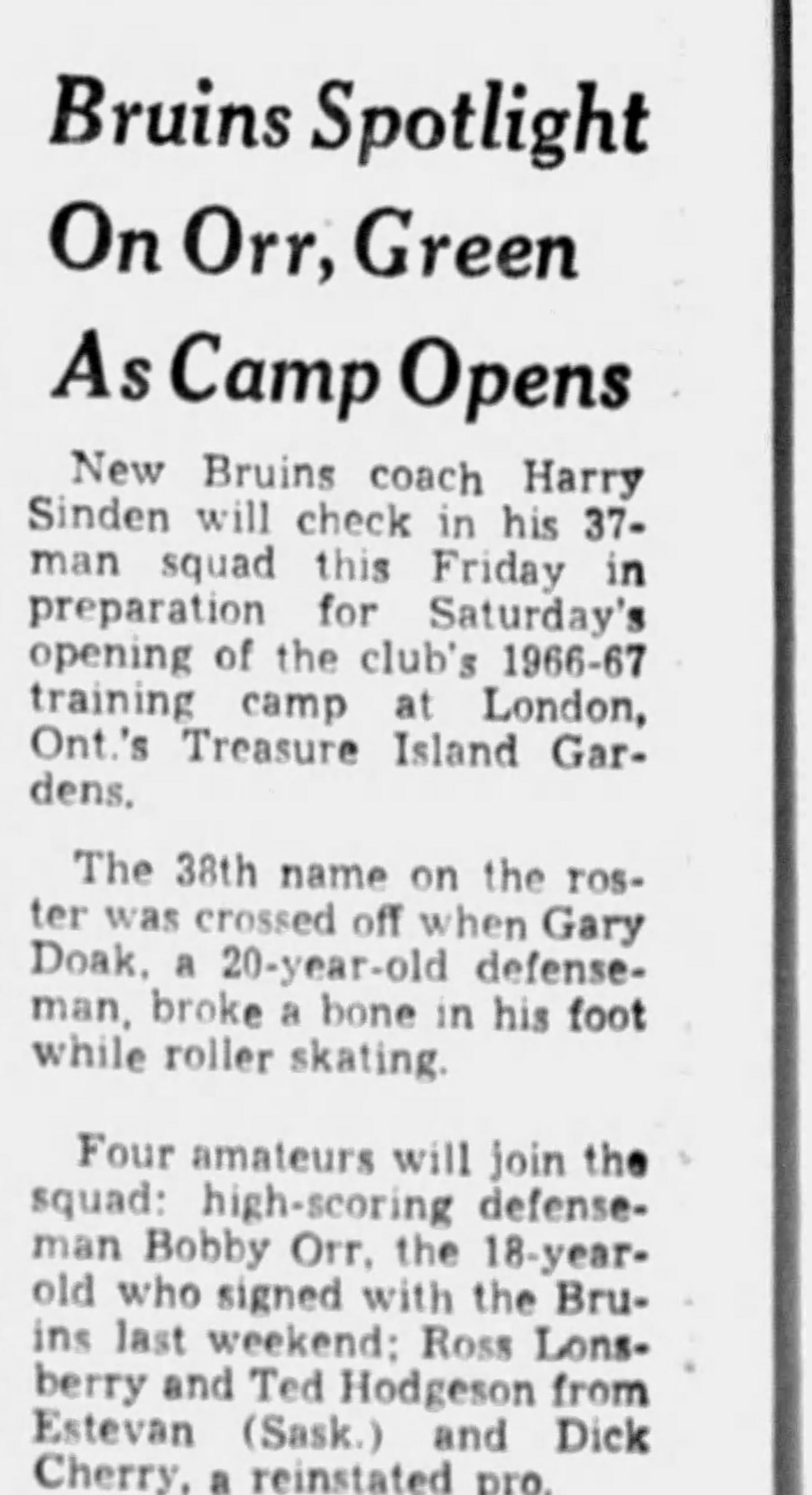
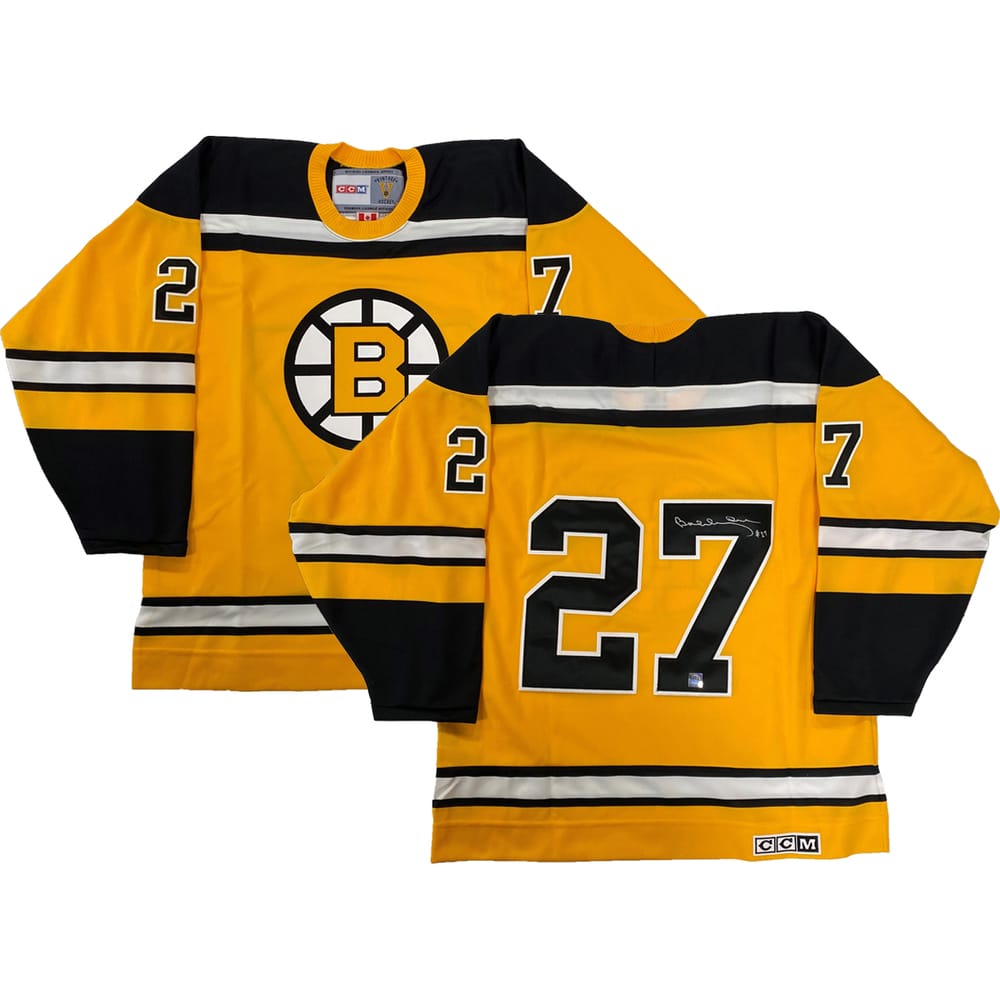
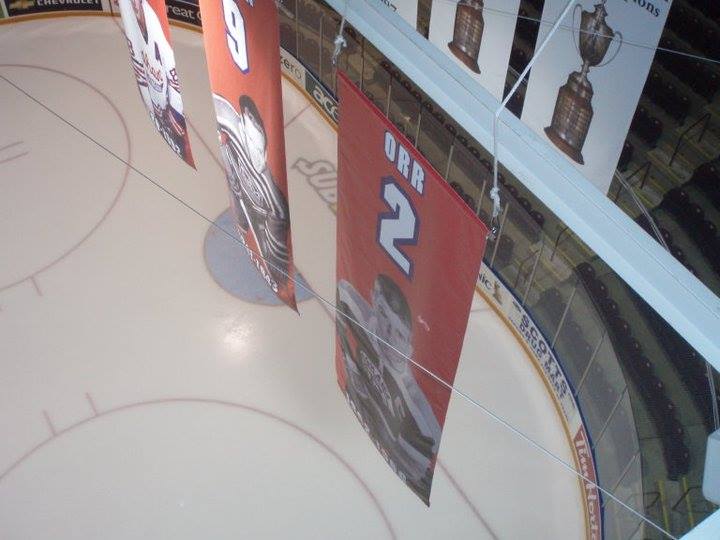
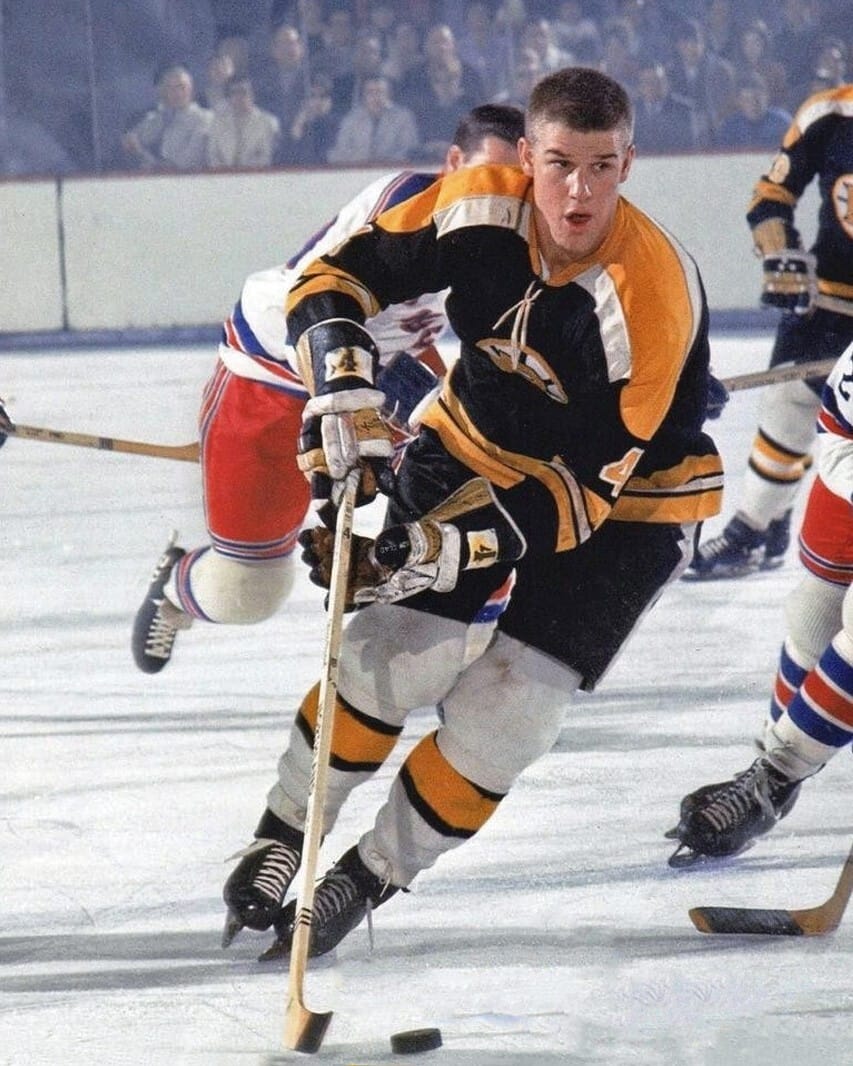
In training camp he wore No. 27. He wore No. 4 from opening night. He had worn No. 2 in Oshawa, but in Boston that number belonged to Eddie Shore.
The debut
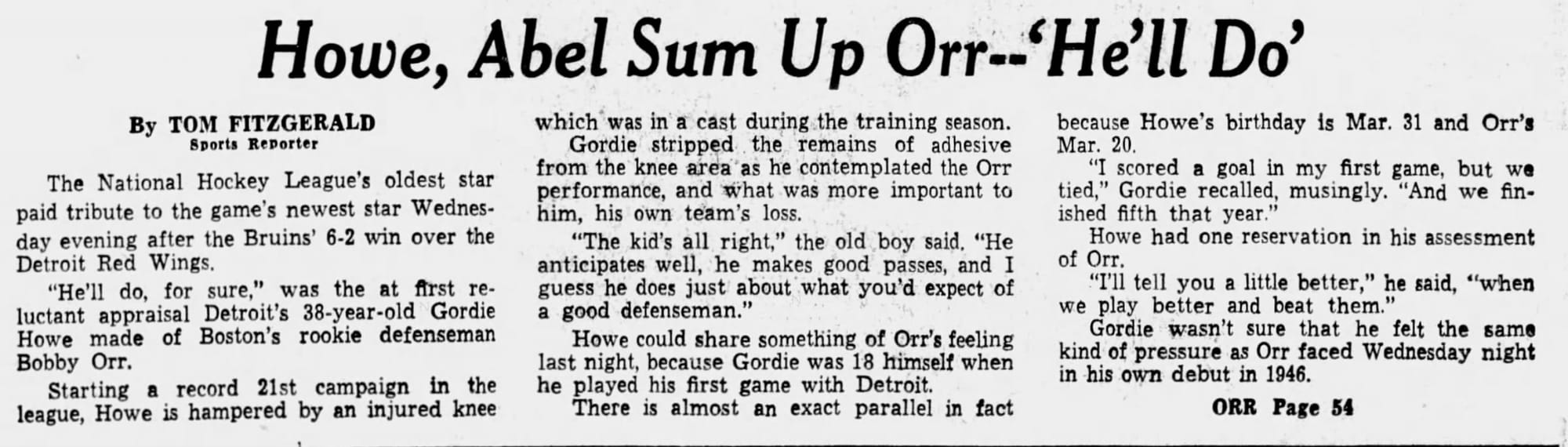
Orr's first game was on Wednesday, Oct. 19, 1966, against Detroit at the Garden. The Bruins won 6-2, and Orr got an assist when his shot came off the end of his stick and Wayne Connelly knocked it in.
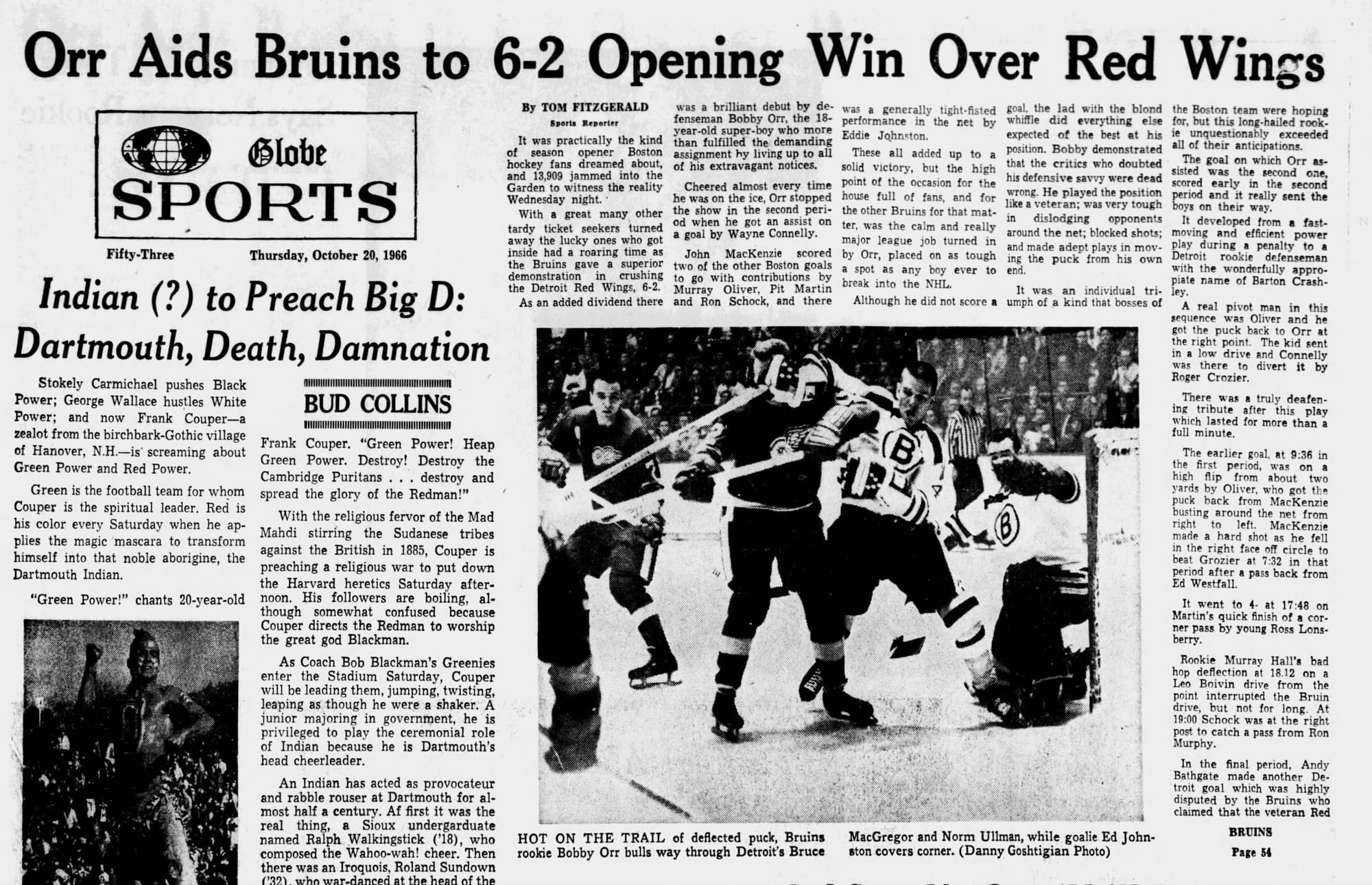
He also caught Gordie Howe with a high elbow. Howe, who was 38, flattened him. "I saw birds for a while," Orr said later. Howe, he said, "had let me know that he was still the man."
After the game, Howe gave the Globe his verdict: "He'll do, for sure." Then he warmed up a little. "The kid's all right. He anticipates well, he makes good passes, and I guess he does just about what you'd expect of a good defenseman." Howe had been 18 in his first NHL game, too.
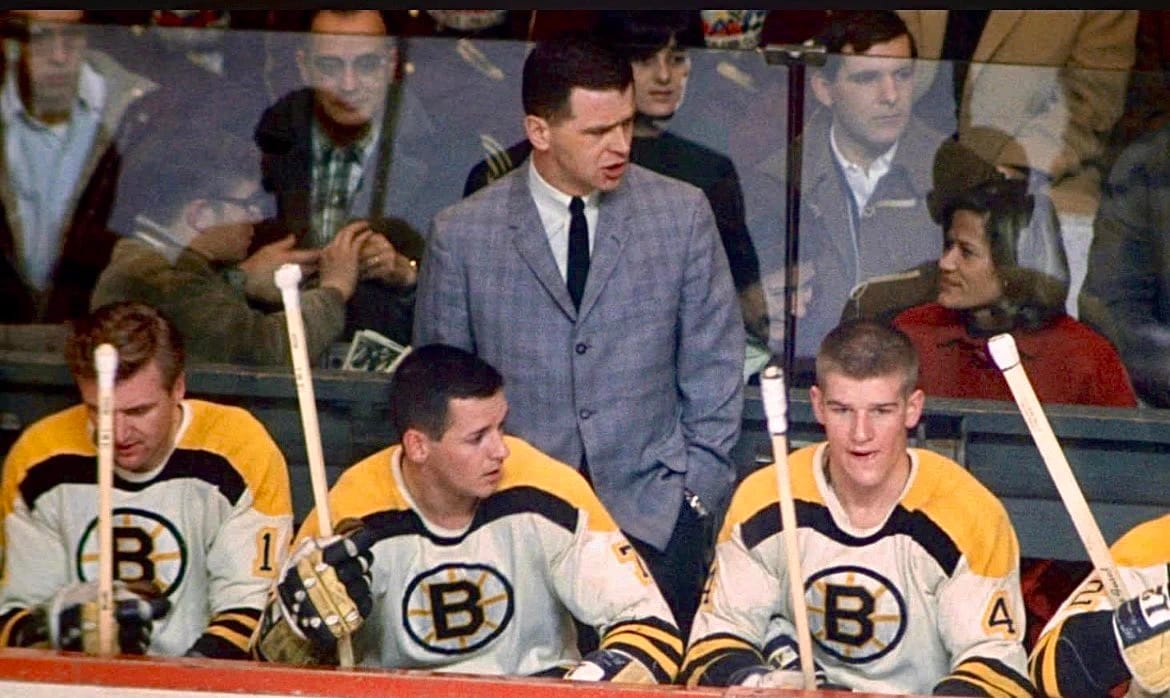
"He was a star from the moment they played the national anthem in the opening game of the season," said Harry Sinden, his first NHL coach.
The rookie year
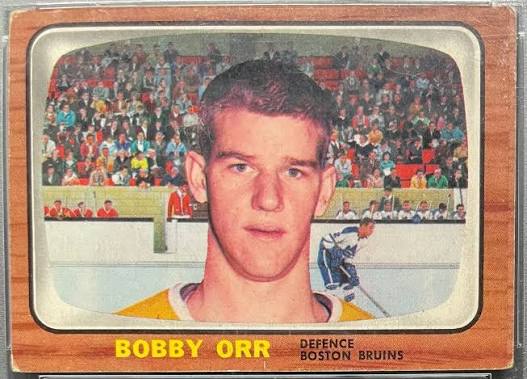
Orr finished his first season with 13 goals and 41 points in 61 games and won the Calder Trophy as the league's top rookie. He missed time after Toronto's Marcel Pronovost checked him into the boards on Dec. 4 and hurt his knee, the first of the injuries that would end his career. The Bruins finished last again, 17-43-10.
When the Rangers' Harry Howell accepted the Norris Trophy as the league's best defenseman that spring, he said he might as well enjoy it now. He was right. Orr won the next 8.
What came after
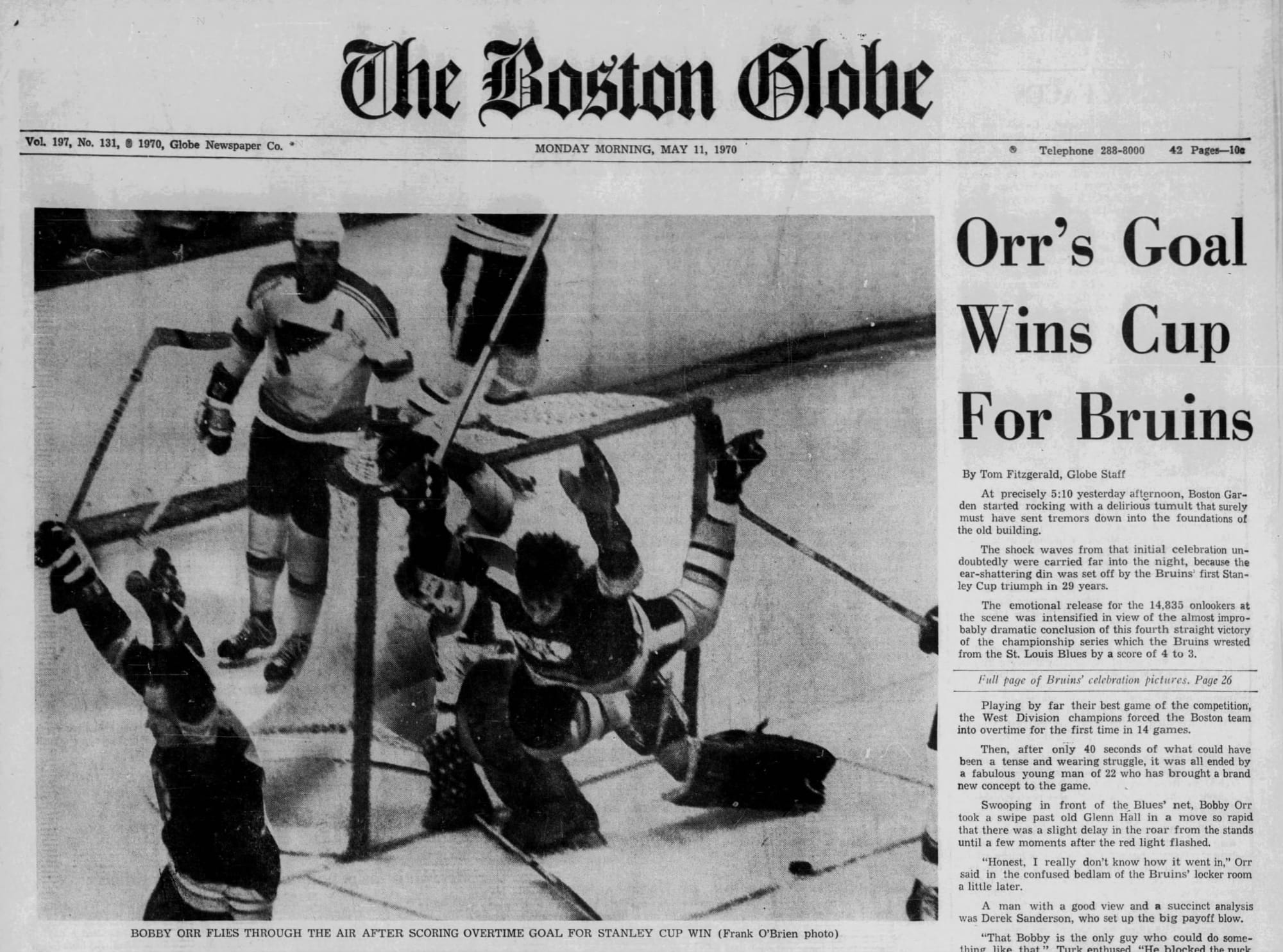
Orr won the Norris every year from 1968 through 1975. In 1969-70 he became the first defenseman to win the scoring title, with 120 points, and won the Hart, the Norris, the Art Ross and the Conn Smythe in the same season. He ended it on May 10, 1970, 40 seconds into overtime of Game 4 against St. Louis, scoring the Cup-winner on a give-and-go with Derek Sanderson and sailing across the crease after Noel Picard tripped him. Ray Lussier's photo of that moment is the most famous picture in hockey.
The next season he had 139 points and a plus-124. Both are still NHL records for a defenseman, and nobody at any position has topped the plus-minus. He scored the Cup-winner again in 1972, at Madison Square Garden, and won another scoring title in 1975.
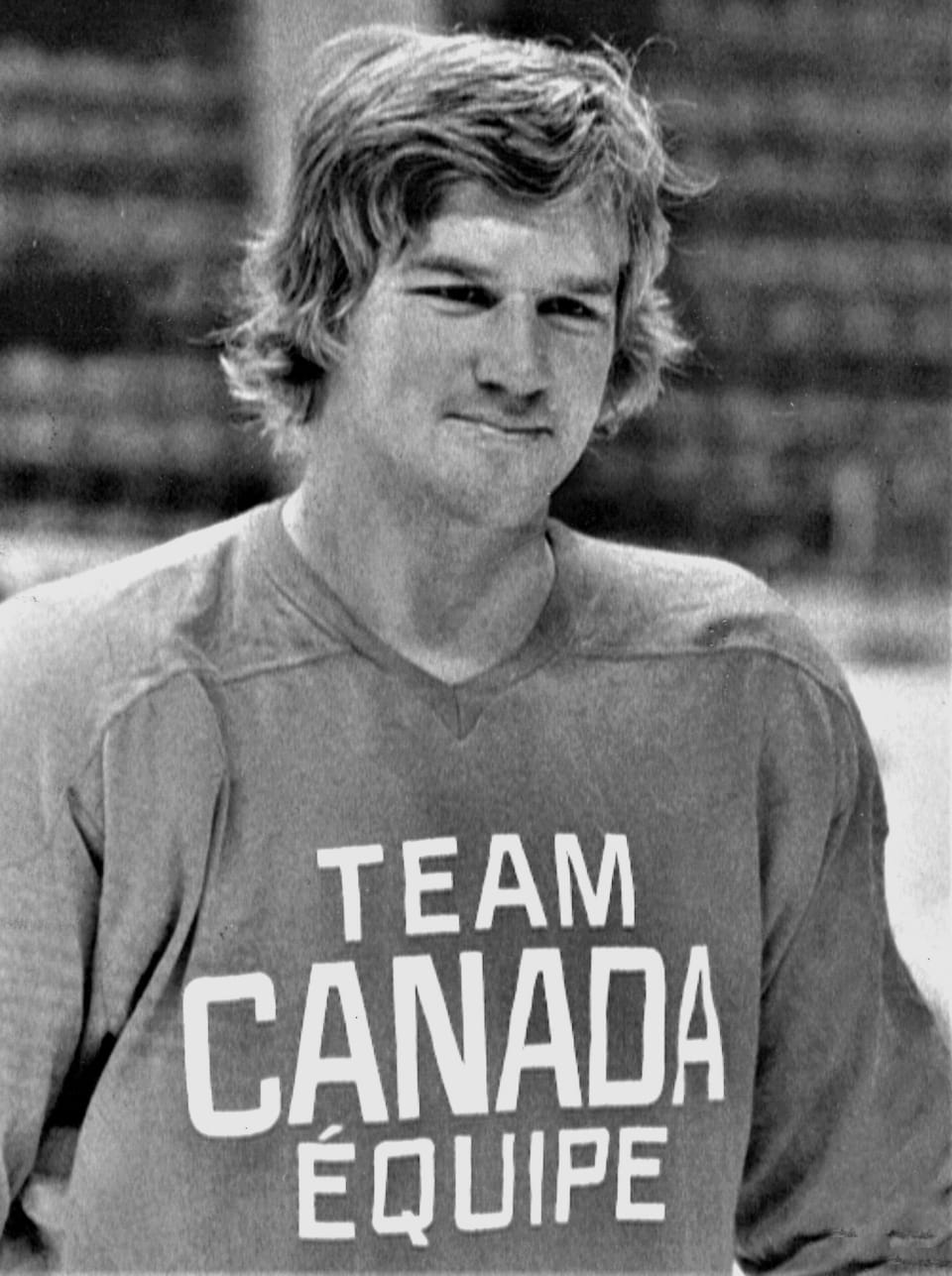
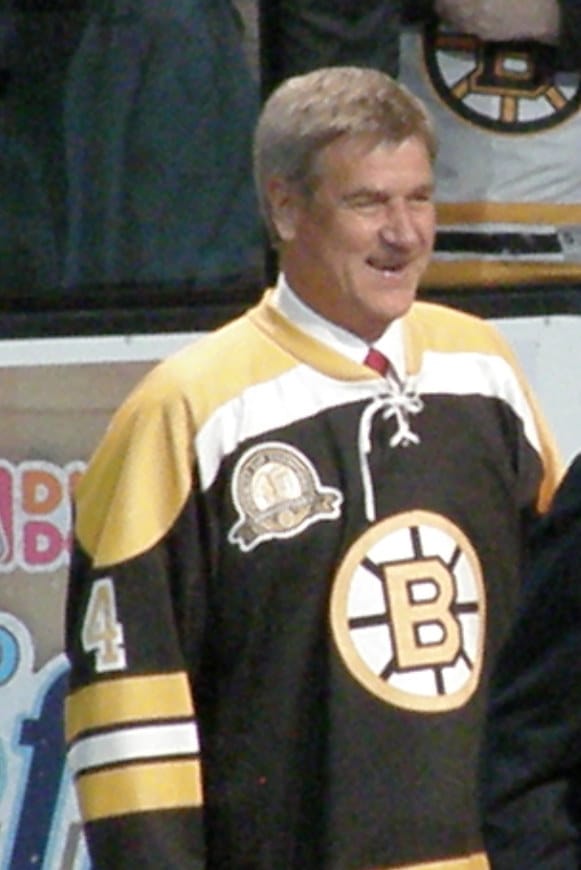
His knees gave out before he did. After at least 6 operations, he left Boston for Chicago as a free agent in 1976, played only 26 games for the Black Hawks, and announced his retirement on Nov. 8, 1978, at 30. He finished with 270 goals and 915 points in 657 games. The Bruins retired No. 4 that January, and the Hockey Hall of Fame waived its waiting period and inducted him that September, at 31, the youngest player it had ever inducted.
Plenty of sources, Wikipedia among them, put his first goal on Oct. 22, the night of the loss in Montreal. The box score says it came a night later, on Sunday, Oct. 23, 60 years ago this week.
October 23, 1966. This week in sports history.

Comments ()