On This Date: Muhammad Ali Beats George Foreman in the Rumble in the Jungle (Oct. 30, 1974)

On Oct. 30, 1974, Muhammad Ali used the rope-a-dope to knock out the unbeaten George Foreman in Zaire and win back the heavyweight championship.

On This Date: Muhammad Ali Beats George Foreman in the Rumble in the Jungle (Oct. 30, 1974)
Foreman on the canvas in the 8th round as referee Zack Clayton steps in, Kinshasa, Oct. 30, 1974.

Muhammad Ali is the most famous athlete of the 20th century, and the Rumble in the Jungle is the fight people mean when they explain why.

But going into Oct. 30, 1974, almost nobody thought Ali would win it. He was 32, and the man he was fighting had never lost.
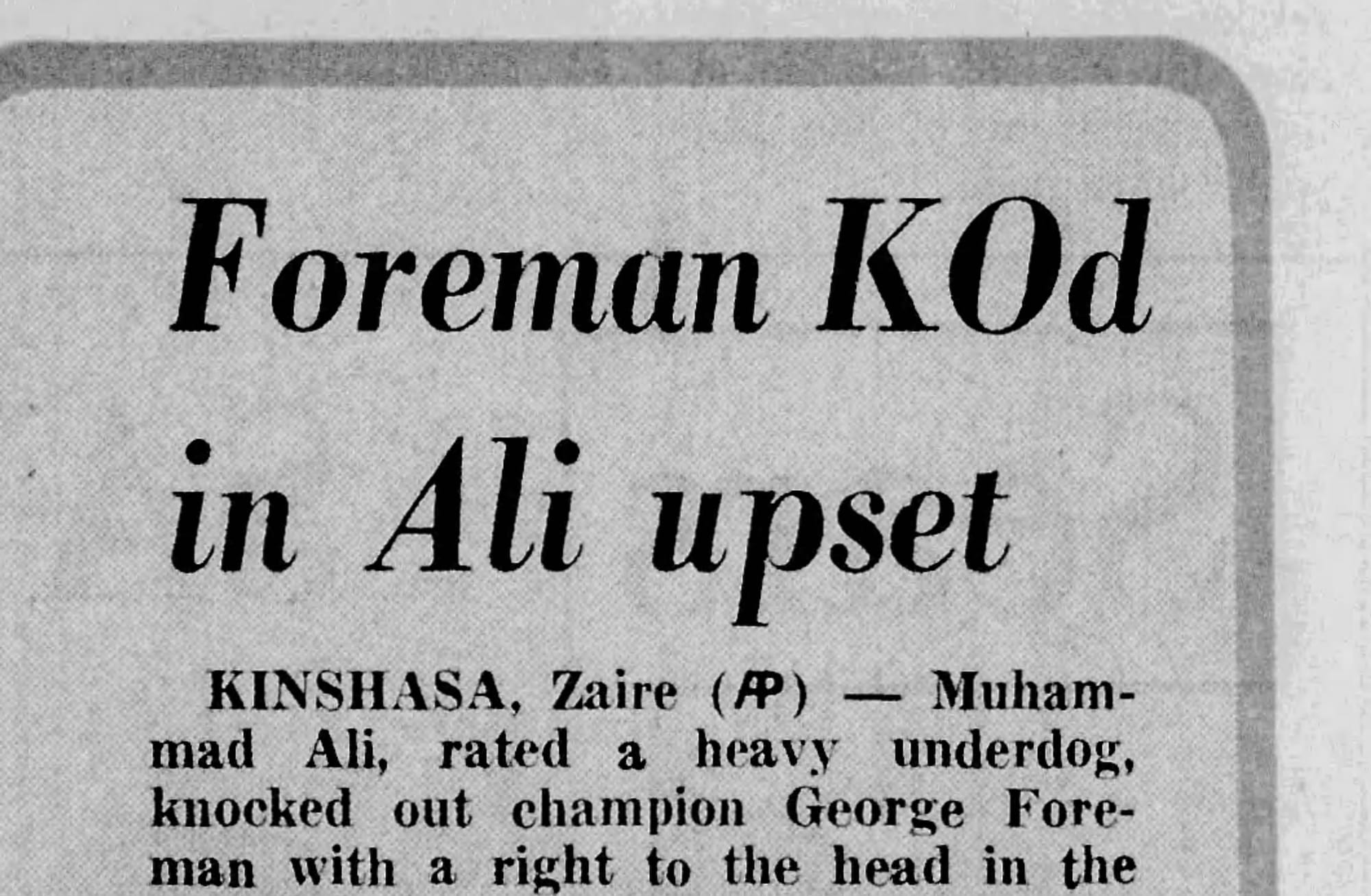
“Foreman KOd in Ali upset.” The news on the front page of Foreman’s hometown paper. (The Houston Post, Oct. 30, 1974, p. 1, via Newspapers.com)

The Champion Nobody Wanted to Fight

George Foreman was 25, a 1968 Olympic gold medalist from Houston, and 40-0 with 37 knockouts. He had taken the heavyweight title from Joe Frazier in Jamaica in January 1973 by knocking him down 6 times in 2 rounds. Then he knocked out Ken Norton in 2 rounds. Frazier and Norton were the only 2 men who had ever beaten Ali.
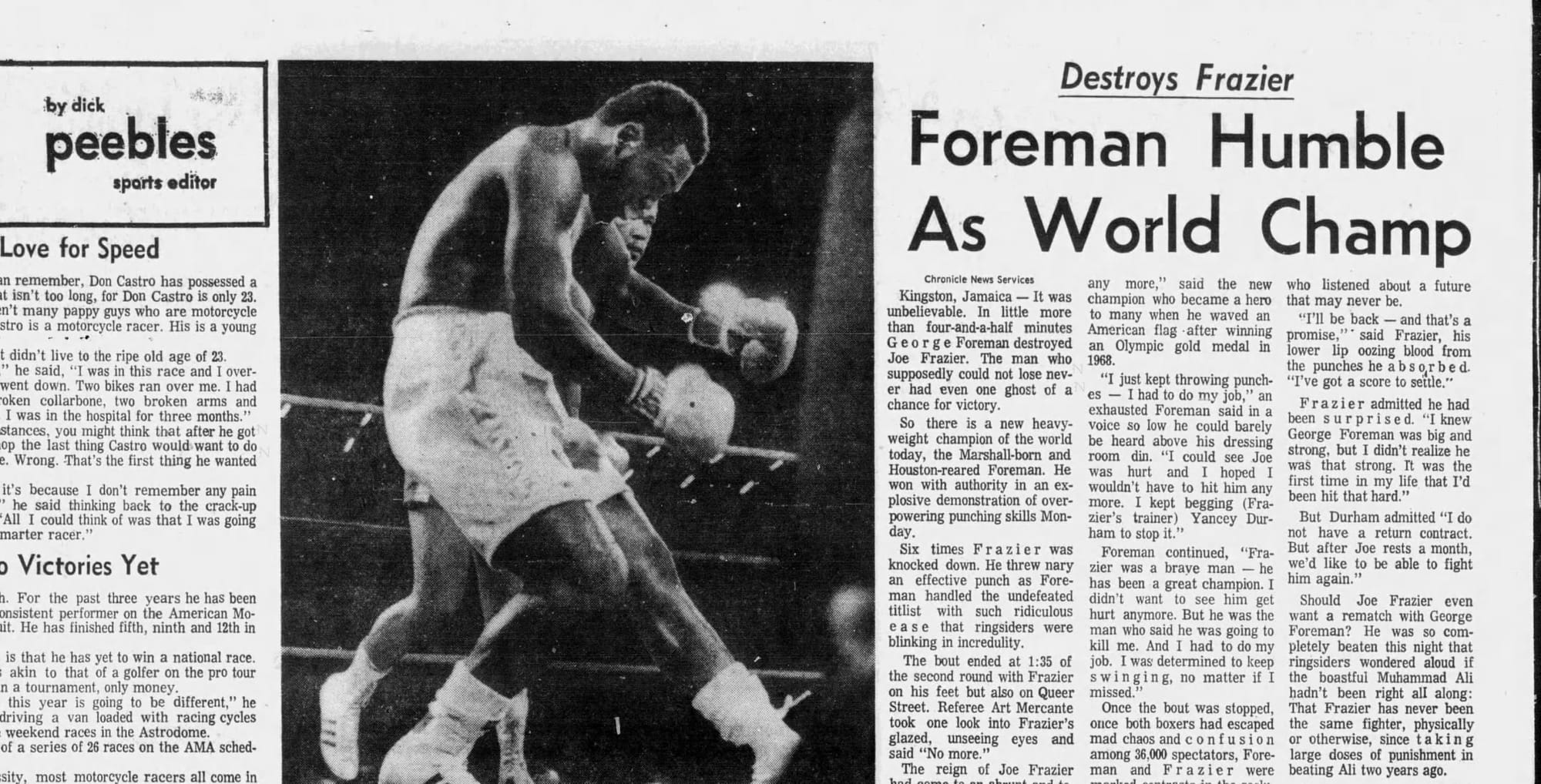
“Foreman Humble As World Champ.” Frazier’s knees buckle in Kingston, Jamaica, in January 1973. (The Houston Chronicle, Jan. 23, 1973, p. 29, via Newspapers.com)

Ali had been stripped of the title in 1967 for refusing to be drafted into the Army and lost more than 3 years of his career. He had lost to Frazier in 1971, had his jaw broken by Norton in 1973, and won the rematches with both. He was still fast, still loud and still popular. Most people thought he was also about to get hurt.
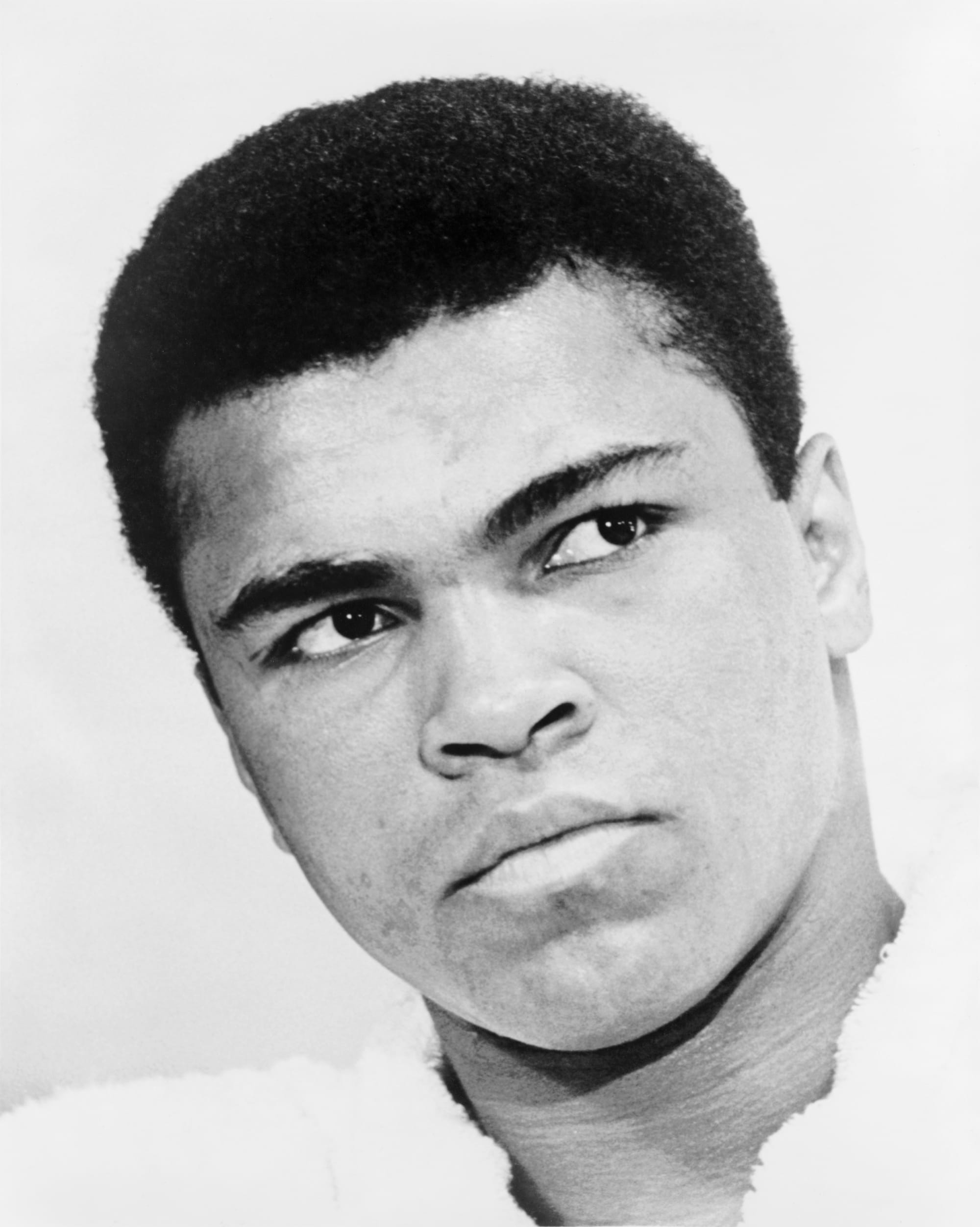
Ali in 1967, the year he was stripped of the title. (Photo: Ira Rosenberg, New York World-Telegram and the Sun, via Library of Congress)

The bookmakers had Ali as a 4-to-1 underdog.

Kinshasa

The fight was the first big promotion for a former Cleveland numbers runner named Don King. He got both fighters to sign by promising each $5 million, more than any boxer had ever been paid, and he got the money from the government of Zaire, where President Mobutu Sese Seko wanted the publicity.

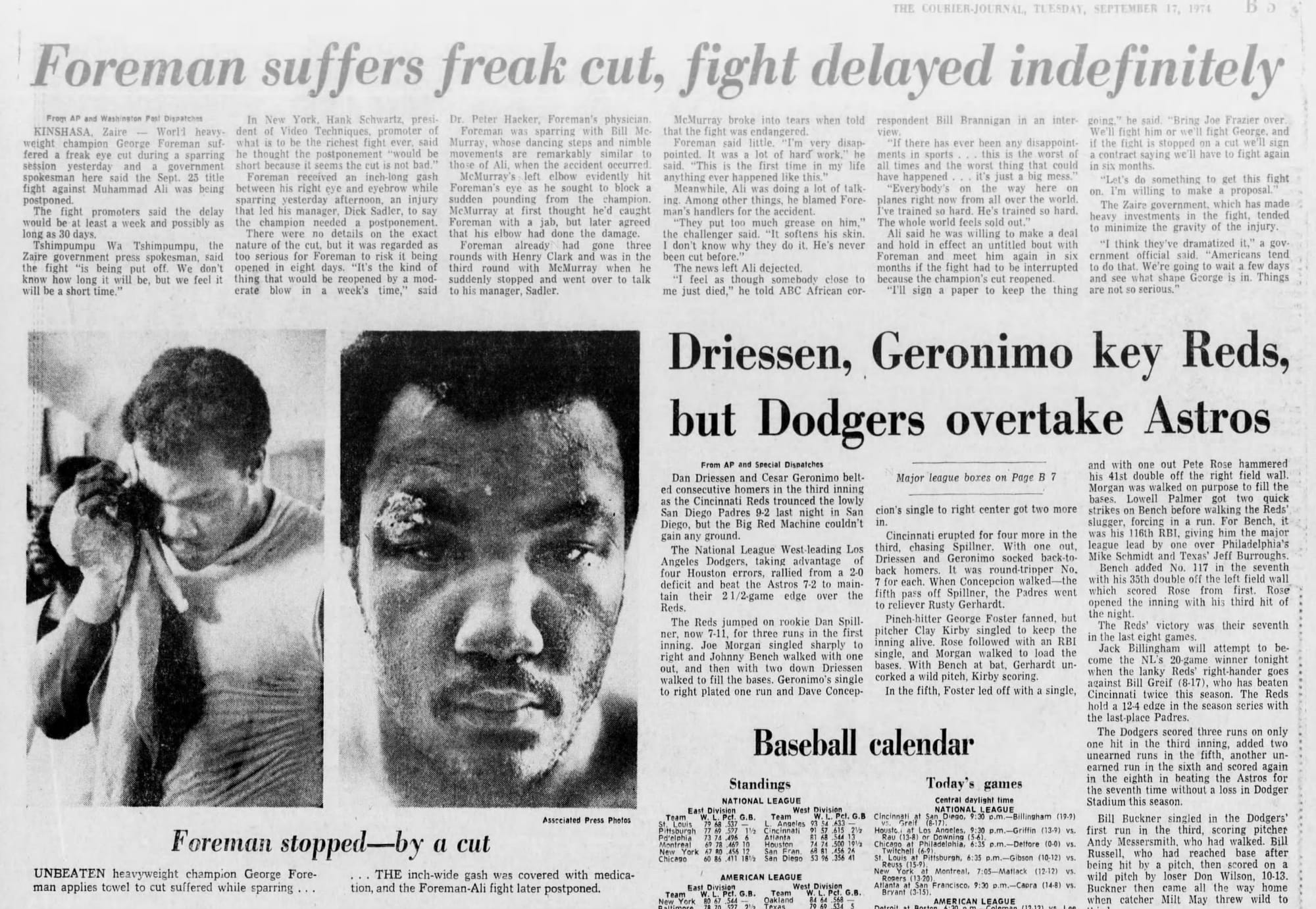
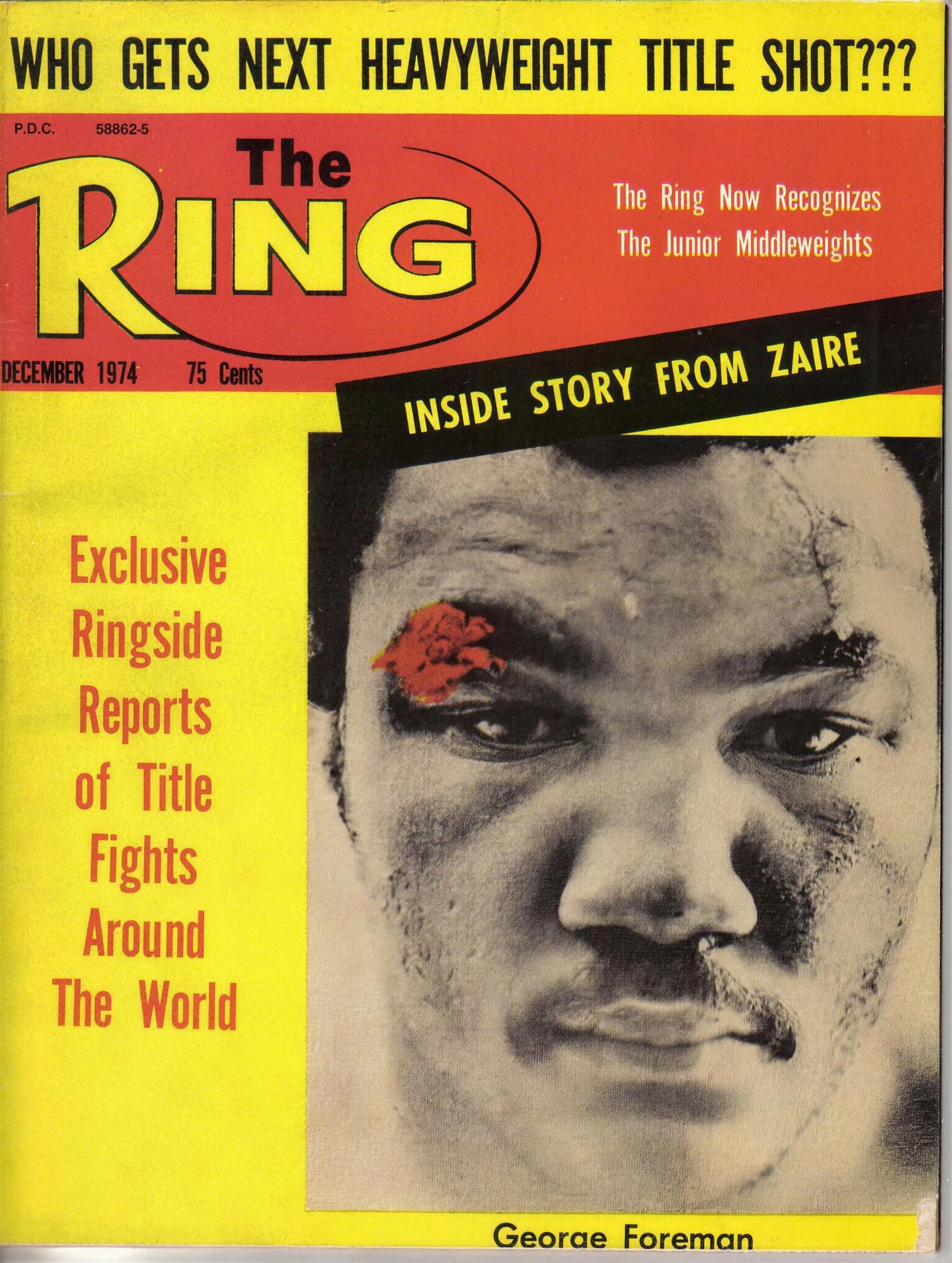
It was supposed to happen on Sept. 25. 9 days before, a sparring partner’s elbow cut Foreman over the right eye, and the fight was pushed back 5 weeks. Ali spent them running through the streets of Kinshasa, where crowds followed him chanting “Ali, bomaye!” It means “Ali, kill him.”
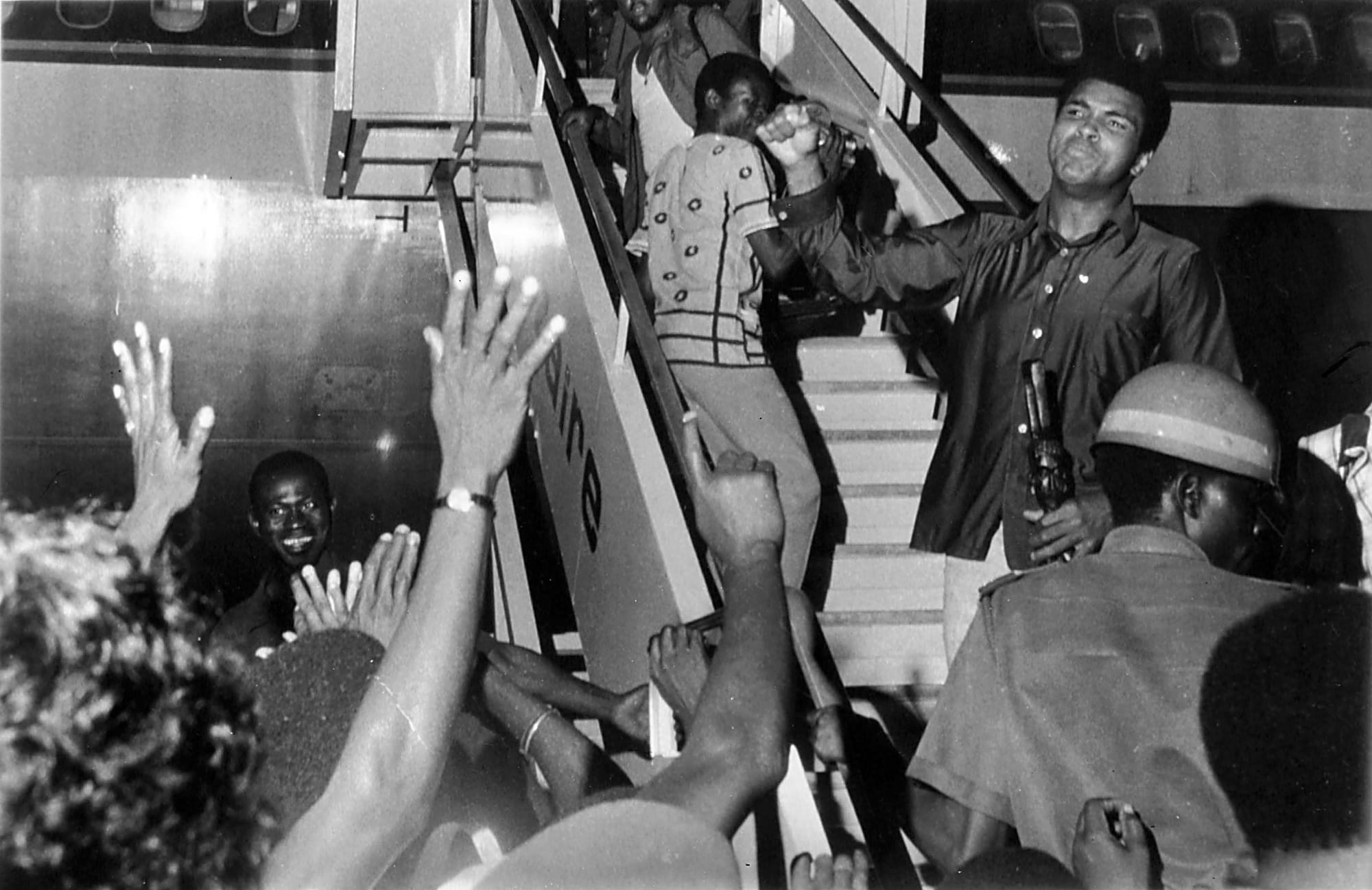
Ali among the crowds in Zaire before the fight.
Foreman’s cut eye on the cover of The Ring, December 1974.
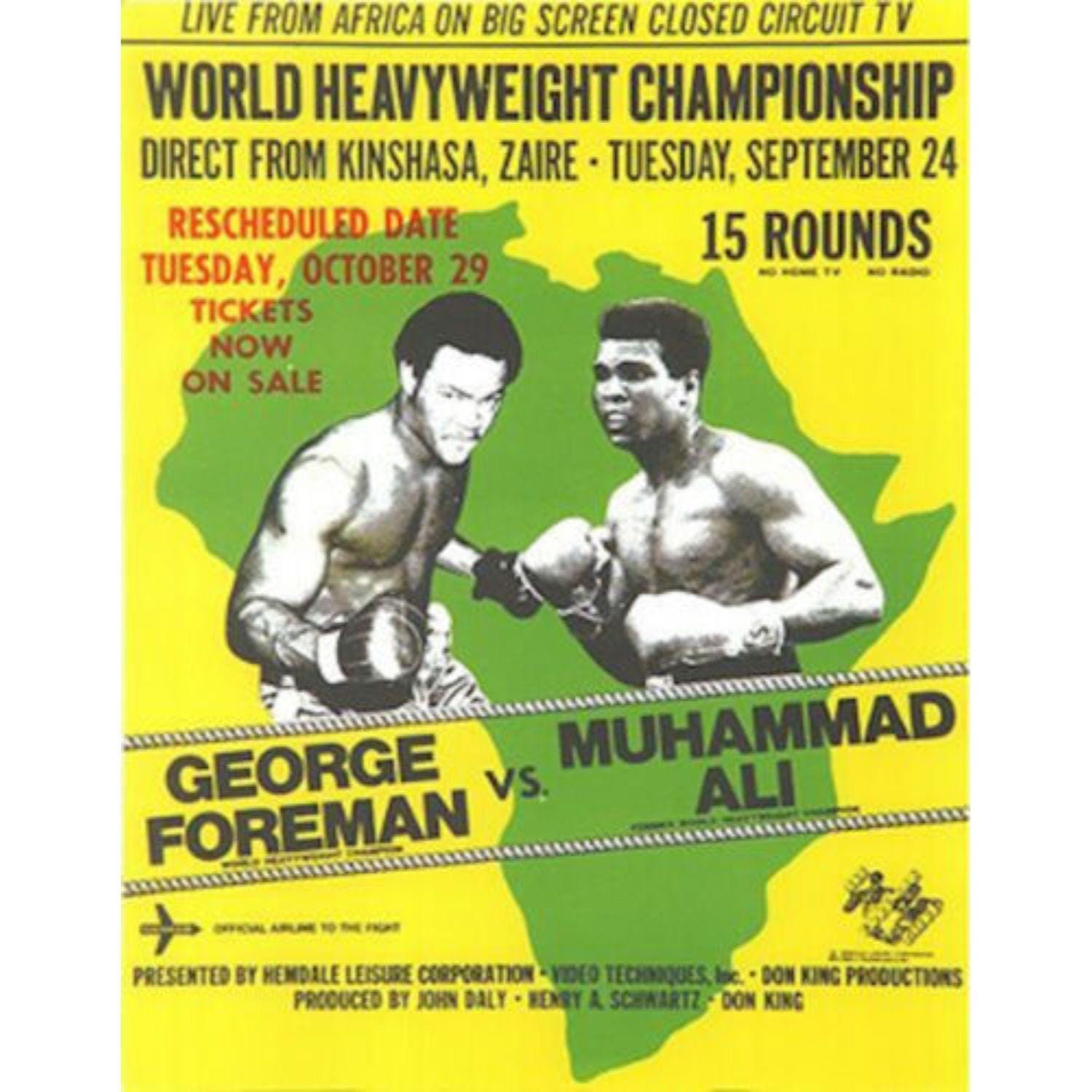
A closed-circuit TV poster stamped with the new date: Tuesday, Oct. 29.
“Foreman suffers freak cut, fight delayed indefinitely.” A sparring partner’s elbow opened a gash over Foreman’s right eye 9 days before the original date. (The Courier-Journal, Louisville, Sept. 17, 1974, p. B5, via Newspapers.com)

The fight started around 4 a.m. local time so it could air live on closed-circuit TV in the United States at 10 p.m. Eastern. The AP counted 50,000 people in the Stade du 20 Mai. The New York Times said nearly 60,000.
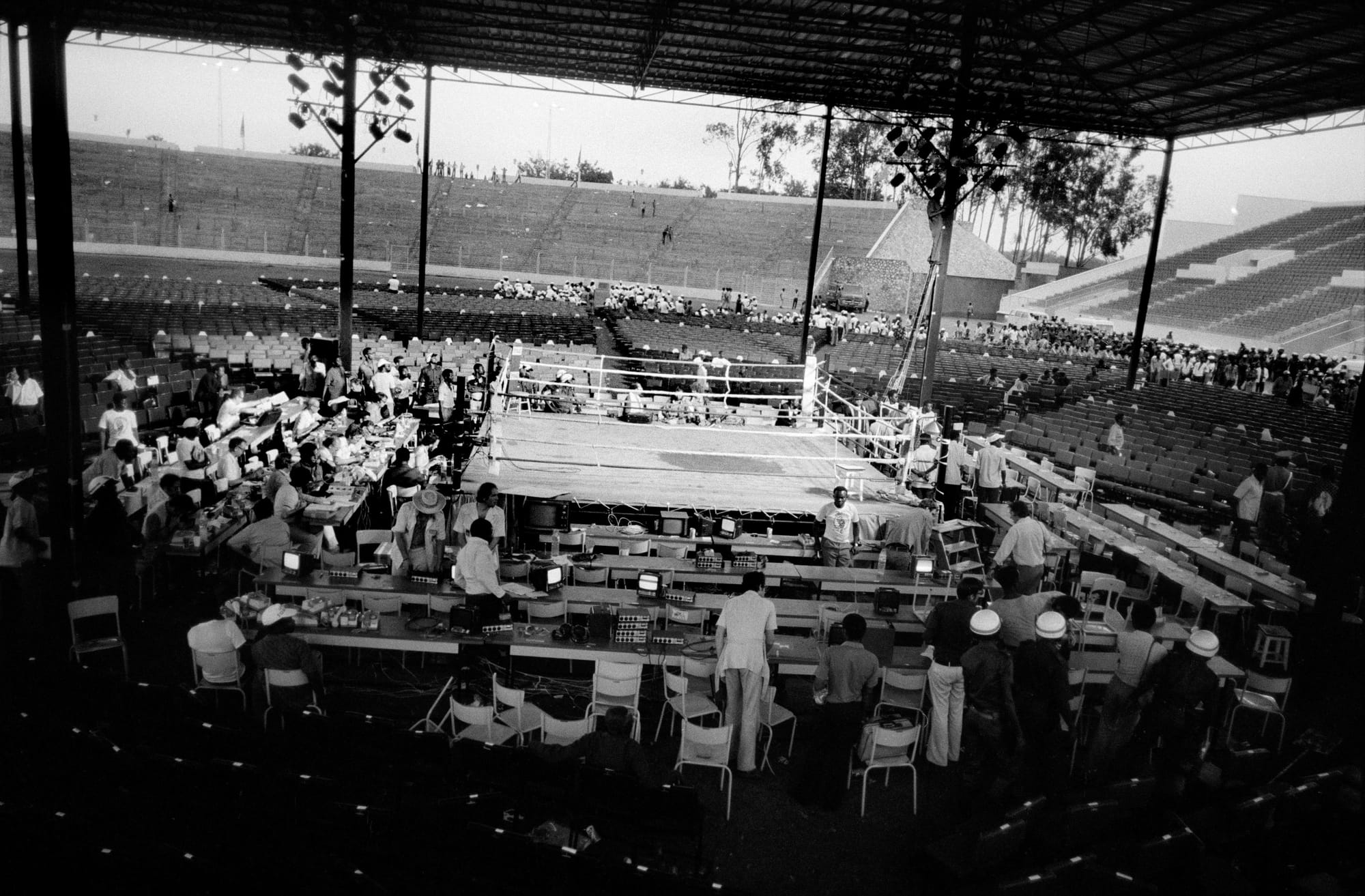
Ringside at the Stade du 20 Mai.

The Rope-a-Dope

Ali came out and hit Foreman with right-hand leads, a punch fighters aren’t supposed to throw against a puncher, and won the 1st round. Then, in the 2nd, he did something that made his own corner scream at him. He leaned back on the ropes, covered up and let Foreman hit him.

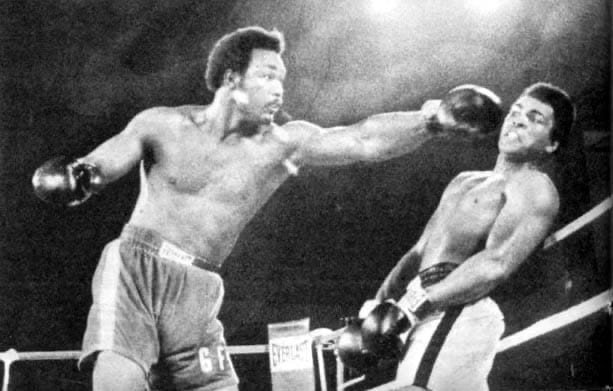
Foreman pounds away with Ali on the ropes.
Foreman throws, and Ali leans away on the ropes in Kinshasa.

Round after round, Foreman pounded Ali’s arms and body. Ali took it, leaned on him in the clinches and talked to him. “That all you got, George?” Foreman remembered him saying. Ali would later give the strategy a name: the rope-a-dope.

“I didn’t dance for a reason,” he said afterward. “It was to make him lose all his power.”
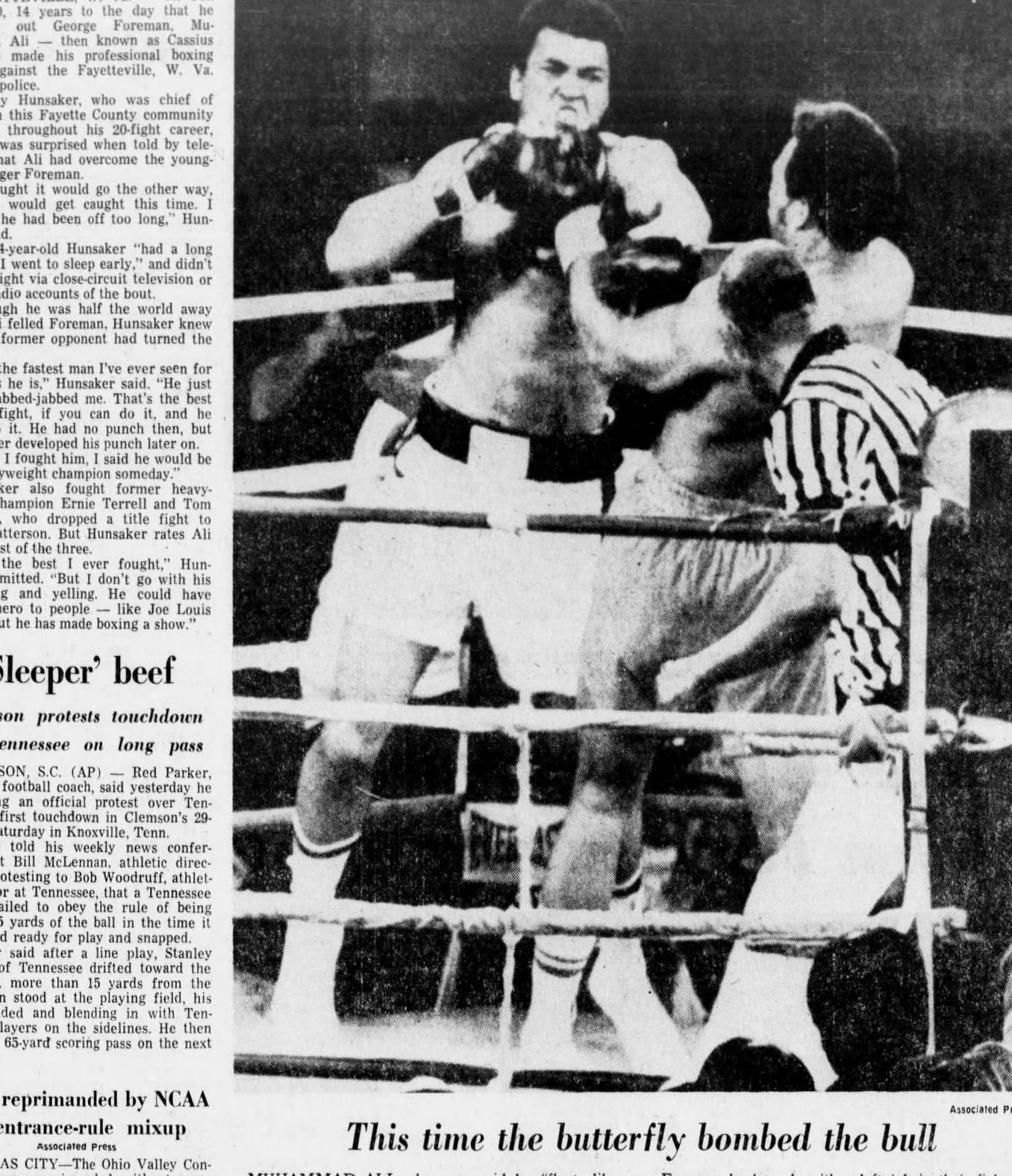
“This time the butterfly bombed the bull.” Ali snaps Foreman’s head back with a jab. (AP photo in The Courier-Journal, Louisville, Oct. 30, 1974, p. C6, via Newspapers.com)

By the 4th round, wrote Dave Kindred of the Louisville Courier-Journal, Foreman “was working on legs of rubber.” By the 7th, he could barely lift his arms.
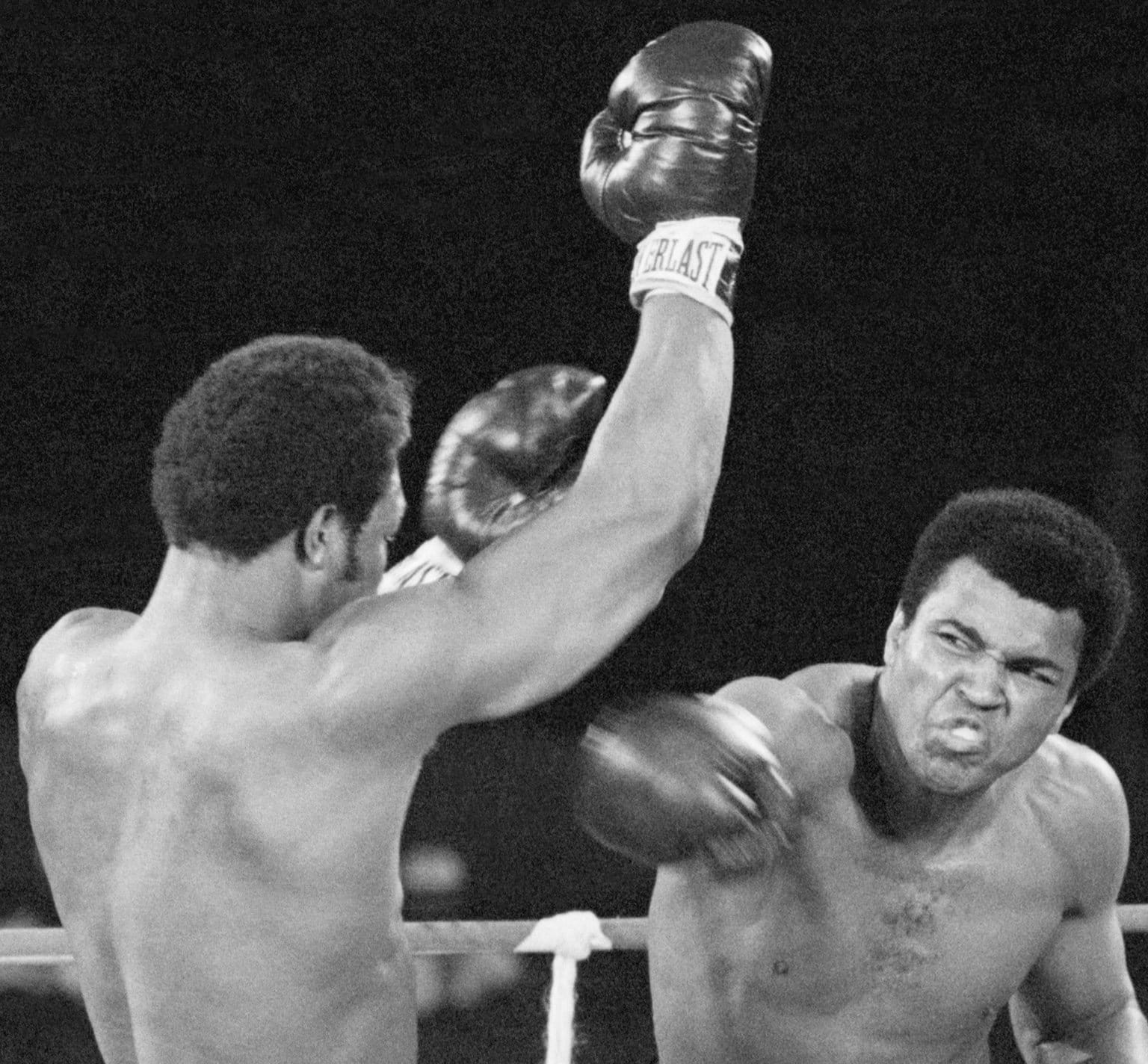
Ali throws a right at Foreman. (UPI photo, via Wikimedia Commons)

Late in the 8th round, Ali came off the ropes, landed a combination and finished with a right hand. Foreman spun and went down. He was getting up when referee Zack Clayton counted 10, at 2:58 of the round. Ali was ahead on all 3 scorecards.
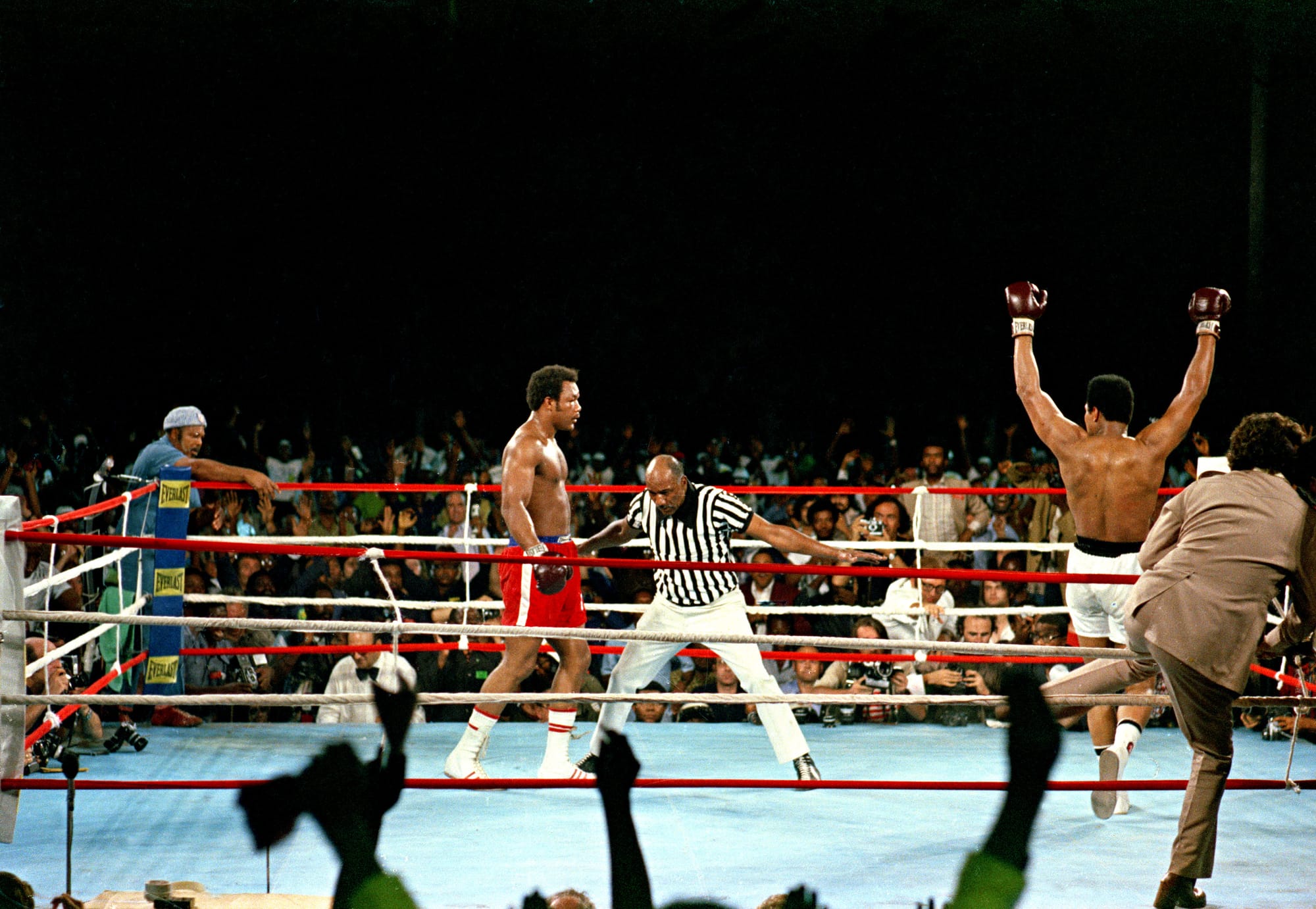
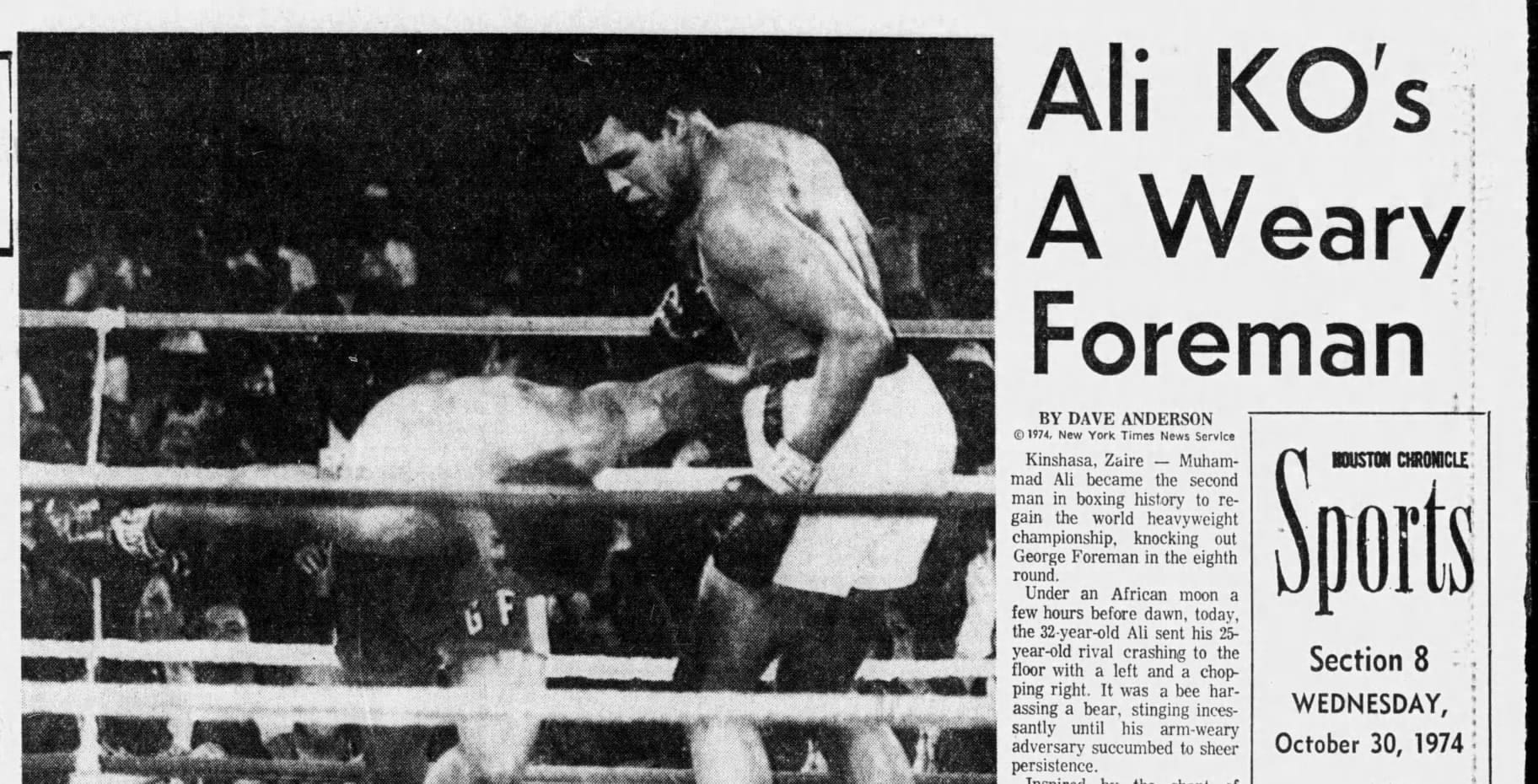
Ali raises his arms as Foreman stands in his corner.
“It’s all over for George Foreman as he heads for canvas in eighth round.” (The Houston Chronicle, Oct. 30, 1974, p. 85, via Newspapers.com)
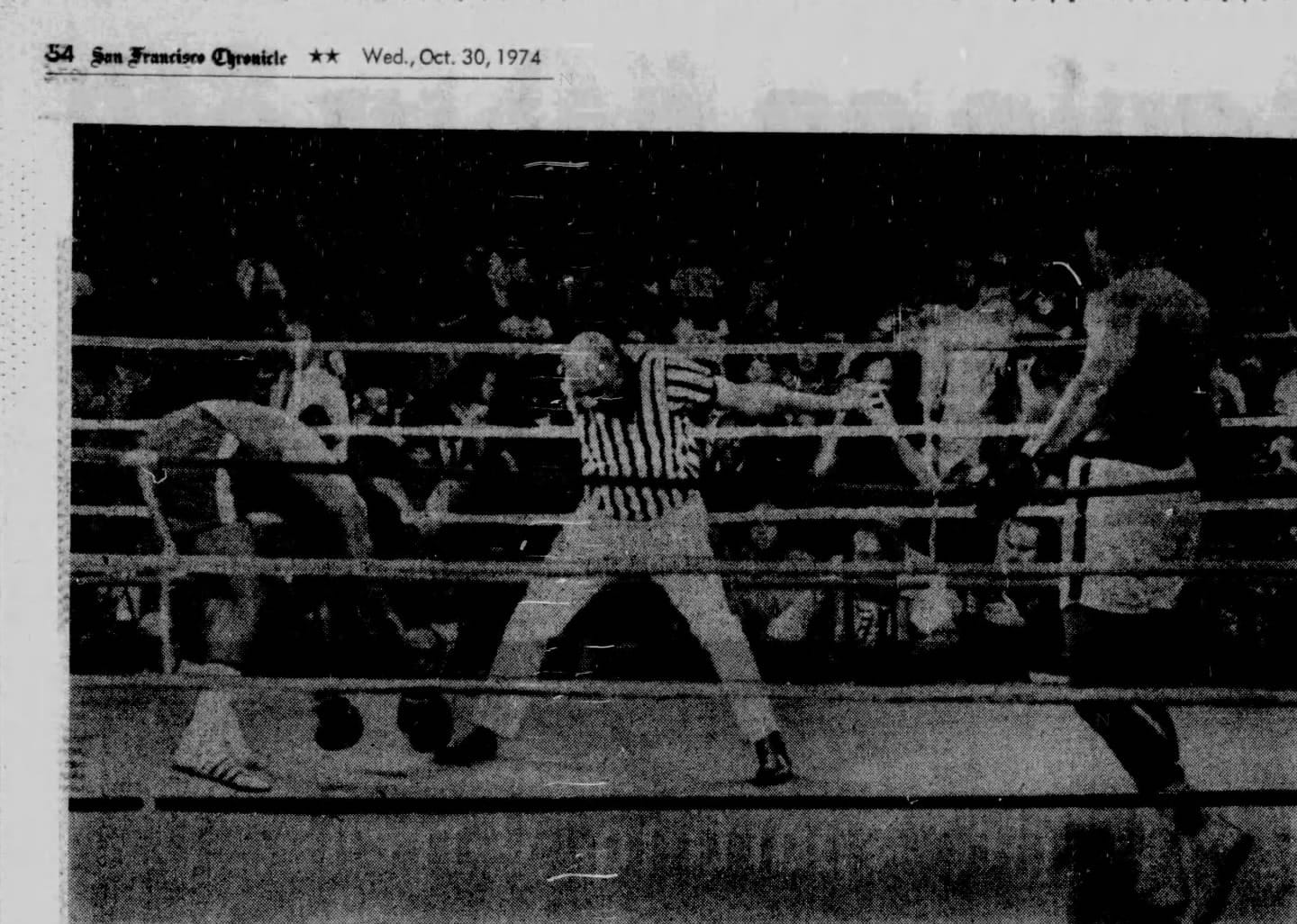
Referee Zack Clayton counts as Foreman tries to get up. (AP Wirephoto in the San Francisco Chronicle, Oct. 30, 1974, p. 54, via Newspapers.com)

He was heavyweight champion of the world again, 7 years after the title was taken from him and 14 years to the day after his first pro fight. Only Floyd Patterson had ever won the title back before.

“I told you he was nothing,” Ali told reporters. “Did you listen?”
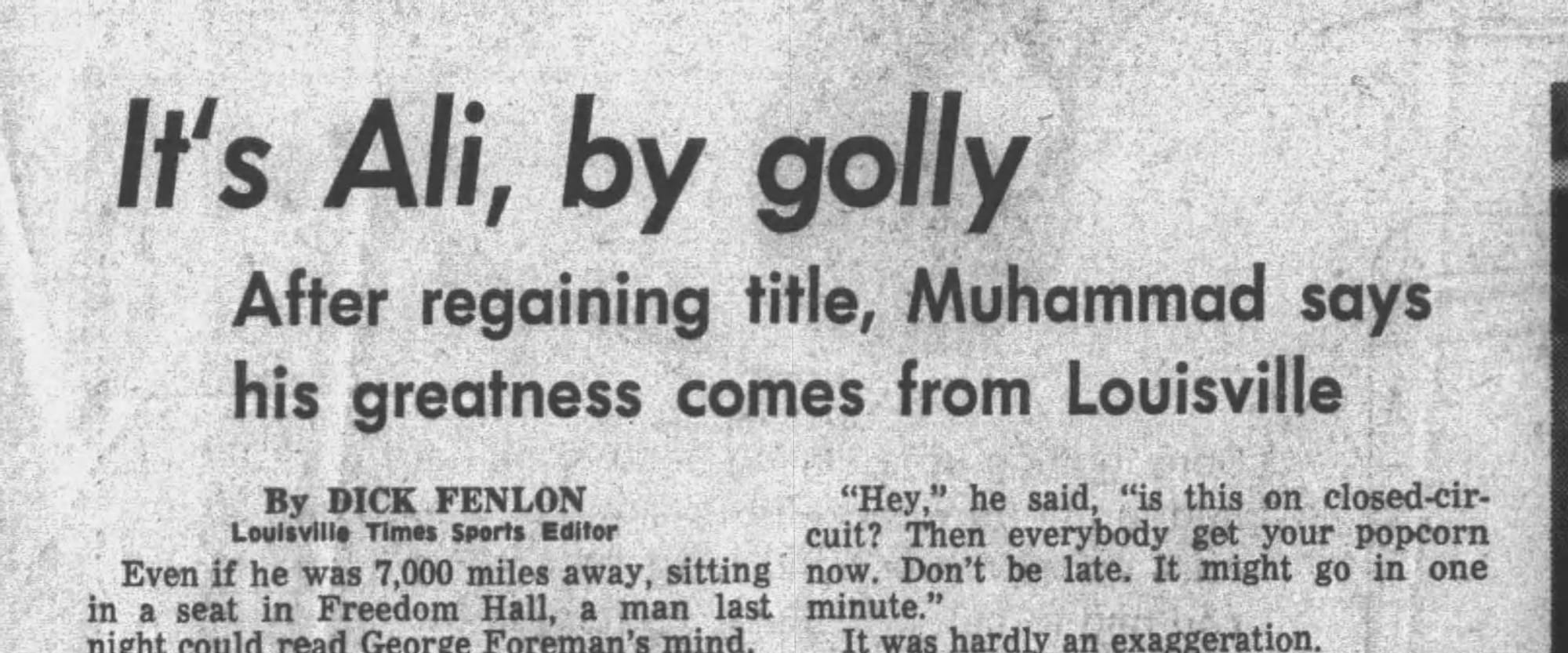
“It’s Ali, by golly.” Louisville watched its hometown fighter on closed-circuit TV at Freedom Hall. (The Louisville Times, Oct. 30, 1974, p. 1, via Newspapers.com)
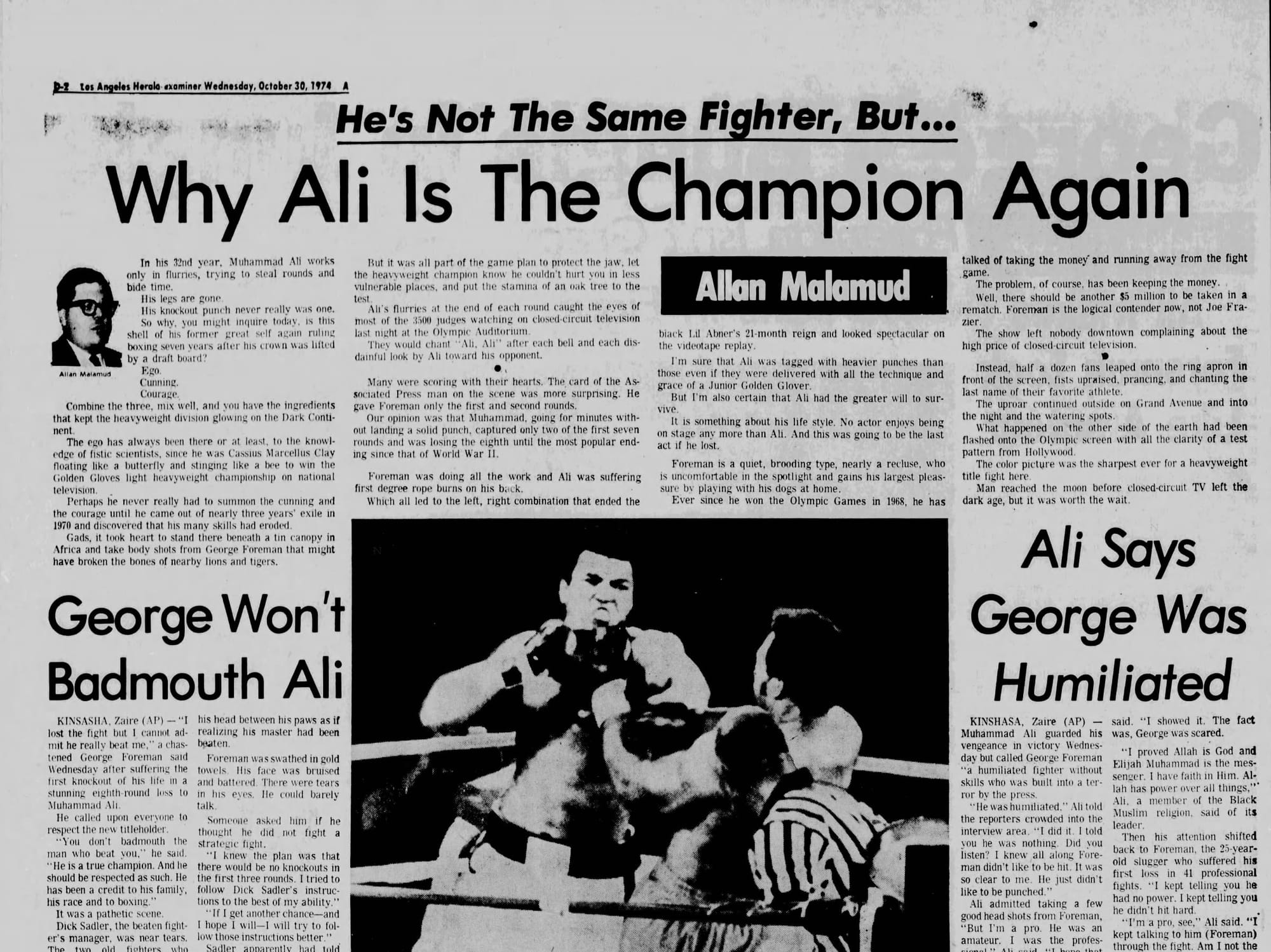
“Why Ali Is The Champion Again.” (Los Angeles Herald Examiner, Oct. 30, 1974, p. 40, via Newspapers.com)

What Came After

Ali fought Frazier a 3rd time a year later in Manila and held the title until 1978. Foreman lost again in 1977, quit boxing and became a preacher. He came back 10 years later and in 1994, at 45, knocked out Michael Moorer to become the oldest heavyweight champion ever.
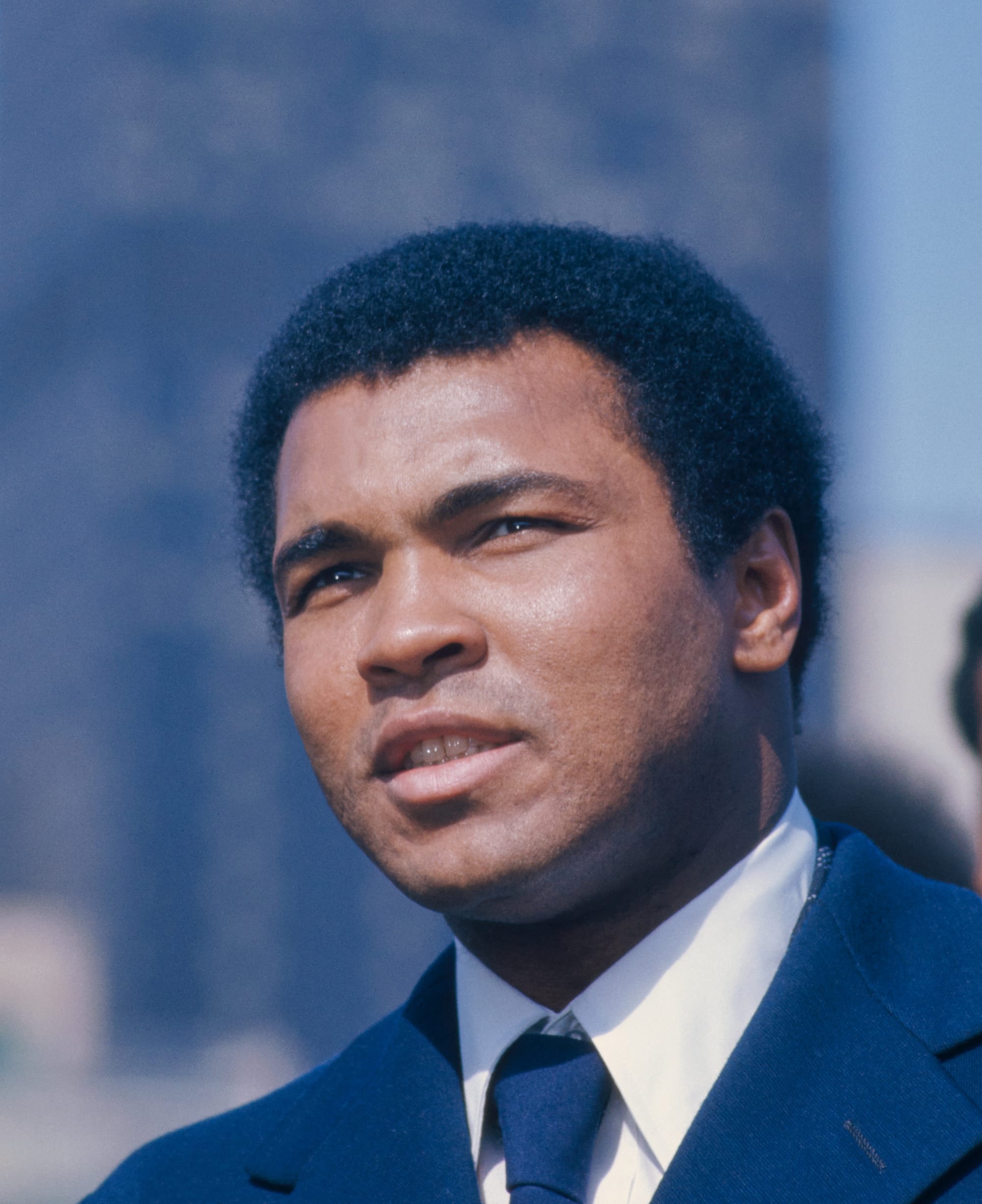
Ali around 1975, as champion again. (Photo: Bernard Gotfryd, via Library of Congress)

The 2 men became friends. “When We Were Kings,” the documentary about the fight, won the Oscar for best documentary feature. When the filmmakers went up to accept it, Ali, slowed by Parkinson’s, went with them, and Foreman was the one who helped him up the steps.
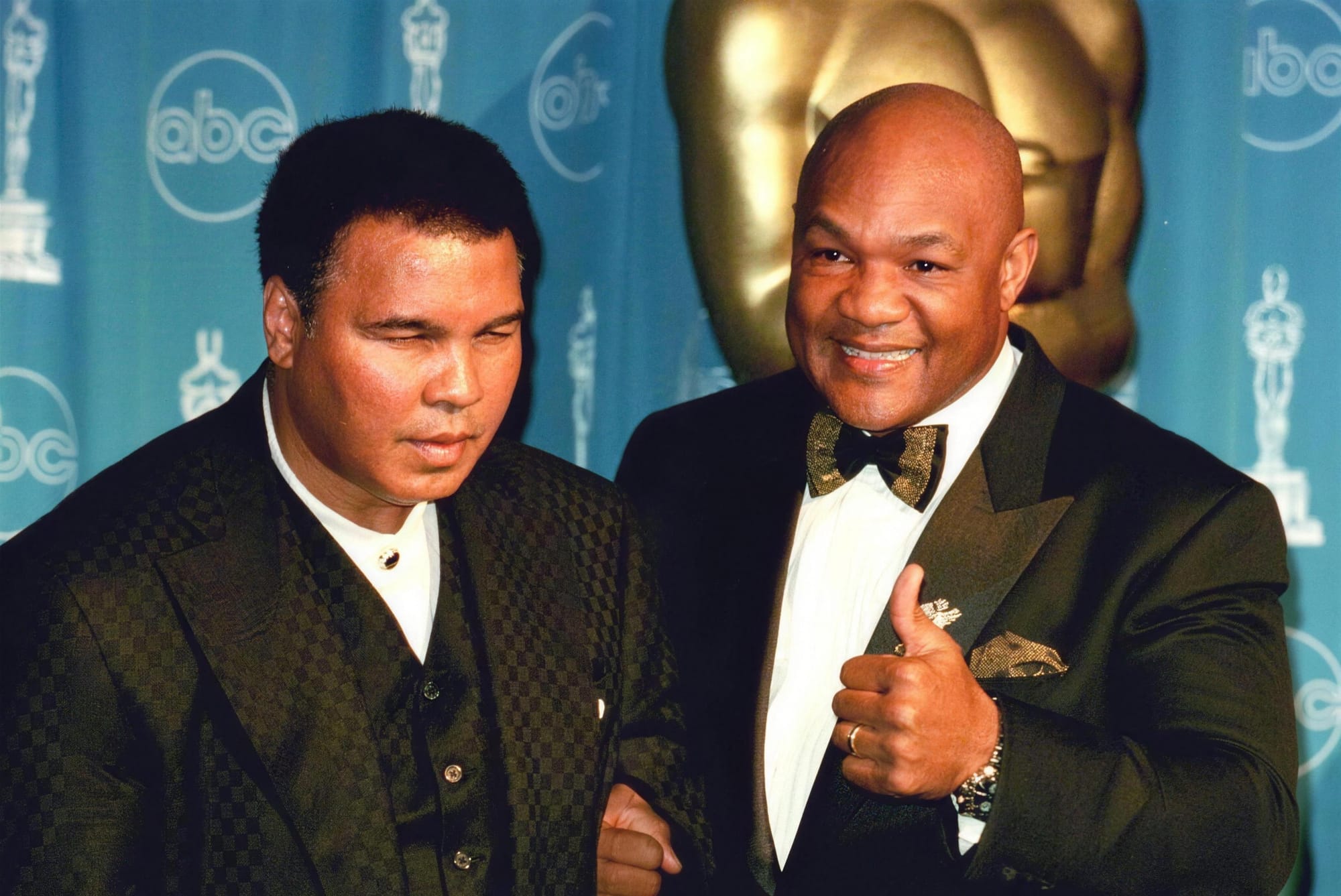
Ali and Foreman at the Academy Awards in 1997.