
On This Date: Tommie Smith Runs 19.83 on One Good Leg, Then He and John Carlos Raise Their Fists (Oct. 16, 1968)
On Oct. 16, 1968, Tommie Smith won the Olympic 200 meters in 19.83 on a torn groin muscle. Then he and John Carlos bowed their heads and raised their fists.
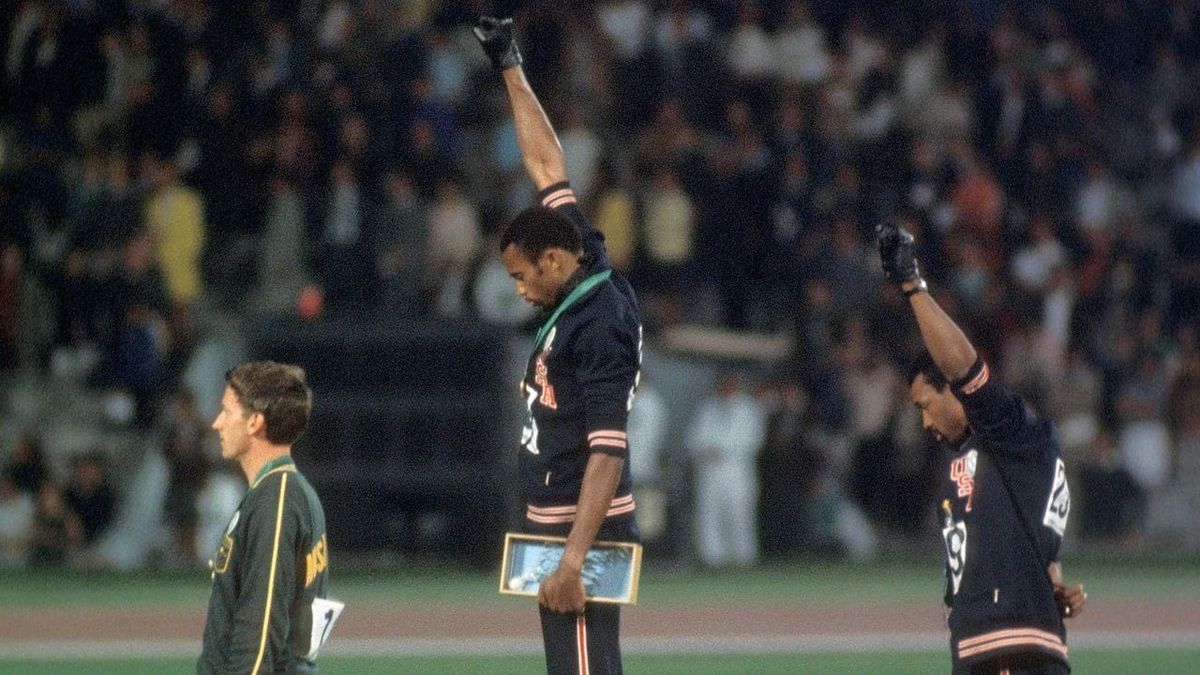
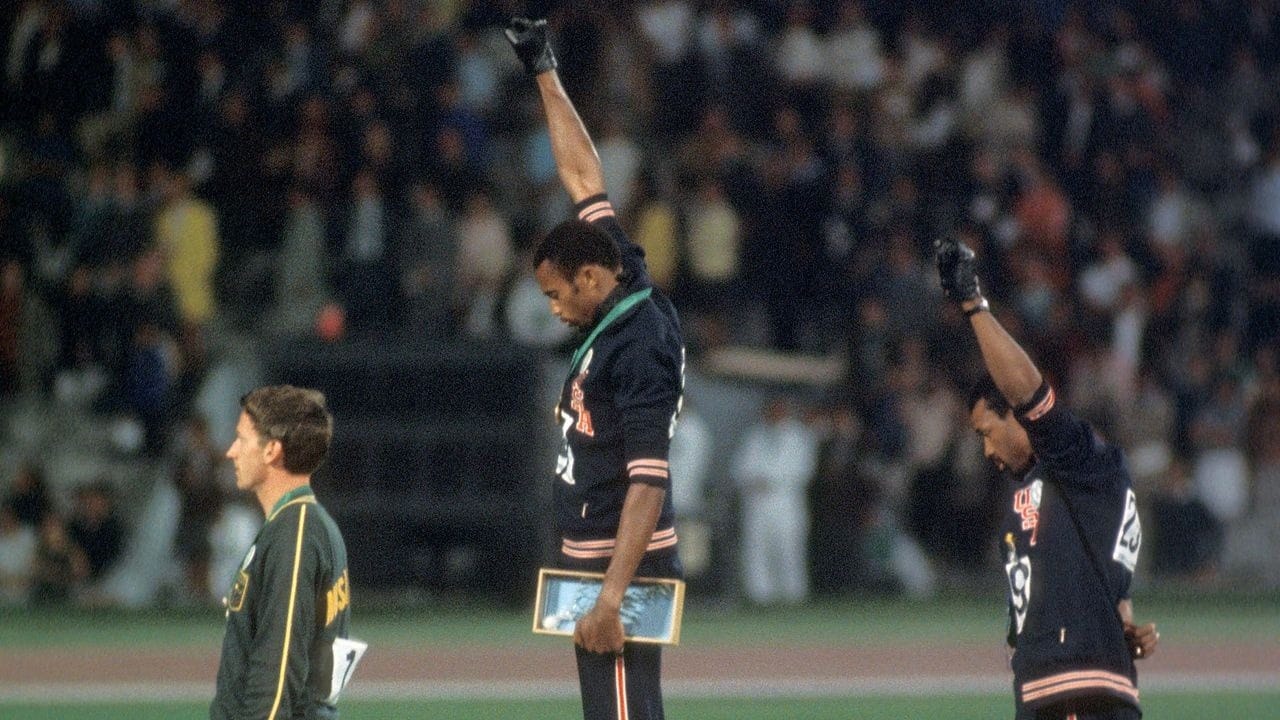
The photograph is in every history book: two American sprinters on the medal stand in Mexico City, heads bowed, black-gloved fists in the air. What the photograph doesn't show is the race that put them there, and the fact that the man on the top step had torn a muscle a few hours earlier and wasn't sure he could run at all.
Speed City
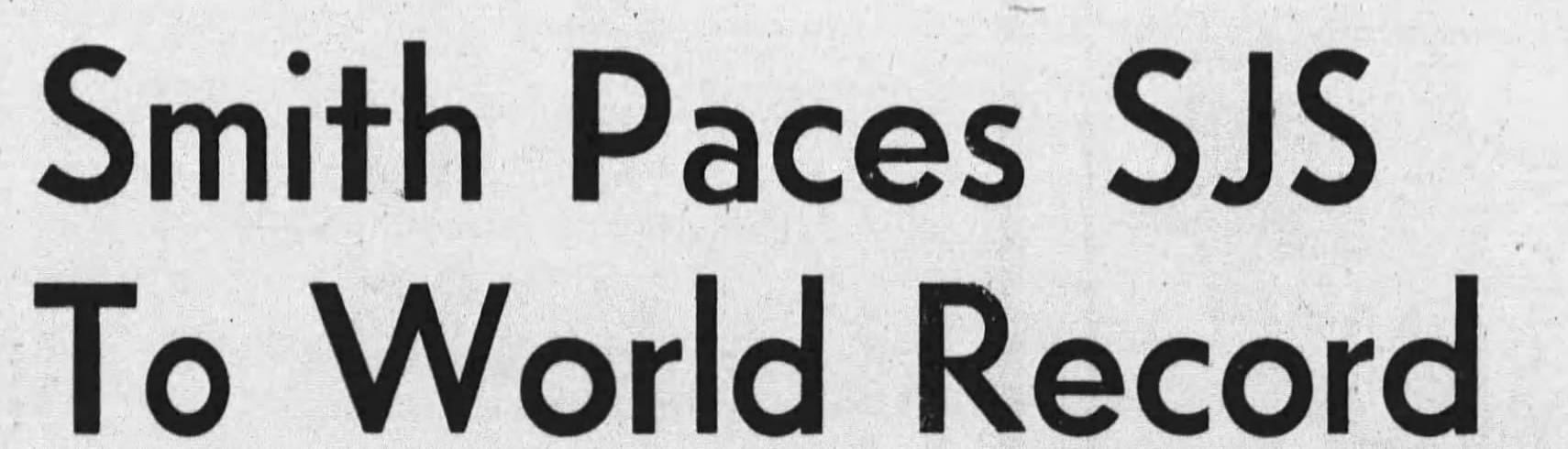
Tommie Smith was the seventh of 12 children, born in Clarksville, Texas, and raised in Lemoore, California, where his family worked the fields. At San Jose State, under coach Bud Winter, he broke world records so often the campus got a nickname: Speed City. On June 11, 1966, he ran 200 meters around a turn in 20.0 seconds. No one had ever done that. By 1968 he held seven individual world records.
John Carlos grew up in Harlem, ran a year at East Texas State, then transferred to San Jose State to train under Winter. At the 1968 Olympic Trials at Echo Summit, he beat Smith head to head in 19.92. The time was never ratified because of the "brush spikes" he wore.
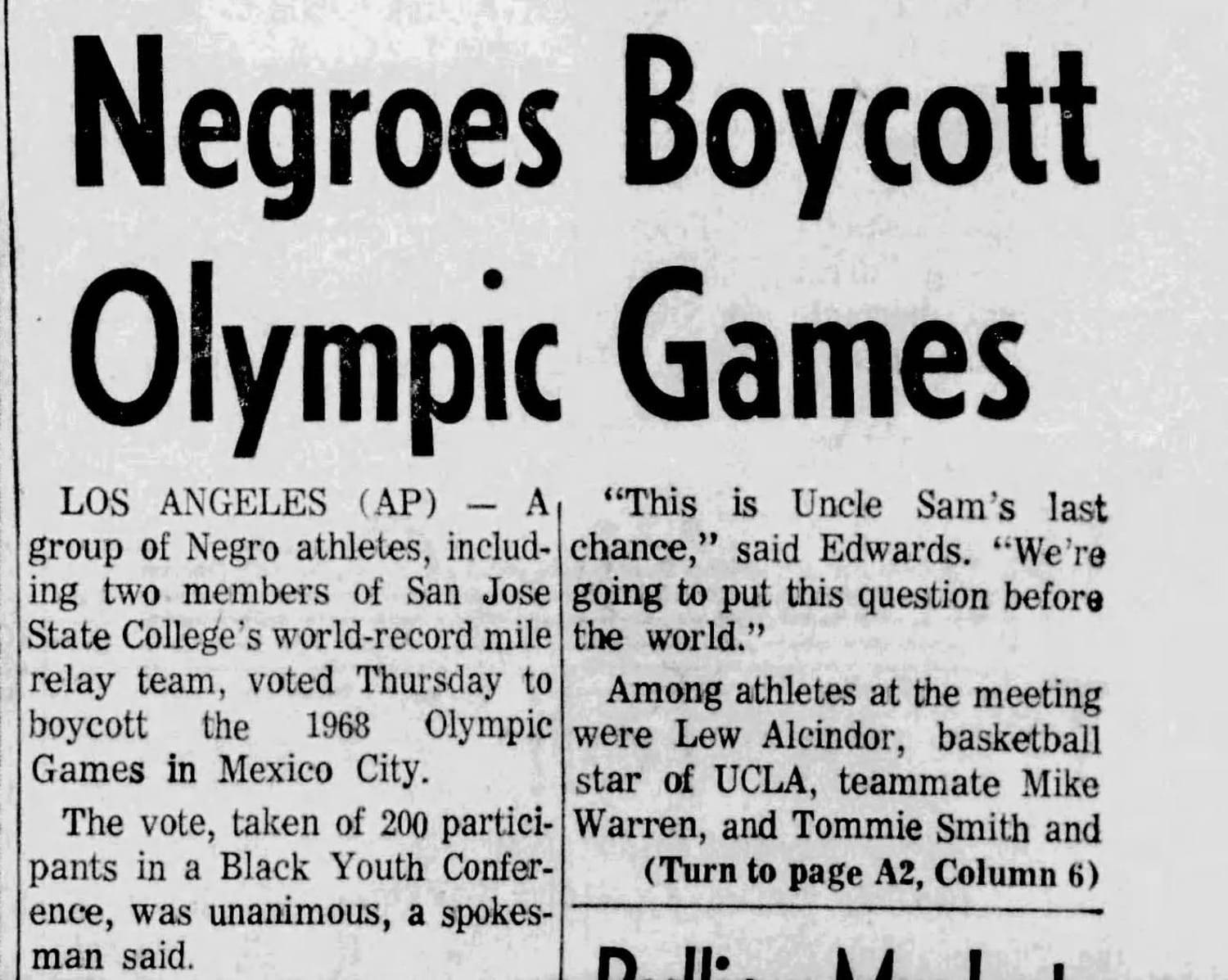
Both men belonged to the Olympic Project for Human Rights, started at San Jose State by a sociology instructor named Harry Edwards. The original plan, announced in Los Angeles in November 1967, was a boycott of the Games by Black American athletes. The boycott fell apart over the following months. The athletes decided they would go to Mexico City and speak for themselves.
The race
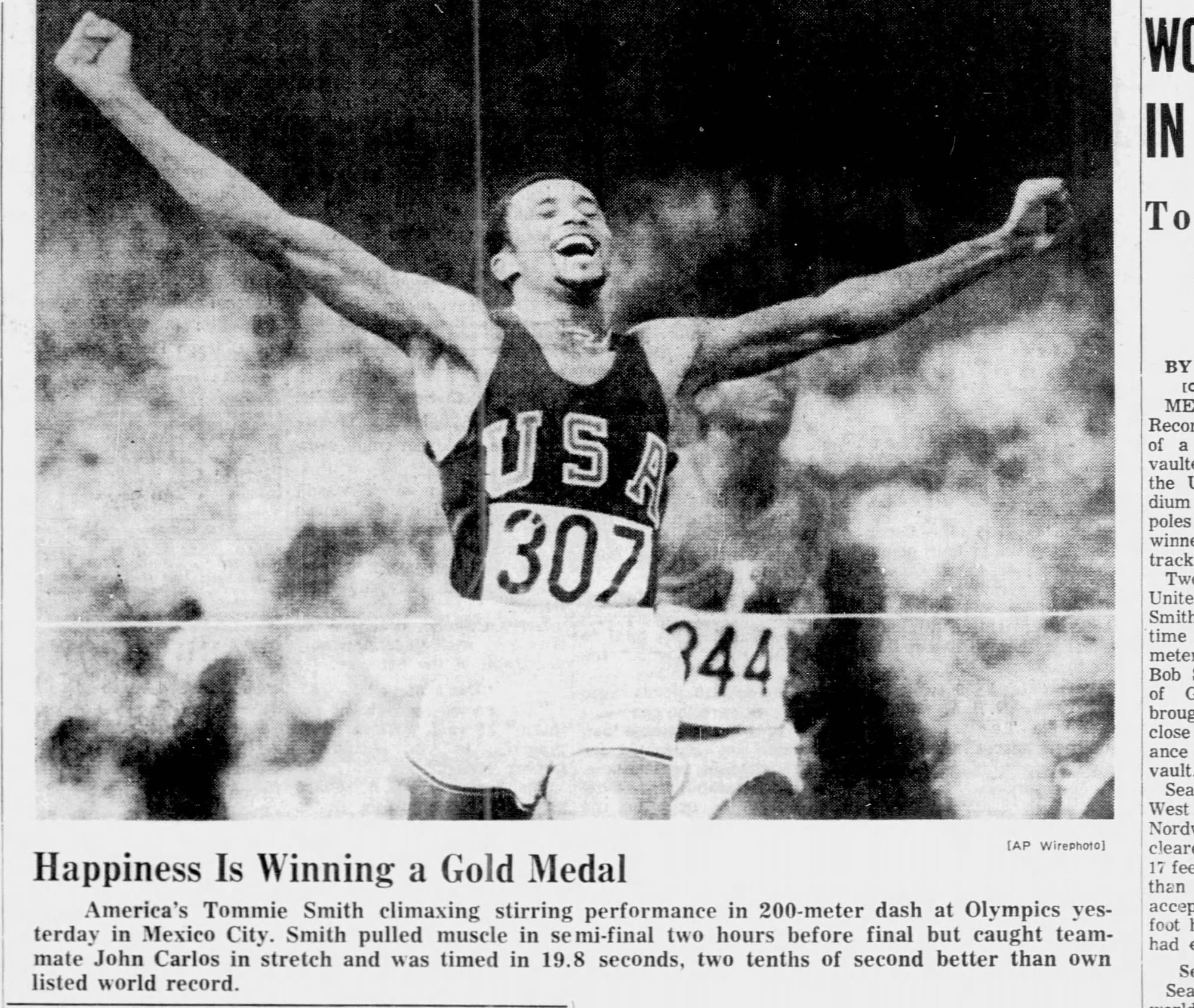
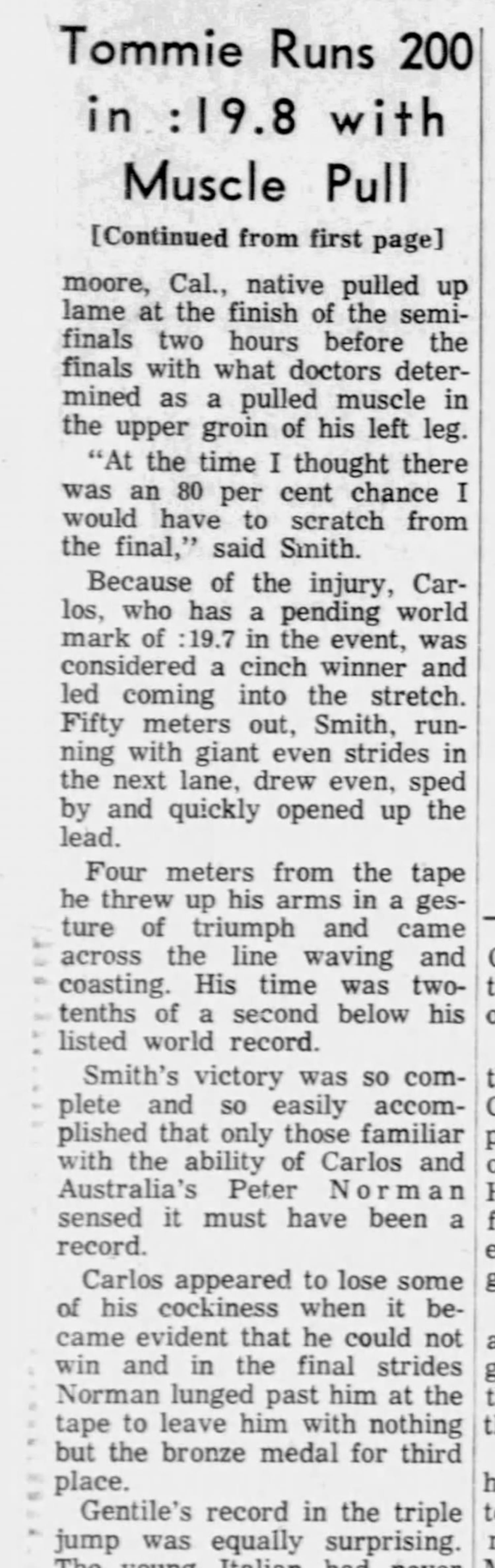
The 200-meter semifinals and final were run on the same day, Oct. 16. In his semifinal, Smith pulled a muscle in his groin. He later said he gave himself about an 80 percent chance of scratching from the final. He ran it with his thigh wrapped.
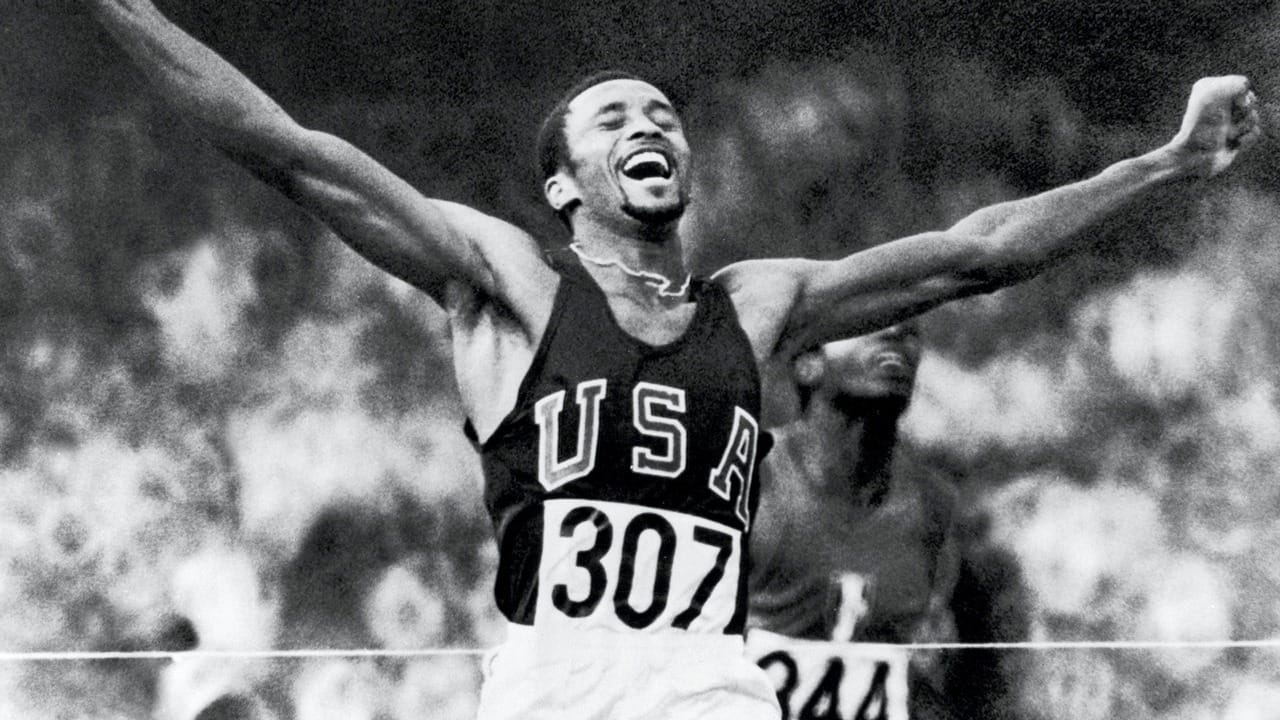
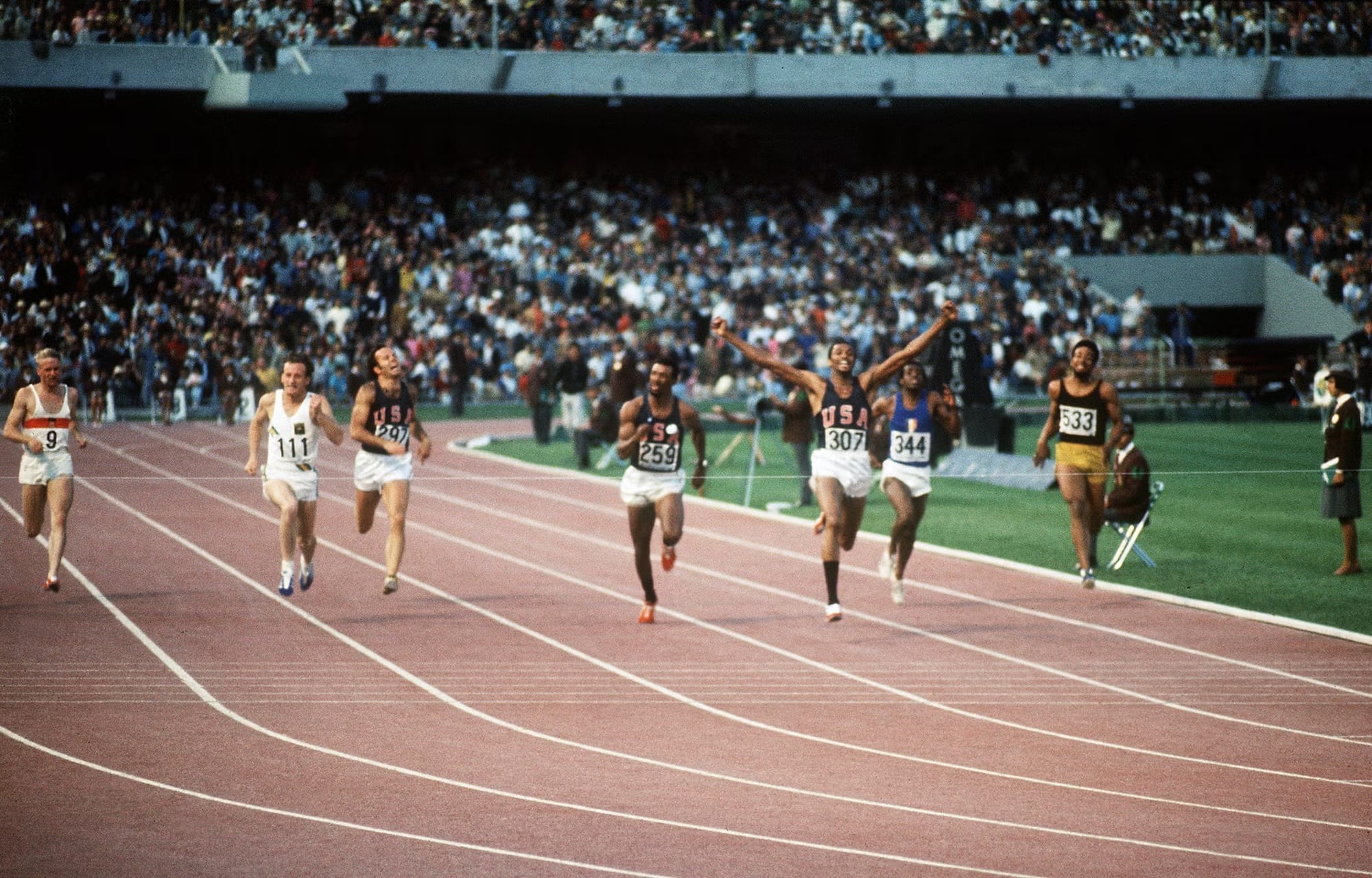
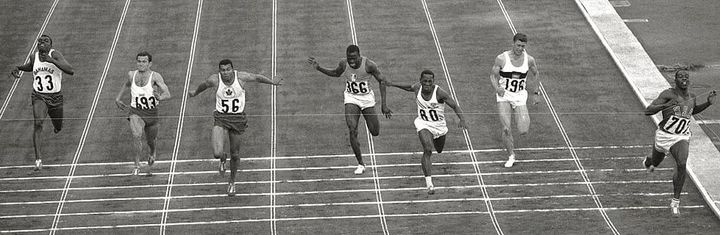
Carlos led through the turn. Smith caught him coming off it, pulled away, and a few strides before the line threw his arms in the air. He still ran 19.83 seconds, a world record and the first 200 under 20 seconds on automatic timing. The record stood for 11 years.
Peter Norman of Australia closed hard to take the silver in 20.06, a time that is still the Australian record. Carlos held on for bronze in 20.10.
The medal stand
Smith and Carlos walked out to the podium in black socks and no shoes, which they said stood for Black poverty. Smith wore a black scarf, for Black pride. Carlos wore a string of beads, for the men who had been lynched, and left his jacket unzipped, in solidarity with working people back home. All three medalists wore the Olympic Project for Human Rights badge; Norman had asked an American rower, Paul Hoffman, for his.
Carlos had left his gloves in the Olympic Village. It was Norman who suggested the two Americans split Smith's pair. That is why, in the photograph, Smith's right fist is up and Carlos's left.
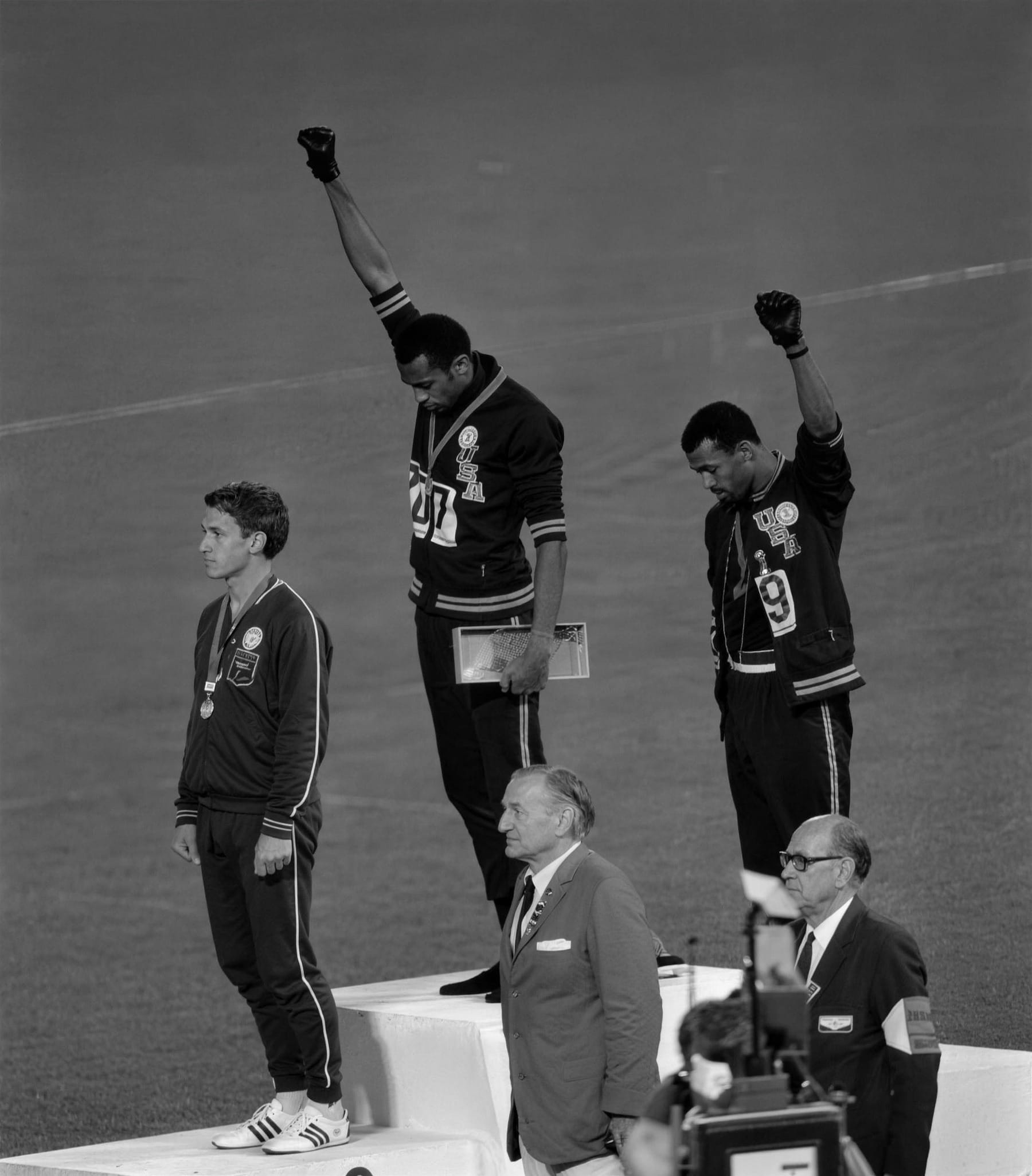
When "The Star-Spangled Banner" began, Smith and Carlos bowed their heads and raised their fists, and held them there until the music stopped. Then the booing started.
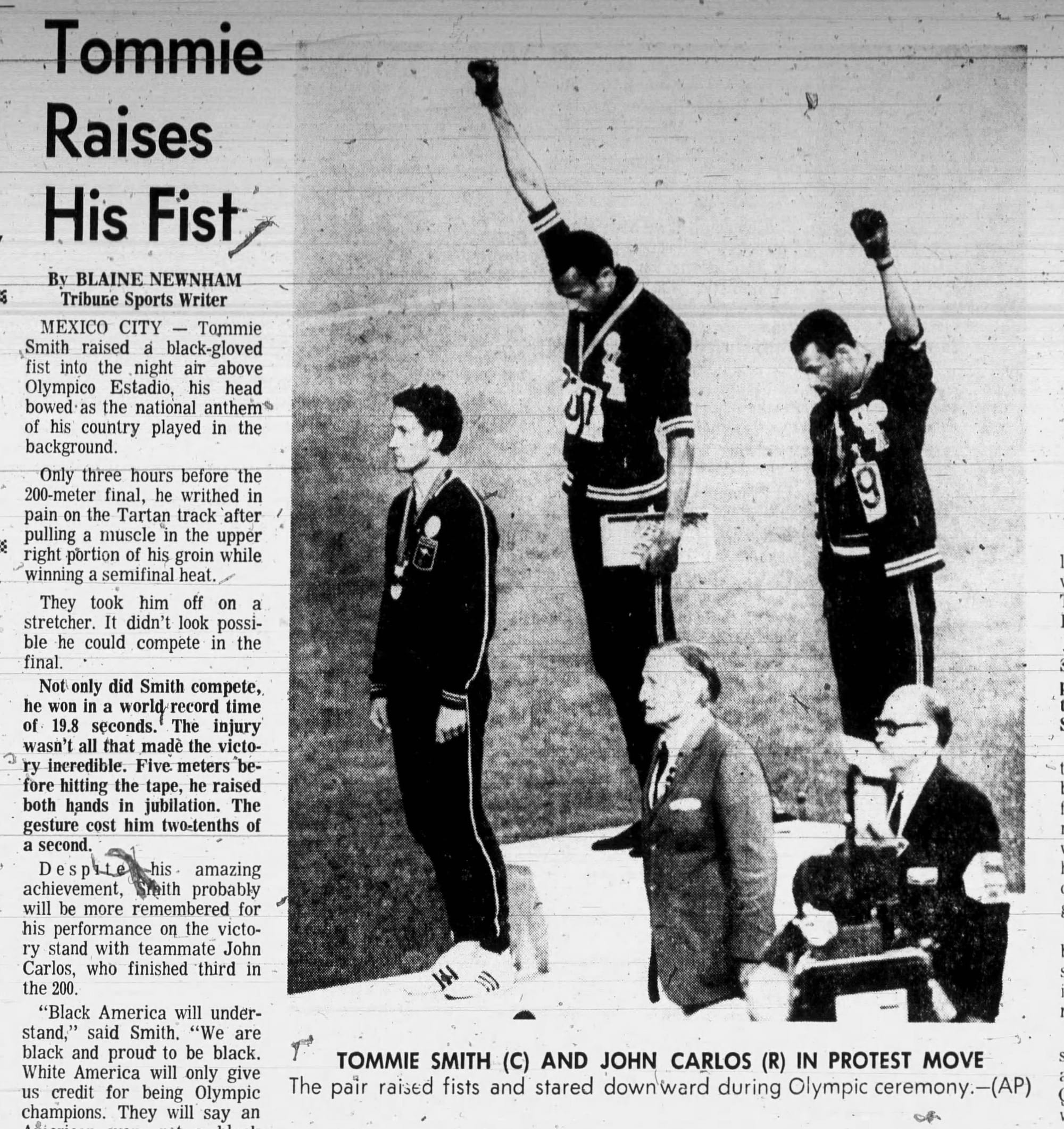
That night, Smith told reporters: "If I win, I am an American, not a black American. But if I did something bad, then they would say I am a Negro. We are black and we are proud of being black. Black America will understand what we did tonight."
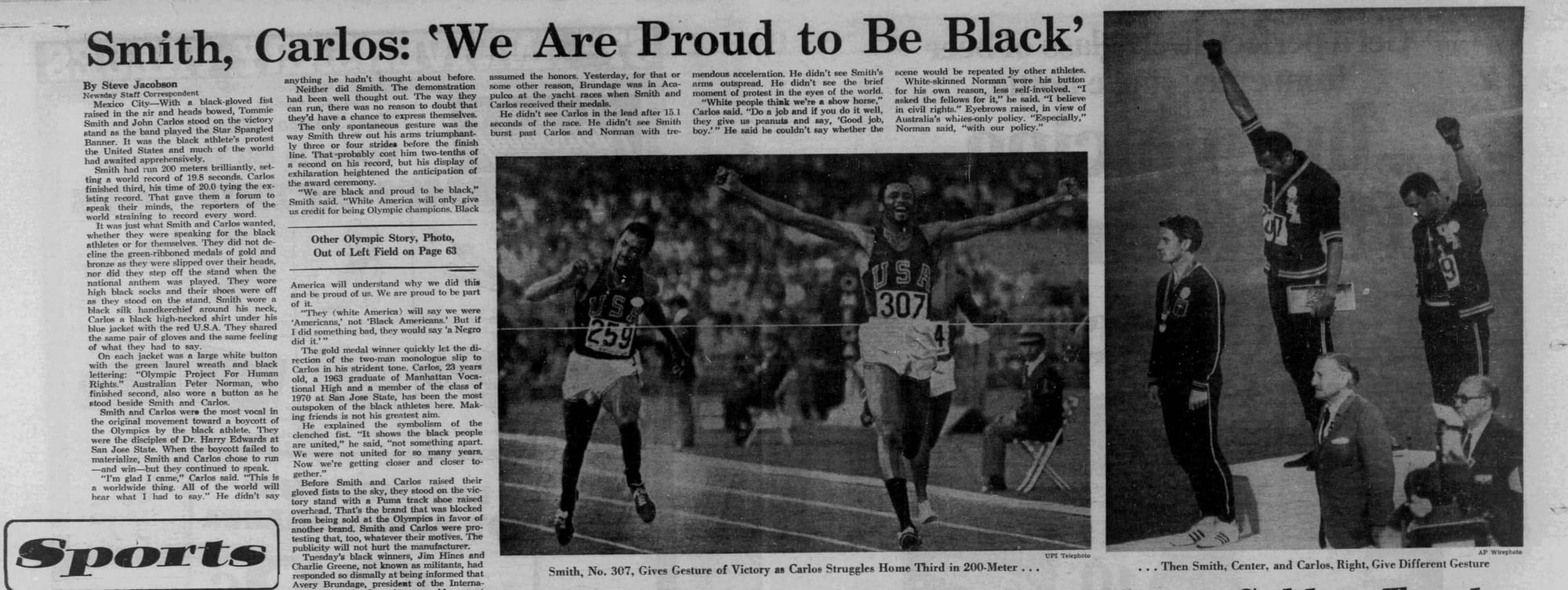
48 hours
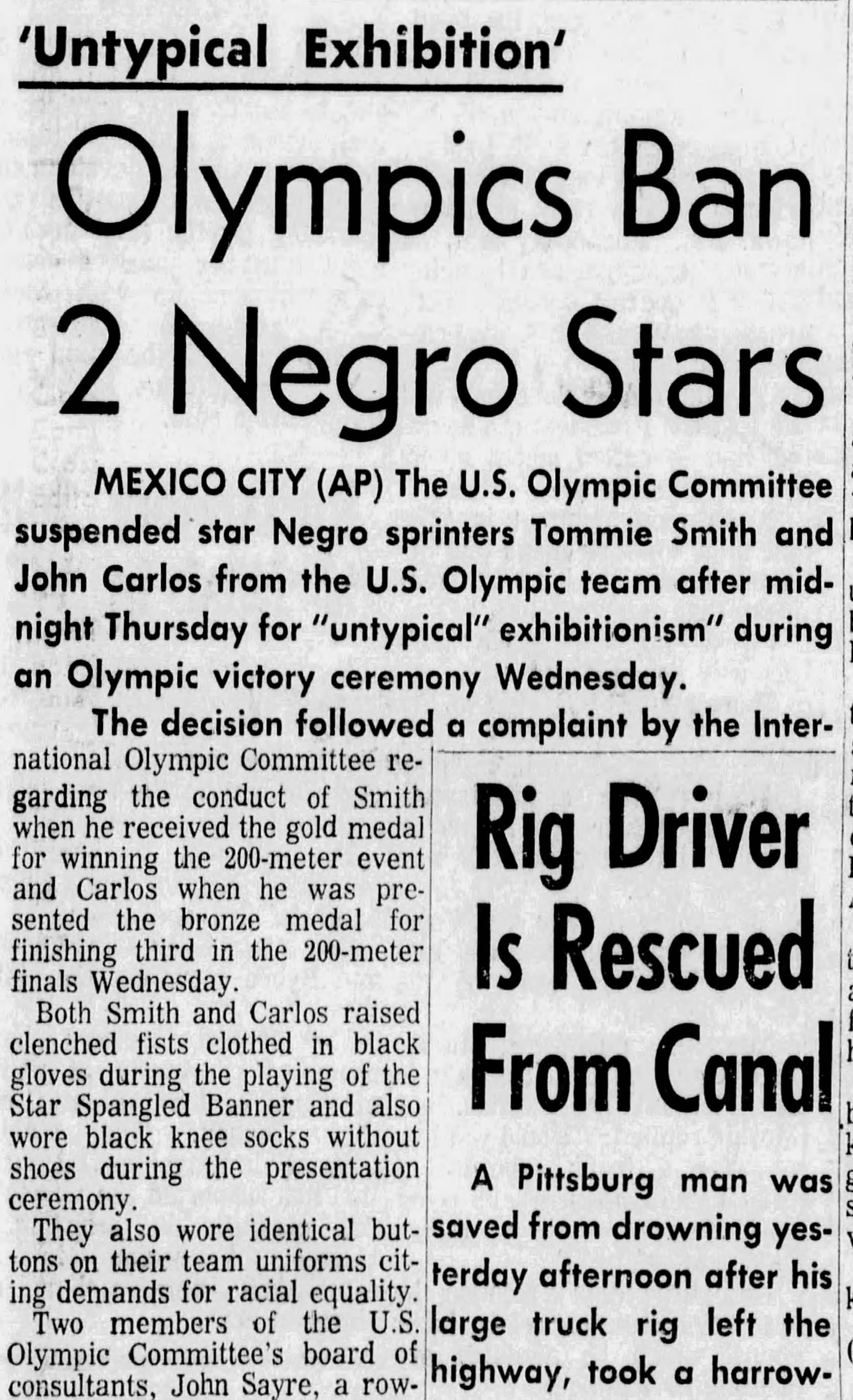
Avery Brundage, the president of the International Olympic Committee, demanded that the two be thrown out. The U.S. Olympic Committee refused. Brundage then threatened to send the entire American track team home, and on Oct. 18 the USOC suspended Smith and Carlos for what its statement called "untypical exhibitionism" and gave them 48 hours to leave the Olympic Village.
They were not stripped of their medals. That part is a myth. The medals went home with them.
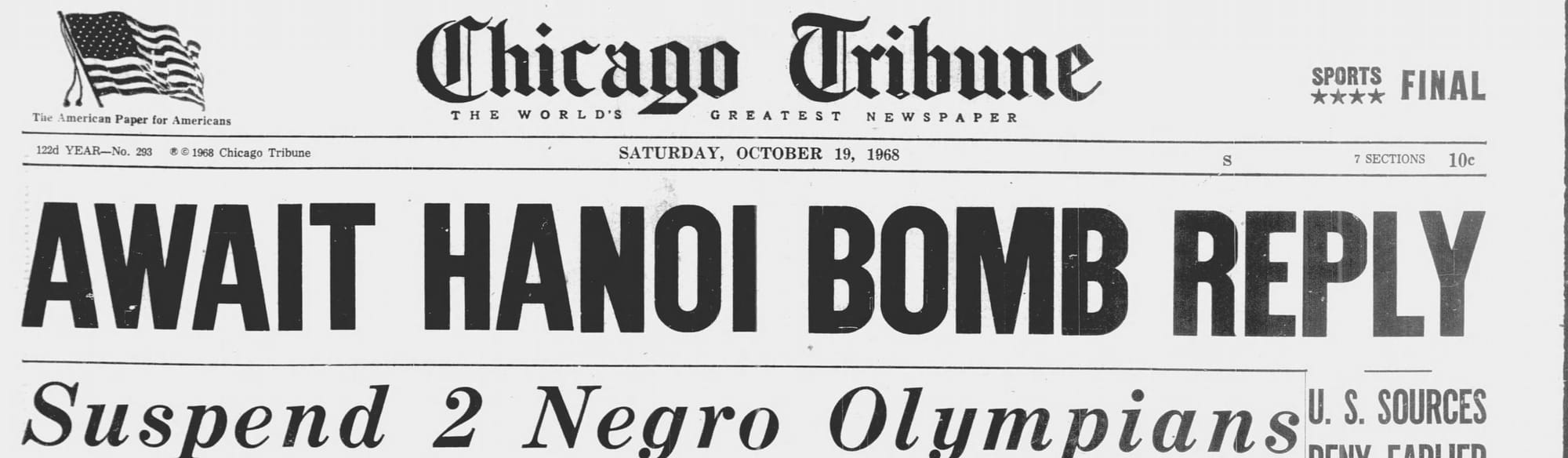
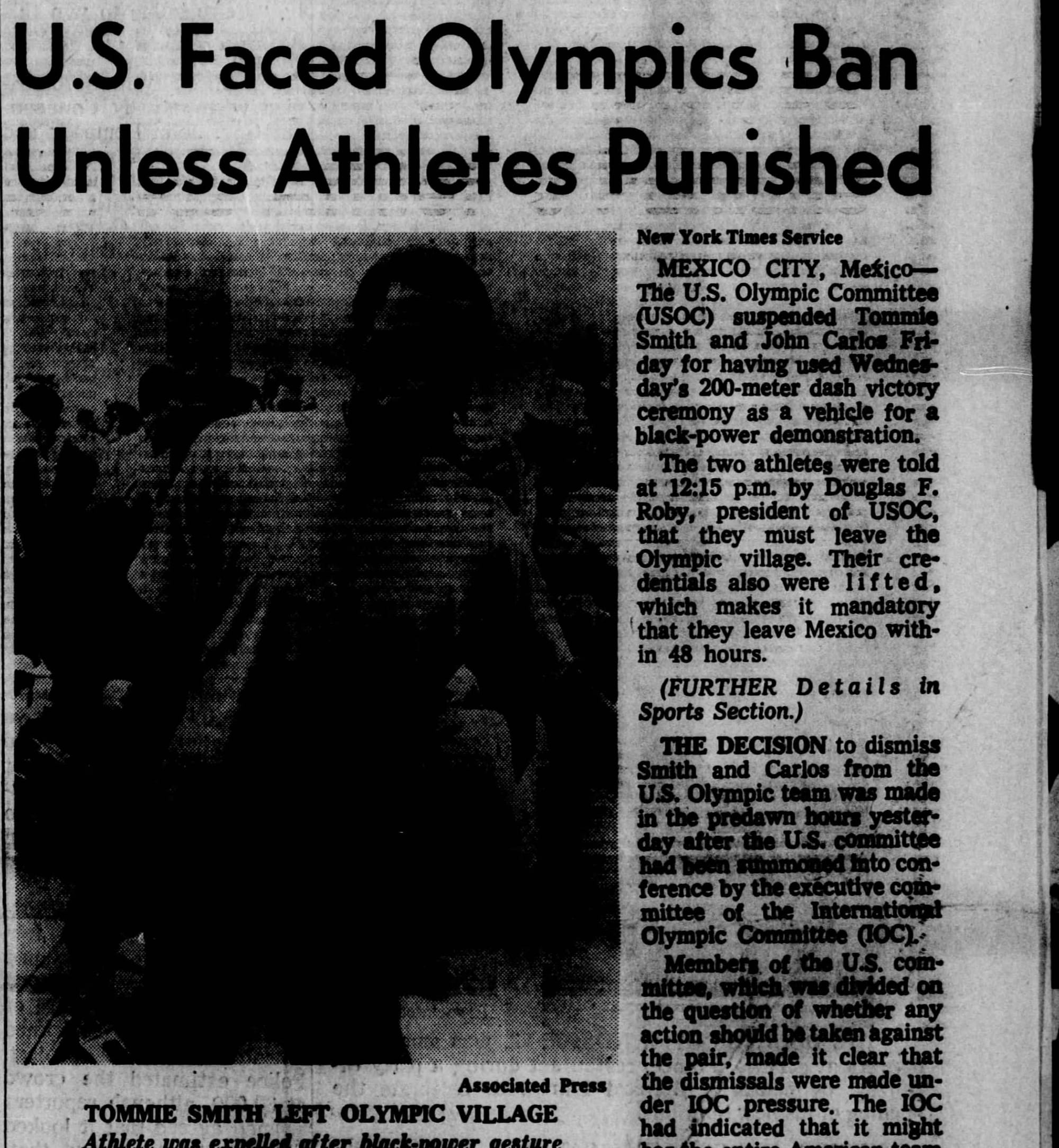
The press was mostly against them. Brent Musburger, then a columnist for the Chicago American, called them "a couple of black-skinned storm troopers." Time magazine wrote that "Faster, Higher, Stronger" was the Olympic motto, but "Angrier, nastier, uglier" better described the scene in Mexico City. A few writers saw it differently. Arthur Daley of The New York Times wrote that the protest "can't be ignored."
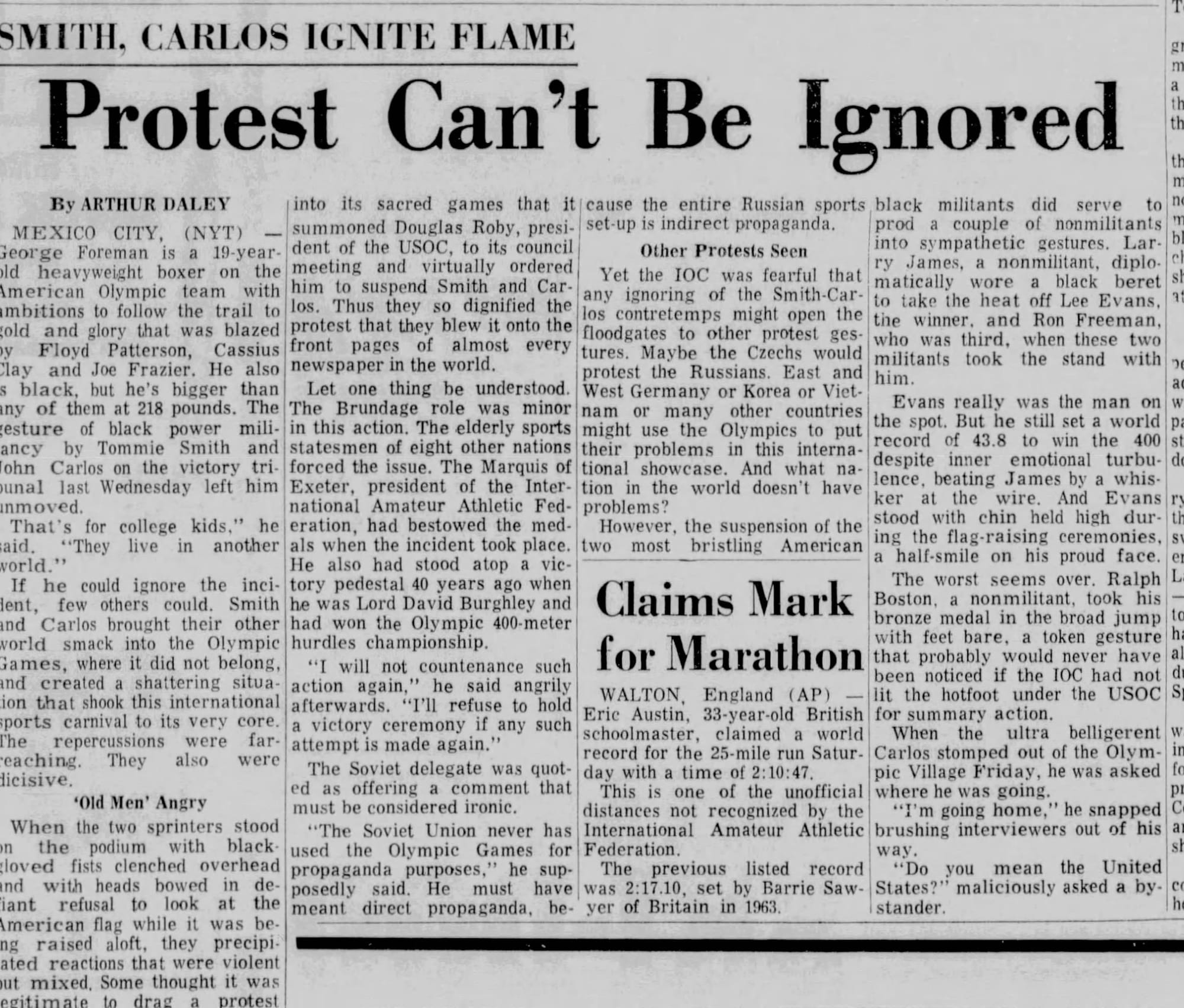
Two days after the suspension, Lee Evans, Larry James and Ron Freeman swept the 400 meters and wore black berets on the podium. They took them off for the anthem. The Games went on.
After
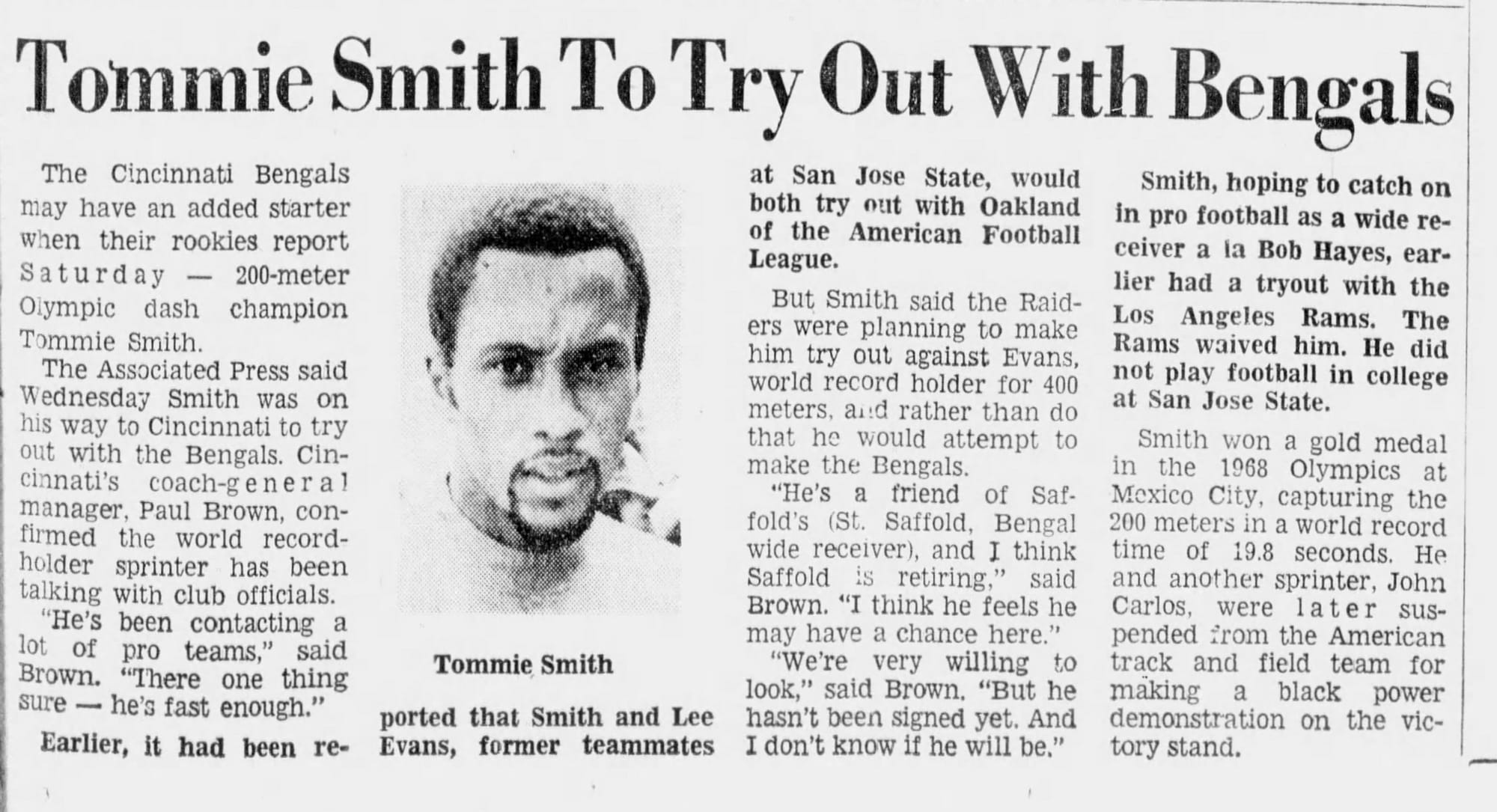
Back home came death threats, to both men and their families. Smith signed with the Cincinnati Bengals and spent most of three seasons on the taxi squad; in 1969 he played two games and caught one pass, for 41 yards. He finished his degree, earned a master's, and spent most of his working life coaching track and teaching, at Oberlin College and then Santa Monica College.
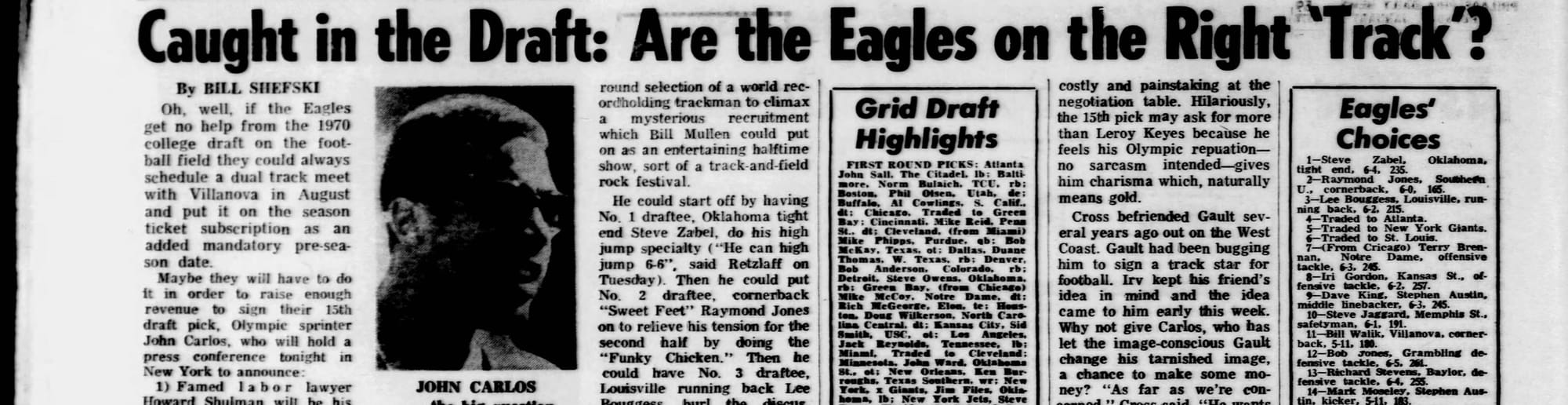
Carlos was drafted by the Philadelphia Eagles in 1970, but a knee injury ended his tryout. He played a season in Canada, worked for the 1984 Los Angeles Olympic organizing committee, and from 1985 was a counselor and track coach at Palm Springs High School.
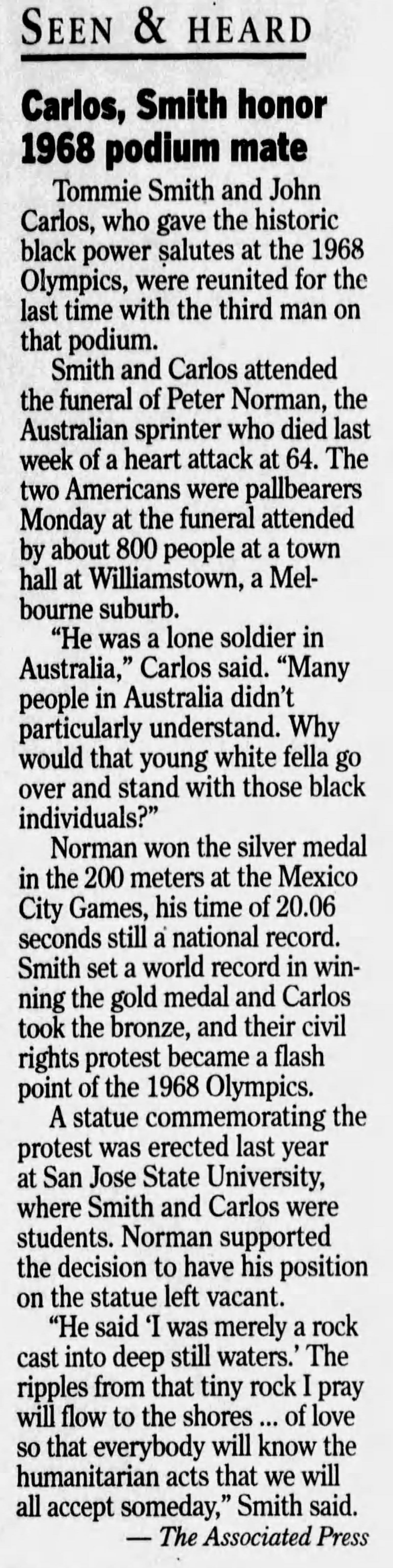
Peter Norman paid a price too. He was reprimanded by Australian officials and never ran in another Olympics. When he died in 2006, Smith and Carlos flew to Melbourne and carried his casket. In 2012 the Australian Parliament formally apologized for the way he had been treated.
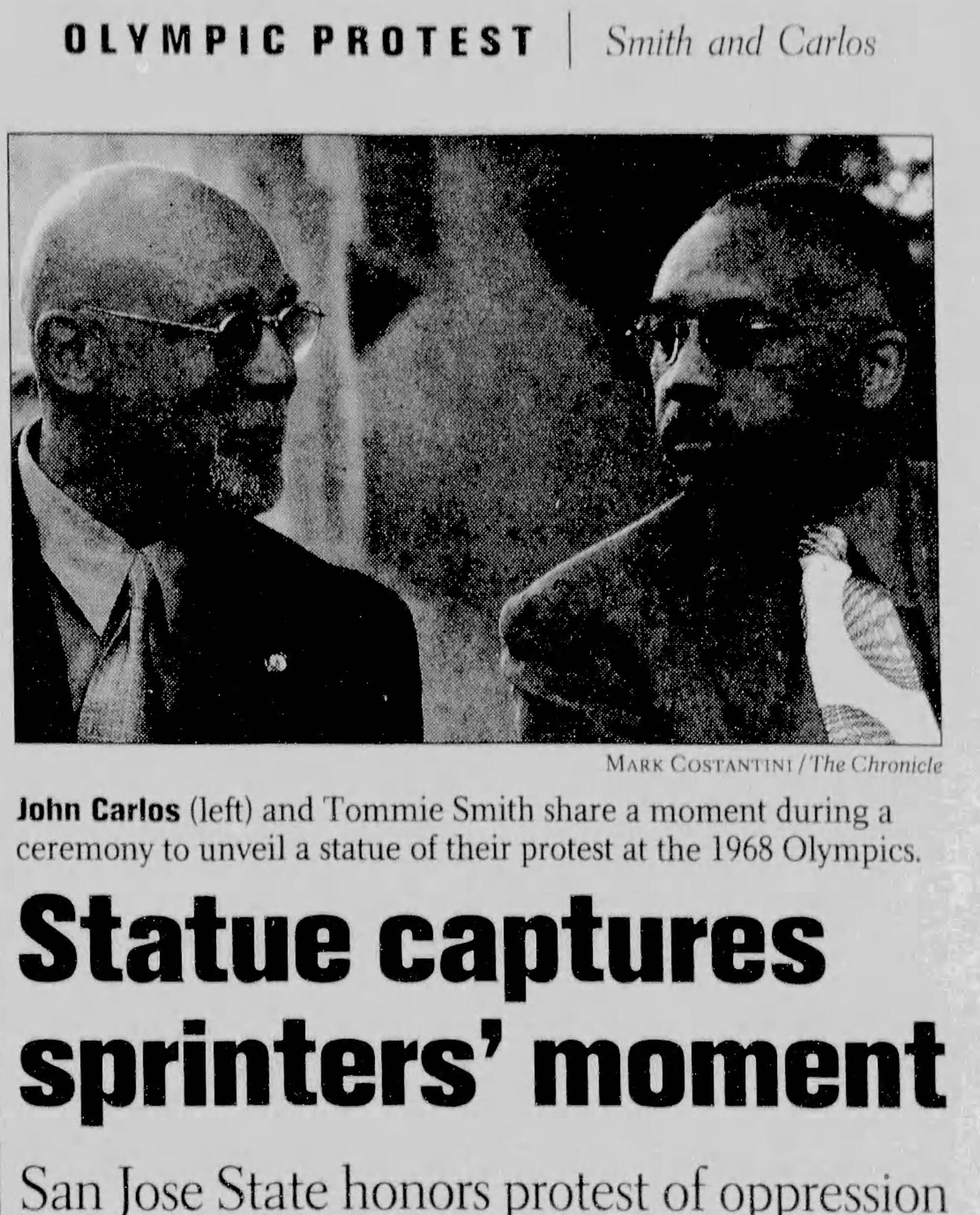
In 2005, San Jose State unveiled a 22-foot statue of the podium. The silver-medal spot is empty. Norman asked for it that way, so that anyone could stand in his place. In 2019, 51 years after Mexico City, the U.S. Olympic Committee put Smith and Carlos in its Hall of Fame.
Smith has always said it was never a Black Power salute. It was a human rights salute. And he earned the platform to make it in 19.83 seconds, on one good leg.
October 16, 1968. This date in sports history.
Comments ()