
The 10 Biggest Heisman Flops: Preseason Favorites Whose Seasons Fell Apart
Since 2009 the preseason Heisman betting favorite has won exactly once. These are the ten who showed up in August as the guy and weren't in the conversation by December.
Every list called "Heisman flops" is the same list. It's Heisman winners who didn't make it in the NFL — Andre Ware, Rashaan Salaam, Danny Wuerffel, Eric Crouch, Gino Torretta. That list has been written fifty times and it's not really about the Heisman at all. It's about the draft.
This is the other one. These are the players who showed up in August as the guy — on the cover, at the top of the odds, first name on every watch list — and then simply were not in the conversation by December. Not "finished third." Not in the conversation.
Start with the stat that makes the whole thing make sense: since 2009, the preseason betting favorite has won the Heisman exactly once. Marcus Mariota, 2014. Every other year, whoever you were sure about in August was wrong.
And the pattern underneath it is uglier than bad luck. Most Heisman campaigns don't die in a big game. They die in camp.
10. Spencer Rattler, Oklahoma, 2021
The outright betting favorite, and not briefly — 3-1 at DraftKings in January, +450 at William Hill in February, +800 at BetMGM in August. He took 19% of all Heisman wagers in the country. Preseason Big 12 Offensive Player of the Year, on every watch list, quarterbacking a team picked first in the conference with thirty-five first-place votes.
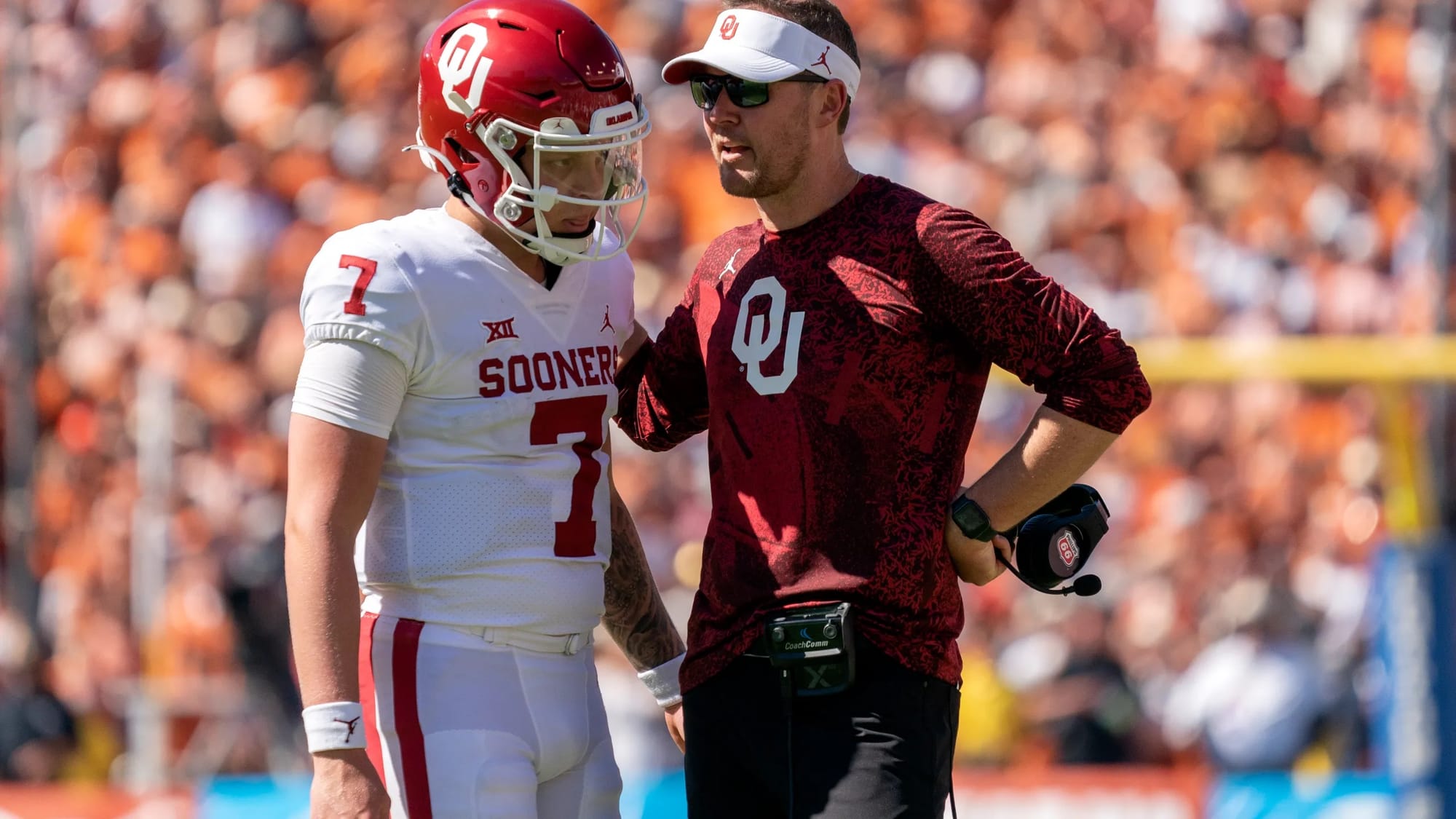
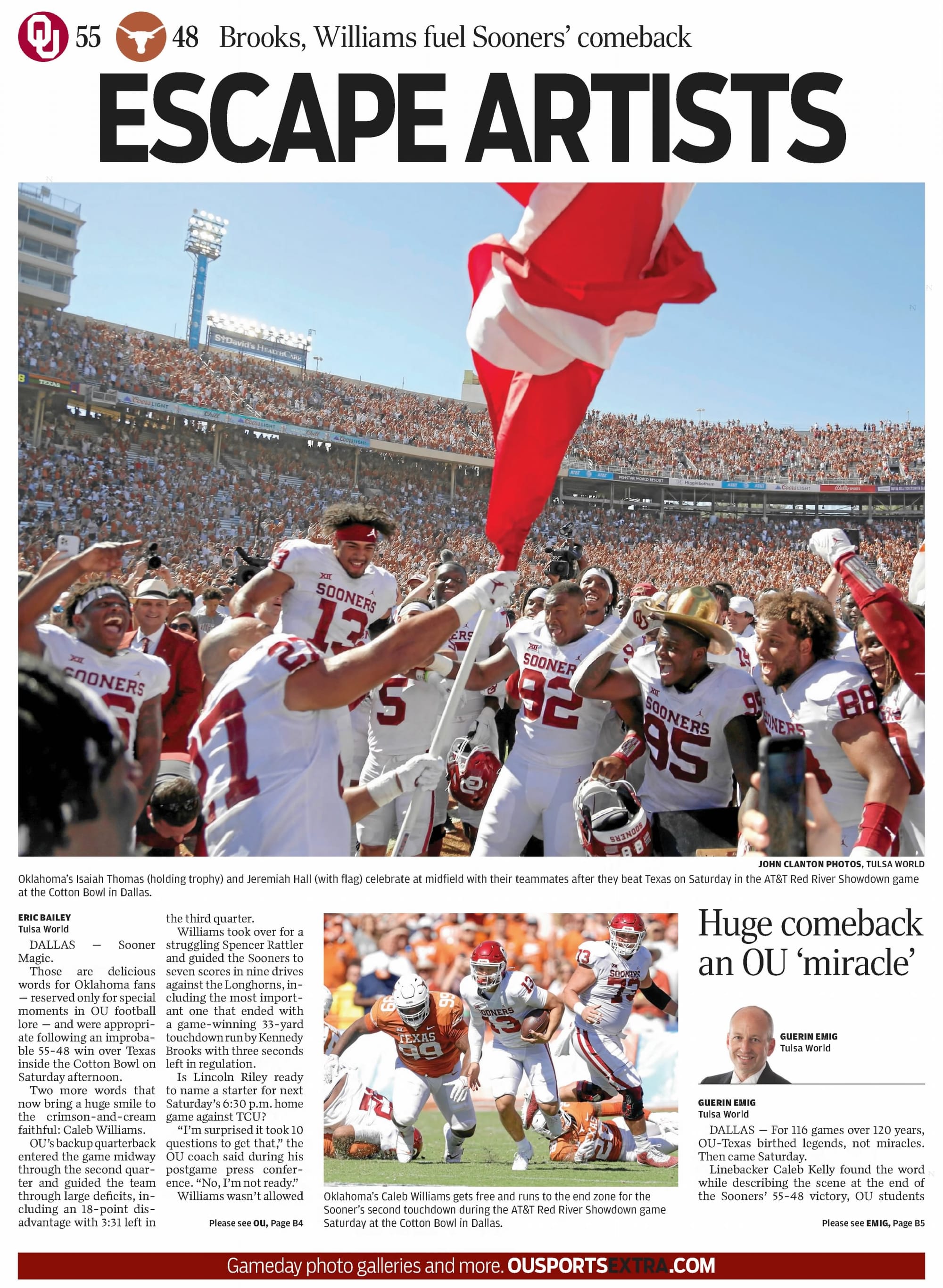
On October 9, in the Red River Showdown, with Texas up 35-20 and eight minutes still left in the first half, Lincoln Riley pulled him after his second turnover and sent in a true freshman named Caleb Williams. Rattler's line at the hook: 8-of-15, 111 yards, an interception, and minus-9 yards rushing. Oklahoma came back and won 55-48.
Asked afterward whether he was ready to name a starter for the following week, Riley said: "I'm surprised it took 10 questions to get that. No, I'm not ready." Rattler never started again, and transferred to South Carolina in December. It's the only entry here where the player was healthy, eligible, and simply replaced — in front of 90,000 people, by a teenager who would win the trophy himself fourteen months later.
9. Sam Darnold, USC, 2017
The outright preseason favorite at 7-2 in July, still the shortest price on the board at 9-2 in late August, and the presumptive No. 1 pick in the following draft.
He wasn't hurt, wasn't suspended, and wasn't benched. He threw for 4,143 yards and 26 touchdowns — and 13 interceptions, matching his entire previous season's total in six games. He finished outside the top ten.
The man who won it was Baker Mayfield, a 10-to-1 preseason shot, by 1,098 points. That's the inversion that makes this list worth making: the same August, the same conference, the favorite finishes nowhere and the longshot wins by the second-largest margin of the decade.
8. Braxton Miller, Ohio State, 2014
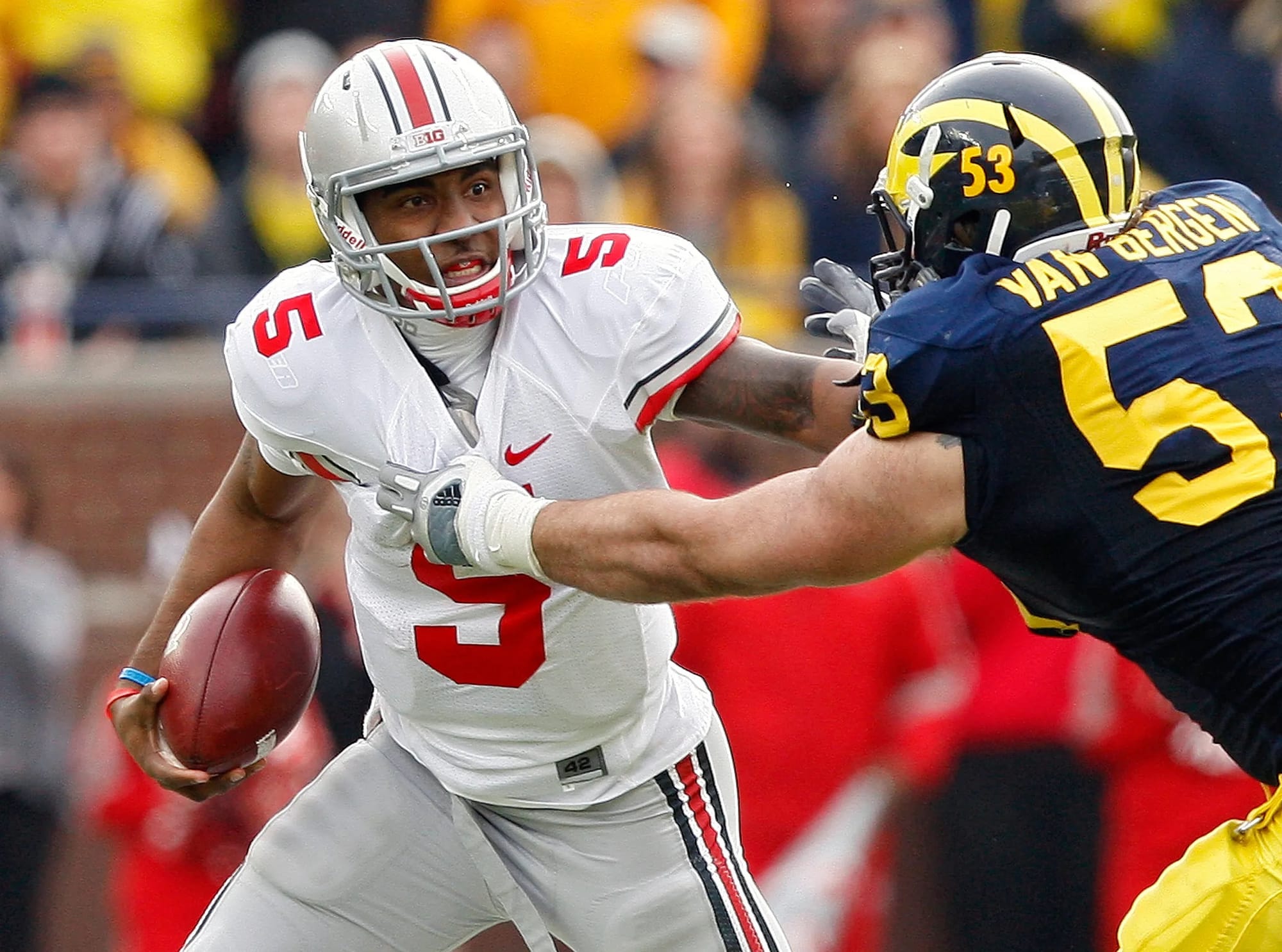
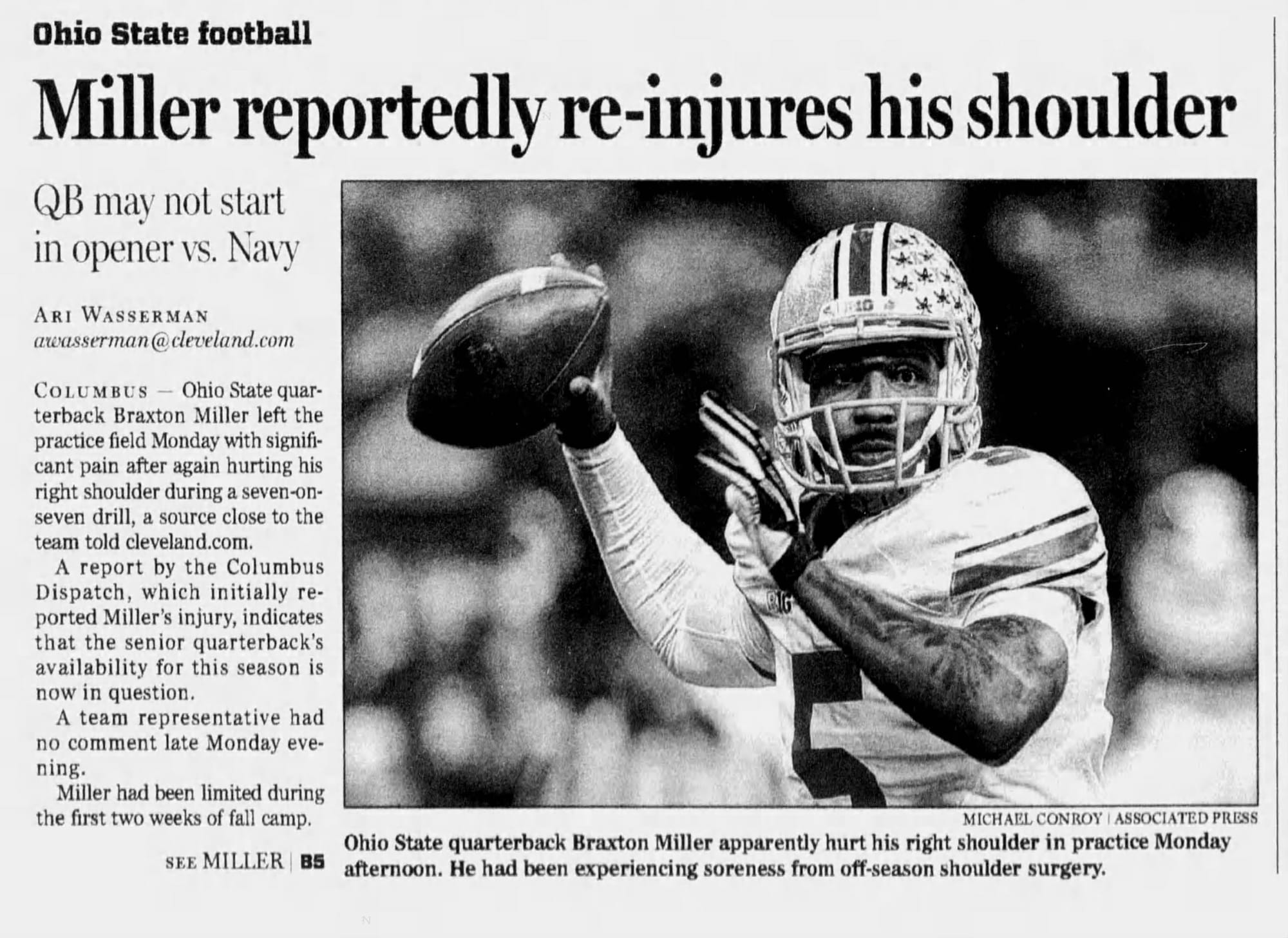
Fifth in the Heisman voting in 2012. Ninth in 2013. Priced at +700 in May, tied for second on the board behind only Jameis Winston.
On Monday, August 18, he walked off the practice field in significant pain after hurting his right shoulder in a seven-on-seven drill — the same shoulder he'd hurt in the Orange Bowl in January and had surgically repaired in February. Seven-on-seven has no linemen and no tackling. Medical redshirt, torn labrum, and he missed the entire year. Oddsmakers took him off the board within a day.
Ohio State won the national championship without him.
No hit. No tackler. Nobody within five yards of him. A drill run in shorts, in August.
7. Todd Gurley, Georgia, 2014
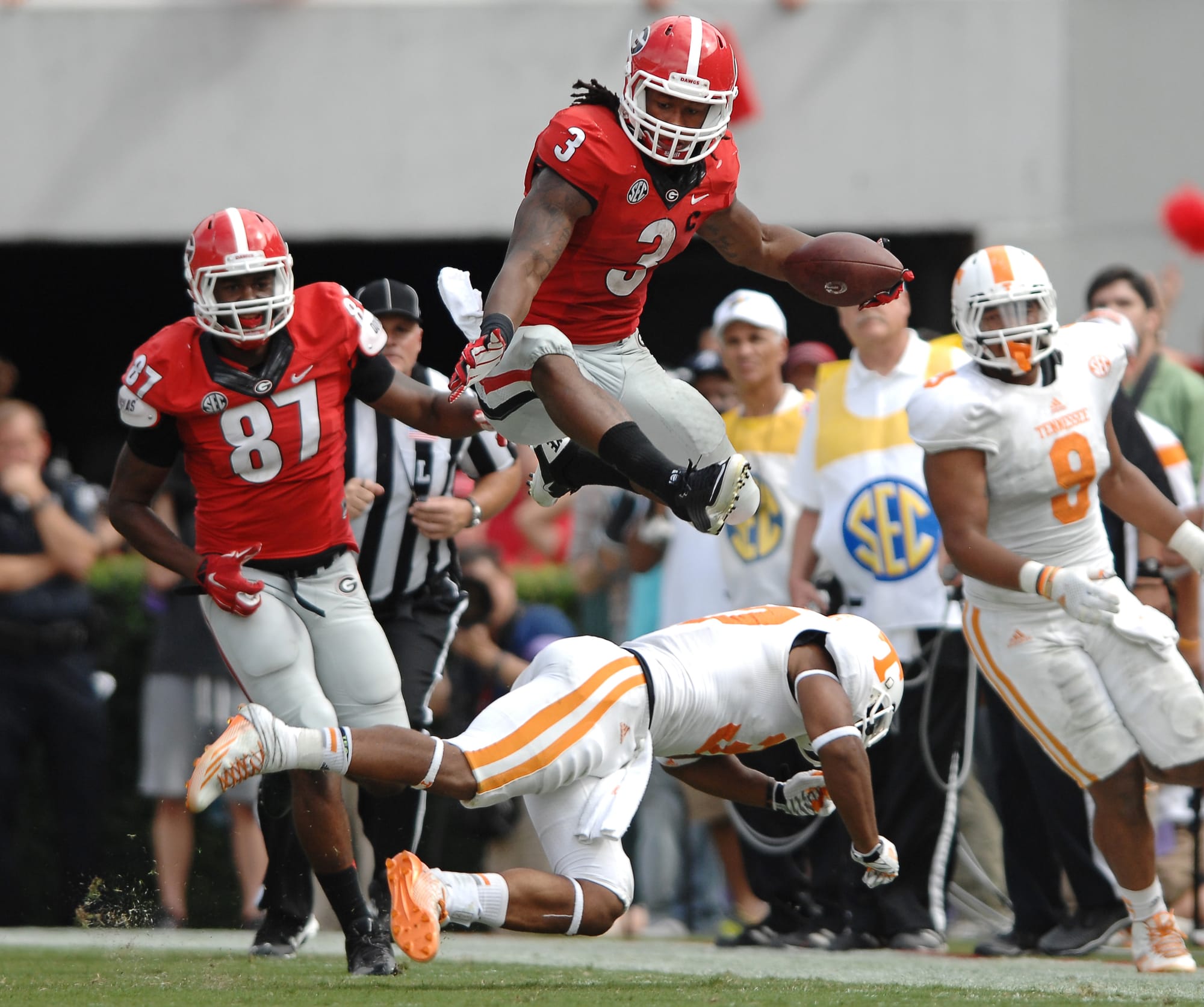
Gurley came into 2014 at +900 — the best price of any non-quarterback in the country, fourth on the board overall, and fourth on Sports Illustrated's preseason Heisman Watch. For a running back in the modern game that's as close to front-runner as it gets, and the AP said so plainly at the time: he "was considered one of the leading Heisman contenders when he was indefinitely suspended just 48 hours before a game at Missouri." He had 773 yards and eight touchdowns at 8.2 yards a carry, was third on the team in catches, had returned a kickoff 100 yards for a score, and had thrown Georgia's longest pass of the season.
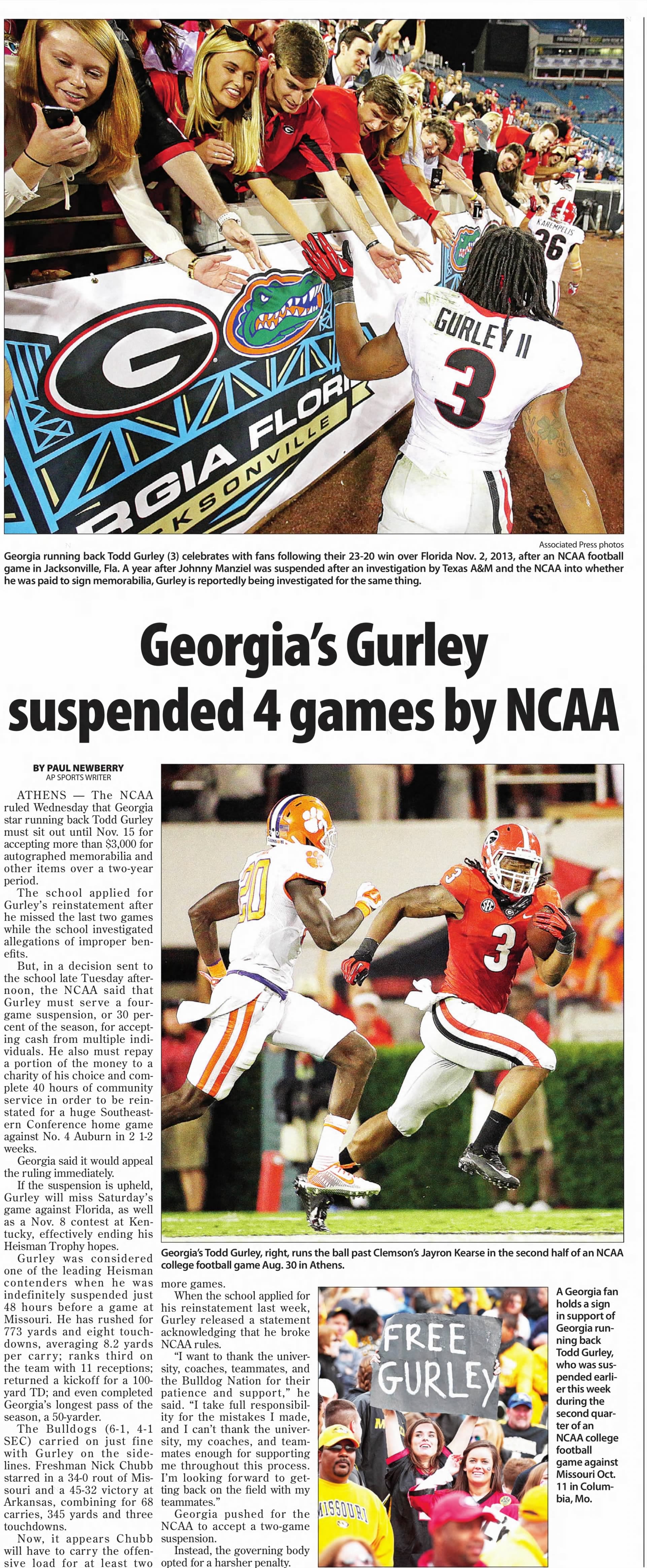
Georgia suspended him indefinitely on October 9 for signing autographs for money. He sat out against Missouri and Arkansas, and on October 29 the NCAA made it a four-game suspension: $3,000 and change, accumulated over two years. One dealer had paid him $400 for signed mini-helmets.
He came back on November 15 against Auburn, ran 29 times for 138 yards and a touchdown — and tore his ACL with about five minutes left in a game Georgia won 34-7.
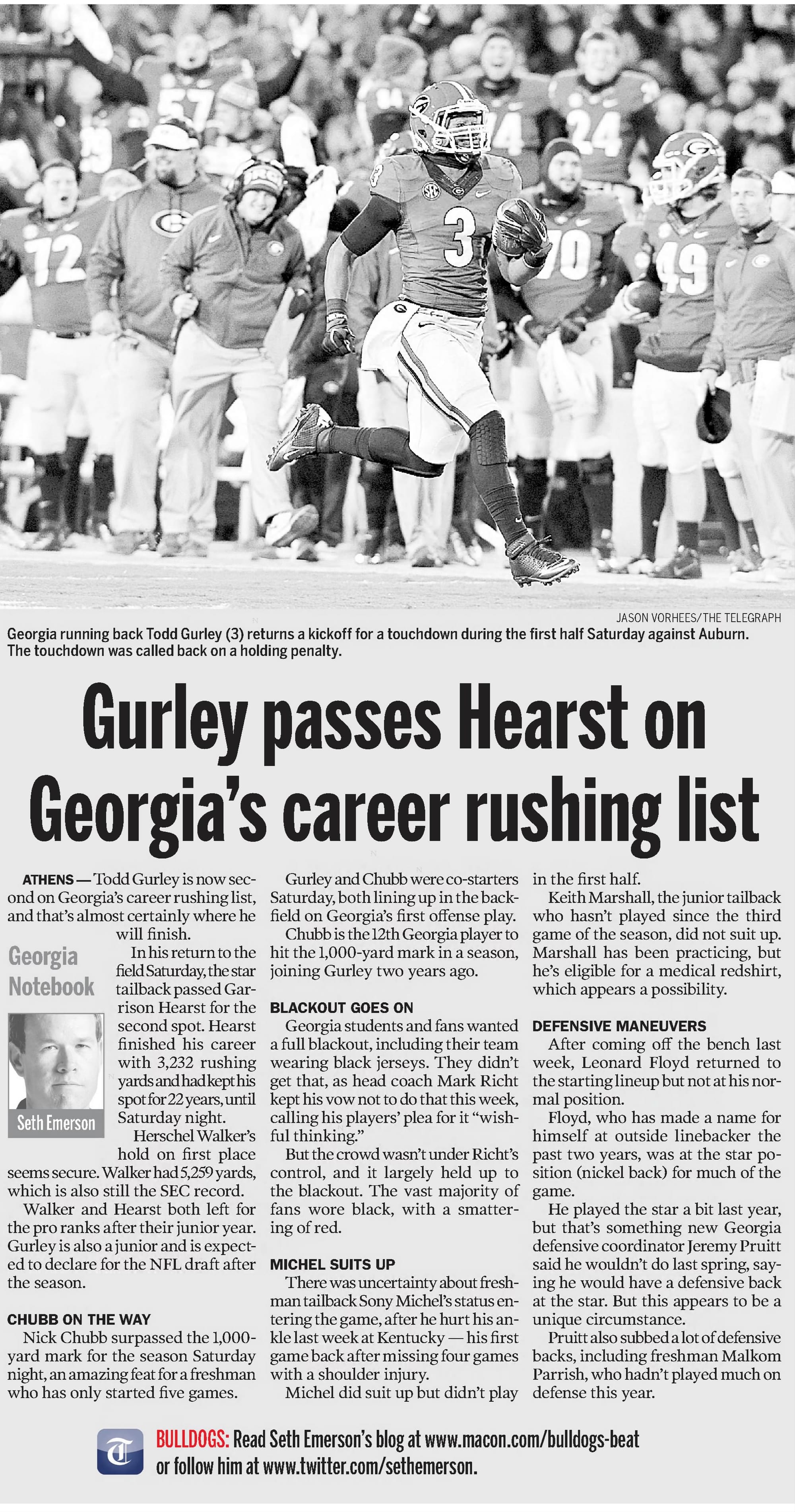
Six games, 911 yards, and a Heisman campaign that ended twice in five weeks for two entirely unrelated reasons.
6. Matt Barkley and Montee Ball, 2012
These two belong together, because Sports Illustrated put them together.
The August 29, 2012 college football preview led with both of them as the Heisman story of the season. Barkley was the quarterback of the AP preseason No. 1 team and a 5-1 Heisman favorite, coming off a sixth-place finish in 2011. Ball had finished fourth in 2011 after tying Barry Sanders' record of thirty-nine touchdowns in a season.
Neither one finished in the top ten of the same vote.
USC went 7-6, Barkley threw fifteen interceptions, separated his shoulder against UCLA and skipped the bowl game — and his own receiver, Marqise Lee, finished fourth in the voting he was supposed to win. Ball's summer had ended before the season did: in the early hours of August 1, he was assaulted by three men in Madison.
Two magazine leads. One issue. Both gone by December.
5. Tommie Frazier, Nebraska, 1994
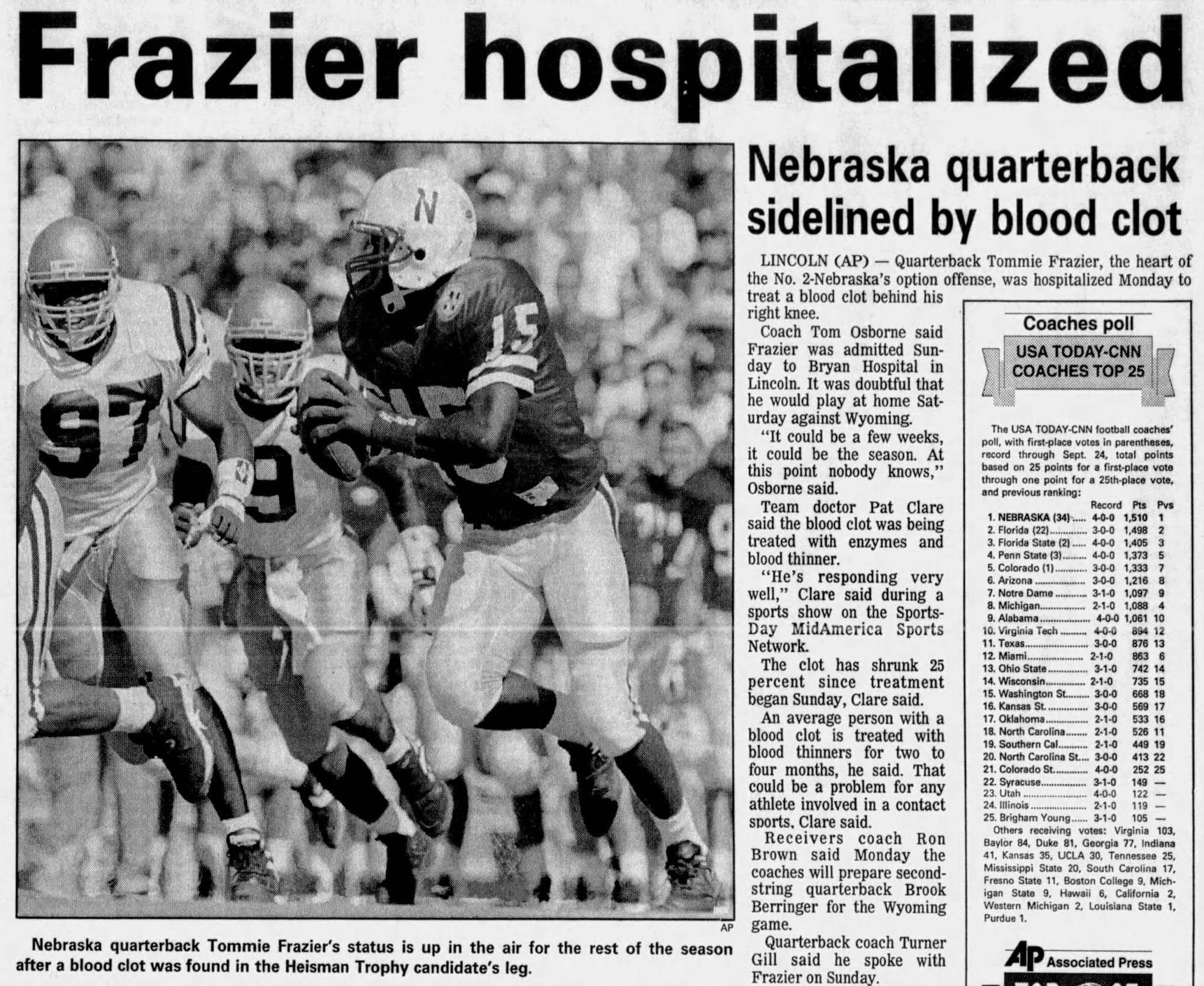
Nebraska's own record books describe him as a preseason Davey O'Brien and Heisman favorite, and the wire photo caption that ran that September calls him, flatly, "the Heisman Trophy candidate." He was admitted to a hospital in Lincoln on Sunday, September 25, and treated the next day for a blood clot behind his right knee. The team doctor explained the problem precisely: an ordinary person gets blood thinners for two to four months, "and that could be a problem for any athlete involved in a contact sport." Tom Osborne put it more simply — "It could be a few weeks, it could be the season. At this point nobody knows."
The clot reformed while he was on anticoagulants. He had surgery on October 6 and missed seven games, and a backup named Brook Berringer took the team the rest of the way.
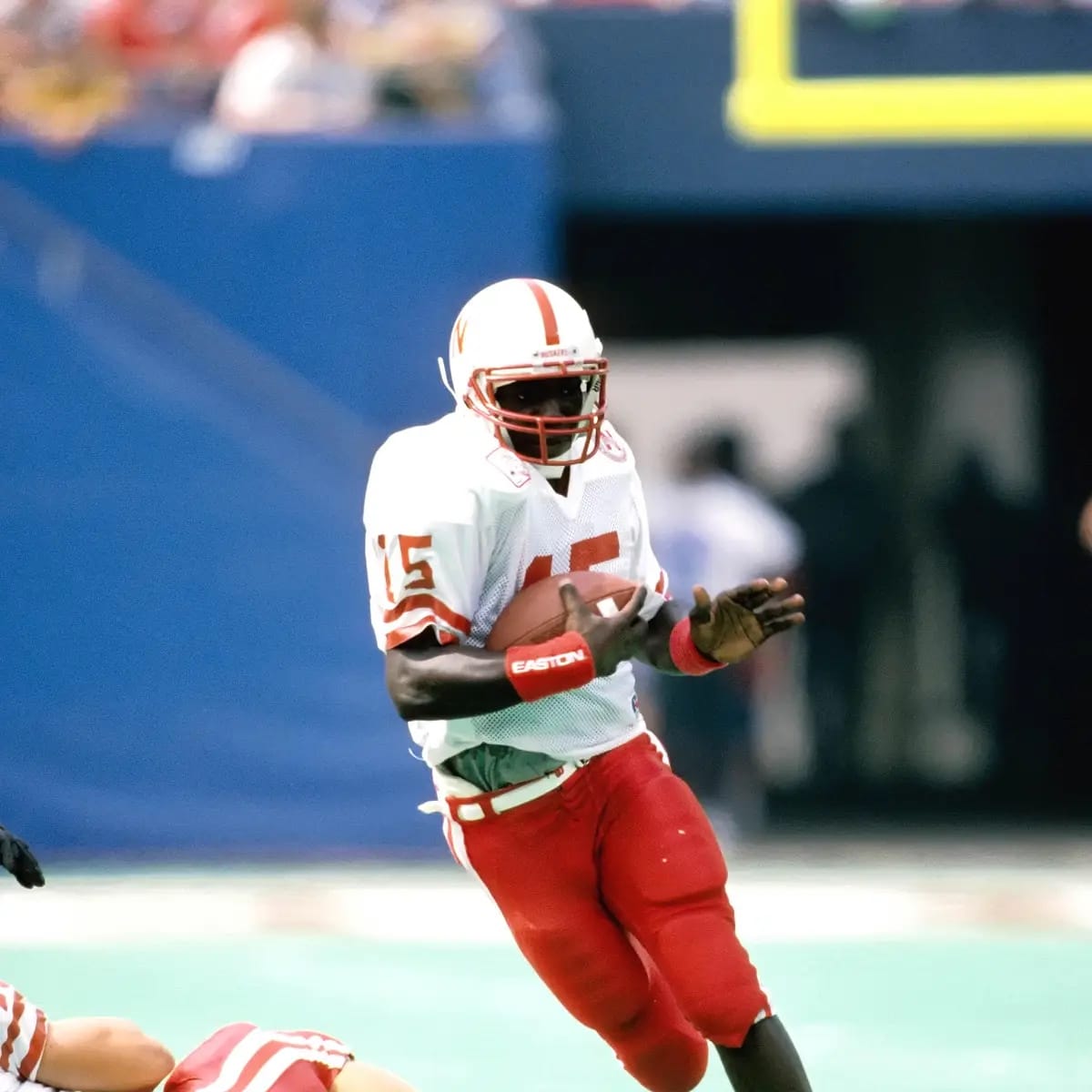
Nebraska won the national championship without him.
Here's why nobody remembers this as a flop: he came back in 1995, quarterbacked one of the best teams in the sport's history, and finished runner-up for the Heisman. The collapse got erased by what came after it, which is the only entry on this list that can say so.
4. Keith Byars, Ohio State, 1985
Byars was the Heisman runner-up in 1984 — 1,764 rushing yards, 22 touchdowns, 2,441 all-purpose yards, 1,251 points in the voting. He came back for 1985 as the obvious pick.
He fractured his right foot in preseason practice and missed five games. He came back and re-broke it in his second game back, and missed the rest of the season. Then, having waited out the whole year, he re-injured the same foot on Ohio State's second series of the Citrus Bowl.
Final line for the season: 213 yards and 4 touchdowns. Three breaks, one foot, one year.
3. Eric Metcalf, Texas, 1988
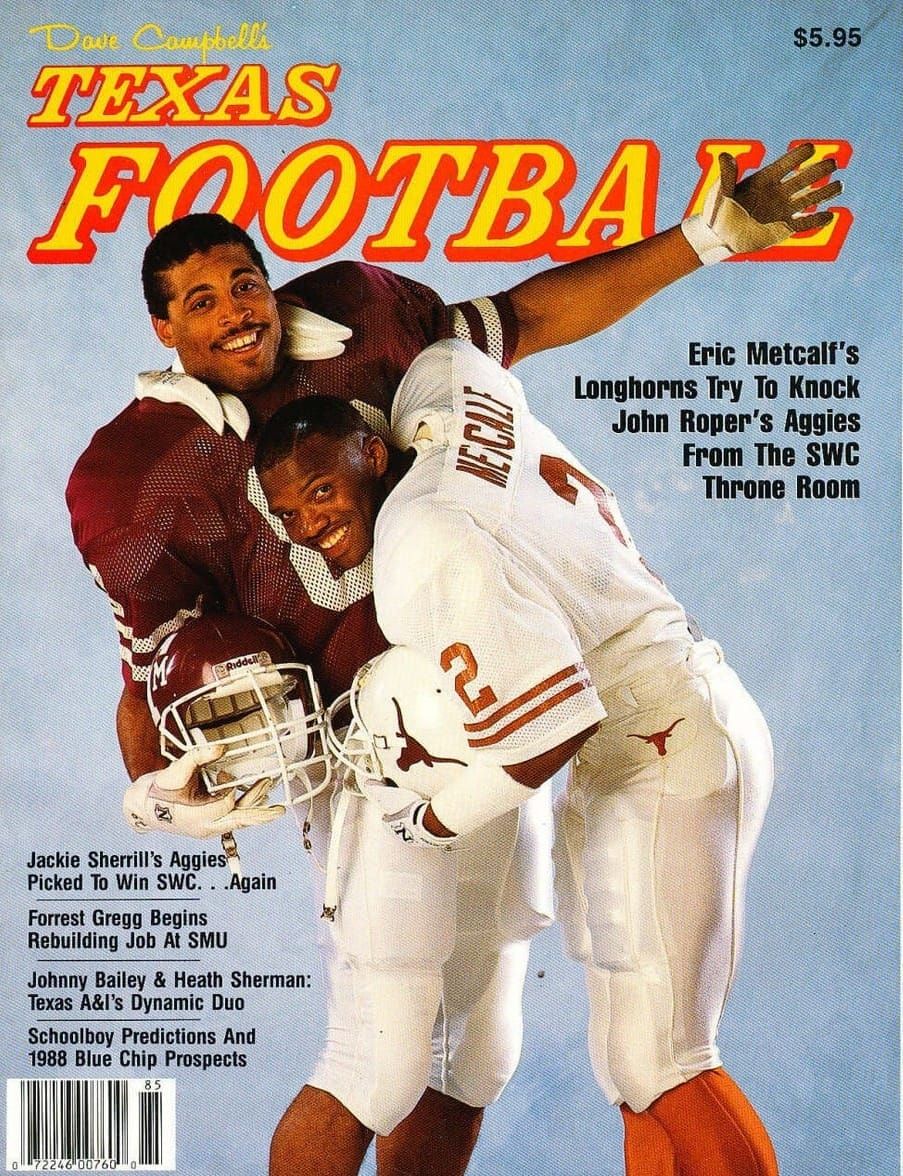
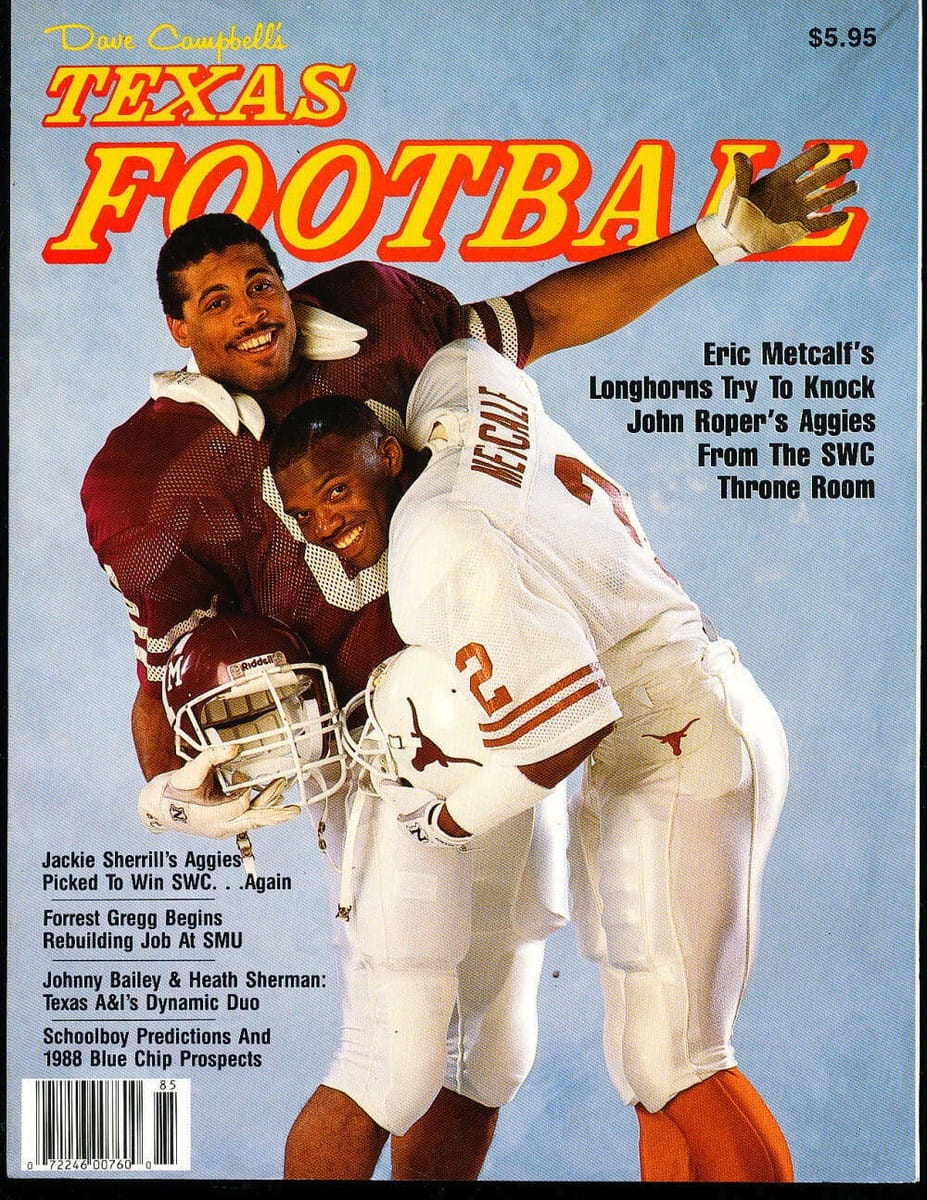
Metcalf was on the cover of Dave Campbell's Texas Football that summer, with Texas A&M linebacker John Roper hanging off his shoulder and a cover line that framed the whole Southwest Conference season around him: "Eric Metcalf's Longhorns Try To Knock John Roper's Aggies From The SWC Throne Room." He was also, that same summer, the NCAA long jump champion and the U.S. national champion, and he finished eighth at the Olympic Trials.
And that's what cost him the season, in the least dramatic way imaginable.
Because he was bouncing between the Trials and a possible summer session, Metcalf took room and board at Jester Center without being enrolled in classes. Nobody at the business office caught it all summer. He wasn't suspended and he didn't do anything anyone considered cheating — he was declared ineligible, and the ruling came down as the team was boarding the plane to Provo.
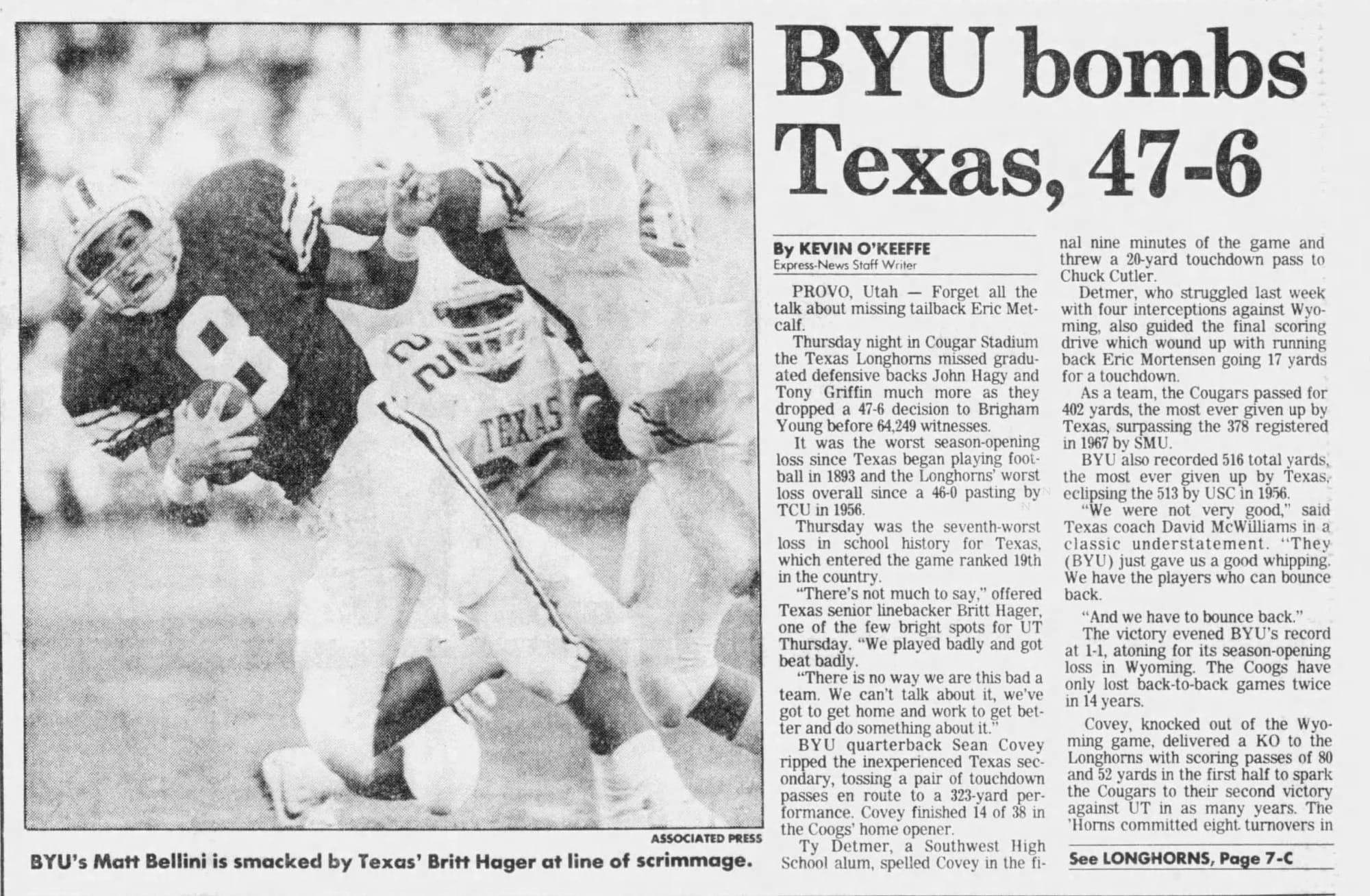
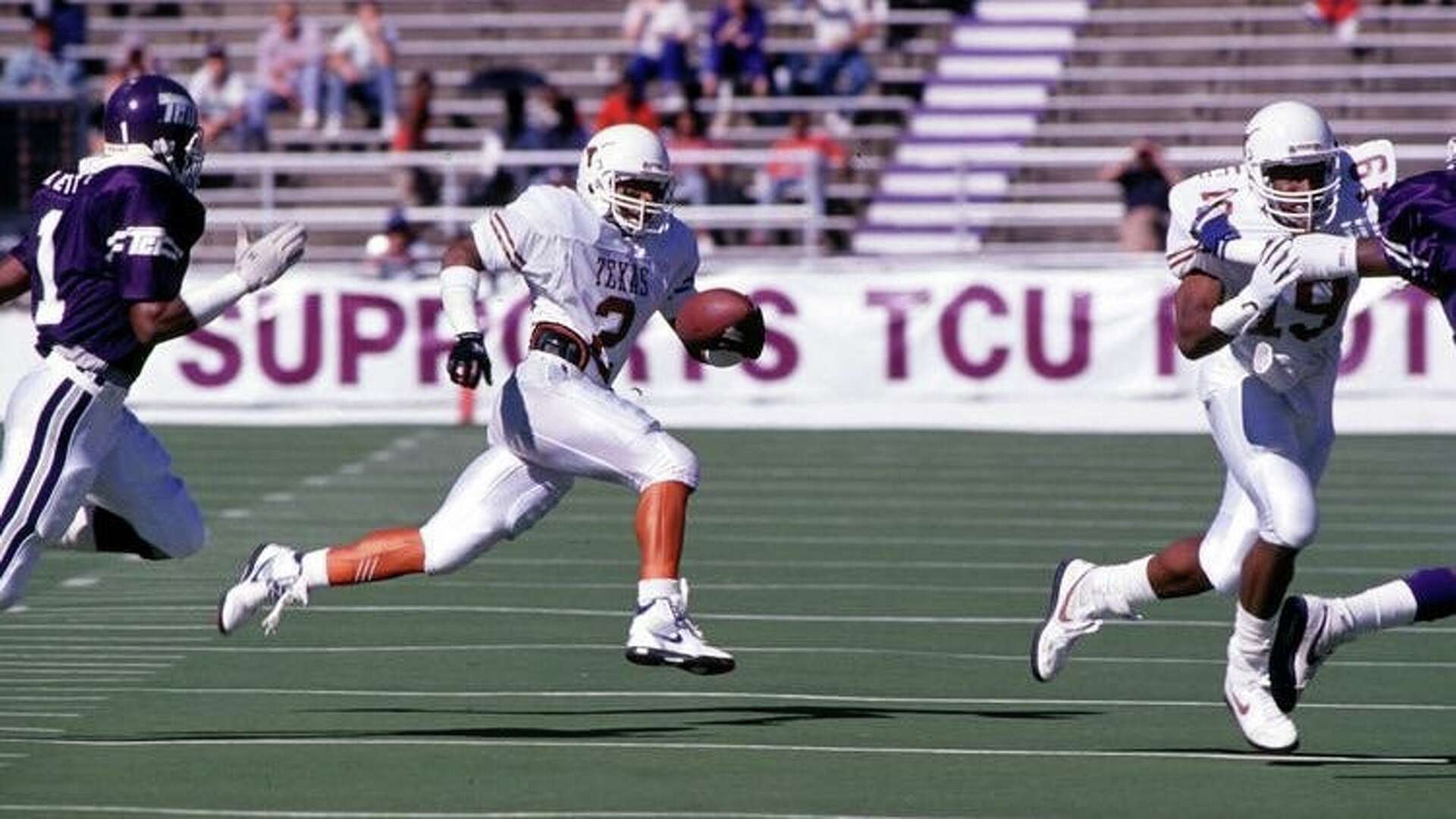
No. 19 Texas played at BYU on Thursday, September 8, 1988, in front of 64,249 in Provo, without him. The San Antonio Express-News began its account: "Forget all the talk about missing tailback Eric Metcalf."
BYU won 47-6. It was the worst season-opening loss Texas had suffered since it started playing football in 1893, and its worst loss of any kind since 1956. BYU put up 516 total yards, more than any team had ever gained against Texas. Texas turned it over eight times. And the fourth-quarter mop-up was handled by a BYU backup named Ty Detmer, who would win the Heisman Trophy two years later — in the one game the season's Heisman candidate wasn't allowed to dress for.
"We were not very good," David McWilliams said afterward. "They just gave us a good whipping."
It was the only game Metcalf missed all year, and the season never recovered: Texas finished 4-7, including a 66-15 loss to Houston, and McWilliams never really got it back. Metcalf ran for 932 yards and finished nowhere near the top ten of a vote Barry Sanders won by a thousand points.
The whole thing was a paperwork error discovered on a tarmac.
2. Maurice Clarett, Ohio State, 2003
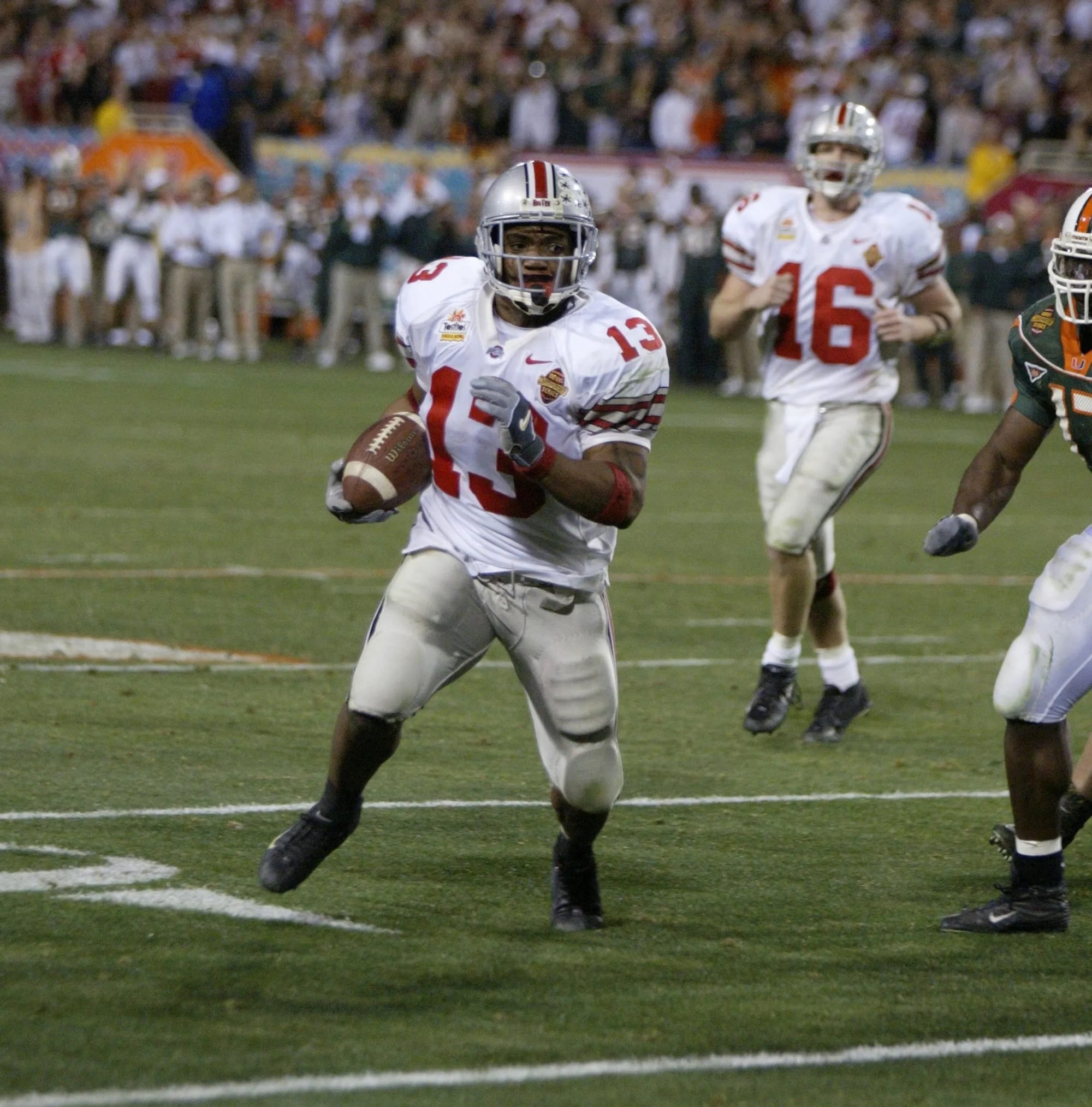
As a freshman in 2002, Clarett ran for 1,237 yards and 18 touchdowns and scored the winning touchdown in the Fiesta Bowl that made Ohio State national champions. Everyone's 2003 pick.
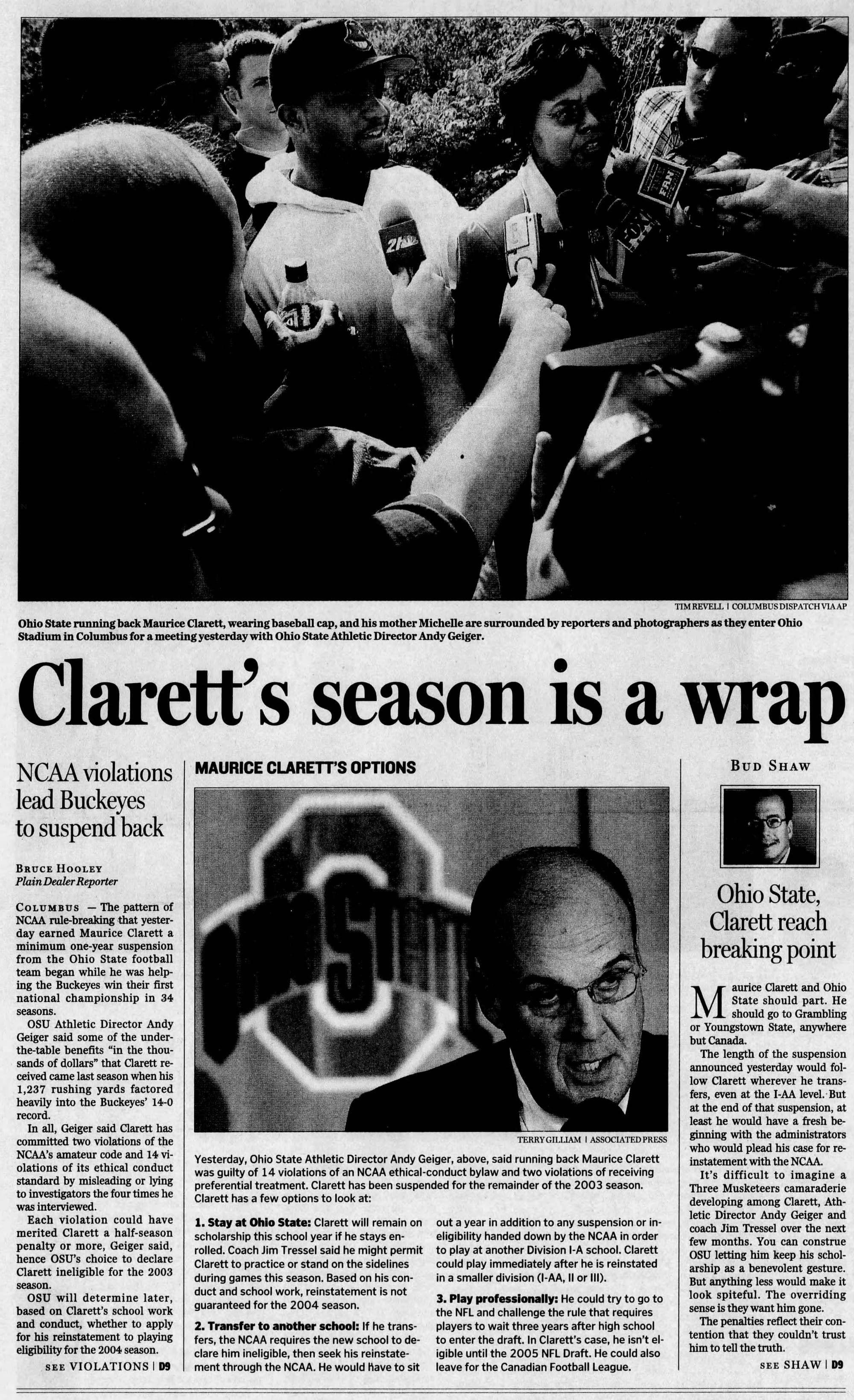
On September 10, 2003, Ohio State suspended him for the entire season. And the case was barely about the benefits. Athletic director Andy Geiger laid out sixteen violations: two for receiving preferential treatment, and fourteen for misleading or lying to investigators across the four times they interviewed him. The money was "in the thousands of dollars." The lying was the reason he never played again.
He played zero games. Ohio State went 11-2 without him, and he never played college football again.
1. Marcus Dupree, Oklahoma, 1983
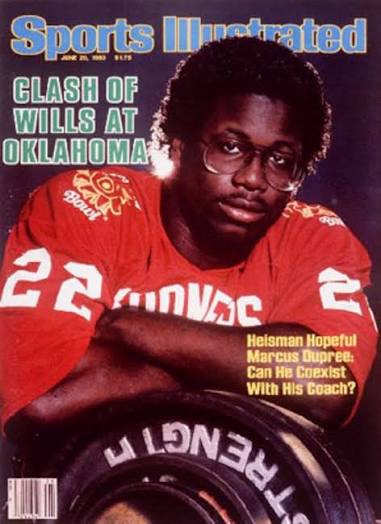
The best high school running back anyone had seen, on the cover of Sports Illustrated in June of 1983 — "CLASH OF WILLS AT OKLAHOMA," and down in the corner, in yellow: "Heisman Hopeful Marcus Dupree: Can He Coexist With His Coach?" By October, UPI was writing that he had been "touted in pre-season as a strong Heisman Trophy candidate."
He reported late and overweight. He carried the ball 61 times for 369 yards across four games. After a 28-16 loss to Texas in Dallas he went home to Philadelphia, Mississippi, and skipped practice on Monday. And Tuesday. Oklahoma suspended him Wednesday morning, and then he didn't show up Wednesday either.
For a few days nobody knew where he was. Police in Mississippi were looking for him, and he stayed on a missing-persons list until an officer in Jackson physically laid eyes on him. "Our people have physically seen him," a policeman told the paper. "The chief wanted us to physically see him and make sure he was all right before we took him off the missing persons' list." His mother said he'd called: he was fine, he was sorry he'd upset her, and he needed some time alone.
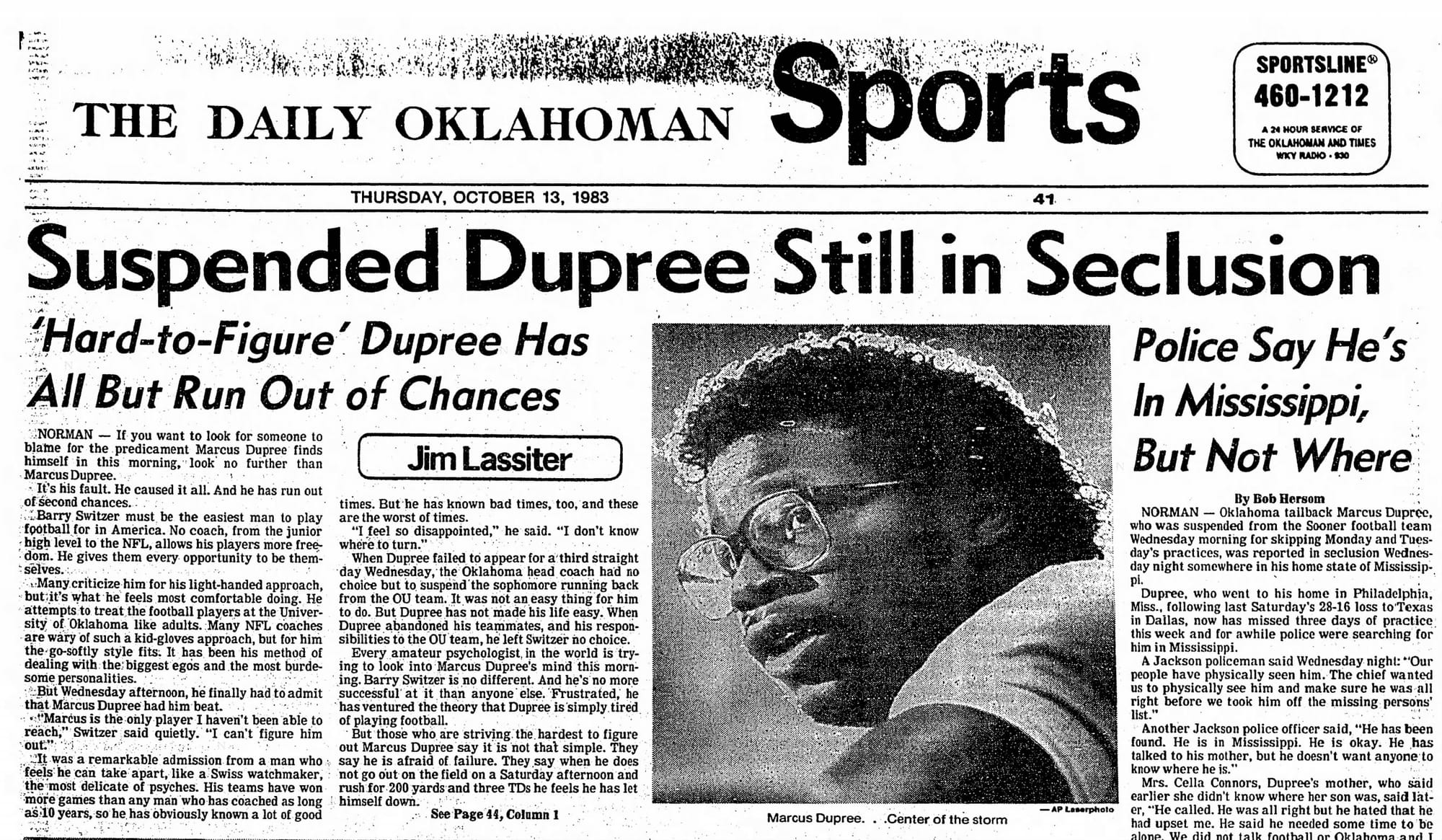
Switzer, who was famous for letting his players be themselves, gave up in public: "Marcus is the only player I haven't been able to reach. I can't figure him out."
He transferred to Southern Miss, sat out, left for the USFL, and tore his LCL in February 1985.
Here's why it's number one, and it's the only absolute on this list. Every other player here finished outside the top ten. Marcus Dupree never received a single Heisman vote in his life. Not one, in any year, from anybody.
Four Things Everyone Believes About Heisman Voting That Aren't True
Anthony Davis lost the 1974 Heisman because his big game came after the deadline. Close, and wrong in an interesting way. On November 30, 1974, USC trailed Notre Dame 24-0 and Davis scored four touchdowns — including a 102-yard kickoff return — in a 55-24 comeback, accounting for 26 of USC's first 27 points. He finished second to Archie Griffin. But ballots weren't due until Tuesday, December 3, after the game. The deadline wasn't the problem. The mail was. Most voters had already dropped their ballots in a mailbox. (The more famous version of this story, Doug Flutie's Hail Mary, really did come after voting closed.)
Vince Young's Rose Bowl should have won him the 2005 Heisman. It could not have. The trophy was awarded December 10, 2005. The Rose Bowl was played January 4, 2006. Bowls and playoff games have never counted, and they still don't.
A bad conference championship game will cost you the Heisman. Conference title games do count — and it still doesn't work that way. Jason White's Oklahoma lost 35-7 to Kansas State in the Big 12 championship game on December 6, 2003. He won the Heisman seven days later. Every voter watched it happen.
Coaches vote for the Heisman. They have no vote at all. It's 931 ballots: 870 media members, split 145 apiece across six regions specifically to stop any one part of the country from running the thing, plus every living former winner, plus one aggregated fan vote.
The Reverse: Five Nobodies Who Won It
Joe Burrow, 2019, is the greatest example in the trophy's history. He was an Ohio State backup who never won the job — 29 completions in three years — transferred, and threw sixteen touchdowns at 57.8% in his first LSU season. The next year he threw for 5,671 yards and 60 touchdowns at 76.3%, went 15-0, and won the Heisman with 841 of 885 first-place votes and a 1,846-point margin, breaking a record O.J. Simpson had held since 1968. His preseason price was somewhere between 40-to-1 and 200-to-1. Johnny Manziel, 2012, didn't win the Texas A&M starting job until August 15, about two weeks before the opener, and wasn't listed in preseason odds at all. Lamar Jackson, 2016 was 100-to-1 at the Westgate; Deshaun Watson was the runaway favorite. Jason White, 2003 had torn two ACLs, the second one in the second game of 2002, and played almost entirely out of the shotgun because he couldn't move. Robert Griffin III, 2011 beat Andrew Luck, who was the presumptive winner and the presumptive No. 1 pick, 405 first-place votes to 247.
The Ones That Just Missed
Jake Locker, Washington, 2010: fourth-shortest odds at +1400, Mel Kiper's projected No. 1 overall pick, on the cover of SI's "HEISMAN 2010" preview — and the race was over in Week 3, when he went 4-of-20 for 71 yards with two interceptions in a 56-21 home loss to Nebraska. Jadeveon Clowney, South Carolina, 2013: 13 sacks and a sixth-place Heisman finish in 2012, and the runaway No. 1 on ESPN's first preseason Heisman Watch — then a rib injury, a chronic foot problem, and three sacks. Bryce Love, Stanford, 2018: the defending Heisman runner-up off a 2,118-yard season and the outright preseason favorite at 5-1; a bad ankle held him to 739 yards and he tore his ACL in the finale. Sam Bradford, Oklahoma, 2009: the defending winner, hurt in the opener against BYU one play after becoming Oklahoma's all-time passing leader, hurt again against Texas in October, and finished with three games and 562 yards. Caleb Williams, USC, 2023: the defending winner and a +500 favorite at three books at once; USC started 6-0, lost five of its last six, and he missed the top ten entirely. J.T. Daniels, Georgia, 2021: third on the preseason board, lost the job in September to a walk-on named Stetson Bennett, who won the national title. Carson Beck, Georgia, 2024: the summer favorite at +750, threw twelve interceptions in a six-game stretch, then tore the UCL in his throwing elbow on the last play of the first half of the SEC Championship Game. Mark Ingram, Alabama, 2010: defending winner, +380 favorite, knee surgery, missed two games, gone. Arch Manning, Texas, 2025: the preseason favorite at +500, quarterbacking the preseason No. 1 team, finished 10-3 with 3,163 yards and 26 touchdowns and never appeared in the race at all — while the eventual winner, Fernando Mendoza, opened at +6000.
And a correction to a list you've probably seen: Brian Bosworth does not belong on one. He finished fourth in the 1986 voting, and his steroid suspension was announced on December 26 — after the ballots were counted.
Who's the biggest one we left off? Comments below.
Comments ()