
On This Date: The Seoul Olympics Open — Sept. 17, 1988 — and the 5 Moments Nobody Has Stopped Arguing About
Thirty-eight years ago today the Seoul Olympics opened, and the doves landed on the cauldron before it was lit. The five moments from the next sixteen days that people are still arguing about.
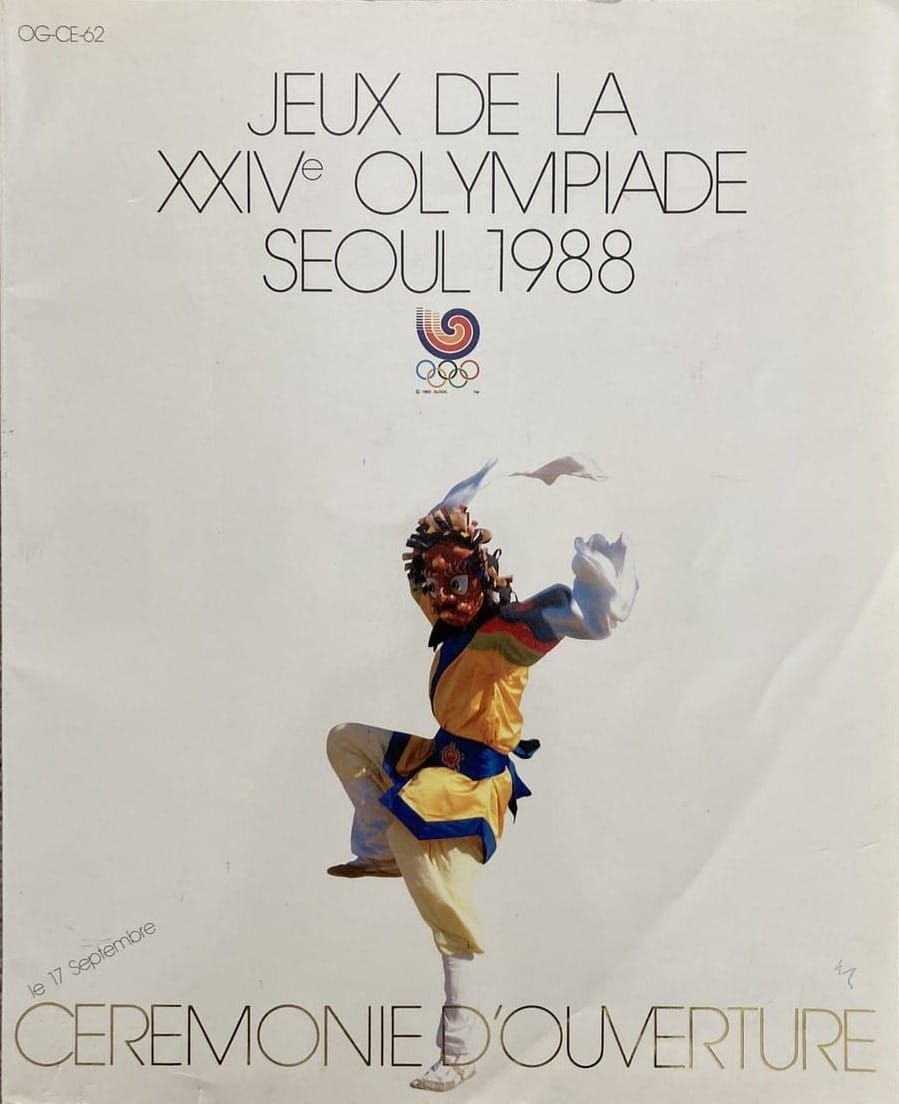
At 10:30 in the morning on September 17, 1988, in a stadium in the Jamsil district of Seoul, Roh Tae-woo stood up and declared the Games of the XXIV Olympiad open. He had been the president of South Korea for eight months, and he had the job at all because of these Olympics.
That's not a figure of speech. In June of 1987, South Korea was a military-backed government facing the largest protests in its history, set off by the torture death of a student named Park Jong-chul and the death of another, Lee Han-yeol, hit by a tear gas canister. The regime had a choice about how to answer, and it had a choice with the world's television cameras arriving in fifteen months. On June 29, 1987, Roh conceded direct presidential elections. Historians have argued ever since about how much the Games had to do with it. Nobody argues that they had nothing to do with it.
So the opening ceremony was already the most consequential thing on the schedule before a single race was run. And then the doves.
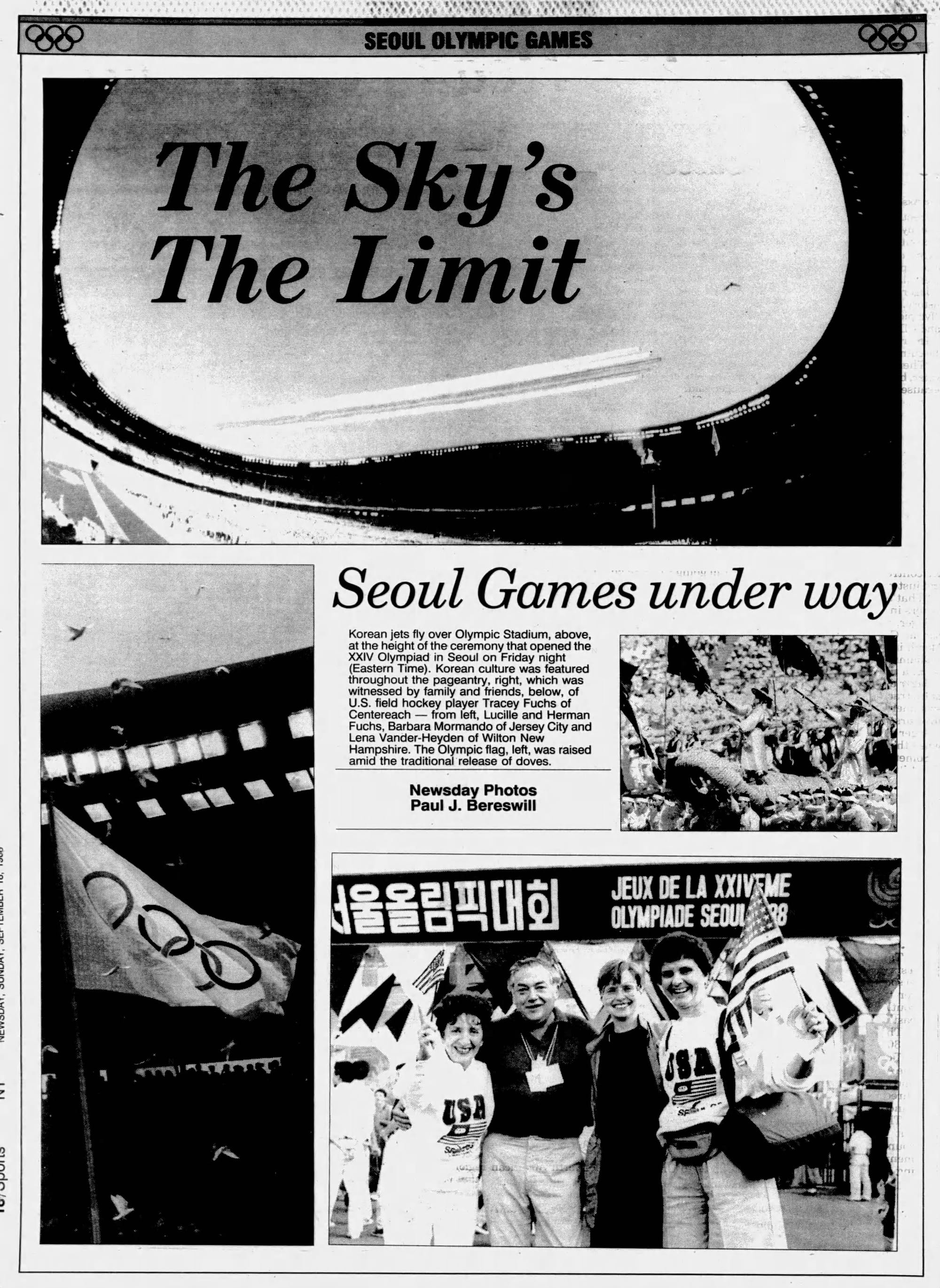
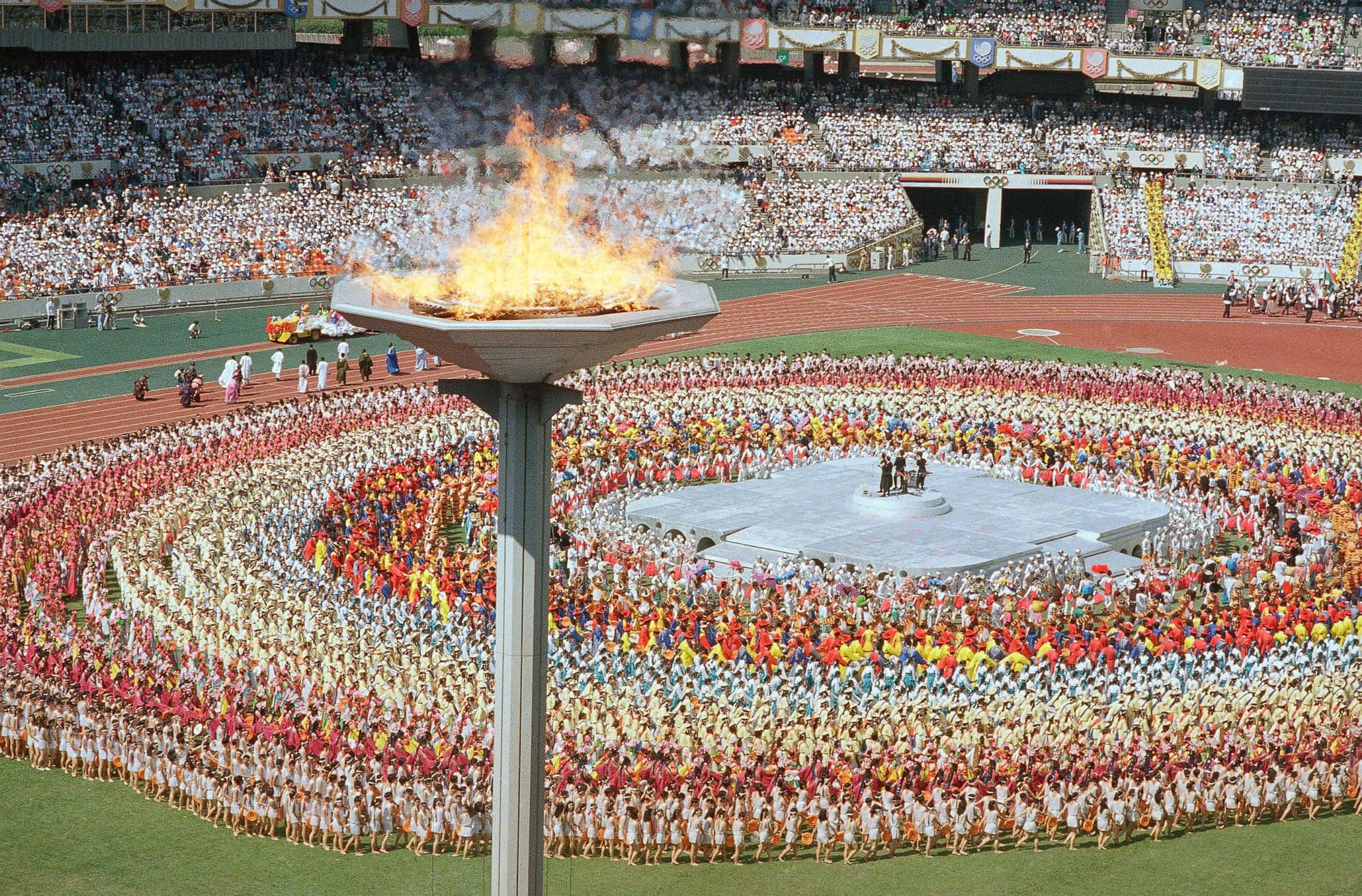
Releasing live doves was Olympic tradition. The birds went up, they were supposed to circle and clear the stadium, and instead they scattered and landed all over the place, including on the rim of the Olympic cauldron. A few minutes later three torchbearers rode a platform up to that cauldron and lit it. Some of the doves were still sitting on it. The cameras cut to the crowd. Seoul was the last Summer Olympics to release live doves, and every Games since has used balloons, paper, kites, or nothing at all.
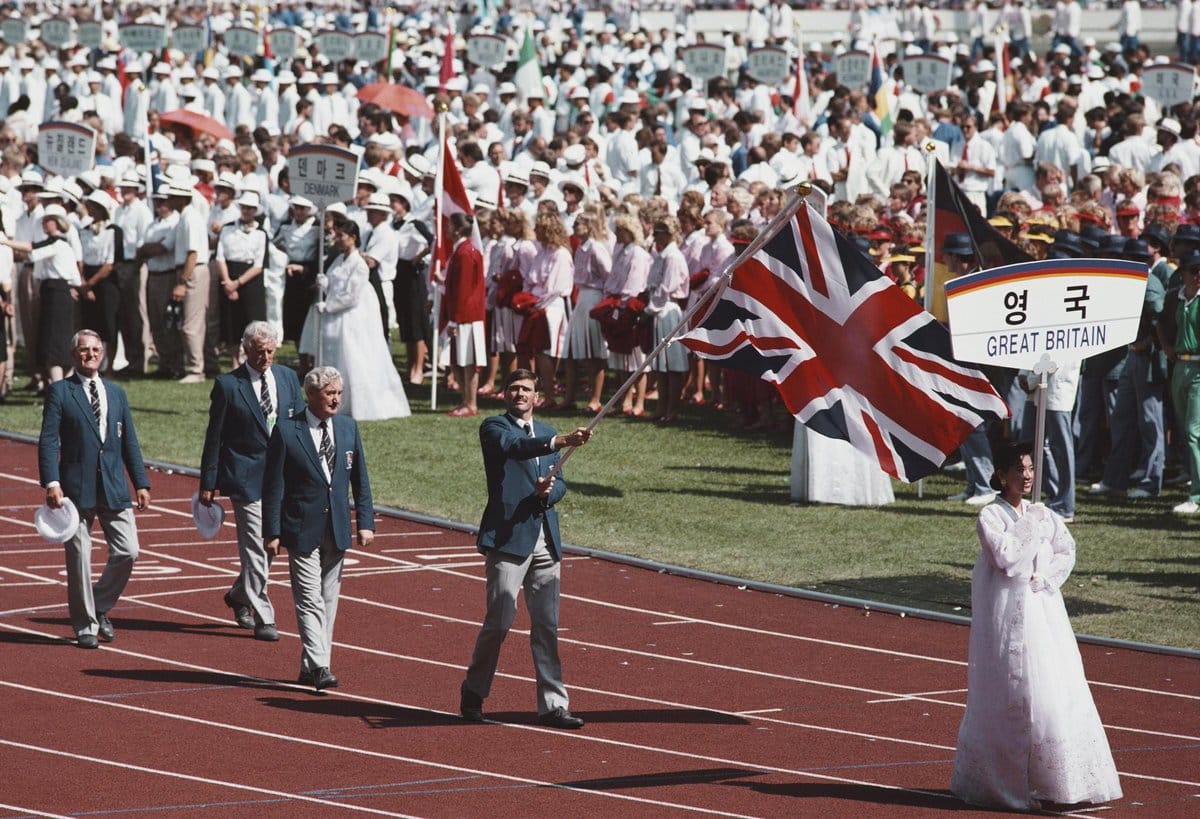
These were the first Summer Games since Montreal in 1976 at which the United States, the Soviet Union and East Germany all showed up. Twelve years, two boycotts, and a Cold War that had another fourteen months to run. Five countries stayed home — North Korea, which had spent two years demanding to co-host and turned down an offer of four full events plus part of the football tournament, along with Cuba, Ethiopia, Nicaragua and Madagascar.
About 160 nations marched. Roughly 8,400 athletes competed in 237 events. It was the last Olympic parade of nations to include East Germany, the Soviet Union, North Yemen and Yugoslavia. Within four years, all four of them had ceased to exist.
Here are the five moments from the next sixteen days that people are still arguing about. One ground rule, because it decides the order: this ranks by stakes plus how alive the argument still is, not by athletic quality. That's why the single greatest achievement of these Games finishes outside the top five. We'll get to it.
5. The last amateurs (Sept. 28)
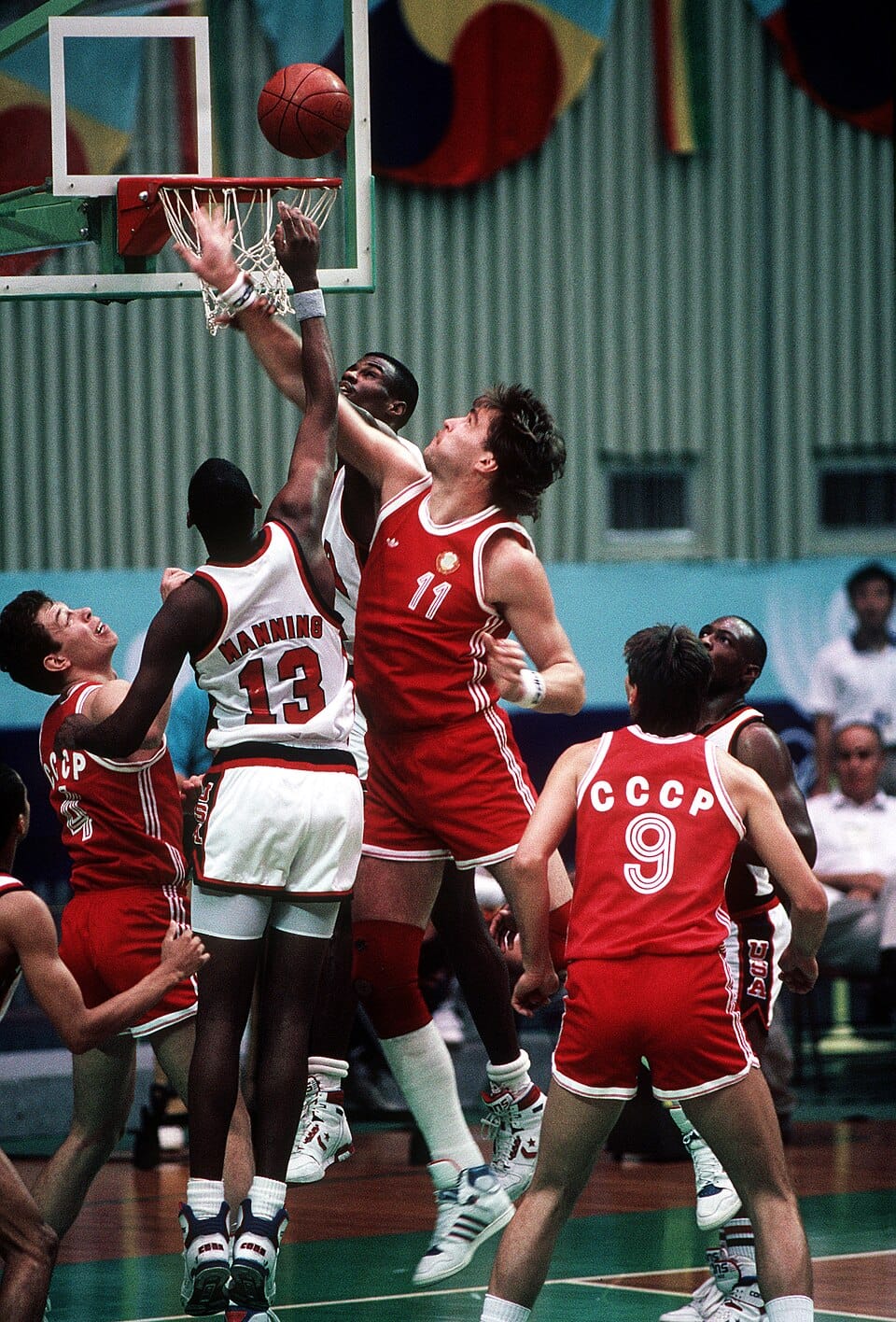
The United States sent college players to Seoul, the way it always had. John Thompson of Georgetown coached them — the first Black head coach of an American Olympic basketball team. He had David Robinson, Danny Manning, Mitch Richmond and Dan Majerle. He had cut a guard from Arizona named Steve Kerr.
In the semifinal on September 28, the Soviet Union beat them 82-76. The Soviets had Arvydas Sabonis, who averaged better than eleven rebounds a game, and Šarūnas Marčiulionis, and they went on to beat Yugoslavia 76-63 for the gold. The Americans beat Australia 78-49 the next day for bronze — the first bronze medal in the history of United States Olympic basketball. The loss to the Soviets was only the second the United States had suffered in eighty-seven Olympic games.
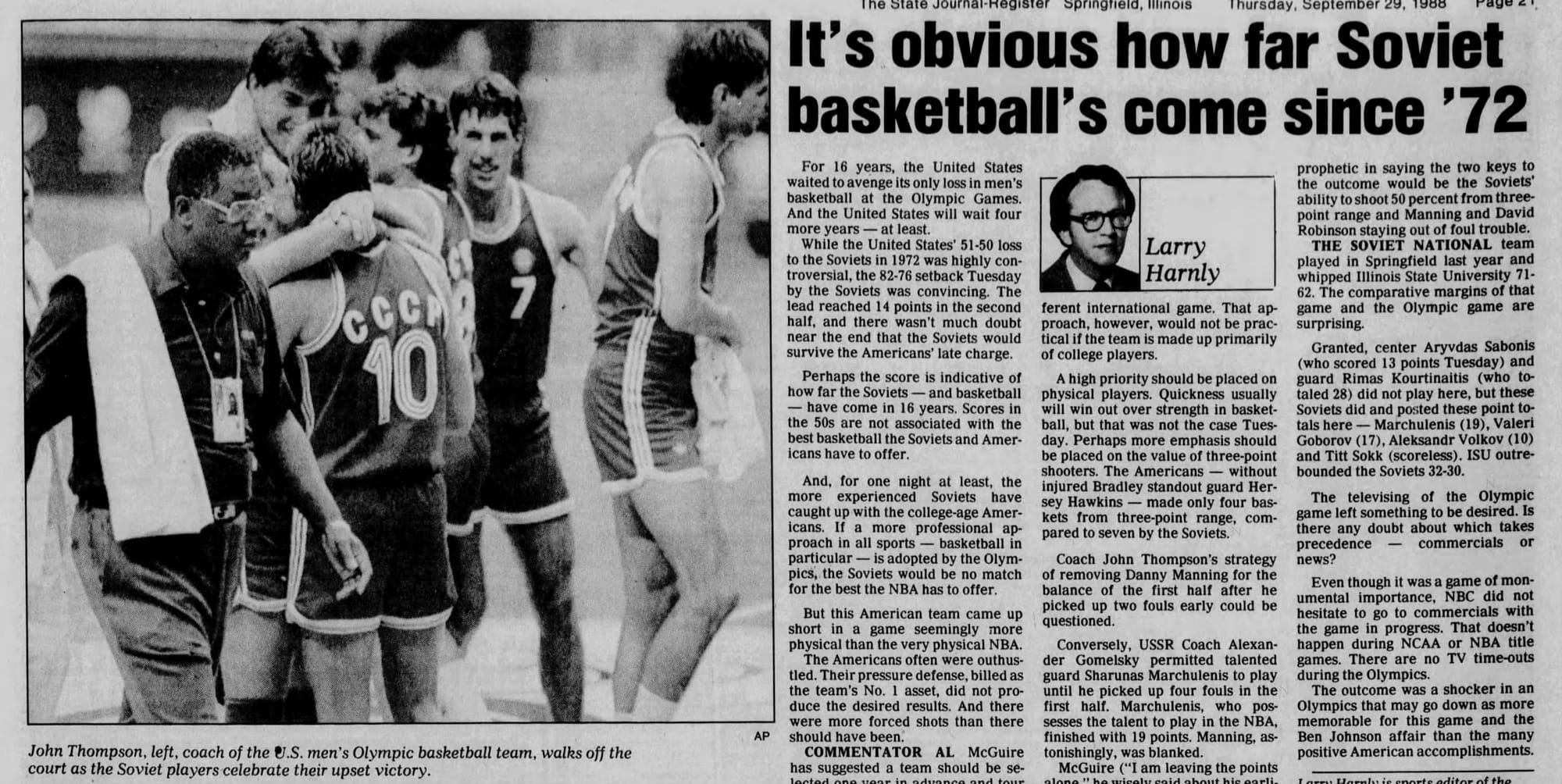
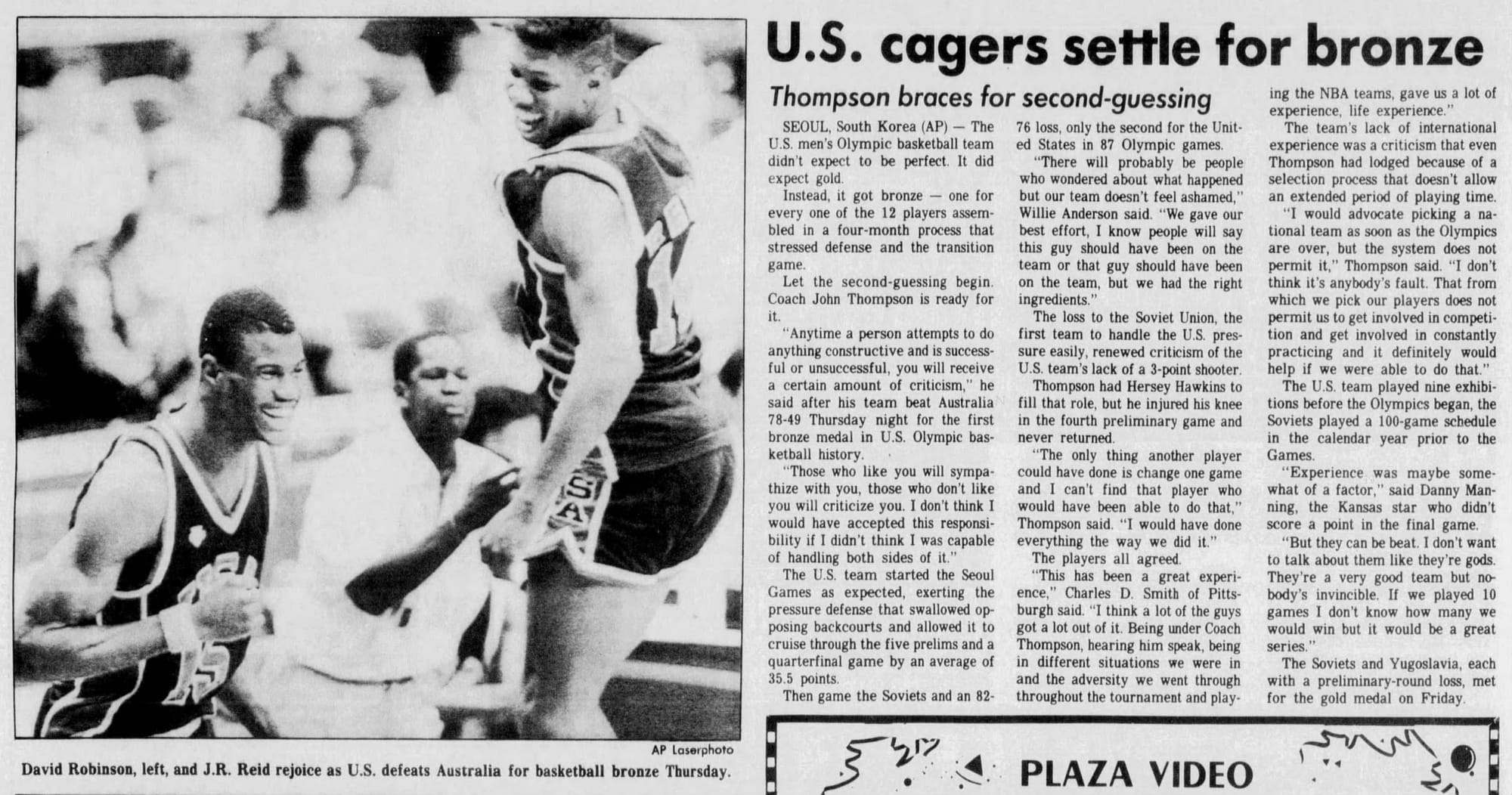
That's the whole moment: a bronze medal. It's on this list because of what it caused. In 1989, FIBA voted to let professionals play. Four years after Seoul, Michael Jordan, Magic Johnson and Larry Bird walked into a gym in Barcelona. Every Dream Team documentary starts in 1992. It actually starts here, in a losing locker room in Seoul, with the last U.S. Olympic basketball team made of college kids.
4. Three world records that are still standing (Sept. 23–29)
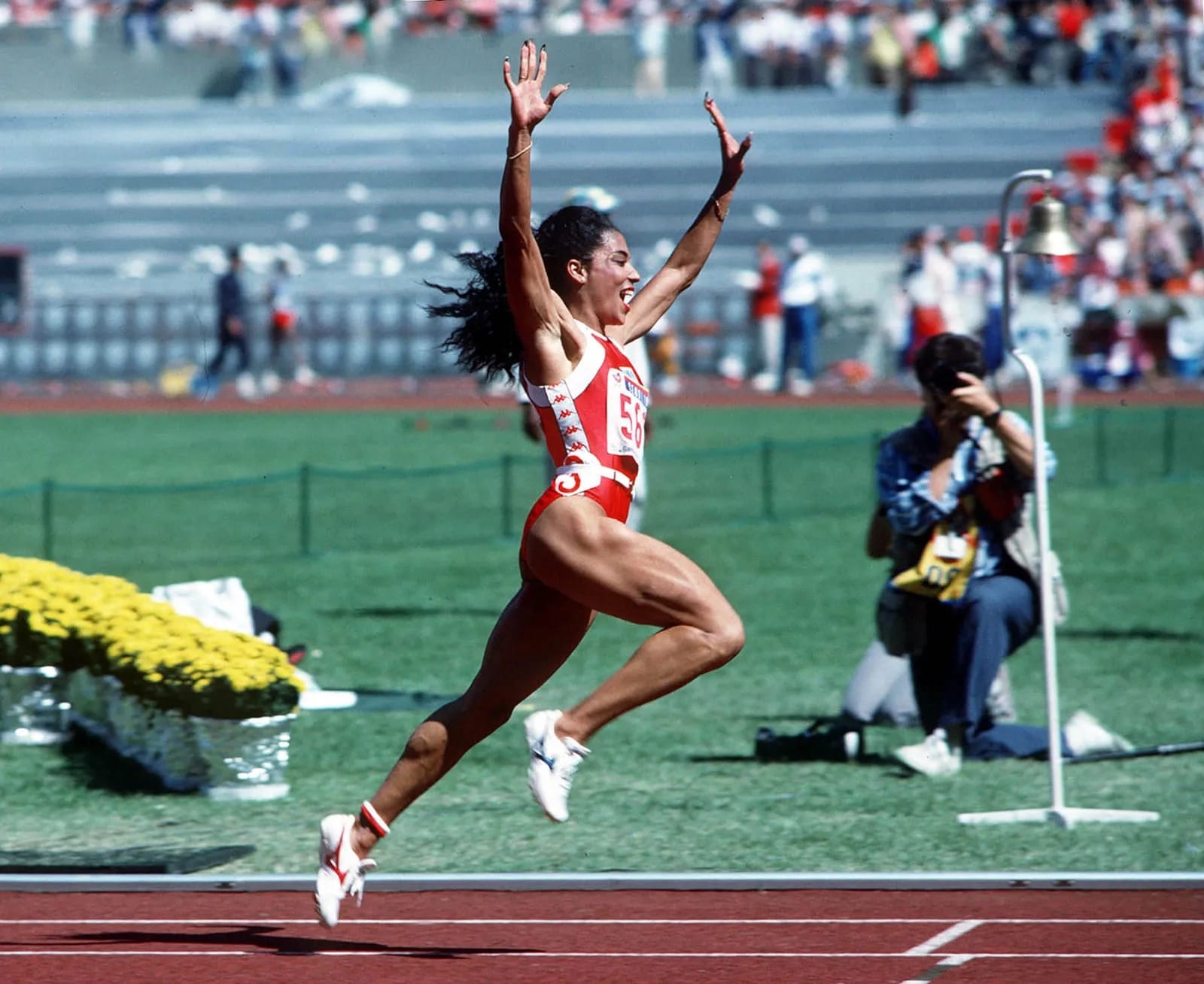
Florence Griffith Joyner won the 100 meters on September 25 in 10.54, with a tailwind of 3.0 meters per second — too strong to count for a record. Four days later she won the 200 in 21.34, and that one counted. It's still the world record. She had already broken the world record that afternoon — Marita Koch's 21.71, which had stood for nine years — by running 21.56 in the semifinal, and then she came back an hour later and took another two-tenths off it. One paper called it the greatest single improvement in a sprint race by a man or a woman.
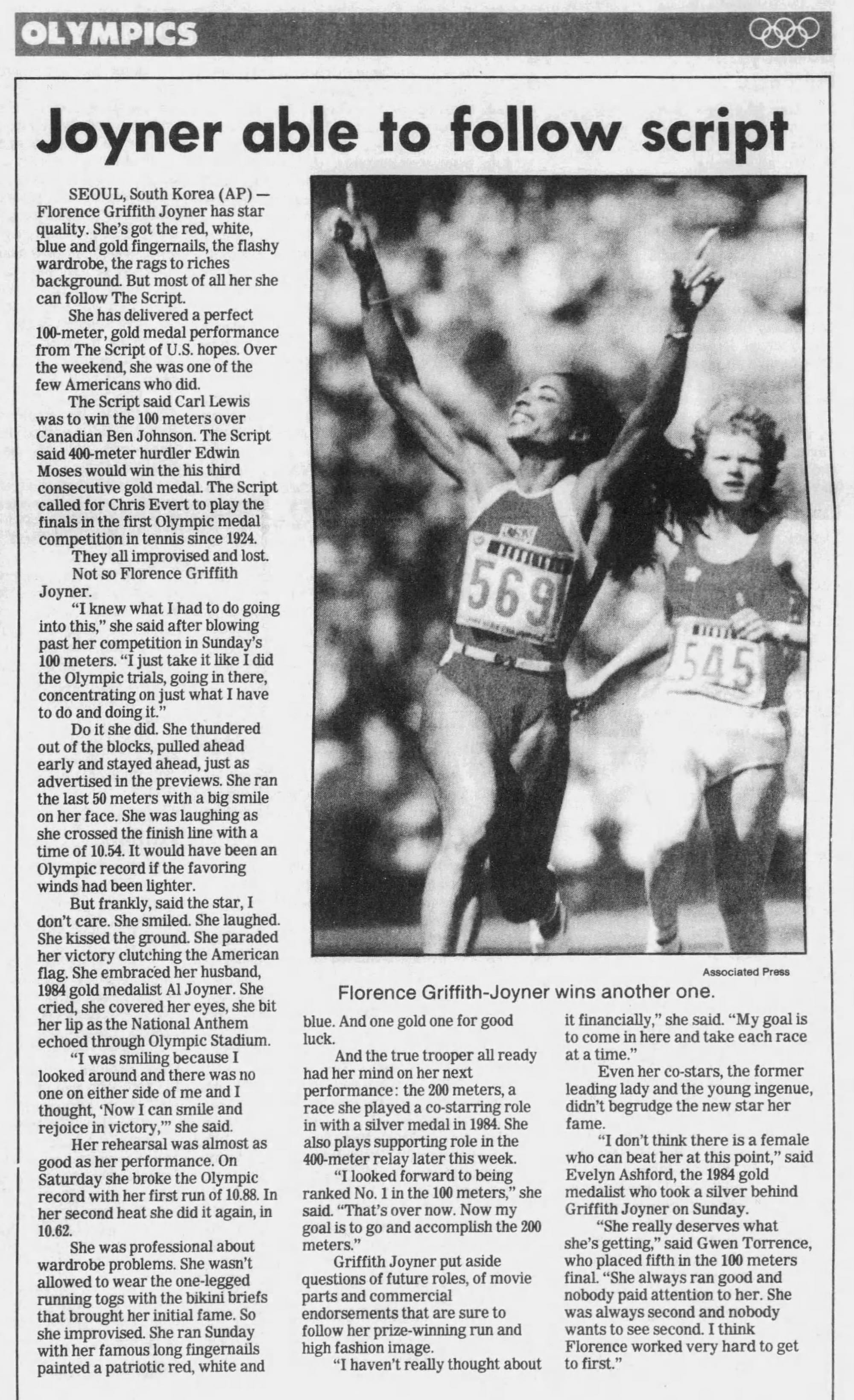
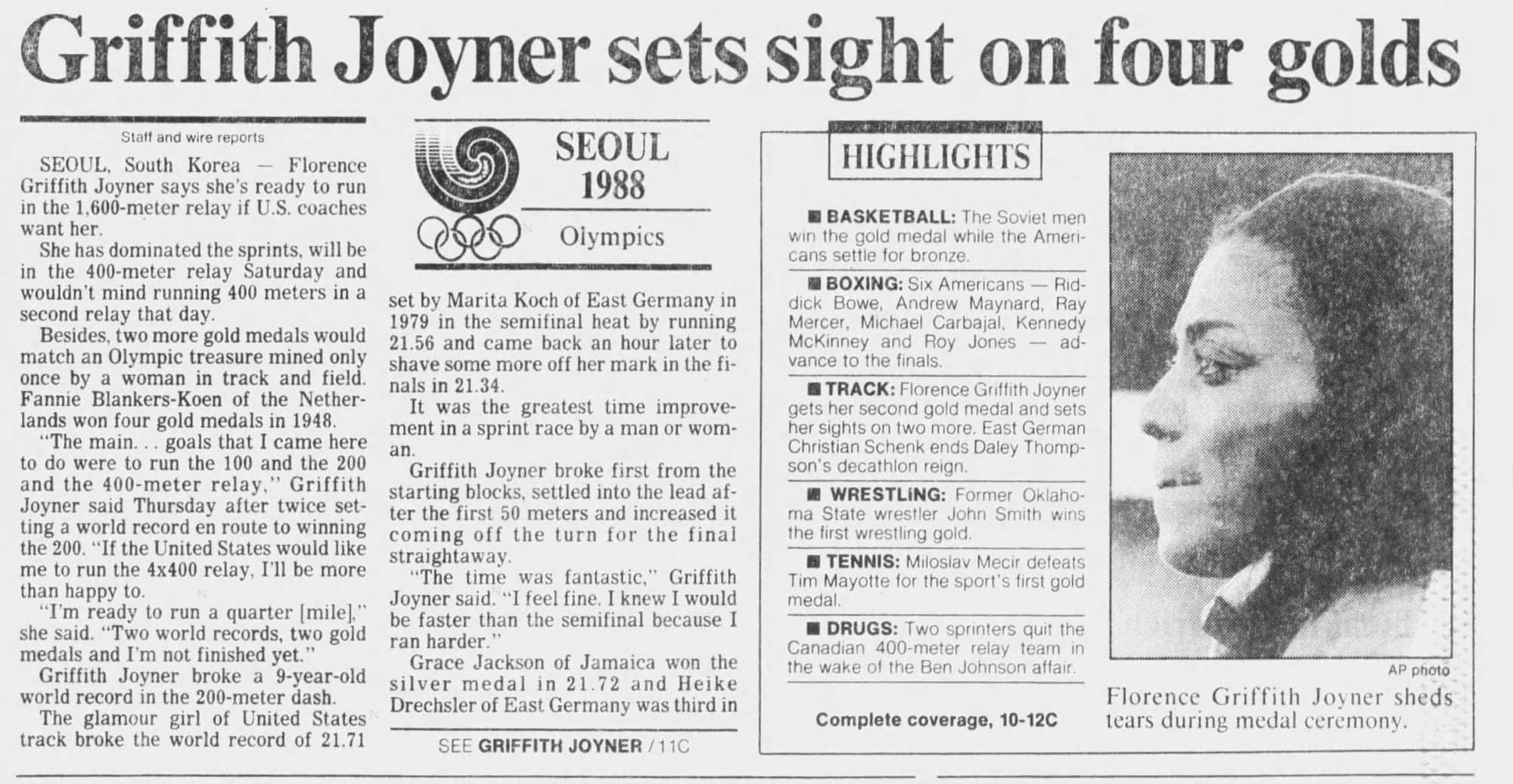
Her 100-meter world record, the famous one, was not set at these Olympics at all. It was set at the U.S. Trials in Indianapolis on July 16, 1988, in a quarterfinal, and it is the most disputed legal record in track and field. The stadium's wind gauge read 0.0. The gauge at the triple jump runway, fifty feet away, was showing a strong tailwind at the same time. Later reconstructions put the actual wind somewhere between +5 and +7 meters per second, against a legal limit of +2.0. World Athletics kept the record and annotated it. Thirty-eight years later, nobody has come close enough to make the question moot.
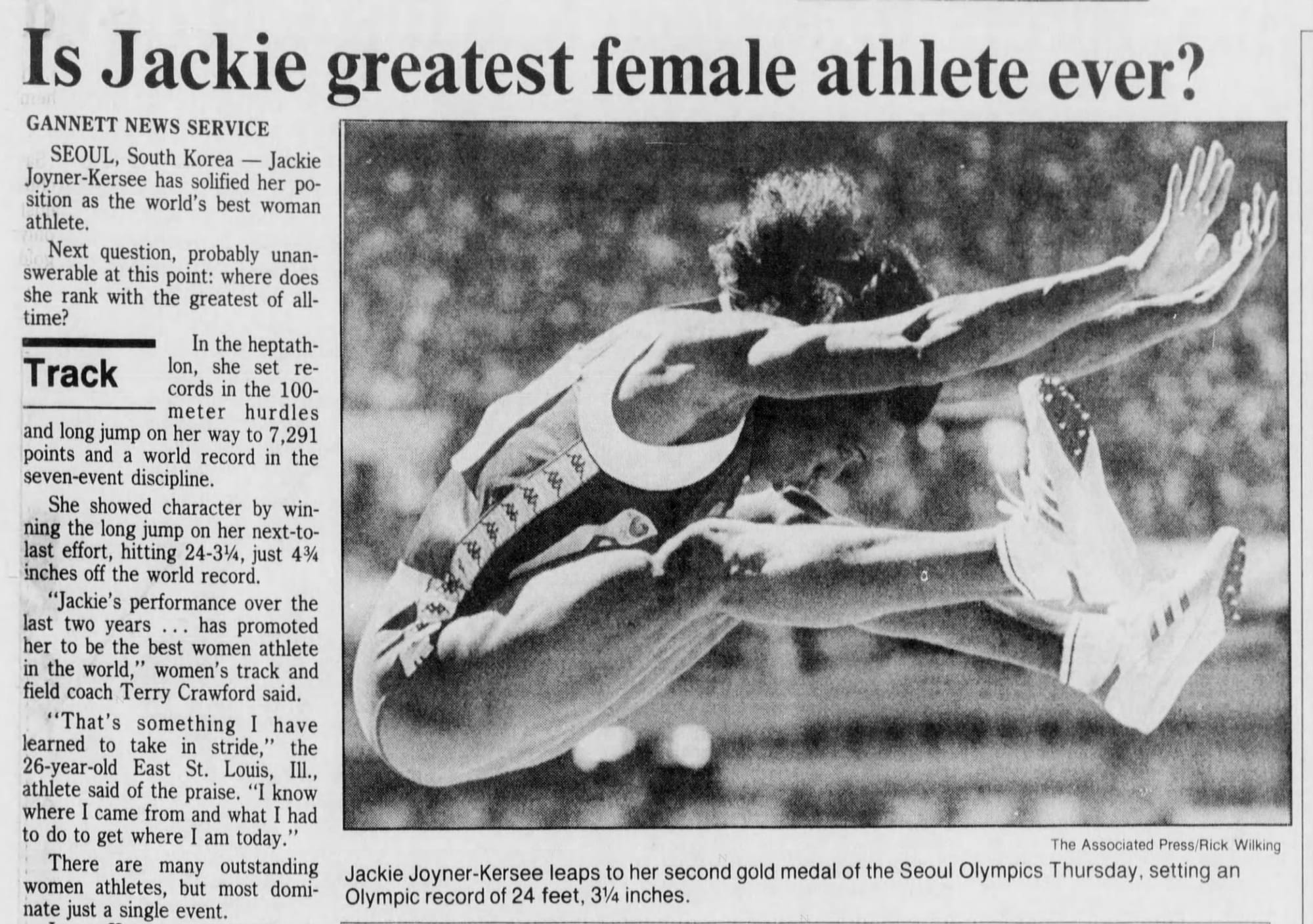
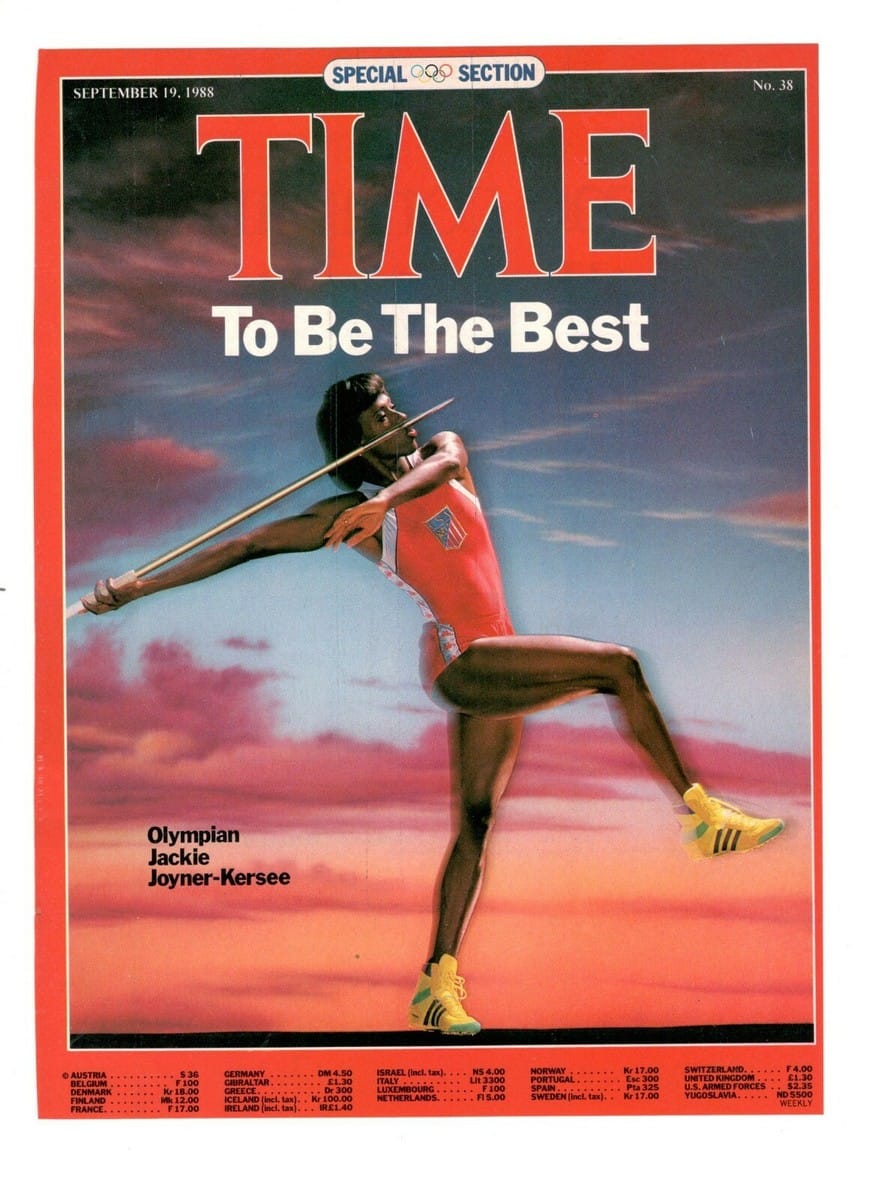
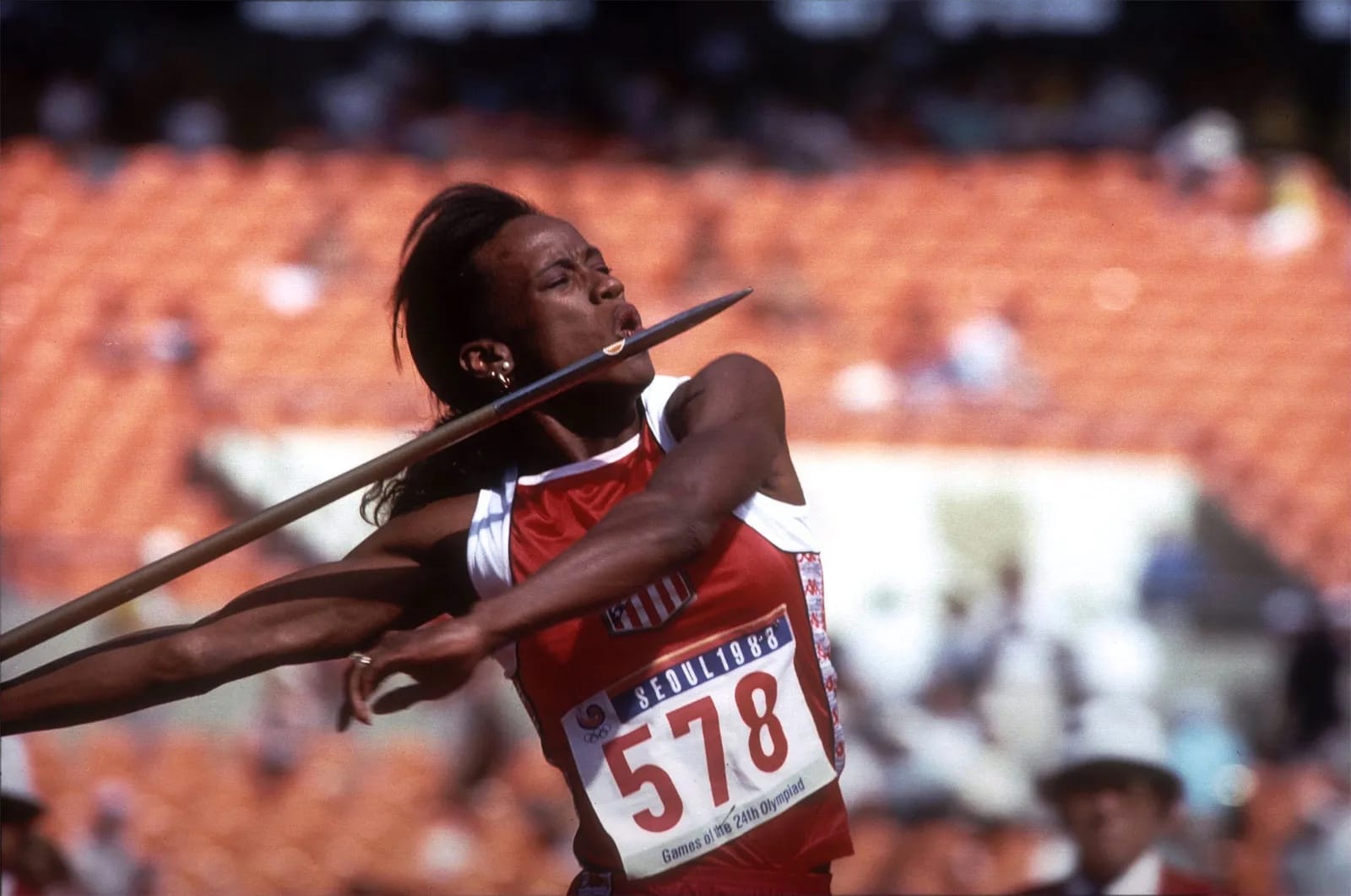
Meanwhile her sister-in-law was rewriting a different record. Jackie Joyner-Kersee scored 7,291 points in the heptathlon on September 23 and 24. That one is still standing too. She added the long jump gold six days later on her next-to-last attempt, at 24 feet 3¼ inches — an Olympic record, and four and three-quarter inches off the world record — in the event Ralph Boston had spent the 1960s rewriting.
Three women's world records from one two-week stretch, all three untouched after thirty-eight years. Griffith Joyner died in 1998 at thirty-eight years old, of suffocation during an epileptic seizure caused by a congenital brain abnormality. The autopsy found nothing drug-related. The rumors have outlived the evidence by a quarter century, which is its own kind of argument, and not a good one. The records are the story. There's a straight line from Wilma Rudolph in Rome to a woman in Seoul running a time that has now outlasted four Olympic cycles of everyone trying to beat it.
3. Greg Louganis hits his head (Sept. 19–27)
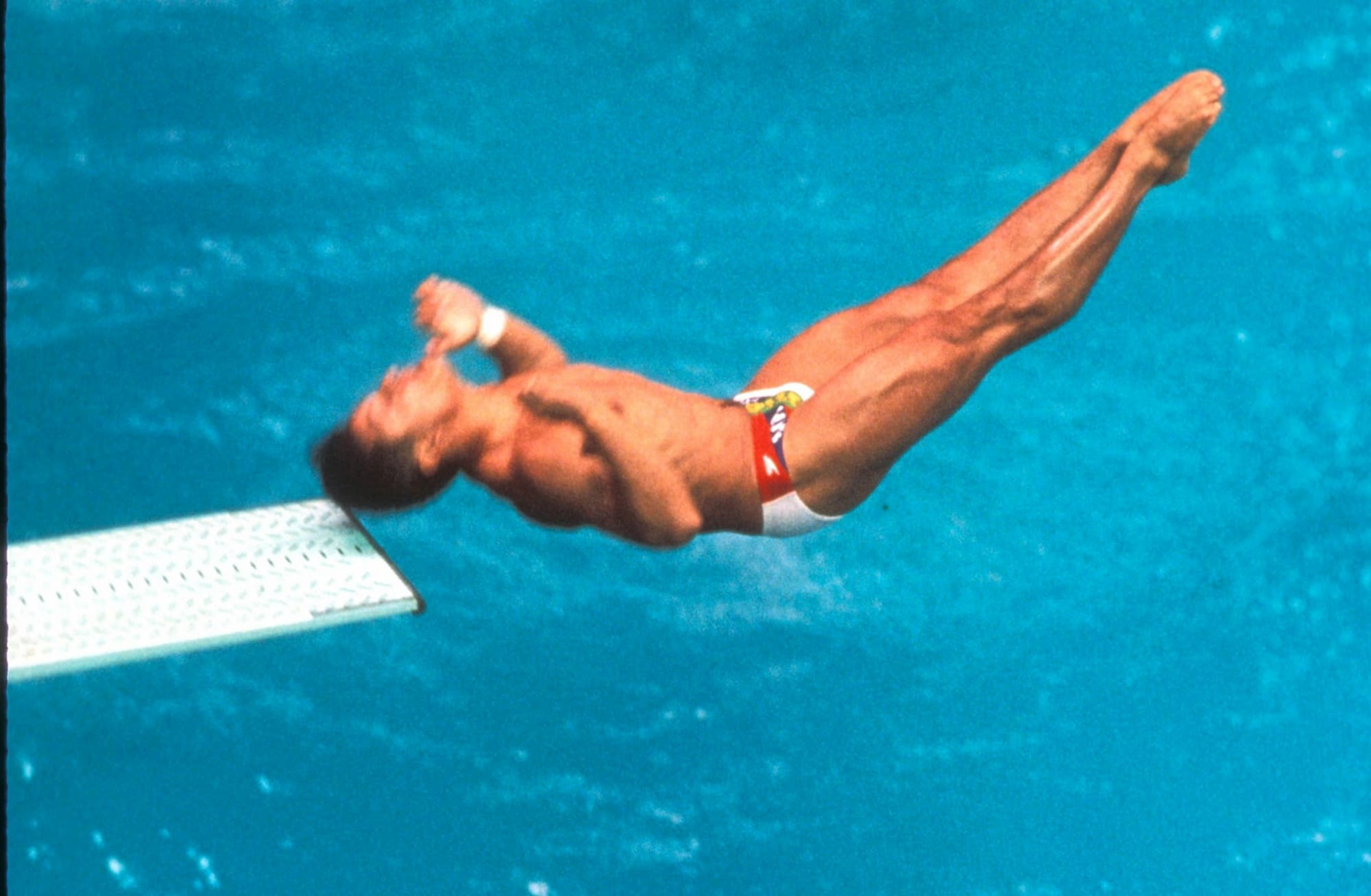
Monday, September 19, preliminary round of the 3-meter springboard. Louganis went up for a reverse two-and-a-half somersault in the pike position, came down short, and struck the back of his head on the board.
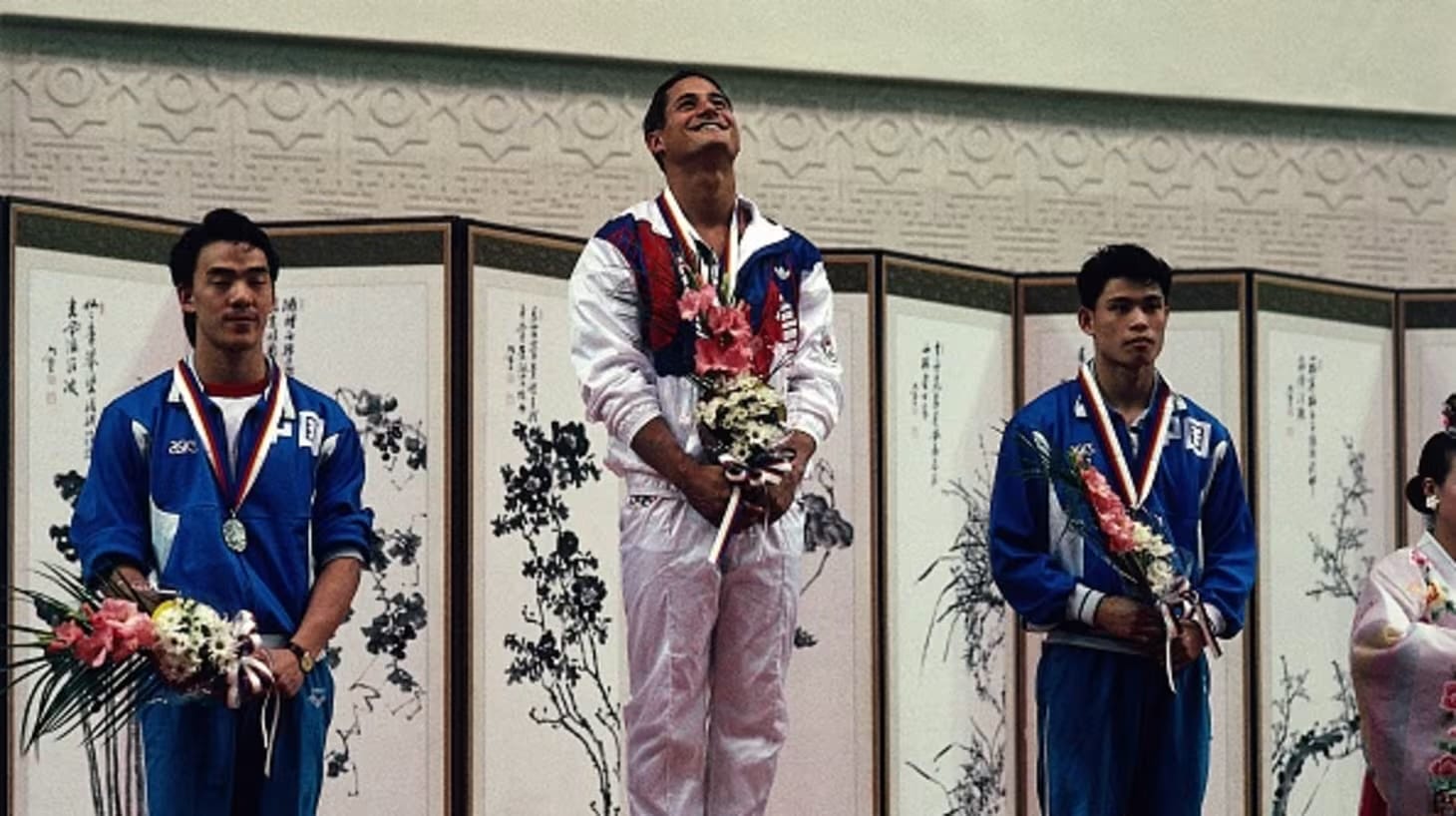
He was stitched up at the side of the pool, came back about thirty-five minutes later, finished the preliminary round in third, and won the final the next day by more than twenty-five points. On September 27 he won the platform as well, by 1.14 points over Xiong Ni of China, on a last dive worth 86.70 — a reverse three-and-a-half somersault in the tuck position, a dive nicknamed for the diver it killed in 1983. He is the only man to sweep both diving golds at consecutive Olympics.
Six months before Seoul, Louganis had been diagnosed HIV-positive. His coach knew. The doctor who put the stitches in his head did not. The world found out in 1995, when he published a memoir and sat down with Barbara Walters, and the coverage that followed was uglier than anything he faced on a diving board. The medical reality — chlorinated water, the actual transmission route, the actual risk, which was effectively nil — took a while to catch up with the headlines.
2. Five scorecards (Oct. 2)
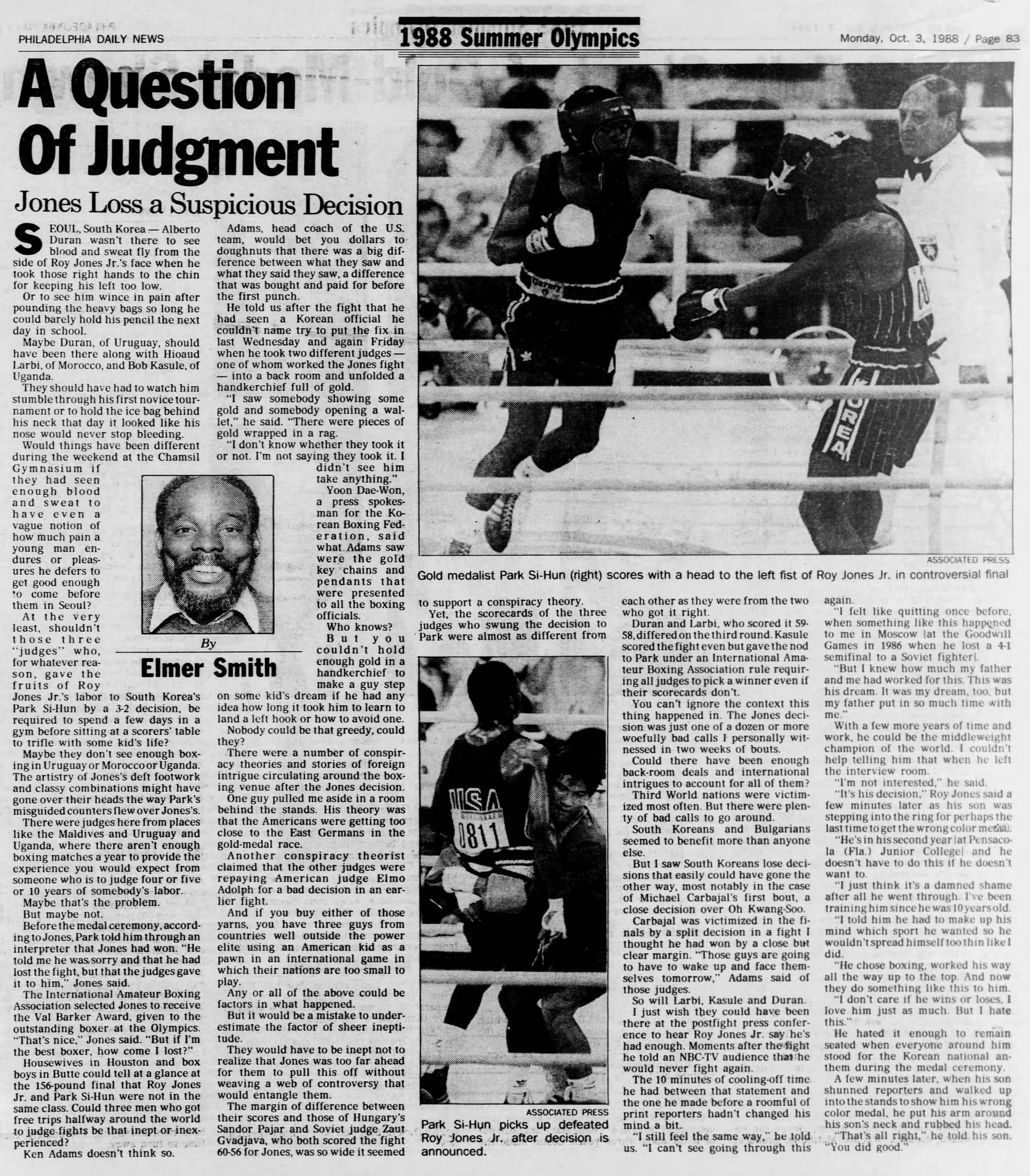
On the last day of the Games, in the light middleweight final, a nineteen-year-old from Pensacola named Roy Jones Jr. fought Park Si-Hun of South Korea and landed 86 punches to Park's 32.
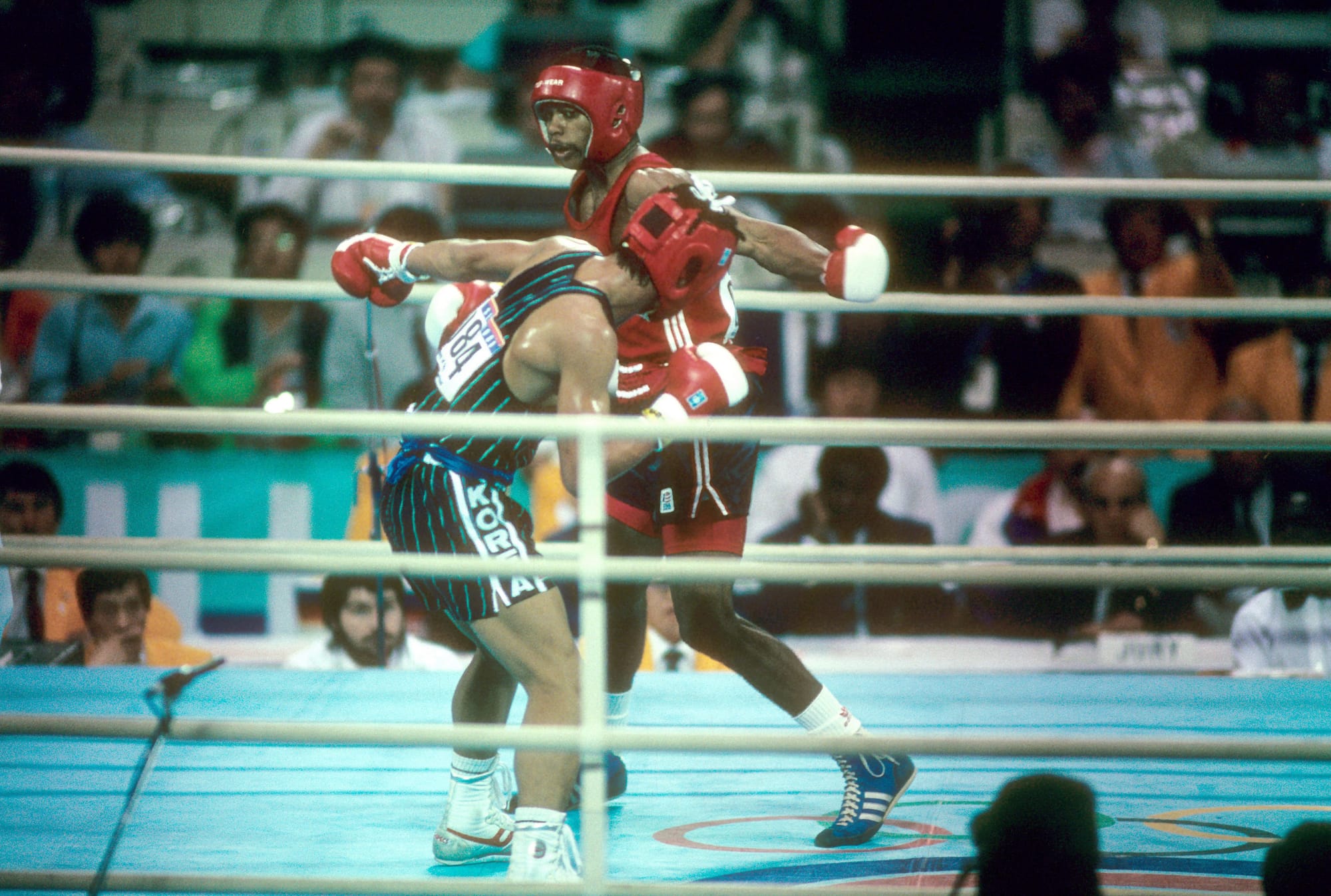
Park won, 3-2. The scorecards survive, and they're the whole story:
| Judge | Country | Score | Winner |
|---|---|---|---|
| Zaur Gvadzhava | Soviet Union | 60–56 | Jones |
| Sándor Pajar | Hungary | 60–56 | Jones |
| Alberto Durán | Uruguay | 59–58 | Park |
| Hiouad Larbi | Morocco | 59–58 | Park |
| Bob D. Kasule | Uganda | 59–59 | Park |
The five official scorecards, light middleweight final, Seoul, Oct. 2, 1988. Jones landed 86 punches to Park’s 32. Kasule scored it even and was required to name a winner.
Kasule's card is the one people get wrong. He didn't give it to Park for aggression — he scored the fight even, and an international boxing rule required every judge to name a winner anyway. So the deciding vote in the most famous robbery in Olympic history was cast by a man whose own scorecard said the fight was a draw.
Jones was given the Val Barker Trophy as the outstanding boxer of the entire tournament — only the third time it has ever gone to someone who didn't win gold, and the last time to this day. All three judges who scored for Park were suspended for six months. Durán and Larbi were later banned for life. Larbi admitted Jones had won easily and said he'd scored it for the host country assuming his colleagues would go the other way.
A 1997 IOC investigation found that the judges had been wined and dined by the organizers, concluded there was no conclusive evidence of bribery, and let the result stand. Roy Jones Jr.'s official Olympic record still says silver. The scandal is why Olympic boxing went to computerized scoring in 1992.
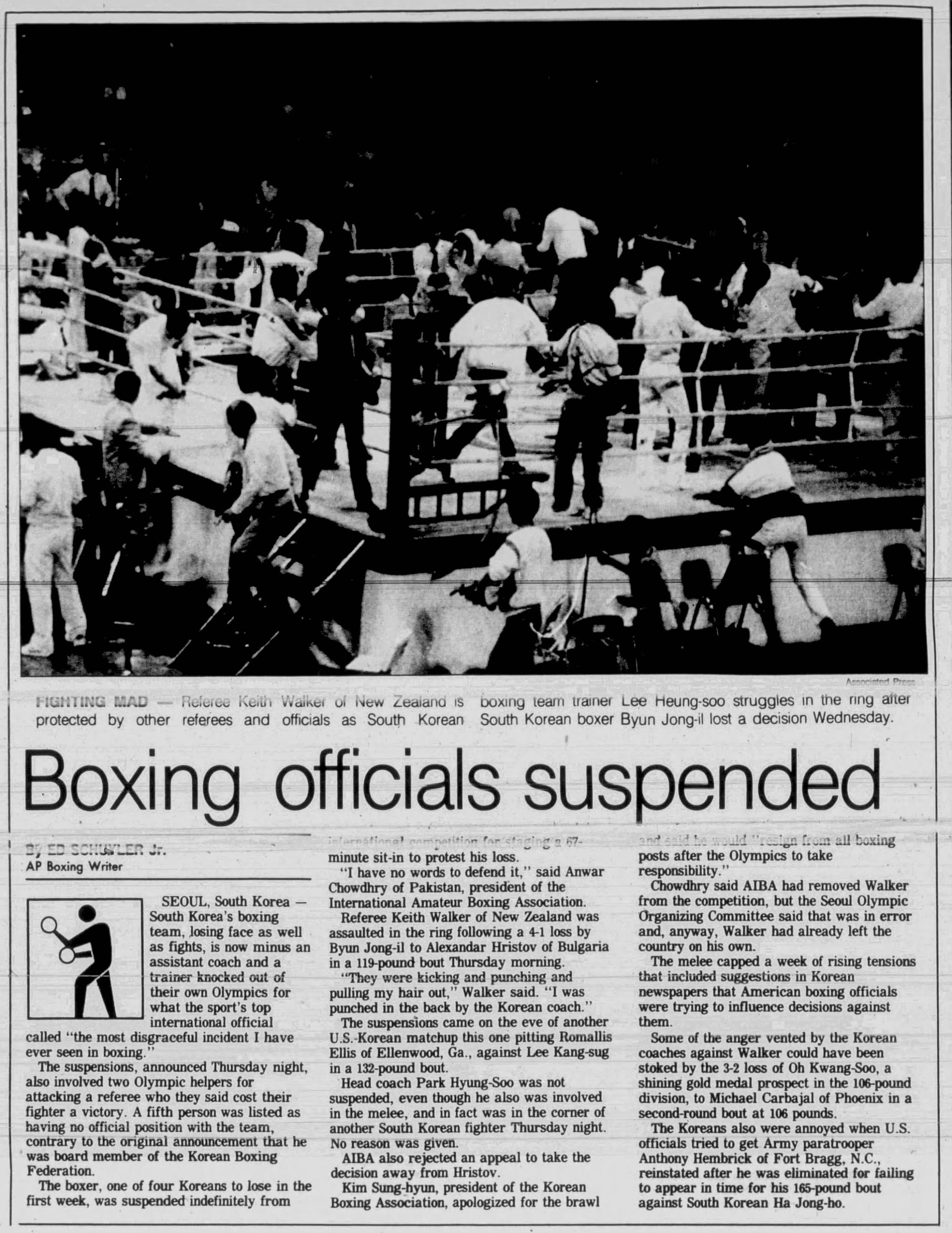
Boxing had already burned down once at these Games. On September 22, Korean bantamweight Byun Jong-il lost a decision after the New Zealand referee docked him two points for headbutting. Byun's coach came into the ring and hit the referee in the back. So did a Korean security guard. "They were kicking and punching and pulling my hair out," Walker said. "I was punched in the back by the Korean coach." The president of the international federation called it the most disgraceful incident he had ever seen in boxing. Five Korean team officials and hangers-on were suspended, and so was Byun — because Byun sat down in the middle of the ring and stayed there for sixty-seven minutes, breaking the Olympic sit-in record of fifty-one minutes set by another Korean boxer in Tokyo in 1964. They eventually turned the arena lights off on him.
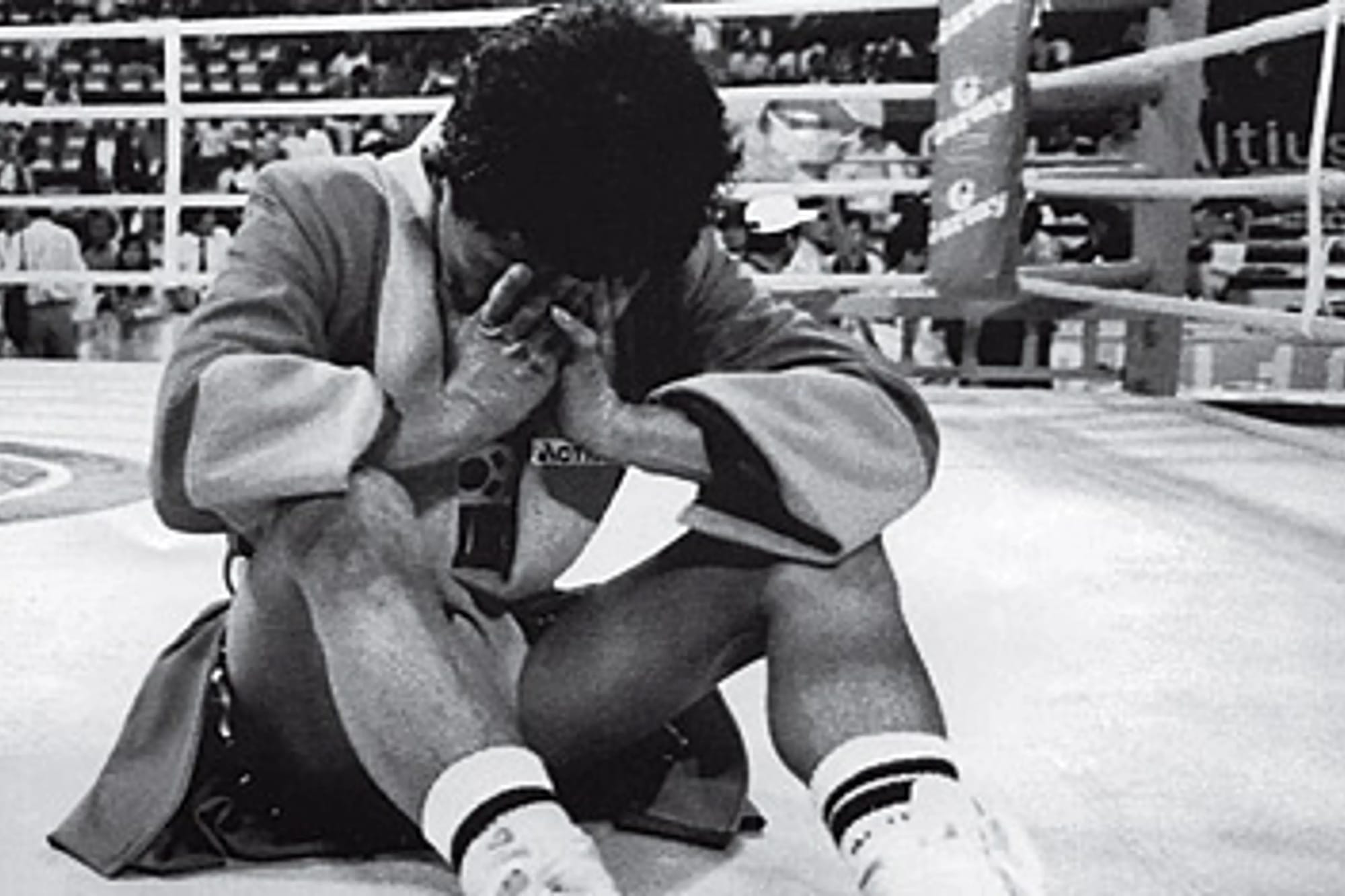
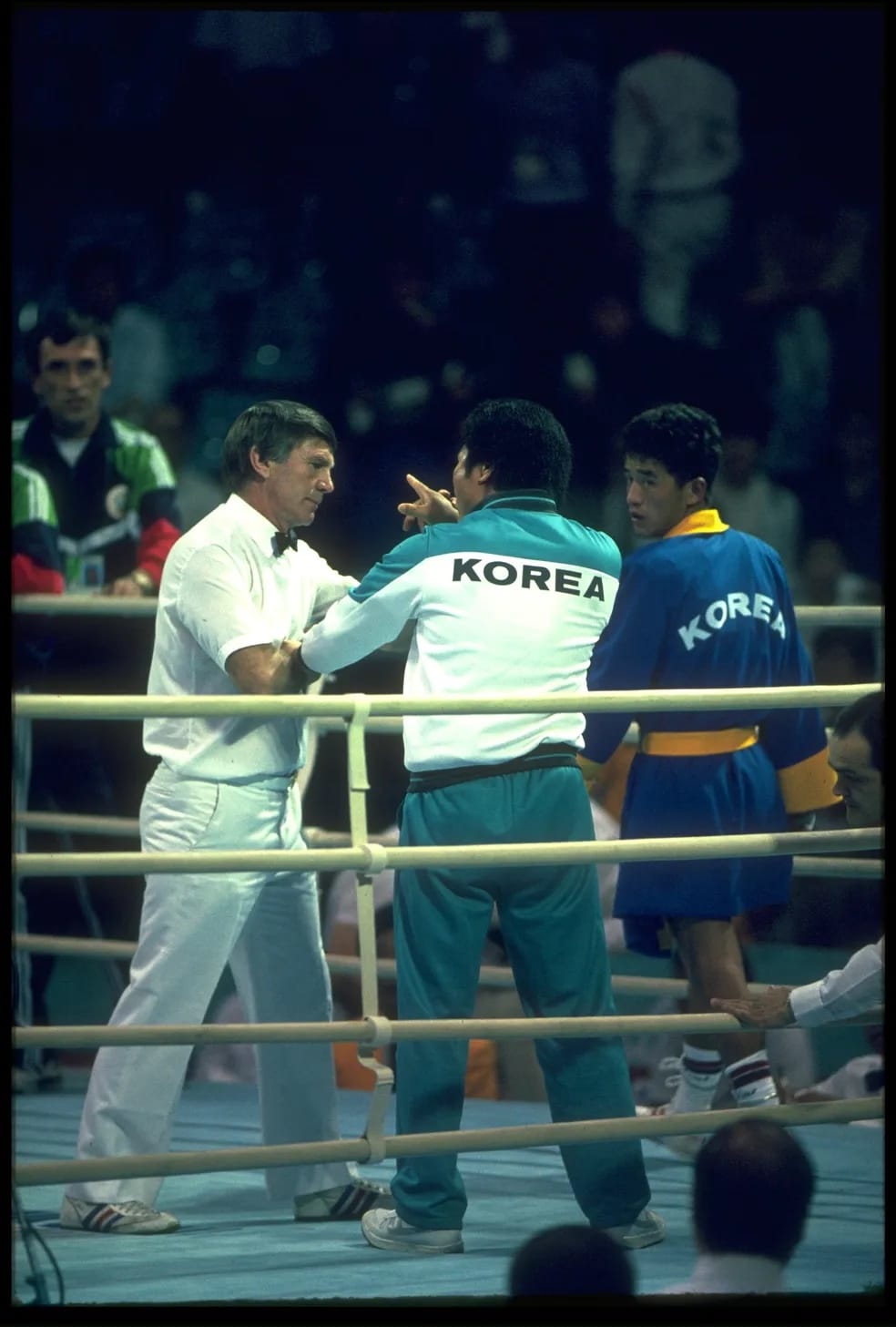
Keith Walker didn't wait for the paperwork. By the time the federation announced it had removed him from the tournament — a statement the Seoul organizing committee then said was issued in error — he had already left the country on his own.
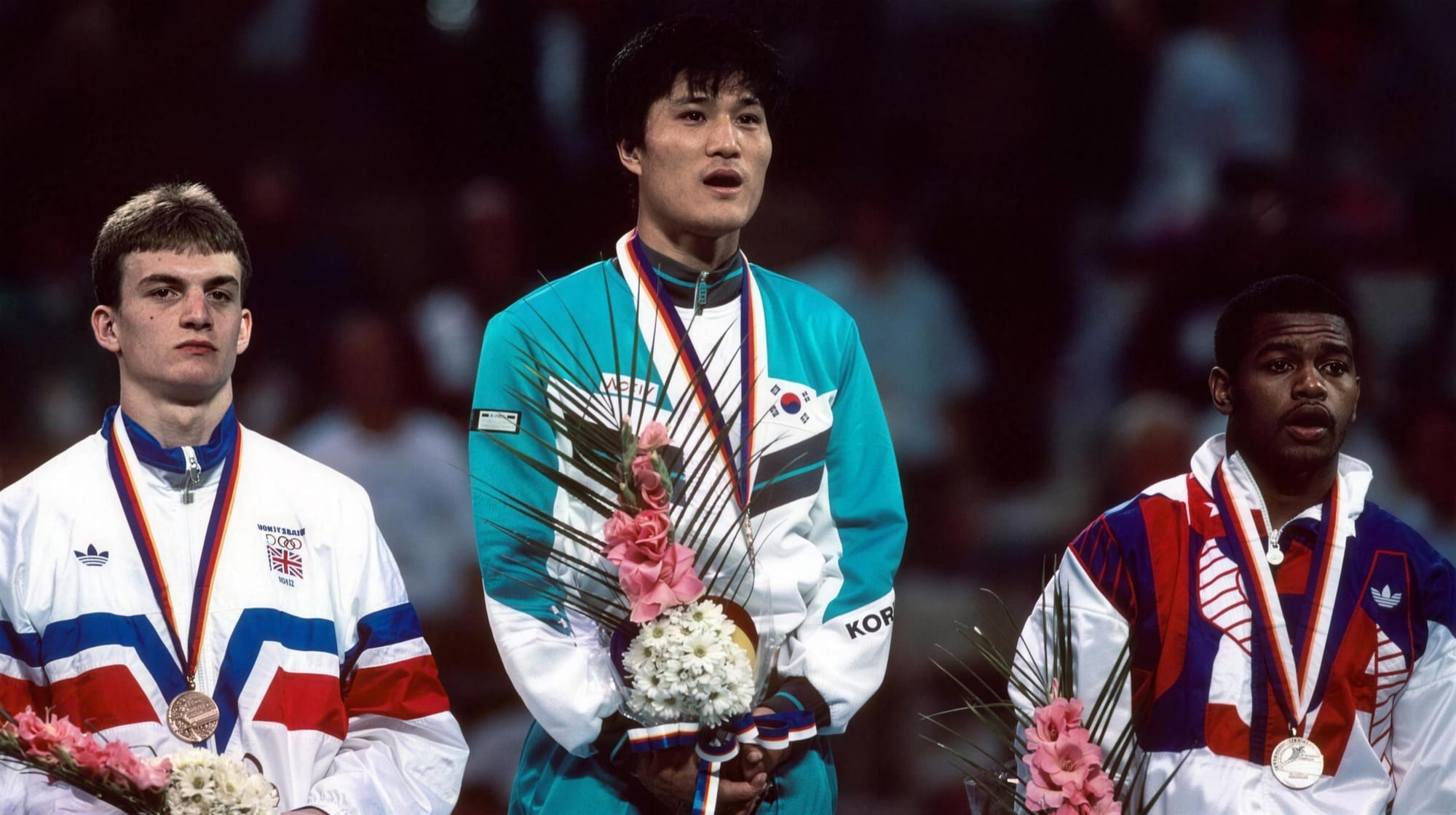
And here is the part that almost nobody knows, because it happened that same night and then sat in a Philadelphia newspaper for thirty-five years. Before the medal ceremony, Park found Jones and spoke to him through an interpreter. Jones's account, printed in the Philadelphia Daily News on October 3, 1988: "He told me he was sorry and that he had lost the fight, but that the judges gave it to him." The photographers got the rest of it — Park, having just been handed the gold, bending down to pick Jones up off the canvas.
Asked about the Val Barker Trophy, Jones said: "That's nice. But if I'm the best boxer, how come I lost?"
So the ending isn't really a twist. On May 30, 2023 — thirty-five years later — Park Si-hun flew to Pensacola, walked into Roy Jones Jr.'s gym, and handed him the gold medal. Jones thought he was doing a camera interview. Park told him it belonged to him. He had been saying so since 1988.
1. Nine point seven nine (Sept. 24 and Sept. 27)
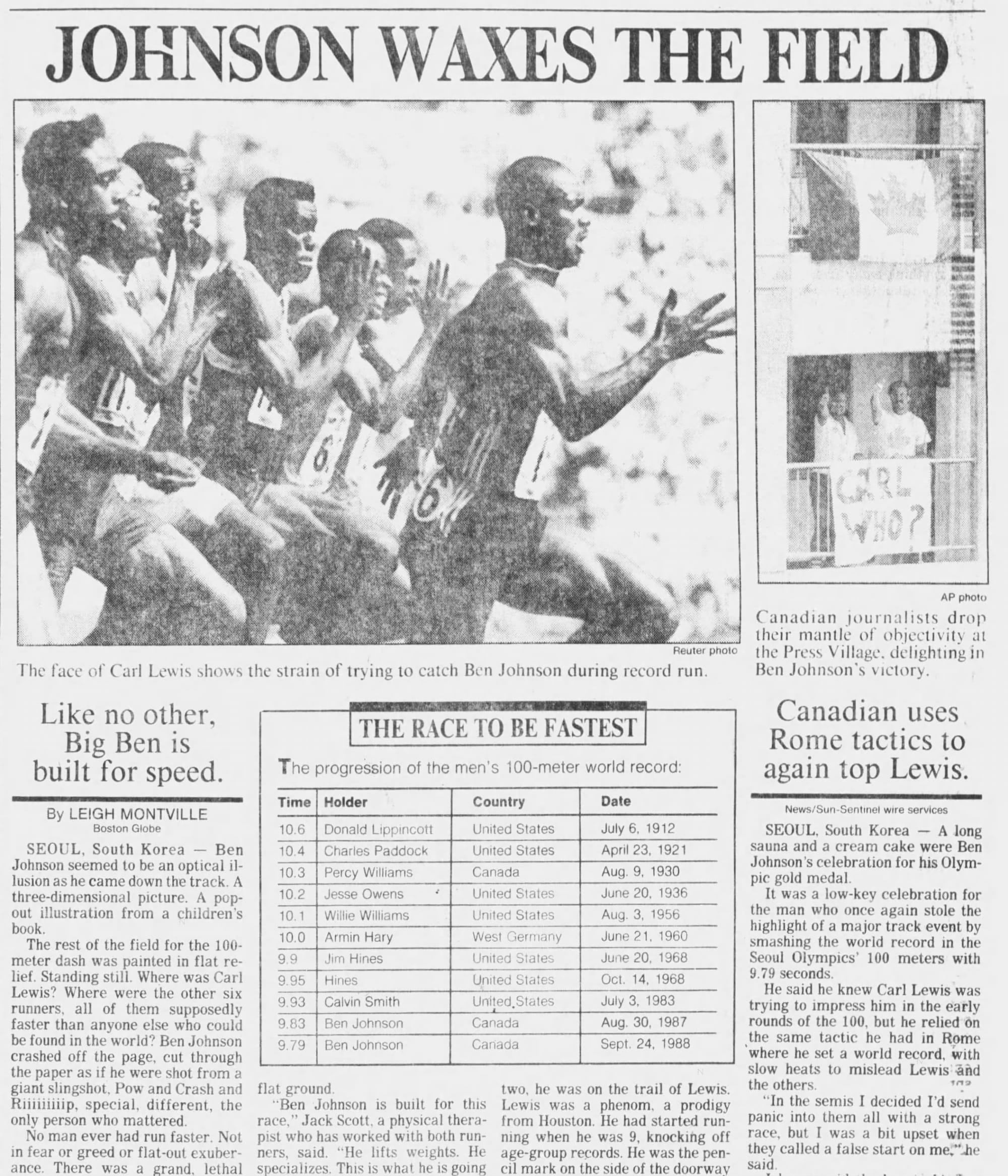
Saturday, September 24. Ben Johnson of Canada ran the 100-meter final in 9.79 seconds, a world record, and beat Carl Lewis by more than a tenth of a second while easing up. It was, for about seventy-two hours, the most famous athletic performance in the world.
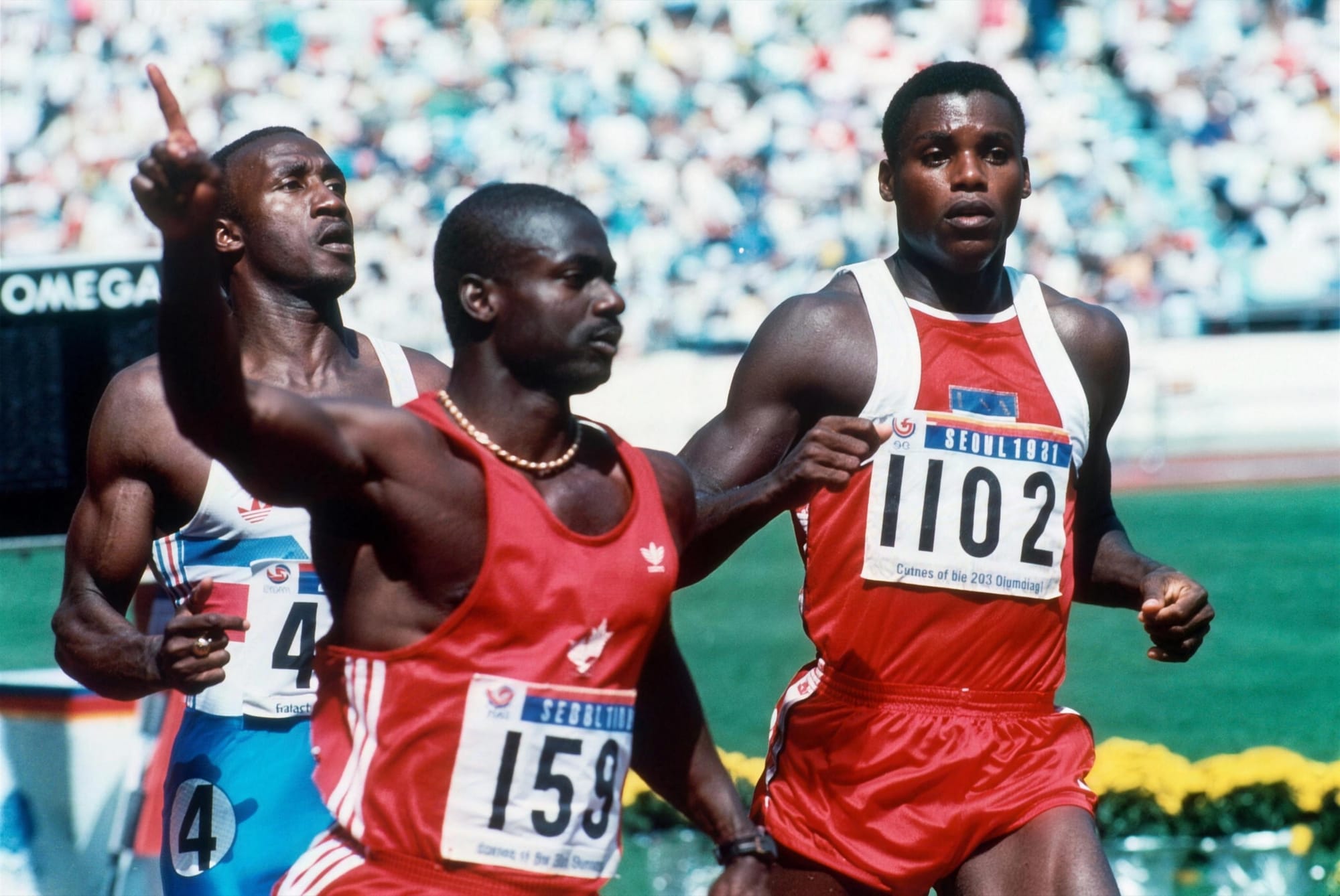
At three o'clock on Tuesday morning in Seoul, Canada's chef de mission, Carol Anne Letheren, walked into Johnson's hotel room, where he was sitting with his mother, his sister, his coach and his manager, and asked him for the medal. His sample had come back positive for stanozolol. He handed it over and said nothing.
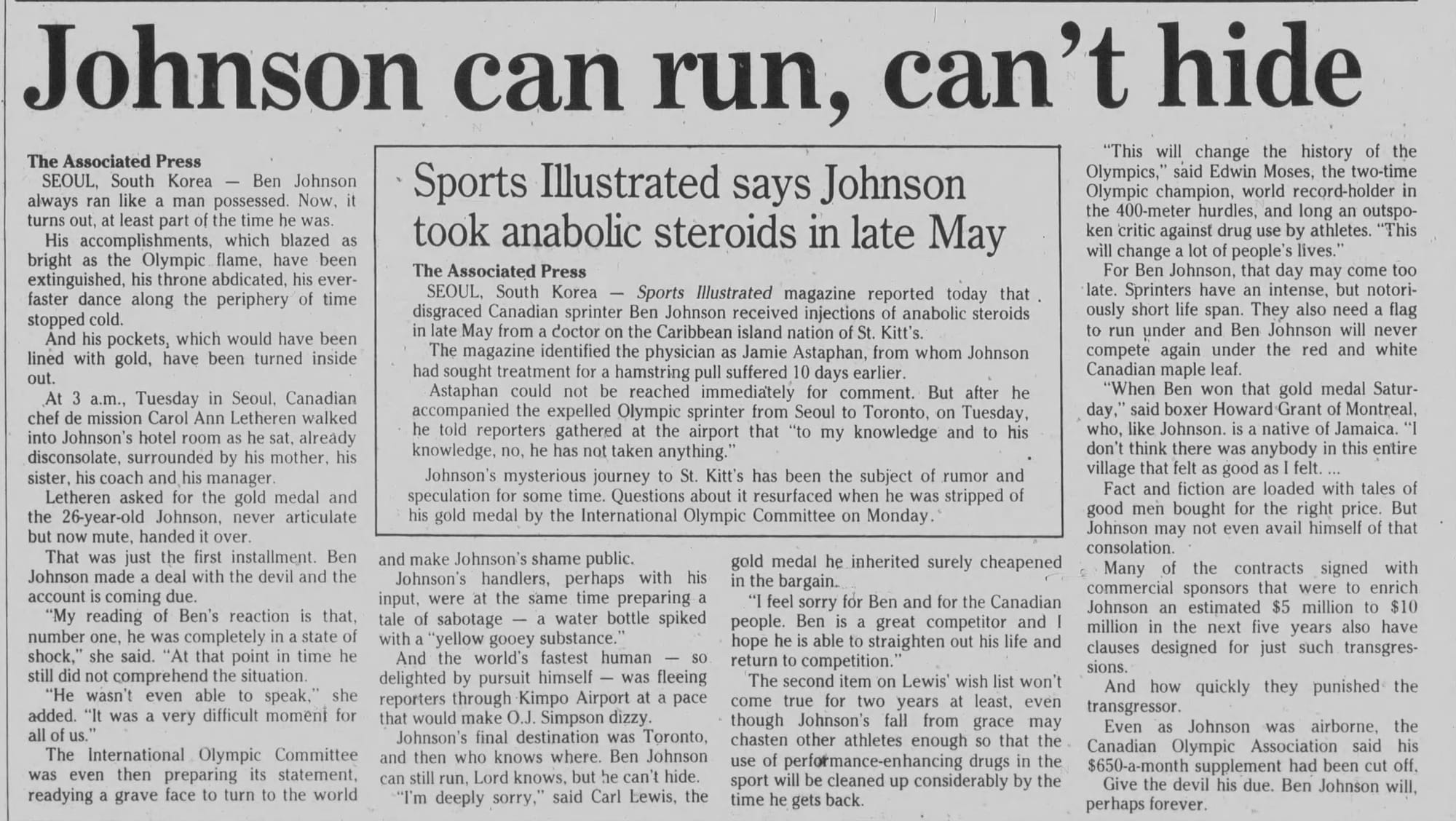
That was long enough for the parade, the front pages, the endorsements and a country's worth of pride. Lewis was awarded the gold, his 9.92 became the world record, and it stayed the record until 1991.
Johnson lost a second world record fourteen months later. The 9.83 he had run in Rome in 1987 was rescinded on September 30, 1989, after he testified at the Dubin Inquiry — a full Canadian judicial commission, chaired by Ontario Chief Justice Charles Dubin, that sat for most of 1989 and heard his own coach, Charlie Francis, explain that he had introduced Johnson to steroids in 1981.
And then it got worse, slowly, for fifteen years. Of the eight men in that final, six were eventually implicated in or connected to performance-enhancing drugs. Only Calvin Smith and Robson da Silva of Brazil were never touched by any of it. That includes the man who was handed the gold: in 2003, documents surfaced showing that Carl Lewis had tested positive for stimulants at the 1988 U.S. Trials and had a ban overturned by his own national committee. The phrase "the dirtiest race in history" was coined that year — 2003, not 1988.
That's why it's number one and nothing else is close. Every other moment on this list finished when it finished. This one has gotten worse every decade since, and it is the reason that when anybody runs anything extraordinary now, the first question is never about the running.
Four Things Everyone Believes About Seoul That Aren't True
Sohn Kee-chung lit the cauldron. The best story of the whole ceremony, and it isn't quite what happened. Sohn — who won the 1936 Olympic marathon in Berlin and was made to compete under a Japanese name, because Korea was occupied — carried the flame into the stadium at seventy-six years old and danced with it. Then he handed off to a young runner named Lim Chun-ae, who passed it to the three people who actually lit it: Chung Sun-man, Kim Won-tak and Sohn Mi-chung, a marathoner, a teacher and a dancer, chosen to represent three different Korean lives. Even Wikipedia contradicts itself on this one.
Ben Johnson was stripped two days after the race. Or three. Both are true, and that's the actual story. Seoul ran thirteen hours ahead of the American East Coast, and every newspaper dated the news to its own calendar. In Seoul the race was Saturday and the medal came back on Tuesday — three days. In North America the papers ran it as Monday — two. The Santa Fe New Mexican of September 28 says the IOC stripped him "on Monday." Wikipedia says September 27. Nobody is lying. Also worth fixing while we're here: he lost two world records, fourteen months apart, not one.
Flo-Jo set the 100-meter world record at the Olympics. She set it in Indianapolis in July, in a quarterfinal, with one wind gauge reading zero and another one fifty feet away reading something else entirely.
The IOC eventually gave Roy Jones the gold. It never did. His record still reads silver. The gold he owns was handed to him in his own gym in Florida by the man who was given it.
The Ones That Just Missed
Steffi Graf's Golden Slam (Oct. 1): she beat Gabriela Sabatini 6-3, 6-3 for the gold, having already won the Australian, the French, Wimbledon and — six days before flying to Seoul — the U.S. Open. Tennis was back as a full medal sport for the first time since 1924. It is the greatest single achievement of these Games and still the only Golden Slam in tennis history, by anyone, ever. It finishes sixth here purely because nobody has ever argued about it. Kristin Otto won six gold medals for East Germany, the first woman to win six at one Games; she never failed a test, and her name appears in the Stasi files that documented East Germany's state doping program, and no medal has been taken back. Matt Biondi won seven medals, five of them gold — matching the number Mark Spitz won in Munich. Anthony Nesty of Suriname beat Biondi in the 100 butterfly by one hundredth of a second, becoming the first Black swimmer to win an Olympic gold and winning his country's first Olympic medal of any kind. Janet Evans, seventeen years old, won three golds and set a 400 freestyle world record that lasted nineteen years. Sergey Bubka won the pole vault at 5.90 meters — and across four Olympics, thirty-five world records and six straight world championships, that remained the only Olympic medal of any color he ever won. Jim Abbott, born without a right hand, pitched the United States past Japan in the final of the baseball tournament, which was a demonstration sport, so the medals weren't official.
Which Seoul moment did we rank too low? Comments below.
Comments ()